

Bathroom leak repair costs in Melbourne start at about $450 to $800 for a professional surface reseal, rise to $800 to $1,500 for epoxy regrouting, and reach $2,500 to $6,000 when the waterproofing membrane has failed and part of the shower has to be rebuilt. Access to the source and the depth of the damage decide which band a job lands in.
That spread is wide because the visible stain tells you very little about the work. A Building and Plumbing Commission study of moisture-related disputes in Victorian residential buildings examined 6,299 de-identified residential building disputes lodged with the Domestic Building Dispute Resolution Victoria service between July 2018 and June 2023, covering 96,803 individual reported issues. Nearly 31% of those issues were water-related, and the absence of a waterstop was the most frequently noted bathroom problem in the sample.
Read that as a pricing statement. A bathroom leak is a moisture containment failure before it's a plumbing failure, and the quote has to reflect which of the two you have.
Table of Contents
- Typical Bathroom Leak Repair Costs in Melbourne
- Why the Same Leak Can Cost Very Different Amounts
- Why Waiting Adds to the Bill
- When a Leak Repair Becomes a Bathroom Renovation
- Registered Builders, Permits and When Licensing Applies
- What Insurance May and May Not Pay
- How to Read a Leak Repair Quote and Confirm the Scope
Typical Bathroom Leak Repair Costs in Melbourne
Scope sets the price before the stain does. The three common priced scopes sit in clear bands, based on a 2026 Australian guide published by RJG Group.
| Repair scope | Typical trigger | Indicative cost (AUD) | What is included |
|---|---|---|---|
| Surface reseal | Failed silicone or cracked grout at a joint | $450–$800 | Remove old sealant, clean and reseal the joint |
| Epoxy regrouting | Grout breakdown across a shower wall or floor | $800–$1,500 | Regrout with epoxy grout and check the joints |
| Membrane failure repair or partial rebuild | Water behind tiles, damp substrate or failed waterproofing | $2,500–$6,000 | Open the area, repair the membrane and reinstate tiles |
These bands are useful for budgeting, not for quoting a specific bathroom. Melbourne prices move with access, tile type, building age and the substrate behind the finish. A rendered wall and a cement sheet floor create different opening-up work, even when the visible leak looks similar.
What each band actually buys
Surface reseal is the smallest scope. It suits failed silicone along the tray edge, a cracked grout line where the screen meets the wall, or a small gap at the waste. The work is usually contained to one visit: remove the old sealant, clean the joint and apply a new seal. The price stays low because the finish is already telling you where the water is getting through.
Epoxy regrouting costs more because the old joints have to be raked out, cleaned and dried before new grout goes in. The labour sits in preparation. Epoxy grout is used because it stands up better to shower conditions than a simple surface seal, but it cannot repair a failed membrane underneath.
Membrane failure repair is a demolition scope. Water has moved behind the tiles, so the tiles come off, the wet substrate comes out, the membrane is reinstated and tested, then screeding and tiling follow. That is why the band reaches $2,500 to $6,000. The visible tile damage may be small, while the actual cost sits in the layers underneath.
Practical rule: a quote that prices "stopping the leak" as a single line has priced an outcome, not a scope. You can't compare it, and you can't check it.
Plumbing fitting repairs and hidden-leak diagnosis sit outside these three bands because their price depends on access, call-out, labour, parts and the detection method. A valve, waste or pipe connection can be relatively contained once exposed. A hidden source behind a sealed wall can require investigation before any repair scope is written. A dedicated JMJ Plumbing leak detection services treats finding the source as its own task, which is how it should appear on the invoice.
The non-obvious point is that delay can move a job between bands. A failed joint first looks like a reseal. If water keeps entering, grout breaks down, then the substrate and membrane are affected. The same starting point can end as a partial rebuild, with the higher cost created by what happened after the first failure was left in place.
Which row applies comes down to observation and access. Staining confined to grout lines and junctions, with dry plasterboard behind, points to a reseal or regrout. Damp plasterboard below, a floor that feels soft underfoot, or a leak that traces back to the shower base points to the membrane row.
Why the Same Leak Can Cost Very Different Amounts
Say a shower mixer drips into the tray. The water is coming from a fitting that becomes reachable once the trim plate comes off, the tray drains correctly, and the repair is a cartridge, a seat or a connection. That's the plumbing row.
Now say the drip shows up as a stain on the hallway skirting behind the shower, the tiles are intact and the grout looks sound. Water is moving behind the finish from a junction the surface can't reveal, and the repair starts with removing tiles to find it.
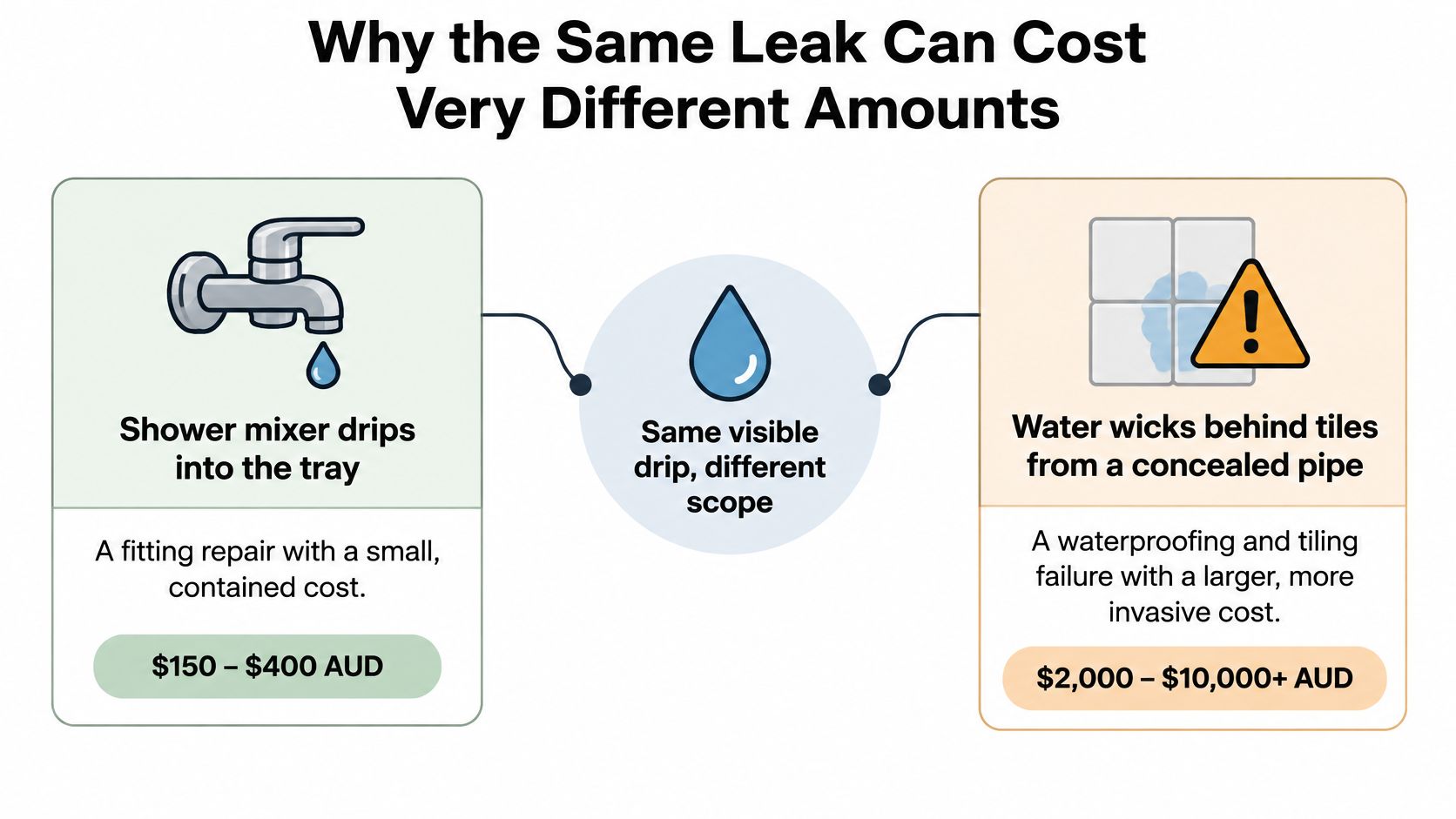
Same symptom on the floor, same complaint about the smell, and two completely different trades with two completely different price structures. The factors below are what move a job between them.
| Factor | How it changes the scope | Effect on cost |
|---|---|---|
| Access to the source | Visible fitting versus a leak behind a sealed wall | Hidden source adds opening up and reinstatement |
| Waterproofing system | Failed membrane needs tile removal, drying and reinstatement | Sits in the membrane-failure band |
| Secondary damage | Wet plasterboard, joinery or subfloor | Adds demolition and replacement; priced from the moisture map |
| Shower floor falls | Incorrect falls need substrate correction and screeding | Adds labour and materials; quoted per job once the screed is exposed |
| Compliance requirements | Membrane documentation, sign-off and retesting | Adds testing and documentation; fixed before tiling starts |
Reading the factors in the right order
Access first. It's the biggest single multiplier and the one a homeowner can influence. Lifting two tiles to inspect a junction costs far less than opening a wall a month later because nobody tested.
The waterproofing system second. Once the failure is behind the membrane rather than in front of it, the repair changes category. Waterproofing has to be continuous, lapped correctly and tested before finishes go back.
Secondary damage third. Wet plasterboard, swollen cabinetry and damp subfloor are consequences, not causes. They add demolition and replacement, and the extent is only known once the area is open.
Two more items, falls and compliance, rarely appear on a cheap quote and always appear on a good one. A shower floor that ponds needs the substrate corrected before anyone screeds and retiles, and a repair that alters the shower floor or a penetration now needs the waterproofing documented and tested.
Where a leak has no visible origin, a leak detection service in Melbourne uses moisture mapping to locate the failure before any tile comes off. That single step is what stops the opening-up cost from being speculative.
The question to hold onto while you read any quote is simple: is this a source fault at a fitting, drain or pipe, or is it a wet-area system failure behind the finishes?
Why Waiting Adds to the Bill
The Australian Building Codes Board analysis of waterproofing compliance found that rectifying waterproofing in a 6-square-metre bathroom five years after completion cost 44% more than rectifying it during construction. The same analysis found waterproofing defects are a widespread building-quality problem: 32% of national survey respondents who reported defects had experienced a waterproofing issue, and 30% of Class 2 buildings had waterproofing or weatherproofing defects.
Forty-four per cent is the price of time, not the price of a trade. During construction, the wet area is already open, the screed is already exposed and the tiler is already on site. Five years later, the same defect sits under finished tiles, a shower screen, a vanity and possibly a second bathroom wall.
The reseal trap
A cosmetic reseal is rational in exactly one situation: when testing confirms a failed joint and rules out a membrane or drainage defect. Then silicone, preparation and a single visit fix it, and that's what the $450 to $800 band is for.
If the joint isn't the problem, the reseal buys months and hides the diagnosis. Water keeps moving behind the membrane, the substrate keeps absorbing it, and the eventual scope includes drying, demolition and reinstatement that a fortnight of early action would have avoided.
A small leak at one junction is a morning's work. The same leak running behind a shower floor for six months is a rebuild, because the substrate has to dry before anything can be fixed.
Three moves that cap the bill
- Contain it the day you find it. Stop using that shower and isolate the supply if the leak runs continuously. Every extra shower pushes more water into framing and sheeting that were never designed to get wet.
- Get a diagnosis before demolition. A moisture map and a pressure test tell you which row of the price table you're in. Demolition without a confirmed source is guessing at your expense.
- Log everything with dates. Photographs of the stain on day one, day ten and day thirty show the insurer whether the damage was sudden or slow, and VerticalRent's maintenance call guide is a useful template for recording what was reported and when.
A single headline price misleads because it flattens a staged job into one number. A staged budget ties cost to defect type, timing and the extent of demolition: containment, diagnosis, opening up, waterproofing rectification, drying, tiling, final testing, plus a contingency for what the tiles were hiding.
The decision point is days, not seasons. Deal with a bathroom leak when you find it, rather than folding it into the next renovation you were planning anyway.
When a Leak Repair Becomes a Bathroom Renovation
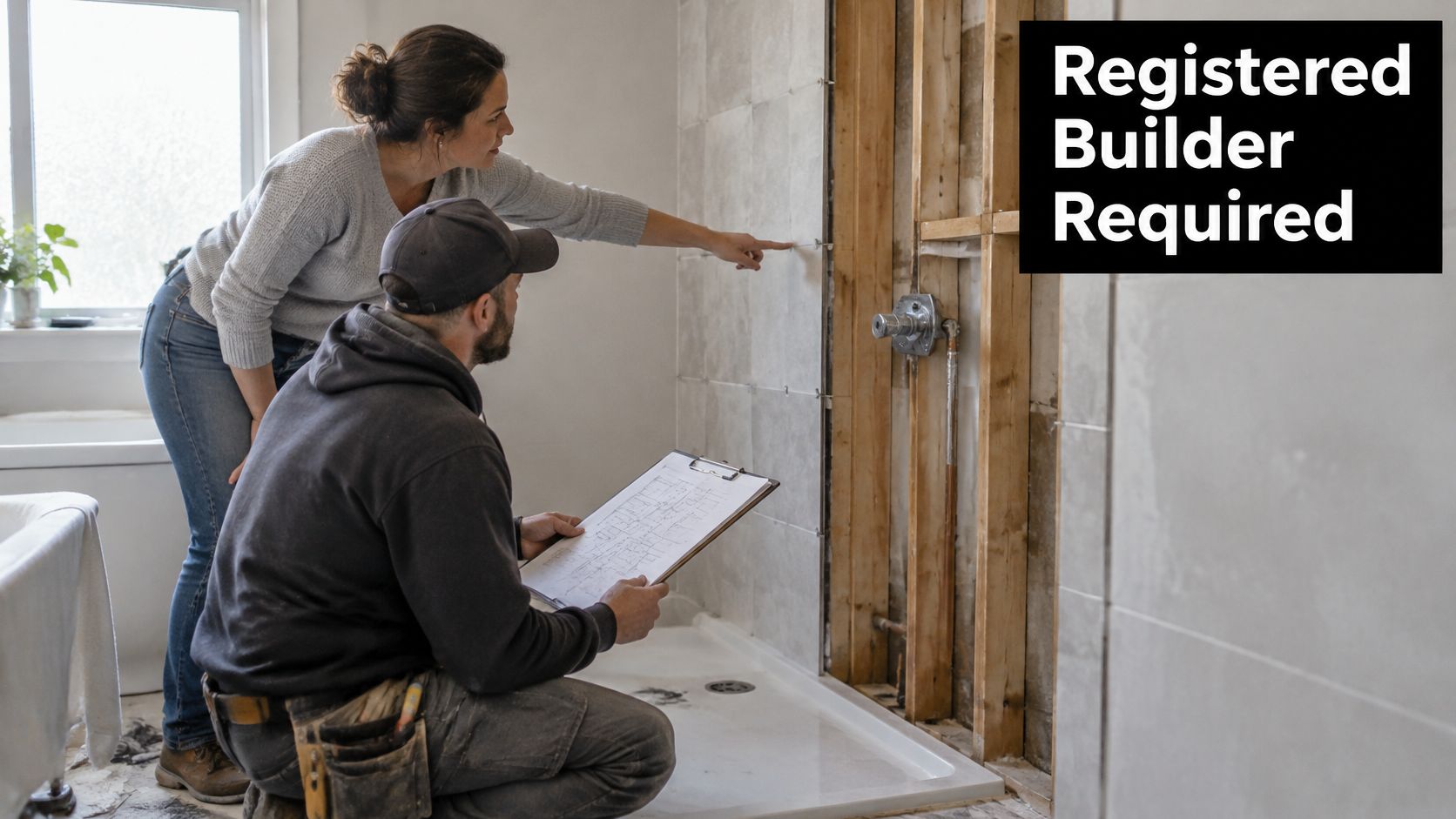
There's a clean line in this work. A failure confined to a fitting, a waste or a pipe stays a plumbing repair, with access through a trim plate, a cabinet or a small section of sheeting. Once moisture has reached the membrane system, the job is a wet-area rebuild, priced in the $2,500–$6,000 band: open the area, repair the membrane, reinstate the tiles.
The line moves when the opening up spreads. If most of a shower floor or the wall junctions around it have to come out, and drying, falls correction, membrane reinstatement and retesting run across the whole room, the job has stopped being a repair of a defect.
It has become a renovation of a room.
That distinction is where the price table's rows stop being interchangeable. A surface reseal at $450–$800 or an epoxy regrout at $800–$1,500 assumes a dry substrate and an intact membrane underneath. A rebuild assumes neither, and budgets for demolition, drying and retiling on top of the waterproofing itself.
What the renovation carries with it
Waterproofing compliance is more than a membrane and a tile. The Building and Plumbing Commission's waterproofing-of-wet-areas guidance expects permit drawings to include section details of the waterproofing treatment, and a drawing that references AS 3740 without those details does not satisfy the expectation.
The paperwork is the renovation's second deliverable. The documentation trail includes evidence of product suitability under NCC Part A5, a membrane test certificate, CodeMark product information where it applies, and final waterproofing sign-off. Where a building permit is required, the relevant building surveyor signs off only once satisfied the work complies. A repair documented this way is worth more at resale than one that looks identical and carries nothing.
The economics, in plain terms
Waterproofing defects rank among the most common building-quality problems in the country, and late rectification costs materially more than getting it right during construction. The second job pays for demolition, drying and reinstatement that the first job never needed.
Ask for the repair-versus-renovation comparison in writing before any demolition starts. A contractor pricing bathroom waterproofing repair who can explain why a repair scope costs less than a rebuild, and what changes if the substrate turns out to be wet, is giving you a decision. A contractor who quotes one number for both is giving you a guess.
Scope, not the label on the quote, decides which job you are paying for.
Registered Builders, Permits and When Licensing Applies
A $10,000 price line changes the rules. The state's domestic building guide, summarised in the Victorian Building Authority fact sheet on waterproofing of wet areas, states that a builder must be a registered building practitioner and use a major domestic building contract when the work costs more than $10,000.
That threshold matters, but it does not decide every obligation. Bathroom work counts as building work under the same guidance, which covers altering, renovating or extending a house, plus work for which a building permit is required. The checklist for home improvements costing $10,000 or less warns that structural work still needs a registered builder or tradesperson at any price, and a building permit may still be required. The homeowner stays responsible for making sure any necessary planning and building permits are obtained.
Four checks before you sign
- Registration. Ask for the building practitioner registration number, not a business name. Registration attaches to a person, and it can be checked.
- Trade licensing. Plumbing and electrical work carry their own licensing, separate from the building registration. Waterproofing on a permit job has to be done and documented to the standard the surveyor will inspect against.
- Contract type. Above the threshold, ask whether the contract is a major domestic building contract, and read what it says about variations and the deposit.
- Permit status. Get the permit number, or a written statement that no permit is required and why, before work begins.
Licensing is a scope test, not a label on the invoice. A surface reseal priced at AUD $450–$800 and an epoxy regrout priced at AUD $800–$1,500 can sit in a different category from a membrane rebuild priced at AUD $2,500–$6,000, because the latter can involve waterproofing, tiles and substrate work. The priced rows tell you what is included. Diagnosis and plumbing rows may remain unpriced until the source of the leak is known, so they should be separated rather than folded into one attractive number.
Melbourne Tiling Services P/L has licensed carpenters, electricians, plumbers, tilers and waterproofers on the same team, with bathroom renovations delivered through those in-house trades. That gives the job coordination under one team rather than work split across separate firms. It matters most when the scope crosses trades, because a repair can trigger registration, licensing, permit and contract obligations independently of the price.
What Insurance May and May Not Pay
Australian insurance treats the damage and the defect as two different things. Policies commonly cover accidental "escape of liquid" damage, while the cost of repairing the failed item itself, such as a cracked pipe, may be excluded, although some policies cover leak detection, as Chubb's guidance on water damage and home finances sets out.
The scale explains why the distinction matters. Chubb reported that the average Australian water-damage claim rose 72% over five years, from A$17,627 in 2014 to A$30,361 in 2018. Those are household water-damage claims including consequential damage, not bathroom repair tariffs, and that's the point: the consequential side of a leak is where the money goes.
The sequence that protects a claim
- Isolate the water. Shut the supply at the nearest isolation valve, and at the meter if you can't find one.
- Photograph and log the moisture damage with dates. Wide shots and close shots, plus a written note of when you first saw it.
- Engage a licensed plumber or qualified leak investigator. A written diagnosis is the document the insurer will read.
- Notify the insurer before extensive demolition. Once tiles are in a skip, the argument about causation gets harder.
- Ask for a divided quote. Leak detection, source repair, drying, waterproofing rectification, tile replacement and consequential damage as separate lines.
Document before you demolish. A wet patch photographed on day one is evidence. The same patch photographed after the ceiling has been cut out is a story.
Good documentation practice is worth borrowing from the restoration side of the industry, where adjusters photograph and meter every affected surface before anything is removed, as this guide to documenting shower pan leak damage shows.
Renters, landlords and owners corporations
The tenant isolates the water, photographs the damage and reports it in writing on the day it happens. The repair cost, and any claim, normally sit with the owner or the body corporate, so the written scope should be addressed to whoever holds that decision, with a copy to the property manager. A split quote lets owners and property managers assess coverage and repair economics separately, which is the only way to compare two quotes.
How to Read a Leak Repair Quote and Confirm the Scope
In Victoria, bathroom leak repair pricing is driven less by the visible stain than by whether the failure is confined to plumbing or has compromised the wet-area waterproofing system, as the Victorian Building and Plumbing Commission's guidance on waterproofing of wet areas explains. A complete quote follows the same seven stages as the work, and each stage should be priced rather than implied.
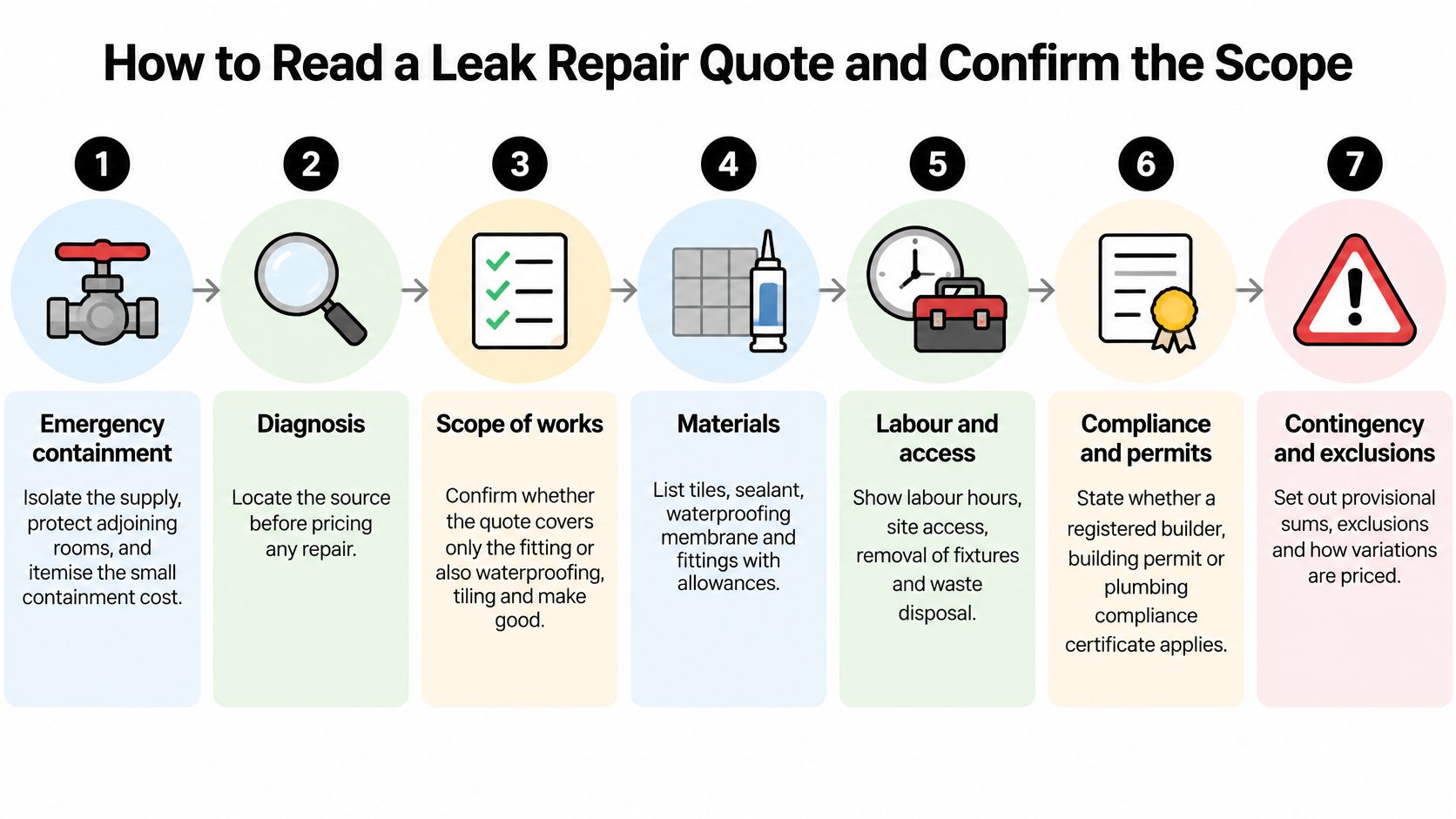
1. Emergency containment. Isolating the supply and protecting adjoining rooms costs little, but it should still appear as a line item. If it doesn't, the quote has assumed the leak stopped itself.
2. Diagnosis. Where the source isn't obvious, the quote should say how it will be found: pressure testing, a moisture meter, thermal imaging or a controlled opening. Membrane failure can need invasive testing, which is why this stage is the one most often missing from a cheap quote.
3. Opening up. Tiles and substrate come out to reach the failure. The quote must state the boundary of the area being opened, because that boundary is what the variation clause will be applied to later.
4. Waterproofing rectification. This is the technical heart of the quote. Victorian wet-area rules require failed waterproofing to be reinstated to a compliant standard, so the quote should state which product system is going in and how it will be tested once cured. A quote that names neither the product nor the test is a quote for an outcome nobody can verify.
5. Drying. Substrate has to be dry before anything goes back over it. This is a schedule item, not a formality, and it's why a membrane repair takes days rather than hours.
6. Tiling and screeding. Victorian practitioner guidance on shower construction specifies shower floor-waste falls between 1:80 minimum (12.5 mm over one metre) and 1:50 maximum (20 mm over one metre). Correcting falls is where a small patch turns into a screed and retile.
7. Testing and contingency. A final waterproofing test, plus a stated reserve for concealed damage. Concealed damage is arithmetic on a building you can't see inside.
Ask once, in writing: the suspected source, the opening locations, the repair boundary, the substrate condition, the reinstatement obligations, the timeframe and the applicable warranty. One email, seven answers.
A single lump sum for "stopping the leak" is an incomplete quote. A bathroom renovation quote in Melbourne itemised across the same seven stages exposes what a lump sum hides: which work is priced and which is left to variations after the tiles come off.
Melbourne Tiling Services P/L works from Highett with qualified waterproofers and tilers, and repairs, shower leak rectification and tiling sit among the business's core work. Waterproofing comes with extended warranties, and any scope change is agreed before work starts rather than discovered in the invoice.
A shower leak in Melbourne rarely stays at the price of the first quote, and the difference is almost always scope, not labour rates. If you're holding a leak you haven't priced yet, visit Melbourne Tiling Services P/L to arrange a diagnosis and a written scope before anything comes off the wall.
Write a Comment