Marble Tiles in Bathroom Style Durability and Care Guide

You've chosen the marble. The sample board is open on the vanity, the soft veining looks perfect beside your tapware, and the bathroom renovation suddenly feels real. Then the practical questions arrive: will polished marble be slippery in the shower, how often will it need sealing, and will Melbourne's cooler, slower-drying conditions make upkeep difficult?

Marble tiles in a bathroom can deliver exceptional depth, brightness and character, but they shouldn't automatically cover every surface. The strongest result usually comes from treating marble as a zoned luxury finish, then matching each zone to its water exposure, slip requirements and cleaning routine. This guide moves from marble's appearance and finishes through safety, maintenance, installation, alternatives and Victorian renovation requirements.

Table of Contents

Introduction to Marble Tiles in Bathroom Design

A Melbourne homeowner might begin with a white Carrara tile for the shower walls, add a marble mosaic to the niche and choose a matching vanity top. On paper, the room feels cohesive. In practice, each surface behaves differently. The shower floor faces standing water and soap residue, the wall receives regular splash, and the vanity area may stay comparatively dry.

That difference matters because marble isn't manufactured with the uniformity of porcelain or ceramic. Each tile has natural variation in colour, veining, density and absorption. Two pieces from the same batch can look related without looking identical. That variation creates the luxury effect, but it also means your installer needs to inspect, sort and set out the tiles carefully.
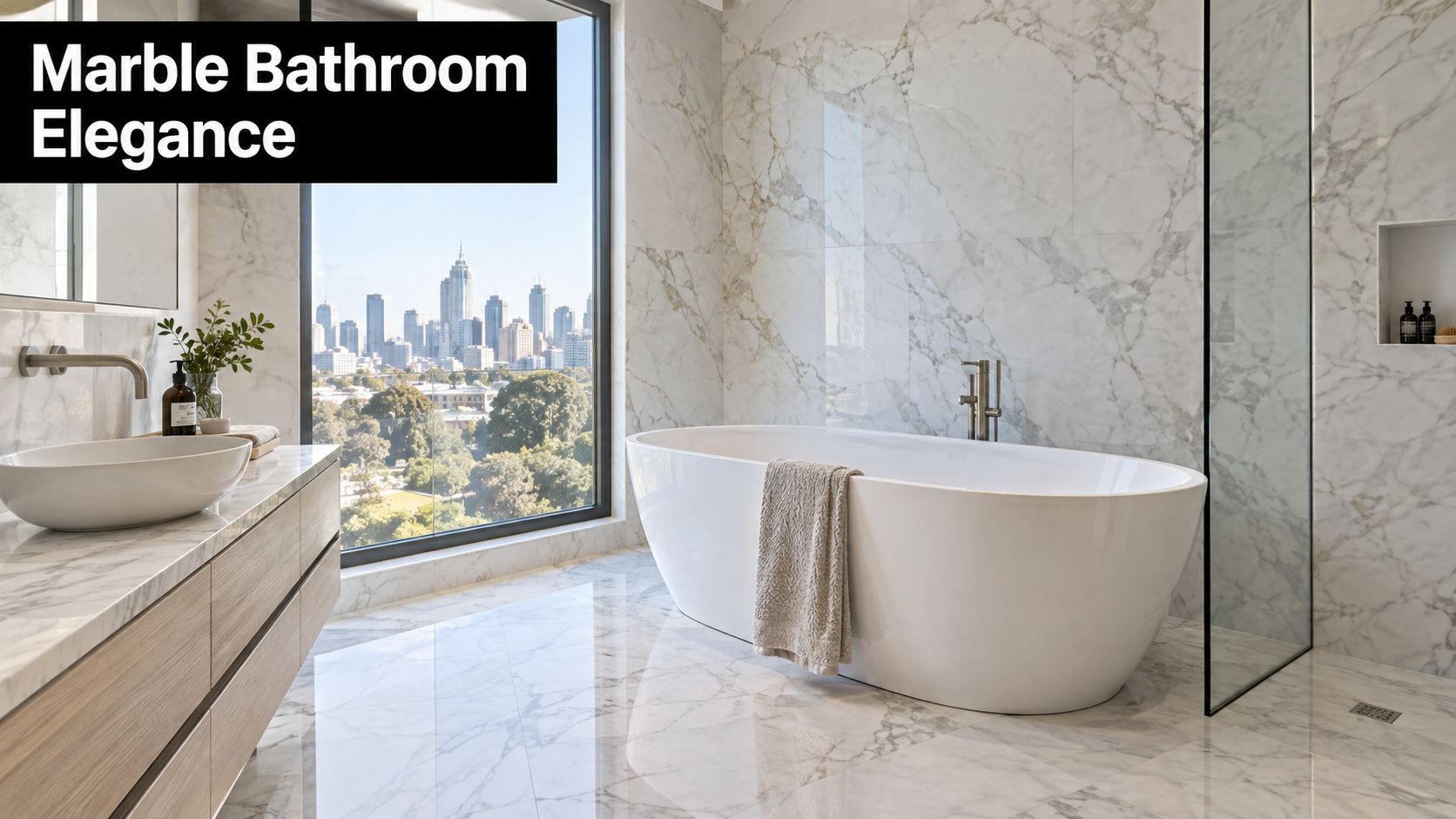
A luxurious bathroom featuring white marble tiles, a modern freestanding bathtub, and a scenic city view.

The right question isn't, “Is marble suitable for a bathroom?” A better question is, which marble, with which finish, in which zone, installed over which substrate, and maintained by whom?

Beauty and upkeep belong together

Marble reflects light differently from a printed tile. Its veining runs through the stone, so a wall can appear layered rather than flat. That makes it useful for a feature wall behind a freestanding bath, a vanity splashback, a niche lining or a carefully selected shower wall.

It also demands more thoughtful care. Acidic products can etch the surface, water and body oils can penetrate porous areas, and a polished finish can become a poor choice where a wet foot needs reliable friction. You're not buying a maintenance-free background. You're choosing a material whose appearance depends on sensible placement and routine care.

Use visual planning before ordering

A render can help you test whether marble belongs across the room or only in selected areas. For homeowners comparing calm, minimal layouts, a Japanese bathroom render can be useful for considering how natural stone, timber tones, open shower zones and restrained colour palettes work together before tiles are purchased.

Australia continues to import marble and related stone products for tile and building applications. The supply chain is active, but it's also influenced by overseas producers, so availability, batch matching and lead times deserve attention during bathroom planning.

Understanding Marble Types Finishes and How They Behave

Start with the stone's appearance, then assess the finish. Marble type controls the visual language, while the finish changes how light, water and touch interact with the surface.

Match the marble to the room's character

Carrara marble generally offers a softer white or pale base with grey veining. It suits classic Melbourne terraces, Hamptons-inspired bathrooms and restrained contemporary schemes where you want movement without a dramatic focal point.

Calacatta marble is recognised for stronger, more expressive veining. It can make a vanity wall or bath backdrop feel like a deliberate piece of architecture, especially when the installer aligns adjoining pieces so the veins read as a continuous composition.

Statuario marble typically presents a bright white ground with distinct grey markings. It gives a sharper, more premium visual impression, but the exact appearance still varies between quarry selections and batches.

Think of each finish as a different type of skin texture. Polished marble has a glossy surface that reflects light and makes colours appear more vivid, much like a smooth, shiny surface under a window. Honed marble has a matte appearance with less glare, so it tends to feel quieter and can disguise minor etching more effectively. Tumbled marble has a deliberately aged, textured edge and surface that works well in rustic or heritage settings.
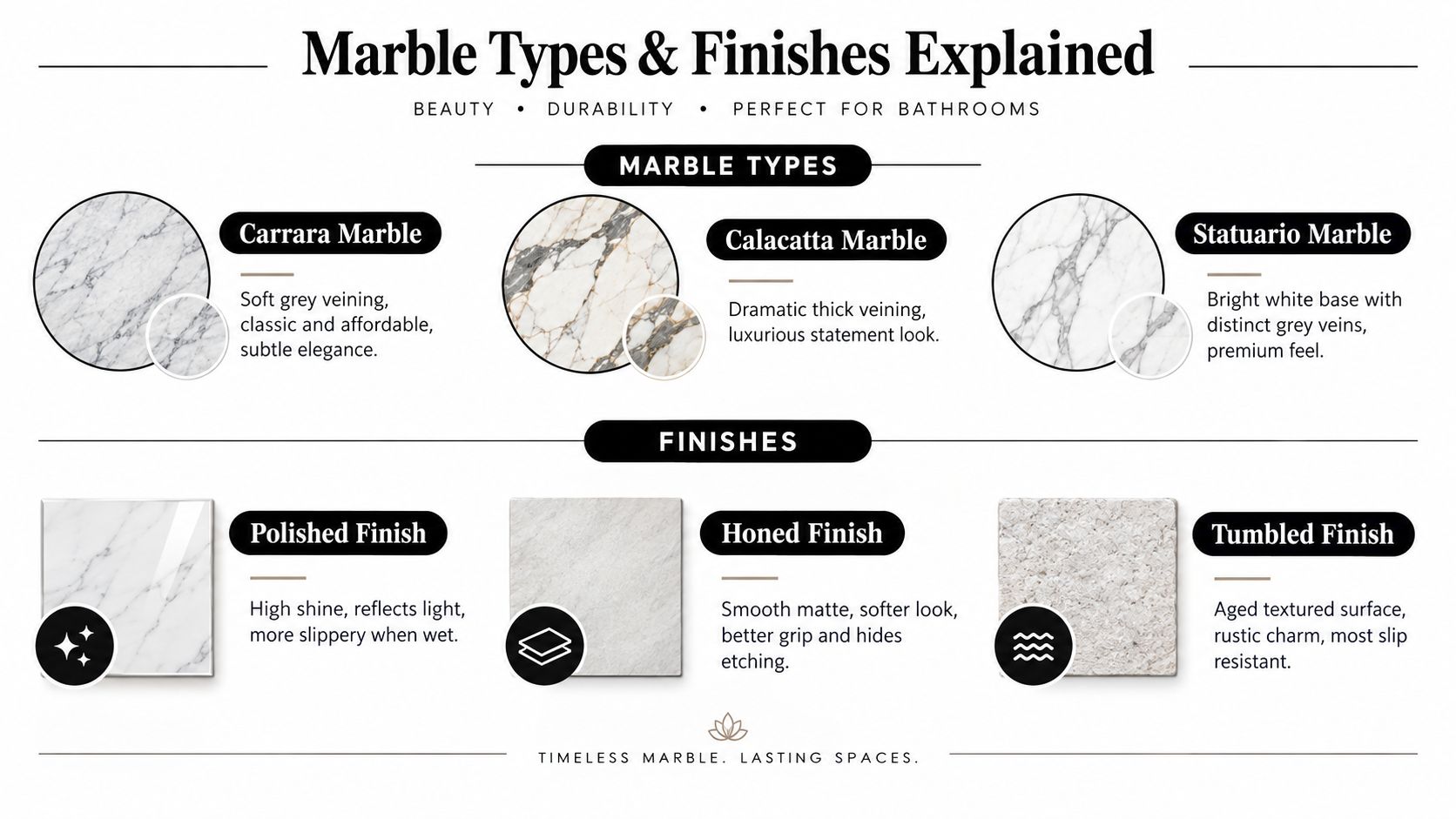
An infographic detailing different types of marble and finishes for bathroom design applications with descriptive labels.

Let the finish follow the zone

A glossy finish can brighten a dim wall, but it isn't automatically appropriate for a shower floor. A honed finish may provide a more practical feel underfoot, subject to its tested slip rating. Tumbled stone introduces texture, yet its irregular surface can require more attention around grout and residue.

Tile size changes the visual scale as well. Smaller mosaics introduce more grout and can help follow falls toward a drain. Larger tiles create fewer visual breaks, but they require a flatter substrate and more precise handling. Large-format slabs can look spectacular on a wall, although moving, cutting and setting them calls for specialist equipment and planning.

Australia's import data illustrates the breadth of the supply base. In 2024, Australia imported crude or roughly trimmed marble and travertine valued at A$86.89K, weighing 153,207 kg. Greece supplied A$83.77K and Turkey supplied A$3.12K of that category, according to Australia's marble and travertine import data.

A different category in 2023, marble and travertine merely cut into a square, reached A$103.20K and 247,778 kg. India led that category at A$49.29K, followed by Italy, Turkey, Egypt and Pakistan. For a Melbourne renovation, that overseas supply base makes batch selection and ordering discipline especially important.

Before committing, view several tiles together, mark the vein direction and ask how the installer will distribute variation. For practical guidance on a matte finish, see these marble floor tiles with a matt finish.

Is Marble Suitable for Bathrooms Durability and Safety Explained

Marble can work in a bathroom, but it isn't equally suitable for every wet-area surface. Suitability depends on absorption, chemical exposure, surface texture, drainage and your willingness to maintain the room.

Natural stone absorbs liquids to different degrees. Lower absorption generally improves resistance to moisture ingress and staining, while higher absorption makes it easier for soap, oils and pigments to enter the stone. An Australian test publication records a mean water absorption value of 0.185% for one set of natural stone products, providing an example of the technical information specifiers compare when assessing materials. The result doesn't mean every marble has that performance, and it doesn't make any stone waterproof. Read the Australian natural stone test data for the importance of checking product-specific information.

Understand the slip question

Slip resistance is assessed separately from appearance. Australian wet-area practice commonly uses the AS 4586 wet pendulum system, with ratings from P0 to P5. A higher P rating indicates lower slip risk, and domestic bathroom selection commonly targets at least P3 to P4, depending on exposure and use case, as explained in this Australian slip-rating guidance.

Polished marble often performs less favourably in wet conditions because its smooth surface provides less micro-texture for friction. A shower entry, floor or area immediately outside the shower should never be selected by colour alone. Ask for the tested rating of the actual product and finish, then confirm that the floor has correct falls to the drain.

Finish and Zone Slip and Moisture Consideration Recommended Use
Polished marble, dry vanity wall High reflectivity, but limited relevance to wet-foot traction Vanity splashbacks and decorative walls
Honed marble, shower wall Matte surface, still requires sealing and suitable grout detailing Shower walls and feature areas after product review
Honed marble, bathroom floor More practical than polished, but the tested rating remains decisive Floors where the documented rating suits the exposure
Textured or tumbled marble, selected wet zone Texture can improve grip, but irregularity may hold residue Feature sections and carefully specified floors

Melbourne conditions change the maintenance conversation

A bathroom that dries slowly gives water, soap residue and grout more time to cause trouble. Strong ventilation, effective extraction and a workable drying routine matter as much as the tile itself. A marble floor that feels acceptable in a dry vanity zone may be the wrong choice for a shower entry if the finish and rating don't suit regular wet feet.

Practical rule: Treat marble as a managed surface, not a waterproof surface.

The decision becomes straightforward when you're honest about daily habits. If you're happy to wipe down surfaces, control ventilation and maintain the sealer, marble can be considered in selected wet areas. If you want to leave the bathroom damp and perform occasional heavy cleaning, reserve marble for lower-splash zones or choose a less reactive alternative.
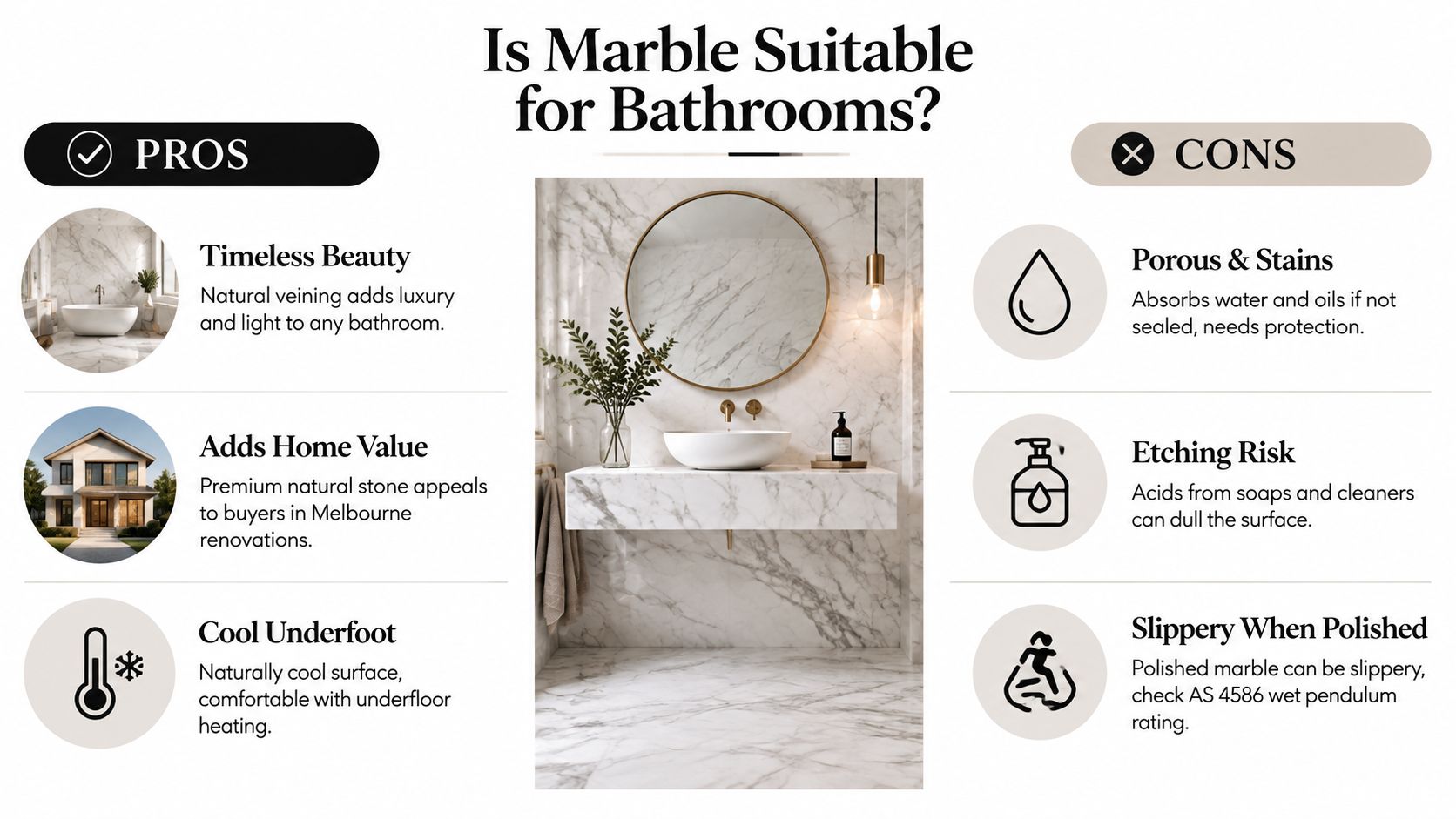
A comparison chart showing the pros and cons of using marble tiles for bathroom renovation projects.

Sealing and Maintenance That Keeps Marble Beautiful

Sealing helps, but it doesn't change marble into porcelain. A penetrating sealer enters the stone and slows liquid uptake. It doesn't create a permanent waterproof coating, stop etching from acids or remove the need to dry the room.

Build a simple care routine

Before the bathroom is used, the installer should confirm that the marble and grout are suitable for the selected sealer, then test the product on an inconspicuous spare tile. The correct product and application method matter because residue left on the surface can affect the finish.

Wet zones require planned resealing. Independent Australian stone-care guidance treats showers and other wet areas as high-risk and recommends resealing porous natural stone every 12–18 months, with ventilation and pH-neutral cleaning forming part of the wider maintenance system, as set out in this Australian stone maintenance manual.

Use the following habits:

  • Blot promptly: Remove water, soap and body-oil spills rather than letting them sit.
  • Choose pH-neutral products: Use a cleaner labelled for marble or natural stone.
  • Avoid acids: Vinegar, lemon-based products and acidic bathroom cleaners can etch marble.
  • Use soft tools: Microfibre cloths, soft mops and non-abrasive sponges are safer than harsh pads.
  • Dry after use: A squeegee and towel reduce residue on shower walls, floors and glass.
  • Watch the grout: Grout lines can hold moisture even when the tile face looks clean.

A denser stone may absorb less, but even very low absorption doesn't eliminate staining or etching risk. Coastal humidity, heavy use and limited ventilation may mean the maintenance interval needs to be shorter than the general wet-area cycle.

Know the signs before damage spreads

Darkening can indicate moisture entering the stone. Dull patches can indicate etching rather than dirt. A sealer that no longer performs as expected may allow water to soak in quickly instead of remaining on the surface.

For a practical reference on protecting your marble tile, focus on gentle cleaning, quick drying and product testing rather than aggressive scrubbing. You can also review this guide to cleaning marble bathroom tiles before choosing products for the room.

A small daily action prevents a larger restoration problem. The aim isn't to keep marble untouched. Natural stone develops character, but sensible care helps you control staining, discolouration and avoidable surface wear.
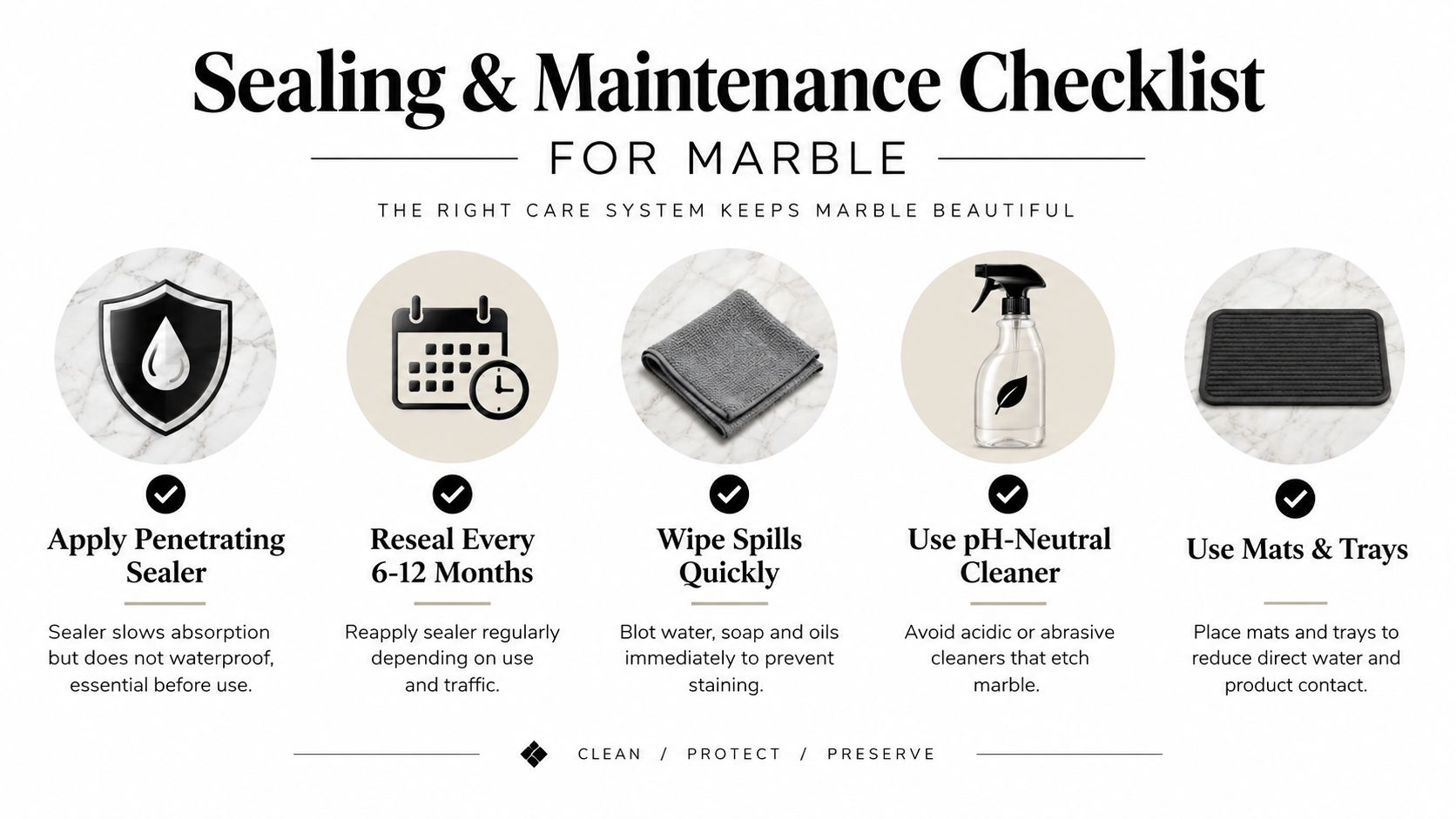
An infographic titled Sealing and Maintenance Checklist for Marble detailing steps like sealing, cleaning, and protection.

This visual reminder covers the basic care system. Keep it near your product cupboard so everyone using the bathroom follows the same approach.

Installation Waterproofing and Underfloor Heating Considerations

A marble bathroom can fail even when the tile is beautiful. Water leaks usually originate in the system beneath and around the tile, not because marble itself was expected to act as the waterproofing layer.

Prepare the base before setting tiles

The substrate needs to be sound, clean, flat and suitable for the selected tile format. Large pieces show unevenness quickly, so installers may use screeding or self-levelling to correct the base before adhesive is applied. In a shower, the floor must fall consistently to the drain without creating a ponding area.

The waterproofing membrane belongs beneath the tile installation and needs careful detailing at corners, penetrations, niches, thresholds and waste outlets. Tiling over a visually neat but poorly prepared wet area won't correct a membrane problem.

Grout selection also matters. The grout must suit the joint size, exposure and cleaning demands. Movement joints allow parts of the installation to accommodate building or thermal movement instead of transferring stress into the marble or grout.

Coordinate heating and stone movement

Underfloor heating can work with tile and natural stone when the heating system, substrate, membrane, adhesive and grout are specified as one assembly. Marble responds to temperature changes, so the installer needs compatible flexible adhesives and appropriate movement detailing. The heating plan should also avoid creating an unsuitable buildup at wastes, thresholds or transitions.

Vein alignment adds another layer of precision. Before adhesive is spread, lay out the marble dry, inspect each tile and agree on the direction of prominent markings. A strong installer won't place the most visually different pieces beside one another without discussing the result.

The visible marble is only the final layer of a waterproofing, drainage, adhesive and movement-control system.

A shower renovation may also involve carpentry, plumbing, electrical work, waterproofing and glass installation. Each trade affects the next. A useful general reference on planning a one-piece shower stall installation reinforces why shower components, access and water management need to be considered together, even when your project uses individual marble tiles.

Keep records of the waterproofing work, product specifications and tile details. If a leak appears later, those documents help identify the relevant layer instead of relying on memory.

Cost Design Ideas and When to Choose Marble Over Alternatives

Marble earns its place when its visual impact justifies its care. Covering every wall and floor can create a striking room, but it also places the most maintenance-sensitive material across the highest-exposure areas.

A zoned marble bathroom often gives a better balance. Use marble behind a freestanding bath, across a vanity splashback, inside a niche or on a feature wall, then choose a practical floor tile and a moisture-resistant wall material for the shower. This approach keeps the natural veining where you notice it most without making every surface equally demanding.

Compare the main design paths

A full marble shower offers continuity and a strong luxury effect. It also requires careful finish selection, disciplined drying and ongoing attention to etching, stains and grout. It's most suitable for homeowners who accept that routine.

A mixed-material bathroom creates contrast. Marble can frame the vanity or bath while porcelain handles the floor and heavier splash zones. For a family bathroom, this arrangement may be easier to live with because the floor and shower surfaces can be selected for cleaning and slip performance rather than appearance alone.

Large-format alternatives reduce visual interruptions. Australian bathroom trend coverage describes growing use of 600×1200 mm tiles and panels, and formats reaching 2400×1200 mm, to reduce grout lines and simplify cleaning. The same coverage highlights large-format porcelain slabs as moisture-resistant options for spa-style bathrooms, as shown in this guide to marble-look porcelain tiles.

Apply the choice to Melbourne homes

For a Hamptons renovation, soft Carrara marble around the vanity can pair with a simple, durable floor. A modern spa bathroom may use a dramatic marble panel as the visual anchor while large-format porcelain manages the shower. In a heritage home, tumbled or honed marble can complement original details without forcing every surface into the same finish.

Your budget needs to account for more than the tile itself. Stone grade, format, cutting, wastage, substrate preparation, waterproofing, labour, sealing and future care all influence the outcome. Melbourne renovation planning often uses a median scope of $10,000, so confirm what that figure includes before comparing quotes, as the publisher's renovation information explains. Treat the number as a planning reference, not a promise for a particular marble project.

Planning Your Renovation With Registered Builders in Victoria

Design decisions become practical decisions once walls move, plumbing changes or permits enter the project. Victorian guidance states that building and demolition work generally requires a building permit unless an exemption applies. Cosmetic bathroom work may be exempt, but structural changes involving soundness, foundations, floor area, height or safety can trigger the permit pathway, according to this Victorian bathroom renovation permit guidance.

In Victoria, domestic building work valued above $10,000 generally requires registration with the Building and Plumbing Commission, formerly the VBA, unless the work falls within a trade-only exception. Consumer guidance lists wall and floor tiling among those exceptions, but anyone carrying out work that requires a building permit must be registered regardless of value, as outlined in this Victorian registration and permit guidance.

Registration isn't just a label. The Victorian domestic builder application for bathroom, kitchen and laundry renovation work calls for industry qualifications, project evidence, a technical referee report, a criminal history check, photo identification, declarations and payment authorisation, as shown in the VBA domestic builder application form.

Before you approve a marble renovation, check:

  • Builder status: Confirm the relevant registration and permit responsibilities.
  • Waterproofing records: Ask who will complete the work and what documentation you'll receive.
  • Slip evidence: Request the tested rating for the selected marble finish and zone.
  • Maintenance agreement: Clarify sealing, cleaning and ventilation expectations.
  • Setting-out plan: Approve vein direction, tile layout and feature-zone boundaries.

Melbourne Tiling Services P/L operates from Highett and coordinates bathroom renovations with carpenters, plumbers, electricians, tilers and waterproofers, offering free quotes and 3D drawings for homeowners planning marble, porcelain or ceramic finishes.


For a bathroom renovation that balances marble's natural character with safe wet-area detailing, contact Melbourne Tiling Services P/L to discuss zoning, waterproofing, slip ratings and a practical tile layout. Request a free quote and 3D design consultation before ordering materials, so your marble is placed where it will look exceptional and remain manageable to care for.

Patterned Bathroom Floor Tiles: Your 2026 Renovation Guide

You're probably standing in your current bathroom thinking the same thing many Melbourne homeowners think before they renovate. It's clean enough, functional enough, and completely forgettable. The white floor, plain wall tile, and standard chrome fittings don't look offensive, but they don't feel considered either.

That's usually the moment patterned bathroom floor tiles enter the conversation. They promise personality, movement, and a stronger design identity. They can absolutely deliver that, but only if the pattern suits the room, the finish performs in wet conditions, and the installation is handled properly by trades who understand bathroom renovations and registered builders' compliance obligations in Victoria.

Table of Contents

From Drab to Dramatic Why Patterned Tiles Are Reclaiming Melbourne Bathrooms

A lot of bathrooms built or updated in the last decade chased the same look. Flat white tiles, pale grey floors, minimal contrast, and nothing on the floor that asked for attention. The result was safe, but often cold.

That's changed. In 2025, Australian tile trends shifted away from stark minimalism, with a 35% increase in homeowners selecting patterned bathroom floor tiles to introduce warmth, texture, and character into their spaces, according to Australian tile trend reporting for 2025. That change makes sense on site. Clients still want a bathroom that feels clean, but they no longer want it to feel generic.

Patterned floors work because they do more than decorate. They create a focal point low in the room, which lets the walls, vanity and fittings stay restrained. In a compact ensuite, that's often the smartest way to add personality without turning every surface into a statement.

Practical rule: If the room is small, let the floor carry the character and keep the vertical surfaces calmer.

The strongest results usually come from restraint, not excess. A geometric floor with a simple wall tile can feel deliberate. A vintage-inspired motif paired with plain joinery can make a new bathroom feel as though it belongs in an older Melbourne home. In Victorian-era properties especially, patterned flooring often bridges old character and modern waterproof construction better than glossy feature walls ever do.

There's also a practical side to the renewed interest. Homeowners are spending serious money on bathroom renovations. Once you're already replacing waterproofing, screeding, plumbing fixtures and finishes, many people decide the floor shouldn't be the blandest surface in the room.

Choosing Your Canvas A Guide to Tile Materials and Finishes

A patterned floor can look first-rate in a showroom and still be the wrong product for a Melbourne bathroom. I see that most often in older inner-suburban homes, where a compact ensuite needs the floor to do three jobs at once: carry the design, meet slip requirements, and cope with daily moisture in a tight footprint. The tile material and surface finish decide whether that works.

Porcelain usually gives the best balance

For most bathroom floors, porcelain is the strongest starting point. It is dense, stable, and better suited to wet areas than many softer decorative products. It also gives you more choice in sharp printed patterns, encaustic-look designs, and stone-look finishes without taking on the sealing and stain sensitivity that come with some natural materials.

If you're weighing up options for a wet area, this guide to porcelain bathroom tiles for wet-area performance covers why they are commonly specified for bathroom floors. In practice, they hold up well under repeated use and are available in matte and textured finishes that are easier to specify safely.

Porcelain is rarely the cheapest tile on the shelf. It is often the better buying decision once you factor in lifespan, cleaning, and the fact that patterned floors are harder and more expensive to replace later if the product underperforms.

Ceramic, encaustic-look, and natural stone

Ceramic can still suit some projects, particularly a lower-traffic bathroom or a renovation with a tighter finish budget. The trade-off is durability. In family bathrooms, the wear usually shows first at the vanity, doorway, and shower entry.

Encaustic-look porcelain suits many Melbourne renovations because it gives the character of traditional patterned flooring in a product that is easier to live with. That matters in Victorian and Edwardian homes, where clients often want heritage flavour but still need a modern waterproofed system underneath.

Natural stone can look exceptional. It also asks more of the owner and the installer. Stone selection, sealing, cleaning products, variation between batches, and ongoing maintenance all need to be considered before it goes on a bathroom floor.

Here is the shortlist I use with clients.

Material Average Cost (per sqm) Durability Water Resistance Maintenance Level
Ceramic Lower entry cost than porcelain in many ranges Good for standard residential use Good when correctly installed Moderate
Porcelain Mid-range to premium, depending on pattern and finish High High Low to moderate
Encaustic-look porcelain Usually mid-range to premium High High Low to moderate
Natural stone Usually premium-priced compared with ceramic and porcelain High, but material-dependent Varies by stone and sealing Higher

Price matters, but it should not drive the whole decision. The install cost to prepare, waterproof, screed, set out, cut, and grout a patterned floor is substantial. Saving money on the tile itself can be false economy if the finish wears badly or the floor becomes harder to keep safe and clean.

Finish affects safety, maintenance, and how the pattern reads

Many homeowners choose the finish by eye. On a bathroom floor, that is the wrong order.

A good patterned tile has to read well under light, feel secure underfoot, and stay practical after years of soap residue, water spotting, and regular cleaning. In a small ensuite, the finish also changes how busy the pattern feels. A high-sheen surface can throw reflections around the room and make a detailed motif look sharper and more crowded than it did on the sample board.

  • Matte finish: Usually the safest all-round choice. It softens glare, suits both contemporary and period-style bathrooms, and is more forgiving with daily marks.
  • Textured or structured finish: Often a strong option in wet zones where extra grip is needed, but texture can hold more residue if the pattern is heavily inked or the grout joints are tight.
  • Gloss finish: Better on walls than floors in most bathrooms. It shows spotting, can feel slippery, and often cheapens a patterned floor once it is wet.
  • Lappato or semi-polished finish: Can work in the right product, but it needs proper checking against the manufacturer's wet-area rating before it is specified.

Choose in this order: wet-area suitability, slip resistance, finish underfoot, then pattern.

That sequence matters because a beautiful pattern does not rescue a floor that feels unsafe at the shower entry or becomes difficult to maintain around the toilet and vanity.

There is another layer that gets missed in design-led articles. Patterned tiles expose installation quality. If the tile has inconsistent sizing, poor print registration, edge warping, or too much variation between boxes, the floor will never look crisp no matter how good the waterproofing and screed are underneath. A proper selection process means checking multiple tiles together, confirming the slip rating and finish for floor use, and making sure the product can be laid accurately in the room you have, not the display board you saw in the showroom.

Mastering Pattern Scale and Layout in Your Space

A patterned floor can make a tight Carlton ensuite feel deliberate and expensive, or make it feel smaller and badly resolved. The difference usually comes down to scale, set-out, and how the pattern lands around real fixtures in a room that was never square to begin with.

Older Melbourne bathrooms are rarely clean rectangles. I see narrow door swings, chimney breasts, out-of-plumb walls, and shower entries pushed hard against existing structure. In those rooms, patterned tiles need more discipline than plain tiles because every cut, every grout line, and every shift in alignment is easier to see.

What works in small Melbourne bathrooms

Compact bathrooms generally suit patterns with a clear repeat and moderate contrast. The floor still gets visual interest, but it does not start fighting the room. Large decorative motifs often need more uninterrupted floor area than a Victorian-era ensuite can give them. Once the toilet pan, vanity, shower screen, and floor waste cut through the design, the pattern reads as fragments instead of a full composition.

Design guidance from Natural Tile's overview of patterned bathroom floor tile ideas points toward balanced geometric patterns for smaller bathrooms, and that lines up with what works on site. Repeating geometry, restrained colour shifts, and a lighter base usually hold the room together better than high-contrast motifs with a large visual repeat.

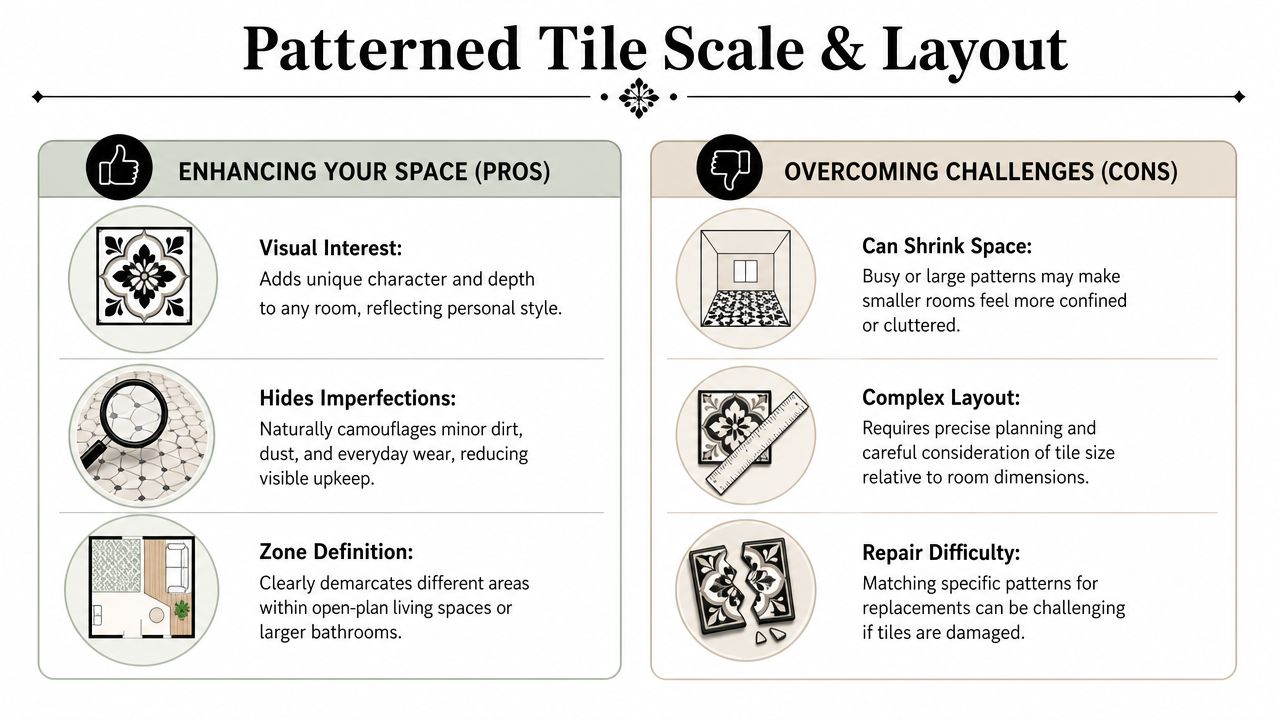
An infographic illustrating the pros and cons of using patterned tiles for interior home decor design.

Direction matters as much as pattern selection. A floor can visually widen a narrow room, stretch a short room, or pull the eye straight to a feature wall. Clients considering directional layouts should look closely at a herringbone tile pattern and how direction changes visual flow. The laying pattern often changes the feel of the room more than the print itself.

Layout decisions that change the room

Good results come from set-out, not guesswork.

Use these rules before the first tile goes down:

  1. Set the room from the main sightline
    Centre the layout to the view from the doorway or hall approach. That is the angle people read first. A pattern can be technically centred to a wall and still look wrong when you enter the room.

  2. Work with the room you have, not the one on the plan
    In older homes, walls can run out, corners can open, and shower nibs can throw the repeat off. Check the actual room after sheeting and waterproofing, then adjust the set-out to suit.

  3. Avoid skinny cuts at visible edges
    Small slivers at skirtings, shower screens, or the vanity front make even expensive tiles look cheap. A small shift in the starting line usually gives a better perimeter balance.

  4. Coordinate the pattern with fixtures early
    Toilet pans, floor wastes, frameless screens, and floating vanities interrupt the layout. Plan those locations before final set-out so the pattern still reads cleanly once everything is installed.

  5. Check where the full repeat will be seen
    The best part of the pattern should land in open floor area, not under the vanity kick or half-hidden behind the toilet.

Design and technical execution meet. A client may want a bold statement floor, but if the room only shows a partial repeat and every edge needs trimming, a quieter tile often gives the sharper result.

In larger bathrooms, stronger motifs have room to read properly. In compact ensuites, disciplined geometry usually wins. It looks intentional, handles awkward room shapes better, and gives the installer more control over symmetry and cuts.

Beyond Beauty Durability Safety and Long-Term Care

A patterned floor has to do more than look good on completion day. In a Melbourne bathroom, especially a compact ensuite in an older home, it needs to stay safe through wet winters, handle daily cleaning, and keep its finish without becoming a maintenance headache.

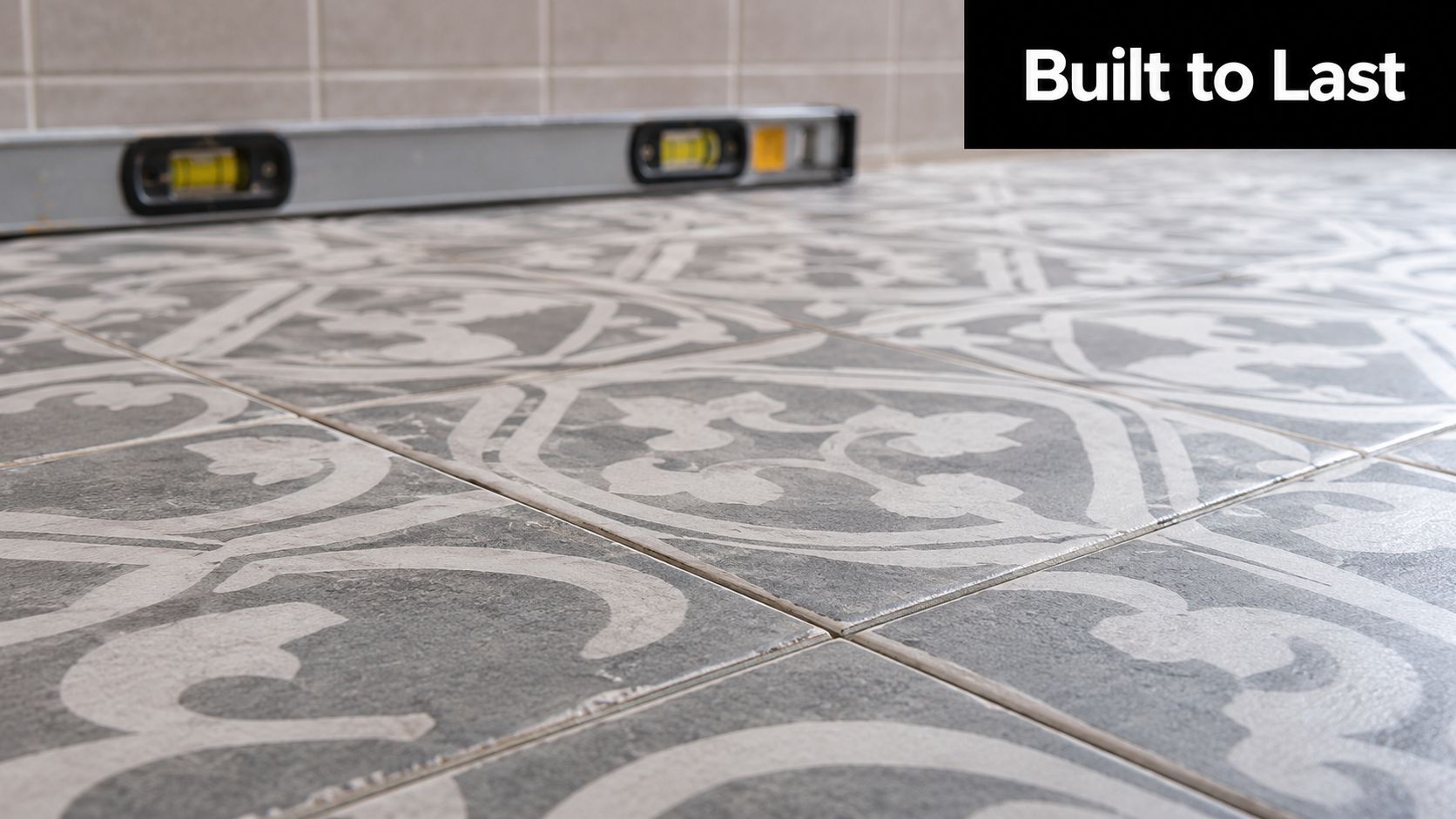
Close up view of patterned grey and white bathroom floor tiles with a spirit level tool.

Slip resistance is not a marketing label

Slip resistance needs to be checked against AS 4586. That is the starting point, not the whole answer.

On site, I look at where the tile is going, how much water will sit on it, how steep the falls are, and who will be using the room. A tile that feels acceptable in a dry display bay can be poor under bare feet once shampoo, soap film, and winter condensation get involved. That matters in Melbourne homes, where bathrooms often have limited natural ventilation and colder surfaces for much of the year.

The other point generic design articles miss is that decorative tiles often come with trade-offs. A heavily textured face can improve grip, but it can also trap grime and make cleaning harder. A smoother encaustic-look porcelain is easier to maintain, but it may need more careful product selection to avoid a slick feel in the shower approach or in front of the bath.

Small bathrooms make this more obvious. In a tight Victorian-era ensuite, there is less room to recover if someone steps from a wet shower area straight onto the main floor. That is why slip performance should be assessed around the layout, not just the sample board.

Durability starts below the tile

Long-term performance depends on what sits under the tile as much as the tile itself. Patterned floors are less forgiving than plain ones. If the substrate moves, if the screed is uneven, or if the waterproofing and falls are poorly executed, the finished floor will show it.

The failures I see are usually practical, not stylistic. Cracked grout at stress points. Hollow tiles from poor coverage. Ponding near the shower entry. Staining around joints that were never suited to the space. A beautiful pattern will not hide any of that. In fact, it often makes it easier to spot.

Porcelain patterned tiles are usually the safest choice for floor durability in family bathrooms because they are dense, hard-wearing, and easier to maintain than many natural stone products. Cement encaustic and natural stone can look excellent, but they ask more of the owner. They need the right sealing approach, gentler cleaning products, and realistic expectations about patina and wear.

Grout and sealing choices affect how the floor ages

Grout deserves more attention than it gets because it changes both the appearance of the pattern and the maintenance load.

  • Cementitious grout: A solid option for many bathrooms when the joints are prepared properly and the product is suited to the tile and movement conditions.
  • Epoxy grout: Better at resisting staining and moisture absorption, particularly in busy wet areas, but it is less forgiving to install and residue needs to be cleaned off patterned surfaces properly.
  • Grout colour: Matching grout gives a quieter look. Contrasting grout sharpens the geometry but also highlights lippage, joint variation, and any installation inconsistency.

Some tiles and most natural stones also need sealing. That should be determined by the tile body and finish, not by assumptions based on appearance. I always prefer to confirm maintenance requirements before selection, because a client chasing a high-end look may not want a floor that needs regular sealing to stay presentable.

Long-term care should be realistic

Good maintenance is simple and consistent. Sweep grit off the floor, clean with products the manufacturer allows, and avoid harsh acidic cleaners unless the surface is specifically rated for them. Keep soap residue under control, because buildup can reduce slip performance and dull the pattern over time.

Ventilation matters as well. Bathrooms that stay damp for hours after use will show residue faster and place more stress on grout joints and sealants. If the room has poor airflow, the cleaning routine needs to be tighter.

The best patterned bathroom floors age well because the specification was honest from the start. The tile suits wet use, the substrate is stable, the waterproofing is done properly, and the owner understands what the surface needs to stay safe and sharp.

Budgeting Your Melbourne Bathroom Renovation Real Costs

A patterned floor can look like the hero of the room in a showroom sample. In a real Melbourne renovation, especially in a tight Victorian ensuite, the floor budget is shaped just as much by waste location, floor falls, waterproofing build-up and labour time as it is by the tile itself.

What the whole renovation includes

According to 2023 Housing Industry Association data, the average cost of a full bathroom renovation in Australia is $26,000, with typical ranges from $8,000 for basic projects to over $35,000 for premium custom installations, as summarised in Australian bathroom renovation cost guidance.

For Melbourne projects, premium bathrooms commonly sit above that national average once you add local labour, apartment access constraints, older substrates, and higher-end finishes. Patterned floors can push the price further because the set-out is slower, offcuts are higher, and the installer has less room to hide small discrepancies.

A realistic budget usually includes all of the following, not just the visible finishes:

  • Demolition and disposal: Removing old tiles, screed, adhesives, fixtures and waste.
  • Subfloor correction: Levelling, repairing damaged sheeting or concrete, and forming proper falls where needed.
  • Waterproofing, permits and plumbing: These costs vary by scope, but they are standard parts of a compliant bathroom build and need to be allowed for early, especially where fixtures are being relocated. A single 2025 bathroom renovation cost breakdown for Australia and Victoria summarises typical allowances for waterproofing, permit fees and plumbing rates.
  • Electrical and ventilation: Lighting, exhaust upgrades, heated rails and any switchboard-related work.
  • Joinery, glazing and fit-off: Vanity installation, shower screen, tapware, mirrors and final fixture fit-off.

Budgets frequently drift. Clients compare a $70 per square metre tile with a $140 one, but the primary cost swing often comes from the room conditions underneath.

Where patterned tile choices change cost

Patterned tiles usually cost more to install than plain field tiles, even when the tile itself is reasonably priced. The reason is straightforward. Set-out takes longer, cuts around wastes and walls need to be cleaner, and the pattern repeat has to stay consistent across a floor that may be out of square.

On compact bathroom floors, that trade-off is sharper. A small room does not always mean a cheap floor. It can mean more cutting, more wastage, and more time spent balancing centrelines against practical details like the doorway, vanity line and shower screen.

Tile selection also changes the labour method. A porcelain encaustic-look tile is generally easier to price and maintain than a cement tile or some natural stone products, but it still needs the right slip rating for a wet floor and a layout that suits the room proportions. Chasing a high-end look on a tight budget usually works best when the pattern is doing the visual heavy lifting and the rest of the specification stays disciplined.

I tell clients to cost the bathroom as a system, not as a tile purchase.

That means allowing for substrate preparation, waterproofing, drainage correction, tile waste, trim details, grout choice, sealing where required, and skilled installation. If you are comparing quotes, compare scope line by line and check whether patterned tile set-out, feature cuts and floor preparation are included. A vague allowance nearly always turns into a variation later.

For homeowners pricing the labour side, it helps to speak with experienced tiling contractors in Melbourne who understand wet-area compliance as well as layout accuracy. The cheapest square metre rate can become the most expensive number in the job if the falls are wrong or the pattern is poorly centred.

The cleanest budgets are built from the floor up. Once the hidden work is priced properly, the tile selection becomes a design decision you can make with clear eyes, rather than a surprise waiting in the quote.

Why Pro Installation Is Non-Negotiable for Patterned Tiles

Plain tiles can hide minor inconsistencies. Patterned tiles don't. They expose them.

If the set-out is off, the motif won't line up. If the substrate is uneven, reflected light will catch lippage. If the screed is wrong, water sits where it shouldn't. This is why patterned floors belong in the hands of experienced installers and properly coordinated bathroom renovations led by registered builders when the project scope requires it.

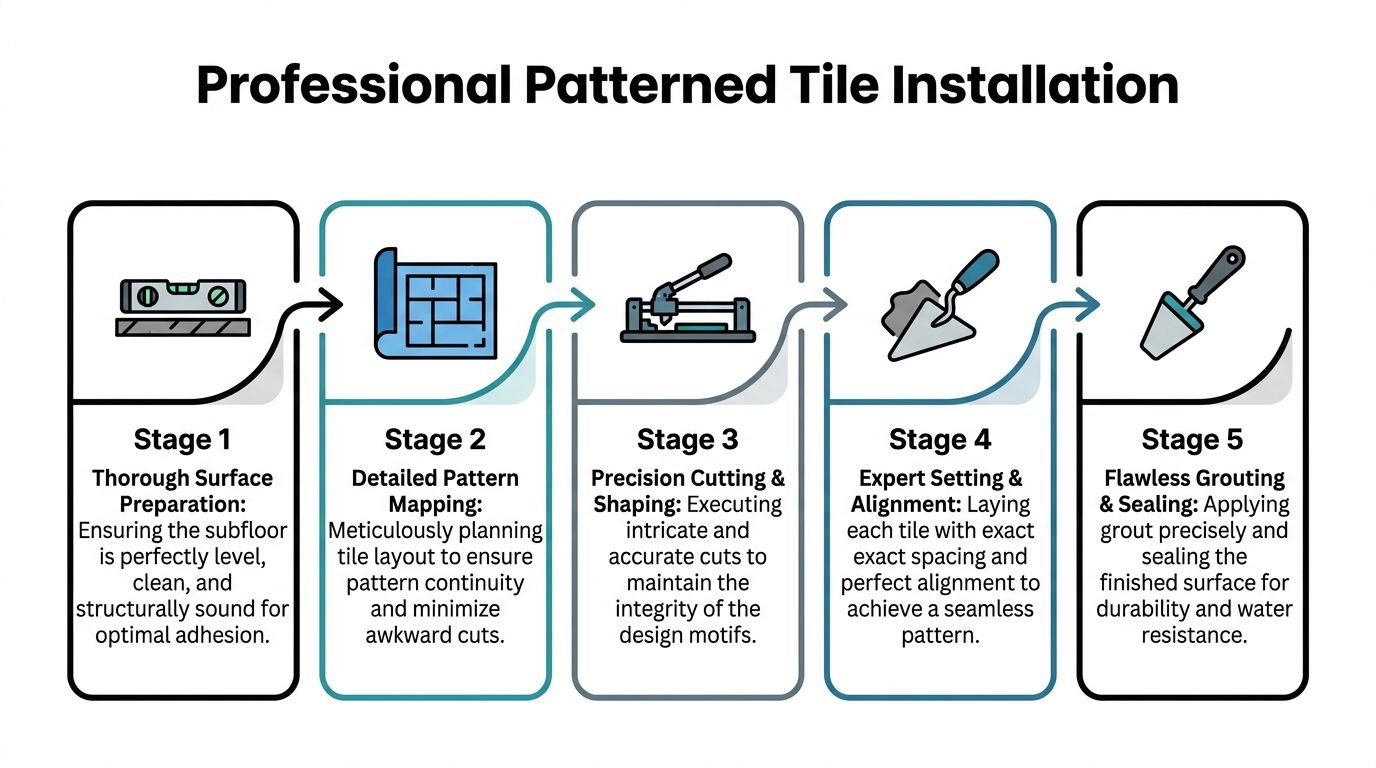
A five-stage infographic illustrating the professional process for installing patterned floor tiles from preparation to sealing.

Pattern alignment exposes every mistake

The process starts well before the first tile is laid. The subfloor has to be stable, flat and ready to receive the system above it. In wet areas, the screed and falls need to work with the waste position and shower layout. Then comes waterproofing, which has to be compliant and protected during the rest of the installation.

The visible floor depends on several invisible steps being right:

  • Surface preparation: If the base isn't flat, no amount of adhesive work will make a patterned layout look disciplined.
  • Dry set-out: Installers need to map repeats, centrelines, border cuts and fixture interruptions before spreading adhesive.
  • Cut sequencing: Decorative motifs need cleaner cuts and more planning than plain square fields.
  • Joint consistency: A small variation across repeated pattern lines becomes obvious fast.

If you're weighing up trade options, it helps to review what experienced tiling contractors near you should actually manage on a bathroom project. The work isn't just laying tile. It's controlling sequence, accuracy and finish quality across the whole floor.

Here's a look at the professional installation flow in practice.

The builder's role behind the finished look

For larger bathroom renovations, especially where plumbing changes, structural rectification, waterproofing, and multiple licensed trades are involved, coordination matters as much as craftsmanship. That's where registered builders bring real value. They're not just booking people in. They're sequencing work so one trade doesn't compromise another.

A registered builder's lens is different from a retail showroom lens. They're looking at substrate condition, code compliance, waterproof transitions, penetrations, glazing interfaces, waste location, movement joints, and whether the specification makes sense for the room you have.

A premium bathroom doesn't come from buying the most expensive patterned tile. It comes from getting the set-out, falls, waterproofing and trade coordination right.

DIY or low-cost installation usually falls down in the same places. Inadequate preparation. Poor pattern centring. Weak perimeter cuts. Messy grout cleanup. Non-compliant waterproofing hidden under a floor that initially looks fine. Those problems are expensive because they often appear after the room is finished.

Conclusion Your Next Steps to a Flawless Finish

Patterned bathroom floor tiles can lift a bathroom from plain to memorable, but they only work when design decisions are tied to technical discipline. The best results come from choosing the right material, matching pattern scale to the room, prioritising slip resistance, and budgeting for the full renovation rather than just the tile selection.

In Melbourne homes, that balance matters even more. Compact Victorian-era ensuites need careful layout planning. Wet winter conditions make floor safety more important than showroom labels. Premium finishes need proper substrate preparation and compliant waterproofing underneath them. That's what separates a bathroom that photographs well from one that performs properly for years.

If you're planning a renovation, treat the patterned floor as part of a complete system. Check the finish underfoot, not just under lights. Review how the pattern will read from the doorway. Ask how the floor will be waterproofed, screeded and detailed around fixtures. Get the full scope priced before committing to a tile that sets the whole room's tone.


If you want a bathroom that looks sharp and performs properly, speak with Melbourne Tiling Services P/L. As Melbourne-based bathroom renovation specialists and Registered Unlimited Builders, they handle the full process from design support and waterproofing through to precision tiling, trade coordination and final fit-off for a durable, high-end finish.

Patterned Bathroom Floor Tiles: Your 2026 Renovation Guide

You're probably standing in your current bathroom thinking the same thing many Melbourne homeowners think before they renovate. It's clean enough, functional enough, and completely forgettable. The white floor, plain wall tile, and standard chrome fittings don't look offensive, but they don't feel considered either.

That's usually the moment patterned bathroom floor tiles enter the conversation. They promise personality, movement, and a stronger design identity. They can absolutely deliver that, but only if the pattern suits the room, the finish performs in wet conditions, and the installation is handled properly by trades who understand bathroom renovations and registered builders' compliance obligations in Victoria.

Table of Contents

From Drab to Dramatic Why Patterned Tiles Are Reclaiming Melbourne Bathrooms

A lot of bathrooms built or updated in the last decade chased the same look. Flat white tiles, pale grey floors, minimal contrast, and nothing on the floor that asked for attention. The result was safe, but often cold.

That's changed. In 2025, Australian tile trends shifted away from stark minimalism, with a 35% increase in homeowners selecting patterned bathroom floor tiles to introduce warmth, texture, and character into their spaces, according to Australian tile trend reporting for 2025. That change makes sense on site. Clients still want a bathroom that feels clean, but they no longer want it to feel generic.

Patterned floors work because they do more than decorate. They create a focal point low in the room, which lets the walls, vanity and fittings stay restrained. In a compact ensuite, that's often the smartest way to add personality without turning every surface into a statement.

Practical rule: If the room is small, let the floor carry the character and keep the vertical surfaces calmer.

The strongest results usually come from restraint, not excess. A geometric floor with a simple wall tile can feel deliberate. A vintage-inspired motif paired with plain joinery can make a new bathroom feel as though it belongs in an older Melbourne home. In Victorian-era properties especially, patterned flooring often bridges old character and modern waterproof construction better than glossy feature walls ever do.

There's also a practical side to the renewed interest. Homeowners are spending serious money on bathroom renovations. Once you're already replacing waterproofing, screeding, plumbing fixtures and finishes, many people decide the floor shouldn't be the blandest surface in the room.

Choosing Your Canvas A Guide to Tile Materials and Finishes

A patterned floor can look first-rate in a showroom and still be the wrong product for a Melbourne bathroom. I see that most often in older inner-suburban homes, where a compact ensuite needs the floor to do three jobs at once: carry the design, meet slip requirements, and cope with daily moisture in a tight footprint. The tile material and surface finish decide whether that works.

Porcelain usually gives the best balance

For most bathroom floors, porcelain is the strongest starting point. It is dense, stable, and better suited to wet areas than many softer decorative products. It also gives you more choice in sharp printed patterns, encaustic-look designs, and stone-look finishes without taking on the sealing and stain sensitivity that come with some natural materials.

If you're weighing up options for a wet area, this guide to porcelain bathroom tiles for wet-area performance covers why they are commonly specified for bathroom floors. In practice, they hold up well under repeated use and are available in matte and textured finishes that are easier to specify safely.

Porcelain is rarely the cheapest tile on the shelf. It is often the better buying decision once you factor in lifespan, cleaning, and the fact that patterned floors are harder and more expensive to replace later if the product underperforms.

Ceramic, encaustic-look, and natural stone

Ceramic can still suit some projects, particularly a lower-traffic bathroom or a renovation with a tighter finish budget. The trade-off is durability. In family bathrooms, the wear usually shows first at the vanity, doorway, and shower entry.

Encaustic-look porcelain suits many Melbourne renovations because it gives the character of traditional patterned flooring in a product that is easier to live with. That matters in Victorian and Edwardian homes, where clients often want heritage flavour but still need a modern waterproofed system underneath.

Natural stone can look exceptional. It also asks more of the owner and the installer. Stone selection, sealing, cleaning products, variation between batches, and ongoing maintenance all need to be considered before it goes on a bathroom floor.

Here is the shortlist I use with clients.

Material Average Cost (per sqm) Durability Water Resistance Maintenance Level
Ceramic Lower entry cost than porcelain in many ranges Good for standard residential use Good when correctly installed Moderate
Porcelain Mid-range to premium, depending on pattern and finish High High Low to moderate
Encaustic-look porcelain Usually mid-range to premium High High Low to moderate
Natural stone Usually premium-priced compared with ceramic and porcelain High, but material-dependent Varies by stone and sealing Higher

Price matters, but it should not drive the whole decision. The install cost to prepare, waterproof, screed, set out, cut, and grout a patterned floor is substantial. Saving money on the tile itself can be false economy if the finish wears badly or the floor becomes harder to keep safe and clean.

Finish affects safety, maintenance, and how the pattern reads

Many homeowners choose the finish by eye. On a bathroom floor, that is the wrong order.

A good patterned tile has to read well under light, feel secure underfoot, and stay practical after years of soap residue, water spotting, and regular cleaning. In a small ensuite, the finish also changes how busy the pattern feels. A high-sheen surface can throw reflections around the room and make a detailed motif look sharper and more crowded than it did on the sample board.

  • Matte finish: Usually the safest all-round choice. It softens glare, suits both contemporary and period-style bathrooms, and is more forgiving with daily marks.
  • Textured or structured finish: Often a strong option in wet zones where extra grip is needed, but texture can hold more residue if the pattern is heavily inked or the grout joints are tight.
  • Gloss finish: Better on walls than floors in most bathrooms. It shows spotting, can feel slippery, and often cheapens a patterned floor once it is wet.
  • Lappato or semi-polished finish: Can work in the right product, but it needs proper checking against the manufacturer's wet-area rating before it is specified.

Choose in this order: wet-area suitability, slip resistance, finish underfoot, then pattern.

That sequence matters because a beautiful pattern does not rescue a floor that feels unsafe at the shower entry or becomes difficult to maintain around the toilet and vanity.

There is another layer that gets missed in design-led articles. Patterned tiles expose installation quality. If the tile has inconsistent sizing, poor print registration, edge warping, or too much variation between boxes, the floor will never look crisp no matter how good the waterproofing and screed are underneath. A proper selection process means checking multiple tiles together, confirming the slip rating and finish for floor use, and making sure the product can be laid accurately in the room you have, not the display board you saw in the showroom.

Mastering Pattern Scale and Layout in Your Space

A patterned floor can make a tight Carlton ensuite feel deliberate and expensive, or make it feel smaller and badly resolved. The difference usually comes down to scale, set-out, and how the pattern lands around real fixtures in a room that was never square to begin with.

Older Melbourne bathrooms are rarely clean rectangles. I see narrow door swings, chimney breasts, out-of-plumb walls, and shower entries pushed hard against existing structure. In those rooms, patterned tiles need more discipline than plain tiles because every cut, every grout line, and every shift in alignment is easier to see.

What works in small Melbourne bathrooms

Compact bathrooms generally suit patterns with a clear repeat and moderate contrast. The floor still gets visual interest, but it does not start fighting the room. Large decorative motifs often need more uninterrupted floor area than a Victorian-era ensuite can give them. Once the toilet pan, vanity, shower screen, and floor waste cut through the design, the pattern reads as fragments instead of a full composition.

Design guidance from Natural Tile's overview of patterned bathroom floor tile ideas points toward balanced geometric patterns for smaller bathrooms, and that lines up with what works on site. Repeating geometry, restrained colour shifts, and a lighter base usually hold the room together better than high-contrast motifs with a large visual repeat.

An infographic illustrating the pros and cons of using patterned tiles for interior home decor design.

Direction matters as much as pattern selection. A floor can visually widen a narrow room, stretch a short room, or pull the eye straight to a feature wall. Clients considering directional layouts should look closely at a herringbone tile pattern and how direction changes visual flow. The laying pattern often changes the feel of the room more than the print itself.

Layout decisions that change the room

Good results come from set-out, not guesswork.

Use these rules before the first tile goes down:

  1. Set the room from the main sightline
    Centre the layout to the view from the doorway or hall approach. That is the angle people read first. A pattern can be technically centred to a wall and still look wrong when you enter the room.

  2. Work with the room you have, not the one on the plan
    In older homes, walls can run out, corners can open, and shower nibs can throw the repeat off. Check the actual room after sheeting and waterproofing, then adjust the set-out to suit.

  3. Avoid skinny cuts at visible edges
    Small slivers at skirtings, shower screens, or the vanity front make even expensive tiles look cheap. A small shift in the starting line usually gives a better perimeter balance.

  4. Coordinate the pattern with fixtures early
    Toilet pans, floor wastes, frameless screens, and floating vanities interrupt the layout. Plan those locations before final set-out so the pattern still reads cleanly once everything is installed.

  5. Check where the full repeat will be seen
    The best part of the pattern should land in open floor area, not under the vanity kick or half-hidden behind the toilet.

Design and technical execution meet. A client may want a bold statement floor, but if the room only shows a partial repeat and every edge needs trimming, a quieter tile often gives the sharper result.

In larger bathrooms, stronger motifs have room to read properly. In compact ensuites, disciplined geometry usually wins. It looks intentional, handles awkward room shapes better, and gives the installer more control over symmetry and cuts.

Beyond Beauty Durability Safety and Long-Term Care

A patterned floor has to do more than look good on completion day. In a Melbourne bathroom, especially a compact ensuite in an older home, it needs to stay safe through wet winters, handle daily cleaning, and keep its finish without becoming a maintenance headache.

Close up view of patterned grey and white bathroom floor tiles with a spirit level tool.

Slip resistance is not a marketing label

Slip resistance needs to be checked against AS 4586. That is the starting point, not the whole answer.

On site, I look at where the tile is going, how much water will sit on it, how steep the falls are, and who will be using the room. A tile that feels acceptable in a dry display bay can be poor under bare feet once shampoo, soap film, and winter condensation get involved. That matters in Melbourne homes, where bathrooms often have limited natural ventilation and colder surfaces for much of the year.

The other point generic design articles miss is that decorative tiles often come with trade-offs. A heavily textured face can improve grip, but it can also trap grime and make cleaning harder. A smoother encaustic-look porcelain is easier to maintain, but it may need more careful product selection to avoid a slick feel in the shower approach or in front of the bath.

Small bathrooms make this more obvious. In a tight Victorian-era ensuite, there is less room to recover if someone steps from a wet shower area straight onto the main floor. That is why slip performance should be assessed around the layout, not just the sample board.

Durability starts below the tile

Long-term performance depends on what sits under the tile as much as the tile itself. Patterned floors are less forgiving than plain ones. If the substrate moves, if the screed is uneven, or if the waterproofing and falls are poorly executed, the finished floor will show it.

The failures I see are usually practical, not stylistic. Cracked grout at stress points. Hollow tiles from poor coverage. Ponding near the shower entry. Staining around joints that were never suited to the space. A beautiful pattern will not hide any of that. In fact, it often makes it easier to spot.

Porcelain patterned tiles are usually the safest choice for floor durability in family bathrooms because they are dense, hard-wearing, and easier to maintain than many natural stone products. Cement encaustic and natural stone can look excellent, but they ask more of the owner. They need the right sealing approach, gentler cleaning products, and realistic expectations about patina and wear.

Grout and sealing choices affect how the floor ages

Grout deserves more attention than it gets because it changes both the appearance of the pattern and the maintenance load.

  • Cementitious grout: A solid option for many bathrooms when the joints are prepared properly and the product is suited to the tile and movement conditions.
  • Epoxy grout: Better at resisting staining and moisture absorption, particularly in busy wet areas, but it is less forgiving to install and residue needs to be cleaned off patterned surfaces properly.
  • Grout colour: Matching grout gives a quieter look. Contrasting grout sharpens the geometry but also highlights lippage, joint variation, and any installation inconsistency.

Some tiles and most natural stones also need sealing. That should be determined by the tile body and finish, not by assumptions based on appearance. I always prefer to confirm maintenance requirements before selection, because a client chasing a high-end look may not want a floor that needs regular sealing to stay presentable.

Long-term care should be realistic

Good maintenance is simple and consistent. Sweep grit off the floor, clean with products the manufacturer allows, and avoid harsh acidic cleaners unless the surface is specifically rated for them. Keep soap residue under control, because buildup can reduce slip performance and dull the pattern over time.

Ventilation matters as well. Bathrooms that stay damp for hours after use will show residue faster and place more stress on grout joints and sealants. If the room has poor airflow, the cleaning routine needs to be tighter.

The best patterned bathroom floors age well because the specification was honest from the start. The tile suits wet use, the substrate is stable, the waterproofing is done properly, and the owner understands what the surface needs to stay safe and sharp.

Budgeting Your Melbourne Bathroom Renovation Real Costs

A patterned floor can look like the hero of the room in a showroom sample. In a real Melbourne renovation, especially in a tight Victorian ensuite, the floor budget is shaped just as much by waste location, floor falls, waterproofing build-up and labour time as it is by the tile itself.

What the whole renovation includes

According to 2023 Housing Industry Association data, the average cost of a full bathroom renovation in Australia is $26,000, with typical ranges from $8,000 for basic projects to over $35,000 for premium custom installations, as summarised in Australian bathroom renovation cost guidance.

For Melbourne projects, premium bathrooms commonly sit above that national average once you add local labour, apartment access constraints, older substrates, and higher-end finishes. Patterned floors can push the price further because the set-out is slower, offcuts are higher, and the installer has less room to hide small discrepancies.

A realistic budget usually includes all of the following, not just the visible finishes:

  • Demolition and disposal: Removing old tiles, screed, adhesives, fixtures and waste.
  • Subfloor correction: Levelling, repairing damaged sheeting or concrete, and forming proper falls where needed.
  • Waterproofing, permits and plumbing: These costs vary by scope, but they are standard parts of a compliant bathroom build and need to be allowed for early, especially where fixtures are being relocated. A single 2025 bathroom renovation cost breakdown for Australia and Victoria summarises typical allowances for waterproofing, permit fees and plumbing rates.
  • Electrical and ventilation: Lighting, exhaust upgrades, heated rails and any switchboard-related work.
  • Joinery, glazing and fit-off: Vanity installation, shower screen, tapware, mirrors and final fixture fit-off.

Budgets frequently drift. Clients compare a $70 per square metre tile with a $140 one, but the primary cost swing often comes from the room conditions underneath.

Where patterned tile choices change cost

Patterned tiles usually cost more to install than plain field tiles, even when the tile itself is reasonably priced. The reason is straightforward. Set-out takes longer, cuts around wastes and walls need to be cleaner, and the pattern repeat has to stay consistent across a floor that may be out of square.

On compact bathroom floors, that trade-off is sharper. A small room does not always mean a cheap floor. It can mean more cutting, more wastage, and more time spent balancing centrelines against practical details like the doorway, vanity line and shower screen.

Tile selection also changes the labour method. A porcelain encaustic-look tile is generally easier to price and maintain than a cement tile or some natural stone products, but it still needs the right slip rating for a wet floor and a layout that suits the room proportions. Chasing a high-end look on a tight budget usually works best when the pattern is doing the visual heavy lifting and the rest of the specification stays disciplined.

I tell clients to cost the bathroom as a system, not as a tile purchase.

That means allowing for substrate preparation, waterproofing, drainage correction, tile waste, trim details, grout choice, sealing where required, and skilled installation. If you are comparing quotes, compare scope line by line and check whether patterned tile set-out, feature cuts and floor preparation are included. A vague allowance nearly always turns into a variation later.

For homeowners pricing the labour side, it helps to speak with experienced tiling contractors in Melbourne who understand wet-area compliance as well as layout accuracy. The cheapest square metre rate can become the most expensive number in the job if the falls are wrong or the pattern is poorly centred.

The cleanest budgets are built from the floor up. Once the hidden work is priced properly, the tile selection becomes a design decision you can make with clear eyes, rather than a surprise waiting in the quote.

Why Pro Installation Is Non-Negotiable for Patterned Tiles

Plain tiles can hide minor inconsistencies. Patterned tiles don't. They expose them.

If the set-out is off, the motif won't line up. If the substrate is uneven, reflected light will catch lippage. If the screed is wrong, water sits where it shouldn't. This is why patterned floors belong in the hands of experienced installers and properly coordinated bathroom renovations led by registered builders when the project scope requires it.

A five-stage infographic illustrating the professional process for installing patterned floor tiles from preparation to sealing.

Pattern alignment exposes every mistake

The process starts well before the first tile is laid. The subfloor has to be stable, flat and ready to receive the system above it. In wet areas, the screed and falls need to work with the waste position and shower layout. Then comes waterproofing, which has to be compliant and protected during the rest of the installation.

The visible floor depends on several invisible steps being right:

  • Surface preparation: If the base isn't flat, no amount of adhesive work will make a patterned layout look disciplined.
  • Dry set-out: Installers need to map repeats, centrelines, border cuts and fixture interruptions before spreading adhesive.
  • Cut sequencing: Decorative motifs need cleaner cuts and more planning than plain square fields.
  • Joint consistency: A small variation across repeated pattern lines becomes obvious fast.

If you're weighing up trade options, it helps to review what experienced tiling contractors near you should actually manage on a bathroom project. The work isn't just laying tile. It's controlling sequence, accuracy and finish quality across the whole floor.

Here's a look at the professional installation flow in practice.

The builder's role behind the finished look

For larger bathroom renovations, especially where plumbing changes, structural rectification, waterproofing, and multiple licensed trades are involved, coordination matters as much as craftsmanship. That's where registered builders bring real value. They're not just booking people in. They're sequencing work so one trade doesn't compromise another.

A registered builder's lens is different from a retail showroom lens. They're looking at substrate condition, code compliance, waterproof transitions, penetrations, glazing interfaces, waste location, movement joints, and whether the specification makes sense for the room you have.

A premium bathroom doesn't come from buying the most expensive patterned tile. It comes from getting the set-out, falls, waterproofing and trade coordination right.

DIY or low-cost installation usually falls down in the same places. Inadequate preparation. Poor pattern centring. Weak perimeter cuts. Messy grout cleanup. Non-compliant waterproofing hidden under a floor that initially looks fine. Those problems are expensive because they often appear after the room is finished.

Conclusion Your Next Steps to a Flawless Finish

Patterned bathroom floor tiles can lift a bathroom from plain to memorable, but they only work when design decisions are tied to technical discipline. The best results come from choosing the right material, matching pattern scale to the room, prioritising slip resistance, and budgeting for the full renovation rather than just the tile selection.

In Melbourne homes, that balance matters even more. Compact Victorian-era ensuites need careful layout planning. Wet winter conditions make floor safety more important than showroom labels. Premium finishes need proper substrate preparation and compliant waterproofing underneath them. That's what separates a bathroom that photographs well from one that performs properly for years.

If you're planning a renovation, treat the patterned floor as part of a complete system. Check the finish underfoot, not just under lights. Review how the pattern will read from the doorway. Ask how the floor will be waterproofed, screeded and detailed around fixtures. Get the full scope priced before committing to a tile that sets the whole room's tone.


If you want a bathroom that looks sharp and performs properly, speak with Melbourne Tiling Services P/L. As Melbourne-based bathroom renovation specialists and Registered Unlimited Builders, they handle the full process from design support and waterproofing through to precision tiling, trade coordination and final fit-off for a durable, high-end finish.