

You're probably standing in a tired bathroom right now, looking at dated tiles, old grout, a shower that never quite feels clean, and a list of renovation ideas that grew faster than expected. Then you type tiling contractors near me into Google and get a flood of names, ads, reviews, and promises that all sound roughly the same.
That search is fine if you need a simple splashback or a straight tile replacement. It's not enough if you're renovating a bathroom in Melbourne. A bathroom renovation isn't just a tiling job. It touches waterproofing, substrates, falls to waste, plumbing penetrations, shower screens, trim details, and in many cases the kind of building coordination that sits beyond what a standalone tiler should be managing.
The mistake many homeowners make is hiring for the visible finish only. The tiles are what you see, so the tiler becomes the whole decision. In reality, the success of a bathroom renovation is usually decided earlier, in the parts behind and under the tile. In Melbourne, that means your search should shift from “Who can lay tiles?” to “Who is qualified to deliver a compliant bathroom renovation and manage the trade risk properly?” For many projects, that points to a registered builder, not just a tiler.
Table of Contents
- Starting Your Melbourne Tiling Project
- Where to Find Reputable Tiling Contractors in Melbourne
- Vetting Your Shortlist Licences Insurance and Key Questions
- Understanding Specialist Services Beyond Basic Tiling
- Decoding Quotes Timelines and Common Red Flags
- Finalising the Hire and Ensuring a Smooth Project
Starting Your Melbourne Tiling Project
A common Melbourne renovation starts the same way. The bathroom still works, but only just. The tiles are tired, the shower base feels dated, silicone has seen better days, and every improvement idea seems to lead to another decision. New vanity. Better storage. Walk-in shower. Larger wall tiles. Frameless screen. Heated floor maybe. Then the search begins.
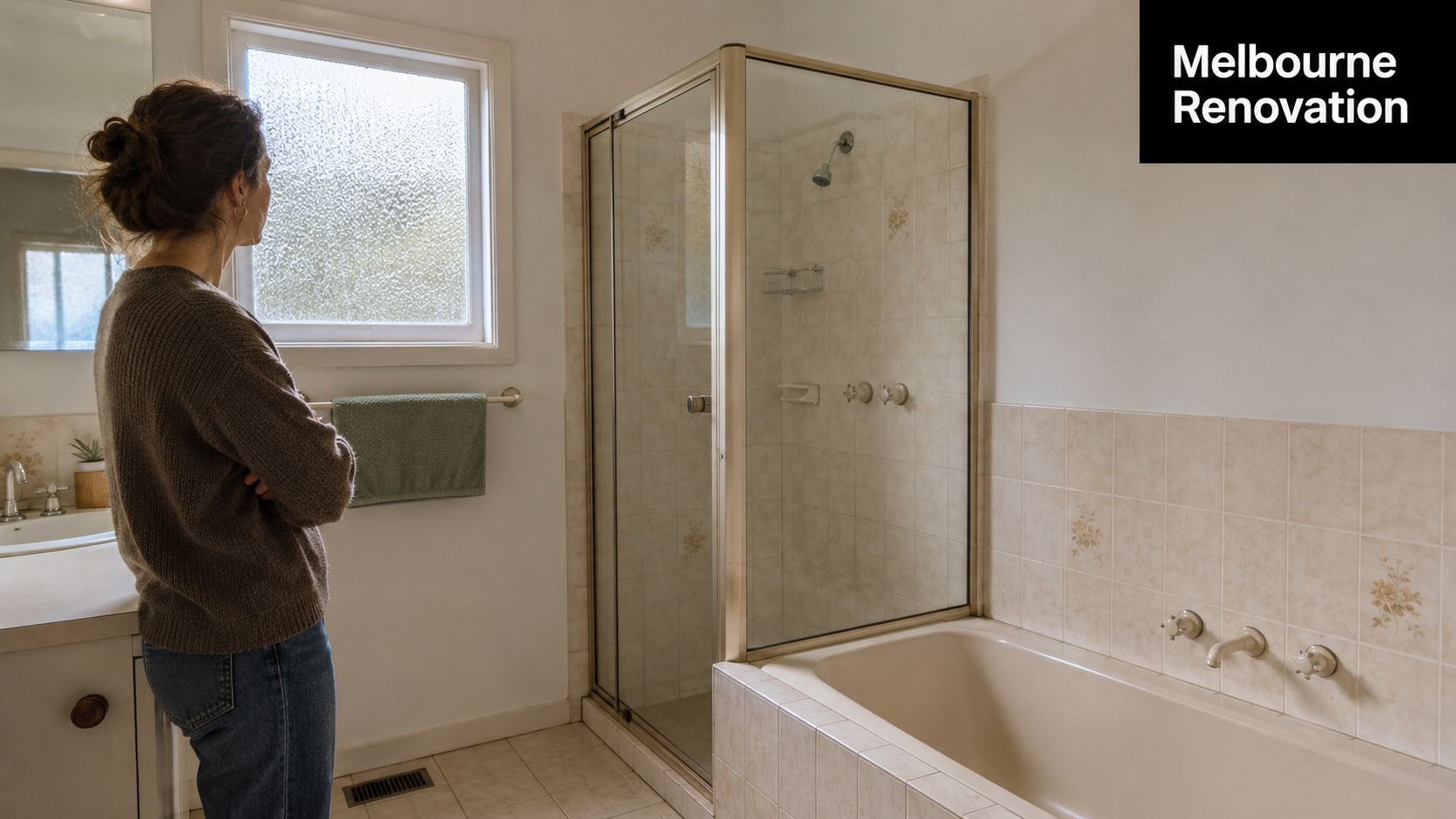
The first fork in the road is simple. Are you doing a tiling job, or are you doing a bathroom renovation?
If you're replacing a kitchen splashback or retiling a laundry floor on a sound substrate, a tiler may be the right trade to call first. If you're renovating a bathroom, changing layout, replacing a shower, dealing with water damage, updating drainage, or coordinating multiple trades, you need to think more broadly. That kind of project often needs someone who can manage scope, sequence, compliance, and responsibility from demolition through to final fit-off.
A bathroom renovation is more than the tile selection
In Melbourne homes, bathroom problems often sit beneath the surface. The old screed may be wrong. The floor may not have the right falls. The wall substrate may move. The shower may have historic leak issues. A homeowner can't see those things from a showroom sample board, but the contractor should be looking for them immediately.
That's where the distinction matters. A tiler installs tiles. A registered builder coordinates a renovation and carries broader responsibility for how all the parts come together.
If the work involves waterproofing, multiple trades, demolition, reconstruction, or any uncertainty about what's behind the walls, hire for the whole renovation, not just the tile finish.
What the right hire protects
A bathroom is a wet area. That sounds obvious, but many hiring decisions ignore it. The right contractor doesn't just deliver straight grout lines. They protect the room from leaks, movement, poor drainage, and unfinished trade interfaces.
Look for someone who talks early about:
- Substrate condition: Whether walls and floors are suitable before tiling starts
- Waterproofing responsibility: Who does it, how it's documented, and how it connects to the tiling work
- Trade coordination: Plumbing, electrical, carpentry, glazing, and final fit-off
- Scope clarity: What's included, what's excluded, and who owns each stage
In a bathroom renovation, the closest contractor isn't automatically the right one. The right one understands the build-up behind the tile and can stand behind the finished room.
Where to Find Reputable Tiling Contractors in Melbourne
A search engine is a starting point, not a screening tool. If you rely only on ads and map listings, you'll mostly see who markets well, not necessarily who suits your bathroom renovation.
In Melbourne, better leads usually come from places where trades are already being filtered by real work. The goal is to build a shortlist of contractors who are used to renovation conditions, not just small patch jobs.
Start with trade-facing suppliers and showrooms
Tile and bathroom showrooms can be useful if you ask the right question. Don't ask, “Do you know a tiler?” Ask, “Who do your customers use for bathroom renovations where waterproofing, screeding, and full coordination matter?”
Trade counters and supplier showrooms often know which contractors buy consistently, return for the right products, and handle more demanding work. That doesn't make every referral perfect, but it's usually better than a cold click on a generic listing.
Useful places to ask include:
- Tile showrooms: Especially when you've chosen porcelain, stone, mosaic, or large-format products that need careful handling
- Bathroom fixture suppliers: They often hear which installers manage layouts and finishing well
- Building material suppliers: These businesses tend to know who works regularly in renovation, not just on one-off jobs
Use industry directories and official lookups
A proper shortlist should include businesses you can cross-check. In Victoria, that means using official registration lookups and established industry directories rather than relying on star ratings alone.
A good process is to gather names from several channels, then narrow them down by verification. You're not trying to find dozens. You're trying to find a handful worth speaking to.
Reviews can tell you whether a client liked the interaction. They rarely tell you whether the falls were correct, the substrate was prepared properly, or the waterproofing responsibility was clear.
Use online platforms carefully
Online review platforms and local search pages can still help. They're useful for pattern spotting. If multiple clients mention delays, communication issues, or incomplete jobs, pay attention. If every review sounds vague and generic, treat that as marketing noise rather than proof.
It also helps to look at a contractor's own recent project work, then compare that with independent feedback. For example, a page of Melbourne tiling reviews from completed local projects is more useful when the examples match the kind of bathroom you're planning.
Build a shortlist with the right mix
For a Melbourne bathroom renovation, the strongest shortlist usually includes a mix like this:
- One registered builder who handles full bathrooms: Best for renovations involving multiple trades and compliance risk
- One tiling specialist with wet-area experience: Worth speaking to if your project is more limited in scope
- One contractor recommended by a supplier or designer: Useful when they've already delivered similar finishes
Don't choose from the first three names you see. Choose from the first few names that survive basic scrutiny. That small change saves a lot of grief later.
Vetting Your Shortlist Licences Insurance and Key Questions
The shortlist can feel like real progress. It's also where costly mistakes begin. A polite contractor, a nice gallery, and a quick site visit don't tell you enough. Bathrooms need tighter screening because the damage from poor work usually shows up after the trades have left.
Start with the essentials before anyone measures up or talks style.
Know the difference between a tiler and a builder
This is the main hiring issue in Melbourne bathroom renovations. A tiler may be excellent at laying tile and still not be the right lead contractor for your project. If the bathroom renovation involves demolition, reconstruction, waterproofing coordination, plumbing, electrical, or layout changes, you need to know who is taking responsibility for the full scope.
Ask directly whether they are a registered builder, what class of work they manage, and who supervises the bathroom renovation as a whole. If the answer is fuzzy, you've learned something important.
Most important check: Verify the contractor's registration yourself and make sure it matches the type of project you're asking them to deliver.
That single step filters out a surprising number of unsuitable options.
The phone call that saves wasted site visits
A short phone call can eliminate the wrong contractor fast. Don't start with tile colour or finish trims. Start with accountability.
Ask questions like these:
- Are you a registered builder for bathroom renovation work? If not, ask what part of the project they contract for.
- Who performs the waterproofing and who provides the documentation? This should never be left vague.
- Have you completed bathrooms similar to mine? Ask for projects with a similar size, layout complexity, and finish level.
- Who coordinates the plumber, electrician, and shower screen installer? If nobody owns the sequence, the homeowner ends up owning the stress.
- Do you inspect the substrate before final pricing? Good contractors know tile can't fix structural or preparation problems.
- Can you provide recent references for similar work? Industry guidance recommends a structured due-diligence workflow that includes verifying a similar-project portfolio, confirming licensure and insurance, requesting 3–4 references, and requiring a written scope before pricing. The same guidance also recommends ordering 10–15% extra tiles for cutting loss, breakage, and future repairs, as outlined in this tile installer due-diligence guide.
The answers matter, but so does how they answer. Clear, direct replies usually signal organised work. Evasive replies usually signal messy scope.
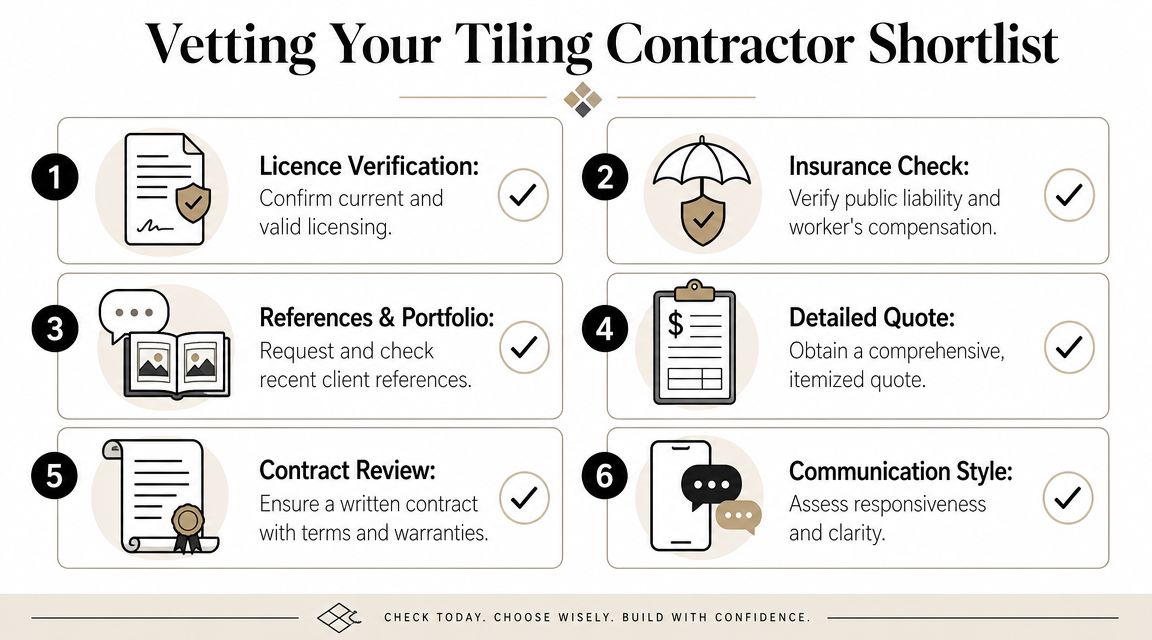
Here's a useful visual summary before you move to site meetings.
What to ask for before pricing
A proper quote starts with a proper brief. If a contractor is prepared to throw out a number without seeing the room properly, without asking about waterproofing, tile type, substrate, or fixtures, that's not efficiency. It's guesswork.
Before pricing, ask for:
- Insurance details: Public liability and any other relevant cover for the work arrangement
- A written scope: Demolition, prep, waterproofing, screeding, tiling, grout, trims, silicone, rubbish, clean-up
- Recent project photos: Not generic inspiration shots, actual completed bathrooms
- References you can call: Current enough to reflect how they work now
If you want a practical reference point for common homeowner questions before those calls, this bathroom renovation and tiling Q&A page is a useful checklist.
Good vetting feels a bit strict. That's exactly the point. Bathrooms punish casual hiring.
Understanding Specialist Services Beyond Basic Tiling
A lot of local search results flatten everything into one category. Tiler. Bathroom tiler. Wall and floor tiler. That language misses the core issue. Not every contractor who can lay a tile can deliver a wet area renovation to a high standard.
The gap becomes obvious in bathrooms because the work is layered. Waterproofing, falls, movement, substrate flatness, trim detail, penetrations, and fixture interfaces all affect the final result.
Waterproofing is not a casual extra
Homeowners often talk about waterproofing as if it's part of the adhesive stage. It isn't. It's a regulated compliance issue in Australian wet areas, and it needs clear responsibility. For bathrooms, showers, and balconies, verifying a contractor's waterproofing capability is critical. Australian guidance also stresses that homeowners should confirm who is responsible for waterproofing and what documentation they will receive, as discussed in this waterproofing and leak-remediation guide.
That matters because water damage can be expensive to rectify, and the tile finish can look perfect while the system underneath is wrong.
When assessing a contractor, look for someone who can explain:
- Where the waterproofing starts and stops
- How penetrations and junctions are handled
- What documentation you receive at completion
- Who owns rectification if a leak appears later
If you're comparing specialist services, this overview of bathroom waterproofing in Melbourne shows the kind of wet-area scope that should be discussed before tiling begins.
Large format tile changes the whole job
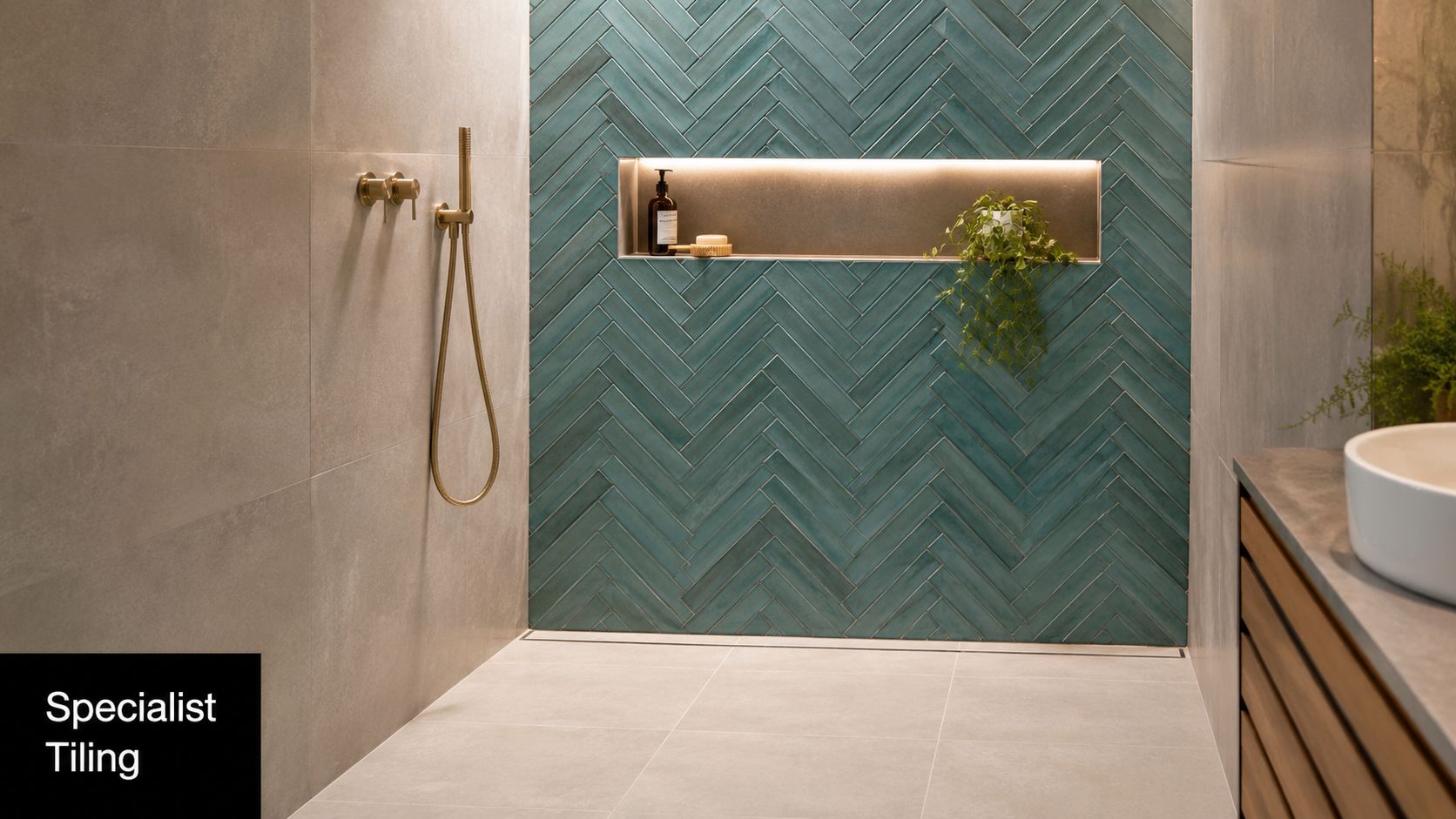
Large-format porcelain and slab-style products have changed bathroom expectations. Clients want quieter joints, cleaner walls, bigger visual lines, and that sleek hotel look. The problem is that larger tile doesn't forgive poor prep.
A contractor who is fine with standard ceramic wall tile may struggle when the specification shifts to large-format tile or premium stone. These materials need flatter substrates, more disciplined handling, and the right setting system. If the prep is off, the finish tells on everyone.
Bigger tile often means more preparation, not less. The reduced grout lines look simpler, but the installation is usually less forgiving.
Ask to see completed work similar to what you're planning. Not just one hero photo. Ask for corners, niches, transitions, floor-to-wall junctions, and drain detailing.
Integrated bathroom work that affects the tiling finish
A quality bathroom finish depends on more than the tile itself. Some of the most important trades are the ones homeowners barely think about until something goes wrong.
Watch for contractors who understand how these pieces connect:
- Screeding and falls: Shower floors need proper drainage. Tile can't compensate for bad falls.
- Self-levelling preparation: Flat floors matter before large-format or rectified tile goes down.
- Shower screen coordination: Frameless glass only looks clean when walls are true and tile edges are resolved properly.
- Leak diagnosis and remedial work: Existing wet-area failures need investigation before cosmetic replacement.
Melbourne Tiling Services P/L is one example of a contractor that works across these combined scopes, including bathroom renovations, waterproofing, self-levelling, screeding, leak rectification, frameless shower screens, and large-format Kerlite-style installations. That integrated model is often a better fit for bathroom renovations than hiring isolated trades one by one.
If a contractor talks only about tile selection and grout colour, they're probably discussing the easiest part of the room.
Decoding Quotes Timelines and Common Red Flags
A bathroom quote can look tidy and still be dangerous. The total price on page one doesn't tell you much unless the scope behind it is equally clear.
Many homeowners revert to the familiar search habit. They compare names from a “tiling contractors near me” search, line up prices, and assume the lower quote is more efficient. In practice, lower quotes are often missing tasks, responsibilities, or remedial allowances that surface later as variations.
Why the cheapest quote often isn't the cheapest project
Local pricing varies because local scope varies. Even outside Australia, marketplace data shows how wide the spread can be. A Tulsa tile installation report listed ceramic tile installation at $6.34 per square foot, with an observed range of $5.57 to $7.10 per square foot, and also showed other installation scenarios around $4.20 and $3.16 per square foot, illustrating how quotes shift with tile type and labour scope in ProMatcher's regional tile cost report.
The lesson isn't to convert overseas rates. The lesson is that one line-item price rarely describes the whole job. A bathroom renovation quote can differ dramatically depending on whether it includes demolition, substrate repair, waterproofing, drainage prep, tile trim systems, shower screen coordination, rubbish removal, and final clean.
A vague quote gives the contractor room to charge later and gives the homeowner very little to stand on.
Comparing Tiling Quotes What to Look For
| Feature | Basic Tiler Quote | Registered Builder Quote |
|---|---|---|
| Scope detail | Often brief, focused on tile supply and installation only | Usually broader, covering demolition, prep, trade coordination, and finish details |
| Waterproofing | May be unclear, assumed, or excluded | Responsibility is identified and documentation is typically addressed |
| Substrate preparation | Sometimes described loosely or left for variation | More likely to be inspected, specified, and priced as part of the build-up |
| Other trades | Homeowner may need to organise plumber, electrician, or glazier separately | Builder usually coordinates the sequence and interfaces |
| Variations | Higher risk when the original scope is thin | Still possible, but clearer scope reduces avoidable disputes |
| Programme | May focus only on the tiling window | Usually considers the whole bathroom timeline from strip-out to completion |
| Accountability | Split across separate contractors | More centralised responsibility for the end result |
A stronger quote usually identifies materials, tile areas, preparation steps, who supplies what, and how defects in existing surfaces are handled if discovered after demolition.
Red flags that should stop the conversation
Some warning signs are immediate. Others show up only when you read the quote carefully.
Walk away if you see this combination:
- No clear written scope: If it only says “bathroom renovation” or “tile labour”, that's not enough.
- Reluctance to confirm registration details: Legitimate contractors shouldn't dance around this.
- Waterproofing responsibility is vague: If nobody clearly owns it, that's a serious risk.
- Cash pressure before paperwork: Fast money requests before proper documentation are a bad sign.
- No allowance for preparation issues: Old bathrooms often hide substrate problems. Pretending otherwise doesn't make them disappear.
- Portfolio mismatch: A contractor showing mostly outdoor paving or splashbacks may not suit a full wet-area renovation.
Timelines matter too. Promises that sound too neat usually are. Good contractors will explain what can delay a job, especially once demolition exposes the existing condition. That honesty is worth more than a rushed promise that falls apart in week one.
Finalising the Hire and Ensuring a Smooth Project
By the time you're ready to choose, the main question should be settled. For a full bathroom renovation in Melbourne, you're usually not hiring just for tile laying. You're hiring for controlled delivery of a wet-area build. That's why the contract matters more than the pitch.
Tile installation is skilled work. In the United States benchmark data often used to describe the trade, tile and stone setters had a national median annual wage of $52,870 in May 2023, with employment concentrated in building finishing contractors at 26,010 workers, according to the Bureau of Labor Statistics occupational profile for tile and stone setters. The practical takeaway for homeowners is simple. Tiling is specialised labour, and the price reflects preparation, execution, and finishing quality, not just the tile itself.
The contract matters more than the sales pitch
A proper bathroom renovation contract should be plain, detailed, and specific. If something matters to you, it should be written down.
At minimum, make sure it covers:
- Detailed scope of works: Demolition, preparation, waterproofing, tiling, glazing, fit-off, waste removal
- Material specifications: Tile type, grout choice, trims, niches, screens, fixtures if supplied
- Payment schedule: Staged and tied to progress, not vague verbal milestones
- Total price and variation process: You need to know how changes are approved
- Warranties and defect responsibility: Especially for workmanship and wet-area elements
- Who is responsible for site supervision: One point of contact avoids confusion
If a contractor says, “Don't worry, we'll sort that out as we go,” that should worry you.
Simple habits that keep the renovation on track
Once the contract is signed, the homeowner still has a role. The smoothest projects usually have clear communication and fewer late changes.
A few habits help:
- Lock tile selections early: Don't leave core finishes unresolved once the schedule starts.
- Confirm supplied items in writing: Tapware, vanity, mirrors, rails, and accessories create delays when assumptions creep in.
- Agree on site access and protection: Parking, keys, dust control, rubbish, and working hours should be settled early.
- Keep decisions in writing: Text or email beats memory every time.
- Inspect at practical milestones: After demolition, after prep, after waterproofing responsibility is confirmed, and before final handover
The safest hiring mindset is this. If the work is limited, hire a tiler. If the bathroom is being rebuilt, hire for the renovation. In Melbourne, that usually means engaging someone who can manage the full project with proper responsibility attached.
If you're planning a bathroom or ensuite renovation and want a contractor that handles tiling within a broader renovation scope, Melbourne Tiling Services P/L offers bathroom renovations, waterproofing, screeding, self-levelling, large-format tiling, leak rectification, frameless shower screens, free quotes, and 3D drawings across Melbourne.
Write a Comment