

If you're in Altona and your bathroom still has ageing tiles, poor ventilation, a shower that never quite drains properly, or a leak you've been putting off, you're not alone. A lot of homes in Melbourne's west have solid bones but tired wet areas. The bathroom is often the room that shows its age first, and it's also the room where shortcuts cause the most expensive damage.
Bathroom renovations altona projects aren't just about making the room look newer. In older coastal suburbs, the primary concern is usually what sits behind the tiles. Movement in the substrate, past patch jobs, failed waterproofing, and hidden moisture damage can turn a simple upgrade into a rectification job if the work isn't assessed properly from day one. That's why homeowners who want a result that lasts usually focus less on showroom styling and more on build quality, compliance, and who's managing the trades.
Table of Contents
- Why Renovate Your Altona Bathroom Now?
- Budgeting for Your Bathroom Renovation in Altona
- The A-to-Z Renovation Process with Registered Builders
- Key Decisions in Design Tiling and Waterproofing
- The Critical Role of a Registered Builder
- See the Potential Altona Renovation Examples
- Your Renovation Questions Answered and Next Steps
Why Renovate Your Altona Bathroom Now?
Many Altona homeowners are in the same position. They like the area, they know the street, the home still works, but the bathroom doesn't. It might be cramped, dated, hard to clean, or showing early signs of water entry around the shower base or corners.
That's one reason bathroom work stays high on the renovation list. In Australia, bathroom work remains one of the most common remodelling categories, and many homeowners are renovating instead of moving because they're locked into low mortgage rates. That's especially relevant in Victoria, where updating an older bathroom in a suburb like Altona can be more practical than selling and rebuying in a high-price market, according to HIRI's discussion of master bathroom remodelling trends.
In practical terms, that changes the way people should look at a bathroom renovation. It isn't just a cosmetic spend. It's a decision to improve daily use, avoid leak risk, and upgrade one of the most heavily used rooms in the house without taking on the cost and disruption of moving.
Why Altona homes need a more careful approach
Altona has plenty of older housing stock, and older bathrooms often come with mixed substrates, previous repairs, uneven floors, and moisture-related wear. Coastal conditions don't help. Salt air, dampness, and years of use can expose weaknesses faster than many owners expect.
A good renovation deals with that reality upfront. It checks the room as a wet area, not just as a style project.
Practical rule: If a bathroom already has staining, loose tiles, cracked grout, swollen skirtings, or a shower that smells damp, treat it as a building issue first and a design project second.
That's where registered builders make a real difference. They look at the whole sequence, the whole room, and the whole risk profile before any tile or tapware gets selected.
Budgeting for Your Bathroom Renovation in Altona
Budget conversations are where many bathroom projects either become clear or become messy. The biggest mistake homeowners make isn't spending too much on tiles or tapware. It's accepting a quote that looks cheaper because key work hasn't been fully included.
In Victoria, the building sector faces higher costs, and a major factor in bathroom budgets is the coordination of licenced trades. A cheap quote can become expensive when carpentry, plumbing, electrical, and waterproofing aren't managed together from the start, leading to delays and rework, as noted in this discussion of trade coordination and transparent renovation budgeting.
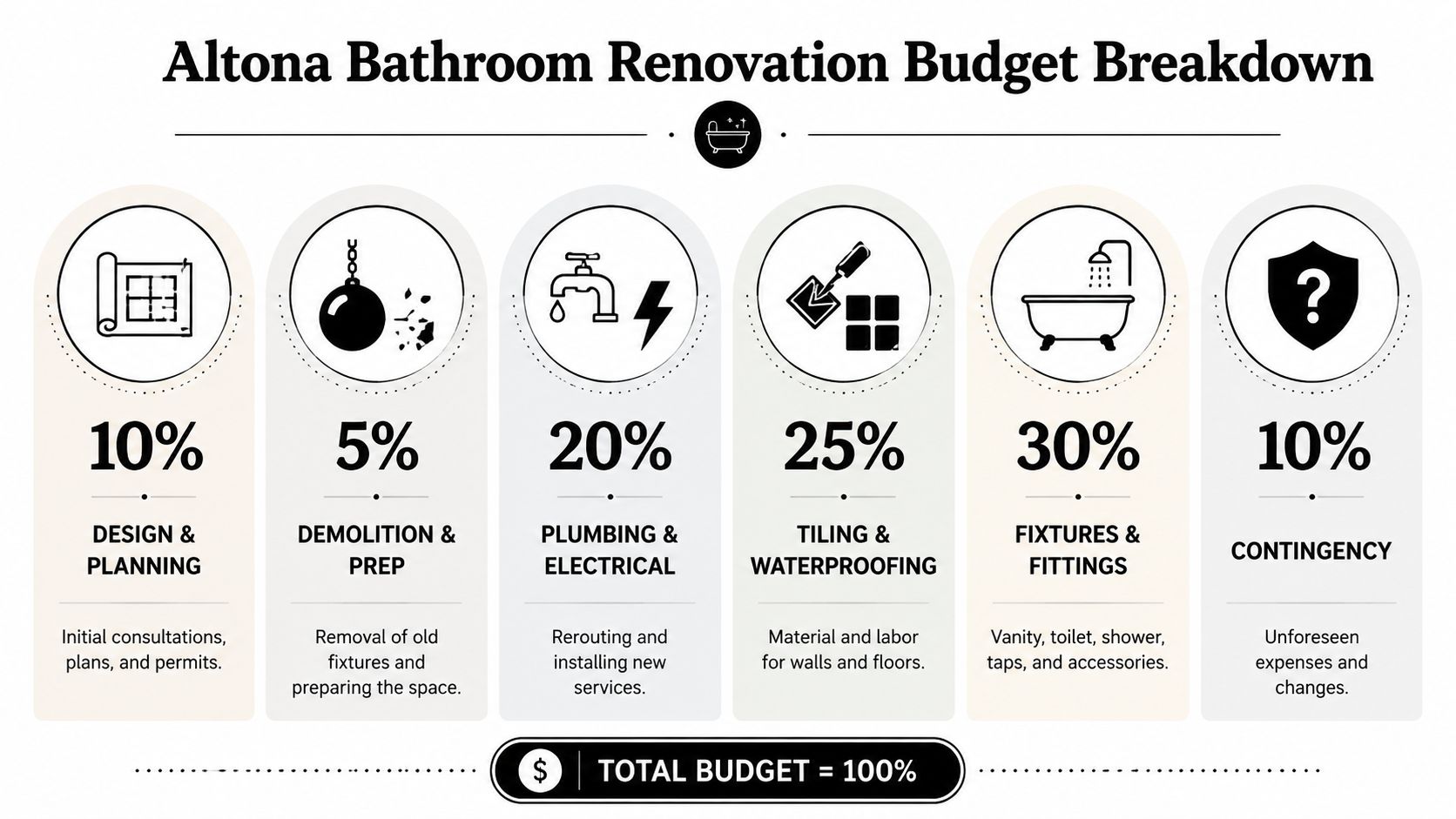
What actually changes the price
Price depends on scope first, finishes second.
A bathroom that keeps the same layout is usually simpler than one that moves the shower, vanity, or toilet. Once plumbing locations shift, the build becomes more involved. The same applies when walls are out of square, floors need correction, or old damage appears during demolition.
The main cost drivers usually include:
- Extent of demolition: A full strip-out costs more than a surface refresh, but it gives the builder access to the structure, substrate, and wet area details that matter.
- Condition of the base: If the floor needs screeding or self-levelling to create proper falls and a flat tiling surface, that's necessary work, not an optional extra.
- Tile selection: Standard ceramics and large-format porcelain don't install the same way. Premium products demand better substrate preparation and tighter set-out.
- Joinery and fixtures: Wall-hung vanities, recessed niches, in-wall cisterns, and custom storage all increase complexity.
- Access and protection: Tight sites, occupied homes, and limited access add labour and handling time.
For early planning, a tool like this bathroom renovation calculator can help you think through scope before you compare formal quotes.
How to compare quotes properly
Don't compare the total only. Compare the inclusions line by line.
Ask whether the quote covers:
| Item | What you want to see |
|---|---|
| Demolition | Removal, disposal, and site protection |
| Substrate prep | Levelling, screeding, and rectification if required |
| Waterproofing | Wet area waterproofing included, not provisional wording |
| Trades | Plumbing, electrical, carpentry, tiling, fit-off |
| Fixtures | Clear allowance or nominated products |
| Variations | Process for hidden damage or owner changes |
If one quote looks much lower, check whether it has simply pushed risk back onto you.
The better quote is usually the one that identifies likely issues early and prices the work in a way that reflects the actual build, not just the attractive version of it.
The A-to-Z Renovation Process with Registered Builders
A well-run renovation feels organised because the order is organised. Bathroom work has to follow a strict sequence. If the early stages are rushed, every finish installed after that carries the defect.
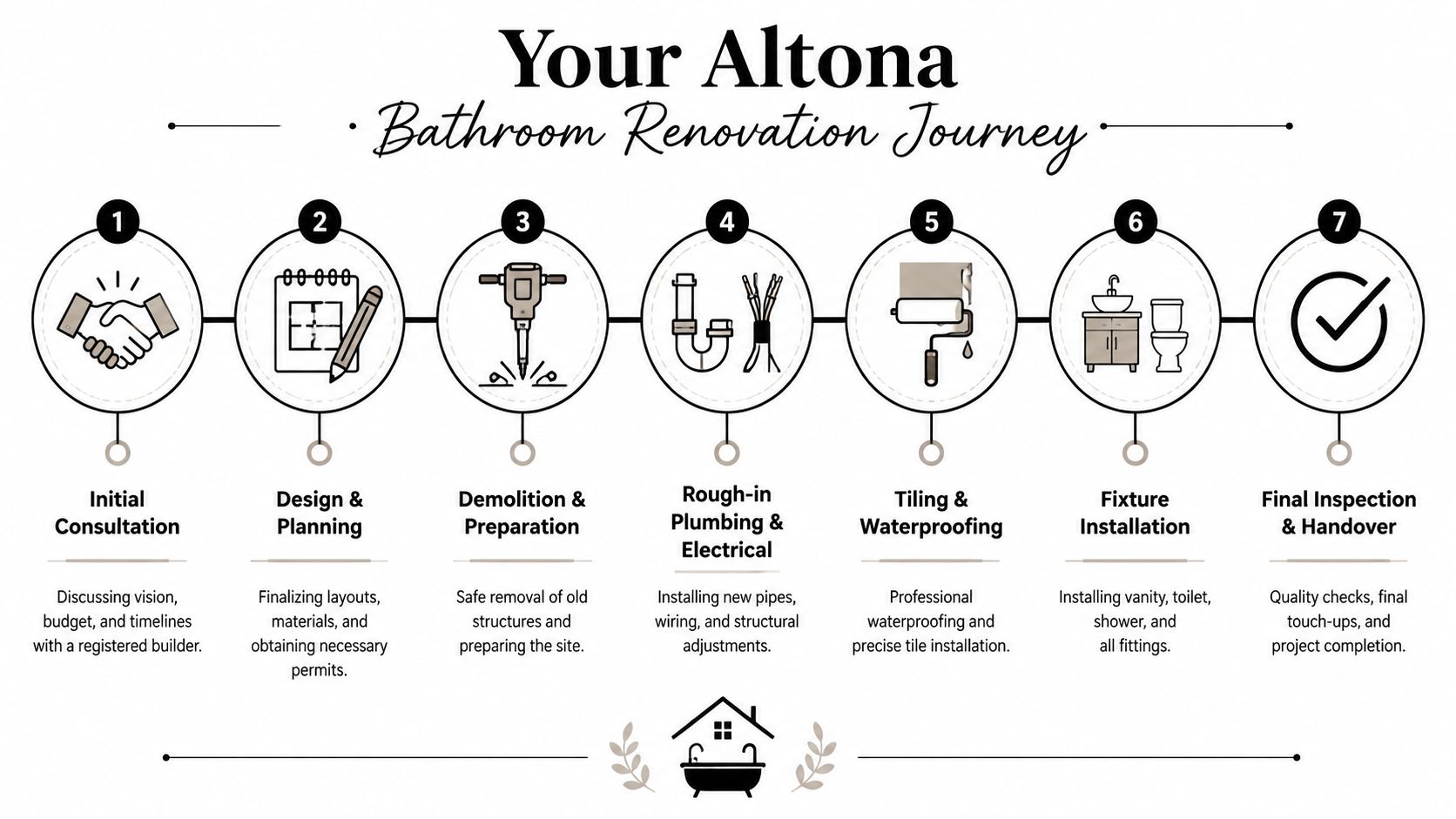
What happens before any tiling starts
The process starts with inspection and set-out. The builder checks the room, confirms dimensions, reviews the existing floor and wall condition, and works through layout decisions that affect plumbing, electrical, and tile lines.
Then comes demolition. This has to be controlled and clean, especially in occupied homes. Once the old bathroom is stripped, the underlying condition of the room becomes visible. That's when movement cracks, patch repairs, rotten sheet material, or poor past workmanship often show up.
After demolition, the room is prepared for rough-in works. That can include:
- Structural checks and framing adjustments where walls or niches need correction.
- Plumbing rough-in for shower, vanity, bath, or toilet changes.
- Electrical rough-in for lighting, exhausts, heating, power points, and mirrors.
- Floor correction through screeding or self-levelling where required.
The non-negotiable wet area sequence
In Victoria, waterproofing must comply with AS 3740, and the critical sequence is structural set-out → waterproofing → tile installation → fit-off. If that sequence is broken, the result can be tile lippage or latent leaks, especially in older Altona homes where substrate movement is common, as outlined in this explanation of bathroom renovation sequencing and wet area performance.
That sequence matters for simple reasons. Waterproofing needs a sound, prepared substrate. Tiles need a flat, stable surface. Fit-off should happen only after the wet area is correctly sealed and the tiling is complete.
Large-format porcelain and Kerlite are far less forgiving than small-format ceramic. If the floor isn't right underneath, the finish won't hide it.
A registered builder coordinates those handovers properly. The waterproofer isn't guessing what the tiler needs. The tiler isn't trying to correct structural problems with adhesive. The plumber isn't returning to fit fixtures into a room that still has unresolved substrate issues.
Typical Altona Bathroom Renovation Timeline
The exact program depends on scope, access, product availability, and whether hidden rectification work is uncovered after demolition. Still, the workflow usually follows a clear pattern.
| Phase | Typical Duration | Key Activities |
|---|---|---|
| Planning and selections | Varies by project | Site inspection, layout review, materials, fixtures, quote sign-off |
| Demolition and strip-out | Several days | Remove old fixtures, wall linings, floor coverings, waste disposal |
| Rough-in works | Several days | Plumbing, electrical, carpentry, structural corrections |
| Surface preparation | Several days | Screeding, self-levelling, substrate checks, set-out |
| Waterproofing and curing | Several days | Membrane application to wet areas, junction detailing, protection |
| Tiling | Several days | Wall and floor tiling, trims, grout, finish checks |
| Fit-off and handover | Several days | Vanity, screen, tapware, toilet, accessories, final inspection |
The timeline stays tighter when decisions are made early and all trades are booked under one managed program. It slows down when fixtures arrive late, variations are introduced mid-build, or the quote didn't allow for the room's actual condition.
Key Decisions in Design Tiling and Waterproofing
A bathroom should look good, but the finish you choose has to suit the room underneath. In Altona, that matters more than people think. Premium products expose bad preparation very quickly.
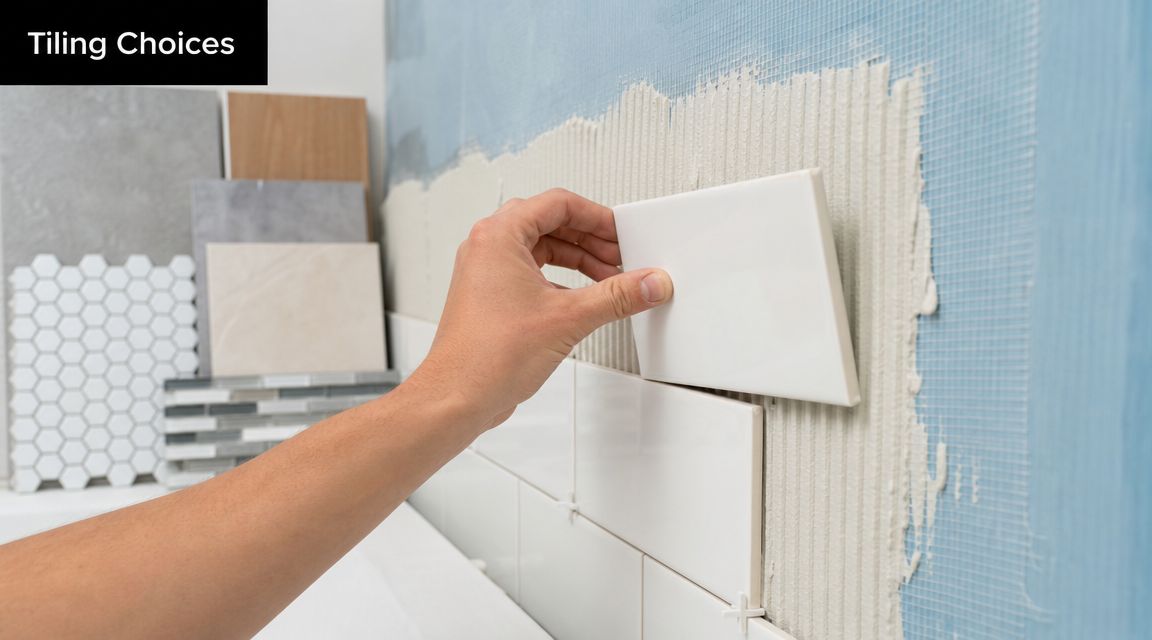
Large format tiles and what they demand
Large-format porcelain and Kerlite can make a bathroom feel calmer, cleaner, and more open because there are fewer grout lines breaking up the surfaces. They also reduce the visual clutter that smaller modular tiles can create in compact bathrooms.
But they only work when the substrate is properly prepared. If walls are bowed or the floor has poor falls, bigger tiles won't forgive that. They'll highlight it. That's why the smartest design decision is often to spend more attention on the base than on decorative extras.
A few material choices consistently work well:
- Large-format wall tiles for a more continuous look and easier cleaning.
- Slip-conscious floor tiles that still feel refined underfoot.
- Simple tile layouts that age well and don't date quickly.
- Quality grout and trim details because edge finishing changes how professional the whole room feels.
If you're weighing membrane systems, junction treatment, or wet area build-ups, this overview of bathroom waterproofing systems is useful background before final selections are made.
Frameless screens and cleaner layouts
Frameless shower screens remain popular for good reason. They open the room up visually and make smaller bathrooms feel less boxed in. They also work well with floor-to-ceiling tiling and linear, minimal layouts.
That said, frameless glass isn't a magic fix for poor planning. The screen position has to suit the shower falls, water containment, and door swing. The bathroom needs to be designed so the screen helps water stay where it should. Otherwise, the room looks sharp on day one and becomes annoying to use every day after that.
The best bathroom design choice is the one that still works properly on a cold weekday morning when everyone is in a rush.
The Critical Role of a Registered Builder
The biggest difference between a smooth renovation and a stressful one often comes down to accountability. When one registered builder manages the project, there's one party responsible for sequence, compliance, trade coordination, and defect prevention.
Why single point accountability matters
Bathrooms combine multiple trades in a very small footprint. Carpenters, plumbers, electricians, waterproofers, tilers, screen installers, and fixture suppliers all affect the final result. If each one is operating separately, small errors become expensive quickly.
A registered builder's role is to control those interfaces. That includes:
- Set-out control: making sure the layout works before services are moved
- Trade timing: getting rough-in, substrate prep, waterproofing, and tiling in the right order
- Compliance oversight: checking that wet area work is completed to the required standard
- Defect prevention: resolving issues before they're buried behind finishes
Melbourne Tiling Services P/L operates as a registered builder and coordinates bathroom renovations, waterproofing, screeding, tiling, frameless shower screens, and associated licensed trades from start to finish.
When a cosmetic update is the wrong fix
In Victoria, faulty bathroom waterproofing is a major driver of defect claims, and the Victorian Building Authority requires wet-area work to meet national standards. A common mistake is assuming a cosmetic refresh is enough when hidden water damage or non-compliant membranes require a full strip-out and rectification by a licenced professional, as discussed in this article on wet area defect risk and rectification.
That's why registered builders matter most on the jobs that look simple at first glance. New tiles over an unstable base don't solve anything. A fresh vanity doesn't fix a failed shower recess. Silicone is not a waterproofing strategy.
If you need formal documentation around wet area requirements, compliance, or certification issues, this guide to a waterproofing compliance certificate in Victoria is a good place to start.
A builder who says a bathroom can be refreshed without checking the condition underneath is asking you to fund a gamble.
See the Potential Altona Renovation Examples
Most homeowners don't need abstract ideas. They need to picture what a finished job could look like in a home similar to theirs, and what choices make sense.
Example one family bathroom in an older brick home
A typical older family bathroom in Altona often has a small shower recess, a bulky vanity, mixed tile repairs, and a floor that's no longer draining cleanly. In that kind of renovation, the best outcome usually comes from a full strip-out, correction of the floor falls, fresh waterproofing, and a simpler tile selection that makes the room feel larger.
The design might include a walk-in shower with a frameless screen, a wall-hung vanity to improve visual space, recessed storage, and lighter large-format wall tiles. The important value isn't just the updated appearance. It's the fact that the room is rebuilt as a proper wet area rather than patched again.
Example two compact ensuite with a premium finish
A different project might be a tight ensuite where the owner wants a cleaner, more architectural finish. Here, large-format porcelain or Kerlite, concealed plumbing details, and minimal hardware can transform the room. But this type of finish only works if the builder gets the set-out, wall straightness, and tile planning right before installation begins.
This is also where return on investment becomes relevant. Widely cited data reported by Zillow from JLC shows a national average bathroom remodel cost of US$26,138, an average return of US$20,915, and 80% ROI for midrange projects. Australian market commentary reflects the same general trend toward value-focused professional renovations, which supports investing in durable waterproofing, correct screeding, and quality tiling rather than superficial upgrades alone, according to Zillow's bathroom remodel ROI analysis.
For Altona owners, that's the practical takeaway. The renovation choices that protect value are usually the least glamorous parts of the job. The membrane, the falls, the screed, the tile set-out, and the quality of the fit-off are what stop today's project becoming tomorrow's repair bill.
Your Renovation Questions Answered and Next Steps
Homeowners usually ask the same questions once they move from browsing to planning. The answers depend on the room, the scope, and the age of the property, but the decision-making framework stays fairly consistent.
Common questions from Altona homeowners
Do I need a permit?
Sometimes. It depends on the scope of the work and whether structural changes or broader building issues are involved. That needs to be checked at the quoting stage, not guessed halfway through the job.
How disruptive is a bathroom renovation?
There will be noise, dust control, trade movement, and periods where the room is completely unusable. In occupied homes, site protection, clean sequencing, and realistic scheduling matter just as much as workmanship.
Can I keep the same layout and still get a good result?
Yes, if the existing layout works. Keeping services in place can reduce complexity. But if the room has drainage problems, access issues, or poor use of space, holding onto the old layout just to save money can be false economy.
Are 3D drawings worth it?
For many projects, yes. They help confirm proportions, tile direction, niche placement, vanity size, and visual balance before work starts. That reduces late changes and avoids buying fixtures that don't suit the room.
What to do before you ask for a quote
You don't need a fully resolved design before contacting a builder. You do need clarity on the basics.
Bring these points to the first discussion:
- Your main problem: leak risk, outdated finishes, poor layout, accessibility, storage, or resale preparation
- Your must-haves: walk-in shower, bath, larger vanity, niche, underfloor heating, frameless screen
- Your finish level: practical and durable, or more architectural and premium
- Your site realities: only bathroom in the home, apartment access, investment property, older house with known issues
A good quote starts with a proper site assessment. If the builder asks detailed questions about substrate condition, waterproofing, falls, access, and trade scope, that's usually a sign the project is being priced as a real build, not as a rough guess.
Bathroom renovations altona projects go better when the homeowner treats the build as a wet-area construction job first and a styling project second. That mindset usually leads to better decisions, fewer surprises, and a bathroom that still performs properly years after the handover.
If you're planning a bathroom upgrade and want clear advice on scope, waterproofing, tiling, and trade coordination, Melbourne Tiling Services P/L offers bathroom renovation planning, 3D drawings, and detailed quotes for homeowners across Melbourne and greater Victoria. A proper first consultation can tell you whether your Altona bathroom needs a straightforward renovation, a full strip-out, or targeted leak rectification before any new finishes go in.
Write a Comment