
Modern Bathroom Tiling: A Melbourne Homeowner’s Guide

You're probably standing in a bathroom that still functions, but only just. The shower works, the vanity holds together, and the tiles might even look acceptable from the doorway. Then you step in closer. The grout is tired, the layout feels cramped, the floor never quite drains properly, and the whole room tells you it belongs to another decade.

That's usually the point where homeowners start looking at modern bathroom tiling. They want cleaner lines, better light, fewer visual breaks, and finishes that feel calm instead of cluttered. In Melbourne, that decision also sits inside a bigger renovation picture. Tile demand doesn't move on style alone. It follows the building cycle, and the ABS reported 15,924 new private sector houses approved in Australia in April 2024, which matters because bathrooms are specified and finished during fit-out stages, after approvals and before final handover, as noted in this overview of Australian bathroom tile demand and housing activity.

A good bathroom renovation isn't won by choosing an attractive tile in a showroom. It's won by getting the structure, waterproofing, drainage, set-out, and trade coordination right first, then choosing tiles that suit the room and the way it will be used.

Table of Contents

Your Guide to a Modern Bathroom Renovation

A modern bathroom has to do two jobs at once. It has to look resolved, and it has to perform properly in a wet area that gets daily use. Homeowners often focus first on the visible layer. Tile colour, vanity shape, brushed tapware, niche positions. Those choices matter, but they only work when the renovation has been planned as a complete system.

That's why bathroom renovations should be approached as building work, not just surface replacement. In a full renovation, the room gets stripped back, the substrate is assessed, plumbing and electrical rough-in are coordinated, waterproofing is completed correctly, and only then does tiling begin. If any of those steps are rushed, the finished room can still look polished on day one and fail later.

The renovation lens

The most reliable way to think about modern bathroom tiling is to ask three practical questions:

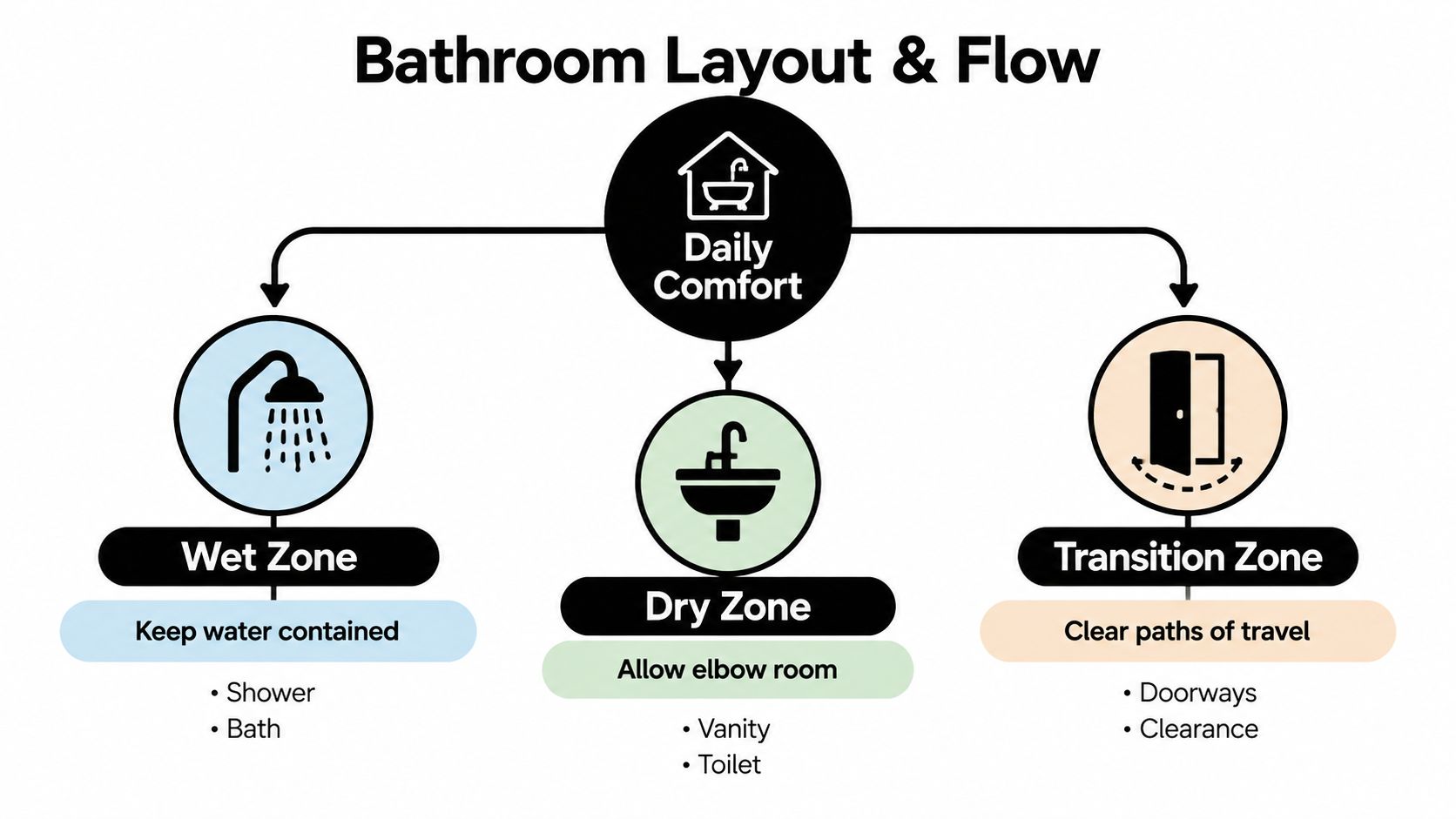
  • How will the room drain: A clean tiled floor means little if water sits against the shower screen or tracks toward the door.
  • What movement will the room experience: Bathrooms expand, contract, and carry moisture. The build has to accommodate that.
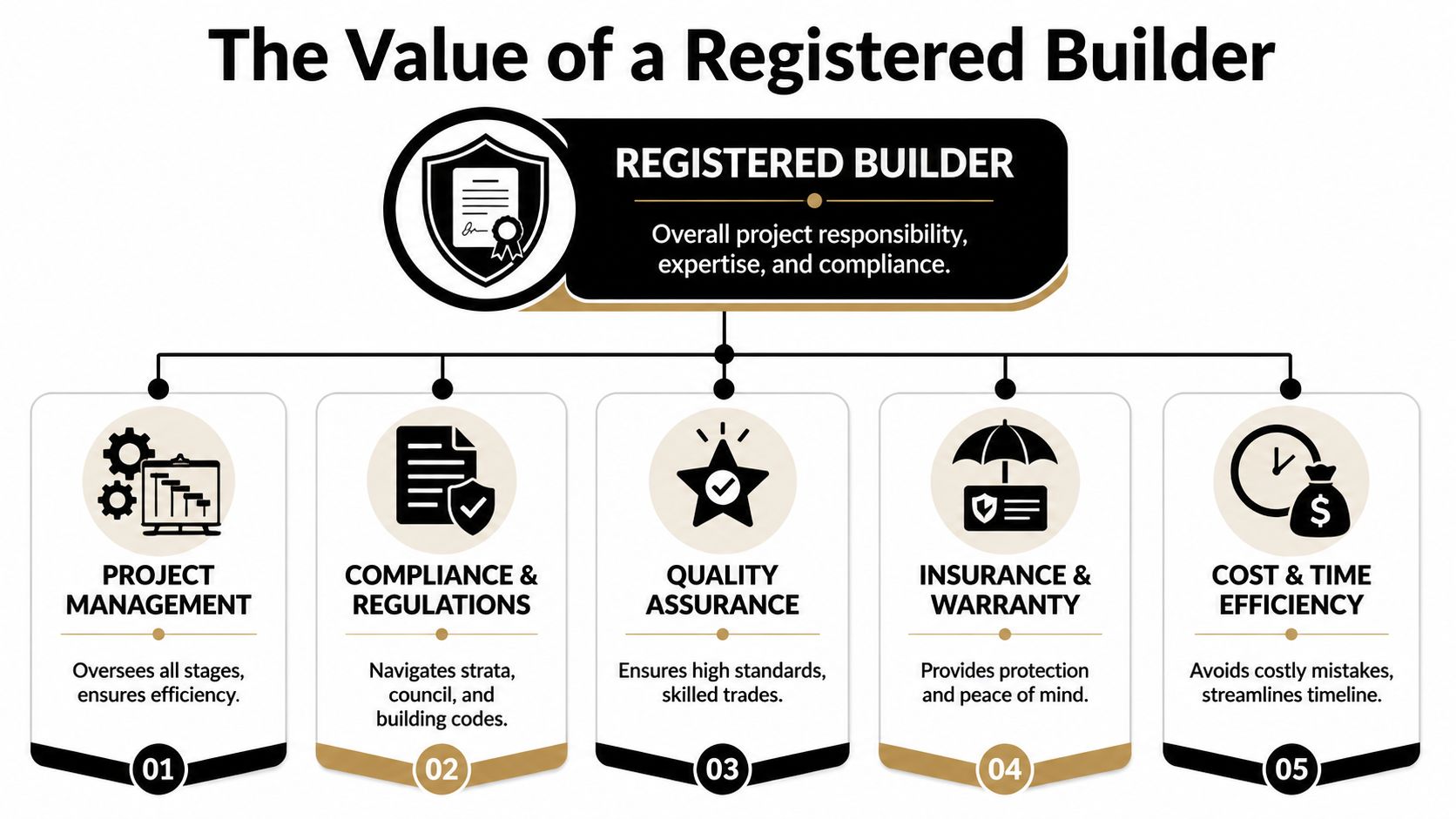
  • Who is responsible for the full result: A tiler can lay tile. A registered builder manages the whole bathroom renovation and coordinates compliance across trades.

Practical rule: If you're renovating the whole bathroom, choose the tile after the layout, plumbing points, and substrate strategy are settled. Not before.

In Melbourne homes, that distinction matters. Many bathrooms sit inside older houses where walls aren't straight, floors aren't level, and previous work may already be hiding moisture damage. A high-end result doesn't come from pretending the room is perfect. It comes from correcting what's behind the walls and under the floor, then setting out the tile work so the finished space feels intentional.

Envisioning Your Style Modern Tiling Trends for 2026

The best modern bathrooms don't chase trends blindly. They use current ideas in a way that suits the room, the light, and the house around them. Most homeowners are after one of a few clear moods. Calm and spa-like. Crisp and architectural. Warm and natural. Dark and dramatic.

An infographic showing five key 2026 trends for modern bathroom tiling, including large format, biophilic, and sustainable designs.

Seamless and quiet

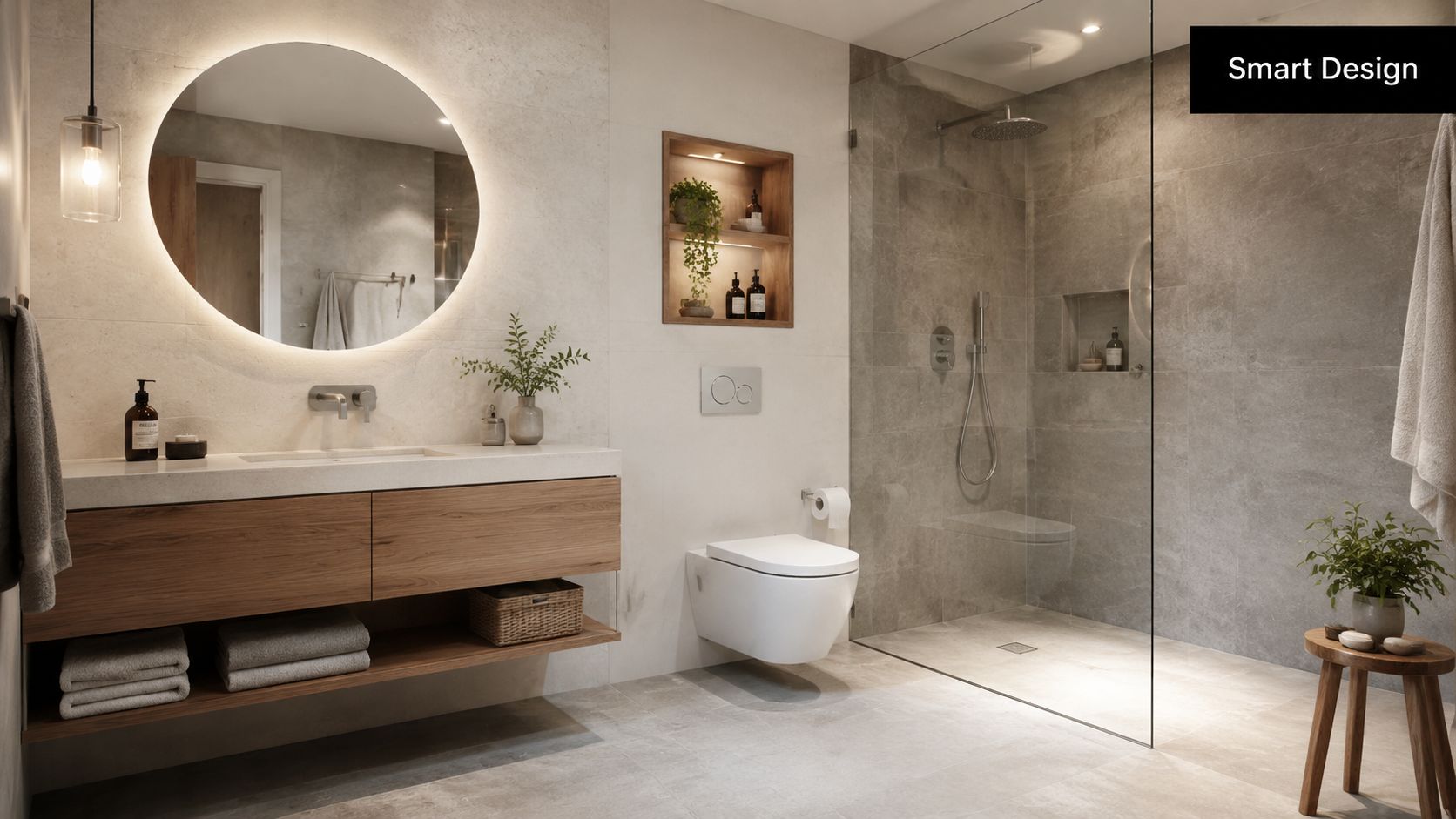
One strong direction is the pared-back bathroom. Large wall tiles, narrow grout joints, floating vanity, frameless shower screen, and very little visual interruption. This style works well in smaller Melbourne bathrooms because it reduces clutter. Fewer cuts and fewer grout lines make the room feel more settled.

Warm whites, soft greys, stone-look porcelain, and matte finishes usually carry this look best. It's modern without feeling cold.

Natural and textured

Another direction leans into biophilic design. Stone-look porcelain, timber-look joinery, earthy colours, and textured feature walls all sit here. The room feels softer and less clinical. This approach works particularly well when the tile has movement in the face but the overall palette stays restrained.

A common mistake is overdoing it. If the floor has heavy pattern, the wall tile should usually quieten down. If a feature wall has texture, the vanity and mirror selection should stay simple.

Good modern bathroom tiling doesn't need every surface to compete. One hero surface is usually enough.

Graphic and directional

Some homeowners want a bathroom with more edge. Vertical stack layouts, geometric mosaics, fluted surfaces, and deeper tones can create that. Navy, charcoal, olive, and warm clay tones can all work, but they need control. In a bathroom without much natural light, too much darkness can flatten the room.

A sharper look often comes from pattern and layout more than colour alone. A standard tile, laid vertically or stacked with precision, can feel far more contemporary than an expensive tile with a busy face.

Where style meets restraint

If a design trend is worth following, it still has to survive daily use. That means the room should be easy to clean, the floor should suit wet conditions, and the feature choices should age well. The bathrooms that date fastest are usually the ones where every current idea got added at once.

A more durable approach is simple:

  • Use texture selectively: Feature wall, niche back, or vanity splashback.
  • Keep floor tiles practical: Especially in shower zones where grip and drainage matter.
  • Let the layout do some of the design work: Pattern can create interest without introducing too many colours.

Choosing Your Tiles Materials Sizes and Finishes

Most bathroom tile decisions come down to balancing appearance with performance. Homeowners usually arrive with a look in mind. The better question is whether the chosen material suits a wet area, the expected maintenance, and the substrate it's being fixed to.

Porcelain ceramic and natural stone

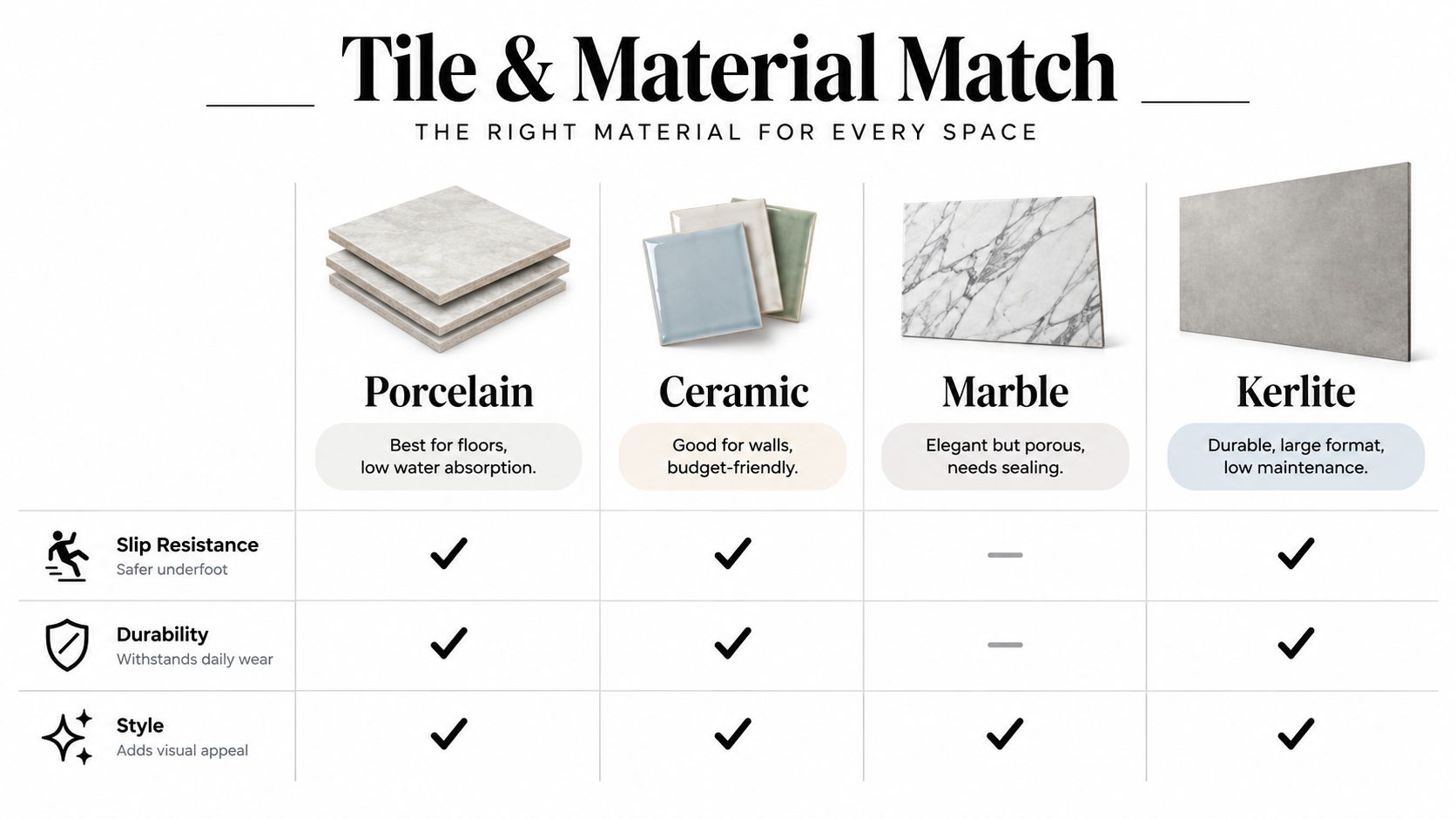
Porcelain is the workhorse of modern bathroom tiling. It's dense, low porosity, and suits both walls and floors in most bathroom renovations. It also gives you the widest design range, including stone-look, concrete-look, and timber-look finishes that are easier to live with than the natural materials they imitate.

Ceramic can still work well, especially on walls. It's often easier to cut and handle, but it's generally better suited to lighter-duty applications than porcelain. In a full bathroom renovation, many homeowners use ceramic only where the wall finish is the priority and the loading is low.

Natural stone can look exceptional, but it comes with obligations. Stone needs more care, usually more sealing attention, and tighter planning around maintenance. Marble and travertine can be beautiful, but they aren't forgiving if you want a low-fuss family bathroom.

Material Durability Water Resistance Maintenance Typical Cost (per m²)
Porcelain High High Low to moderate Varies by product and format
Ceramic Moderate to high Good Low to moderate Varies by product and finish
Natural stone High when suitable stone is selected and installed properly Varies by stone and sealing Moderate to high Varies by stone type and finish

Size changes the install

Large-format tile is a major part of modern bathroom tiling because it creates a clean, spacious look. Industry guidance notes that bathroom wall tiles commonly move into the 12 x 24 inch to 30 x 15 inch range for contemporary layouts, and that same guidance points out the trade-off clearly. As tile size increases, substrate flatness becomes more critical, so screeding and self-levelling have a direct effect on visual quality and durability, as explained in this guide to bathroom tile dimensions and substrate requirements.

That's why large format isn't just a style choice. It's an installation choice. A wall that was “good enough” for small tiles often won't be good enough for larger ones. The bigger the tile, the more every dip, bow, and twist in the surface shows up as lippage, hollow spots, or poor alignment.

For homeowners considering slim panel products and premium oversized finishes, it helps to understand the handling and substrate demands involved in large format tile installations.

Finish matters as much as colour

Gloss tiles reflect more light and can help a small room feel brighter. They're commonly used on walls where cleaning is straightforward and slip resistance isn't the issue. Matte finishes feel more contemporary in many bathrooms and are often better at softening glare.

Floor selection needs more discipline.

  • For shower floors: Smaller mosaics or compact tiles usually work better because they follow the falls more cleanly.
  • For main bathroom floors: Matte or lightly textured finishes generally give a better balance of appearance and practicality.
  • For feature walls: You can be more expressive because those surfaces don't carry foot traffic.

A tile that looks perfect in a showroom board can be the wrong tile for a wet floor. That's one of the most common disconnects between design intent and daily use.

The Art of Tiling Layouts and Patterns

Layout changes everything. The exact same tile can read as calm, sharp, classic, or busy depending on how it's set out. In tight bathrooms especially, the pattern isn't decoration alone. It changes how the room feels in height, width, and rhythm.

A modern bathroom vanity featuring geometric grey and white patterned wall tiles and a contemporary faucet.

Layouts that make a room feel larger

Stack bond is one of the cleanest options. Tiles line up directly above each other, which gives a disciplined, architectural finish. This works particularly well with rectified porcelain and minimalist bathrooms.

Vertical stack layouts draw the eye upward. In bathrooms with lower ceilings, that can make the walls feel taller. Horizontal stack can widen the room visually, which is useful in narrow spaces.

Running bond, sometimes called brick pattern, is softer and more familiar. It can still suit a modern bathroom, but with larger contemporary tiles many homeowners now prefer the cleaner order of stacked layouts.

Patterns that add movement and detail

Herringbone introduces movement and texture. It works well in shower feature walls, vanity splashbacks, or smaller statement zones. It looks premium when the set-out is tight and the cuts are balanced. It looks messy when the room hasn't been measured properly from the outset.

Geometric and patterned tiles can also carry a room, but they need restraint around them. If the wall pattern is bold, the floor usually needs to be quieter.

Set-out is where expensive tile can be wasted or elevated. Centre lines, edge cuts, niche alignment, and tap penetrations should all be planned before adhesive is mixed.

This walkthrough gives a useful visual sense of how pattern affects the final room.

A practical way to discuss layout with your renovator is to focus on effect, not jargon:

  • Want more height: Ask about vertical stacking.
  • Want a quieter look: Ask for a full grid set-out with even cuts.
  • Want a luxury detail: Use herringbone or feature mosaics in one controlled area.
  • Want the room to feel wider: Review horizontal emphasis and larger wall modules.

The most successful patterns are the ones that suit the room's proportions and the tile's shape. Not the ones copied from a display without checking the actual space.

Behind the Tiles Waterproofing and Installation Essentials

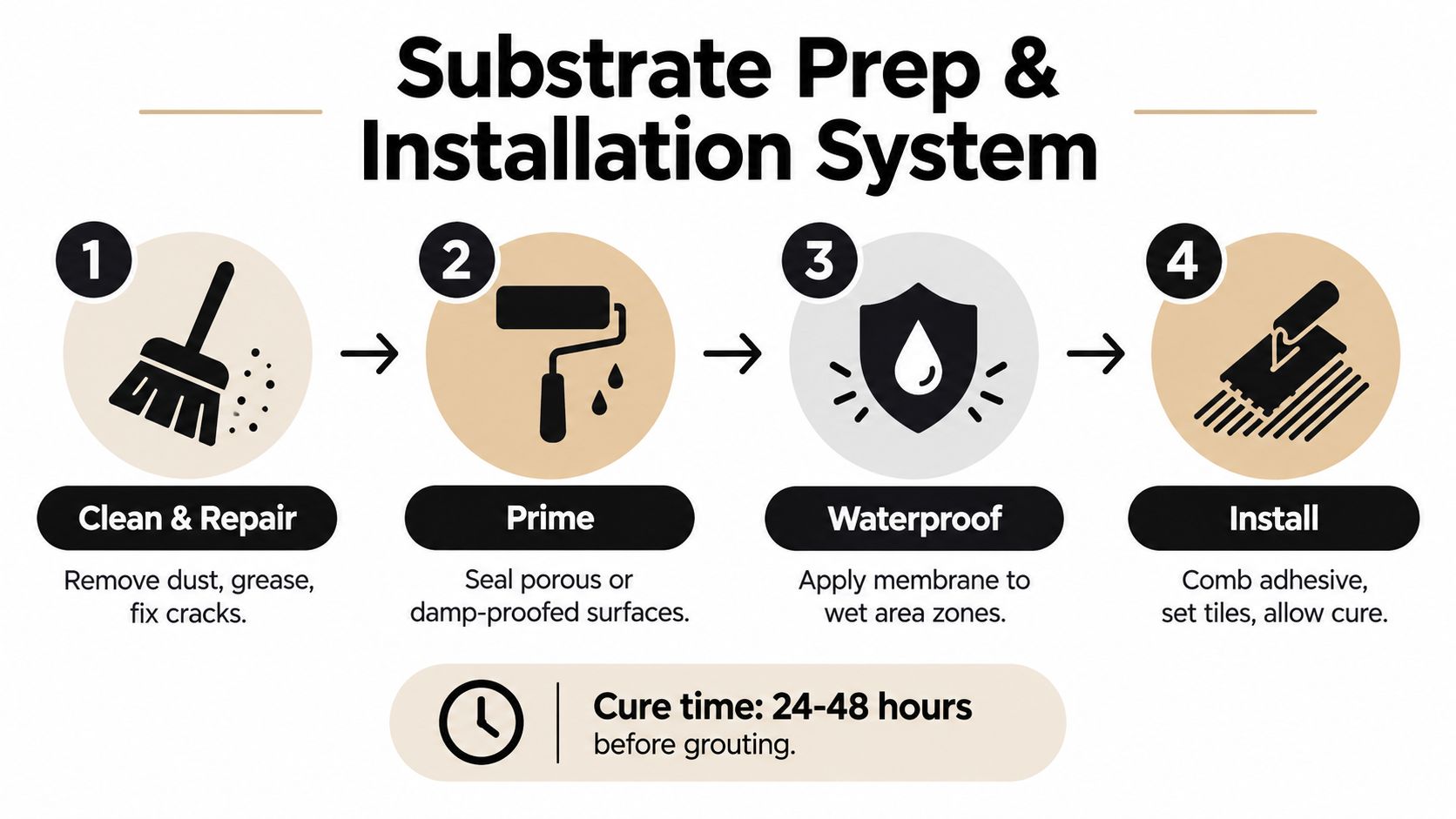
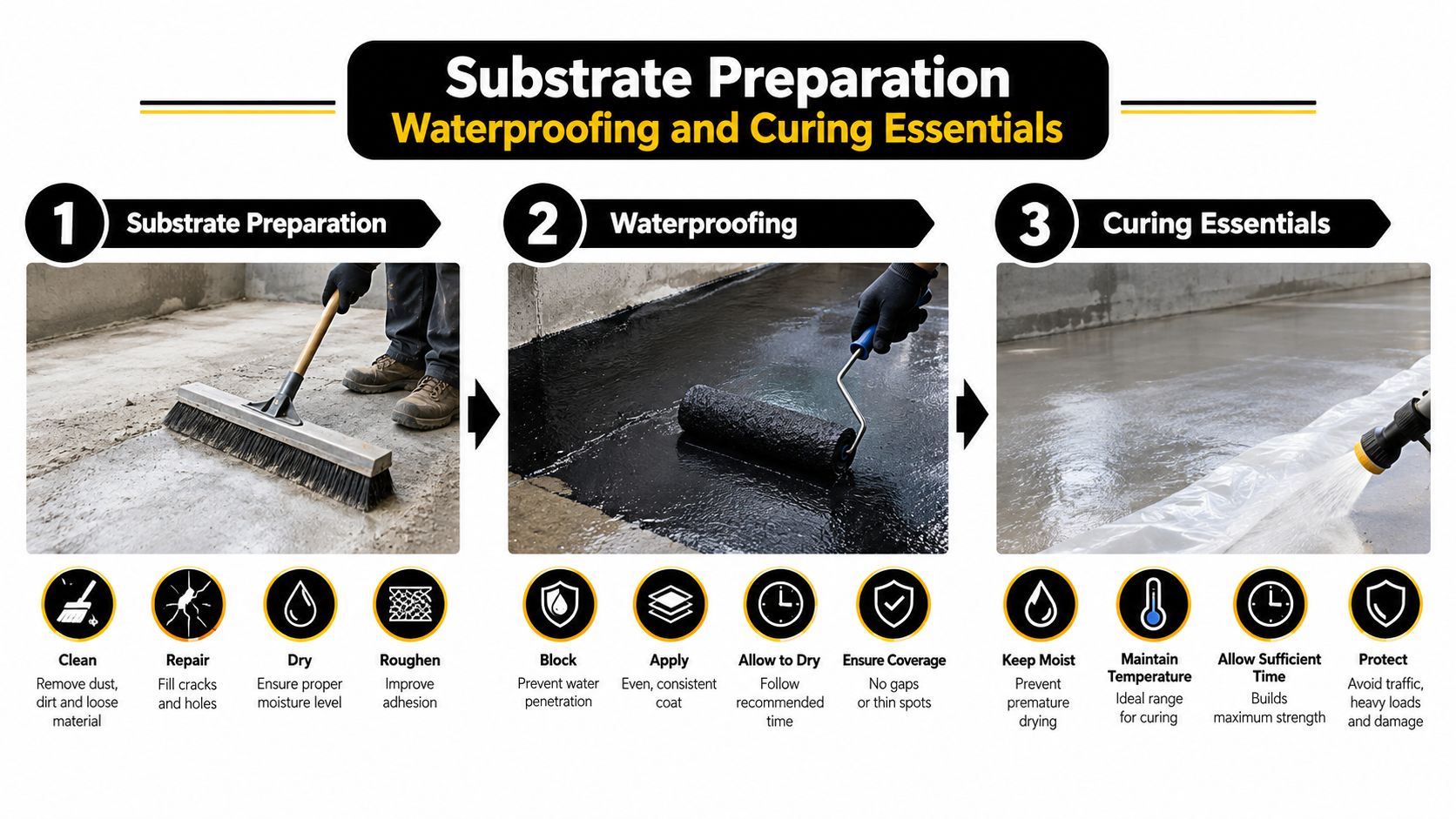
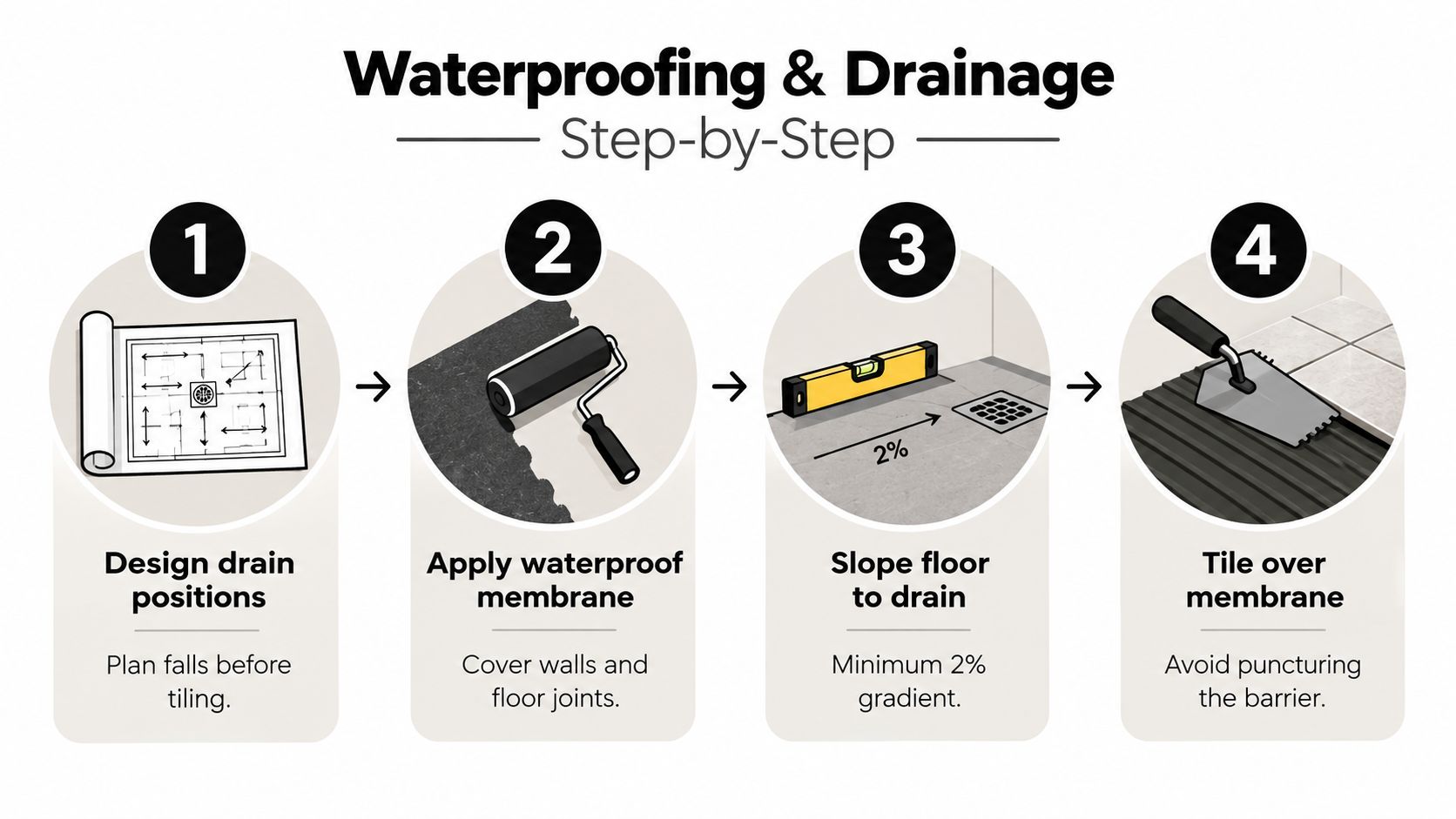
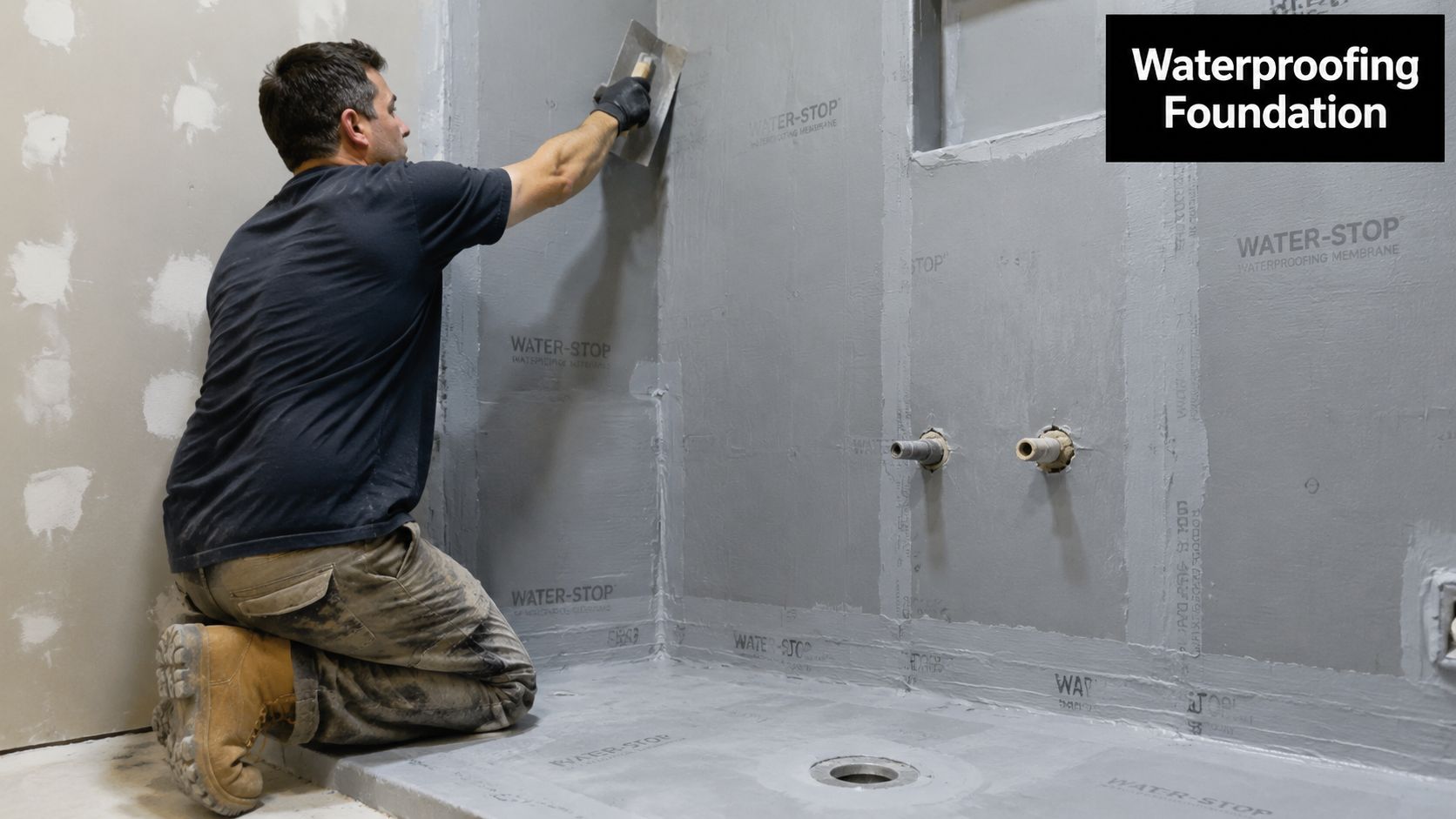
The tile surface is what you see. It isn't what keeps the bathroom dry. That job belongs to the waterproofing system, the substrate preparation, and the drainage falls beneath the finish.

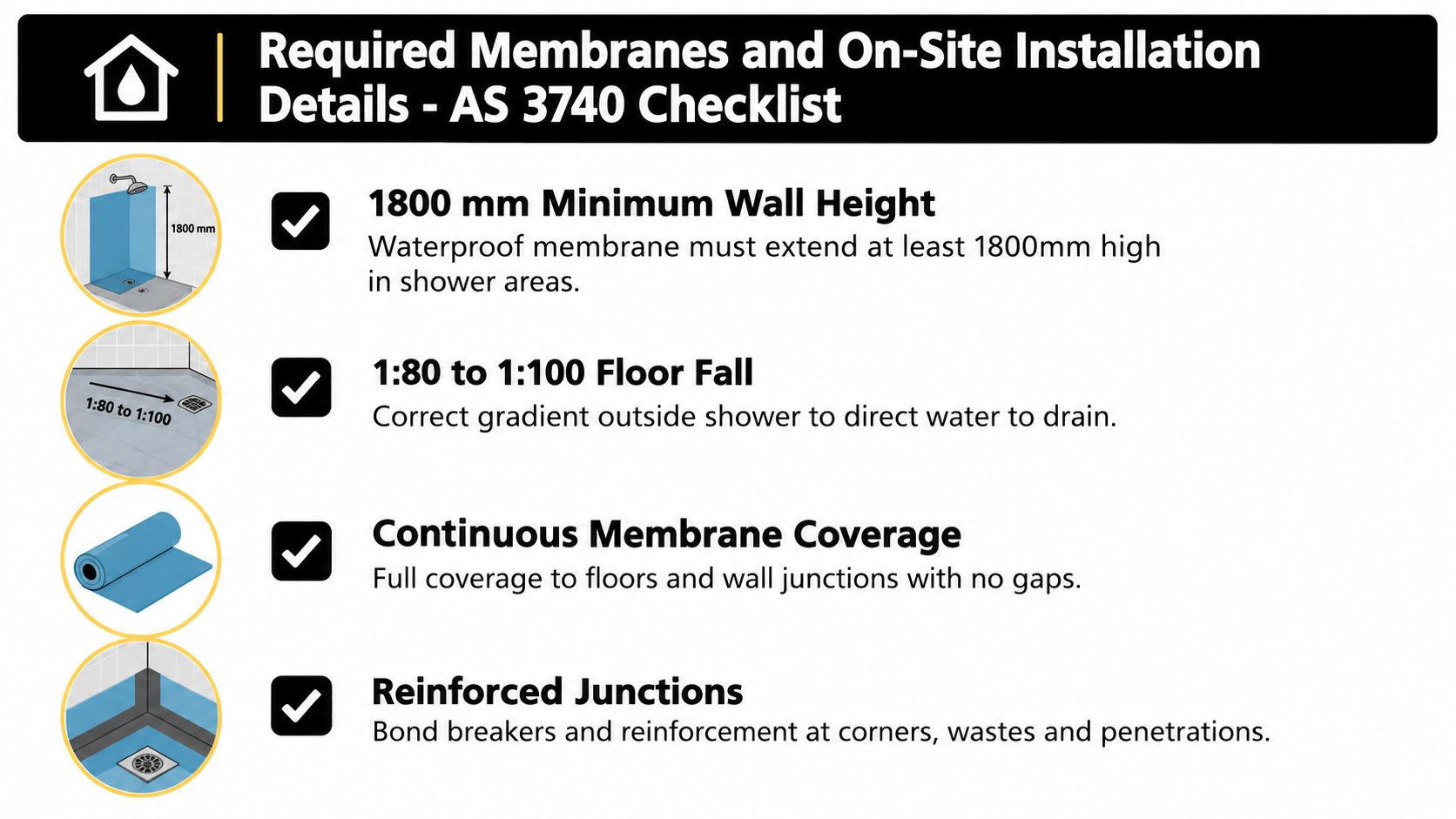
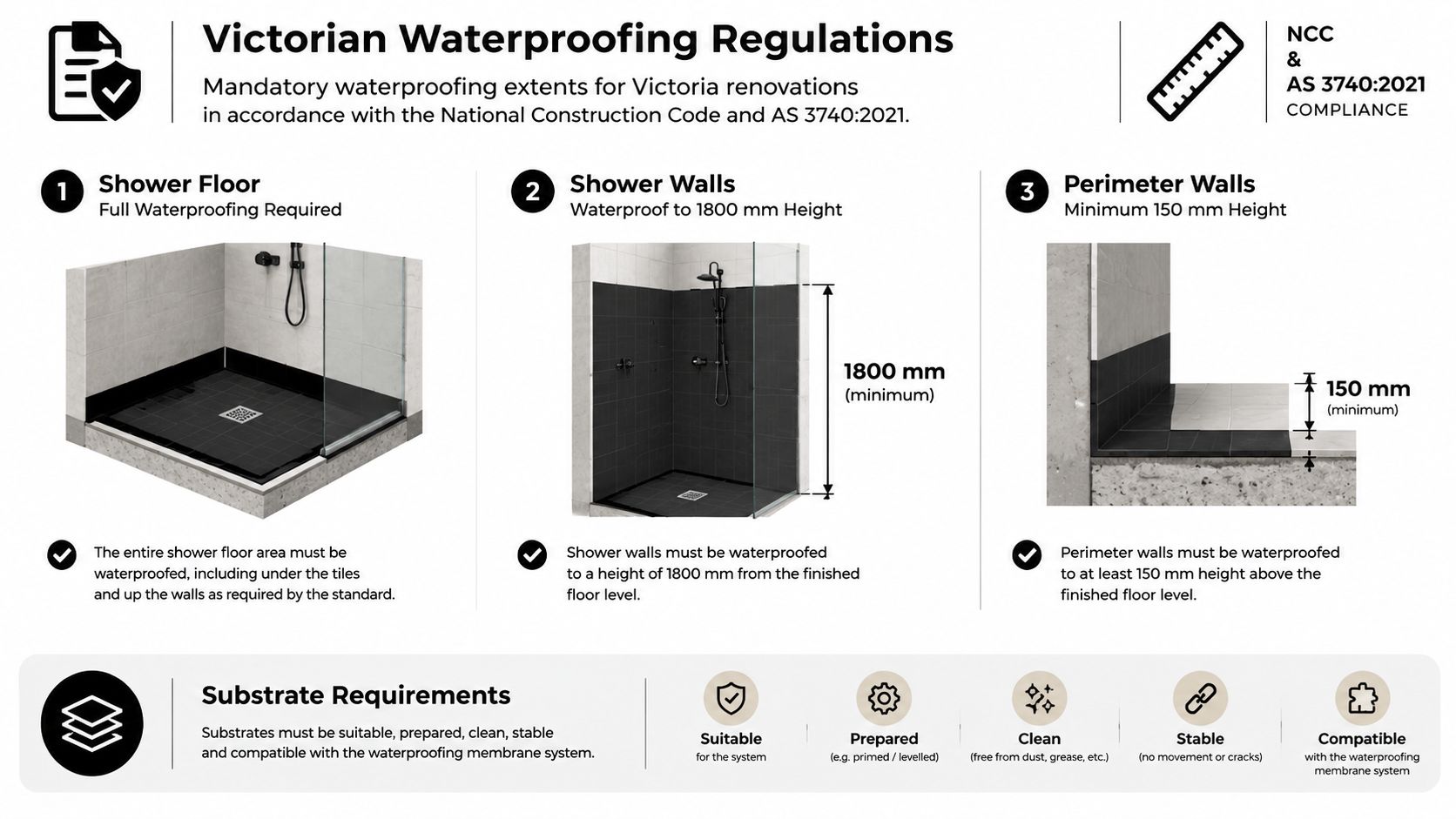
Australian bathroom tiling is built around durability and wet-area compliance. The NCC 2022 references AS 3740 for waterproofing of wet areas, and contemporary bathrooms are built as a compliant system with the waterproof membrane first, then tile finish, reflecting hard-earned lessons from leaks and mould, as outlined in this guide to bathroom waterproofing and AS 3740.

An infographic showing seven essential steps for professional bathroom waterproofing and tiling installation processes.

What sits under the tile finish

A proper install usually starts with demolition and assessment. Once the old bathroom is removed, the structure, floor condition, framing, and sheeting can be checked. If the substrate is unstable or out of tolerance, no tile choice will rescue the result.

The next steps are where a lot of cheap jobs go wrong:

  1. Substrate preparation
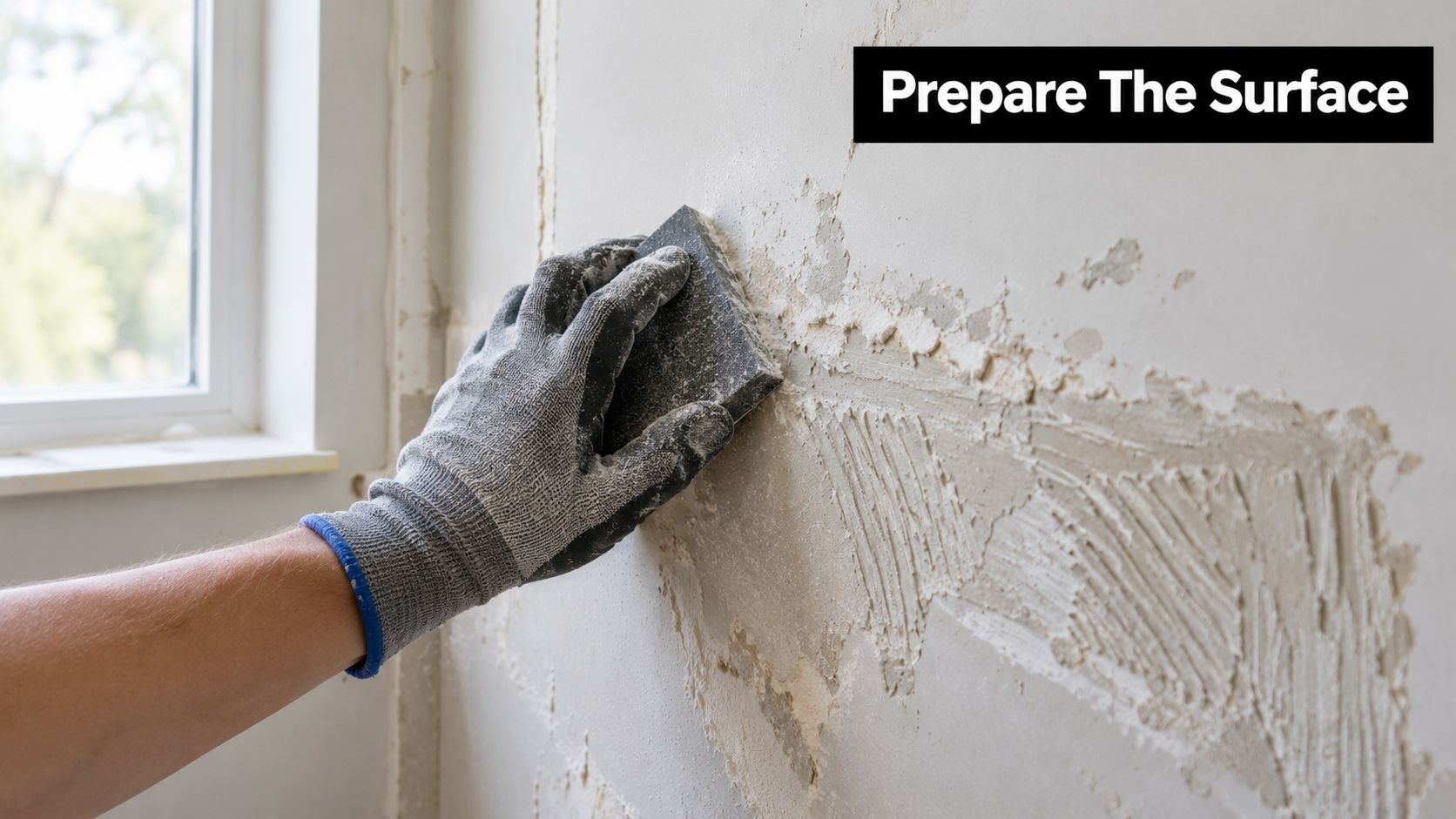
    Walls and floors need to be suitable for the chosen tile format. Large tiles need flatter surfaces. Shower floors need controlled falls.

  2. Waterproofing
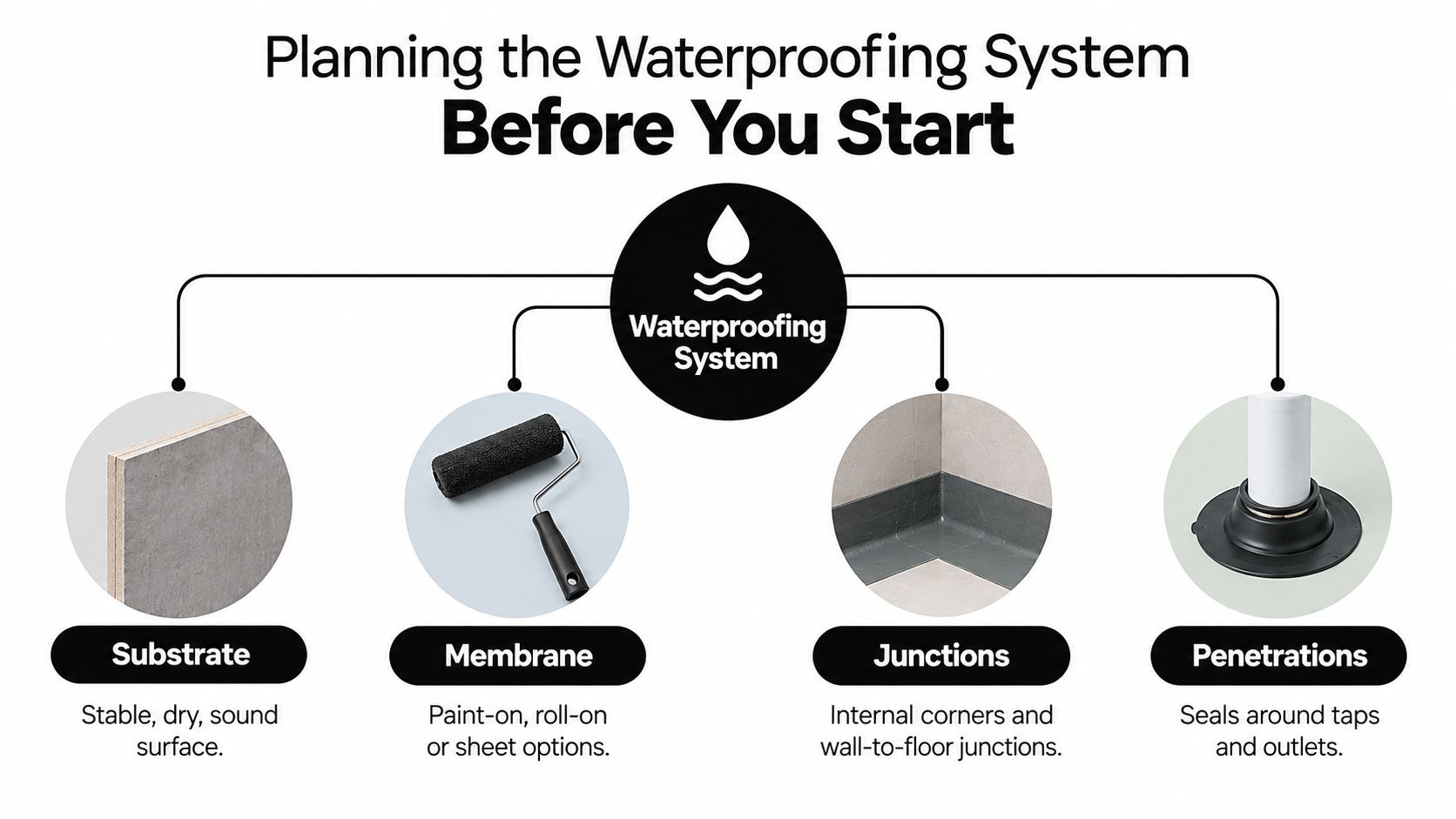
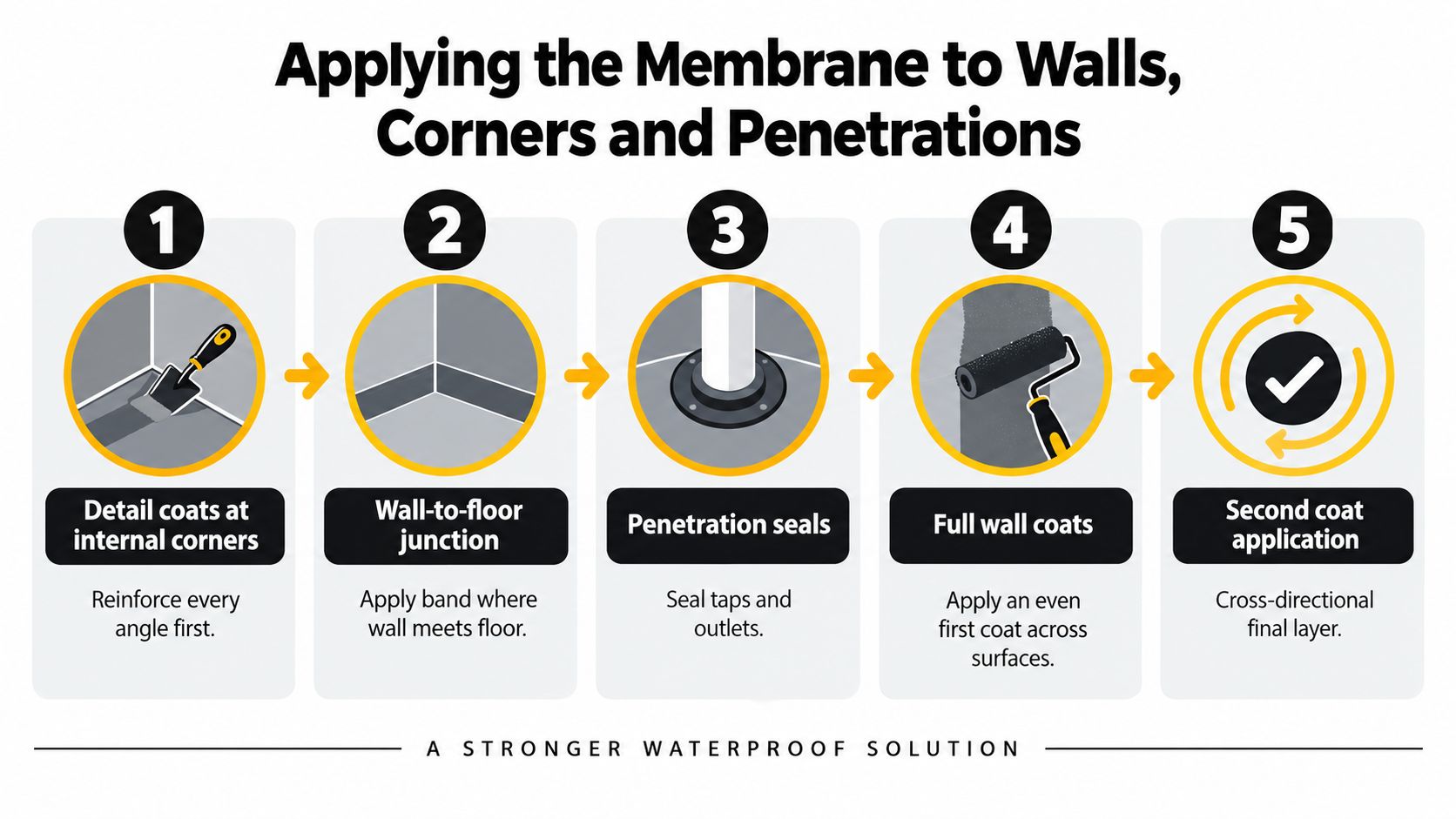
    Membranes are applied to the correct wet areas, junctions, penetrations, and transitions. This isn't decorative work. It's the wet-area defence layer.

  3. Screeding and falls
    Shower bases and bathroom floors must direct water to waste points. If falls are wrong, water ponds, tracks, or sits against edges.

  4. Tile fixing and movement allowance
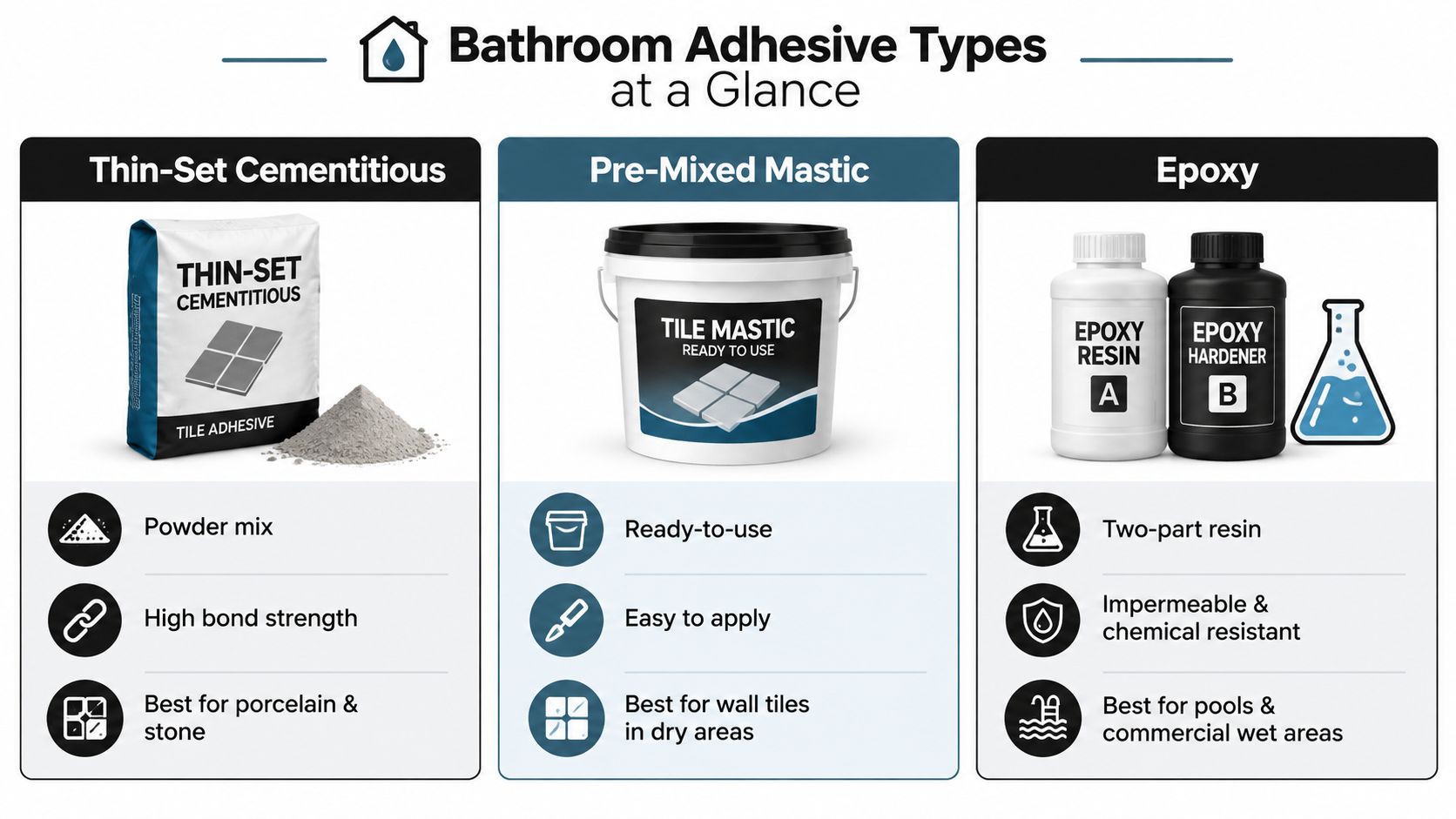
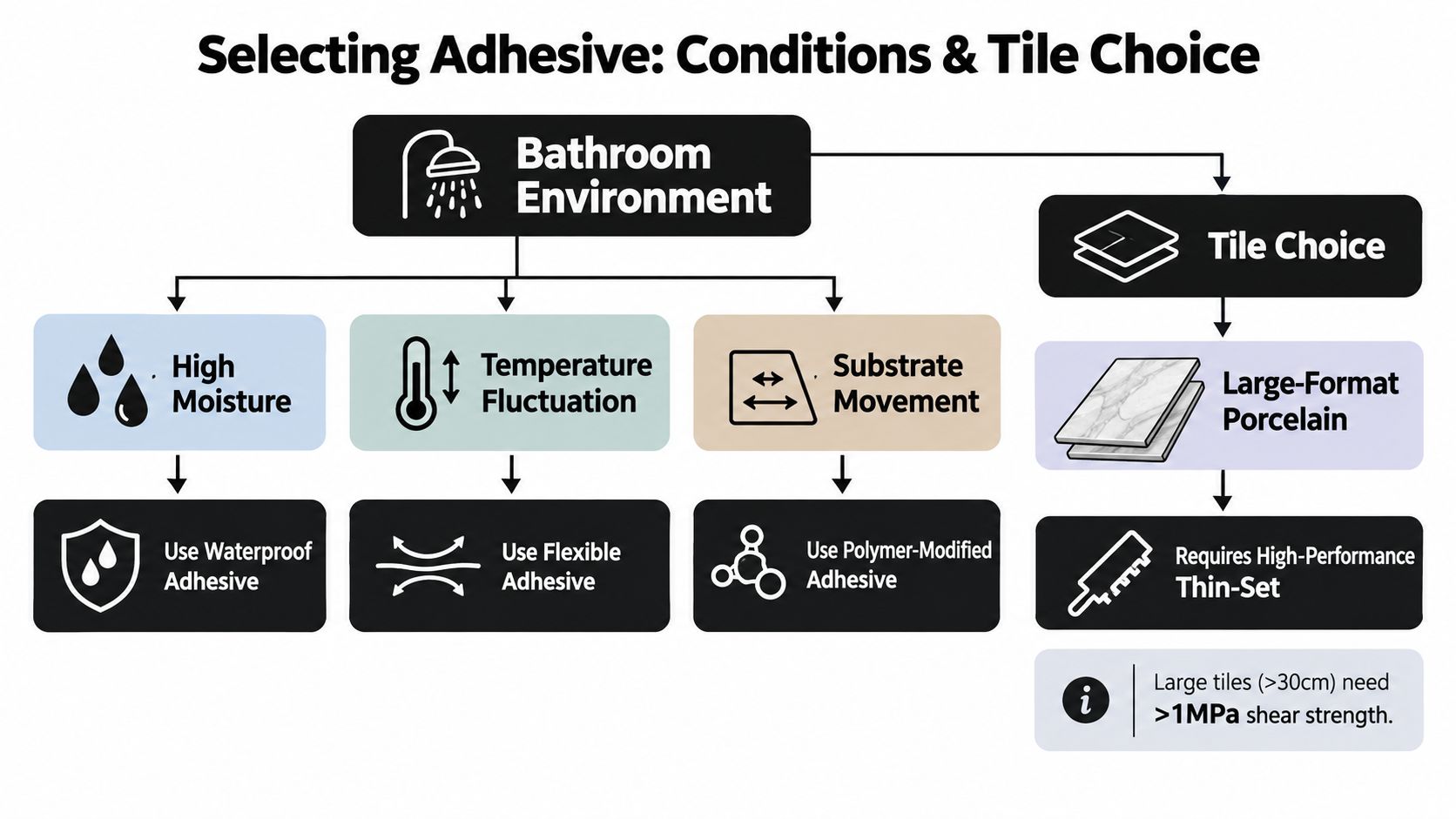
    Adhesive selection, coverage, levelling, and movement treatment all affect longevity.

A homeowner who wants a useful technical overview can also review waterproofing requirements and bathroom wet-area practice in Melbourne.

Tiles are not waterproof. If water management is poor under the surface, grout and silicone won't save the room.

Why registered builders matter in bathroom renovations

The difference between a tiler and a registered builder becomes important. In a full bathroom renovation, multiple trades need to be coordinated. Carpentry, plumbing, electrical, waterproofing, tiling, glazing, and fit-off all affect one another. If the sequencing is wrong, one trade can undo another trade's work.

A registered builder takes responsibility for that overall sequence and the compliant outcome. That matters in practical ways:

  • Penetrations are planned properly: Tapware, shower rails, and wastes need to work with waterproofing and tile set-out.
  • Trades don't clash: Plumbing points, niches, and vanity locations get resolved before final tiling.
  • Defects are easier to trace and prevent: One party manages the room as a system, not as disconnected tasks.

Melbourne Tiling Services P/L is one example of a company that handles bathroom renovations under registered builder oversight while coordinating tiling, screeding, waterproofing, and the required supporting trades.

Budgeting Your Melbourne Bathroom Tiling Project

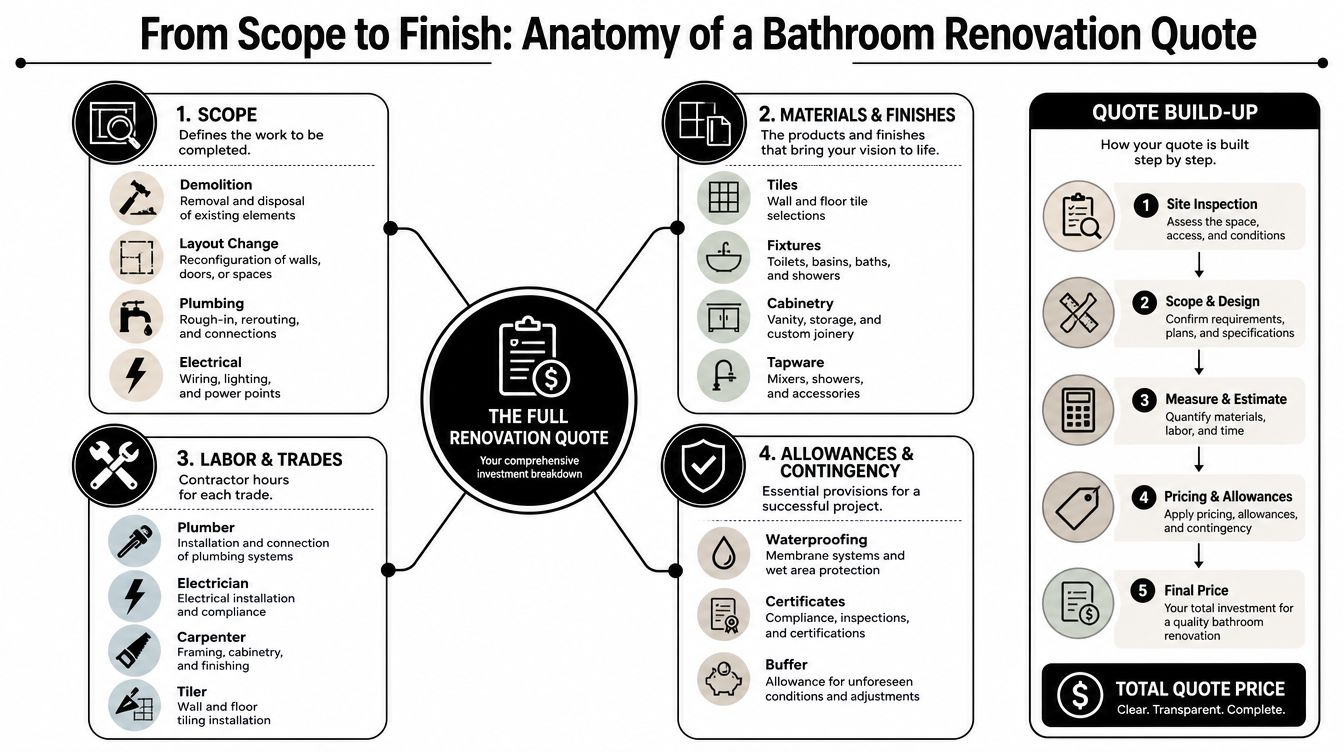
The number that catches most homeowners out isn't the tile price. It's everything around the tile. Adhesives, trims, waterproofing, screeding, labour, demolition, substrate correction, plumbing changes, and electrical updates can all shift the budget more than the face value of the chosen tile.

Where the money actually goes

A bathroom tiling budget usually includes several layers of work:

  • Demolition and disposal: Removing old tiles, fittings, sheeting, and debris.
  • Preparation: Levelling floors, correcting walls, replacing damaged substrate, and setting falls.
  • Waterproofing and fixing materials: Membrane systems, adhesives, grout, sealants, trims, and movement detailing.
  • Labour: Tiling itself, plus all the time spent measuring, setting out, cutting, and finishing.
  • Associated renovation trades: Plumbing, electrical, carpentry, shower screens, painting, and fit-off if it's a full bathroom renovation.

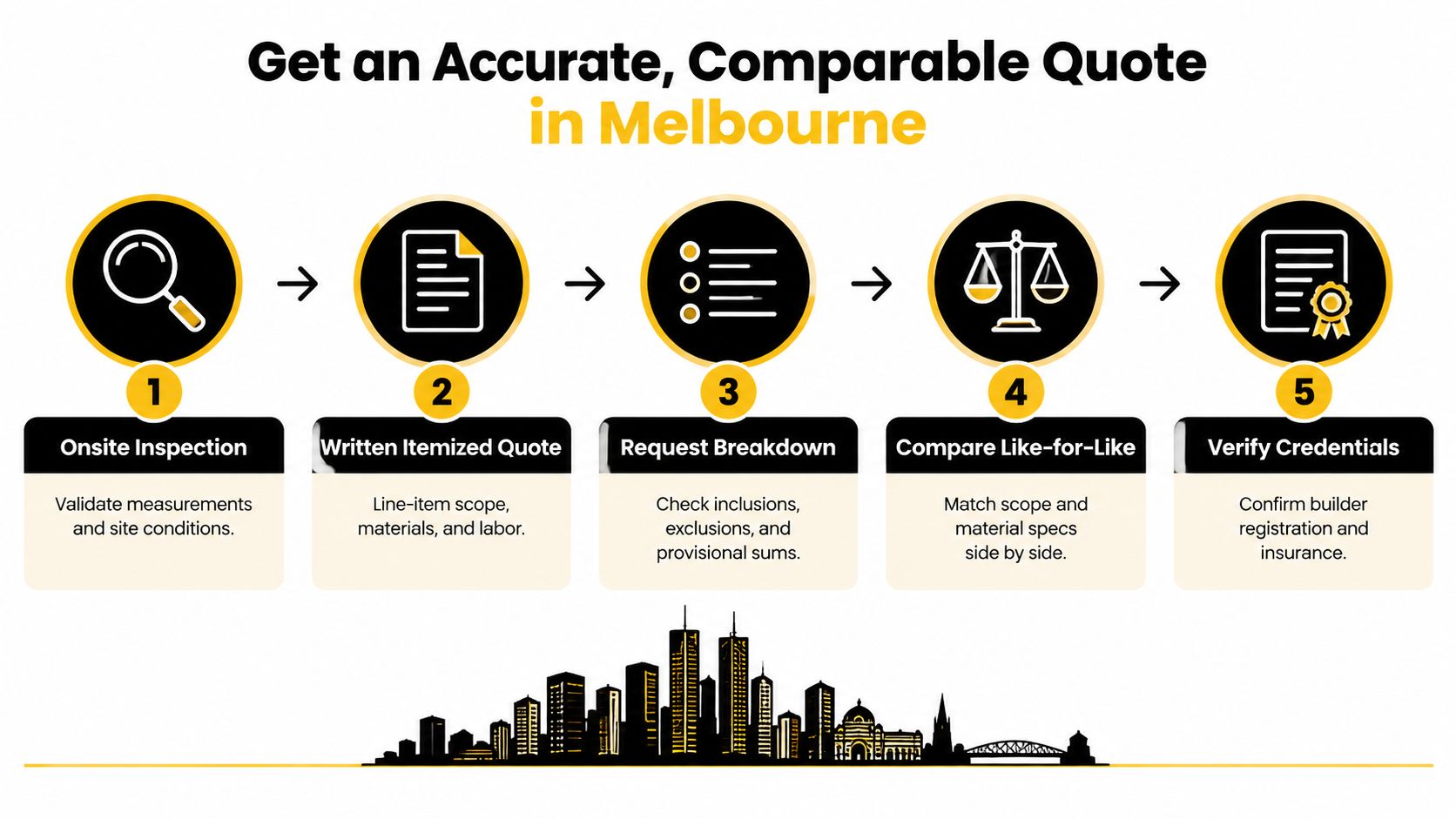
If you're comparing quotes, many misunderstandings often begin. One quote may include complete preparation and compliant wet-area work. Another may only price laying tile onto whatever surface is already there. They're not comparable.

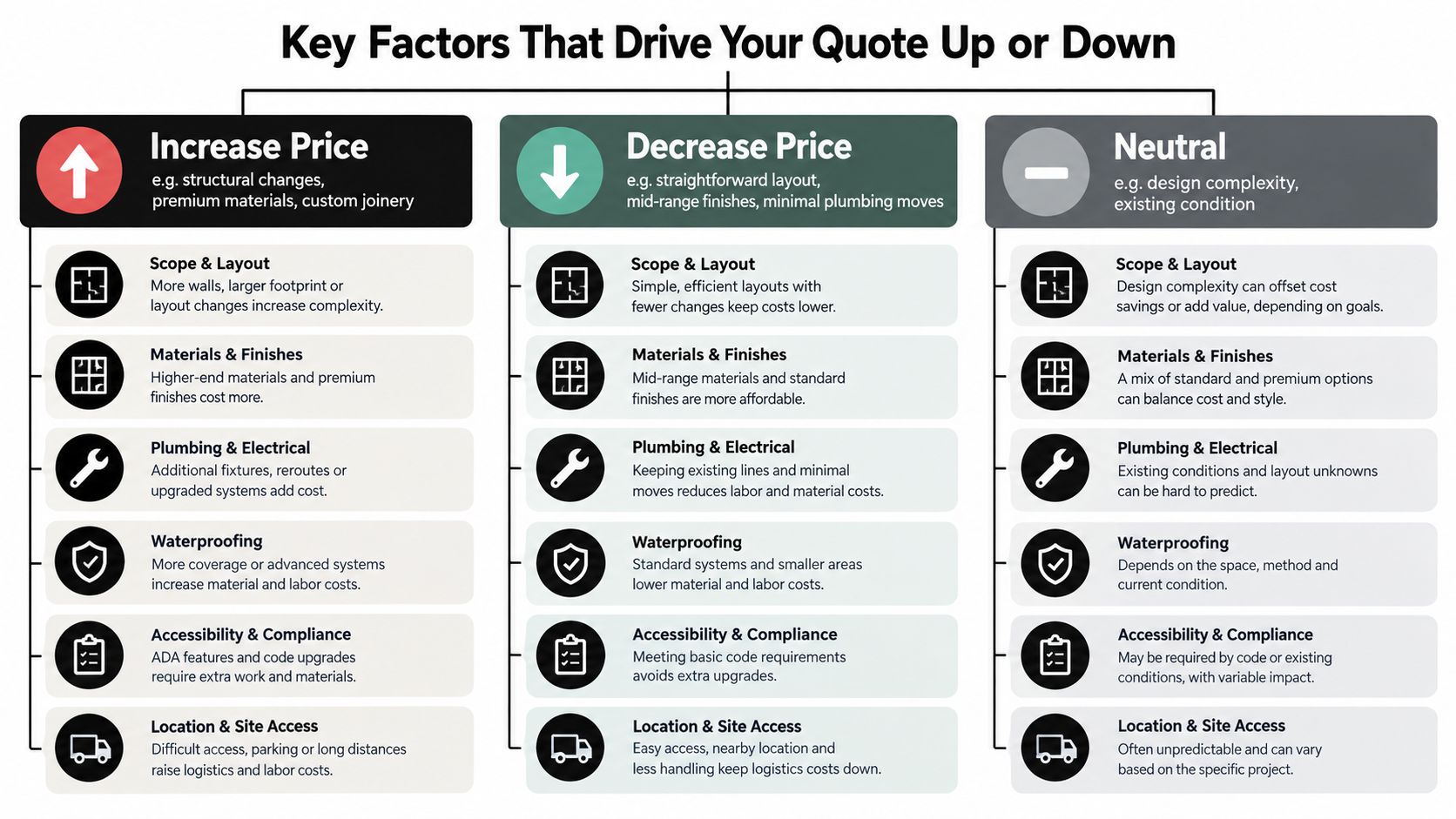
What changes the final price

Some bathrooms are straightforward. Many aren't. These factors usually move the cost most:

Cost driver Why it matters
Tile size Larger tiles need flatter substrates and more exact handling
Layout complexity Herringbone, feature bands, niches, and mitred edges add labour
Existing room condition Uneven floors, damaged walls, and moisture issues require rectification
Scope of renovation Full bathroom renovations cost more than tile-only replacement because more trades are involved
Fixture relocation Moving plumbing points or electrical locations adds trade coordination

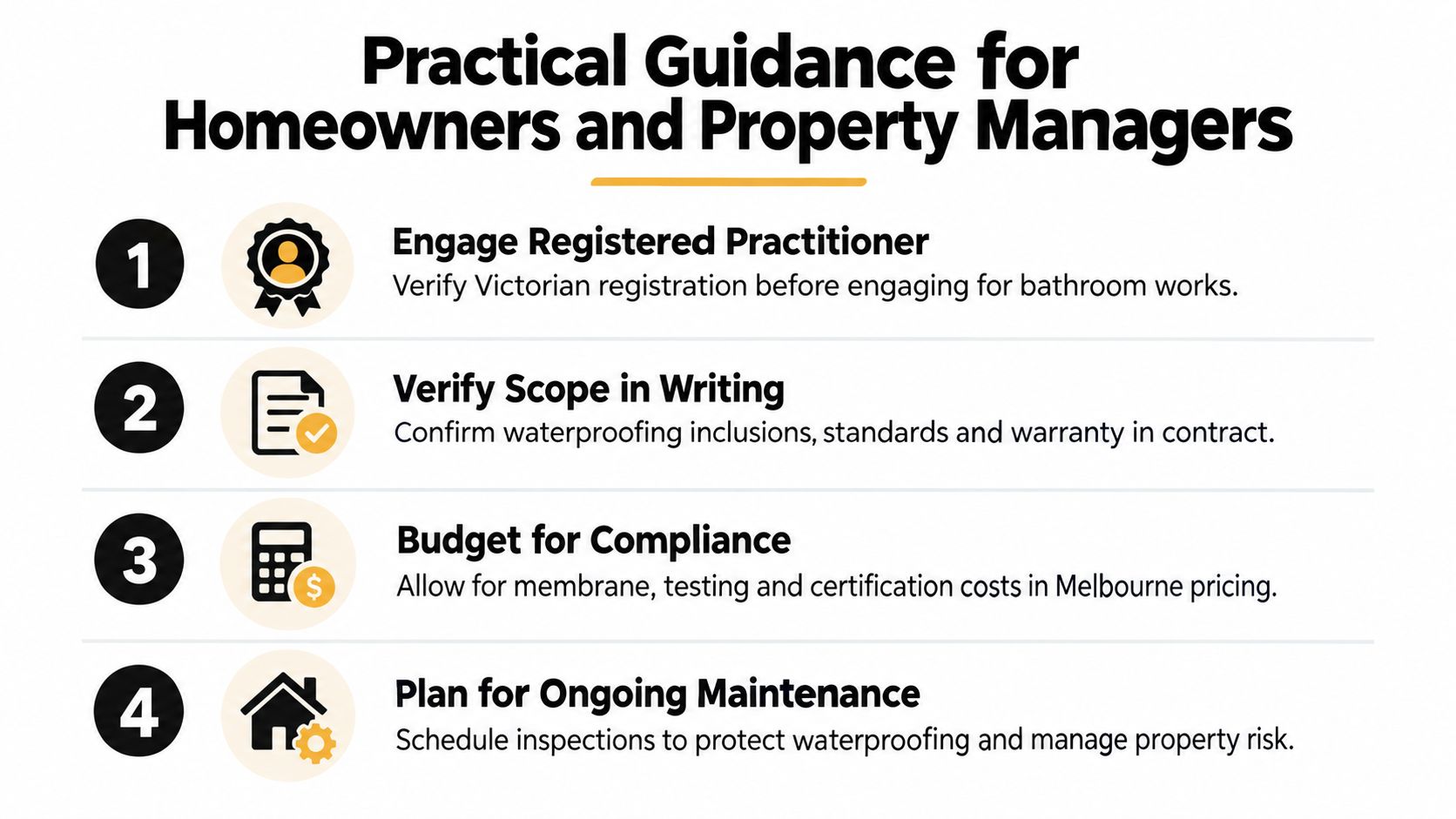
A transparent quote should separate products, labour, prep, and exclusions clearly. It should also state who is managing the job. If a builder is coordinating the renovation, that should be obvious in the paperwork.

The cheapest bathroom quote often assumes the existing room is ready for tiling. That's rarely the reality once demolition starts.

How to Choose the Right Tiling Professional in Melbourne

Hiring well matters more than choosing the perfect tile. A strong installer can make a straightforward tile look sharp and long-lasting. A poor installer can ruin expensive materials very quickly.

A hiring checklist that protects you

Start with questions that reveal how the contractor thinks about the whole room.

  • Ask who manages the renovation: If it's a full bathroom renovation, you want clarity on who coordinates plumbing, electrical, waterproofing, and final compliance.
  • Review wet-area experience: Ask how they handle falls, membrane sequencing, niches, movement joints, and penetrations.
  • Check large-format experience: Not every tiler handles oversized porcelain or panel products well.
  • Request a written quote: It should outline demolition, substrate prep, waterproofing, tiling, and exclusions in plain language.
  • Look at completed bathrooms: You're checking alignment, cuts, niche detailing, silicone finish, and overall set-out, not just nice photography.
  • Confirm insurance and registration status: Especially important where broader building work is involved.

For owners comparing providers across project types, including larger fit-outs, it can help to see how a contractor presents their capabilities in areas such as commercial tiling work in Melbourne, because it often reveals how they think about scale, coordination, and finish quality.

When a tiler is not enough

A tiler may be the right hire for a very limited scope. Replacing a splashback tile or carrying out isolated tile repairs is different from rebuilding a bathroom. But once the project involves demolition, waterproofing, layout revision, multiple trades, and responsibility for the finished room, a registered builder is the safer structure.

That doesn't make the tiler less important. It means the project needs one accountable party above the trade level.

Choose the team that can answer practical questions clearly. How will the floor be prepared. Who sets the falls. Who waterproofs. Who signs off the sequencing. What happens if demolition reveals substrate damage. Those answers tell you far more than a mood board ever will.


If you're planning modern bathroom tiling as part of a full renovation, Melbourne Tiling Services P/L handles bathroom and ensuite projects across Melbourne with registered builder oversight, trade coordination, waterproofing, screeding, and wall and floor tiling as part of the same scope.

Bathroom Renovations Altona 2026: Your Dream Space

If you're in Altona and your bathroom still has ageing tiles, poor ventilation, a shower that never quite drains properly, or a leak you've been putting off, you're not alone. A lot of homes in Melbourne's west have solid bones but tired wet areas. The bathroom is often the room that shows its age first, and it's also the room where shortcuts cause the most expensive damage.

Bathroom renovations altona projects aren't just about making the room look newer. In older coastal suburbs, the primary concern is usually what sits behind the tiles. Movement in the substrate, past patch jobs, failed waterproofing, and hidden moisture damage can turn a simple upgrade into a rectification job if the work isn't assessed properly from day one. That's why homeowners who want a result that lasts usually focus less on showroom styling and more on build quality, compliance, and who's managing the trades.

Table of Contents

Why Renovate Your Altona Bathroom Now?

Many Altona homeowners are in the same position. They like the area, they know the street, the home still works, but the bathroom doesn't. It might be cramped, dated, hard to clean, or showing early signs of water entry around the shower base or corners.

That's one reason bathroom work stays high on the renovation list. In Australia, bathroom work remains one of the most common remodelling categories, and many homeowners are renovating instead of moving because they're locked into low mortgage rates. That's especially relevant in Victoria, where updating an older bathroom in a suburb like Altona can be more practical than selling and rebuying in a high-price market, according to HIRI's discussion of master bathroom remodelling trends.

In practical terms, that changes the way people should look at a bathroom renovation. It isn't just a cosmetic spend. It's a decision to improve daily use, avoid leak risk, and upgrade one of the most heavily used rooms in the house without taking on the cost and disruption of moving.

Why Altona homes need a more careful approach

Altona has plenty of older housing stock, and older bathrooms often come with mixed substrates, previous repairs, uneven floors, and moisture-related wear. Coastal conditions don't help. Salt air, dampness, and years of use can expose weaknesses faster than many owners expect.

A good renovation deals with that reality upfront. It checks the room as a wet area, not just as a style project.

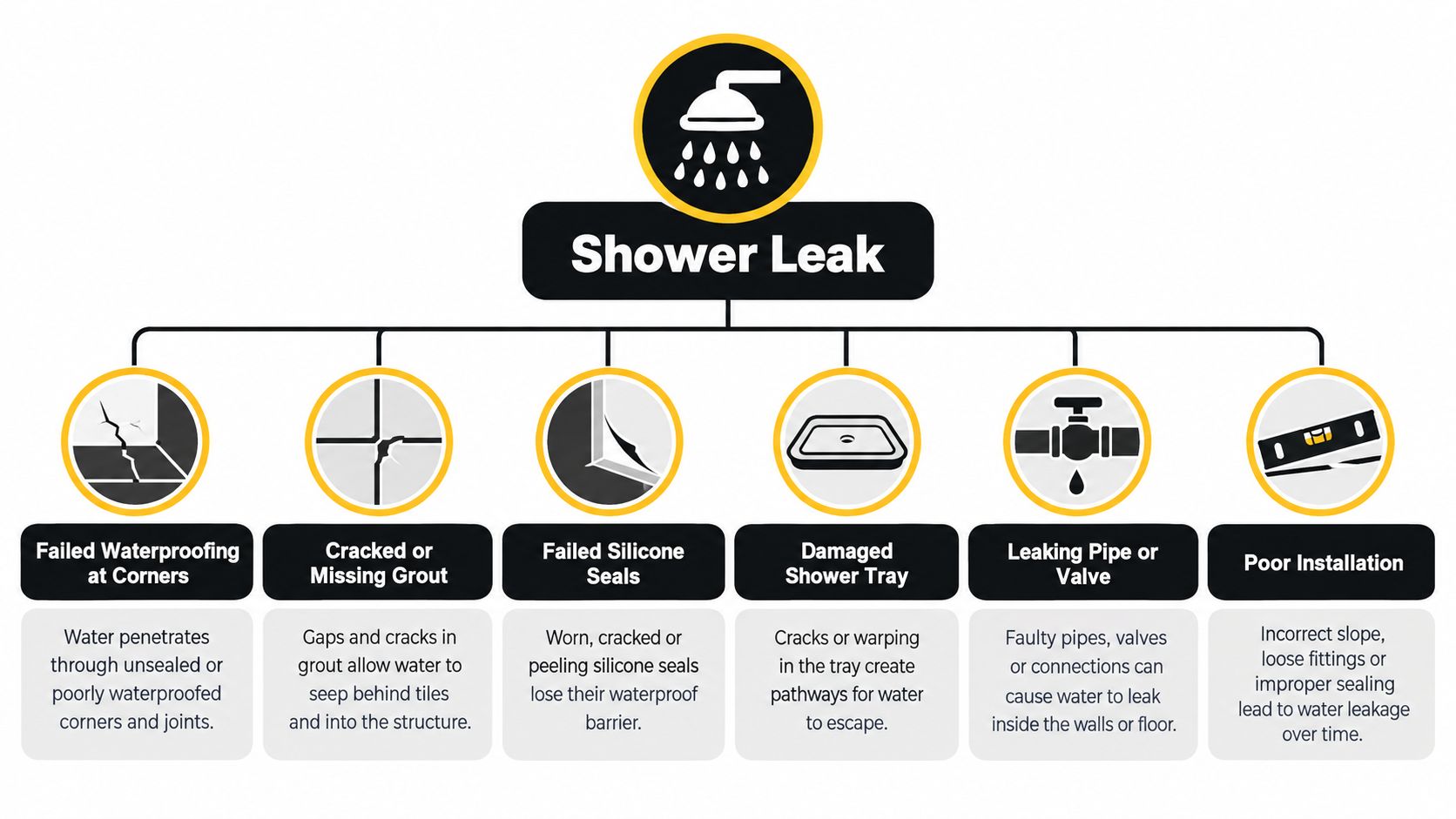
Practical rule: If a bathroom already has staining, loose tiles, cracked grout, swollen skirtings, or a shower that smells damp, treat it as a building issue first and a design project second.

That's where registered builders make a real difference. They look at the whole sequence, the whole room, and the whole risk profile before any tile or tapware gets selected.

Budgeting for Your Bathroom Renovation in Altona

Budget conversations are where many bathroom projects either become clear or become messy. The biggest mistake homeowners make isn't spending too much on tiles or tapware. It's accepting a quote that looks cheaper because key work hasn't been fully included.

In Victoria, the building sector faces higher costs, and a major factor in bathroom budgets is the coordination of licenced trades. A cheap quote can become expensive when carpentry, plumbing, electrical, and waterproofing aren't managed together from the start, leading to delays and rework, as noted in this discussion of trade coordination and transparent renovation budgeting.

An infographic showing the percentage breakdown of a typical bathroom renovation budget in Altona, Australia.

What actually changes the price

Price depends on scope first, finishes second.

A bathroom that keeps the same layout is usually simpler than one that moves the shower, vanity, or toilet. Once plumbing locations shift, the build becomes more involved. The same applies when walls are out of square, floors need correction, or old damage appears during demolition.

The main cost drivers usually include:

  • Extent of demolition: A full strip-out costs more than a surface refresh, but it gives the builder access to the structure, substrate, and wet area details that matter.
  • Condition of the base: If the floor needs screeding or self-levelling to create proper falls and a flat tiling surface, that's necessary work, not an optional extra.
  • Tile selection: Standard ceramics and large-format porcelain don't install the same way. Premium products demand better substrate preparation and tighter set-out.
  • Joinery and fixtures: Wall-hung vanities, recessed niches, in-wall cisterns, and custom storage all increase complexity.
  • Access and protection: Tight sites, occupied homes, and limited access add labour and handling time.

For early planning, a tool like this bathroom renovation calculator can help you think through scope before you compare formal quotes.

How to compare quotes properly

Don't compare the total only. Compare the inclusions line by line.

Ask whether the quote covers:

Item What you want to see
Demolition Removal, disposal, and site protection
Substrate prep Levelling, screeding, and rectification if required
Waterproofing Wet area waterproofing included, not provisional wording
Trades Plumbing, electrical, carpentry, tiling, fit-off
Fixtures Clear allowance or nominated products
Variations Process for hidden damage or owner changes

If one quote looks much lower, check whether it has simply pushed risk back onto you.

The better quote is usually the one that identifies likely issues early and prices the work in a way that reflects the actual build, not just the attractive version of it.

The A-to-Z Renovation Process with Registered Builders

A well-run renovation feels organised because the order is organised. Bathroom work has to follow a strict sequence. If the early stages are rushed, every finish installed after that carries the defect.

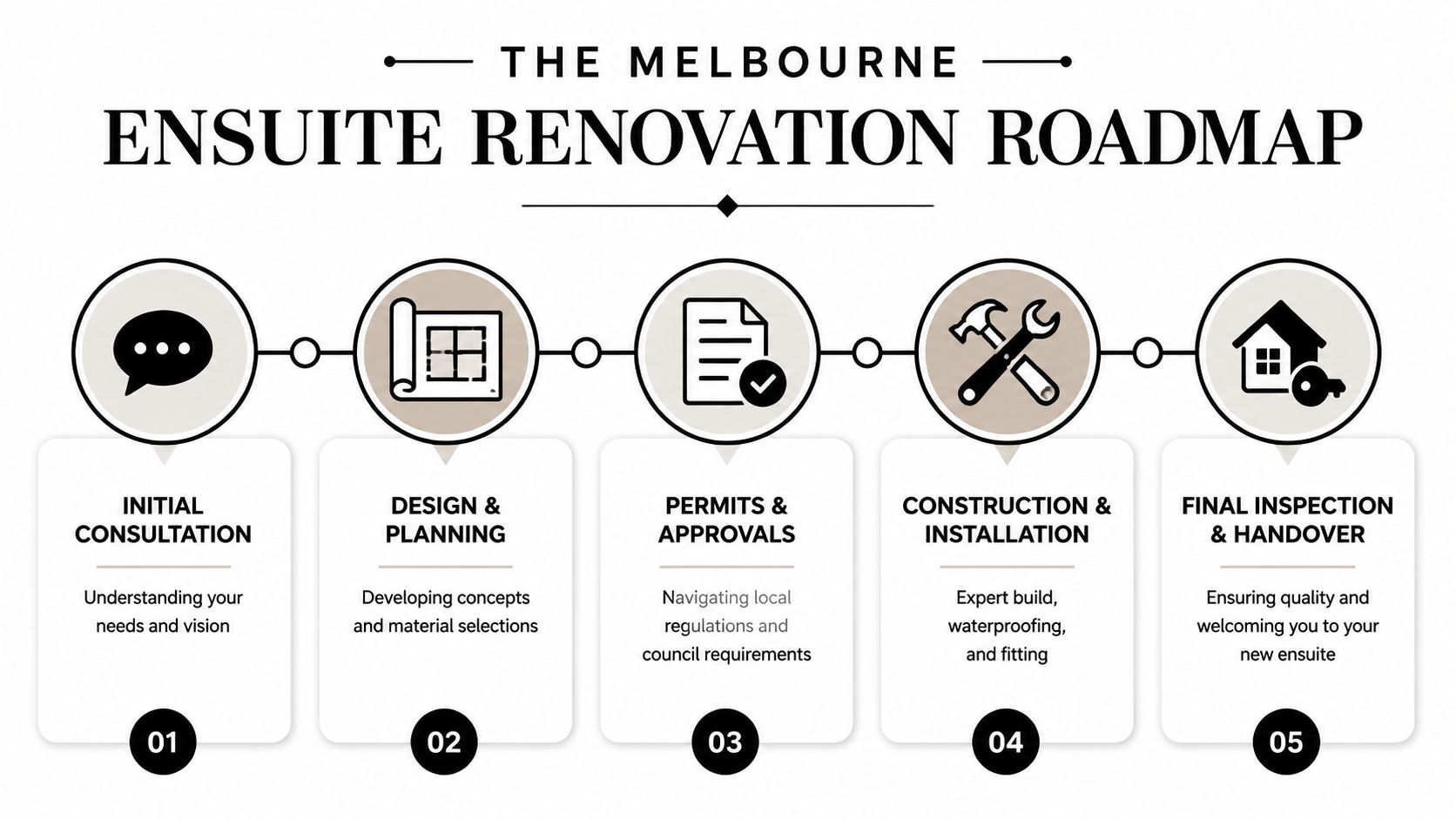
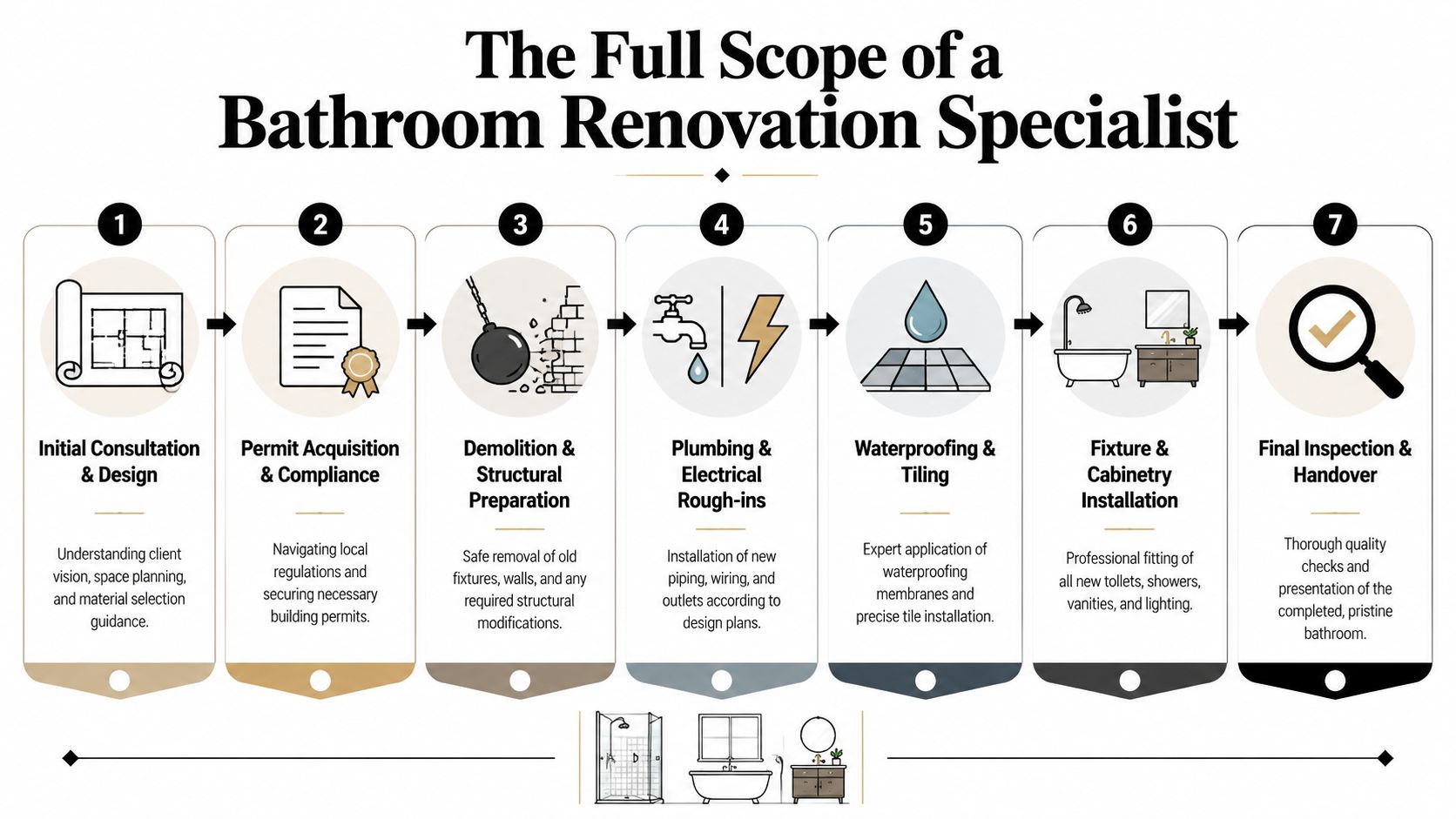
A seven-step visual roadmap showing the professional bathroom renovation process from initial consultation to final handover.

What happens before any tiling starts

The process starts with inspection and set-out. The builder checks the room, confirms dimensions, reviews the existing floor and wall condition, and works through layout decisions that affect plumbing, electrical, and tile lines.

Then comes demolition. This has to be controlled and clean, especially in occupied homes. Once the old bathroom is stripped, the underlying condition of the room becomes visible. That's when movement cracks, patch repairs, rotten sheet material, or poor past workmanship often show up.

After demolition, the room is prepared for rough-in works. That can include:

  1. Structural checks and framing adjustments where walls or niches need correction.
  2. Plumbing rough-in for shower, vanity, bath, or toilet changes.
  3. Electrical rough-in for lighting, exhausts, heating, power points, and mirrors.
  4. Floor correction through screeding or self-levelling where required.

The non-negotiable wet area sequence

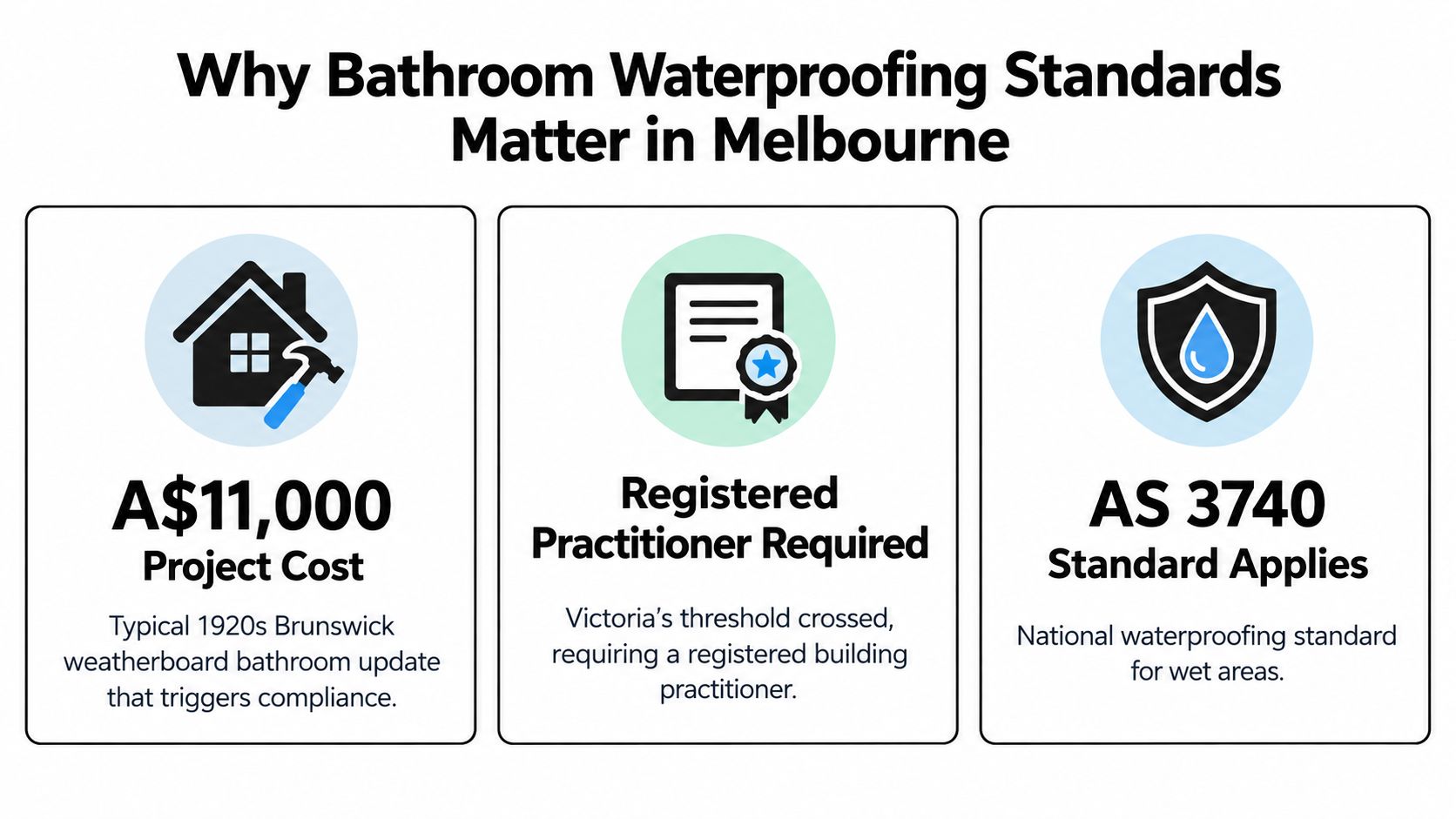
In Victoria, waterproofing must comply with AS 3740, and the critical sequence is structural set-out → waterproofing → tile installation → fit-off. If that sequence is broken, the result can be tile lippage or latent leaks, especially in older Altona homes where substrate movement is common, as outlined in this explanation of bathroom renovation sequencing and wet area performance.

That sequence matters for simple reasons. Waterproofing needs a sound, prepared substrate. Tiles need a flat, stable surface. Fit-off should happen only after the wet area is correctly sealed and the tiling is complete.

Large-format porcelain and Kerlite are far less forgiving than small-format ceramic. If the floor isn't right underneath, the finish won't hide it.

A registered builder coordinates those handovers properly. The waterproofer isn't guessing what the tiler needs. The tiler isn't trying to correct structural problems with adhesive. The plumber isn't returning to fit fixtures into a room that still has unresolved substrate issues.

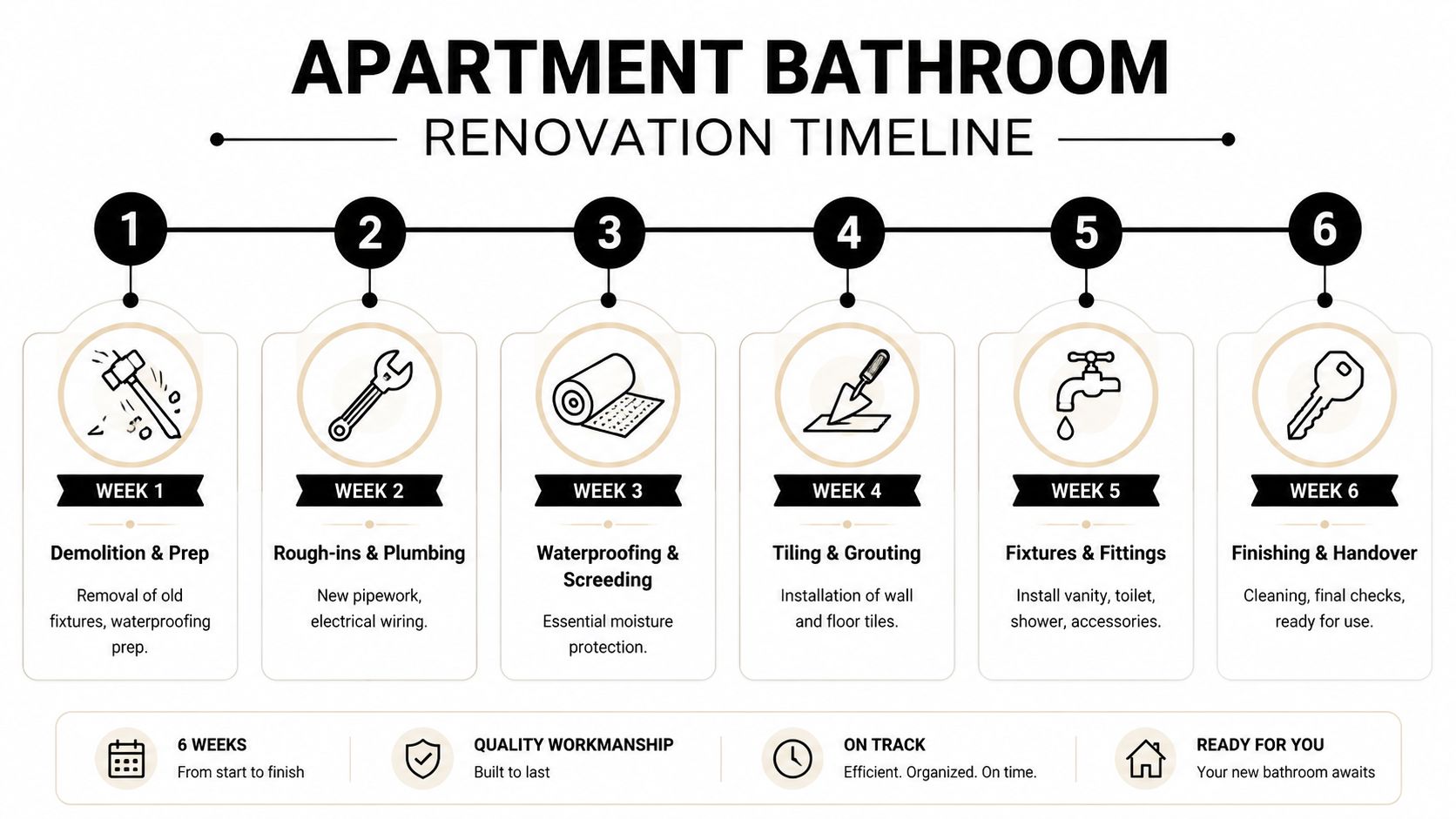
Typical Altona Bathroom Renovation Timeline

The exact program depends on scope, access, product availability, and whether hidden rectification work is uncovered after demolition. Still, the workflow usually follows a clear pattern.

Phase Typical Duration Key Activities
Planning and selections Varies by project Site inspection, layout review, materials, fixtures, quote sign-off
Demolition and strip-out Several days Remove old fixtures, wall linings, floor coverings, waste disposal
Rough-in works Several days Plumbing, electrical, carpentry, structural corrections
Surface preparation Several days Screeding, self-levelling, substrate checks, set-out
Waterproofing and curing Several days Membrane application to wet areas, junction detailing, protection
Tiling Several days Wall and floor tiling, trims, grout, finish checks
Fit-off and handover Several days Vanity, screen, tapware, toilet, accessories, final inspection

The timeline stays tighter when decisions are made early and all trades are booked under one managed program. It slows down when fixtures arrive late, variations are introduced mid-build, or the quote didn't allow for the room's actual condition.

Key Decisions in Design Tiling and Waterproofing

A bathroom should look good, but the finish you choose has to suit the room underneath. In Altona, that matters more than people think. Premium products expose bad preparation very quickly.

A person installs a white rectangular wall tile onto a blue mesh surface with wet mortar.

Large format tiles and what they demand

Large-format porcelain and Kerlite can make a bathroom feel calmer, cleaner, and more open because there are fewer grout lines breaking up the surfaces. They also reduce the visual clutter that smaller modular tiles can create in compact bathrooms.

But they only work when the substrate is properly prepared. If walls are bowed or the floor has poor falls, bigger tiles won't forgive that. They'll highlight it. That's why the smartest design decision is often to spend more attention on the base than on decorative extras.

A few material choices consistently work well:

  • Large-format wall tiles for a more continuous look and easier cleaning.
  • Slip-conscious floor tiles that still feel refined underfoot.
  • Simple tile layouts that age well and don't date quickly.
  • Quality grout and trim details because edge finishing changes how professional the whole room feels.

If you're weighing membrane systems, junction treatment, or wet area build-ups, this overview of bathroom waterproofing systems is useful background before final selections are made.

Frameless screens and cleaner layouts

Frameless shower screens remain popular for good reason. They open the room up visually and make smaller bathrooms feel less boxed in. They also work well with floor-to-ceiling tiling and linear, minimal layouts.

That said, frameless glass isn't a magic fix for poor planning. The screen position has to suit the shower falls, water containment, and door swing. The bathroom needs to be designed so the screen helps water stay where it should. Otherwise, the room looks sharp on day one and becomes annoying to use every day after that.

The best bathroom design choice is the one that still works properly on a cold weekday morning when everyone is in a rush.

The Critical Role of a Registered Builder

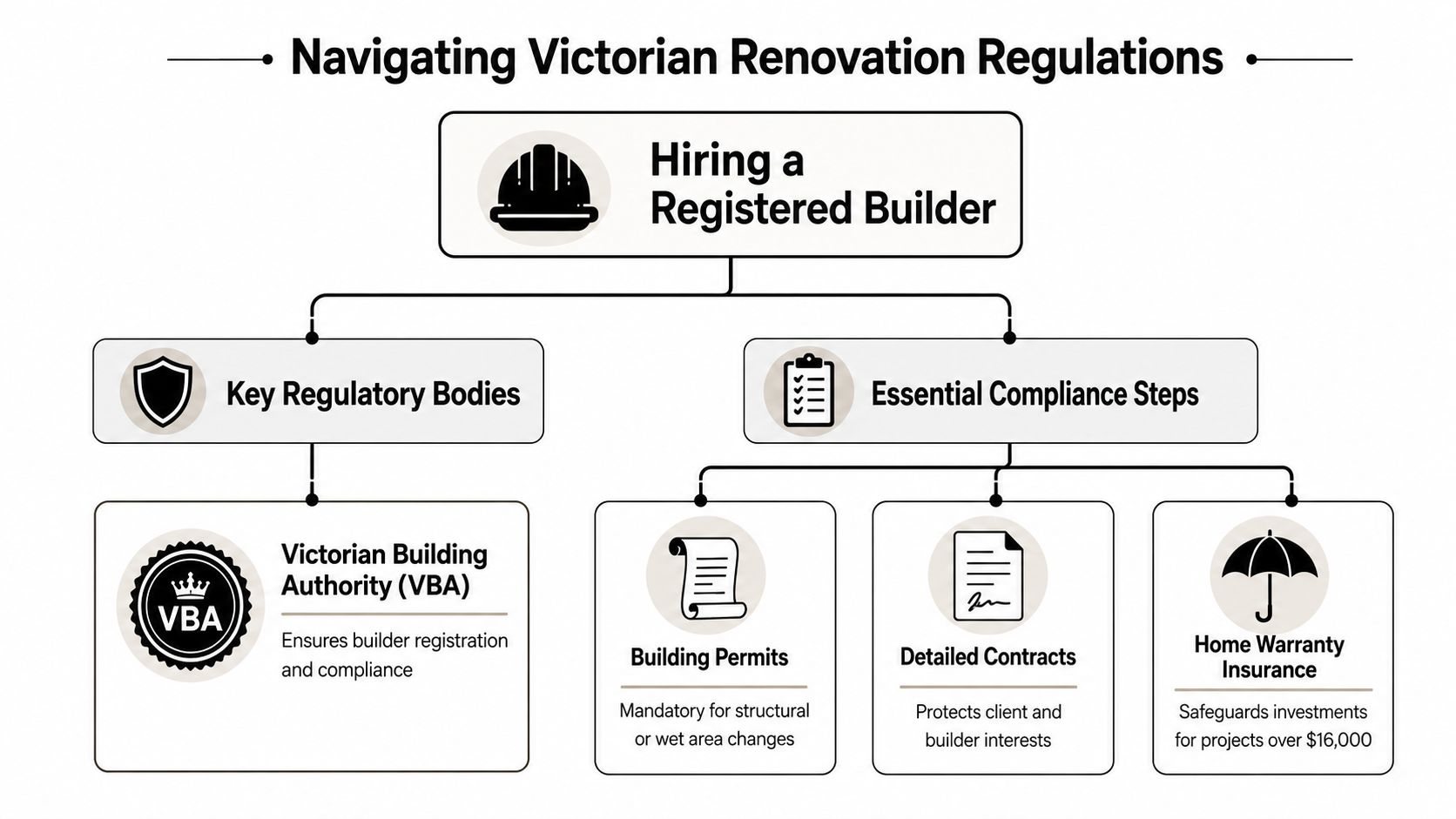
The biggest difference between a smooth renovation and a stressful one often comes down to accountability. When one registered builder manages the project, there's one party responsible for sequence, compliance, trade coordination, and defect prevention.

A professional construction worker in a hard hat reviewing architectural plans at a building site.

Why single point accountability matters

Bathrooms combine multiple trades in a very small footprint. Carpenters, plumbers, electricians, waterproofers, tilers, screen installers, and fixture suppliers all affect the final result. If each one is operating separately, small errors become expensive quickly.

A registered builder's role is to control those interfaces. That includes:

  • Set-out control: making sure the layout works before services are moved
  • Trade timing: getting rough-in, substrate prep, waterproofing, and tiling in the right order
  • Compliance oversight: checking that wet area work is completed to the required standard
  • Defect prevention: resolving issues before they're buried behind finishes

Melbourne Tiling Services P/L operates as a registered builder and coordinates bathroom renovations, waterproofing, screeding, tiling, frameless shower screens, and associated licensed trades from start to finish.

When a cosmetic update is the wrong fix

In Victoria, faulty bathroom waterproofing is a major driver of defect claims, and the Victorian Building Authority requires wet-area work to meet national standards. A common mistake is assuming a cosmetic refresh is enough when hidden water damage or non-compliant membranes require a full strip-out and rectification by a licenced professional, as discussed in this article on wet area defect risk and rectification.

That's why registered builders matter most on the jobs that look simple at first glance. New tiles over an unstable base don't solve anything. A fresh vanity doesn't fix a failed shower recess. Silicone is not a waterproofing strategy.

If you need formal documentation around wet area requirements, compliance, or certification issues, this guide to a waterproofing compliance certificate in Victoria is a good place to start.

A builder who says a bathroom can be refreshed without checking the condition underneath is asking you to fund a gamble.

See the Potential Altona Renovation Examples

Most homeowners don't need abstract ideas. They need to picture what a finished job could look like in a home similar to theirs, and what choices make sense.

Example one family bathroom in an older brick home

A typical older family bathroom in Altona often has a small shower recess, a bulky vanity, mixed tile repairs, and a floor that's no longer draining cleanly. In that kind of renovation, the best outcome usually comes from a full strip-out, correction of the floor falls, fresh waterproofing, and a simpler tile selection that makes the room feel larger.

The design might include a walk-in shower with a frameless screen, a wall-hung vanity to improve visual space, recessed storage, and lighter large-format wall tiles. The important value isn't just the updated appearance. It's the fact that the room is rebuilt as a proper wet area rather than patched again.

Example two compact ensuite with a premium finish

A different project might be a tight ensuite where the owner wants a cleaner, more architectural finish. Here, large-format porcelain or Kerlite, concealed plumbing details, and minimal hardware can transform the room. But this type of finish only works if the builder gets the set-out, wall straightness, and tile planning right before installation begins.

This is also where return on investment becomes relevant. Widely cited data reported by Zillow from JLC shows a national average bathroom remodel cost of US$26,138, an average return of US$20,915, and 80% ROI for midrange projects. Australian market commentary reflects the same general trend toward value-focused professional renovations, which supports investing in durable waterproofing, correct screeding, and quality tiling rather than superficial upgrades alone, according to Zillow's bathroom remodel ROI analysis.

For Altona owners, that's the practical takeaway. The renovation choices that protect value are usually the least glamorous parts of the job. The membrane, the falls, the screed, the tile set-out, and the quality of the fit-off are what stop today's project becoming tomorrow's repair bill.

Your Renovation Questions Answered and Next Steps

Homeowners usually ask the same questions once they move from browsing to planning. The answers depend on the room, the scope, and the age of the property, but the decision-making framework stays fairly consistent.

Common questions from Altona homeowners

Do I need a permit?
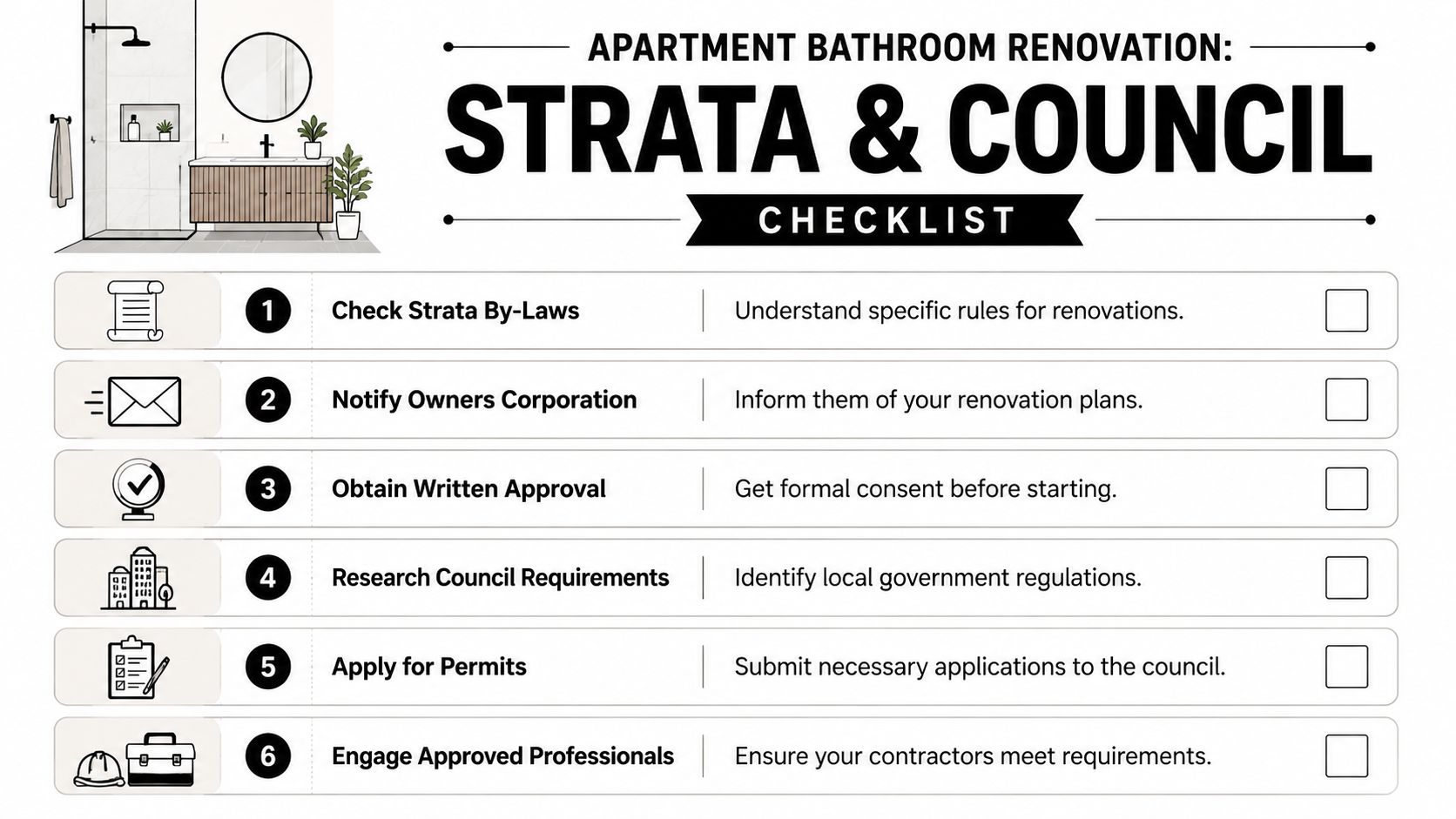
Sometimes. It depends on the scope of the work and whether structural changes or broader building issues are involved. That needs to be checked at the quoting stage, not guessed halfway through the job.

How disruptive is a bathroom renovation?
There will be noise, dust control, trade movement, and periods where the room is completely unusable. In occupied homes, site protection, clean sequencing, and realistic scheduling matter just as much as workmanship.

Can I keep the same layout and still get a good result?
Yes, if the existing layout works. Keeping services in place can reduce complexity. But if the room has drainage problems, access issues, or poor use of space, holding onto the old layout just to save money can be false economy.

Are 3D drawings worth it?
For many projects, yes. They help confirm proportions, tile direction, niche placement, vanity size, and visual balance before work starts. That reduces late changes and avoids buying fixtures that don't suit the room.

What to do before you ask for a quote

You don't need a fully resolved design before contacting a builder. You do need clarity on the basics.

Bring these points to the first discussion:

  • Your main problem: leak risk, outdated finishes, poor layout, accessibility, storage, or resale preparation
  • Your must-haves: walk-in shower, bath, larger vanity, niche, underfloor heating, frameless screen
  • Your finish level: practical and durable, or more architectural and premium
  • Your site realities: only bathroom in the home, apartment access, investment property, older house with known issues

A good quote starts with a proper site assessment. If the builder asks detailed questions about substrate condition, waterproofing, falls, access, and trade scope, that's usually a sign the project is being priced as a real build, not as a rough guess.

Bathroom renovations altona projects go better when the homeowner treats the build as a wet-area construction job first and a styling project second. That mindset usually leads to better decisions, fewer surprises, and a bathroom that still performs properly years after the handover.


If you're planning a bathroom upgrade and want clear advice on scope, waterproofing, tiling, and trade coordination, Melbourne Tiling Services P/L offers bathroom renovation planning, 3D drawings, and detailed quotes for homeowners across Melbourne and greater Victoria. A proper first consultation can tell you whether your Altona bathroom needs a straightforward renovation, a full strip-out, or targeted leak rectification before any new finishes go in.

Bathroom Floor Tiling: A Melbourne Renovation Guide

You're probably at the point where the bathroom looks worse before it looks better. Old tiles are out, the floor feels uneven underfoot, and every showroom visit makes it easy to focus on colour, pattern and finish. That's normal. It's also where plenty of bathroom renovations go off track.

Bathroom floor tiling isn't just about what you see on the surface. In a Melbourne home, a tiled bathroom floor only performs properly when the subfloor, screed, falls, waterproofing, adhesive and movement detailing all work together. If one layer is wrong, the prettiest tile in the room won't save the job.

Homeowners usually start with tile choice. Registered builders start lower down. They ask whether the floor is stable, whether the falls can be formed properly, whether the waterproofing detail will comply, and whether the selected tile suits the room and substrate. That is the correct order of work if you want a bathroom that looks sharp on handover and still performs properly years later.

Table of Contents

Choosing the Right Bathroom Floor Tiles

The tile is the part you'll notice every day, but the right choice starts with safety and suitability. In Australia, bathroom floor tiling should be specified around the wet-area slip-resistance benchmark in AS 4586, not just the tile's appearance. For internal wet areas such as bathroom floors, a common practical target is at least P3, as explained in this guide to choosing the right floor tile.

A comprehensive comparison chart of various bathroom floor tile materials including porcelain, ceramic, stone, vinyl, and mosaic.

Start with grip, not colour

A bathroom floor gets wet. That sounds obvious, but plenty of selections are still made as if the room were a dry hallway. The safest bathroom floors usually combine a textured matt finish, sensible tile sizing, and good drainage. Smaller mosaics can help with traction because they create more grout joints underfoot. Large glossy tiles can look clean in a showroom and feel risky in a real shower area.

Practical rule: If a tile looks slippery when it's dry, don't expect it to behave better when soap and water hit it.

Slip resistance also works together with the rest of the floor build-up. A compliant waterproofed floor with poor falls is still a problem. A grippy tile over a badly prepared substrate is still a problem. Good bathroom floor tiling is always a system.

What different tile types do well

Homeowners in Melbourne usually compare a small group of materials.

Bathroom Floor Tile Comparison Best For Durability Maintenance
Porcelain Family bathrooms, ensuites, heavy daily use High Low
Ceramic Budget-conscious bathrooms with straightforward layouts Good Low to moderate
Natural stone Premium bathrooms where appearance is the priority Good, but depends on stone Higher
Mosaic Shower floors and smaller wet zones needing more grip Good Moderate
Large-format tiles Contemporary bathrooms with minimal grout lines Good, but installation-sensitive Low to moderate

Porcelain is usually the practical workhorse. It suits busy bathrooms, it's consistent, and it's available in finishes that can meet wet-area slip requirements.

Ceramic can work well in many domestic bathrooms, particularly where the budget is tighter and the room isn't asking the tile to do too much visually or structurally.

Natural stone such as marble gives a high-end finish, but it asks for more care. It's less forgiving on maintenance, and the selection has to be made carefully for a wet floor.

Large-format tiles look excellent in modern bathroom renovations, but they're less tolerant of imperfect floors. If you're considering slim-profile panels or oversized porcelain, it helps to understand the installation demands before you buy. This overview of large-format tiles gives a good sense of where they work and what they require.

The Critical Foundation Below Your Tiles

Most failed tile jobs don't start with the tile. They start underneath it.

That's the part homeowners rarely see once the renovation is finished, but it's the part that decides whether the floor feels solid, drains properly and stays crack-free. If the substrate is uneven, weak, damp, moving, or out of level, the tile layer above it inherits every one of those problems.

A comparison illustration showing natural stone versus cracked concrete as foundations for tiled floor surfaces.

Why the floor prep decides the result

Think of the substrate the same way you'd think about a house footing. You can spend money on finishes, but if the base is wrong, the finish won't stay right for long.

In bathroom renovations, the common trouble spots are familiar. An old timber floor has too much movement. A slab has dips and high points. Previous renovation work leaves patches, adhesive residue or weak areas. The room might also need falls corrected so water moves to the waste instead of sitting in corners.

Australian practice places real weight on this stage. A common but critical question for Victorian renovators is whether screeding or self-levelling is needed before tiling. The answer is often yes, because AS 3958.1 places heavy emphasis on substrate flatness and stability, especially for large-format tiles that show every imperfection, as noted in this article on uneven tile in bathroom renovations.

When screeding and self-levelling are needed

Screeding is used when the floor needs shape, especially falls to the waste. It creates a stable mortar bed and gives the tiler something consistent to work over.

Self-levelling compounds are used when the floor needs flatness more than slope correction. They're useful for smoothing out local irregularities before tile goes down.

A builder or tiler might recommend one, both, or neither depending on the room. What matters is the diagnosis. A lot of bad bathroom floor tiling comes from skipping that step and trying to fix a structural or substrate issue with adhesive thickness alone.

  • Use screeding when the room needs corrected falls, a shower recess needs forming, or the floor plane is broadly wrong.
  • Use self-levelling when the floor is structurally sound but locally uneven and needs flattening for tile installation.
  • Pause the tiling altogether when the floor needs structural repair first. That might mean strengthening timber, replacing damaged sheet flooring, or resolving movement before any wet-area build-up starts.

A perfectly laid tile on a poor base is still a poor job. It just takes longer to reveal itself.

Waterproofing Your Melbourne Bathroom to Code

If there's one part of bathroom floor tiling that should never be treated as a shortcut, it's waterproofing. Homeowners often focus on visible finishes because that's what they live with day to day. The structure below the tile doesn't get the same attention until a leak shows up in the hallway, the ceiling below, or the skirting outside the bathroom.

A professional bathroom waterproofing service in Melbourne demonstrating before and after results on brickwork.

What the membrane actually does

The modern benchmark in Australia changed significantly with AS 3740:2010, which standardised waterproofing requirements in domestic wet areas. It requires specific membrane coverage and detailing to prevent water ingress, which is treated as a leading cause of internal building damage in Australia in this discussion of the history of tile flooring and wet-area standards.

That matters because the tile and grout aren't the waterproof layer. The membrane is. The tiled finish above it takes wear, cleaning and foot traffic. The membrane below it protects the structure.

A compliant bathroom floor build-up usually includes prepared substrate, any required screed, the waterproofing membrane, and then the tile assembly above. Junctions, floor-to-wall transitions, penetrations and shower areas need the right detailing. This isn't decorative work. It's protective work.

Why registered builders matter

Registered builders add real value in bathroom renovations through this specialized expertise. The job isn't just to lay tiles. It's to manage the wet-area construction properly, coordinate the right licensed trades, and make sure the sequence is correct from demolition to certification.

If you're trying to understand what proper documentation and sign-off look like in Victoria, this overview of a waterproofing compliance certificate in Victoria is useful. It explains the compliance side that many homeowners only discover after asking for proof late in the project.

  • Bad waterproofing hides well at first. The bathroom can look finished and still be vulnerable.
  • Repairs are rarely local. Once water gets past the system, remediation often means removing tiles and rebuilding layers.
  • Cheap shortcuts are expensive later. Saving money on membrane work usually shifts the cost into leak detection, demolition and reinstatement.

The Tiling Installation Process From Start to Finish

A professional installation rarely begins with opening adhesive bags. It starts with checking the room, confirming dimensions, reviewing the set-out and making sure the floor is ready to receive tile. That's especially important in a bathroom where one crooked line at the doorway can make the whole room feel off.

Layout comes before glue

Good layout work isn't about making every room perfectly centred. In many Melbourne bathrooms, especially older homes with alcoves, nib walls or off-square entries, the smarter decision is to protect the most visible sightline.

For odd-shaped bathrooms, the first decision isn't just visual layout but how to manage cuts at doorways and waterproofing upturns. The aim is to start from a focal point so the most visible lines, such as the threshold, stay clean, even if that means sacrificing a perfectly centred pattern elsewhere, as discussed in this guide to tiling floors in irregularly sized rooms.

That planning usually covers:

  • Entry view: what you see first when the bathroom door opens
  • Perimeter cuts: whether tiny slivers will appear at walls, nibs or the vanity line
  • Drain location: whether the tile size and pattern work with the waste position
  • Fixtures: how the floor lines relate to the toilet pan, vanity and shower screen

The cleanest bathrooms usually don't come from the most symmetrical plan. They come from the smartest compromise.

Setting, curing and finishing

Once the layout is locked in, the installer selects the adhesive to suit the tile type, format and substrate. Large-format porcelain doesn't get treated the same way as a small mosaic floor. Natural stone may need different handling again.

Tiles are then bedded carefully, aligned, checked for lippage and kept consistent across changes of plane. After that, the floor needs curing time. Rushing this stage causes trouble. Walking on fresh work too early, grouting too early, or loading the room with other trades before the bond is ready can undo good installation.

A registered builder coordinates all of this with plumbing, electrical, shower screen measuring and extras such as under tile heating for bathroom renovations. That coordination matters because the bathroom isn't a tiling job in isolation. It's a sequence of trades that need to hand over cleanly.

Costs and Timelines for Melbourne Bathroom Renovations

A bathroom can look like a simple tile update until the old floor comes up. Then the actual cost shows itself. Out-of-level sheeting, water-damaged framing, poor falls, and patchwork repairs are what push budgets and timelines off track in Melbourne bathrooms.

That is why the finish should never be priced in isolation. Floor tiling sits inside a renovation sequence that often includes demolition, plumbing, electrical, carpentry, substrate repairs, waterproofing, screeding, glazing, painting and final fit-off. The tile is visible. The work underneath determines whether the result lasts.

What changes the cost

Cost usually rises with preparation, detailing and coordination.

A straightforward bathroom with a stable substrate and standard porcelain tile is one price. A bathroom that needs floor correction, shower recess work, under-tile heating, stone, large-format tiles, or difficult drainage detailing is another. The labour is heavier, the set-out is tighter, and the margin for error is smaller.

These items commonly push the budget up:

Cost factor Why it matters
Substrate repair Damaged or moving floors need correction before tiling
Screeding or levelling The room may need falls or flattening before tile installation
Waterproofing detail Complex shower areas and transitions require more labour
Tile format Large-format and premium materials need tighter execution
Layout complexity More cuts, awkward edges and drain work take more time
Trade coordination Full bathroom renovations involve multiple licensed trades

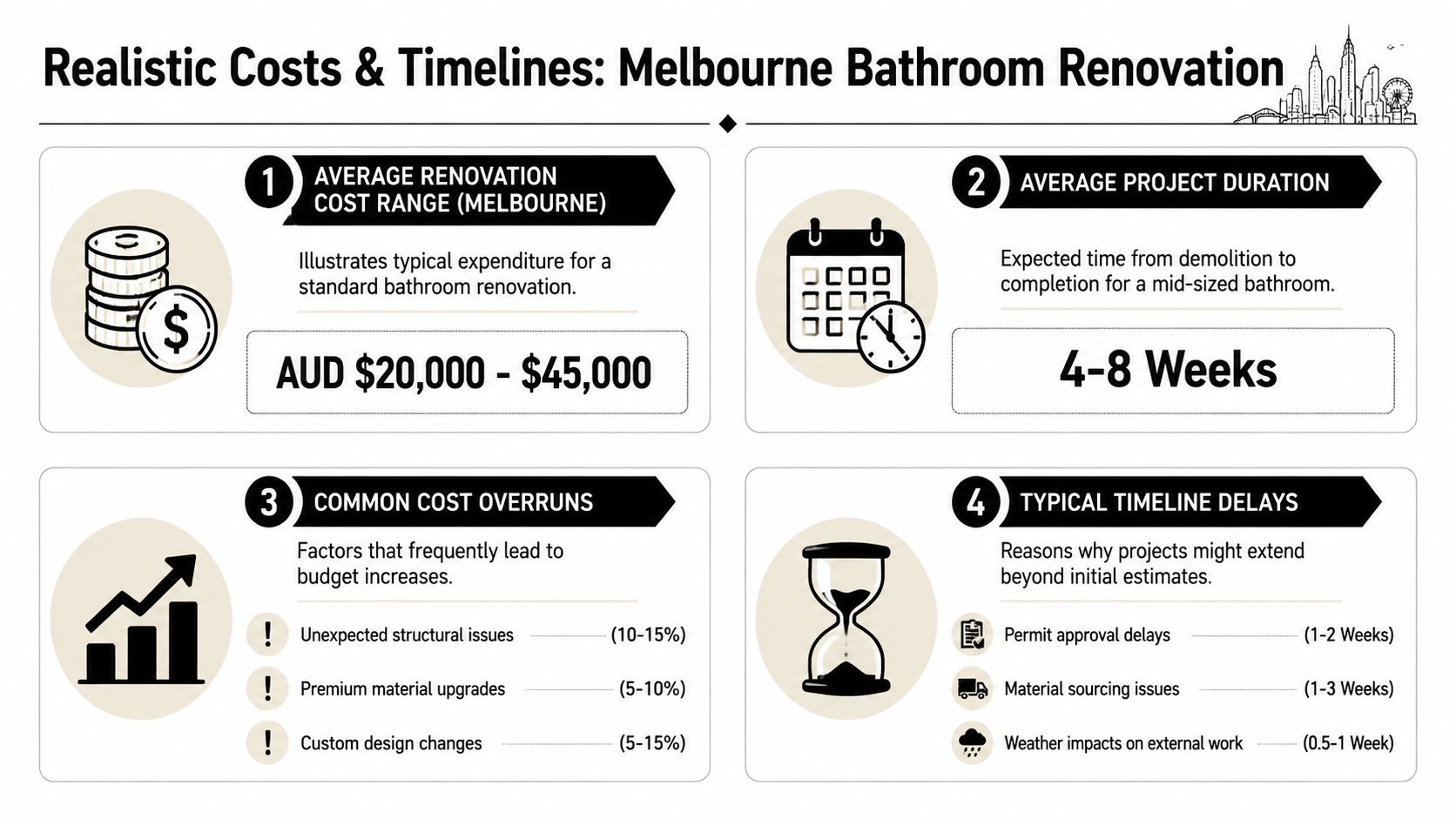
For a full bathroom renovation, Melbourne Tiling Services P/L notes a typical median project cost around $10,000 in its planning material. Use that as a rough reference only. Some bathrooms stay close to that range. Others climb quickly once remedial work, compliance upgrades, premium finishes, or structural corrections are included.

Small rooms can be deceptive. They often cost more per square metre because every junction matters, access is tighter, and there is less room to hide bad planning.

What affects the timeline

Timelines follow condition and sequencing more than room size. I have seen compact bathrooms take longer than larger ones because the base was out of tolerance and several trades had to return in the right order.

A realistic program usually allows for:

  1. Demolition and strip-out
  2. Subfloor assessment and repairs
  3. Screeding or levelling where required
  4. Waterproofing and curing
  5. Tiling and adhesive cure time
  6. Grouting, sealing and fit-off by other trades

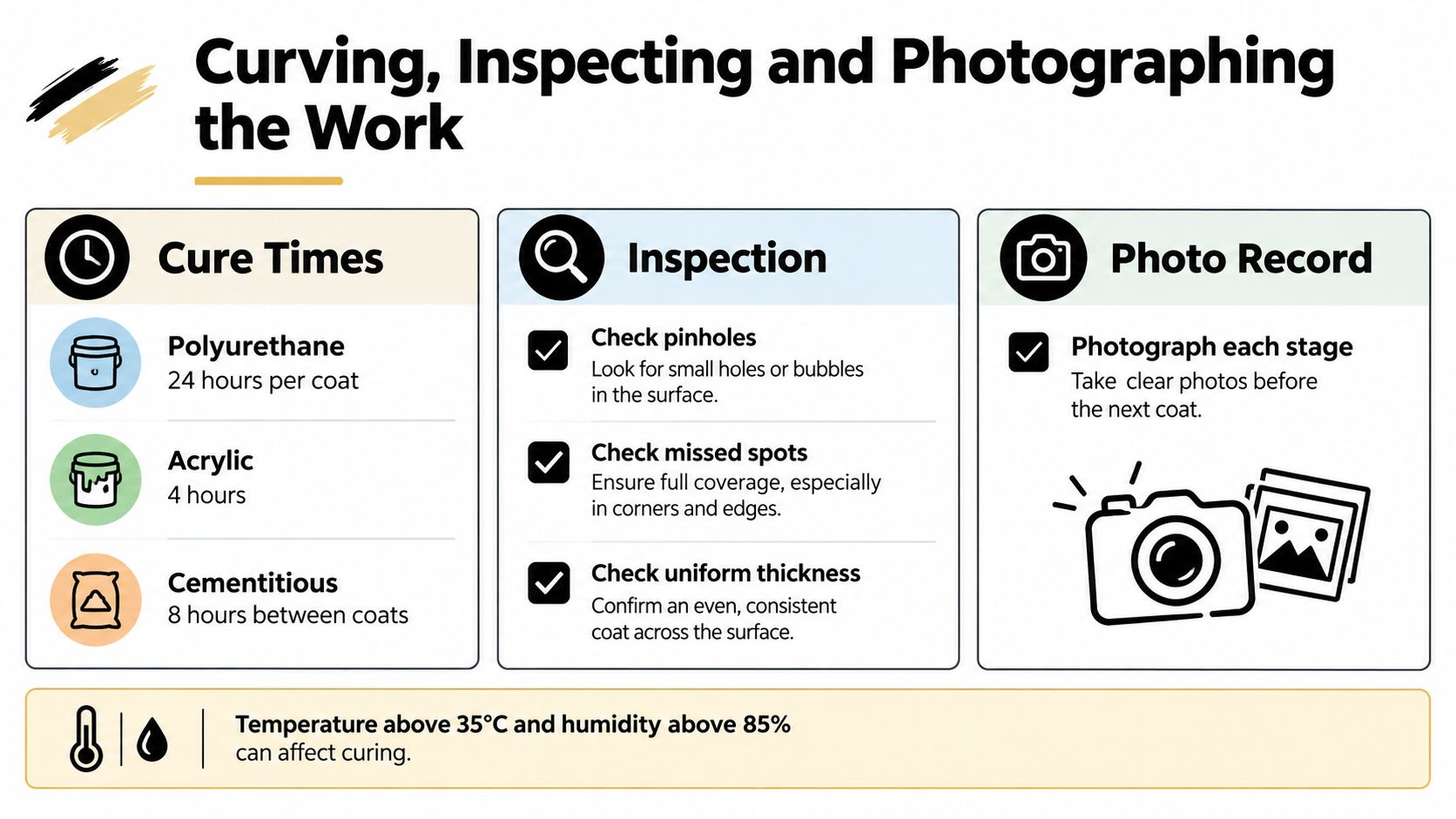
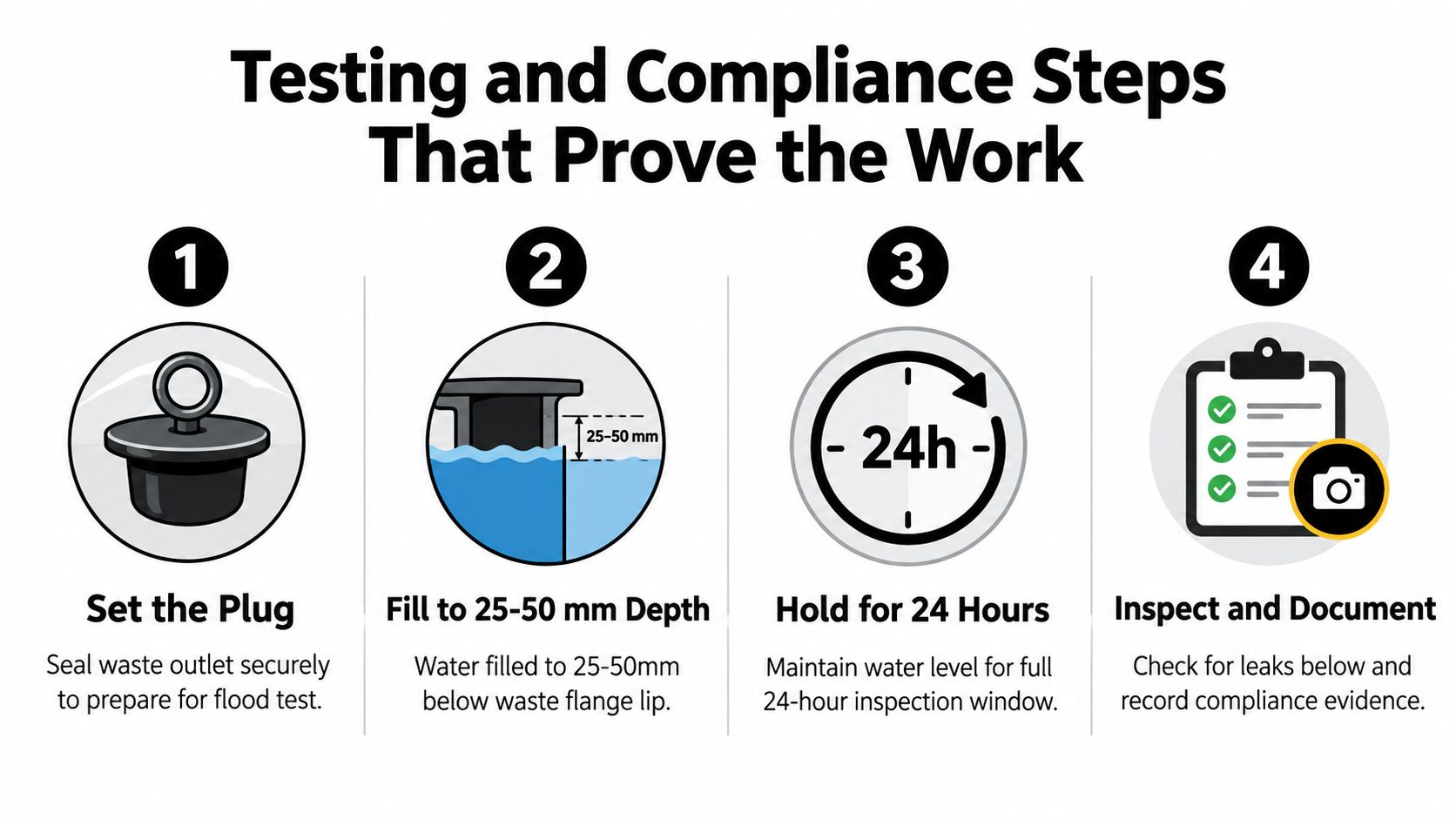
Curing time is where schedules often go wrong. Adhesives, screeds, waterproofing membranes and sealants all need their proper window. If the job gets rushed to save a day or two, the risk of bond failure, cracked grout, trapped moisture or remedial work goes up.

If you want an early budget figure, a renovation calculator can help with planning. Site inspection is still what confirms scope. That is how you separate a cosmetic tile replacement from a bathroom that needs proper preparation, code-compliant waterproofing, and repairs before a single new tile goes down.

Long-Term Care and When to Call for Remediation

A newly tiled floor doesn't need fuss, but it does need sensible care. Most long-term problems come from neglected joints, harsh cleaning, movement underneath the floor, or a leak that went unnoticed for too long.

A split image showing healthy food ingredients for daily routines and a bench for assistive living.

Simple maintenance that protects the floor

The day-to-day routine should be uncomplicated.

  • Use pH-neutral cleaners: They're less likely to damage grout, sealers or stone finishes.
  • Keep water moving: Wipe down standing water if the room stays damp for long periods.
  • Check silicone joints: Junctions around the shower, wall base and fixtures should stay intact.
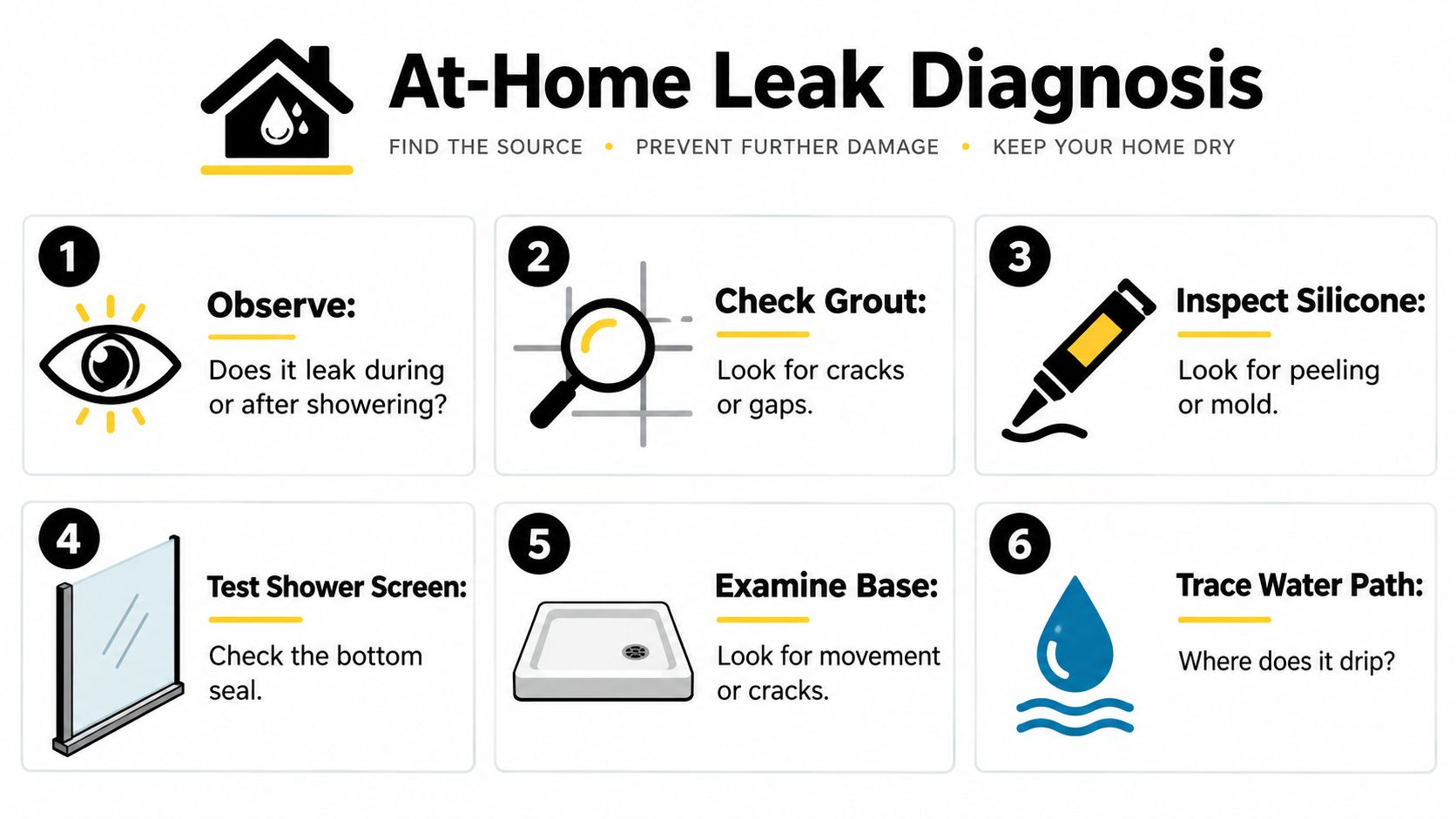
  • Watch grout condition: Cracking, powdering or persistent discolouration usually means something needs attention.

If the floor is natural stone, the maintenance approach may be a bit stricter. If it's porcelain, the routine is usually simpler. Either way, cleaning should support the finish, not strip or etch it.

Signs the floor needs attention

Small symptoms often show up before major failure.

Large-format tiles are especially unforgiving here. Per AS 3958.1, deviations in the subfloor can telegraph through the tile, creating lippage and stress points that lead to cracks, which is one reason professional remediation is often required, as outlined in this article on ceramic tile installation standards and flatness.

Watch for these warning signs:

  • Loose or drummy tiles: The bond may be failing.
  • Cracked grout lines: Movement can be transferring into the tile field.
  • Lippage that seems to worsen: The substrate may be shifting or the original prep may have been poor.
  • Musty odours or staining outside the bathroom: Water may be escaping the wet area.
  • Repeated silicone failure: There may be movement or moisture pressure behind the joint.

If one tile cracks, that might be local damage. If joints, tiles and seals start failing together, treat it as a system problem.

That's the point to bring in someone who can diagnose the cause, not just patch the symptom.

Start Your Bathroom Renovation with Confidence

The main lesson with bathroom floor tiling is simple. The finish only performs as well as the build-up below it. Homeowners see the grout lines, tile colour and pattern. Registered builders look at structure, flatness, falls, waterproofing, movement and sequencing because that's what keeps the floor sound.

A durable bathroom floor isn't produced by one good decision. It comes from a chain of good decisions made in the right order. Choose a tile that suits a wet floor. Prepare the substrate properly. Form the falls correctly. waterproof to code. Use the right adhesive and movement detailing. Then allow the installation to cure and finish properly before the room is handed over.

That's why bathroom renovations work better when one accountable party manages the process. Instead of having separate trades make isolated decisions, registered builders can coordinate the demolition, plumbing, electrical, waterproofing and tiling so the room is built as one system. That reduces guesswork and helps avoid the common situation where everyone blames the layer before them.

If you're planning a new ensuite, updating a tired family bathroom, or dealing with a floor that has already started to fail, start with the parts that matter most. Ask what condition the subfloor is in. Ask how the waterproofing will be handled. Ask who is responsible for compliance. Those questions will tell you more about the likely result than any tile sample board ever will.


If you're planning bathroom floor tiling and want the whole renovation considered properly, Melbourne Tiling Services P/L can help you organise the next step. You can book a free, no-obligation quote, request 3D drawings to visualise the layout, or use the online renovation calculator to map out budget and scope before work begins.