

You're probably in the same spot as a lot of Melbourne homeowners planning bathroom renovations. You love the warm, calm look of travertine, but once you start comparing products, the doubts creep in. Will real stone stain? Will it need sealing? Is it the right choice for a busy family bathroom, an ensuite that gets daily steam, or an older home where one leak can turn into a major repair?
That tension is real. The bathroom has to look good, but it also has to survive daily use, cleaning, moisture, movement in the structure, and the realities of Australian standards. In older Melbourne homes especially, the finish you see is only half the job. The tile choice, substrate prep, waterproofing system, and the way a registered builder coordinates trades all affect whether the renovation still performs years later.
Table of Contents
- The Enduring Appeal of Travertine Without the Upkeep
- What Exactly Are Travertine Look Porcelain Tiles
- Porcelain vs Natural Travertine An Honest Comparison
- Technical Specifications That Matter for Melbourne Bathrooms
- Design and Layout Ideas for Your Renovation
- Installation Waterproofing and Why a Registered Builder Matters
- Choose Melbourne Tiling Services for a Flawless Finish
The Enduring Appeal of Travertine Without the Upkeep
A lot of clients walk into a tile showroom wanting the same thing. They want a bathroom that feels settled and natural, not glossy, cold or overdesigned. Travertine has that appeal. Its soft movement, sandy tones and quiet texture suit almost every style, from a contemporary ensuite to a renovated cream-brick home in the suburbs.
Then the practical questions start. Real travertine is a natural stone. That means variation, visible pores, ongoing care, and more caution around water, soap residue and cleaning products. In a bathroom, those aren't minor details. They shape how the room lives day to day.
That's why travertine look porcelain tiles have become such a strong option in Melbourne renovations. They give you the look people are usually chasing from stone, but with a more predictable finish and far fewer maintenance demands. If you like the idea of a warm, natural palette but don't want a surface that asks for special treatment, porcelain usually makes more sense.
The look people want is still achievable
In practice, most homeowners aren't asking for geology. They're asking for atmosphere. They want a bathroom that feels calm in the morning and easy to keep clean on a weeknight. Travertine-look porcelain does that well because it can carry the colour variation and vein pattern of stone without inheriting the same level of vulnerability.
Practical rule: In wet areas, choose the surface that suits the way you actually live, not the one you admire only in a showroom.
That matters even more in family homes, rentals and properties managed by landlords. A tile that needs less intervention is usually the better long-term decision.
Why this matters more in Melbourne bathrooms
Melbourne renovations often involve older wall lines, mixed substrates, awkward room sizes and ageing plumbing locations. In that setting, a forgiving, stable finish matters. So does compliance. A bathroom isn't just a design project. It's a wet area assembly that needs to work as a system.
The strongest bathroom results usually come from balancing three things:
- Appearance: The room still needs warmth, scale and visual consistency.
- Performance: Wet floors, shower walls and splash zones need durable, low-absorption materials.
- Installation quality: Good tiles can still fail over poor prep or bad waterproofing.
Travertine look porcelain tiles sit in that sweet spot for many bathroom renovations. They're attractive, practical and easier to specify properly than natural stone in most wet-area applications.
What Exactly Are Travertine Look Porcelain Tiles
Travertine look porcelain tiles are not a compromise product. They're a purpose-built one. Manufacturers design them to reproduce the veining, tonal movement and subtle surface character of natural travertine, but on a much denser tile body that handles bathroom conditions far better.
A useful way to think about it is this. Standard ceramic is like a more absorbent biscuit. Porcelain is more like a fired dense plate. Both are tile, but they don't behave the same once water, steam and cleaning cycles become part of everyday use.
How the look is created
Modern travertine-look porcelain is produced through controlled manufacturing rather than natural quarry variation. The pattern and texture are engineered onto the tile surface so the finished piece can resemble filled, honed, cross-cut or vein-cut travertine depending on the range.
The result is a tile that gives designers and homeowners much tighter control over the final room. You can dry-lay samples, check pattern repetition, plan mitred corners and match floor-to-wall transitions with far more predictability than you get with natural stone.
That consistency is useful when you're trying to achieve:
- Minimal grout lines: Especially with rectified formats.
- A calm palette: Without random colour jumps.
- Large uninterrupted surfaces: Such as shower walls and feature panels.
Why porcelain behaves differently in wet areas
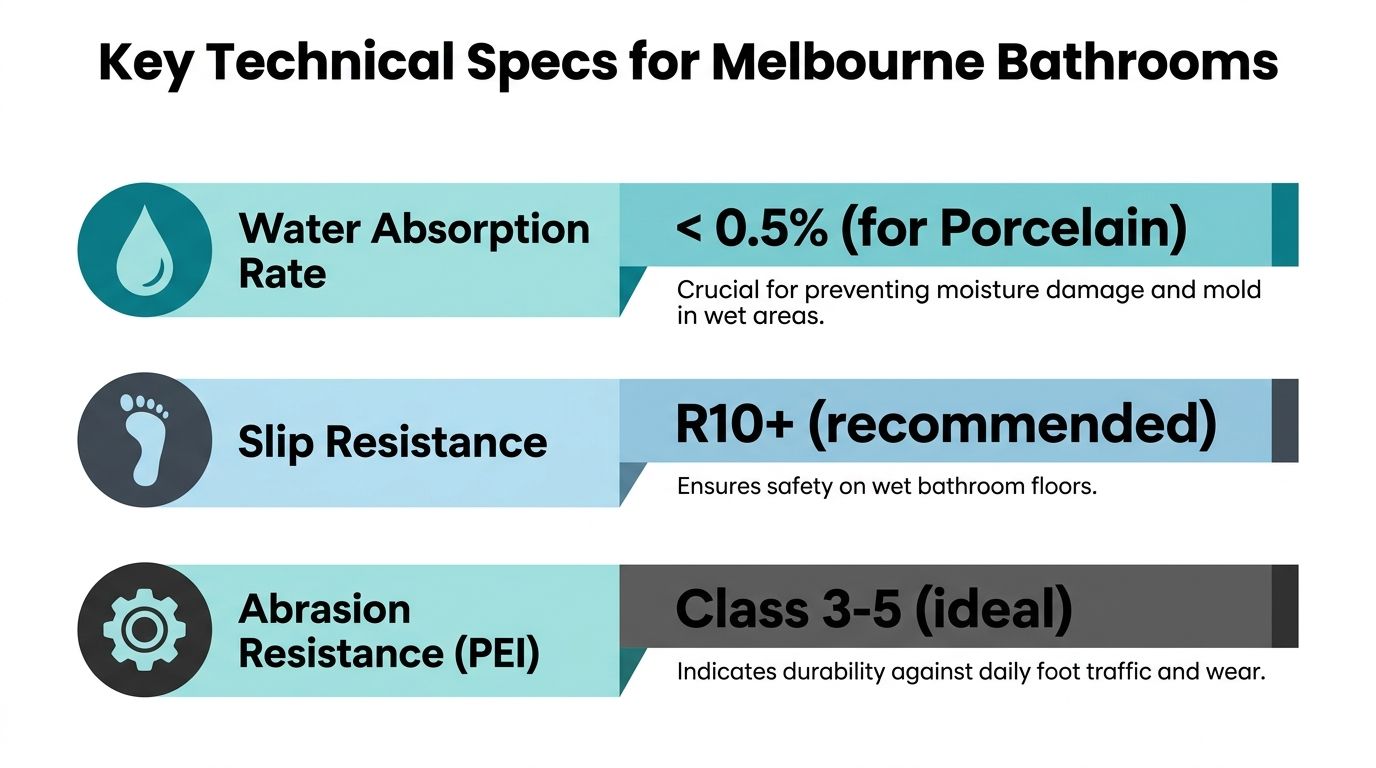
The key difference is density. As noted in this travertine-look porcelain overview, travertine-look porcelain tiles are engineered to replicate the natural veining and texture of travertine stone while offering significantly higher durability and water resistance; porcelain tiles typically have water absorption rates below 0.5%, which places them within the lowest absorption category per ASTM standards and makes them suitable for wet bathroom environments such as showers and tub surrounds in Australia, where moisture exposure is a key design consideration.
That's why porcelain is usually the safer specification for showers, bathroom floors and tub surrounds. Low absorption reduces the chance of moisture getting into the tile body itself. It also means the tile won't ask for the same sealing regime that natural travertine does.
A tile can look like stone without behaving like stone. In a bathroom, that's often the whole point.
There's also a practical installation advantage. Because the product is manufactured to tighter tolerances, it's easier to plan layouts, align joints and deliver a cleaner finish around niches, strip drains and frameless shower screens.
For homeowners, the takeaway is simple. Travertine look porcelain tiles aren't just “stone style”. They're a high-performance surface built for spaces where water, hygiene and durability matter every day.
Porcelain vs Natural Travertine An Honest Comparison
Natural travertine still has genuine appeal. It's a real stone with natural variation that some people will always prefer. If you want authenticity above everything else, it can be a beautiful finish. But bathrooms punish weak decisions, and that's where porcelain usually separates itself.
Travertine-look porcelain tile has gained significant traction in Australia, representing approximately 37% of all ceramic porcelain tile sales by volume, up from 27% in 2015, according to this market summary on travertine-look tile. That shift is especially visible in bathroom and wet-area work because homeowners increasingly want low-maintenance, water-resistant surfaces.
Where natural travertine still appeals
Real travertine offers variation that no printed surface can replicate perfectly. Every piece is different. That can be an asset in a powder room feature wall or a low-splash area where the stone is there to be admired rather than tested.
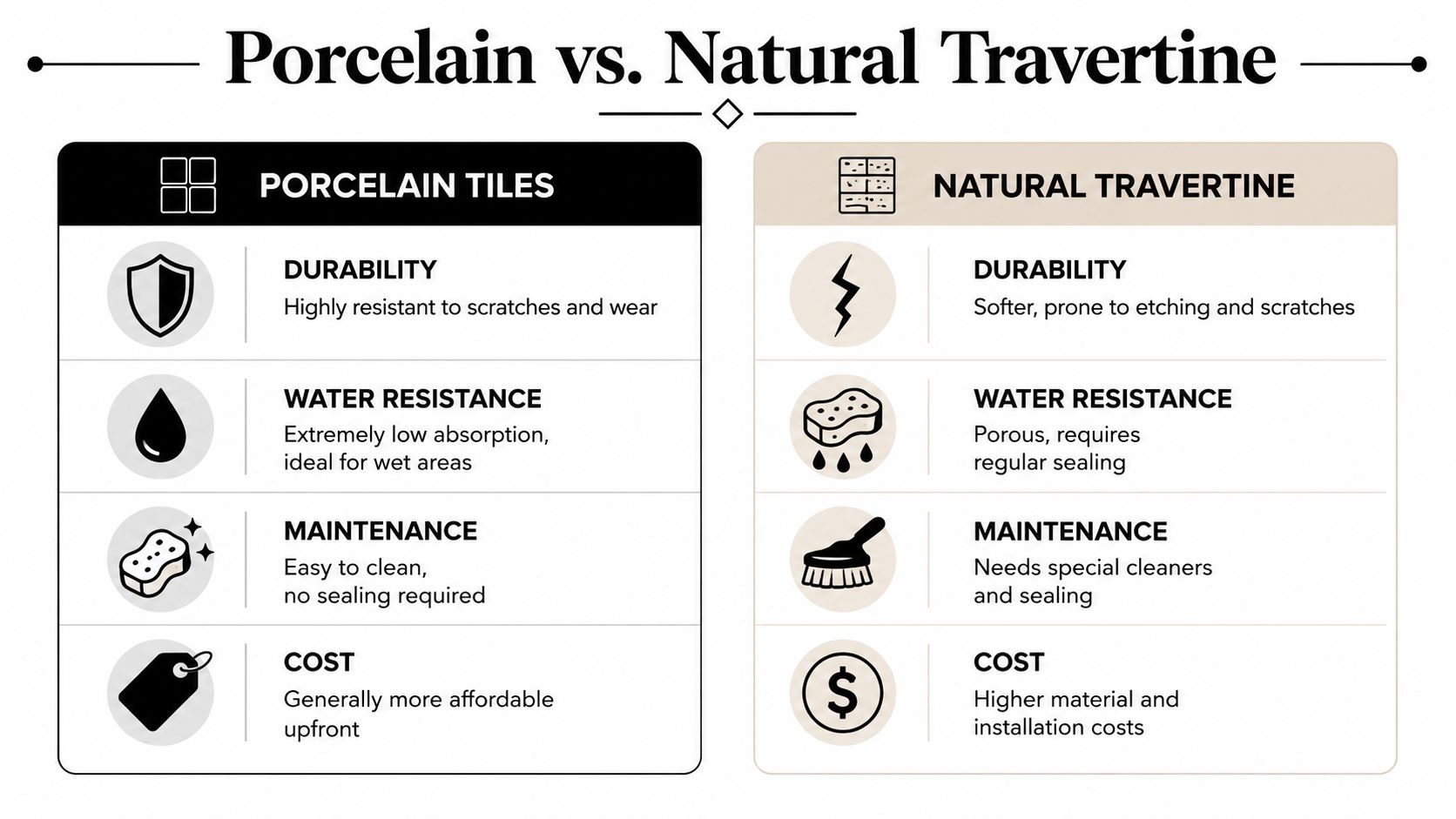
Still, the trade-off is straightforward. Natural travertine is porous, softer than porcelain, and more sensitive to staining, etching and maintenance lapses. In a busy bathroom, especially one used by children, tenants or guests, those risks are harder to ignore.
Where porcelain usually wins
Porcelain is the product most builders and tilers would rather stand behind in a wet room. Not because it's fashionable, but because it's more predictable. It handles water better, cleans more easily, and doesn't need the ongoing sealing routine that natural travertine requires.
Here's the side-by-side view most clients need:
| Feature | Travertine-Look Porcelain | Natural Travertine |
|---|---|---|
| Water behaviour | Dense, low-absorption surface suited to wet areas | Porous stone that needs sealing and ongoing care |
| Maintenance | Easy day-to-day cleaning, no tile sealing required | Regular sealing and more careful product selection |
| Consistency | Controlled colour, pattern and sizing | Natural variation, which can be beautiful but less predictable |
| Bathroom suitability | Strong choice for floors, walls and showers | Better suited where owners accept more upkeep |
| Installation planning | Easier to lay out for minimal joints and repeating modules | More variation to sort and blend on site |
A few practical observations from renovation work:
- For family bathrooms: Porcelain is usually the smarter choice. It copes better with routine use and rushed cleaning.
- For ensuites: Either can work aesthetically, but porcelain gives you more freedom with larger formats and lower maintenance.
- For landlords and property managers: Natural travertine creates more future care obligations.
- For older homes: Porcelain's predictability helps when walls aren't perfect and layouts need tighter control.
If a client loves the travertine look but doesn't want a bathroom that needs babysitting, porcelain is the honest recommendation.
That doesn't make natural stone wrong. It just makes it a deliberate choice for someone who understands the upkeep and is willing to commit to it. Most households want the visual warmth, not the maintenance contract that comes with it.
Technical Specifications That Matter for Melbourne Bathrooms
A bathroom tile should never be chosen on colour alone. The specs matter because they affect safety, cleanability, durability and compliance. In Melbourne, where bathrooms often sit inside older structures with mixed substrates and renovation-era surprises, those details matter even more.
Water absorption and why it matters
For wet areas, low absorption isn't just a nice feature. It's one of the reasons porcelain performs so well. According to the verified technical data linked via ISO 10545-3 water absorption information, travertine-look porcelain tiles exhibit water absorption rates below 0.5% due to being fired at temperatures of 1,200–1,250°C. That dense, non-porous matrix is especially useful in Melbourne bathrooms and balconies because it helps minimise the risk of efflorescence and spalling, and it removes the need for the sealing regime associated with natural stone.
That doesn't mean the tile itself replaces waterproofing. It doesn't. But low absorption does support a more durable wet-area finish when the rest of the system is built correctly.
For a broader look at suitable bathroom porcelain options, see these porcelain tiles for bathrooms.
Slip ratings, DCOF and floor safety
Slip resistance is where many renovations go wrong. People pick the smoothest surface because it looks refined under showroom lighting, then realise too late that a bathroom floor has to perform with wet feet, shampoo residue and steam.
Travertine-look porcelain tiles used in Australian bathrooms and wet areas typically meet or exceed AS 4586:2013 requirements for slip resistance, and many matte-engineered products achieve DCOF values above 0.42, which aligns with the recommended threshold for level internal wet areas such as bathrooms and laundries. In practical terms, a matte finish with a documented DCOF of 0.42 to 0.6 is suitable for most residential and light commercial interiors in Melbourne.
When checking samples, ask for documented performance, not just a salesperson's description of “good grip”.
- Matte finishes: Usually the safest all-round choice for bathroom floors.
- Micro-textured surfaces: Helpful where slip resistance matters but you still want easy cleaning.
- Highly polished surfaces: Better reserved for walls or low-risk areas.
The right bathroom floor tile should feel safe under wet feet without feeling rough enough to trap grime.
Rectified edges and large format choices
Rectified tiles are mechanically finished to consistent dimensions with sharp edges. That allows tighter grout joints and a cleaner, more contemporary look. On travertine-look porcelain, this usually suits the stone aesthetic well because it reduces visual interruption.
Large formats can also work brilliantly in Melbourne bathrooms, especially on walls. Fewer joints create a calmer surface and make cleaning easier. But there's a catch. Bigger tiles demand flatter substrates, better planning around falls, and more discipline in setting out. A large-format tile won't hide poor prep. It exposes it.
When choosing between sizes, think about the room as built, not just the showroom panel. Drain location, door swings, vanity widths, window heights and ceiling lines all influence what will look balanced on site.
Design and Layout Ideas for Your Renovation
Travertine-look porcelain works because it can shift style without feeling forced. The same material can read soft and minimal in a new ensuite, grounded and practical in a family bathroom, or surprisingly sympathetic in an older Melbourne home that needs updating without losing its identity.
Making a modern ensuite feel warm
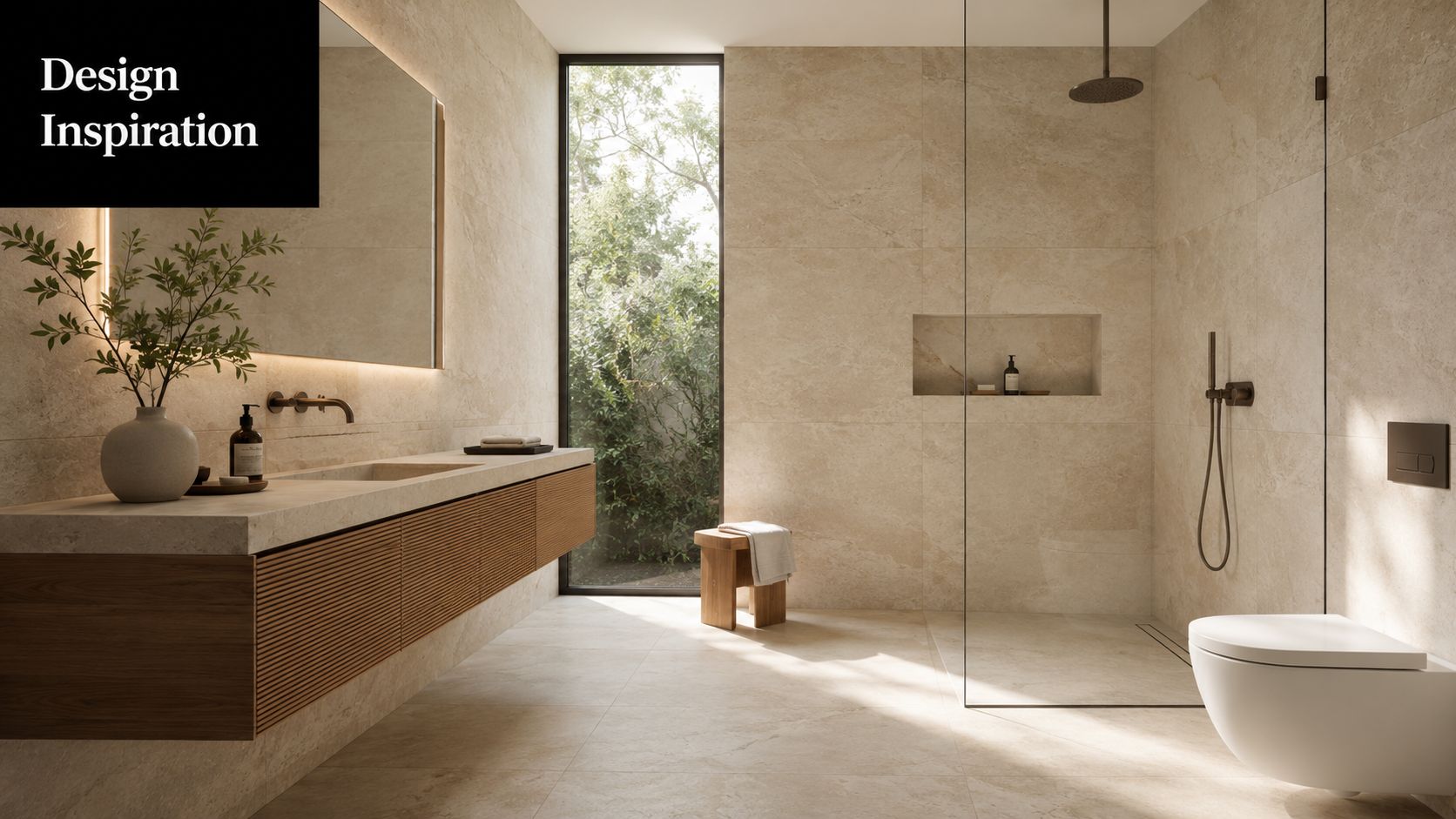
A lot of modern bathrooms fail because they lean too hard into cold minimalism. Travertine-look porcelain softens that. Pair a matte stone-look tile with a timber vanity, brushed metal tapware and a frameless shower screen, and the room feels cleaner without becoming sterile.
For ensuites, large wall tiles often work best when the floor finish stays slightly more tactile. That gives you visual calm on the walls and better underfoot confidence where it matters. A niche lined in the same tile usually looks stronger than switching to a busy mosaic just for contrast.
Good combinations include:
- Soft ivory or beige tile with oak cabinetry: Warm, easy, timeless.
- Silver-toned travertine look with white joinery: More architectural and restrained.
- Natural finish walls with matte floor tile: A practical balance between texture and maintenance.
Getting large format tiles right in older homes
In Victoria, approximately 40% of housing stock sits within 1940s to 1990s contexts, according to the Victorian housing style report reference. That matters because many bathroom renovations happen inside homes that weren't designed for oversized contemporary finishes.
Older Melbourne bathrooms often have lower ceiling lines, tighter widths, off-square corners and existing plumbing positions that limit layout freedom. Large formats such as 600 x 1200 mm can still work well, but only if the room proportions and set-out support them. In a narrow bathroom, one oversized tile choice can make every cut look awkward. In the right room, the same tile can make the space feel calmer and more open.
A simple approach usually works best:
- Respect the scale of the room: Don't force huge panels into a cramped layout if every edge ends in a sliver cut.
- Match tone to the age of the home: Warmer travertine shades often sit better in cream-brick, weatherboard and mid-century settings.
- Use minimal grout thoughtfully: It looks modern, but it still has to suit existing skirtings, trims and fittings.
A short visual walkthrough helps when comparing finishes and room moods:
The best period-sensitive renovations don't try to fake heritage detailing with modern tile. They keep the room proportions honest, use a warm material palette, and let improved waterproofing and cleaner detailing do the heavy lifting.
Installation Waterproofing and Why a Registered Builder Matters
The tile is the finish you see. It is not the waterproofing system. That distinction matters because plenty of failed bathrooms still look good on handover day. The problems show up later, when movement opens a junction, a penetration hasn't been sealed properly, or water tracks beyond the shower area and starts damaging the structure.
For bathroom renovations, compliance starts below the tile. Substrate preparation, bond breakers, membrane application, falls, drainage, joint treatment and curing all affect whether the room remains watertight.
Tiles are the finish, not the waterproofing system
Australian Standard AS 3740:2021 sets strict requirements for wet-area waterproofing and installation practice. As noted in this summary of porcelain tile versus travertine in wet areas, the registered builder is responsible for coordinating trades to ensure compliant membranes and detailing around joints and penetrations, which is essential for the long-term performance of travertine-look porcelain tiles in bathrooms.
That's the part many homeowners underestimate. A premium tile won't rescue poor detailing. If the membrane is wrong, the falls are poor, or the penetrations are handled badly, the bathroom can fail regardless of how much was spent on the finish.
For a closer look at local wet-area practice, review this guide to waterproofing in Melbourne.
What registered builders actually control
A registered builder's value isn't just paperwork. It's coordination and accountability. In a proper bathroom renovation, multiple trades touch the same space and the same risk points. If no one controls the sequence, defects slip through the joins between trades.
The critical points usually include:
- Substrate readiness: The surface must suit the membrane and tile system.
- Membrane continuity: Corners, hob details, upturns and penetrations need careful treatment.
- Set-out and falls: Tile layout must work with drainage, not fight it.
- Trade coordination: Plumbers, waterproofers and tilers need the same plan, not separate assumptions.
A leak-proof bathroom isn't built by one good trade working in isolation. It's built by several trades following one disciplined sequence.
This is especially important in older homes. Movement, legacy repairs, timber floors, patched walls and uneven framing all increase the demand for proper supervision. If you're renovating a bathroom in Melbourne, the question isn't only which tile you like. It's who is responsible for the entire wet-area system, and whether that responsibility is clear from day one.
Choose Melbourne Tiling Services for a Flawless Finish
Travertine look porcelain tiles make sense for many Melbourne bathrooms because they combine the warmth of stone styling with the practical advantages that wet areas demand. They're easier to maintain, easier to specify for showers and floors, and easier to integrate into modern layouts with clean lines and controlled grout joints.
But the tile choice is only half the decision. The long-term result depends on the people planning the set-out, preparing the substrate, managing the membrane system and coordinating every trade in the right order. That's where many bathroom renovations succeed or fail.
Melbourne Tiling Services P/L is set up for that full-scope work. The team operates as Registered Unlimited Builders, not just tile installers, which matters when a bathroom needs genuine trade coordination and code-aware project management. They handle start-to-finish bathroom and ensuite renovations, with in-house tilers and certified waterproofers working as part of the same process rather than as disconnected subcontractors.
That's valuable if you're dealing with an older Melbourne home, a leak-prone shower, or a bathroom that needs more than a cosmetic refresh. Their work also includes 3D drawings, free quotes, premium material selection and end-to-end oversight, which helps clients make better decisions before demolition starts.
If you're comparing contractors, it's worth looking at experienced tiling contractors near you in Melbourne who understand not only finishes, but also waterproofing, falls, compliance and renovation sequencing. That's what protects the investment.
A bathroom should still look right years after handover. The finish matters. The system underneath matters more.
If you're planning a bathroom renovation and want travertine look porcelain tiles installed with proper waterproofing, compliant detailing and builder-led project management, contact Melbourne Tiling Services P/L for a free quote and expert guidance on a durable, leak-resistant finish.
Write a Comment