Tiling and Waterproofing: A Melbourne Reno Guide for 2026

You're probably at the stage where the old bathroom has stopped being “good enough”. The grout looks tired, the shower feels dated, and every renovation photo you save seems to show the same clean lines, large-format tiles, and frameless glass. Then the practical concern hits. What if the new bathroom looks great for six months, but water gets behind the tiles and starts causing damage you can't see?

That concern is justified. In bathroom renovations, the visible finish and the hidden protection are not the same thing. Tiles are the surface you live with every day. Waterproofing is the part that protects the room, the framing, and the adjoining areas from moisture. If either side is handled badly, the project can fail for reasons that have nothing to do with how attractive the tiles looked on handover day.

Tiling has lasted for thousands of years. Ceramic floor tiles date back to the fourth millennium BCE, and modern porcelain production changed dramatically in 1980 with the fast-firing roller hearth kiln process, which made porcelain stoneware tiles commercially viable for broad use in wet areas, as outlined in this history of tile development. That long history is part of the appeal. A tiled bathroom should feel permanent. But permanence only happens when the system under the tile is right.

Table of Contents

The Foundation of a Flawless Bathroom Renovation

A good bathroom renovation starts with one simple truth. The finish and the function are separate jobs.

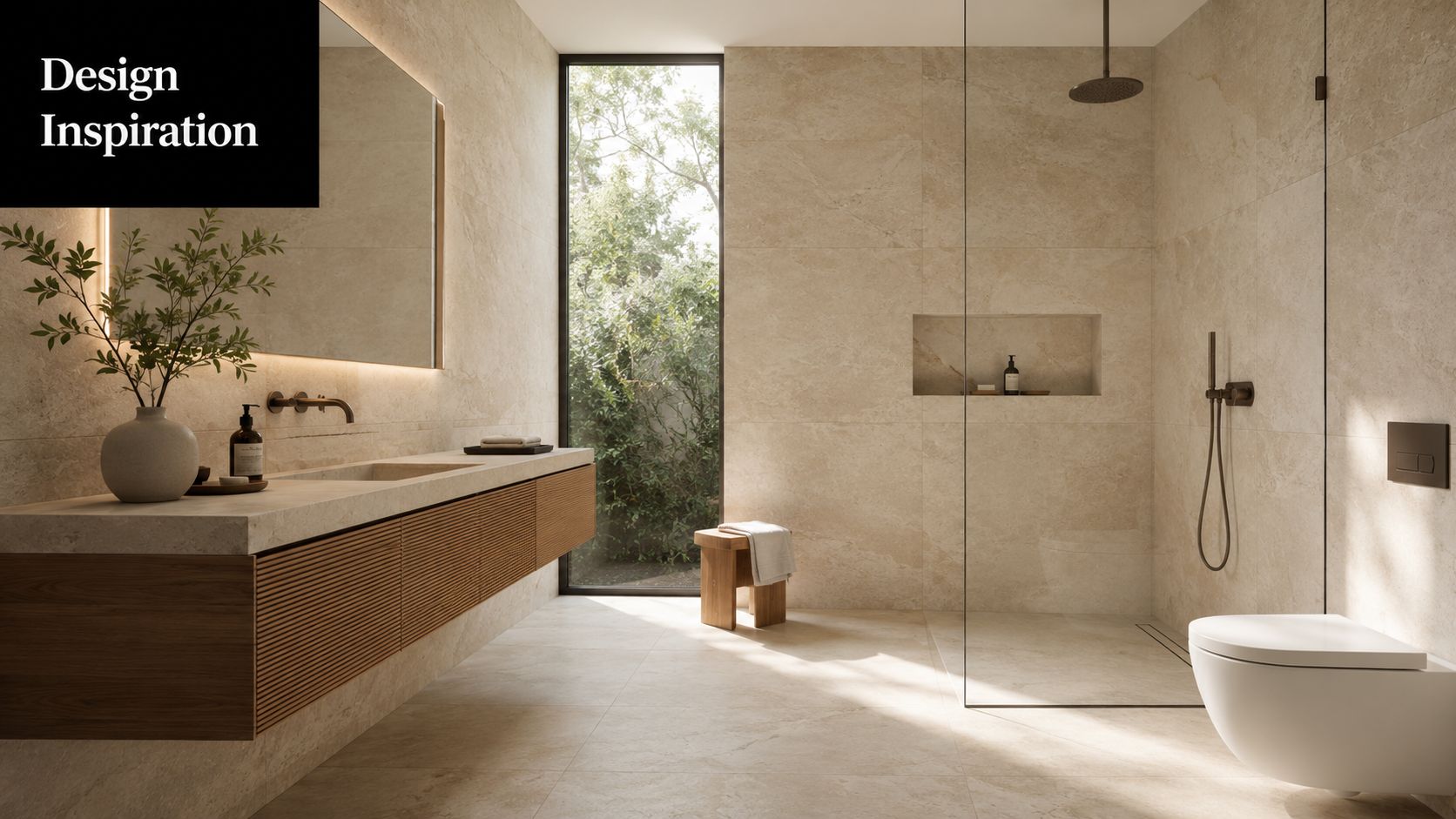
Tiles deliver the look. They set the tone of the room, influence maintenance, and shape the overall feel underfoot. If you're choosing porcelain planks, mosaic floors, rectified wall tiles, or stone-look panels, you're deciding how the bathroom will present every day. If you want a better sense of what that finish layer can do, bathroom floor tiling options in Melbourne are worth reviewing before any final selections are made.

Beauty on the surface, protection underneath

The hidden part is less glamorous and far more important. Behind every bathroom that performs well over time, someone got the substrate, falls, membrane, junction treatment, and tile fixing method right. Homeowners often focus on tile colour, niche position, and tapware finish first. Builders look at those too, but they also check where the water will go, where it might sit, and how every junction will be sealed before a single tile is fixed.

A bathroom can look premium and still be vulnerable if the waterproofing system is incomplete.

That's why experienced registered builders don't treat tiling and waterproofing as separate cosmetic tasks. They treat them as one wet-area assembly. The tile layer has to suit the waterproofing layer beneath it, and the room has to be built in the correct order.

What homeowners usually regret

The regret is rarely, “I chose the wrong tile size.” It's usually one of these:

  • They hired trades separately: one person demolished, another waterproofed, another tiled, and no one owned the whole result.
  • They approved a layout without checking drainage and falls: the floor looked flat and modern, but water movement wasn't properly resolved.
  • They assumed grout and tile would keep water out: they won't. They're part of the finish, not the full protection system.

Bathrooms fail unnoticed at first. Moisture gets into a corner junction, around a penetration, or behind a badly detailed shower base. Months later, the signs start showing up somewhere else. By then, the repair is larger than the original shortcut.

A flawless renovation doesn't come from expensive finishes alone. It comes from disciplined construction, proper sequencing, and a builder who understands that wet areas punish guesswork.

Why Integrated Waterproofing Is Non-Negotiable

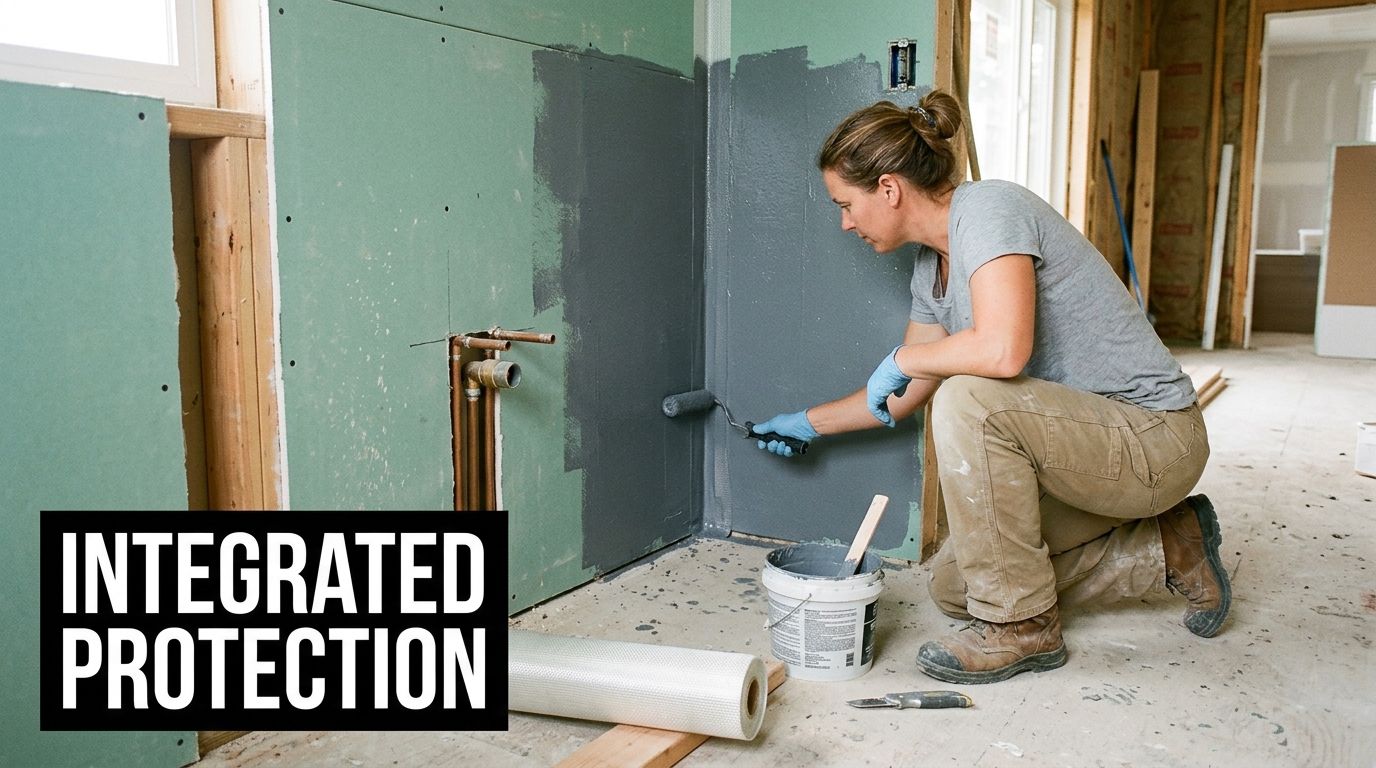
A bathroom waterproofing system works like a hull on a boat. If the hull is continuous, the structure stays protected. If there's one breach, water finds it. That's why partial waterproofing, rushed junction work, or improvised detailing is not a minor defect. It's a system failure waiting for pressure, movement, or time to expose it.

A woman kneeling on a construction site, applying grey waterproof sealant to green moisture-resistant drywall.

Tiles are not the waterproof layer

Often, homeowners are misled by the fact that tiles are water-resistant on the face. Grout fills joints, yet neither replaces a proper membrane system.

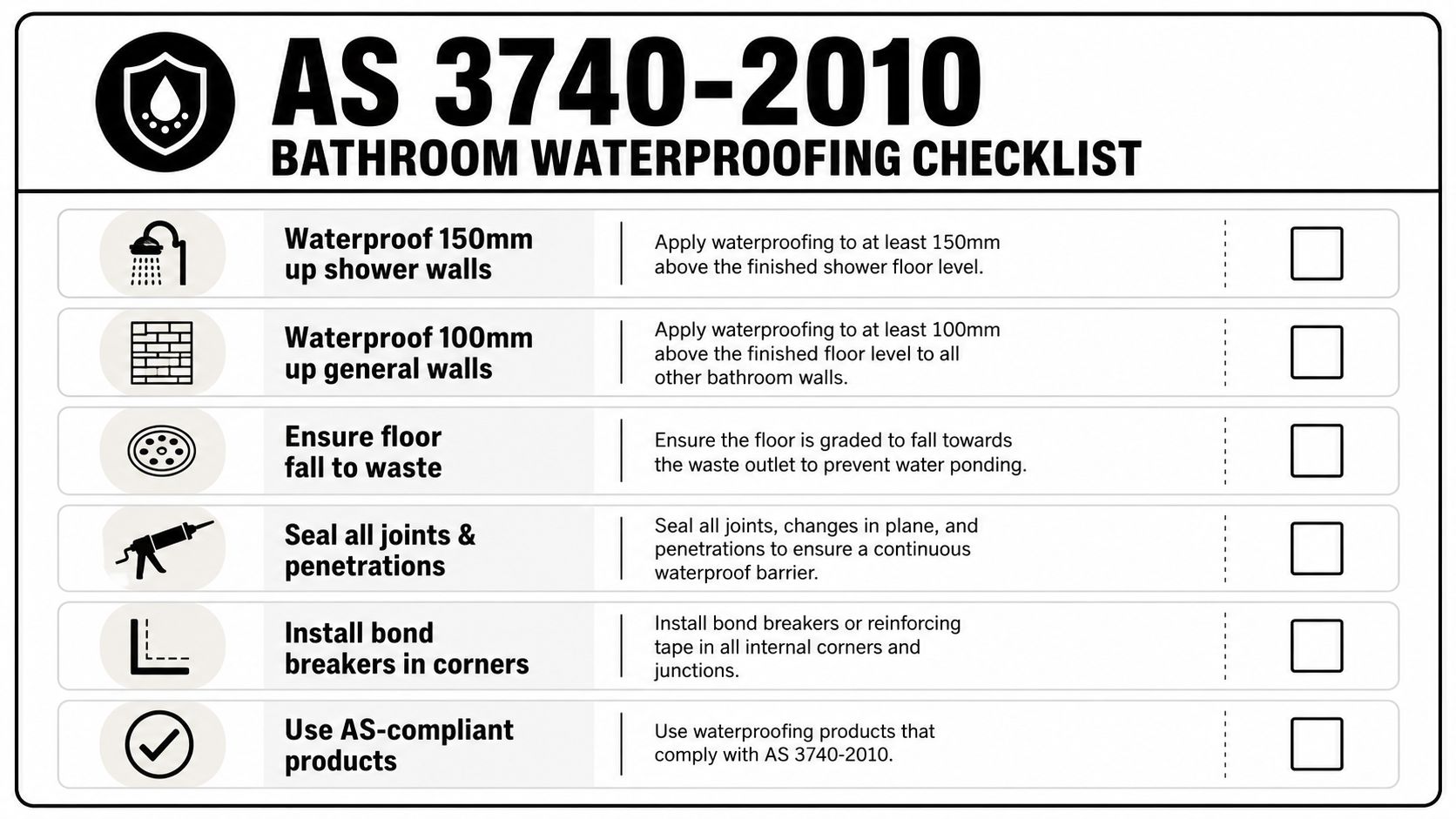
Waterproofing is a structural protection measure, and in Australia the National Construction Code treats it as a required building-control measure for wet areas because moisture failure can lead to substrate damage, mould, and expensive rectification, as discussed in this overview of waterproofing's evolution and building-control role. In practical terms, that means showers, bathroom floors, laundries, and similar wet zones can't be approached like ordinary wall and floor finishes.

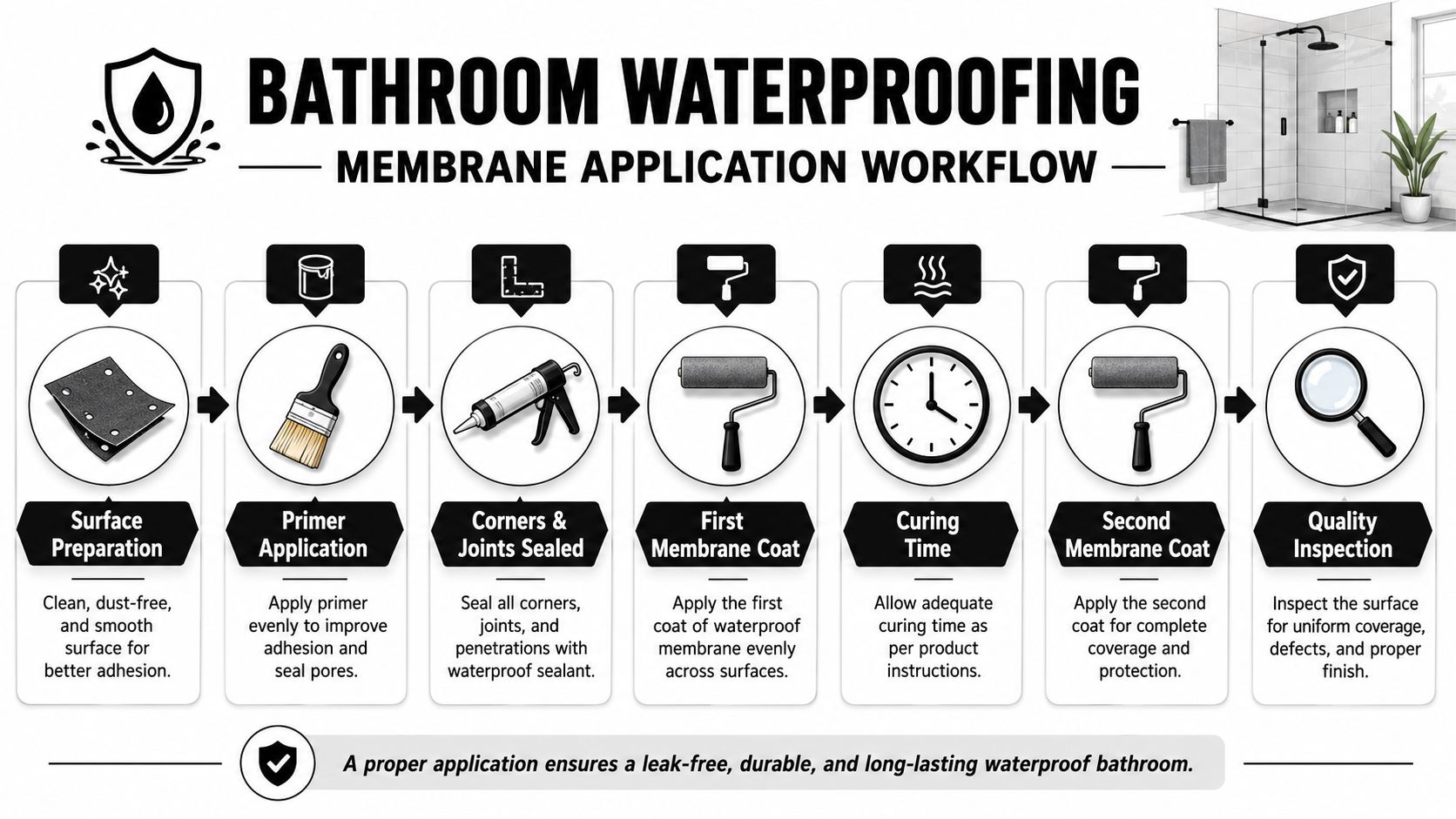
The membrane is the actual barrier. Its job is to stop water before it reaches the parts of the building that deteriorate when they stay wet. If that layer is broken at a corner, drain connection, hob, niche, waste penetration, or wall-floor junction, water can move behind the tile assembly.

One weak junction can undermine the whole room

This is why integrated waterproofing matters. The membrane, sealants, bond breakers, tapes, adhesives, screed, and tile installation method all have to work together. Good installations don't rely on one miracle product. They rely on continuity.

A robust wet-area approach usually includes:

  • Prepared substrate: clean, stable, suitable for the membrane system selected.
  • Correct falls: water must move to the waste instead of lingering at the perimeter.
  • Continuous membrane treatment: floor, wall junctions, corners, penetrations, and transitions all need deliberate detailing.
  • Compatible tile fixing materials: the tile layer can't compromise the membrane's purpose.

Practical rule: If the waterproofing detail can't be clearly explained at a junction, it probably hasn't been properly resolved.

In Melbourne bathrooms, the failure points are often not the middle of the floor. They're the awkward parts. Internal corners. Around mixers and outlets. The shower entry. The connection between a screeded floor and a framed wall. A good builder slows down at those points instead of trying to speed through them.

That's also why “just patch the leak” advice often disappoints homeowners. If the leak source sits in the interface between trades, the fix has to address the assembly, not only the surface symptom.

Key Materials for Tiling and Waterproofing

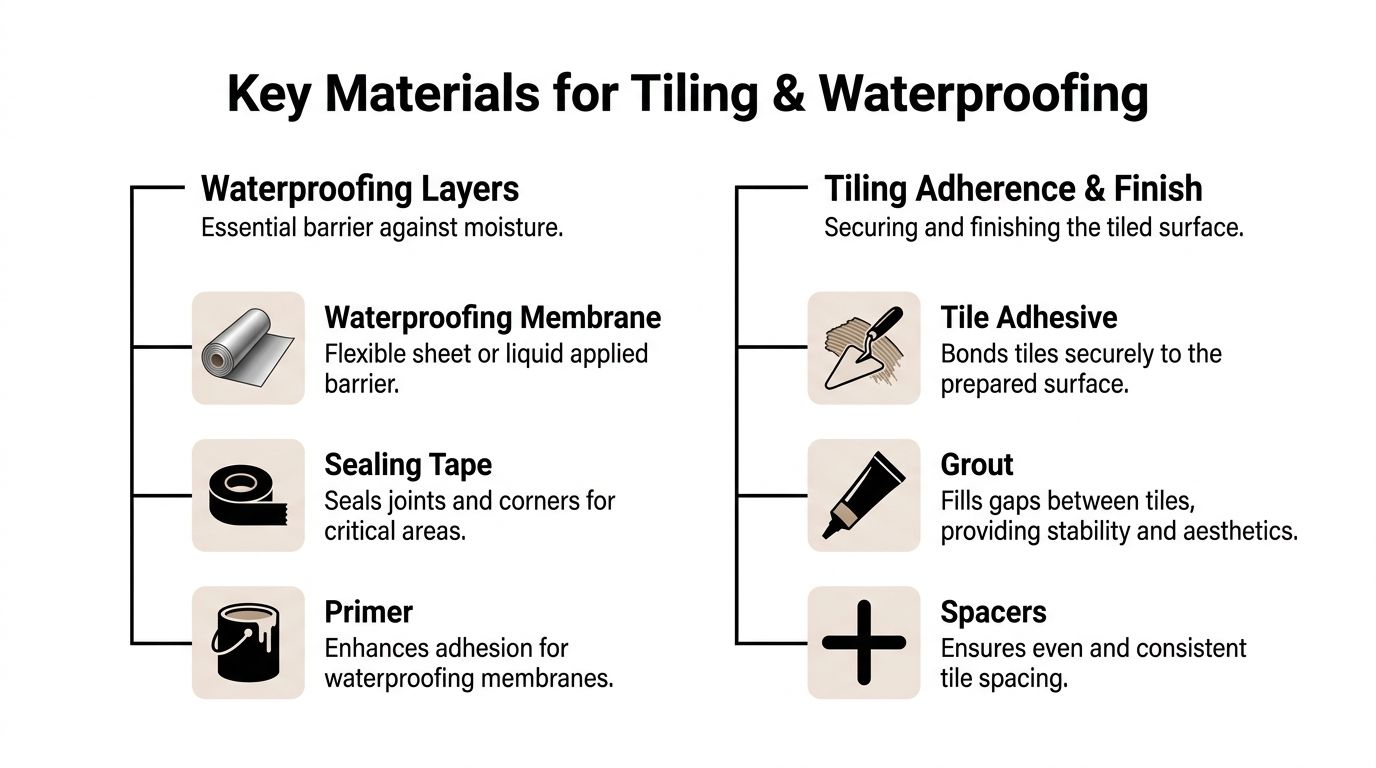
The wet-area build-up isn't one product. It's a stack of materials, and each layer has a job. When one layer is chosen in isolation, problems start. When the layers are selected as a system, the bathroom has a much better chance of staying sound.

A diagram outlining key materials used for effective professional tiling and waterproofing projects.

The layers that actually matter

Start at the bottom. The substrate has to be stable and suitable for wet-area treatment. Over that, the room may need levelling or screeding to create the required falls, especially in shower areas. A flat room is not the same as a functional room. In showers, the floor has to guide water to the waste without birdbaths or reverse falls.

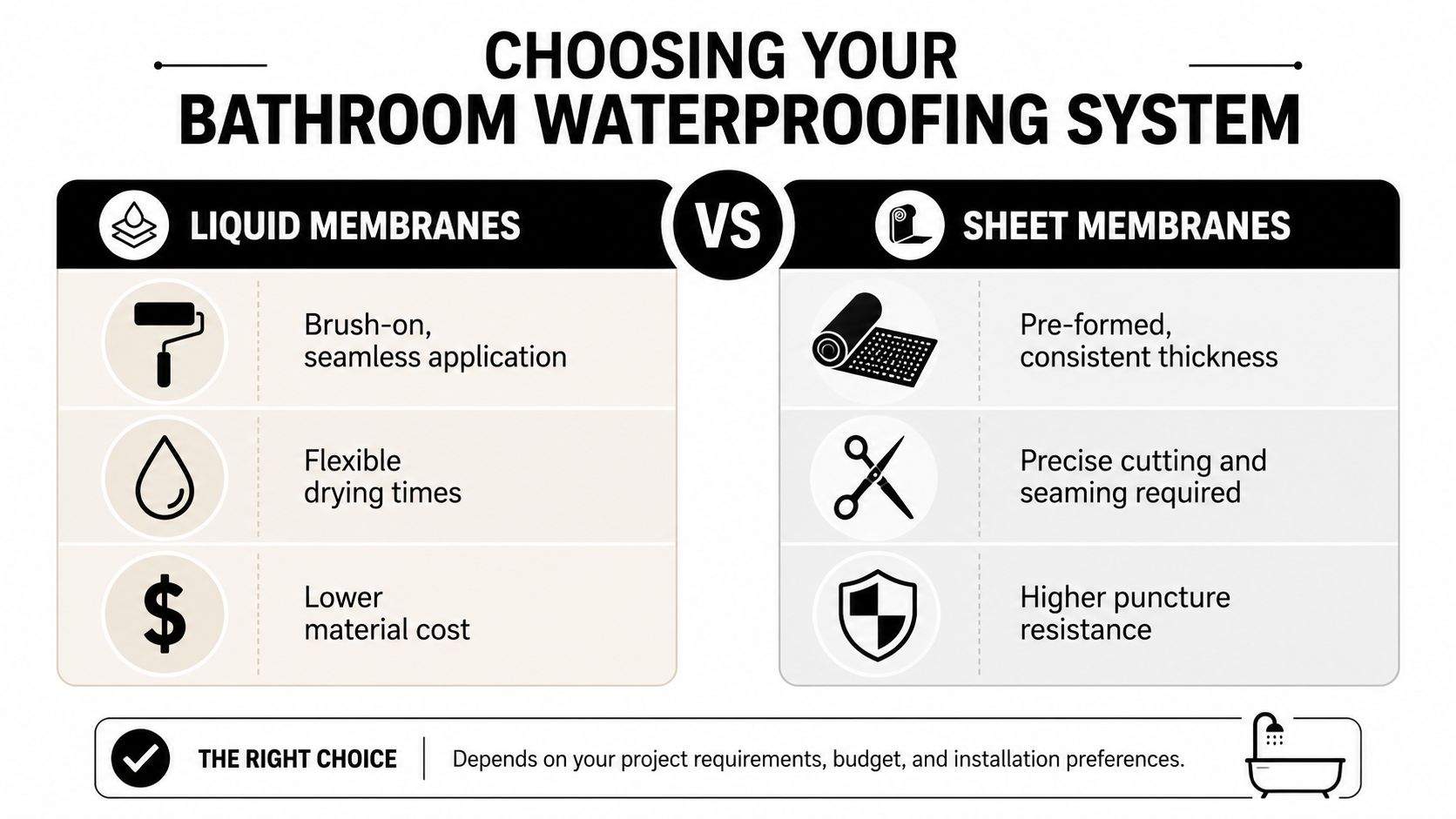
Then comes the membrane system. In tiled wet areas, guidance commonly places the waterproofing membrane directly beneath the tile bond coat so moisture is stopped before it reaches the substrate. Recognised system types include cementitious, liquid-applied, and sheet-applied membranes, and project specifications often require the membrane to continue up vertical surfaces in wet zones, with 48-hour ponding used as a watertightness check before tiling proceeds, as described in this technical shower waterproofing guide.

For homeowners, the takeaway is straightforward. The membrane type isn't chosen by habit alone. It depends on the substrate, the geometry, the programme, the drainage arrangement, and the finish materials above.

A practical materials list usually includes:

  • Primer: used where the membrane system requires substrate preparation for adhesion.
  • Membrane: liquid or sheet, depending on system design and detailing needs.
  • Reinforcement accessories: tapes, bond breakers, corner pieces, collars, and sealants for transitions and penetrations.
  • Screed or levelling compound: used to establish falls and support tile installation.
  • Tile adhesive and grout: selected to suit tile type, movement, moisture exposure, and the membrane beneath.

Material compatibility decides whether the system works

Compatibility is where a lot of bad work starts to unravel. For tiled showers, wet-area guidance emphasises that the membrane and adhesive must suit each other, especially under low-porosity tiles. Adhesives that cure by hydration or chemical reaction are preferred because standard emulsion adhesives may not fully cure when trapped between a waterproof membrane and a dense tile, which can lead to failure, as set out in this internal wet-area membrane code of practice.

That matters more now because modern bathroom renovations often use porcelain with very low absorption. Large-format wall tiles, porcelain panels, and premium thin-surface products look sharp, but they also reduce forgiveness in the fixing system. If the adhesive is wrong, curing can be compromised. If the substrate prep is poor, the tile may debond. If the corners aren't detailed properly, movement and moisture can combine into a failure that shows up long after the installer has left site.

The best-looking tile in the showroom won't save a bathroom built on incompatible materials.

For owners comparing finish options, tile materials used in Melbourne wet-area projects can help clarify what suits bathrooms, ensuites, and feature walls. In practice, some projects also specify large-format porcelain systems such as Kerlite, which need careful handling, flat substrates, and a fixing method matched to the product's thickness and size.

Victorian Regulations and Builder Warranty Explained

Victoria is where generic bathroom advice starts to fall apart. Plenty of online guides explain membranes, adhesives, and tile selection in broad terms. They don't tell you what matters when the project has to satisfy local compliance expectations and when a leak has to be diagnosed after handover.

Compliance lives in the details

In Victorian bathroom renovations, the risky areas are usually the interfaces. Industry guidance highlighted for local audiences points to interfaces and penetrations, not the tile face itself, as the critical leak points. That aligns with what builders and rectification teams see on real jobs. The vulnerable spots are around wastes, tap penetrations, screen fixings, hob ends, door transitions, and changes in material or plane, as discussed in this Victorian waterproofing and leak-rectification video guidance.

That's where compliance becomes practical rather than theoretical. A membrane might be the correct product on paper, but the room still fails if junction sealing is poor, if the substrate wasn't ready, or if later trades puncture or compromise the waterproofed area.

For homeowners in Victoria, the big compliance questions are usually these:

Question Why it matters
Who is responsible for the wet-area scope? Accountability gets blurry when trades are split.
Was the waterproofing installed and documented properly? That affects defect response and confidence in the finished room.
Were junctions and penetrations treated as critical details? That's where leak risk often sits.
Who coordinates rectification if something goes wrong? A single responsible party simplifies the process.

If you're checking documentation, waterproofing compliance certificate requirements in Victoria are worth understanding before work begins, not after a problem appears.

Why a Registered Builder changes the risk profile

A registered builder changes the conversation because they can take responsibility for the full renovation scope rather than only one trade package. That matters in bathrooms more than most rooms in the house. Plumbing, carpentry, sheeting, waterproofing, screeding, tiling, glazing, and fit-off all affect the final wet-area result.

When a homeowner coordinates separate trades, defects often land in the gap between them.

Using a single registered builder won't make a poor process good. But it does create a clearer chain of responsibility, better trade sequencing, and a more coherent warranty position. If there's an issue, the owner isn't left arguing about whether the fault belongs to the tiler, the waterproofer, the plumber, or the person who installed the screen after everyone else had left.

That's the local angle many generic blogs ignore. In Victoria, bathroom success isn't only about product selection. It's about compliant installation, traceable responsibility, and having one party own the finished room.

Your Bathroom Renovation Process and Timeline

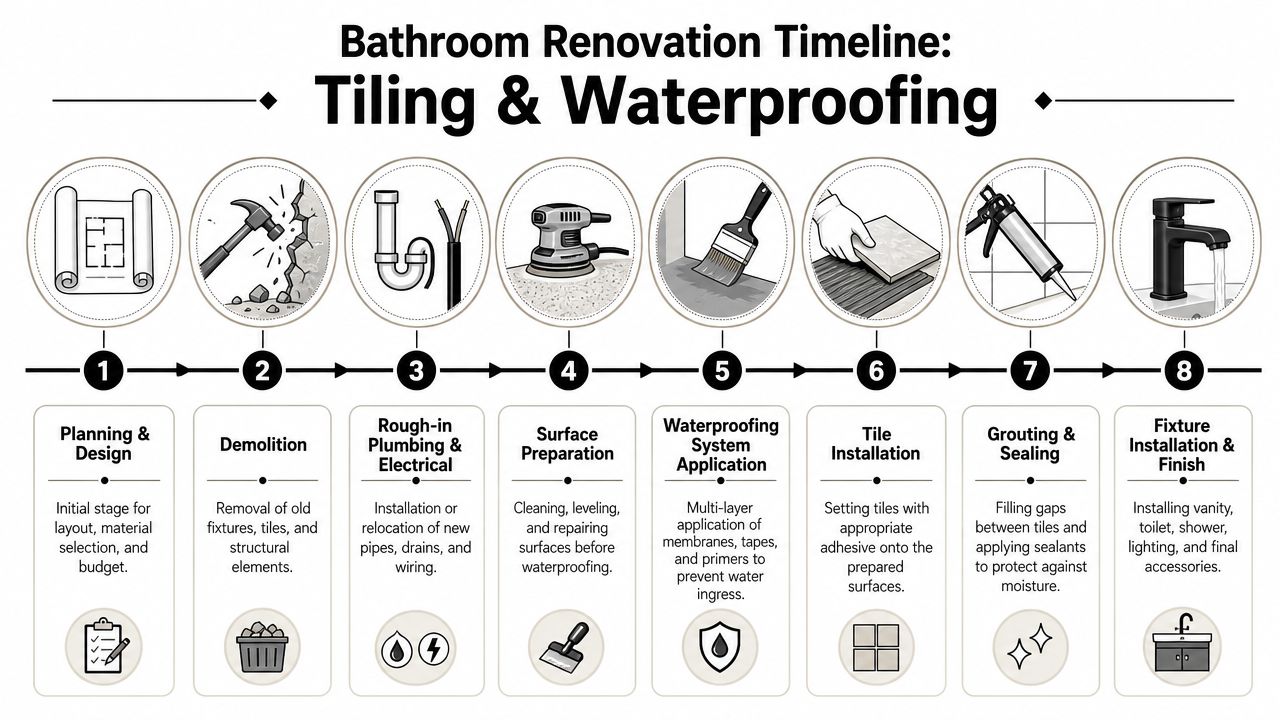
Bathroom renovations go wrong when trades overlap badly or when someone rushes curing and prep because the owner wants the room back in service. A controlled timeline protects quality. It also protects the waterproofing system from being buried before anyone has confirmed the room is ready for tile.

The overall flow is easier to understand visually.

A linear infographic outlining the eight key steps for a successful bathroom renovation including tiling and waterproofing.

The sequence that keeps wet-area work under control

A typical bathroom renovation usually follows this order:

  1. Planning and selections
    Layout, fixture choices, tile format, drainage intent, and material lead times are settled early. During this initial phase, unrealistic ideas often get corrected before they become site problems.

  2. Demolition
    Old fixtures, tiles, and linings come out. Once the room is open, the builder can assess the substrate and framing condition.

  3. Rough-in works
    Plumbers and electricians complete the hidden services. Waste positions, mixers, outlets, and lighting all need to be fixed before the room is closed in.

  4. Sheeting and preparation
    Walls and floors are prepared for wet-area treatment. This stage often includes correcting surfaces so the membrane and tile system have a sound base.

After the room is prepared, the waterproofing stage becomes critical. Public guidance often ignores non-standard shower geometry, but in Melbourne renovations that's exactly where work gets technical. Neo-angle showers, mitred curb returns, and unusual corner conditions require membrane cutting and overlap detailing that goes beyond simple square-room demos, as shown in this practical video on waterproofing awkward shower geometry.

A useful visual walkthrough can help homeowners understand how these steps fit together.

Where projects usually go off track

The most common site mistakes are rarely dramatic. They're small decisions that stack up:

  • Waterproofing before the room is ready: dusty surfaces, unresolved penetrations, or poor substrate condition.
  • Tiling too soon: membrane systems need proper curing and inspection.
  • Custom geometry handled like a standard shower: corners, entries, hobs, nib walls, and niches need deliberate detailing.
  • Late changes after waterproofing: moving fittings or adding fixings can compromise the sealed system.

A registered builder is valuable here because sequencing isn't just project management admin. It affects technical performance. The plumber can't guess where the tiler wants the waste. The waterproofer can't do reliable work over unfinished prep. The shower screen installer shouldn't be creating avoidable penetrations or stressing finished edges after the fact.

Good bathrooms are built in order. That sounds simple, but on site it's one of the biggest differences between a smooth renovation and a rectification job.

Budgeting for Your Melbourne Bathroom Renovation

Budget pressure causes more wet-area mistakes than homeowners realise. Not because people want poor workmanship, but because the budget often gets consumed by visible items first. Vanity, tapware, feature tiles, and frameless glass are easy to compare. Screeding, membrane detailing, substrate preparation, and supervision are harder to “see”, so they're often where corners get cut.

That's a mistake. In tiling and waterproofing, the hidden work protects the visible investment.

Where the budget usually goes

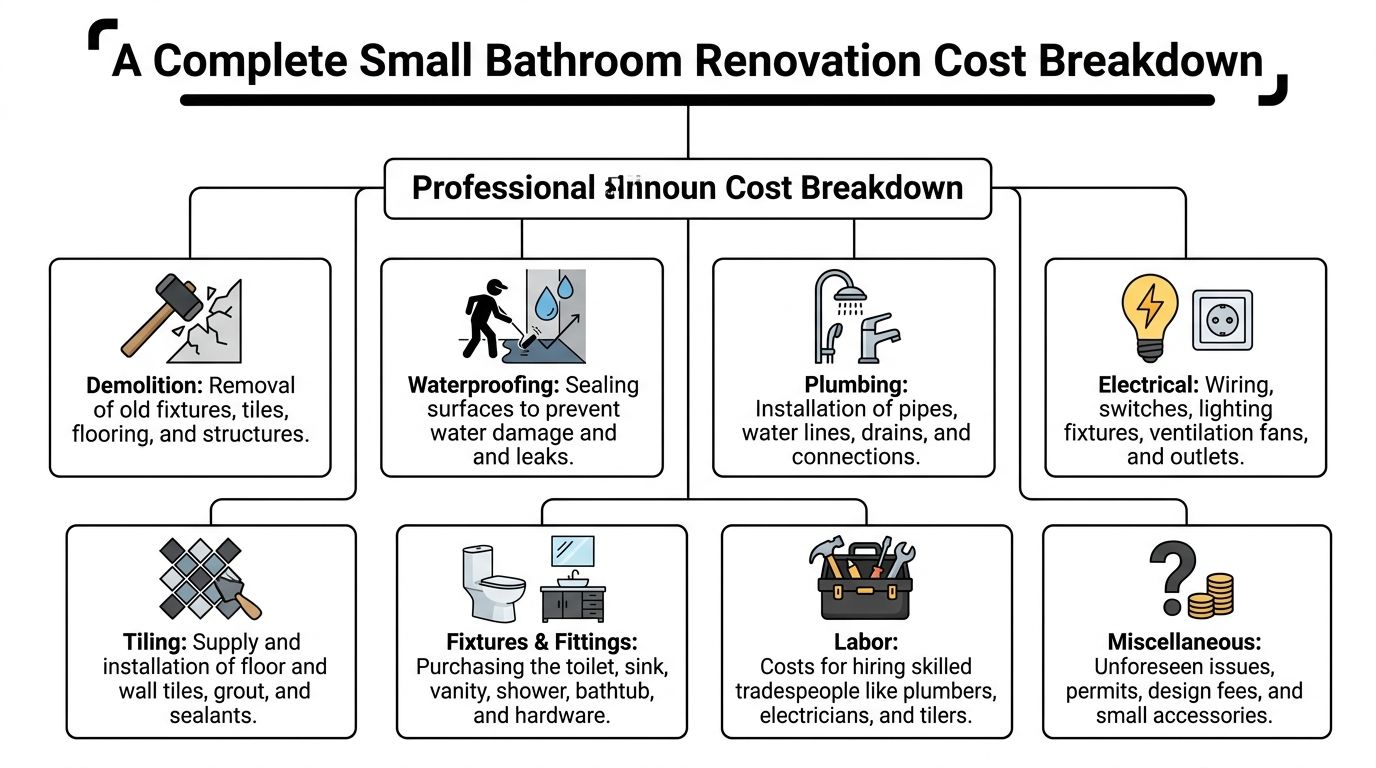
A useful way to think about the spend is by trade package and function, not only by product. The exact cost depends on room size, access, demolition complexity, fixture selections, structural repairs, and finish level, but a mid-range Melbourne bathroom renovation often spreads across several key categories.

Item / Trade Estimated Cost Range Percentage of Budget
Demolition and strip-out Varies by site condition Typically a smaller early-stage share
Plumbing works Varies by fixture changes and drainage scope Often one of the larger trade components
Electrical works Varies by lighting, heating and fan upgrades Moderate project share
Carpentry and wall/floor preparation Varies by framing, sheeting and repairs Significant where the room needs correction
Waterproofing Varies by layout, shower design and detailing complexity A defined wet-area protection cost that shouldn't be compressed
Tiling labour Varies by tile size, pattern, cuts and access Often a major labour component
Tiles and trims Varies widely by material selection Can range from restrained to premium
Fixtures and fittings Varies by brand and specification Often owner-driven and highly variable
Shower screen and glazing Varies by customisation Moderate to premium depending on design
Contingency Owner allowance Essential for hidden conditions

The brief for this article requested a sample budget framed around a mid-range Melbourne bathroom renovation total of about $20,000 to $30,000. Treat that as a planning example only, not a fixed quote. Real projects move up or down depending on scope and selections.

How to budget without creating hidden risk

The smartest budgeting move is to separate wants from essentials.

  • Protect the wet-area system first: don't downgrade preparation, waterproofing, or competent installation to afford a more expensive tile.
  • Keep a contingency: once demolition starts, hidden issues can appear in framing, sheeting, or previous work.
  • Be realistic about custom details: niches, feature patterns, mitred edges, large-format porcelain, and complex shower screens all add labour.
  • Ask who owns the whole result: a cheaper fragmented trade arrangement can cost more later if defects appear and no one takes responsibility.

Spend carefully on finishes. Don't economise on what keeps water out of the building.

Homeowners usually feel the cost of proper work before handover. They feel the cost of bad work long after handover. The first is budgeting. The second is rectification.

How Melbourne Tiling Services Delivers Your Vision

For homeowners who want one party to manage the wet-area risk properly, the practical model is straightforward. Use a registered builder who can coordinate the entire bathroom renovation, align the licensed trades, and keep responsibility tied to the full finished room rather than one isolated task.

That matters because tiling and waterproofing are connected to everything around them. Drain set-out affects falls. Sheeting affects membrane performance. Tile choice affects adhesive selection. Screen design affects penetrations and finishing details. If those decisions are made in silos, the room becomes harder to build well.

Melbourne Tiling Services P/L operates as a Melbourne-based bathroom renovation and tiling specialist with registered builder capability, coordinating bathroom renovations, wet-area waterproofing, screeding, tile installation, leak rectification, and related trades from start to finish. The business also offers free quotes, 3D drawings, and planning tools that help owners understand scope before site work begins.

For a homeowner, that approach reduces guesswork. You can review the layout, confirm finish selections, clarify who is handling each stage, and understand how the wet-area work fits into the broader renovation. That's the right way to approach bathrooms in Victoria. Not as a stack of separate jobs, but as one controlled build with compliance, accountability, and durability built into the process.

If you're planning an ensuite update, a full bathroom renovation, or a leak-prone shower rebuild, the decision that matters most often isn't the tile you pick. It's who is responsible for making the whole room perform.


If you want practical advice on bathroom renovations, tiling and waterproofing, or compliance-focused wet-area work in Victoria, Melbourne Tiling Services P/L is a sensible next step. You can review your layout, materials, and scope with a registered builder before committing to demolition, which makes it easier to avoid the mistakes that turn a bathroom upgrade into a leak rectification job.

Ceramic Tiles Bathroom: Melbourne Renovation Guide 2026

You're probably standing in a bathroom that's overdue. The tiles look tired, the shower feels dated, and once you start browsing showrooms, every decision seems to multiply. White subway, terrazzo-look, matte grey, stone-look porcelain, mosaics, large format. It's easy to get lost in looks and miss the part that determines whether the room performs well for years.

That's where ceramic tiles for a bathroom still make sense. They've been around for a reason. The National Park Service preservation brief on ceramic tile floors notes that tilemaking can be traced back to the fourth millennium B.C., and modern ceramic tile is still valued because firing creates a hard, water-resistant surface that suits wet areas.

In Melbourne bathroom renovations, that history matters less as trivia and more as proof of a material that's lasted through changing building methods, design trends, and daily wear. Good tile selection isn't about chasing what looks current on social media. It's about matching the right tile to the right part of the room, then installing it as part of a compliant waterproofed system.

Table of Contents

Your Melbourne Bathroom Renovation Starts with the Right Tile

I usually see the same moment early in a Melbourne bathroom renovation. A client has a tile they like, then we put that sample against the actual room. Suddenly the real questions show up. Will it work on a shower floor with proper fall? Will it hide soap marks? Will it suit an older home where the walls are rarely dead straight? Will it support a bathroom build that stays sound years after handover?

That is why tile selection needs to start with function, not the showroom display. The tile affects cleaning, slip risk, set-out, grout joints, trim details, and how forgiving the installation will be once the waterproofing and substrate preparation are locked in. In Melbourne, I also look at the age of the home, likely movement in the structure, and whether the chosen format will help or fight the room.

Why ceramic still holds its place

Ceramic remains a practical choice because it performs well in the right areas and gives good value without creating unnecessary complexity. For bathroom walls, splash zones outside the shower, and feature areas, it often does the job well. It is lighter to handle than many dense tiles, usually easier to cut, and available in a wide range of finishes and sizes.

Its long history matters, but performance matters more. Ceramic still earns its place because it can be matched to the right part of the bathroom instead of being forced into every part of it. If you want a clearer breakdown of how different products behave on site, this guide to bathroom tiling materials and their practical uses is a useful starting point.

A good bathroom does not need one tile everywhere.

In many projects, the smarter build is a straightforward ceramic wall tile paired with a floor tile that is selected for grip, density, and wet-area suitability. That approach usually gives better long-term results than choosing one look and trying to make it solve every problem.

Practical rule: Choose tiles by zone first. Start with the shower floor, then the main floor, then wall areas, then any feature tile.

What homeowners usually get wrong

The common mistake is choosing from a display board without thinking through how the bathroom will be used. Showrooms are flat, bright, and dry. Real bathrooms deal with steam, residue, cleaning products, movement in the substrate, and wet feet on cold mornings.

From a builder's perspective, the better questions are practical:

  • Where will water sit or drain slowly
  • Which surfaces need more grip underfoot
  • What finish will show less residue and be easier to clean
  • Is the tile suitable for the specific wall or floor location
  • Will the tile size and edge detail work with falls, trims, grout joints, and the waterproofing system

That last point gets missed too often. Tile is the visible finish, but it sits on top of a system that has to comply and perform. In a bathroom renovation, the best-looking tile is the wrong choice if it makes set-out difficult, creates problems at junctions, or pushes the job away from sound wet-area practice and Australian Standards.

Ceramic vs Porcelain vs Natural Stone Tiles

A tile can look right on a sample board and still be the wrong product for a Melbourne bathroom. I see that regularly on renovation jobs. The problem usually is not colour or style. It is whether the tile suits a wet area, works with the waterproofing system underneath, and will still perform after years of steam, cleaning, and daily use.

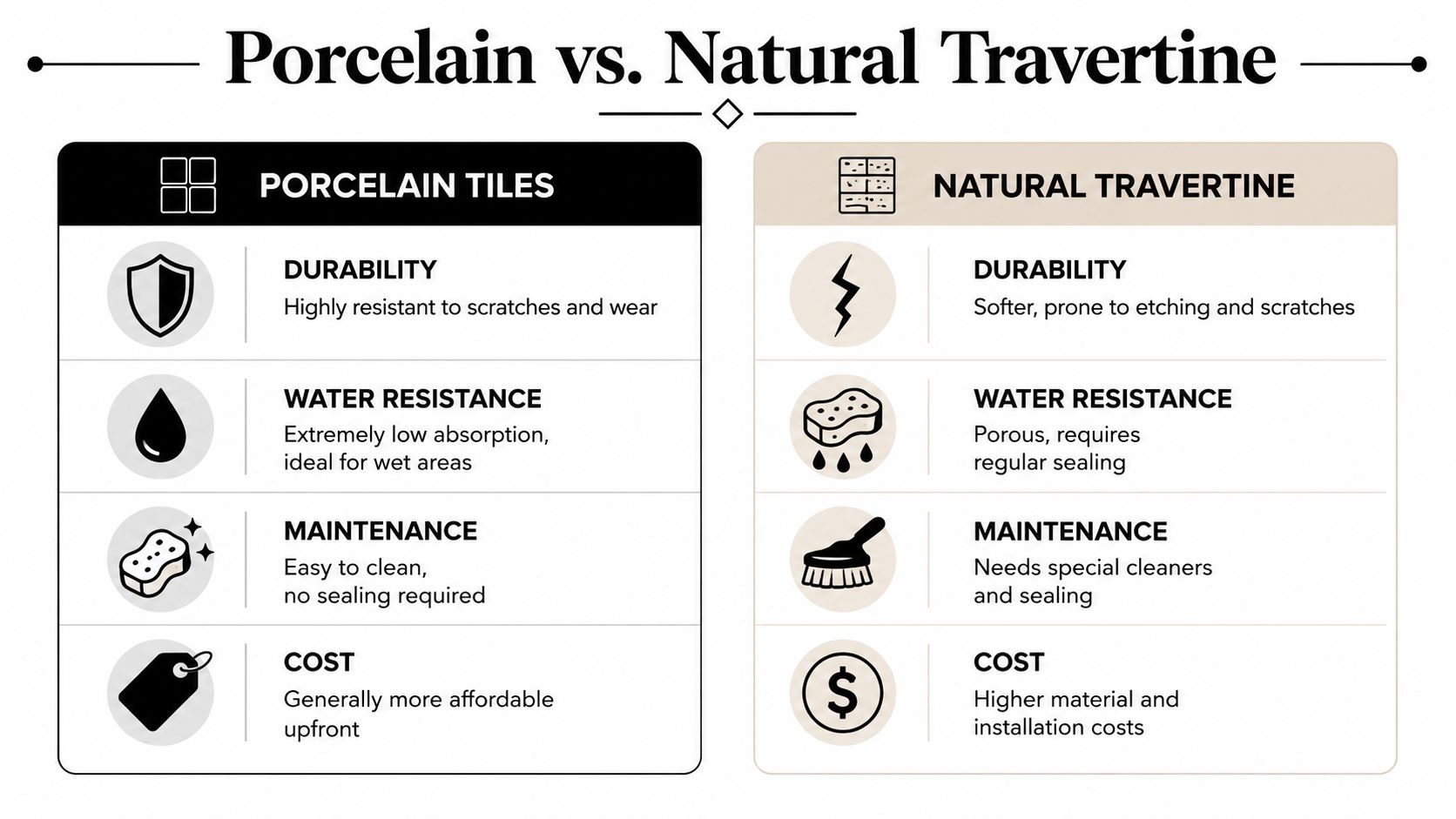
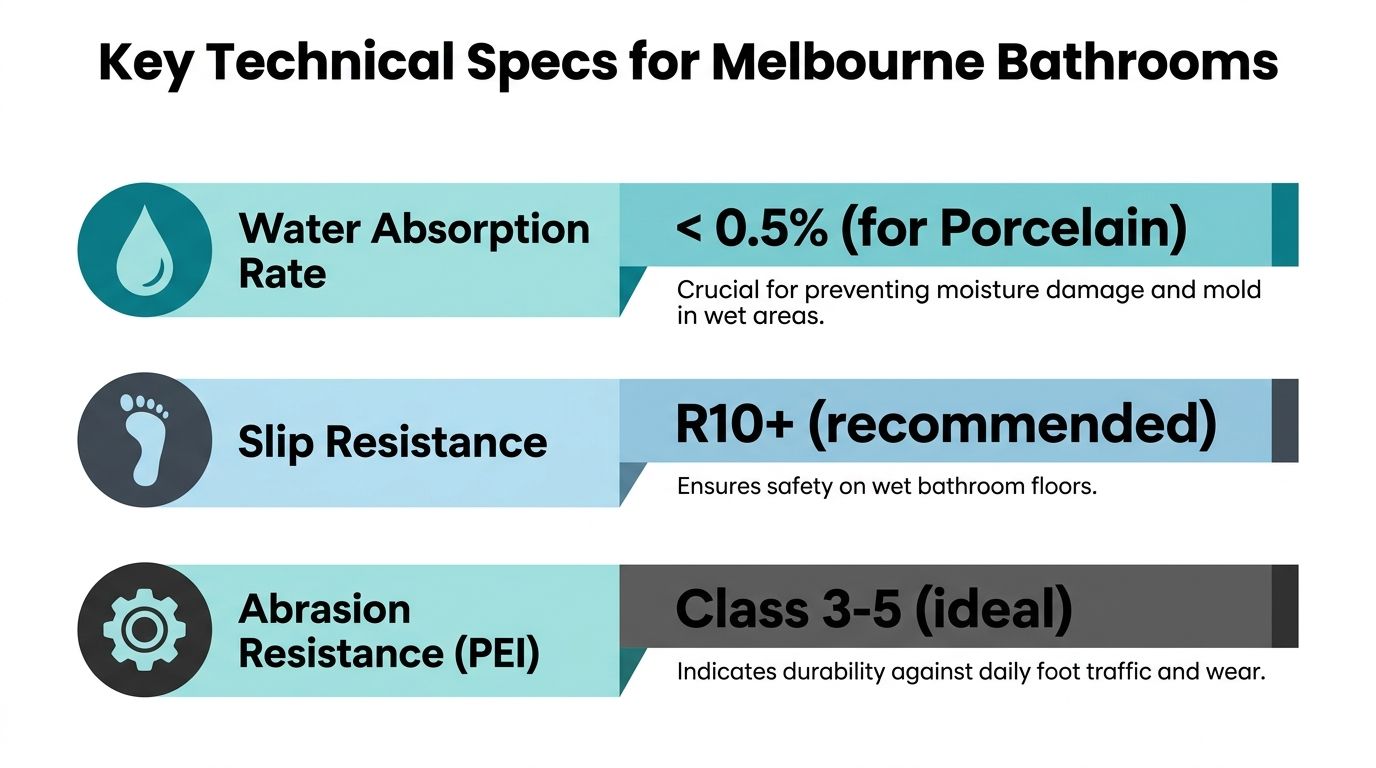
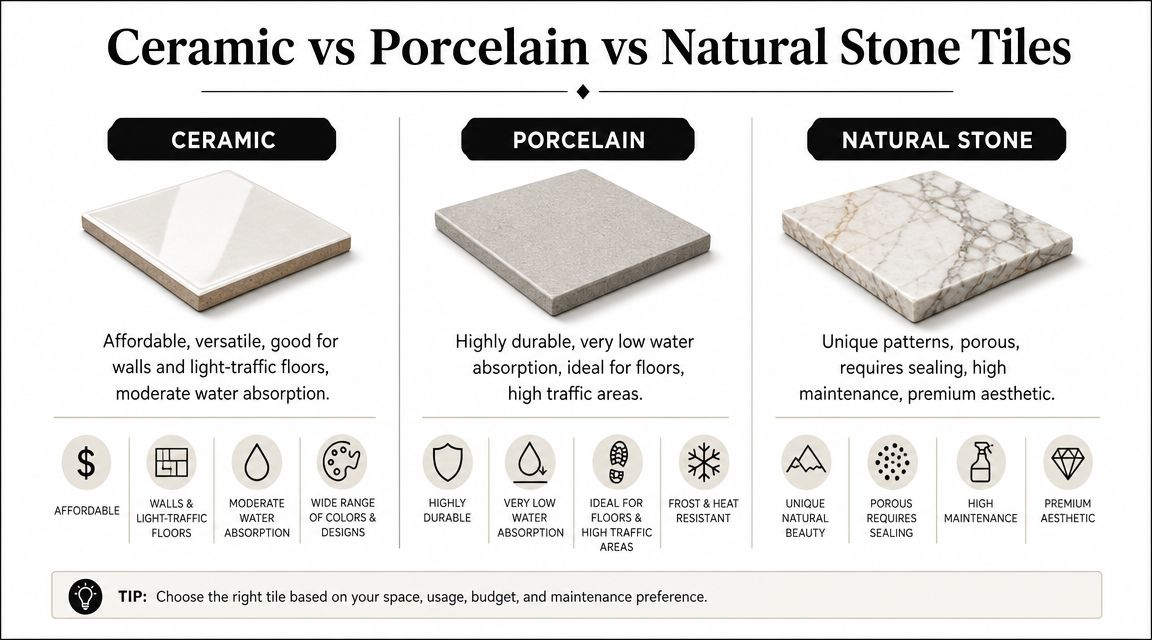
The first technical difference is porosity. Denser tiles absorb less water, which generally makes them a better fit for shower floors and other hard-working wet zones. More porous materials can still be used, but only in the right locations and with the right expectations around maintenance and sealing.

A comparison chart of ceramic, porcelain, and natural stone tiles highlighting their features, durability, and maintenance requirements.

What changes in a bathroom

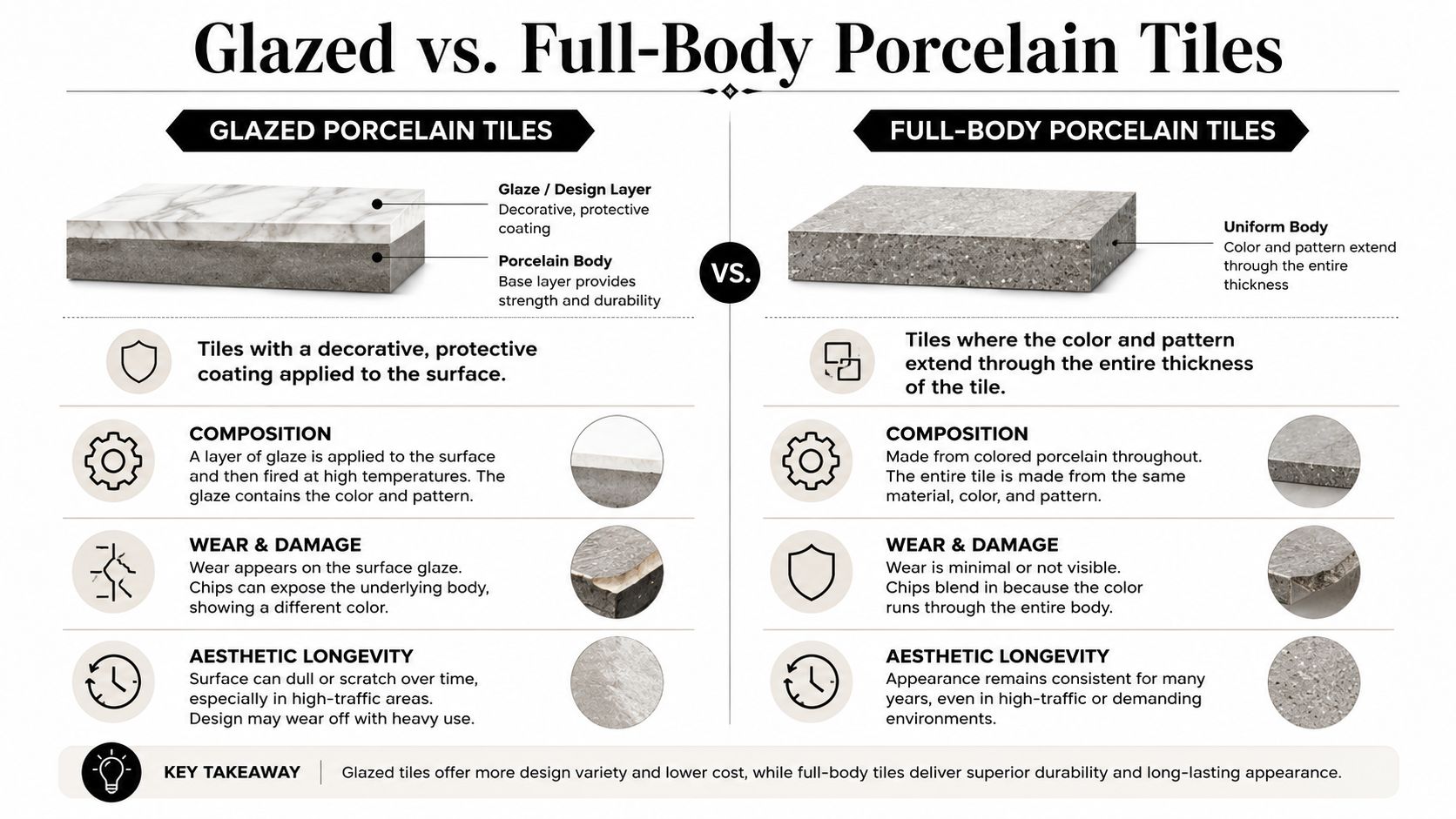
For bathroom work, water absorption is one of the clearest dividing lines between tile types. Porcelain sits in the impervious class, which is why builders and tilers often prefer it for shower bases, bathroom floors, and other areas that stay damp for long periods. A low-absorption tile does not replace proper waterproofing, but it does add a more stable and durable wearing surface over a compliant system.

Ceramic still earns its place. On bathroom walls, it is often the practical choice because it is lighter, easier to cut, and usually more cost-effective than porcelain. That can help with set-out, trims, and penetrations around mixers, niches, and fittings. For many projects, a good ceramic wall tile plus a properly rated porcelain floor tile is the sensible build.

Natural stone is different again. Stone can produce an excellent result, but it introduces more variables on site. Some stones stain easily, some need regular sealing, and some finishes are less forgiving under soap residue or aggressive bathroom cleaners. From a registered builder's perspective, stone only makes sense if the owner accepts the upkeep and the installer details the substrate, sealing, movement joints, and edge treatments properly. For a broader overview of tiling materials used in renovations, it helps to compare the material first, then choose the finish.

Tile Comparison for Bathroom Use

Attribute Ceramic Tile Porcelain Tile Natural Stone
Water absorption Higher than porcelain Very low absorption, suited to wetter locations Varies by stone type and is often more porous
Best bathroom use Walls, splash zones, and some lighter-duty floors if correctly specified Shower floors, main floors, and heavily used wet areas Feature walls, vanity splashbacks, and selected floors where maintenance is accepted
Durability Good in the right location Dense and hard-wearing Depends heavily on stone type, finish, and care
Maintenance Usually straightforward, especially glazed finishes Generally low maintenance Requires more cleaning care and often sealing
Slip options Available in different finishes Wide range of textured and wet-area finishes Depends on finish, cut, and stone type
Typical trade-off Lower cost and easier wall installation, but not ideal for every wet floor application Strong long-term performer, but usually dearer and harder to cut Premium look with higher upkeep and more installation risk

In practice, I rarely recommend using one tile type everywhere just to keep the look uniform. Bathrooms are built in zones, and each zone places different demands on the tile, the adhesive, the falls, and the waterproofed substrate below.

Natural stone is not a bad choice. It is less forgiving. If low maintenance, predictable performance, and easier compliance are the priorities, porcelain usually gives the cleanest result on the floor, while ceramic remains a reliable option on the walls.

Understanding Tile Ratings for Safety and Performance

A bathroom tile only performs if it stays safe under wet feet, works with the falls in the floor, and holds up over years of cleaning. In Melbourne renovations, I treat tile ratings as a buildability and compliance issue as much as a finish selection issue.

A close-up view of bare feet walking on modern grey textured ceramic tiles in a bathroom.

Why slip resistance matters

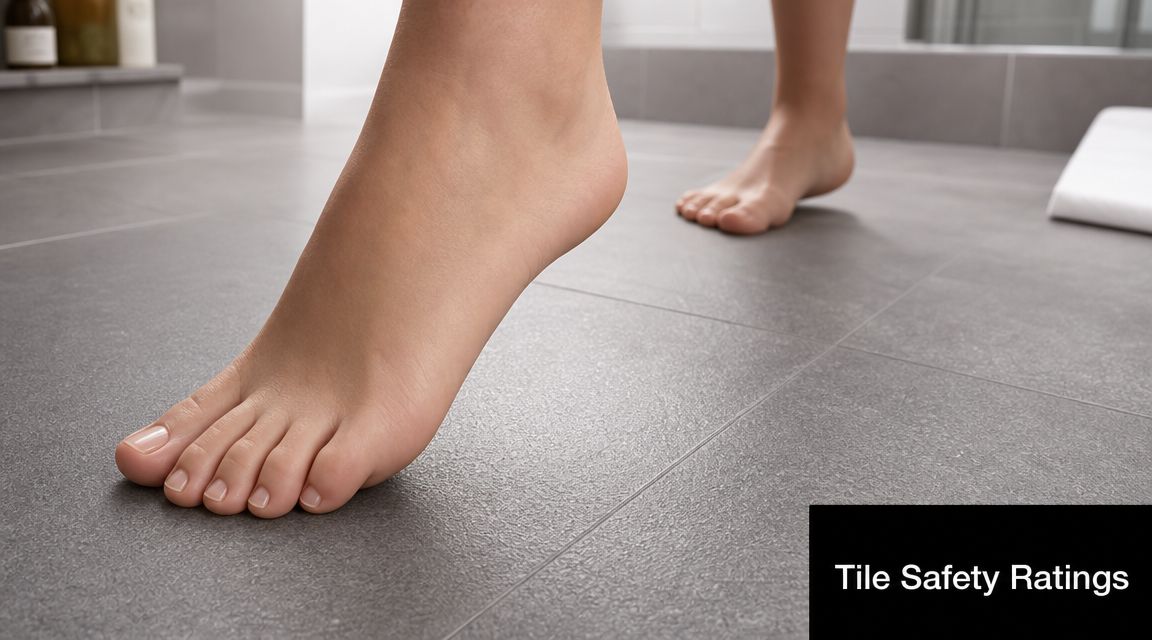
Slip resistance is one of the first checks for any bathroom floor tile, particularly in shower areas and other regularly wet zones. A tile can look suitable in a showroom and still be the wrong product once soap, water, and cleaning residue hit the surface.

As noted earlier, wet-area tile selection should be backed by proper slip data rather than appearance alone. A common assumption I see is that homeowners can judge slip resistance by touch or by looking at a sample board. That is unreliable. Some lightly textured tiles become slippery in service, while some flatter-looking products perform well because they were designed and tested for wet-floor use.

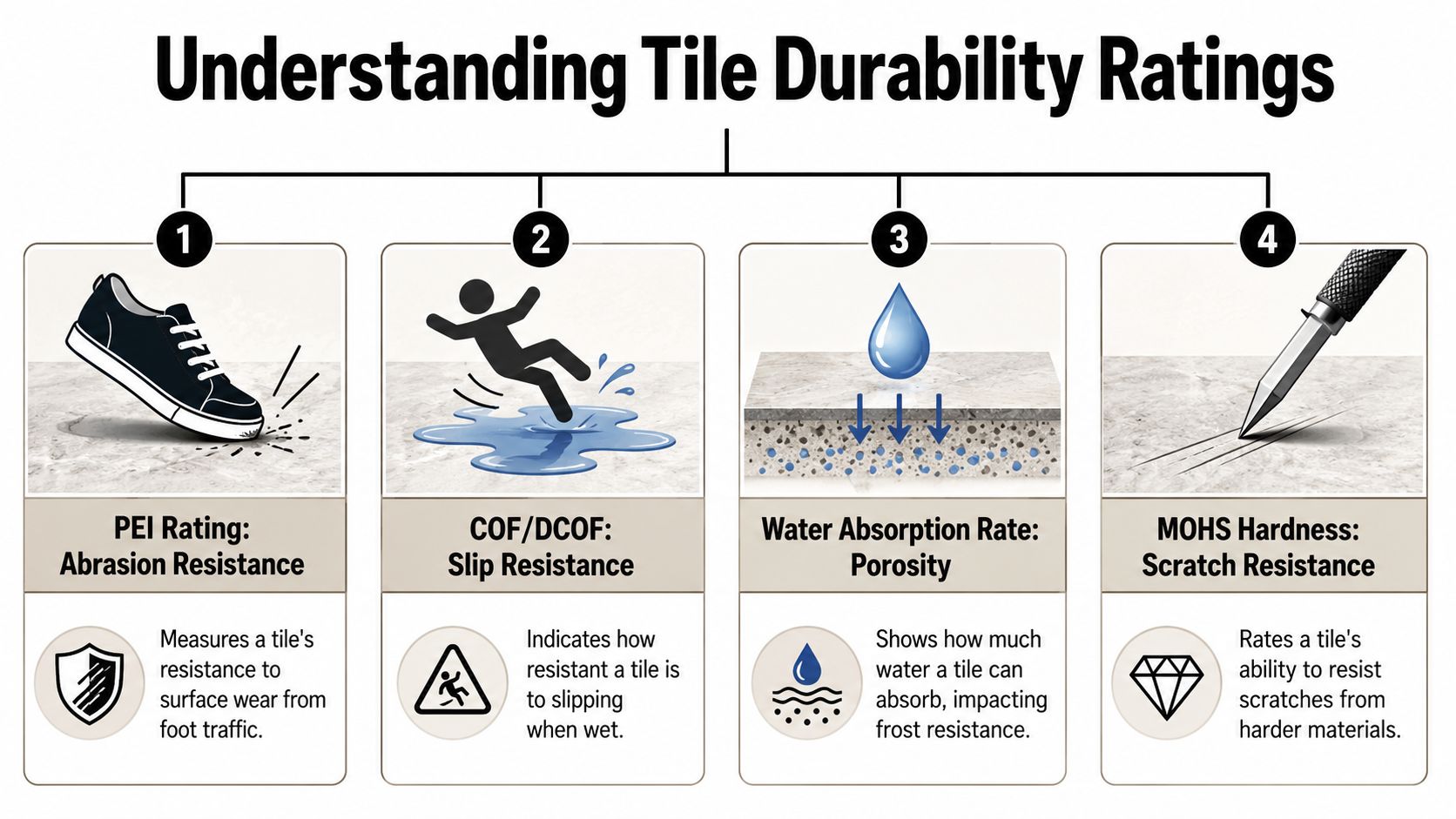
The finish also affects how well the floor works with the rest of the bathroom build. The guidance on glazed and unglazed porcelain in wet areas explains why unglazed or purpose-textured surfaces usually give better grip, especially on shower floors.

Finish matters as much as colour

Finish choice always involves a trade-off. More grip can mean more effort to clean. A smoother surface is easier to wipe down, but it may be less forgiving under wet feet.

In practice, I look at finishes by zone, not by trend:

  • Glossy glazed finishes usually work best on walls where easy cleaning matters more than underfoot grip.
  • Matte finishes are often a sensible middle ground for general bathroom floors.
  • Unglazed or textured finishes deserve close attention for shower floors and other wet zones where slip risk is higher.
  • Highly polished finishes are usually a poor fit for bathroom floors, even if they suit the look of the room.

There is another practical issue here. Heavy texture can trap grime in the face of the tile and make regular cleaning harder, especially in family bathrooms. Good tile selection is about getting enough grip for the location without creating a surface that is frustrating to maintain.

From a builder's point of view, ratings are only useful if they match the way the bathroom is being constructed. The tile, adhesive, grout joints, floor falls, and waterproofed substrate all have to work together. If the supplier cannot clearly state where a tile is suitable, or cannot provide the relevant slip information, I would not specify it for a wet-area floor.

Best Practices for Wall and Floor Tiles

A bathroom can look right at handover and still fail in use if the tile selection ignores where each product is being installed. I see that problem regularly in Melbourne renovations. The wall tile is too delicate for floor traffic, or the floor tile is so awkward for the shower base that the tiler has to fight the falls and drain layout from day one.

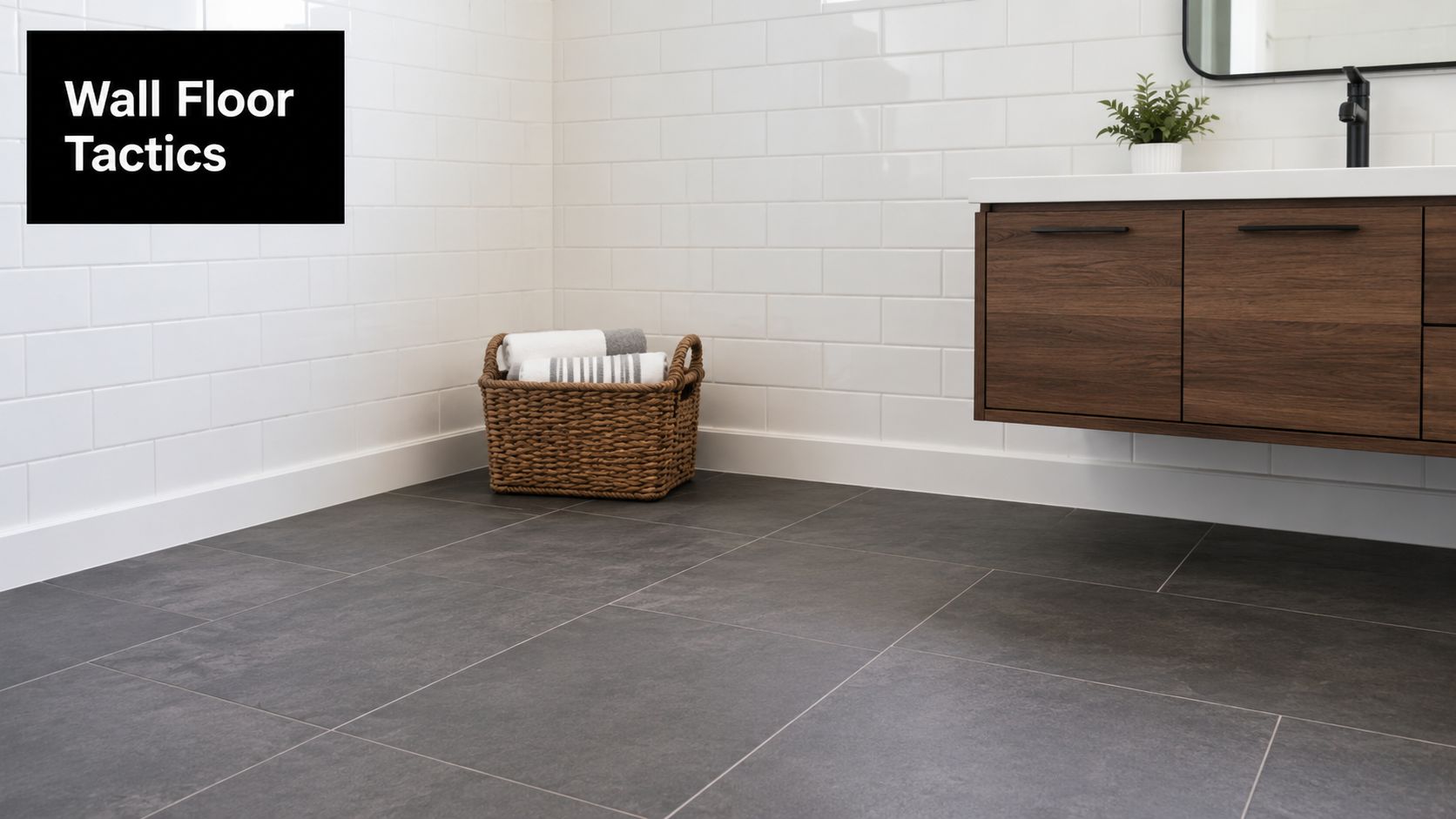
A modern bathroom featuring dark ceramic tile flooring, a floating wooden vanity, and white subway tiled walls.

Wall tiles and floor tiles are not interchangeable

Wall tiles and floor tiles are designed for different loads and different risks. A glazed ceramic tile that performs well on a wall may chip or crack under foot traffic, point loading, or movement in the substrate. In a bathroom, that matters well beyond appearance. Once tiles or grout start failing on the floor, water management, cleanability, and service life usually suffer with them.

From a registered builder's point of view, tile choice also has to respect the broader wet-area system. The waterproofing membrane sits behind the finish, but the finished surface still needs to work with the intended falls, drainage, and daily use. Australian wet-area standards do not let you treat tile selection as a styling exercise separate from construction detail.

I assess bathroom tile zones like this:

  • Walls need reliable adhesion, reasonable weight for the substrate, and a finish that is easy to keep clean.
  • General bathroom floors need durability, slip resistance suited to wet barefoot traffic, and a surface that will not become a maintenance problem.
  • Shower floors need tiles that can follow the required falls cleanly around the waste without creating lipping, ponding, or awkward cuts.

Tile size affects buildability, not just appearance

Size changes how easy the bathroom is to build properly. Large tiles can give walls and open floor areas a cleaner look, but they also demand flatter substrates, tighter set-out, and more planning around corners, niches, and fixtures. If the room is out of square, large pieces make that obvious fast.

On shower floors, smaller formats still earn their place for practical reasons. They conform to the fall more naturally, reduce the risk of unsupported corners, and usually give better footing because there are more joints across the surface. Large tiles can still work in some bathrooms, especially with the right waste location and a set-out planned early. The margin for error is smaller.

If you are weighing up sizes, this guide to large-format tiles for bathroom renovations explains where they perform well and where they create avoidable installation problems.

This video gives a good visual sense of how tile layout and installation detail affect the result:

Smaller tile is often the safer and more buildable choice in wet zones.

For ceramic tiles bathroom renovations, the strongest result usually comes from using different tile formats where they suit the room, the drainage layout, and the waterproofed substrate, rather than forcing one tile across every surface.

Making Smart Grout and Sizing Choices

Grout is where many bathrooms either stay looking sharp or start looking tired. People often treat it as filler. It isn't. It affects maintenance, appearance, and how forgiving the finished room is in daily use.

Grout is part of the system

On a wall, grout choice is mostly about appearance and cleanability. On a shower floor, it becomes more serious. The grout joints are exposed to regular water, soap, cleaning products, and movement around drains and corners.

In demanding wet areas, epoxy grout is often worth considering because it resists water and staining better than standard cementitious grout. Cementitious grout still has a place and is common, but it usually needs more care over time and is less forgiving when owners want a very low-maintenance bathroom.

A few practical rules help:

  • Use epoxy where the exposure is harsh: Shower floors, niches, and splash-prone areas benefit most.
  • Don't choose white grout by default: It can look crisp at handover and become a cleaning burden later.
  • Match grout to tile edge quality: Rectified tiles allow tighter, cleaner lines. Irregular edges need more tolerance.

Choosing width and colour

Grout width changes the whole look of the bathroom. Tight joints feel cleaner and more contemporary. Wider joints can suit handmade-look or smaller-format tiles, but they also create more visible grid and more cleaning area.

Colour matters just as much:

  • Blended grout colours make the surface feel calmer and hide minor variation.
  • Contrasting grout highlights the layout and every alignment decision.
  • Mid-tone grout is often the most forgiving on floors.
  • Very light grout shows staining more readily in hard-working bathrooms.

If you're weighing scale as well as grout, this guide to large-format tiles and layout decisions helps clarify the trade-offs between fewer joints and more complex installation.

The best bathrooms usually don't have the most dramatic grout choice. They have the one that still looks good after months of steam, cleaning, and normal family use.

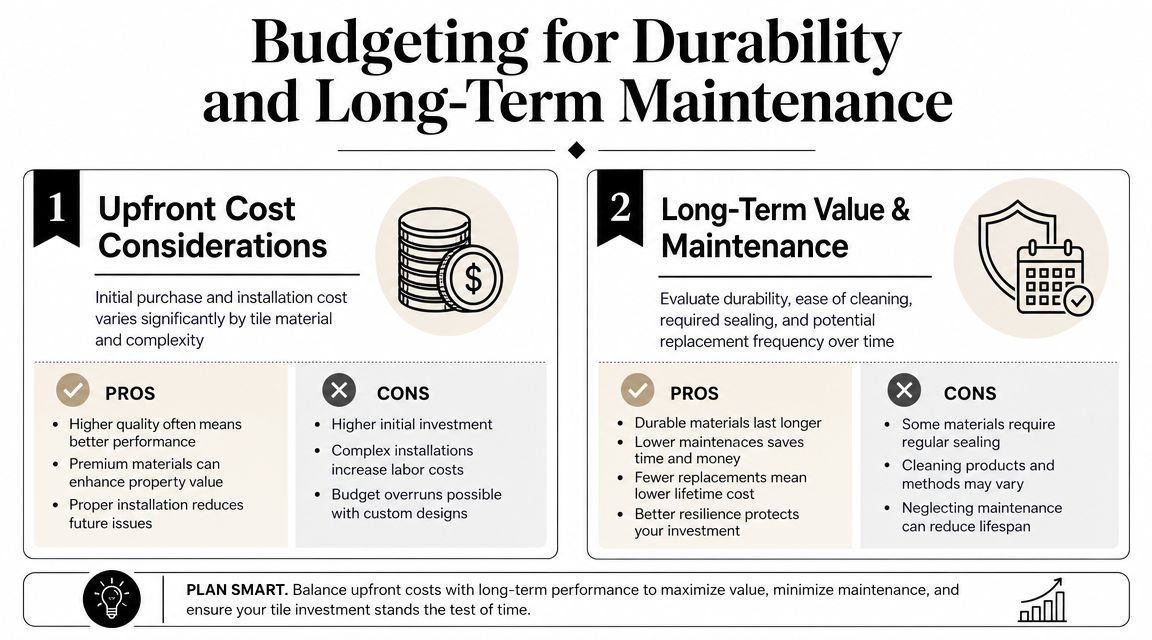
Budgeting for Durability and Long-Term Maintenance

Bathroom tile budgets usually blow out in one of two places. The first is at selection, where money goes into a feature tile that adds very little to day-to-day performance. The second shows up years later, when a surface is hard to keep clean, wears poorly, or contributes to avoidable slip risk.

An infographic titled Budgeting for Durability and Long-Term Maintenance detailing costs, pros, and cons of tile installation.

A bathroom in Melbourne has to handle regular moisture, cleaning chemicals, movement in the building, and wet-area construction requirements. That means the cheapest square-metre rate is rarely the true cost. Tile choice affects how well the room wears, how easily it cleans up, and how much pressure the whole assembly places on the substrate, set-out, and waterproofed areas. If you want context around that underlying system, this guide to bathroom waterproofing in Melbourne renovations explains why the visible finish is only one part of a durable bathroom.

Cheap to buy can be expensive to live with

The long-term trade-off usually sits between cleaning, safety, and durability.

A low-cost glossy tile might be easy to wipe down on a wall and a poor choice on a floor. A heavily textured tile can improve grip underfoot and still create more scrubbing in the shower than many owners expect. Natural stone can look excellent in the right project, but sealing, product selection, and ongoing care need to be budgeted properly from the start. Ceramic wall tiles remain one of the most economical options in many bathrooms because they give a consistent finish without adding much maintenance.

I usually tell clients to price the bathroom for ten years of use, not just for handover day.

Budget by zone, not by one tile for everything

Trying to force one tile across every surface often creates the wrong compromises. Bathrooms perform better when each area is costed for its actual job.

Bathroom zone What to prioritise Typical budgeting mindset
Shower floor Grip, wet performance, installability on falls Spend for function first
Main bathroom floor Safety, wear resistance, ease of cleaning Choose for daily traffic, not just appearance
Walls Cleanability, finish consistency, cost control Ceramic often gives strong value here
Feature areas Appearance and detail Keep these selective so they do not distort the whole budget

This approach also helps with compliance and buildability. Smaller tiles or mosaics on shower floors usually work better over falls. Large-format tiles can reduce grout lines elsewhere, but they may increase labour if the room is out of square or the set-out needs more cutting. Good budgeting accounts for both the material and the installation method.

For early planning, some owners use builder or contractor calculators to map scope before requesting quotes. Melbourne Tiling Services P/L has a renovation calculator intended to help homeowners frame likely project scope before selections are locked in.

The best tile choice is usually the one that still performs well after years of steam, cleaning, and wet feet.

Why You Need a Registered Builder for Your Bathroom Renovation

Tile is the visible finish. The actual risk sits underneath it. Most bathroom failures I'm called to inspect aren't caused by the tile itself. They come from poor substrate preparation, weak set-out decisions, bad falls, or failed waterproofing around penetrations, joints, and transitions.

Bathrooms fail at the joins between trades

A bathroom renovation usually involves demolition, carpentry, plumbing, electrical work, waterproofing, screeding, tiling, silicone finishing, and fixture installation. Problems start when no one is properly coordinating how those pieces connect.

That's why builder oversight matters. In Victoria, bathrooms aren't just decorating projects. They're controlled wet-area works that need the room to function as a system. The tile, grout, puddle flange, sheet or liquid membrane, waste location, movement joints, and shower screen all affect one another.

The tile doesn't keep the bathroom waterproof on its own. The waterproofing system does. The tile assembly has to support it, not undermine it. If you want context on how critical that layer is, this explanation of bathroom waterproofing in Melbourne renovations is worth reading before you approve any scope.

Questions worth asking before work starts

When you speak to a contractor, ask direct questions. If the answers sound slippery, that usually tells you enough.

  • Who is coordinating the full scope if plumbing, electrical, waterproofing, and tiling all overlap?
  • Who is responsible for substrate preparation before membrane and tile go down?
  • How are shower falls being formed and checked before tiling starts?
  • What tile is being specified for each zone and why?
  • What documentation or certification applies to the waterproofing work?
  • Who rectifies failures if leaks or cracked finishes appear after handover?

A registered builder doesn't just organise trades. They control sequencing, accountability, and compliance. That's what keeps a bathroom renovation from becoming a patchwork of separate jobs with no one taking ownership when something goes wrong.

If you're choosing ceramic tiles for a bathroom, don't separate tile selection from build responsibility. They belong together.


If you're planning a bathroom renovation in Melbourne and want clear advice on tile selection, waterproofing, and buildable layouts, Melbourne Tiling Services P/L can help you assess the scope before work starts and align your tile choices with long-term performance.

Balcony Waterproofing Melbourne: A Builder’s Guide (2026)

A lot of Melbourne homeowners first notice a balcony problem from inside the house, not outside it. It's the water stain on the ceiling below, the bubbling paint near a door, the musty smell after a run of rain, or the grout line that never seems to dry out. By the time those signs appear, water has usually been getting in for a while.

That's why balcony waterproofing melbourne isn't a cosmetic job. It's a building-envelope job. If the cause is diagnosed properly and the system is rebuilt properly, the balcony stays dry and the rooms below stay protected. If the cause is guessed at, you end up paying twice.

Table of Contents

Your Guide to a Leak-Free Melbourne Balcony

If you're reading this because your balcony has started leaking, don't assume the fix is just “paint on a new membrane”. That's one of the most expensive mistakes owners make. A balcony is a full assembly made up of slab, falls, drainage, membrane, terminations, tile bed, tiles, grout, sealants and penetrations. If one part is wrong, the whole system is compromised.

This isn't a fringe problem either. A Victoria-focused balcony defects study found that 52% of assessed apartment buildings had defective balconies caused by water ingress, with a further 19% showing explicit waterproofing issues. For homeowners and apartment owners in Melbourne, that tells you two things. First, balcony leaks are common. Second, you need a methodical repair, not a rushed patch-up.

What a proper starting point looks like

A seasoned builder won't begin by talking about brands and colours. The first job is diagnosis.

A proper site inspection should look at:

  • Where the water shows up: Ceiling below, internal wall, door threshold, slab edge, balustrade fixing or tile joints.
  • How the balcony sheds water: Whether water runs to drains cleanly or ponds on the surface.
  • What's been done before: Regrouting, silicone touch-ups, patch membranes or retiling over an old problem.
  • Whether movement is involved: Cracks at corners, wall junctions and around posts usually point to stress points, not just surface wear.

Practical rule: If someone quotes to re-waterproof your balcony before checking falls, drainage and penetrations, they're pricing a symptom, not the cause.

What homeowners need to demand

You don't need to know every clause in a standard to make a good decision. You do need to insist on a contractor who can explain the failure path in plain English.

Ask them to identify:

  1. where water enters,
  2. how it travels,
  3. why the existing system failed,
  4. what has to be removed,
  5. how the repaired system will be verified before finishes go back on.

That's the difference between a temporary improvement and a durable repair.

Why Balconies Really Leak The Culprits Beyond the Membrane

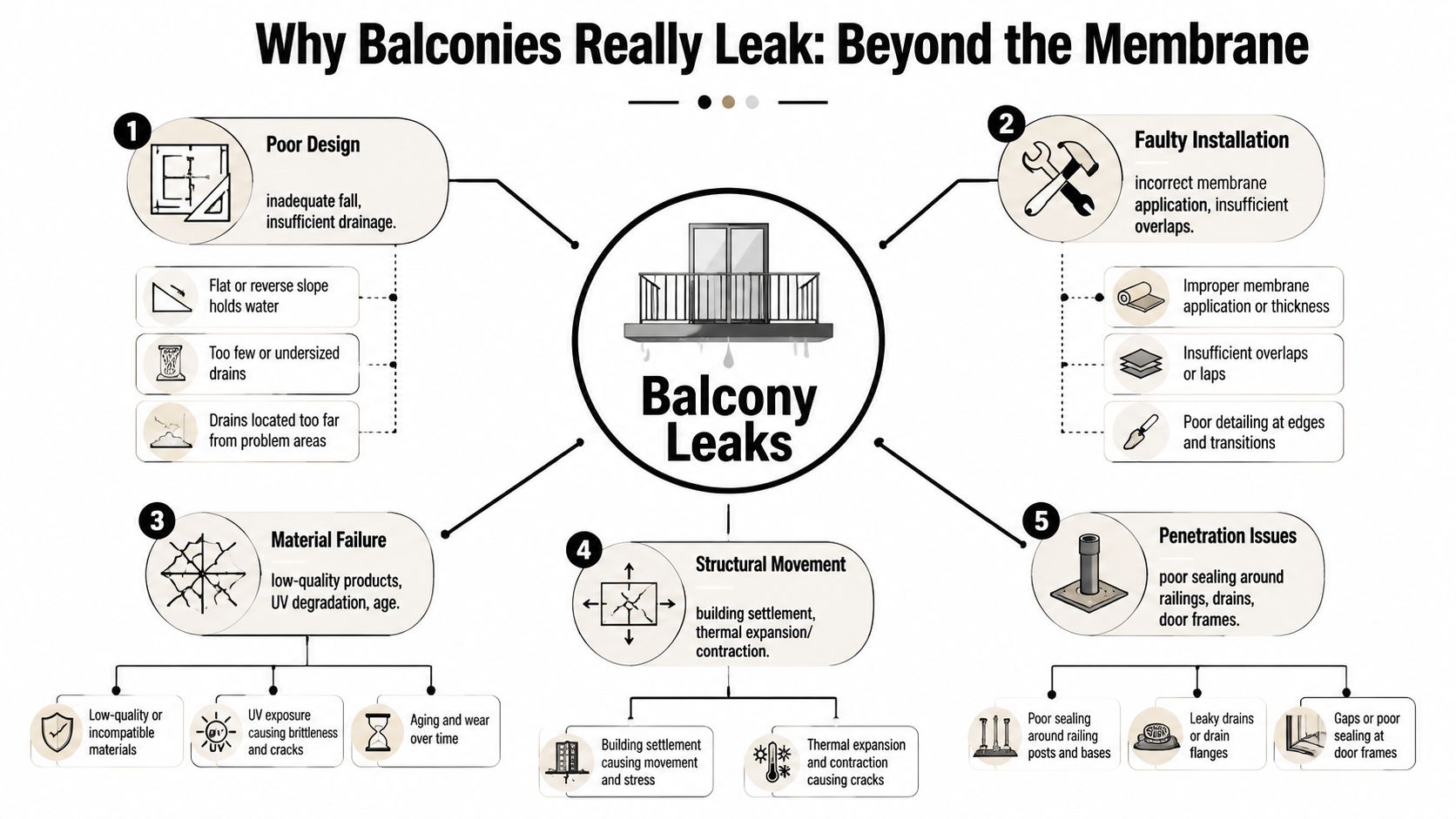
The membrane gets blamed for almost every balcony leak in Melbourne. Sometimes that's fair. Often it isn't. In practice, balconies usually leak because several small failures combine. Water ponds where it shouldn't, a sealant line cracks, a threshold is poorly detailed, or a drain can't cope because the geometry was wrong from the start.

The Victorian Building Authority guidance on water ingress in balconies, decks and terraces says balcony water ingress is often caused by poor design, inadequate water diversion, blocked drains, failed sealants, inappropriate external materials and other drainage-related defects, not just membrane failure. That's the most important mindset shift for owners. Replacing the membrane without fixing the water path often means the leak comes back.

An infographic detailing five primary causes of balcony leaks including poor design, installation, materials, movement, and penetrations.

The failure points that show up most often

Some causes are obvious once you know where to look.

  • Poor falls: Water sits on the surface instead of moving to the outlet. Standing water always finds weakness.
  • Blocked or badly located drains: Even a sound membrane struggles if the outlet arrangement is poor.
  • Failed sealants: Door frames, balustrade bases and threshold joints are frequent entry points.
  • Penetrations: Every post, flange and pipe passing through the surface creates a risk point.
  • Surface cracking and movement: Buildings move. Rigid details fail first at corners and junctions.

Many owners focus on cracked grout because that's what they can see. Grout matters, but it's usually not the primary waterproof layer. If the balcony underneath has poor falls or bad detailing at a threshold, regrouting won't solve the leak.

Why patch jobs usually disappoint

Silicone over joints. A waterproof paint from the hardware store. Replacing a few cracked tiles. These fixes can reduce symptoms for a while, but they rarely address the assembly underneath.

A proper diagnosis usually includes checking the balcony in wet conditions if possible, reviewing the edge details, examining drain setup, and tracing whether the leak appears after heavy rain, routine washing, or only wind-driven weather. Those patterns help identify whether the issue is surface ponding, overflow, a threshold problem or a penetration failure.

The best repair isn't the one with the biggest product list. It's the one that removes the actual entry point and controls where water goes.

If you want balcony waterproofing melbourne done properly, start with water management. The membrane matters. The drainage path matters just as much.

Choosing Your Waterproofing System A Melbourne Perspective

A leaking balcony often gets sold a membrane before anyone has chosen the right system for the build. That is how owners pay twice. The product matters, but the better question is whether the system suits the substrate, the finish, the movement in the structure, and the way the balcony sheds water in Melbourne weather.

For many projects here, a liquid-applied membrane with reinforced corners and junctions, installed in at least two coats to achieve the required dry-film thickness, is a practical choice, as described in this Melbourne balcony waterproofing guide. It works well on balconies with awkward edges, multiple penetrations, and detailed junctions. It also leaves less room for sloppy application. If the installer guesses coverage rates or rushes recoat times, the membrane can fail even though the surface looks finished.

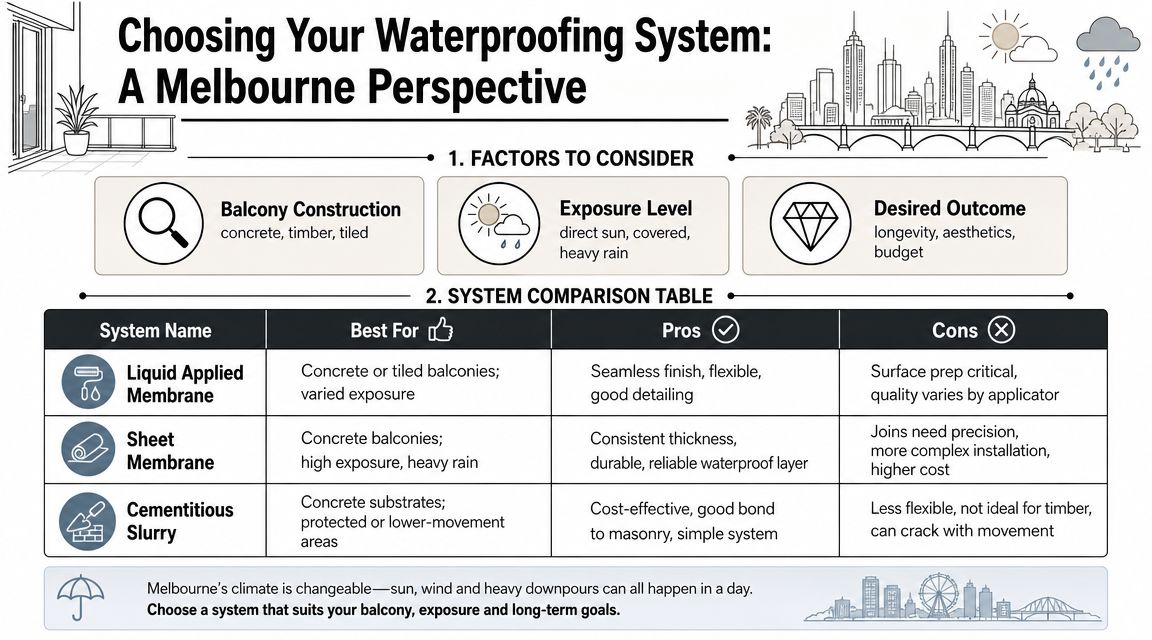
An infographic comparing different balcony waterproofing systems suitable for the variable climate in Melbourne, Australia.

What builders usually compare first

Balcony Waterproofing Systems Compared Best For Pros Cons
Liquid-applied membrane Concrete balconies, complex shapes, detailed junctions A continuous, joint-free surface, good around corners and penetrations, widely used in remediation Thickness must be controlled properly, cure times matter, poor application creates weak spots
Sheet membrane Larger open areas where consistent sheet installation is practical Factory-controlled thickness, durable when seams and terminations are done properly Seams are critical, detailing around penetrations can be more demanding
Tile-over remediation systems Existing tiled balconies where demolition may be avoidable in limited cases Can reduce disruption when the substrate and existing finish are genuinely suitable Only works if the underlying structure is stable and the existing problem is not trapped below

The trade-off is straightforward. Liquid systems are more forgiving of complex shapes. Sheet systems are more controlled across big open runs. Tile-over systems can save time on the right balcony, but they are often oversold to owners who should be opening the assembly up and fixing the causes underneath.

That last point matters in Melbourne strata buildings. If the leak involves a balcony over another lot, a threshold tied into the building envelope, or balustrade fixings connected to common property, system choice is not just a product decision. It affects scope, access, approvals, and who should be carrying out the repair.

Where each system works and where it doesn't

Liquid systems suit many Melbourne balconies because they can be worked into drain flanges, floor-to-wall junctions, door upstands, and irregular slab edges without forcing extra joins into risky spots. I use them often in remedial work for that reason. The catch is quality control on site. Wet film thickness, reinforcement at change-of-plane areas, and curing conditions all need to be checked, not assumed.

Sheet membranes can be excellent on a new build or a stripped-back balcony with clean geometry. The material gives consistent thickness straight off the roll. The risk sits at the laps, terminations, and penetrations. One poor seam or badly finished outlet detail can undo an otherwise sound installation.

Tile-over remediation systems need the hardest scrutiny. They only make sense where the existing substrate is stable, the adhesion is reliable, moisture is not trapped below, and the balcony geometry already works. If the falls are wrong, if the threshold height is marginal, or if movement has already broken the surface assembly, going over the top usually hides the defect rather than fixing it.

A proper scope usually includes more than selecting the membrane:

  • Substrate preparation: remove contaminants, weak material, and anything that will interfere with adhesion
  • Crack and joint treatment: detail movement areas before the field membrane goes down
  • Drain and edge integration: make sure outlets, drips, terminations, and threshold details work with the chosen system
  • Compatibility checks: confirm primers, adhesives, screeds, tiles, and sealants are approved to work together
  • Verification: check dry-film thickness, inspect the finished work, and use flood testing where the detail allows it

Melbourne Tiling Services P/L handles balcony waterproofing together with tiling, screeding, and renovation work. That broader scope matters because balcony failures are often shared between trades. The membrane installer, tiler, screeder, and builder all affect whether the finished balcony stays dry.

The Rules of the Game Australian Standards and VBA Compliance

Balcony waterproofing isn't just a trade preference. It sits inside a compliance framework. If the work is external above-ground waterproofing, the technical benchmark in Melbourne is AS 4654.2, and the Victorian Building Authority notes that NCC compliance for balconies requires membranes to comply with AS 4654.1 and AS 4654.2 in a complete system, not just as a coating product. The VBA fact sheet on water ingress research insights also points directly to AS 4654.2 for the minimum details needed to comply.

That matters because many failed balconies weren't undone by the middle of the membrane field. They were undone at a transition, an edge, a drain, a post or a door.

What compliance means on site

Compliance in practical terms means the builder has to think in assemblies.

That includes checking:

  • Substrate suitability: The base must be sound and appropriate for the selected system.
  • Termination heights: Membrane returns and upturns have to be detailed so water can't overrun them.
  • Penetration detailing: Balustrade fixings, pipes and outlets need proper sealing and integration into the waterproofing system.
  • Evidence of installation quality: Inspection, thickness confirmation and testing matter more than a glossy finished look.

On-site reality: A balcony can look perfectly tiled and still be non-compliant underneath.

Many cheap quotes often fall apart. They price demolition, membrane, tile and grout as if the job is linear. Real waterproofing work isn't linear. It's detail-heavy. The slow parts are usually the parts that prevent leaks later.

Why registered builders matter

For homeowners, engaging registered builders matters because balcony leak repairs often touch more than one trade. You may need demolition, carpentry repairs, screeding, waterproofing, tiling, plumbing around drains, and joinery or threshold adjustments at door openings.

That's also why the overlap with bathroom renovations is so strong. The same discipline applies. Membranes have to suit the substrate. Falls have to be formed correctly. Penetrations have to be planned before finishes lock everything in. A contractor who understands only one layer of that process often misses the defect that sits in the next layer down.

More Than a Balcony Why Your Waterproofing Expert Should Be a Renovation Pro

A leaking balcony and a failed shower recess usually come from the same kind of mistake. Somebody treated waterproofing as a product instead of a system. In both settings, water is controlled by falls, junctions, penetrations, drainage, movement detailing and finish sequencing. That's why the best balcony repairers are often the same people who understand bathroom renovations at a high level.

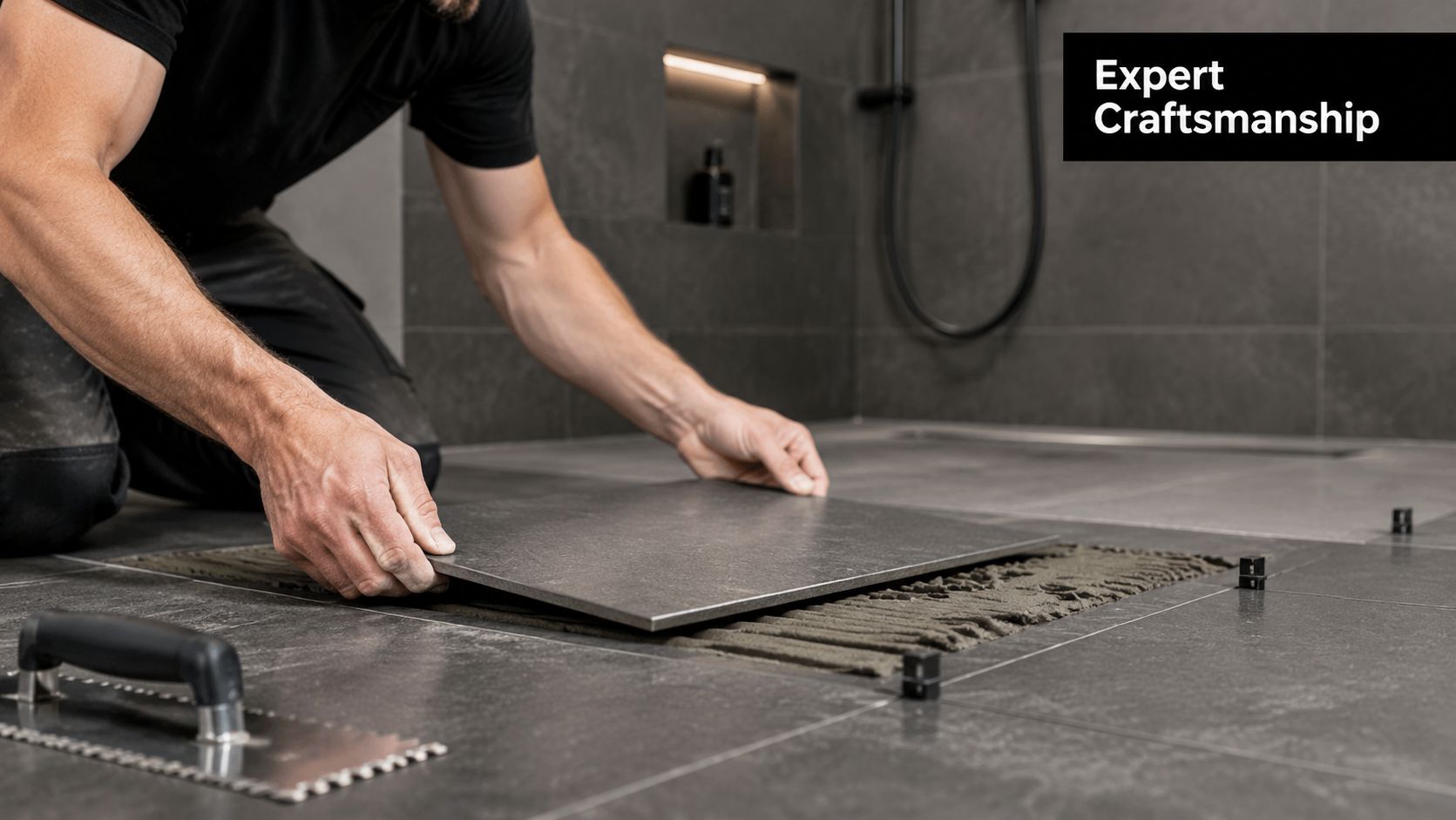
A professional tiler carefully installing a large dark ceramic floor tile onto adhesive in a bathroom.

Balconies and bathrooms fail in similar ways

The principle is identical. Water sits on or behind a finished surface, then moves through the weakest detail.

Common crossover issues include:

  • Bad falls: Water doesn't move to the waste or outlet.
  • Weak corners: Floor-to-wall junctions crack first if they aren't reinforced and detailed properly.
  • Poor penetration sealing: Shower fittings and balcony posts create similar risk points.
  • Finish-first thinking: People focus on the tile they can see, not the waterproofing they can't.

That's why a contractor who also handles bathroom renovations often has a stronger grip on sequencing. They know the screed can't be an afterthought. They know the drain detail can't be improvised once tiling starts. They know movement joints aren't optional just because the tile layout looks cleaner without them.

One trade alone usually isn't enough

Owners sometimes hire a tiler because tiles are cracking, or a waterproofer because there's a leak, or a handyman because the job “looks minor”. That can work for small surface maintenance. It usually doesn't work for recurring failures.

A durable balcony repair often needs coordinated work across:

  1. Assessment and strip-out
  2. Substrate repair and fall correction
  3. Drainage and threshold detailing
  4. Waterproofing installation
  5. Tiling, sealing and final verification

If the person quoting can only talk about membrane brand but not screed, drainage, door heights or tile build-up, they probably don't control the whole risk.

That's why homeowners are usually better served by a renovation-minded contractor who understands wet-area systems from slab to finish.

Hiring Your Contractor Questions to Ask and Red Flags to Avoid

Choosing the contractor is where most owners either protect themselves or create a bigger problem. Balcony waterproofing melbourne attracts everyone from capable registered builders to people who mainly sell “quick reseals”. The difference isn't always obvious from a photo gallery.

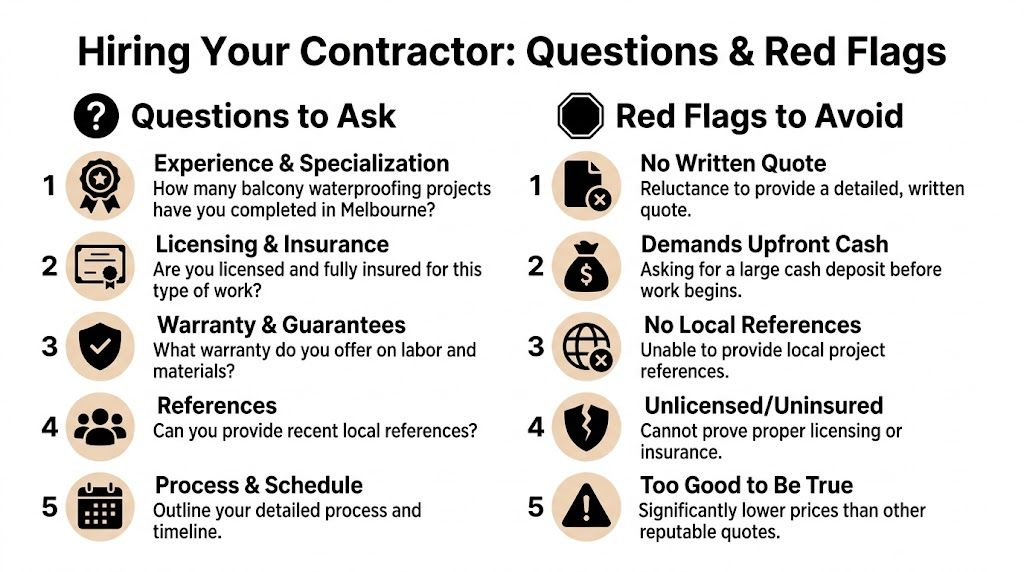
Use the checklist below before you accept a quote.

An infographic titled Hiring Your Contractor listing five essential questions and five red flags for waterproofing.

Questions that reveal real competence

  • Registration and insurance: Ask for the builder registration details and proof of current insurance. A professional won't hesitate.
  • Failure diagnosis: Ask what they believe is causing the leak. If they can't explain the likely path of water entry, keep looking.
  • System build-up: Ask exactly what layers are included. Demolition, substrate prep, screed correction, membrane, flood or water testing, tiling, sealant and finishes should be clear.
  • Compliance evidence: Ask how they verify membrane thickness, terminations and penetrations before tiling over.
  • Occupied-apartment experience: If you're in strata, ask how they deal with access, approvals, neighbours below and Owners Corporation communication.

For apartment owners, responsibility is a major part of the conversation. The Melbourne balcony repair FAQ notes that the waterproofing membrane is often the lot owner's responsibility, while the structural slab underneath may be common property, depending on the title, plan and source of the defect. A competent contractor should be able to explain where their scope starts and where Owners Corporation involvement may be needed.

A short explainer can help if you're comparing quotes:

Red flags that usually lead to trouble

Some warning signs are consistent across bad waterproofing jobs.

Red flag Why it matters
Verbal quote only If the scope isn't written down, exclusions and shortcuts appear later
Focus on regrouting alone Regrouting may improve appearance, but it rarely solves a system failure by itself
No discussion of falls or drainage That usually means the contractor is treating the symptom
No mention of testing or inspection Good work is verified, not assumed
Pressure to choose the cheapest option Cheap waterproofing often becomes expensive rectification

Ask one simple question: “What are you doing to stop water getting in at the threshold, corners and penetrations?” The answer tells you a lot.

In strata buildings, also ask who they want copied into communication. Good contractors are usually comfortable dealing with owners, building managers, and Owners Corporations because responsibility can be split across finishes, membrane and structure.

Your Next Steps to a Dry and Durable Balcony

You usually find out a balcony has been leaking after the water has already travelled. A stained ceiling below, swollen skirting near the adjoining room, loose tiles at the doorway, rust marks on the slab edge. By then, the membrane may be only part of the problem.

The next step is to get the cause identified properly. On Melbourne balconies, leaks often start with poor drainage, blocked outlets, failed junctions at thresholds and balustrade penetrations, or movement that has opened up the system over time. If the balcony sits in a strata building, confirm who is responsible before work starts. The surface finishes may sit with the lot owner, while the slab, structure, or parts of the defect may involve the Owners Corporation.

Good repair work starts with a written scope. It should set out what will be removed, whether falls need correcting, how drainage will be dealt with, what waterproofing system will be installed, and how the work will be checked before tiles or finishes go back on.

Do not approve a patch job unless the contractor can show why it will work.

I tell owners the same thing on site. If the quote jumps straight to resealing grout lines or adding more silicone, the leak path probably has not been traced. Water rarely respects the visible crack. It follows the easiest route, then shows up somewhere else.

For homeowners, landlords, and apartment owners, the safest option is to use registered builders who understand waterproofing, screeding, tiling, and renovation sequencing together. Balcony failures are often assembly failures, not just membrane failures, so the repair needs to be coordinated that way.

If you need a practical assessment of a leaking balcony, Melbourne Tiling Services P/L can inspect the issue, identify the likely cause, and provide a written scope for compliant repair work, including related tiling, screeding, waterproofing, and renovation requirements.