

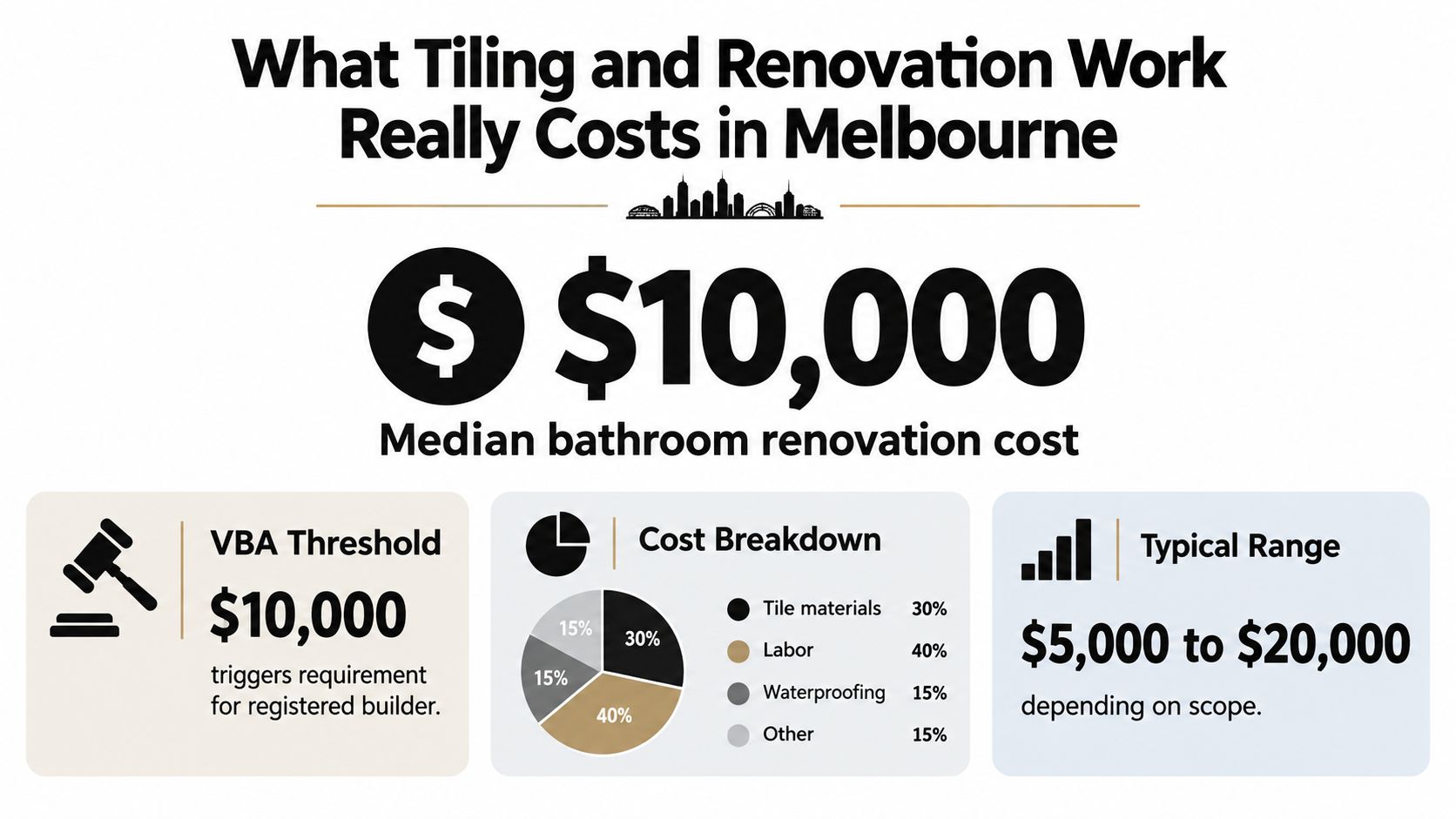
Most Melbourne bathroom renovations sit around a median $10,000, and in Victoria that's also the point where domestic building work generally needs registration with the Building and Plumbing Commission before work starts if the job value including labour and materials exceeds that amount. If you're dealing with a leaking shower, cracked grout, or old bathroom tiles, the smart decision isn't “Which tile looks good?” It's “Is this a surface repair, a waterproofing failure, or a full renovation job that needs registered builders?”
That's the spot plenty of Melbourne owners are in right now. The bathroom still works, but there's a musty smell, grout is cracking, silicone has gone black, and someone downstairs is asking about a stain on the ceiling. You can spend money three times on patch jobs, or you can diagnose the failure properly once and choose the right scope.
Melbourne sits inside a heavily regulated domestic-building environment, not an informal cash-job market. Business Victoria treats residential construction, renovation, improvement, and maintenance as domestic building work, and Victoria requires the right registration or licence for building, plumbing, and electrical work that often sits inside bathroom renovations and coordinated tiling projects, as outlined in Victorian domestic building rules. That matters for tiling services in Melbourne because good bathrooms aren't just tiled well. They're designed, waterproofed, drained, and coordinated properly.
Table of Contents
- When a Leaking Bathroom Becomes a Renovation Decision
- What Tiling Services in Melbourne Actually Cover
- How a Melbourne Tiling Project Runs From Quote to Handover
- Choosing the Right Tile for Wet Areas and Feature Walls
- What Tiling and Renovation Work Really Costs in Melbourne
- How to Verify a Licensed Tiler or Registered Builder
- When Regrouting Stops Being Enough and a Rebuild Starts
- Service Areas Across Melbourne and Next Steps
When a Leaking Bathroom Becomes a Renovation Decision
A typical inner-Melbourne problem looks like this. You've got a 1990s bathroom in Caulfield East or a similar apartment pocket. The grout has hairline cracks, the door jamb is swelling, and the neighbour below has started asking why their ceiling paint is bubbling.
At that point, most owners make the same mistake. They treat every leak like a grout problem. It isn't. Sometimes grout is the issue. Sometimes grout is only the first visible symptom of a failed wet-area system.
The three paths owners usually face
You've really only got three options:
- Patch and reseal: Fine if the issue is limited to edge seals or isolated grout deterioration.
- Regrout properly: Worth considering if the membrane underneath is still sound and the leak hasn't reached the substrate.
- Strip out and rebuild: The right call when water has tracked beyond the tile finish and the waterproofing system has failed.
Regrouting is a maintenance task. Waterproofing rectification is a building task. Confusing the two is how owners waste money.
The hard part is that the bathroom often looks salvageable from the surface. That's why so many people start with silicone and grout. Then they pay again when the smell returns, tiles sound hollow, or moisture shows up somewhere it shouldn't. If you want a useful homeowner primer before anyone starts pulling tiles off, read this guide to fixing leaking showers in Melbourne.
Why the renovation threshold matters early
The $10,000 mark matters because it isn't just a budgeting number. In Victoria, if domestic building work exceeds AUD 10,000 including labour and materials, registration with the Building and Plumbing Commission is required before the work begins. The same rule applies to building work that needs a permit regardless of project value, according to Victoria's renovation permit guide.
That's why a leaking bathroom can stop being a “tiler job” very quickly. Once the fix involves demolition, waterproofing, plumbing coordination, electrical changes, or structural adjustments, you're in bathroom renovations territory, not basic maintenance.
What Tiling Services in Melbourne Actually Cover
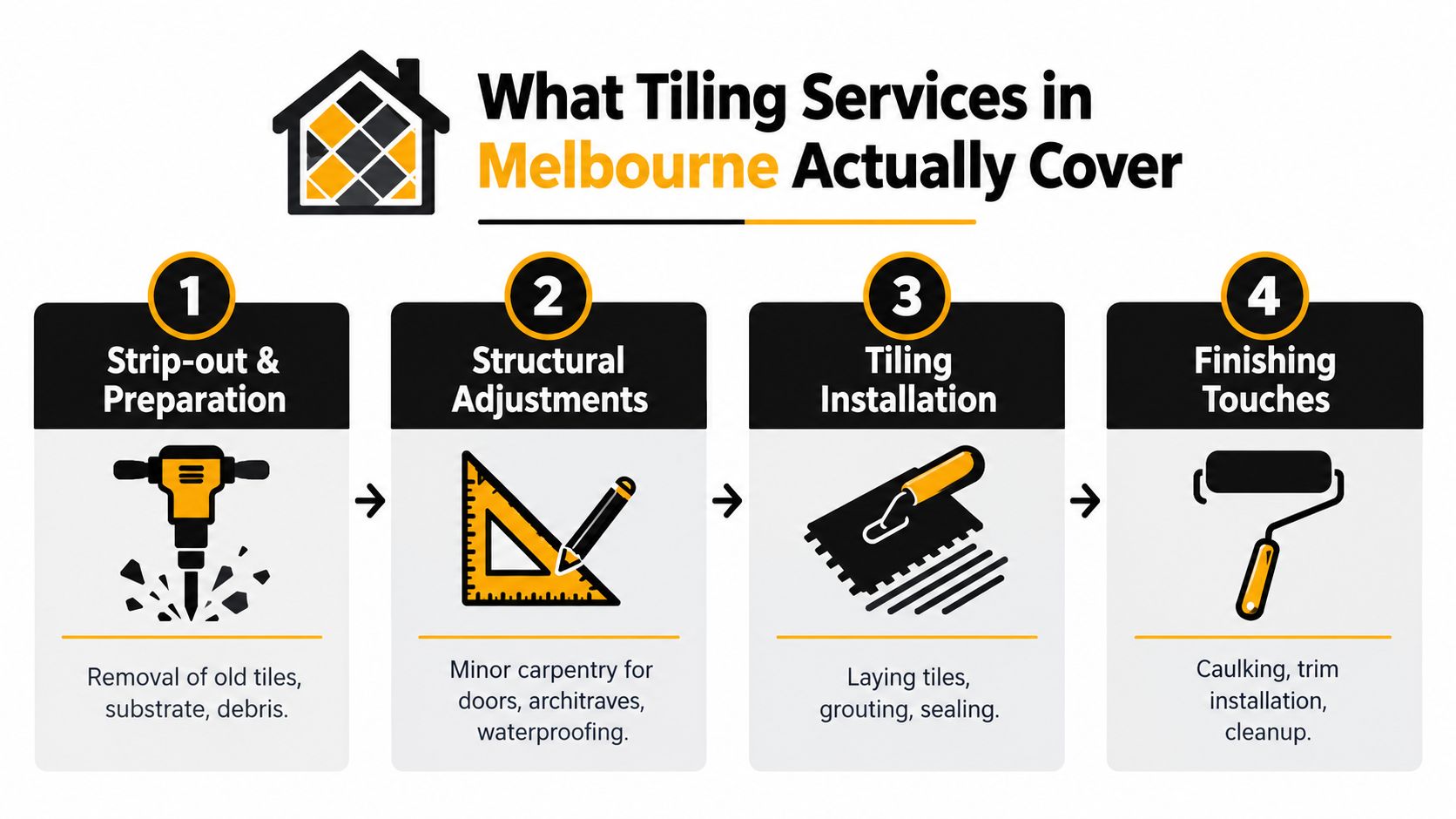
Most homeowners ask for a tiling quote when they need a renovation scope. Those aren't the same thing. A tiler-only quote might cover tile laying, grout, and silicone. A full bathroom renovation quote should cover the whole chain of work that makes the tile layer perform properly.
What a full-scope job includes
On a normal Melbourne bathroom project, the work usually runs through these parts:
Strip-out and disposal
Old tiles, adhesive, screed, damaged sheet linings, and failed substrate come out first.Trade rough-in
Plumbing rough-in belongs to a registered plumber. Electrical rough-in for lighting, exhausts, power points, or heated rails belongs to a licensed electrician.Preparation and correction
Decent jobs separate from cosmetic ones. Floor falls need shaping, walls need flattening, and door or architrave clearances often need carpentry adjustments.Waterproofing and tiling
The wet area gets membrane treatment, then tile installation, grouting, sealing, and fit-off coordination.
What the law and the scope actually mean
If you're pricing tiling services in Melbourne, ask one blunt question first. Are you buying tile installation only, or are you buying a compliant wet-area assembly?
Victoria's domestic-building framework matters here because bathroom work often overlaps multiple licensed trades. Business Victoria states that domestic building work includes construction, renovation, improvement, or maintenance of a residential premise, and unlimited domestic builders can carry out, manage, and arrange all components of that work under Victoria's domestic building framework.
That's why registered builders matter on bigger bathroom renovations. A sole tiler can lay tiles. They can't lawfully stand in for every trade on a job that needs building coordination, plumbing, electrical work, waterproofing oversight, and contract responsibility once the project scope grows.
Practical rule: If the quote includes demolition, waterproofing, plumbing moves, lighting changes, shower-screen coordination, and final fit-off, you're no longer comparing tilers. You're comparing project managers and trade coordinators.
What to compare when reading quotes
Use this checklist when two quotes look similar but aren't:
- Scope clarity: Does the quote separate demolition, screeding, waterproofing, tile supply, labour, and clean-up?
- Trade allocation: Does it specify who handles plumbing, electrical, carpentry, and waterproofing?
- Wet-area detail: Does it reference waterproofing standards and floor falls, or just say “prep as required”?
- Turnkey responsibility: Who owns defects if the leak returns. The tiler, the waterproofer, or the builder coordinating the lot?
For owners who like seeing how competent operators package and explain service scope online, these strategies for flooring contractors are useful because they show how clear scoping and communication should look before work even starts.
How a Melbourne Tiling Project Runs From Quote to Handover
Good projects don't feel rushed. They feel organised. If a contractor says they can smash out a full wet-area renovation almost immediately without proper sequencing, assume corners are being cut somewhere you won't see until later.
The sequence that actually makes sense
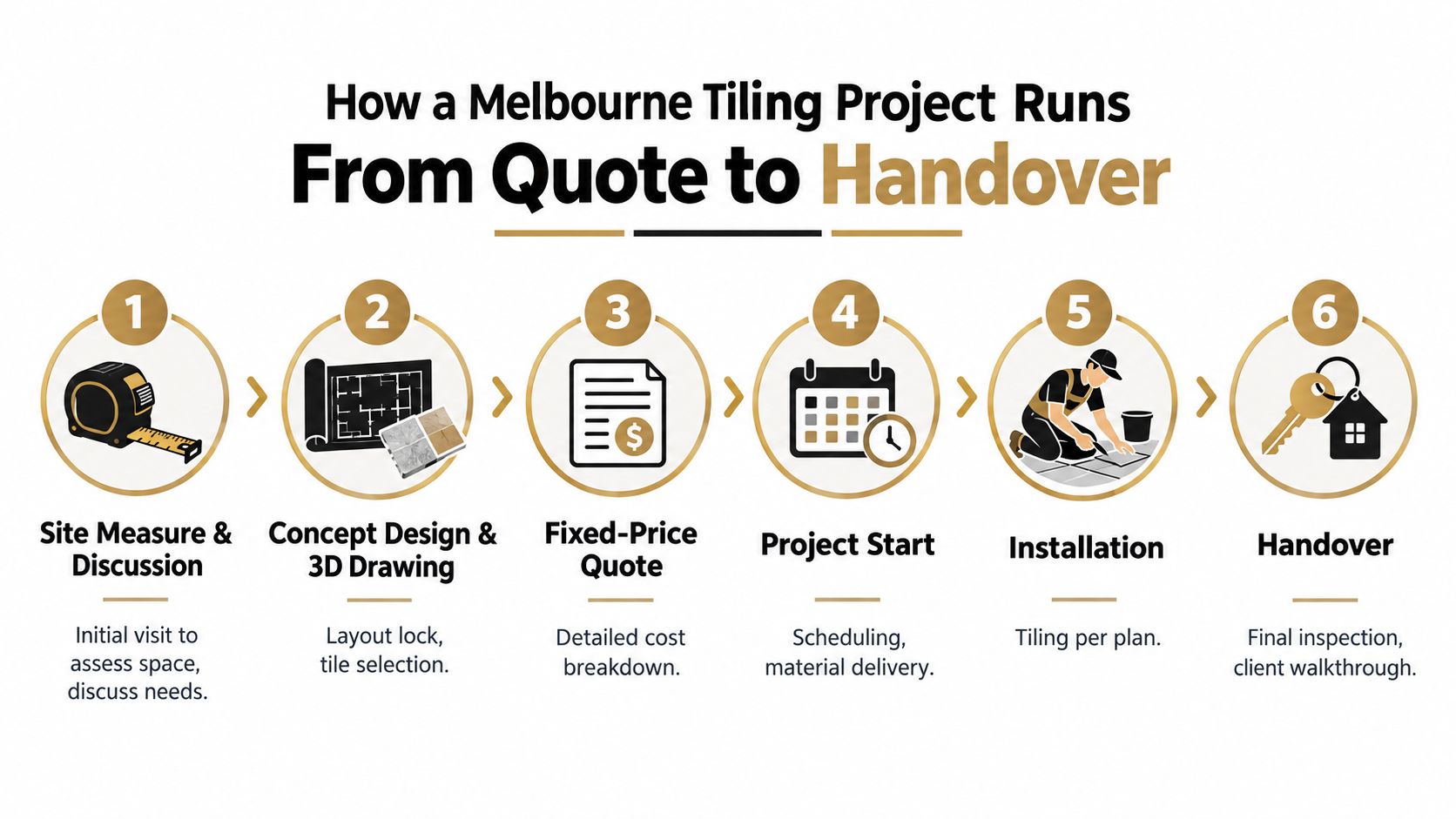
A well-run project usually follows this order:
Site measure and discussion
The contractor checks dimensions, substrate condition, drainage issues, access, and whether the current layout should stay or change.Concept design and 3D drawing
Tile sizes, niche positions, tapware set-out, and floor falls get resolved before demolition starts.Fixed-price quotation
You want a written scope, not a vague number in a text message.Project booking and material lead time
Delays often start here, not on site. Imported tiles, frameless screens, and custom vanities can hold up the whole build.
What happens on site
Once the job starts, this is the practical order:
- Strip-out
- Plumbing and electrical rough-in
- Substrate repair, screeding, and levelling
- Waterproofing
- Flood test after cure
- Wall and floor tiling
- Grouting and silicone
- Fit-off, clean, and handover
The timing depends on room size, access, and tile geometry, but some parts can't be rushed without risking failure. Waterproofing needs application and cure time. Tile installation slows down if walls are out of plumb or the owner changes layout mid-job.
Where time blows out
The common delay points are predictable:
- Late tile selection: Owners who haven't locked tile sizes and trims before start day lose time fast.
- Hidden damage: Rotten skirtings, soft sheet linings, or failed screeds only show themselves after strip-out.
- Fancy formats: Large-format porcelain and slab products need flatter substrates and slower set-out.
- Scope creep: “While you're here” changes cost time even before they cost money.
If a contractor doesn't talk you through sequencing, cure time, and handover detail, they're probably selling speed instead of control.
Some owners also want one firm to handle the lot. That's reasonable. Melbourne Tiling Services P/L is one example of a company that offers bathroom renovations, tiling, waterproofing, screeding, shower-screen installation, and trade coordination under a registered builder model, which suits owners who don't want to manage separate contractors.
Choosing the Right Tile for Wet Areas and Feature Walls
A tile isn't just a finish. It changes how the whole bathroom has to be built underneath. That's why choosing on colour alone is amateur hour.
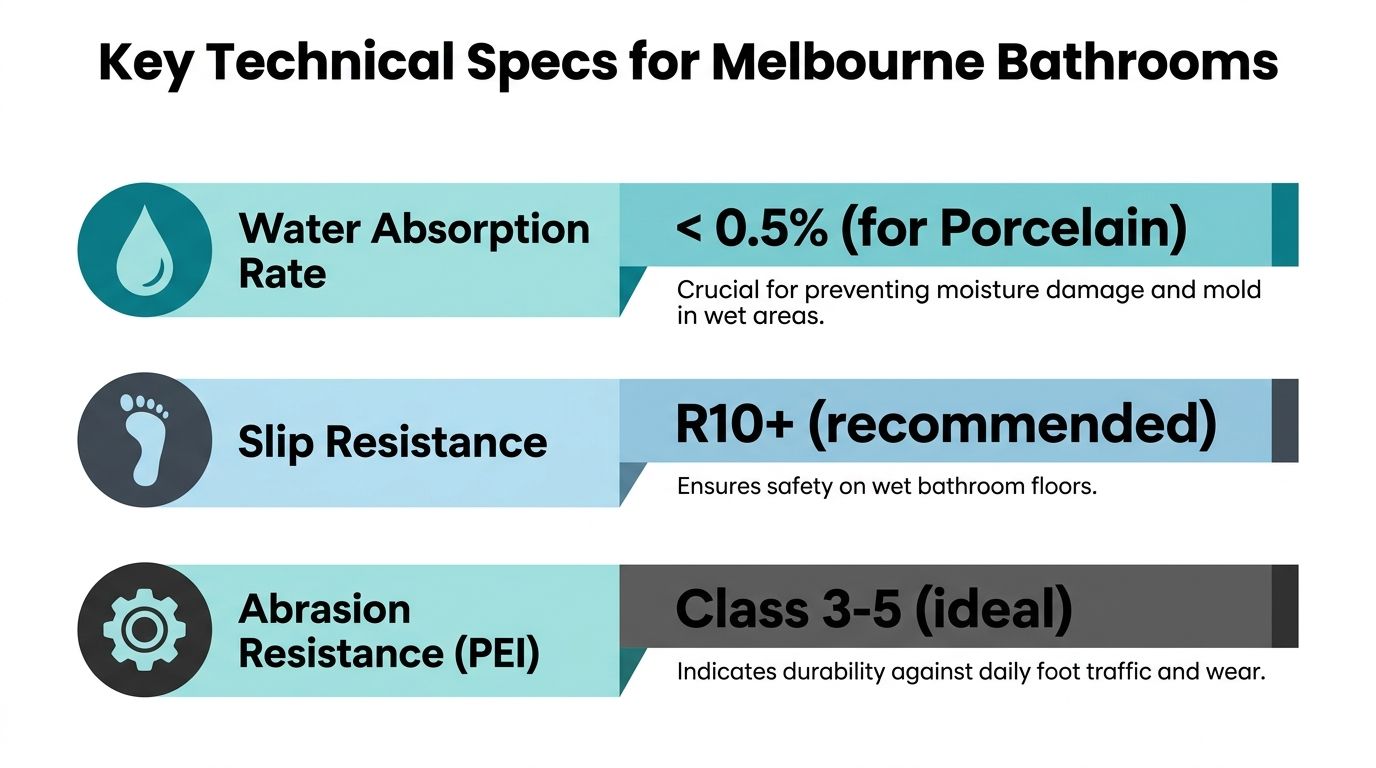
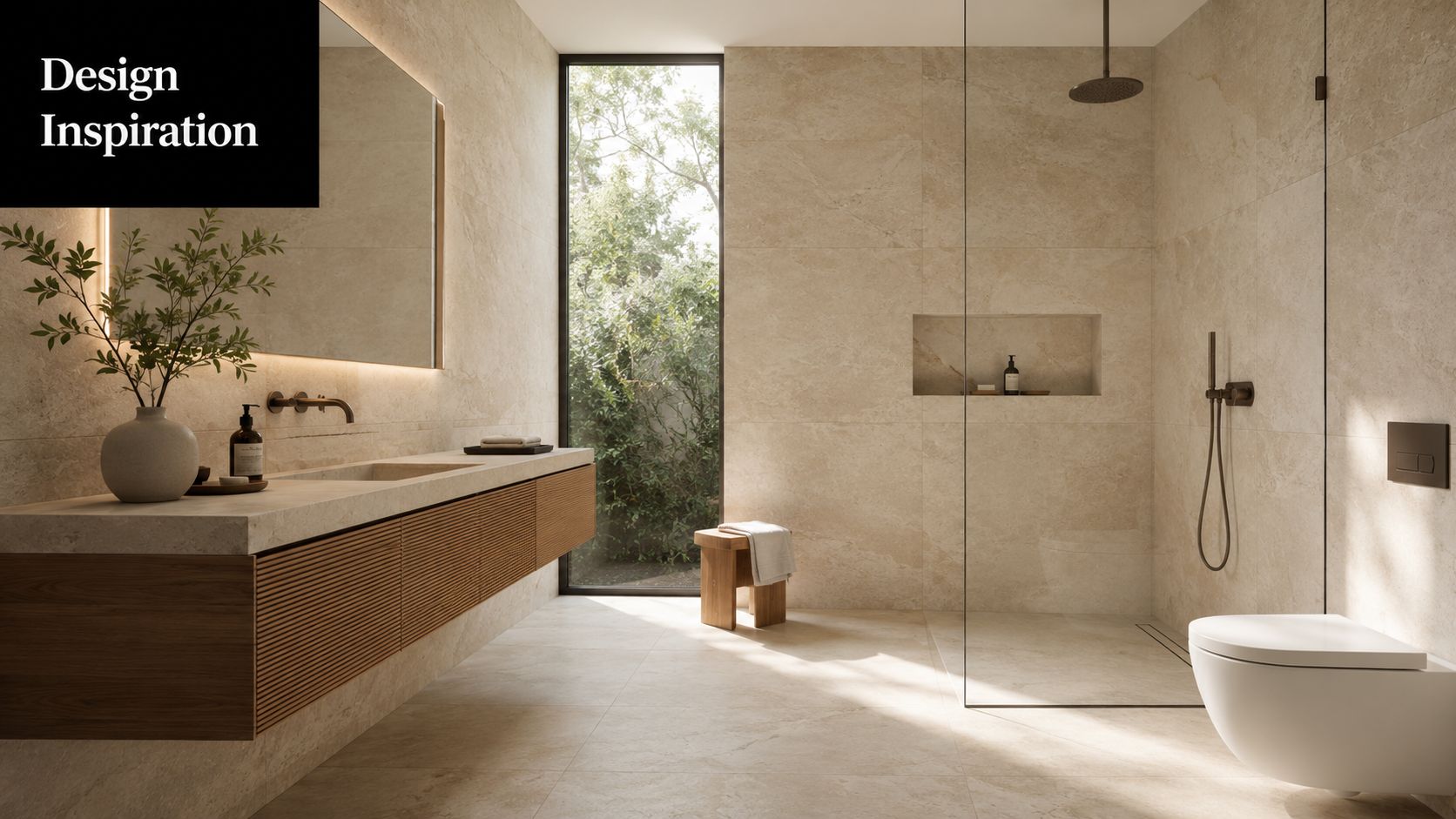
For Melbourne bathrooms, ensuites, and balconies, the smarter comparison is water exposure, slip resistance, substrate tolerance, and how forgiving the tile is during installation. If you want inspiration first, then compare the practical side after, this guide on how to choose bathroom tiles is a useful starting point.
Tile Material vs Melbourne Application
| Tile Type | Bathroom Floor | Shower Base | Feature Wall | Balcony |
|---|---|---|---|---|
| Ceramic | Usable, but less forgiving in wet heavy-use settings | Not my first choice | Good budget option | Poorer choice where weather exposure matters |
| Porcelain | Strong everyday choice | Best all-round workhorse | Excellent | Strong option with correct exterior specification |
| Marble | Premium look, higher maintenance | Risky unless properly detailed and maintained | Very strong visually | Needs careful specification and ongoing maintenance |
| Large-format Kerlite or porcelain slab | Excellent if substrate is near perfect | Can work, but detailing must be precise | Excellent for low-joint feature walls | Demands advanced preparation and movement planning |
The practical trade-offs
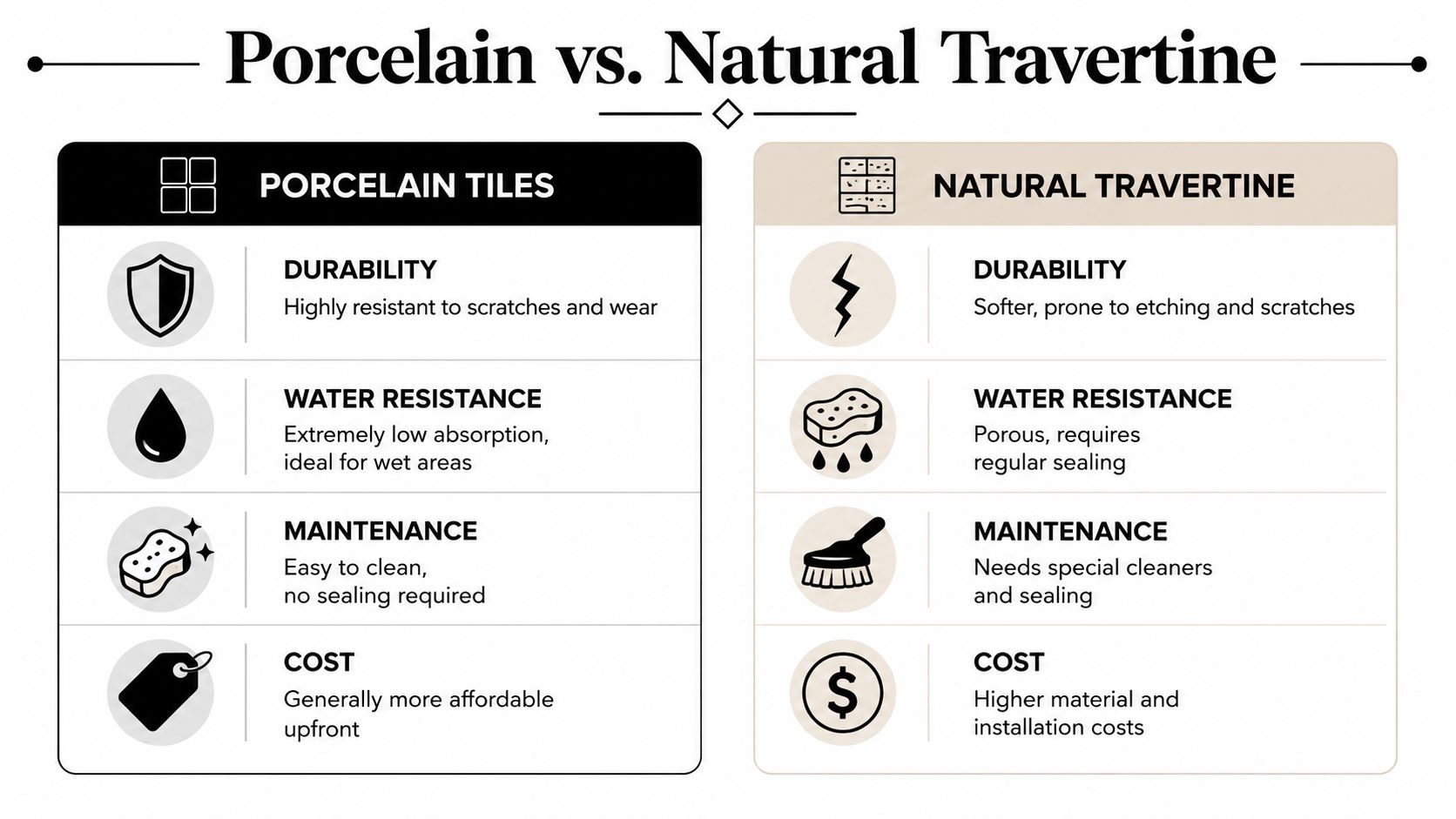
Porcelain is the safe recommendation for most wet areas. It's the workhorse. It suits bathroom floors, shower walls, and a lot of balcony applications when the exterior specification is right.
Ceramic can still work, especially on walls and lighter-duty spaces, but it's not where I'd save money in a high-use shower or family bathroom.
Marble looks expensive because it is expensive to do properly. It needs maintenance. It also shows installer mistakes more brutally than porcelain does.
Large-format tile needs a different standard
Large-format tile gets sold on aesthetics. The issue is geometry.
One Australian industry reference describes large-format tile starting from roughly 400 mm on one side, while another reference tied to AS 3958 points to tiles exceeding 1.2 m on an edge or 1 m² in face area, as discussed in this large-format tile guide. Once you get into those sizes, substrate flatness, lippage control, bed thickness, and expansion-joint planning become essential.
That matters even more in wet areas. Fewer grout joints can look cleaner, but each joint matters more. The installer has less room to hide uneven prep, and corners take more stress if movement hasn't been planned.
Wet-area choices I'd make
- Main bathroom floor: Porcelain with a slip-resistant finish.
- Ensuite feature wall: Large-format porcelain or slab if the wall prep is first-rate.
- Shower base: Porcelain, cut and laid with drainage in mind before aesthetics.
- Exposed balcony: Exterior-rated tile only, with movement and waterproofing treated as the system.
Australian waterproofing guidance also requires shower areas to be fully waterproofed, with membranes extending up enclosed shower walls to at least 1,800 mm above finished floor level or 50 mm above the shower rose, whichever is higher, and bathrooms on timber or particleboard subfloors generally require the full floor to be waterproofed, as noted in this summary of AS 3740 waterproofing expectations.
What Tiling and Renovation Work Really Costs in Melbourne
Ignore any article that treats price as the only decision. In bathrooms, cost only makes sense once scope is defined. A quote for regrouting, a quote for waterproofing rectification, and a quote for a full rebuild are not versions of the same job.
The useful anchor is the median $10,000 bathroom renovation figure mentioned earlier. It's the line where many owners realise the bathroom they planned as a tidy-up has become a registered building job.
The costs that matter most
You should think in buckets, not one headline number:
- Minor repair scope: Regrouting, resealing, replacing isolated cracked tiles.
- Rectification scope: Local strip-back, substrate inspection, membrane repair, and retiling.
- Full bathroom renovations: Demolition, trade rough-in, substrate works, waterproofing, tiling, and fit-off.
The registration threshold is the legal hinge. In Victoria, domestic building work over AUD 10,000, including labour and materials, requires Building and Plumbing Commission registration before the work begins, according to Victoria's renovation permit and registration guidance.
What pushes a quote upward
Price jumps usually come from hidden conditions, not luxury finishes alone.
- Concealed water damage: Once tiles come off, swollen sheet linings, degraded screeds, or damaged framing can turn up.
- Levelling work: Large-format tile needs flatter walls and floors than standard tile.
- Balcony remediation: External failures often involve the broader building envelope, not just the visible tile.
- Access constraints: Apartments with limited access, noise restrictions, or difficult waste removal slow everything down.
Here's a useful visual explainer before you compare quotes:
How to sanity-check a quote
Don't just ask whether a quote is cheap or expensive. Ask whether it is complete.
Use a renovation calculator to test room size, tile selection, and scope assumptions. Then compare that number against the written inclusions. If one quote skips substrate rectification, waterproofing detail, waste removal, or final trim work, it isn't cheaper. It's just incomplete.
For owners trying to benchmark labour and installation pricing specifically, this page on tiling cost per square metre in Melbourne helps frame what should and shouldn't be bundled into a square-metre rate.
How to Verify a Licensed Tiler or Registered Builder
This part is simple. Don't trust branding, uniforms, social media, or a polished quote. Verify the registration.

What to check before you sign
Start with the official practitioner search. Confirm the individual or company name exactly as it appears on the quote and contract. Then confirm the registration class and make sure it's active, not expired or suspended.
For a bathroom renovation, I'd want to see these documents before paying a deposit:
- Certificate of Registration: The name should match the contracting entity.
- Insurance certificate of currency: Current, readable, and relevant to the work.
- Written scope of works: It should refer to wet-area waterproofing requirements and separate the major components clearly.
- Fixed-price contract: Labour, waterproofing, screed, and tile supply should not be mashed into one vague figure.
The red flags that matter
A few warning signs should stop you immediately:
- Waterproofing bundled vaguely under a tiler's name: If the person pricing the job can't explain who is responsible for the wet-area compliance side, walk away.
- No registration proof on a bigger renovation: That's a direct problem once the project scope requires registered builders and licensed trades.
- No separation of trade scopes: You need to know who handles plumbing, electrical, demolition, and substrate preparation.
- Verbal promises instead of documents: Friendly isn't the same as accountable.
Victoria also sits inside a mature tiling labour market. Jobs and Skills Australia reports about 18,000 employed wall and floor tilers nationally, with 4,600 in Victoria, accounting for 25.6% of the occupation, and 94.9% of wall and floor tilers work in construction, according to this Australian tiling industry profile. So don't accept the excuse that proper documentation is somehow unusual. In this market, competent operators know exactly how to prove they're legitimate.
Ask for the paperwork before the deposit, not after demolition starts.
When Regrouting Stops Being Enough and a Rebuild Starts
Regrouting fixes surface deterioration. It does not rebuild a failed waterproofing system. That distinction decides whether you spend once or twice.
Use this triage checklist
Regrout and reseal if the problem is clearly limited to cracked grout lines, failed silicone at corners or edges, and there's no sign the substrate has been affected.
Targeted strip-back and re-membrane makes sense when the failure appears localised and inspection supports that. The key issue is whether the underlying waterproofing can still be treated as mostly intact.
Full rebuild is the right call when leakage is persistent, the membrane has failed, or water has tracked into the screed, framing, or adjacent finishes.
Industry guidance on regrouting as a defect rectification strategy draws the line clearly. Regrouting suits limited grout or seal defects only when the membrane remains sound. Persistent leakage or confirmed membrane failure needs full rectification.
The signs owners shouldn't ignore
Push past cosmetic thinking if you notice two or more of these:
- Musty smell: It returns after cleaning or regrouting.
- Efflorescence: White salts come back quickly.
- Drummy tiles: Hollow sounds suggest debonding.
- Swollen trims or skirtings: Water has moved past the tiled face.
- Moisture that won't stabilise: The bathroom dries visually, but the structure doesn't.
Victorian wet-area guidance under the NCC 2022 adoption of AS 3740:2021 is strict for a reason. Shower floors must be fully waterproofed, walls in shower areas must be waterproofed to at least 1800 mm above the floor substrate, wall junctions need waterproofing at least 40 mm either side, and penetrations in the shower zone must be waterproofed. The Victorian Building Authority guidance also specifies floor falls to wastes of 1:80 minimum and 1:50 maximum, or about 12.5 mm to 20 mm over 1 m, in this VBA waterproofing guidance.
If that system has failed underneath, “seal and tile over” is not a repair strategy. It's delay.
Service Areas Across Melbourne and Next Steps
If you're comparing tiling services in Melbourne, don't just look at photos. Match the service area, the job type, and the delivery model to the problem you have.
Melbourne Tiling Services P/L service area snapshot
| Region | Suburbs | Quote Response |
|---|---|---|
| Inner Melbourne | Brunswick, Carlton, Richmond, South Yarra, St Kilda | Written quotes available from plans, dimensions, and site photos |
| Bayside | Brighton, Sandringham and surrounding suburbs | Suitable for bathrooms, ensuites, leak rectification, and upgrade works |
| East | Hawthorn, Kew, Balwyn, Box Hill | Common for older bathroom rebuilds and premium tile installations |
| West | Footscray, Sunshine, Werribee | Quoted for renovation and remedial tiling scopes |
| North | Preston, Reservoir, Heidelberg | Suitable for repair work through to full bathroom renovations |
| Greater Victoria | Regional and wider-state projects | Assessed case by case |
The next move that saves time
Send rough dimensions, a few phone photos, and tell the contractor whether it's a bathroom, ensuite, balcony, or shower-only issue. That's enough to start sorting a cosmetic fix from a structural wet-area problem.
If the job may involve regrouting versus rebuild, ask for both scenarios to be priced from the start. That stops you comparing apples with hand grenades. It also forces the discussion onto scope, which is where most owners either save money or burn it.
Melbourne Tiling Services P/L handles bathroom renovations, leak rectification, waterproofing, screeding, and wall and floor tiling across Melbourne, with free written quotes, 3D drawings, and a renovation calculator to help you compare repair against rebuild before committing. If you want a straight answer on whether your bathroom needs regrouting, targeted rectification, or a full compliant rebuild, visit Melbourne Tiling Services P/L.

Recent Comments