

A lot of tile problems start small. One cracked floor tile near the vanity. A shower tile that sounds hollow when you tap it. Grout that keeps darkening no matter how often you clean it. Most homeowners in Melbourne look at that and think the same thing. Can this be patched quickly and cheaply so life can get back to normal?
Sometimes yes. Often, no.
Good tile repair in Melbourne isn't just about swapping a broken tile for a new one. It's about working out why the tile failed in the first place. In bathrooms, ensuites, laundries, balconies, and wet areas, a surface defect can be the visible part of a deeper issue involving movement, moisture, drainage, screed failure, or waterproofing breakdown. That's where a repair decision overlaps with the bigger picture of bathroom renovations and building compliance. A proper fix protects the room, not just the tile face.
Table of Contents
- That Cracked Tile Is Telling You a Story
- Diagnosing Your Tiles Repair, Regrout, or Renovate?
- A Guide to Common Tile Failures in Melbourne Homes
- DIY vs Professional Repair Is It Worth the Risk?
- The Professional Process A Registered Builder's Workflow
- Understanding Costs Timelines and Compliance in Melbourne
- Frequently Asked Questions About Tile and Bathroom Projects
That Cracked Tile Is Telling You a Story
You step out of the shower and feel a slight crunch underfoot. Later, you notice a fine crack running from the corner of a floor tile to the grout line. A week after that, one patch of grout near the screen always looks damp. None of those signs seem dramatic on their own, but together they usually mean the room is asking for attention.
In Melbourne homes, tile failures often get treated as cosmetic problems first. A handyman replaces one tile. Fresh grout goes in. Silicone gets neatened up. The bathroom looks better for a while, but the same spot starts failing again because the actual problem was underneath.
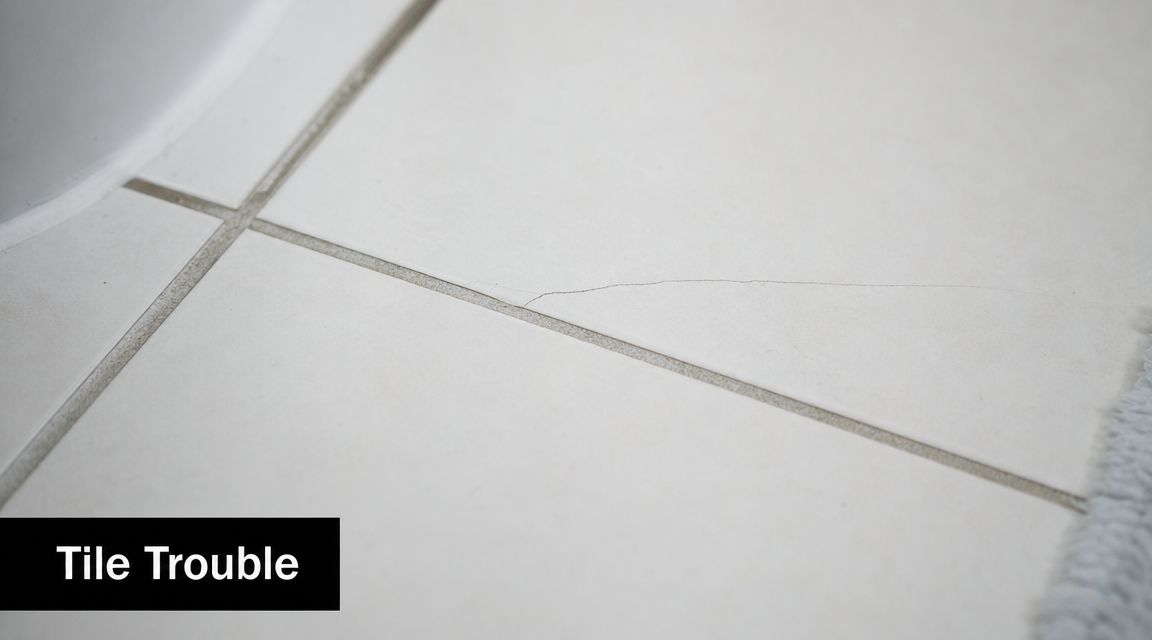
That's why the first question isn't “How do we hide this?” It's “What caused it?”
A single cracked tile can come from impact. Several cracks appearing over time can point to movement in the substrate. A loose shower tile may be a bond failure. Damp grout can be surface moisture, but it can also be a warning sign that water is getting where it shouldn't. In wet areas, especially older bathrooms, the tile layer is only one part of the system. If the waterproofing, screed, falls, or base preparation has failed, a neat patch-up won't last.
Practical rule: If the same area keeps cracking, sounding hollow, leaking, or losing grout, stop treating it as a one-off tile problem.
A Registered Builder matters. A tiler can replace tiles. A builder looks at the room as an assembly of trades, substrate, waterproofing, drainage, and compliance. That broader view is what separates a worthwhile repair from a false economy. In many bathroom renovations, the smartest money is spent on diagnosis first, because that determines whether a local repair will hold or whether the room needs deeper remedial work.
Diagnosing Your Tiles Repair, Regrout, or Renovate?
Many homeowners want the smallest possible job. That's understandable. But the right answer depends less on what you can see and more on what the symptoms are telling you. One of the biggest mistakes in tile repair Melbourne jobs is choosing a cosmetic fix for a structural or waterproofing problem.
Many Melbourne homeowners ask “Can you just replace the broken tile?” when the more important question is “Why did it fail?” A diagnostic approach matters because failed waterproofing is treated as a systemic risk, and recurring grout loss, hollow tiles, and leaks after rain often mean concealed water damage makes a simple patch repair short-lived, as discussed by Melbourne tile regrouting guidance.
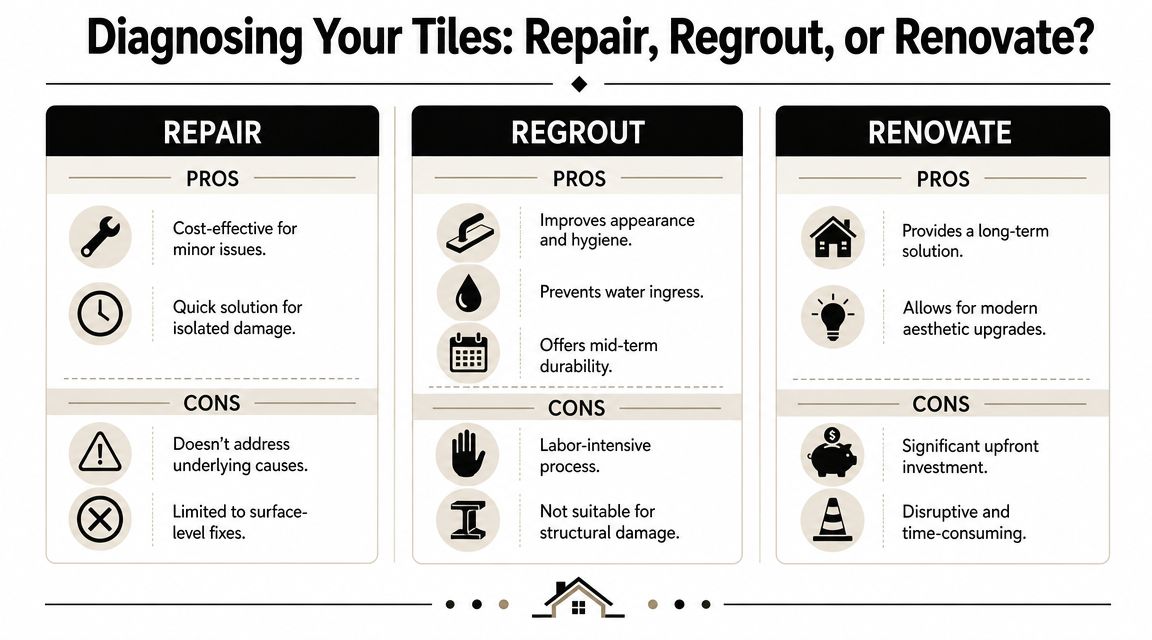
When a repair is usually enough
A localised repair can work well if the failure is clearly isolated.
- Single impact damage: One chipped or cracked tile after something heavy was dropped.
- Stable surrounding area: Adjacent tiles are firm, level, and well bonded.
- No moisture signs: No mould smell, staining, soft walls, or recurring grout issues.
- Replacement tile available: The colour, calibre, and finish can be matched closely enough.
This kind of job is still delicate. Removing one tile without damaging its neighbours takes care, especially with rectified porcelain or tightly jointed walls.
When regrouting makes sense
Regrouting is useful when the tiles are sound but the joints are tired, porous, stained, or crumbling. It can improve hygiene, appearance, and water shedding at the surface. It isn't a cure for movement or waterproofing failure.
Good regrouting depends on removing failed grout properly, cleaning the joints, and choosing the right product for the area. If you're comparing surfaces and finishes before any rework, it helps to understand how ceramic, porcelain, marble, and other tiling materials behave in wet areas and repairs.
Regrouting works best when the tile assembly is still healthy. It fails fast when the base underneath is moving or staying wet.
When renovation is the smarter call
There comes a point where repair costs stack up without solving the room. That's when a bathroom renovation or partial rebuild becomes the better decision.
Common signs include:
- Multiple drummy tiles
- Leaks outside the shower recess
- Recurring grout cracking at the same joints
- Loose floor tiles near the waste or doorway
- Swelling skirtings, damaged architraves, or staining in adjacent rooms
- Older bathrooms with repeated patch jobs
In those cases, the issue is rarely just the visible tile. It's more often the system beneath it. A renovation gives access to the substrate, waterproofing, falls, drainage points, and penetrations. That lets the repair address the cause instead of chasing symptoms.
A useful way to think about it is this:
| Symptom | Best first response |
|---|---|
| One cracked tile after impact | Local repair |
| Sound tiles, dirty or failing joints | Regrout assessment |
| Hollow tiles plus dampness | Investigate substrate |
| Shower leak or balcony leak | Builder-led inspection |
| Repeated failures in same area | Renovation assessment |
The cheapest quote is often for the smallest scope. The best value comes from choosing the scope that corresponds to the failure.
A Guide to Common Tile Failures in Melbourne Homes
Tile failure usually follows a pattern. Once you know what to look for, it becomes easier to describe the problem properly and get the right trade involved from the start.
Impact cracks versus movement cracks
An impact crack is usually obvious. Something heavy hits the tile and the damage is centred around that point. The surrounding tiles often stay stable, and the grout lines may remain intact.
Movement cracks behave differently. They tend to appear along stress lines, near corners, across several tiles, or repeatedly in the same zone. That points to movement below the tile surface. In bathrooms, that can mean deflection in the floor, substrate instability, or stress around penetrations and transitions.
Loose tiles and drummy floors
A “drummy” tile sounds hollow when tapped. Homeowners often notice it first by feel rather than sound. The floor feels different. The tile may flex slightly, or grout around it starts powdering out.
That hollow sound usually means the bond between tile and base has been compromised. Sometimes the issue is poor adhesive coverage. Sometimes moisture has weakened the bond. In older wet areas, persistent water exposure can affect more than one layer of the assembly, so the tile is only the first thing you notice.
Grout breakdown that keeps returning
Grout does age, and not every grout problem means a major rebuild. But if the same joints keep cracking or washing out, there's usually a reason. Recurrent failure often points to movement, trapped moisture, or both.
Watch for these clues:
- Same line, same problem: Grout keeps reopening in exactly the same joint.
- Dark joints that never dry: Moisture is lingering where it shouldn't.
- Powdering and edge staining: Water is moving through the assembly.
- Silicone failure nearby: Junctions are under stress or staying wet.
If grout fails once after many years, that may be age. If it fails again soon after replacement, assume the grout isn't the real problem.
Leaks that show up away from the tile
Leaking showers and balconies rarely announce themselves neatly. The visible stain may appear outside the bathroom, below the slab edge, in a wardrobe backing onto the shower, or on a ceiling below. That's why homeowners sometimes miss the link between a small tile issue and a bigger waterproofing defect.
Tiles and grout are not the waterproof layer. They're the wearing surface. Once water gets past them and the membrane or substrate isn't doing its job, the moisture travels. By the time you see peeling paint or swollen trim, the repair decision is no longer just about replacing a tile. It's about protecting the building fabric.
DIY vs Professional Repair Is It Worth the Risk?
DIY has its place. Replacing a soap dish, scraping old silicone, or cleaning stained grout can be sensible if you know the limits. The risk starts when a visible tile defect tempts you into disturbing a wet area assembly without understanding what's beneath it.
Where DIY can work
DIY is usually safest when the job stays cosmetic and low-risk.
- Surface cleaning and maintenance: Removing soap build-up, mould staining, or old sealant residue.
- Minor aesthetic touch-ups: Small chips in non-critical areas where waterproofing isn't involved.
- Observation and documentation: Marking crack progression, photographing damp spots, or checking whether a tile sounds hollow.
Once demolition starts, the stakes change. Matching tile size is one thing. Matching the original bed height, maintaining falls, protecting adjacent waterproofing, and avoiding collateral damage are another.
Where a registered builder changes the outcome
In Melbourne bathrooms, repairs often involve more than one trade. That's the point many homeowners discover they don't have a simple tiling issue at all. They have a leaking shower, damaged substrate, poor drainage, or a failed membrane.
If you're weighing up the risks in wet areas, it helps to understand how leaking showers are properly assessed and repaired before deciding whether a patch job is enough.
Here's the practical comparison:
| Factor | DIY Repair | Professional Repair (Registered Builder) |
|---|---|---|
| Upfront cost | Lower at the start | Higher at the start |
| Long-term cost | Can rise quickly if the repair fails | Better aligned to root-cause repair |
| Tools required | You source and learn as you go | Trade tools and proven methods already in use |
| Time | Weekends, delays, repeat attempts | Planned sequence with coordinated trades |
| Tile matching | Often limited to what you can find | Better strategy for blending, substitution, or redesign |
| Waterproofing judgement | Easy to underestimate | Assessed within the whole room system |
| Compliance | Hard to manage if the scope expands | Managed as part of the build process |
Professional repair isn't only about workmanship. It's also about decision-making. A registered builder looks at sequencing, protection of other finishes, access, moisture risk, and whether a local repair could create a larger liability later. That matters in family bathrooms, investment properties, and apartments where leaks affect neighbouring lots.
There's also the practical issue of accountability. If a repair touches waterproofing, drainage falls, or concealed damage, you want a scope that reflects the actual condition of the room. That's much harder to achieve with piecemeal patching.
The Professional Process A Registered Builder's Workflow
A sound tile repair job starts before a single tile is lifted. In Melbourne bathrooms and balconies, the visible crack is often the last sign to appear, not the first thing to go wrong. A registered builder approaches the work as fault finding first, repair second.
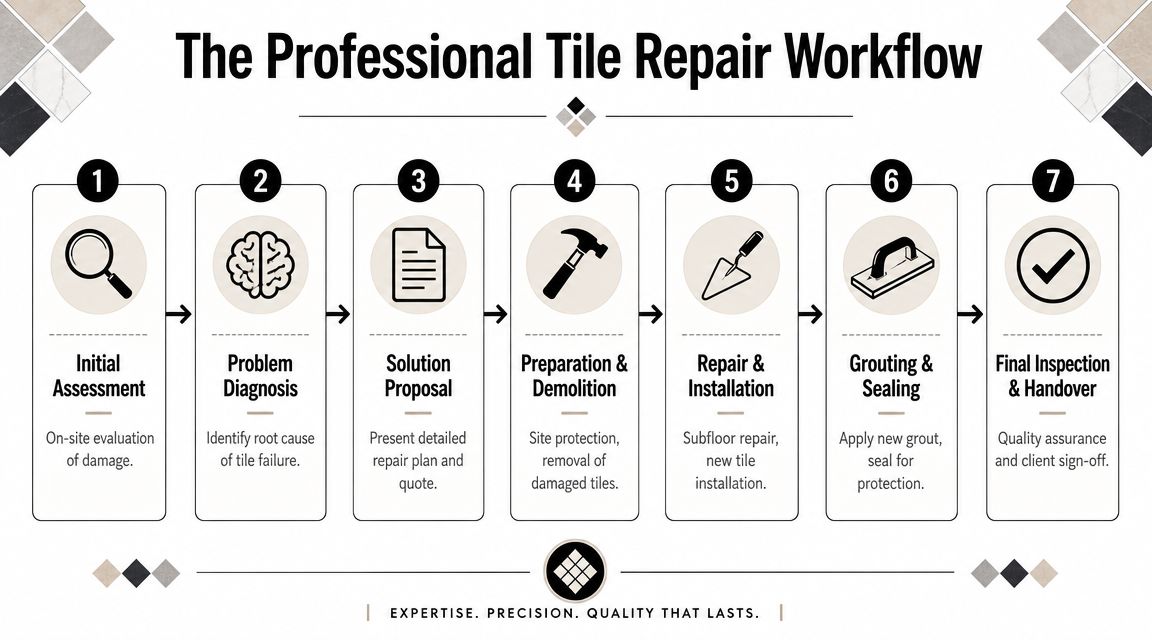
Step one is always diagnosis
The first inspection should look beyond the broken tile. The pattern of failure matters. One loose tile near a doorway can point to movement. Repeated grout loss around a shower base can point to moisture. Hollow sounding tiles across a larger area can suggest bond failure or a problem in the substrate below.
That inspection usually includes checking cracked areas, tapping surrounding tiles, looking at grout joints, inspecting adjacent rooms, and asking practical questions about the room's history. Has the area been repaired before? Does the problem worsen after showers? Has silicon been replaced more than once? Those details help separate a local repair from a room-wide issue.
A builder-led assessment should narrow the scope into the right category:
- Isolated tile failure
- Localised debonding
- Waterproofing concern
- Drainage or screed defect
- Full wet-area remedial work
That distinction matters because the repair method changes with the cause. Replacing one tile over a wet or unstable base usually means doing the same job twice. If the fault reaches the waterproofing layer, the work also needs to be judged against Victorian requirements for wet area repairs and certification. The standard for that is clearer when the scope is reviewed alongside waterproofing compliance requirements in Victoria.
Removal prep and rebuild
Once the cause is understood, the site gets prepared properly. In an occupied home, that means protecting vanities, shower screens, timber floors, and access paths. In apartments, it can also mean dust control, lift protection, acoustic limits, and strict work hours.
Tile removal needs control. The goal is to expose the failed area without damaging sound surrounding work that can stay in place. During removal, the underlying condition often becomes obvious. Failed patch repairs, weak bedding, poor adhesive coverage, cracked screeds, and moisture-damaged backing are common findings.
A proper rebuild may involve:
- Substrate correction: Repairing unstable, damaged, or moisture-affected base materials
- Screeding or levelling: Restoring the correct plane and falls so water drains as intended
- Waterproofing repairs where required: Reinstating the wet-area system, not only the tile finish
- Tile selection and set-out: Matching the existing layout and appearance as closely as practical
A registered builder adds value over a tile-only patch service. If the demolition exposes failed waterproofing, structural movement, or concealed water damage, the scope can be adjusted before the room is closed up again. That protects the rest of the bathroom, not just the spot you can see today.
Finishing the repair properly
The final stage is about service life as much as appearance. Tiles need to sit flat, joints need to be consistent, and replacement pieces need to work with the existing room rather than draw attention to themselves. Grout colour matters. Joint width matters. Movement joints and sealant details at junctions matter as well, especially in showers, balconies, and floor-to-wall transitions.
A clean-looking repair can still fail if water keeps sitting in the wrong place, if the substrate still moves, or if the waterproofing was already compromised.
Melbourne Tiling Services P/L is one example of a builder-led operation that handles bathroom renovations, waterproofing, screeding, leak rectification, and tile installation under a registered building scope. That model suits repairs that affect the integrity of the room, involve more than one trade, or raise compliance questions.
The handover should be clear and practical. Homeowners should be told what failed, what was repaired, what remains outside the repaired area, and whether any further remedial work is recommended. That is how small tile repairs stay small, instead of turning into a larger bathroom problem six months later.
Understanding Costs Timelines and Compliance in Melbourne
A cracked shower tile can look like a half-day job. Then the tile comes up, the bed is damp, the substrate is soft, and the repair is no longer about one tile. That is why pricing and timing in Melbourne vary so much. The visible damage is only the starting point.
A proper quote has to allow for diagnosis, careful removal, protection of adjacent finishes, and making good once the cause is confirmed. If the problem stays local, costs stay contained. If the repair exposes failed waterproofing, movement, or water damage, the job shifts from tile replacement to remedial building work.
What affects cost
The main cost drivers usually include:
- How much demolition is needed to reach sound material
- Whether replacement tiles or suitable alternatives can be sourced
- Tile size, finish, and breakage risk during removal
- Access conditions in occupied homes, apartments, and strata buildings
- The condition of the substrate, screed, or wall sheeting
- Whether other trades are required, such as waterproofers or carpenters
Material also changes the risk profile. Standard ceramic is usually more forgiving. Large-format porcelain, stone, and older brittle tiles often take more time because removal has to be controlled and the finished repair is less tolerant of unevenness, lipping, or colour variation.
The Melbourne market has a wide spread in quoting styles and scope. Some quotes cover a patch only. Others include investigation, rectification, drying time, and compliance steps if the work affects a wet area. The cheaper figure is not always the lower-cost outcome if the original cause is left in place and the bathroom has to be opened again.
What affects timing
Area matters less than sequence.
A single dry-area tile with matching stock on hand can be repaired quickly. A shower repair can slow down for good reason. Materials may need time to dry. Waterproofing and adhesives have curing requirements. Access in apartment buildings can limit working hours, waste removal, and deliveries.
Common timing factors include:
- Availability of matching tiles, trims, and grout
- Drying time after leaks or moisture exposure
- Trade coordination if the job goes beyond tiling
- Noise, dust, and access rules in occupied properties
- Strata booking windows, lift protection, and site restrictions
Homeowners usually want one firm timeframe. In practice, the honest answer depends on what is found once the room is opened. Builder-led repairs are better at managing that uncertainty because the scope can be adjusted properly instead of being forced into a tile-only fix that does not suit the condition underneath.
Why compliance matters
Compliance becomes part of the job as soon as the repair touches the waterproofed system or broader building elements. At that point, the question is no longer just how to replace a tile. The question is whether the bathroom still meets the standard expected of a wet area and whether the repair has been documented correctly.
That is where registered builder oversight matters. A builder can assess whether the failure is isolated or part of a larger defect, bring in the right trades, and make sure the repair method suits the actual condition of the room.
If your job may involve wet-area rectification, read more about a waterproofing compliance certificate in Victoria and when it applies. It helps clarify what work needs formal sign-off and why that matters for resale, insurance, and the long-term integrity of the bathroom.
Frequently Asked Questions About Tile and Bathroom Projects
Can you match old or discontinued tiles?
Sometimes. If spare tiles were kept from the original job, that's ideal. Without them, matching becomes a blend of size, edge profile, surface finish, and colour tone. In some repairs, a close match works. In others, a deliberate design change looks better than a poor patch.
Can premium tiles be repaired invisibly?
Not always. High-end porcelain, marble, and large-format products can be difficult to remove and replace without affecting adjacent tiles or revealing slight variation. Repairing premium or large-format tiles in occupied strata properties also brings practical issues like noise limits, dust control, and pattern mismatch risk, as highlighted in this discussion of premium tile repair in occupied properties.
Is a Registered Builder really necessary for bathroom work?
If the issue is confined to an isolated tile, not always. But once the job touches waterproofing, drainage, substrate failure, or multiple trades, builder oversight becomes far more important. Bathrooms are systems, not just finishes.
What about apartments and strata properties?
Access, working hours, waste removal, lift protection, and neighbour impact all need planning. The quality of the repair is only half the job. The other half is how the work is managed.
Should I repair or renovate?
If the failure is local and the cause is clear, repair can be the right move. If the room has repeat issues, hidden moisture, or signs of broader deterioration, renovation is often the more durable decision.
If you need clear advice on tile repair, leaking showers, balcony issues, or a bathroom renovation scope, Melbourne Tiling Services P/L can inspect the problem, explain whether repair or rebuild makes more sense, and provide a practical next step for your property in Melbourne.
Write a Comment