
You're probably looking at bathroom tiles right now and thinking about colour, format, and whether the room will feel bigger with a lighter floor. That's normal. Then someone in the house steps out of the shower onto a smooth tile, their foot shifts, and the whole decision suddenly looks different.
In bathroom renovations, the floor isn't a finishing touch. It's a safety surface, a compliance item, and part of a waterproofing system that has to work every day under wet feet, soap residue, cleaning products, and steam. In Melbourne homes, where families often need a bathroom to suit children now and ageing parents later, non slip bathroom flooring is one of the most important calls you'll make.
Table of Contents
- Why Your Bathroom Floor Is Your Most Important Safety Decision
- Decoding Australian Slip Resistance Ratings
- Choosing the Best Non Slip Flooring Materials
- Installation The Foundation of a Safe Bathroom Renovation
- How to Choose a Qualified Melbourne Tiler and Builder
- Maintaining Your Non Slip Floor for Lasting Safety
Why Your Bathroom Floor Is Your Most Important Safety Decision
A bathroom floor has to do more than look good under downlights. It has to keep its grip when water splashes out of the shower, when someone walks through barefoot, and when soap film starts building up. That's why flooring deserves more attention than many homeowners give it at the start of bathroom renovations.
The common mistake is choosing a tile collection first and asking safety questions later. On a showroom wall, a polished or lightly textured tile can look almost identical to a properly slip-rated floor tile. Under wet feet, they don't behave the same way. The difference only shows up when the room is in daily use.
Practical rule: If a tile supplier can't clearly tell you the slip rating and where that tile should be used, it shouldn't be your bathroom floor tile.
Safety is only one part of the decision. Compliance matters too. A bathroom floor sits within a larger build sequence that includes substrate preparation, falls to waste, waterproofing, tile selection, grout choice, and installation quality. If one part is wrong, the room can become slippery, hard to maintain, or vulnerable to leaks.
For homeowners, the long-term value is straightforward. A compliant floor protects the people using the room and protects the renovation itself. That's especially important in family homes, investment properties, and homes being updated for ageing in place.
Why this matters in everyday use
Some rooms forgive bad material choices. Bathrooms don't. They combine hard surfaces, moisture, bare feet, and repeated cleaning. Even a premium tile can become the wrong tile if it's too smooth for the application.
Registered builders look at the floor as part of the whole room, not as a stand-alone product. That's the right way to approach it. The safest result usually comes from choosing a floor that balances grip, cleanability, durability, and compatibility with the rest of the system.
Decoding Australian Slip Resistance Ratings
Slip ratings matter because the tile you choose in a showroom is not being judged under the same conditions as a wet bathroom floor in daily use. In Melbourne renovations, I regularly see homeowners shown attractive floor tiles first and the test data second. That order should be reversed.
For bathroom floors in Australia, the two classifications homeowners will hear most often are the P rating and the R rating. They come from different test methods under AS 4586, which is the Australian Standard used to classify slip resistance for new pedestrian surface materials. The P classification comes from the wet pendulum test. The R classification comes from the oil-wet ramp test. Both tell you something useful, but they are not interchangeable shorthand for “safe everywhere.”
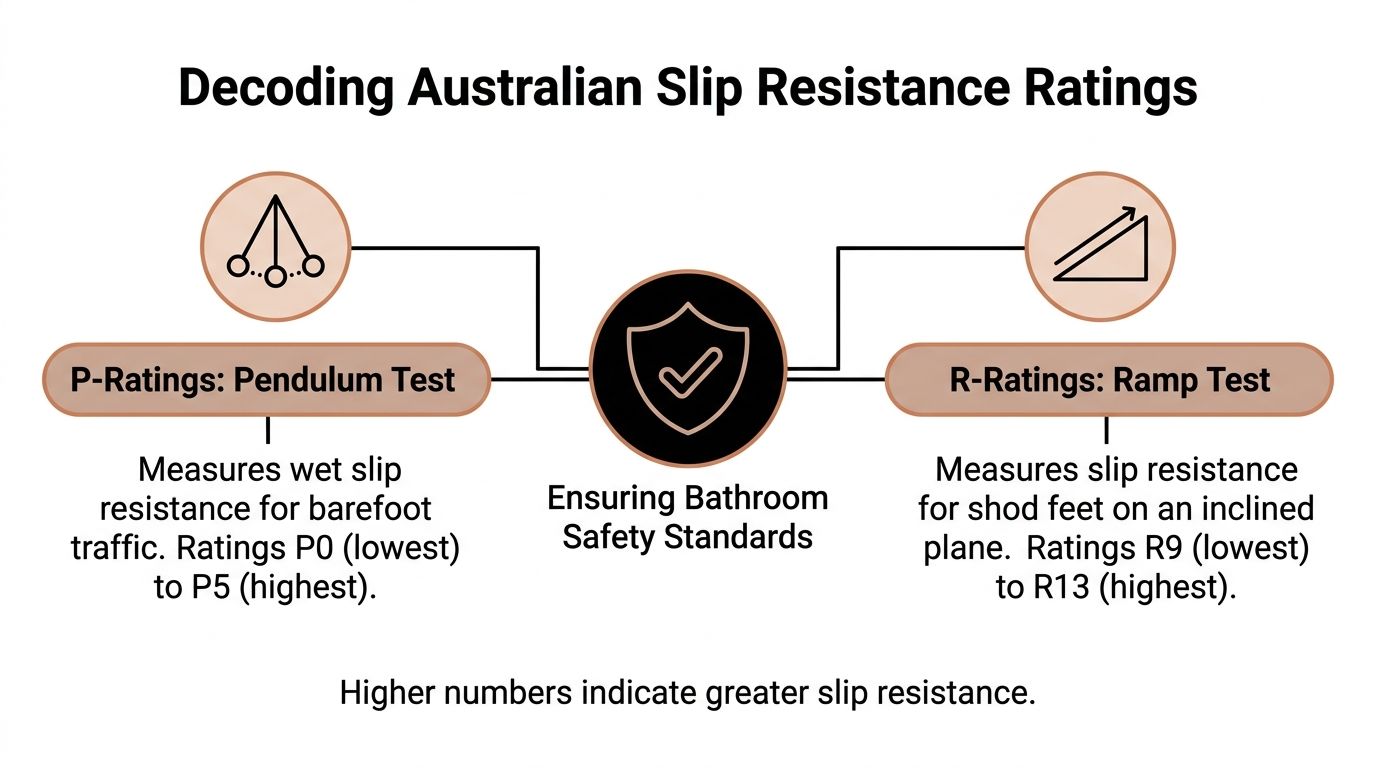
What P and R ratings actually mean
For a residential bathroom, the P rating is usually the more practical starting point because bathrooms are barefoot, wet environments. The R rating still has value, especially when comparing product ranges, but it comes from a different test setup and should be read in context.
The bigger point is compliance. AS 3740 governs waterproofing of domestic wet areas, and the bathroom floor must be selected and built as part of that full wet area system. A registered builder does not treat slip resistance as a stand-alone tile question. The floor finish, substrate, set-down or hob detail, falls, drainage, waterproofing, grout joints, and cleaning regime all affect how the room performs once people are using it.
That is why I tell clients to ask for the manufacturer's tested classification under AS 4586, not a brochure description like “ideal for bathrooms” or “anti-slip finish.” If the supplier cannot produce the test result, there is no solid basis for specifying that tile on a wet bathroom floor.
Minimum compliance and real-world use are not the same thing
A compliant product can still be the wrong choice for a particular household. A tight ensuite used by healthy adults has different demands from a family bathroom used by children, older parents, or anyone with reduced balance or mobility. The safest choice is the one that suits the users and the layout, while still being practical to clean and durable over time.
Surface texture is part of that trade-off. More grip often means more texture. More texture can mean more cleaning effort, especially where soap residue, body oils, and hard water build up. That is one reason many builders and tilers favour slip-rated porcelain tiles for bathrooms. Good porcelain ranges can balance grip, maintenance, and durability better than many softer or more porous materials.
What to ask for in a tile showroom
A useful showroom conversation is direct. Ask for the information that relates to compliance and actual use:
- Ask for the tested slip classification under AS 4586. Verbal assurances are not enough.
- Ask which test applies to the intended area. Barefoot wet areas and other traffic areas are assessed differently.
- Ask where the product is approved to be used. Bathroom floor, shower floor, wall tile, and feature tile are different applications.
- Ask for the exact finish being quoted. One colour may be available in multiple surfaces with different slip performance.
- Ask who is coordinating the whole wet area system. The tile choice has to work with the waterproofing design, falls, and installation method required under AS 3740.
Homeowners do not need to read the standards cover to cover. They do need enough clarity to distinguish a tested, suitable floor tile from a product that looks the part. In a bathroom renovation, that difference affects safety on day one and the durability of the whole room over the next decade.
Choosing the Best Non Slip Flooring Materials
Once the ratings make sense, the next question is material. This material choice determines whether many bathroom renovations come together properly or drift into compromises that look good on day one and frustrate everyone later.
In most Melbourne bathrooms, the strongest candidates are porcelain, ceramic, textured natural stone, and mosaic tiles. Each can work. Each also has trade-offs. The right choice depends on who's using the room, how much maintenance you're comfortable with, and how much visual continuity you want between the floor and walls.
What works well in real bathrooms
Porcelain is usually the safest all-round recommendation for a busy home bathroom. It's dense, durable, and widely available in matte and textured slip-rated finishes. It also gives you the broadest design flexibility, from stone-look neutrals to concrete-look large format pieces. If you're comparing finishes, this guide to porcelain tiles for bathrooms is useful for understanding where porcelain suits wet area work.
Ceramic can also perform well, particularly in standard bathroom floors where you want a practical finish at a more accessible price point. The limitation is range and durability. Some ceramic lines are excellent. Others are better suited to walls or lighter-duty applications. You need to check the actual rating and product suitability, not assume all ceramic is equal.
Textured natural stone appeals to homeowners who want a premium, organic look. It can provide good underfoot grip when the finish is right, but it demands more care. Stone choice, sealing, pore structure, and ongoing cleaning all affect how it performs over time. In homes where low maintenance is a priority, stone often loses out to porcelain that mimics stone visually.
Non Slip Bathroom Flooring Material Comparison
| Material | Common Slip Ratings | Pros | Cons | Average Cost (per sqm) |
|---|---|---|---|---|
| Porcelain | Available in slip-rated options including bathroom-suitable finishes | Durable, water-resistant, broad style range, strong option for floors and wet zones | Some textured products can hold more residue if cleaning is neglected | Varies by product and range |
| Ceramic | Available in bathroom-suitable matte and textured finishes | Practical, widely available, easier to coordinate with wall tiles | Product quality varies, not every ceramic tile is suitable for floors or showers | Varies by product and range |
| Textured natural stone | Can be selected for slip resistance when properly specified | Premium appearance, natural texture, strong design character | More maintenance, sealing requirements, variation between stone types | Varies by stone type and finish |
| Mosaic tiles | Commonly used in shower floors and detailed wet zones | Extra grout lines improve grip, easier to form to falls, strong shower-floor choice | More grout joints mean more cleaning, can look visually busy in larger spaces | Varies by material and sheet type |
The cost column stays broad for a reason. Material pricing shifts heavily based on brand, size, finish, origin, and whether the tile is standard stock or special order. A cheap floor tile that fails on maintenance or suitability is rarely cheap in the long run.
What usually works best by area
Different zones often call for different formats.
- Main bathroom floor. Slip-rated porcelain is often the cleanest balance of safety, durability, and design.
- Shower base. Mosaics or small-format textured porcelain usually perform best because they follow the falls well and add traction through grout lines.
- Family bathroom. Matte finishes tend to age better visually than glossy surfaces that show water spotting and soap film.
- Luxury ensuite. If the brief calls for a stone look, many homeowners get a better maintenance outcome with stone-look porcelain than real stone.
A floor can be easy to clean or forgiving to look at. The best products manage both.
What doesn't work well is choosing polished floor tiles because they looked elegant under showroom lights. In dry areas, maybe. In a bathroom, especially near the shower, that's usually the wrong compromise. Another weak choice is selecting oversized smooth tiles for a shower floor. They can make falls harder to form properly and reduce practical grip where you need it most.
The strongest results come from treating material selection as a performance decision first and a style decision second. Fortunately, with current tile ranges, you usually don't have to give up the look to get the safety.
Installation The Foundation of a Safe Bathroom Renovation
A bathroom floor usually looks finished long before it is safe. I see this on Melbourne renovations where the tile choice was sensible, but the floor still ponds water at the shower entry, the grate sits too high, or movement in the base starts showing up as cracked grout and loose tiles months later. Safe wet area flooring depends on the whole build. Tile, substrate, waterproofing, falls, drainage, and trade sequencing all have to work together.
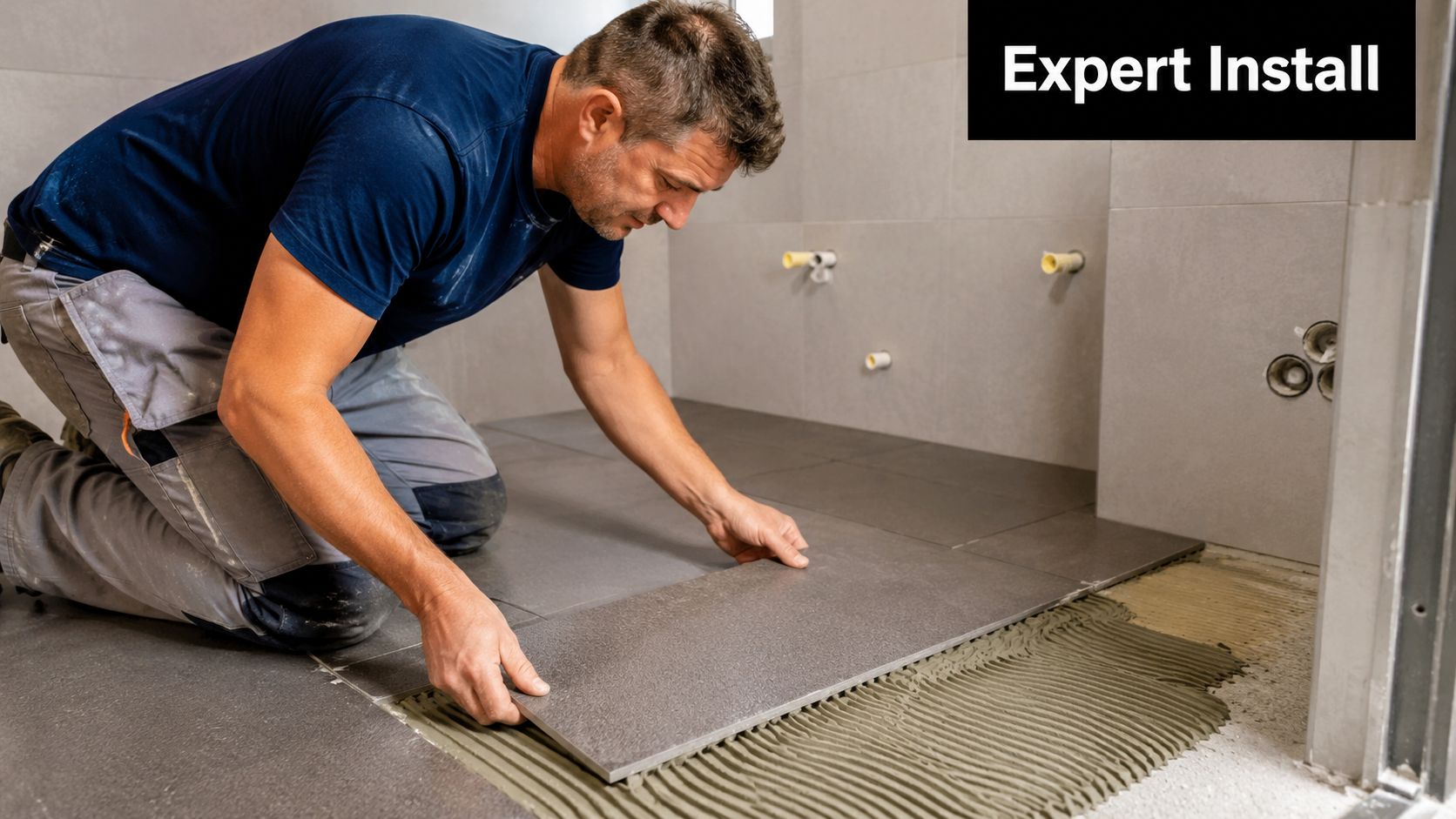
Why the system matters more than the tile alone
AS 4586 helps you choose a slip-resistant surface. AS 3740 governs how the wet area is waterproofed. In practice, a bathroom renovation has to satisfy both. A tile with the right slip resistance rating can still underperform if the shower floor is too flat, if the screed is uneven, or if the substrate was never prepared for tile.
The common failures are predictable. Water sits where it should drain. Tile edges lip because the base was not corrected properly. Grout cracks because there is movement underneath. Membrane details fail around wastes, hobs, and penetrations because the work was rushed or poorly coordinated.
That is why installation quality carries so much weight.
A sound sequence usually starts with demolition and substrate assessment, then repairs, floor preparation, screeding or levelling, waterproofing, set-out, tiling, grouting, sealing where required, and final fit-off. On a properly managed job, each stage is checked before the next one starts. That matters in older Melbourne homes, where out-of-level floors, previous moisture damage, and patched framing are common.
Where bathroom renovations usually go wrong
The problems that cause slip risk and early failure are often hidden behind a neat tile finish:
- Substrate preparation is rushed. If the floor moves or the base is not flat enough for the selected tile, the finish will not stay sound.
- Falls are poorly formed. Water should move to the waste without ponding near the shower entry, wall lines, or corners.
- Waterproofing is treated as a stand-alone trade. It is part of a wet area system and has to suit the floor waste, junctions, penetrations, and final floor build-up.
- The floor waste and tile format are mismatched. Large tiles on a small shower base often make correct falls harder to achieve.
- Set-out ignores safety and maintenance. Awkward cuts, uneven joints, and badly planned transitions can create trip points and cleaning issues.
For homeowners trying to understand what should be happening beneath the tile finish, this overview of bathroom waterproofing systems is a useful reference.
If the floor holds water, people start adjusting how they walk through the room. That is a design and construction failure, not just a cleaning issue.
The registered builder's role
A registered builder brings the wet area together as one compliant build, not a collection of separate trades. That means checking whether the tile selected under AS 4586 also suits the floor layout, confirming the waterproofing design aligns with AS 3740, coordinating the waterproofer, tiler, plumber and electrician, and making sure the finished room is fit for use.
That role matters most when the job gets complicated. A recessed shower, a linear waste, underfloor heating, a timber subfloor, or an apartment renovation with limited floor depth all introduce trade-offs. Better slip resistance can mean a rougher surface that needs more cleaning. A larger tile may suit the look of the room but make falls harder to form. A builder should identify those issues before materials are ordered, not after they arrive on site.
Good builders also stop bad decisions early. Sometimes that means changing the shower floor to mosaic or small-format tile so the falls can be formed properly. Sometimes it means rejecting a substrate that another contractor wanted to tile over. Those calls protect the renovation long after handover.
How to Choose a Qualified Melbourne Tiler and Builder
Not every tiler is set up to deliver a compliant wet area renovation, and not every builder understands the detail that a good bathroom floor demands. Homeowners often assume a neat tile finish equals a sound bathroom. It doesn't. The visible face is only part of the work.
The easiest way to sort serious operators from risky ones is to ask specific questions and listen for specific answers. Good tradespeople won't be offended by that. They'll usually welcome it.
Questions worth asking before you sign
Start with process, not price.
- Who is responsible for the full bathroom renovation. If multiple trades are involved, ask who coordinates them and who carries responsibility for the outcome.
- Do you regularly install slip-rated bathroom floors and shower mosaics. Experience with standard wall tiling isn't the same as building safe wet zones.
- How do you handle floor preparation and falls. You want a clear explanation, not a vague assurance that they “sort it on site”.
- Who completes the waterproofing work. The answer should show that the contractor understands compliant wet area practice and trade coordination.
- Can you explain why this tile is suitable for the bathroom floor and shower floor. A qualified operator should be able to justify the selection in practical terms.
If you're comparing local contractors, reviewing established Melbourne tiling contractors near you can help you understand what full-scope service should look like.
What a proper quote should include
A thin quote often means thin scope. If the document focuses only on tile supply and laying, there's a good chance important work has been assumed away or left ambiguous.
Look for these inclusions:
- Demolition and disposal details. Old bathrooms rarely come apart cleanly without follow-on repair work.
- Substrate preparation. This might include levelling, screeding, repair, or sheet preparation depending on the site.
- Waterproofing allowance. It should be explicit, not buried.
- Tile installation method. Especially relevant if you're using mosaics, large-format porcelain, or mixed finishes.
- Grout and sealant scope. Corners, junctions, and movement areas matter.
- Trade coordination. Plumbing, electrical, carpentry, glazing, and fit-off all affect the result.
A good quote tells you what's being built. A poor quote only tells you what's being sold.
The other thing worth checking is whether the contractor talks about the bathroom as a system. If all the conversation sits around tile style, feature walls, and finishes, that's a warning sign. Skilled bathroom renovators usually spend just as much time discussing falls, membrane work, drainage, and layout constraints.
For homeowners, confidence shouldn't come from the nicest brochure or the lowest number on a page. It should come from hearing a builder or tiler explain the work in a way that shows they've done it properly many times before.
Maintaining Your Non Slip Floor for Lasting Safety
A non slip bathroom floor doesn't stay safe by default. The same texture that improves grip can also hold onto soap film, body oils, and cleaning residue if the floor isn't maintained properly. Once that build-up sits on the surface, the floor can feel smoother and more slippery than it should.
The best routine is simple and consistent. Use cleaning products that remove residue without leaving a glossy film behind. Rinse well. Pay attention to shower exits, corners, and the area in front of the vanity, because that's where build-up often becomes noticeable first.
What helps and what hurts
A few habits make a real difference:
- Use pH-appropriate cleaners. Harsh products can damage grout, sealers, or some stone finishes.
- Avoid waxy or polishing products. They can defeat the purpose of a textured tile.
- Scrub textured floors properly. A flat mop alone often won't lift residue from a structured surface.
- Keep grout and joints in good order. Failed joints don't just look poor. They affect hygiene and performance.
The larger point is that lasting safety comes from the whole chain. Good non slip bathroom flooring starts with the right material, depends on correct installation, and stays effective through sensible maintenance. That's how bathroom renovations deliver long-term value, and it's why registered builders treat the floor as part of an entire wet area system rather than a simple tile choice.
If you're planning bathroom renovations and want guidance from Melbourne Tiling Services P/L, speak with a team of Registered Unlimited Builders who handle tiling, waterproofing, screeding, and full bathroom construction across Melbourne. They can help you choose non slip bathroom flooring that suits your home, meets the right standards, and performs properly for years.
Recent Comments