
In Melbourne, a realistic large format tile installation cost often lands around $200 to $450+ per square metre all in, and the biggest variable isn't usually the tile price, it's the substrate preparation needed to make the surface flat enough for large tiles. If the floor or wall needs screeding, self-levelling, waterproofing, or rectification before the first tile goes down, the quote moves fast.
Table of Contents
- The True Cost of a Continuous Tile Finish
- Melbourne Large Format Tile Installation Cost Guide 2026
- Why Large Format Tiles Cost More The Key Drivers
- Decoding a Sample Quote for a Melbourne Bathroom Renovation
- Budgeting for Hidden Costs and Add Ons
- Hiring a Qualified Tiler and Registered Builder in Victoria
- Are Large Format Tiles Worth the Extra Cost
The True Cost of a Continuous Tile Finish
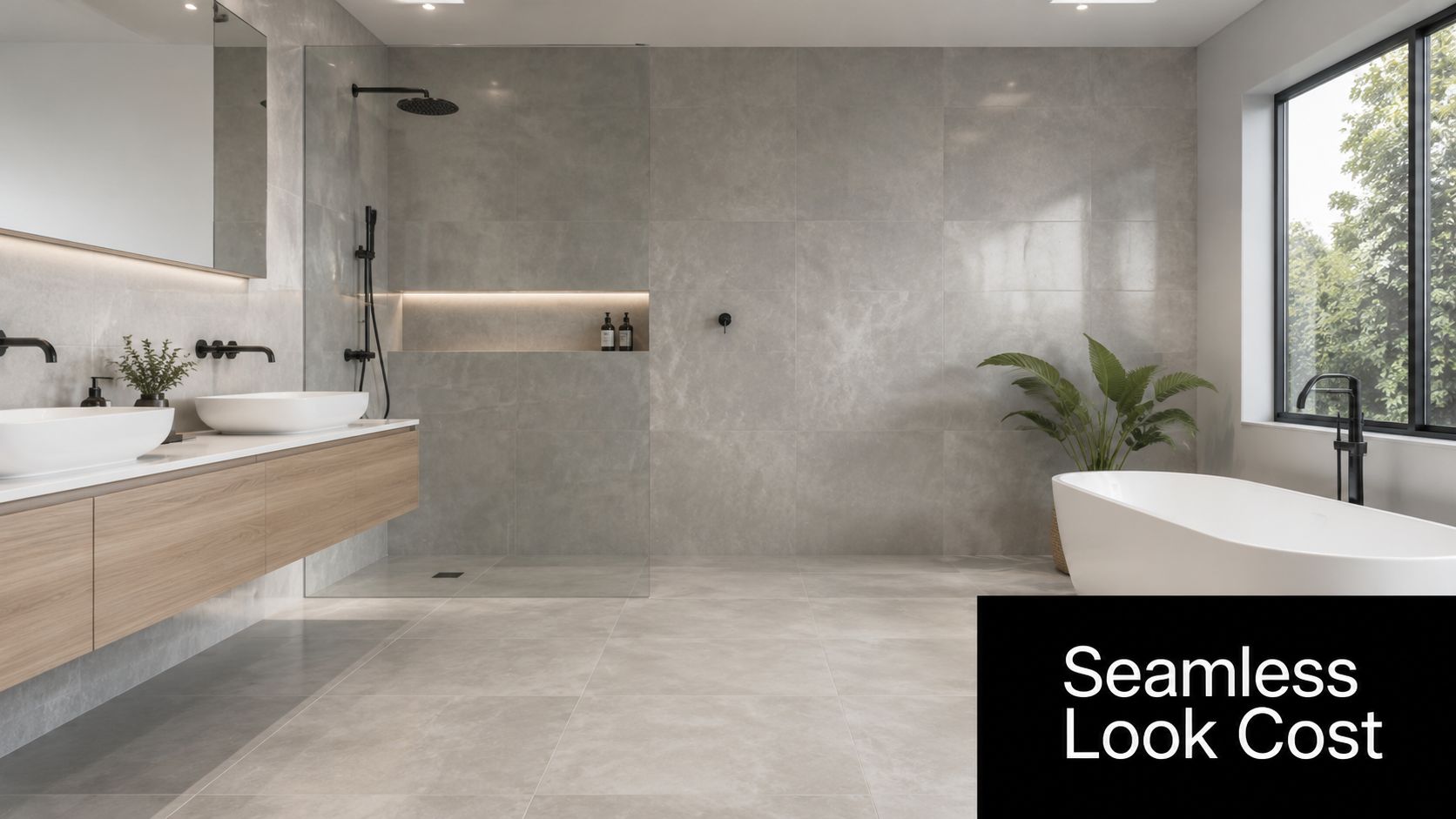
A homeowner walks into a tile showroom, likes oversized porcelain, and assumes the bathroom quote will mostly be driven by the tile choice. Then the quotes arrive, and one installer is hundreds more than the next. That gap is usually the cost of getting a real Melbourne bathroom ready for large-format tiles.
Practical rule: compare the quote for the finished surface, not just the tile. If the substrate is out of tolerance, the final price will rise whether you planned for it or not.
The part most pricing guides leave out is the work under the tile. Substrate correction, waterproofing, and screeding often decide whether the job is straightforward or labor-heavy. AS 3958.1 calls for no more than 3mm deviation under a 3m straightedge, and large tiles make that standard matter even more. If the floor is not close to flat, the installer spends time bringing it into line before the first tile goes down.
That is where the budget moves. A floor with a hump, a shower base that needs rectification, or walls that are out of plumb all add labour before tiling starts. In a bathroom renovation, those hidden hours can cost more than the tile itself.
A clean, unbroken look is what people want from large tiles, but the job starts with the parts you never see. If the floor falls the wrong way, the membrane needs repair, or the drain set-out is off, the installer has to correct it first. One missed substrate problem can turn a tidy quote into a much larger one once the room is measured properly.
Why the quote varies so much
Some bathrooms are ready for tile. Others need old finishes removed, levelling work, waterproofing, and extra care around drains, niches, and thresholds.
That is why two quotes for the same room can sit far apart. One may include only laying tile, while the other includes the substrate work needed to make the bathroom usable and compliant.
Ask one question first, what work is included before tiling starts?
A fair large-format quote is not the cheapest line on the page. It is the one that accounts for the condition of the room, the prep needed to meet the standard, and the waterproofing work that protects the renovation long term. That is what separates a bathroom that holds up well from one that shows lippage, movement, or bond failure early.
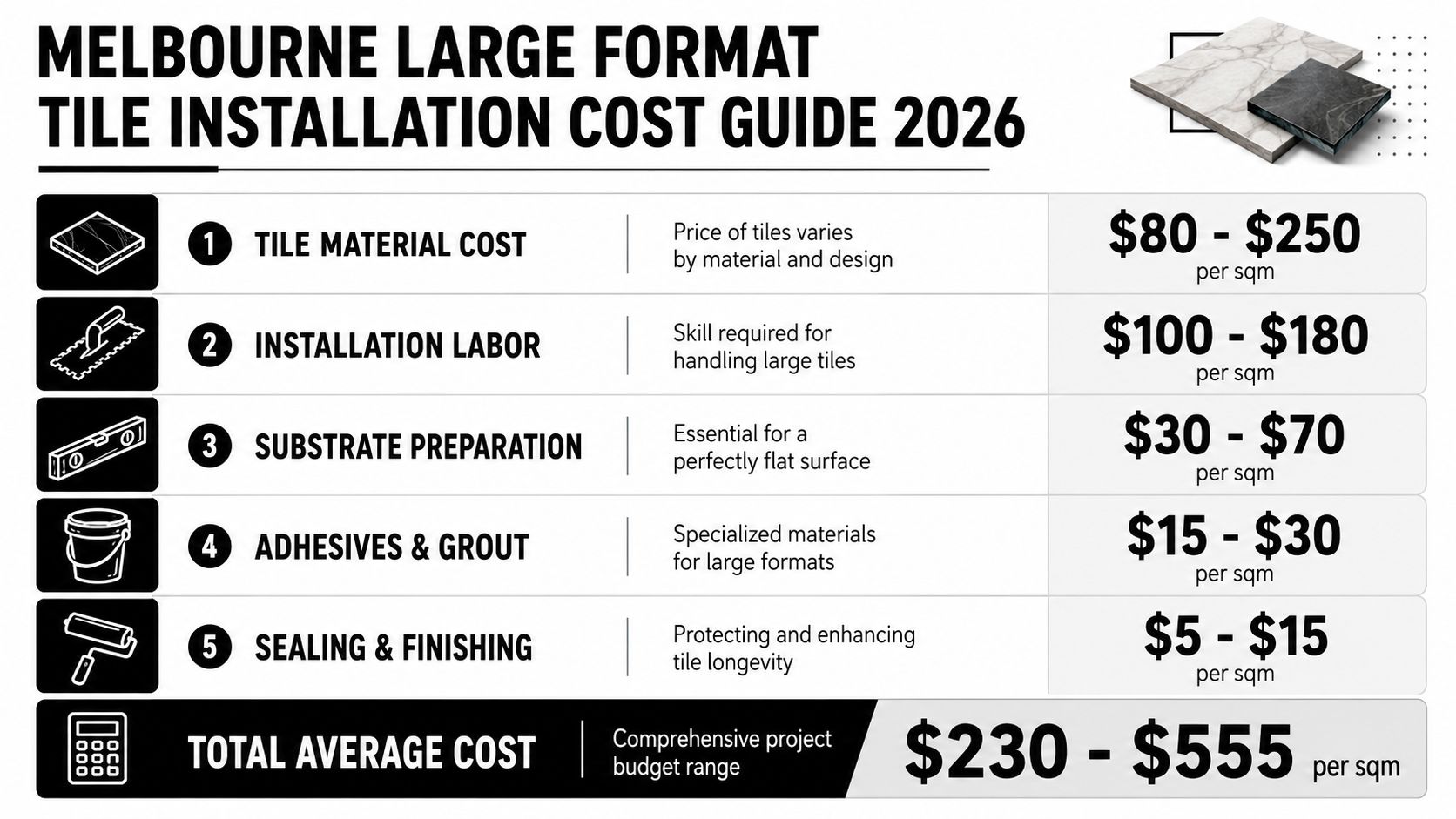
Melbourne Large Format Tile Installation Cost Guide 2026
A Melbourne bathroom renovation gets expensive fast when the quote only covers tile laying and ignores the work underneath. A complete budget covers tile supply, labour, subfloor or wall prep, waterproofing, and finishing around drains, edges, and trims. Large-format work stays in a premium band because the room often needs more correction before the first tile goes down, and that is where many homeowners get caught out. The broad pricing pattern is consistent with industry guides that place large-format installation above standard tiling costs. The Spruce cost guide
| Tier | Tile type | Estimated cost per m², inc. GST |
|---|---|---|
| Entry level | Standard porcelain, straightforward layout | $180 to $220/m² |
| Mid-range | Large-format porcelain, typical bathroom work | $280 to $350/m² |
| Premium | Premium porcelain or natural stone, complex layout | $380 to $450+/m² |
Those figures are a practical Melbourne guide, not a fixed quote. A flat room with sound walls and a simple layout can sit near the lower end, while a bathroom that needs levelling, screeding, waterproofing repairs, or careful set-out around niches and drains quickly moves into the higher bands. Large-format tiles magnify any fault in the base, so the prep line matters as much as the tile choice itself.
A useful way to sanity-check a quote is to compare it with independent 2026 tiling data. One set of estimates shows a typical tile job can land around $4,000 to $8,000 total, while a similar bathroom using large-format tile often sits around $4,000 to $9,000 or more once tile size, surface preparation, and layout complexity are counted in. EstimationPro's 2026 tiling price data
What that means for a Melbourne bathroom
For an 8m² bathroom floor and walls, the final number can still vary a lot. A clean, ready-to-tile room may stay close to the base install rate. A renovation with uneven walls, tired substrate, shower recess corrections, or new waterproofing will cost more because the job has moved beyond simple tile installation.
If you are comparing quotes, separate the numbers into supply, prep, waterproofing, and install. That shows where the money is going and makes it easier to compare apples with apples. It also helps explain why one quote can look cheap at first and end up higher once all the required work is added back in.
Budgeting tip: ask for substrate preparation, waterproofing, and tile laying as separate line items. It is the fastest way to see whether a quote is genuinely cheaper or just missing work.
The video below shows a large-format floor installation, including the set-out and levelling process that often drives the final price in a bathroom renovation.
Estimated Large Format Tile Installation Costs in Melbourne, Per Square Metre
| Tier | Tile Type | Estimated Cost per m², inc. GST |
|---|---|---|
| Entry level | Standard porcelain with light prep | $180 to $220/m² |
| Mid-range | Large-format porcelain bathroom installation | $280 to $350/m² |
| Upper range | Premium porcelain or stone with detailed prep | $380 to $450+/m² |
For Melbourne homeowners, the main cost driver is not just the tile. It is the amount of correction needed before and during installation. A bathroom with a flat substrate and simple layout behaves very differently from one that needs rectification before the waterproofing membrane even goes on. That is why large-format tiling is best priced as a total project, not as a simple square-metre rate.
Why Large Format Tiles Cost More The Key Drivers
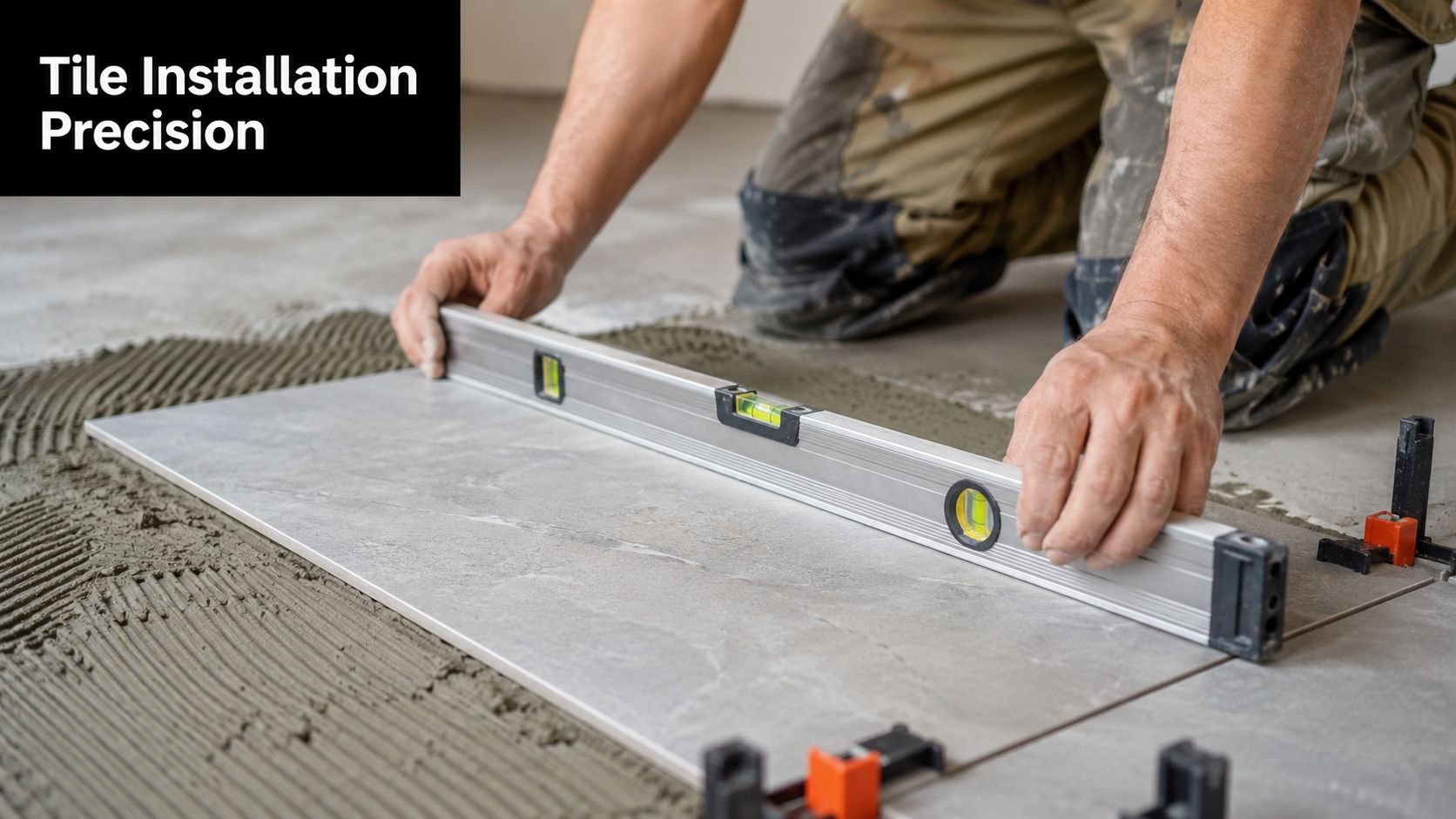
Large tiles act like a mirror for everything underneath them. A slight dip, a raised edge, or a wall that's out of square becomes visible fast, which is why substrate tolerance matters more with large-format work than with smaller tiles. In plain terms, the surface has to be flatter, cleaner, and more controlled before installation begins.
The floor has to be right first
The situation is akin to building a house. If the slab is off, everything above it asks for extra work.
Bathroom floors often need screeding to form correct falls, especially around showers and drainage points. Some jobs also need self-levelling before tiling starts, and that adds labour, material, and drying time. The same principle appears in large-format pricing guides, where labour rises because the setter has to avoid lippage and maintain even coverage across a much bigger tile face. Ideal Tile installation guide
U.S. benchmark data place large-format or custom tile work at $20 to $25+ per sq ft compared with $10 to $15 per sq ft for basic ceramic, which lines up with the premium many Melbourne homeowners see once the substrate needs proper preparation. The same source notes that large-format projects often need more precise screeding and self-levelling to control the finish. Ideal Tile installation guide
Materials and handling are part of the price
Large tiles are heavier, less forgiving, and slower to set out. That changes the tools and the labour rhythm.
Large-format work usually needs more precise adhesive coverage, more careful handling, and more checking during placement. Those aren't extras, they're part of getting the job right.
The specialised side of the job also includes levelling systems, suction cups, and extra care around cuts and edge finishing. Large-format pricing benchmarks from another guide point to a 20 to 40% installation premium over standard tile work, driven by slower set-out, heavier tiles, and extra accessories. Orientbell large-format tile guide
That premium isn't random. It reflects the labour needed to make a big tile sit flat, stay bonded, and look clean at the joints. In a bathroom, where every detail is close to eye level, the finish has to be better than “good enough.”
Decoding a Sample Quote for a Melbourne Bathroom Renovation
A bathroom quote that is worth comparing should read like a scope of work, not a single number on a page. For a Melbourne ensuite using large-format porcelain, I'd expect demolition, rubbish removal, plumbing isolation, waterproofing, screeding, tile laying, grout, silicone, and finishing either listed separately or grouped in a way that makes the work clear.
Here is the kind of breakdown I would want a homeowner to see:
- Demolition and disposal: $800 to $1,200
- Waterproofing: $600 to $900
- Screeding or floor correction: $400 to $700
- Tile laying for an 8 m² bathroom: $1,200 to $1,800
- Grout, silicone, trims, and finishing: $300 to $700
- Plumbing isolation and reconnection, if required: priced separately
That is the sort of structure that makes a quote easy to test. If one number looks much lower, the missing item is usually the reason.
A realistic bathroom budget should also reflect what happens before the first tile is laid. If the base is uneven, the room needs rectification, not just tile fixing. In Melbourne bathrooms, that often means extra time on prep, especially in older homes where floors have moved or previous trades have left the substrate out of shape. A screeding guide for tiles is useful if you want to understand why that work gets listed as its own line item.
What a quote usually hides in plain sight
A cheap-looking quote often assumes the room is ready to tile. That assumption is where projects go off track.
The total bill can include demolition, disposal, waterproofing, screeding, trim, adhesive systems, grout, and silicone. If the room also needs plumbing disconnection or reconnection, the total rises again. None of that is unusual in a bathroom renovation, it is just the cost of doing the job properly.
A homeowner comparing two quotes should look for clear pricing on:
- Substrate preparation, including levelling or rectification
- Waterproofing, especially in shower and wet areas
- Tile cuts and waste, which increase with larger formats
- Finishing items, such as trim, grout, and silicone
- Access and staging, especially in apartments or tight sites
A quote that leaves those items out can look cheaper until variations start appearing.
What a good comparison looks like
The better question is, “What condition does the room need to be in before you can tile it?” That single question shifts the conversation from a headline rate to the actual scope.
For homeowners planning bathroom renovations, the useful comparison is like-for-like scope, not just a square-metre figure. If one contractor includes waterproofing, screeding, and finishing, while another only prices tile laying, the lower quote is not really lower. A fair comparison is the one where the demolition, prep, waterproofing, and tile installation are all priced on the same basis, so you can see the actual total before work starts.
Budgeting for Hidden Costs and Add Ons
Hidden costs are where large-format projects surprise people. Old tile removal, poor access, extra grinding, and waste allowances can all push a bathroom over the number you first had in mind.
What to watch for before you sign
- Old tile removal and disposal: If the room already has tiles, the labour to remove them can be significant, especially when the substrate underneath needs repair afterwards.
- Asbestos checks in older homes: Any suspected asbestos has to be handled properly before demolition continues.
- Poor substrate condition: If the floor is far from flat, extra grinding, levelling, or screeding may be needed before tile can start.
- Apartment access: Tight stairs, lift bookings, loading rules, and site hours can all add time and coordination.
- Special trims and finishing profiles: Large tiles often need neat edge solutions, not just a basic siliconed edge.
- Waste and breakage allowance: Bigger tiles mean more careful cutting and handling, but damaged pieces still happen.
The surface-prep question holds greater significance than commonly perceived. A lot of pricing articles only quote the tile-laying rate, but the hidden cost drivers in Australia are usually the prep stages, not the visible tiles. This screeding resource is useful if you're trying to understand why a floor might need correction before tiling can even start.
Budget rule: if the substrate hasn't been inspected in person, the quote is only a starting point.
That's why contingency matters. In Melbourne bathroom renovations, the renovation often costs more than the tile supply because the work around the tile is where the complexity sits. If the room needs rectification, the labour bill starts to reflect that before any premium tile is installed.
Hiring a Qualified Tiler and Registered Builder in Victoria
A finished large-format bathroom can look simple, but the work behind it is not. The installer has to read the room, correct levels, manage waterproofing junctions, and place heavy tile with care. If any part of that sequence is off, the finish shows it.
Victoria also has compliance requirements that affect the final cost and who is allowed to do the work. For domestic building work valued over AUD 10,000, a registered builder is required to contract for the job, and bathroom renovations with large-format tiles, waterproofing, and related trades often sit in that range once all labour and prep are included. Check the Victorian Building Authority guidance before work starts, and confirm the builder's registration on the VBA register rather than relying on a quote alone. Waterproofing in wet areas must comply with AS 3740-2021, and the waterproofer should hold a current licence.
Questions worth asking every contractor
Ask the questions that show whether the contractor understands the full job, not just the visible tile layer.
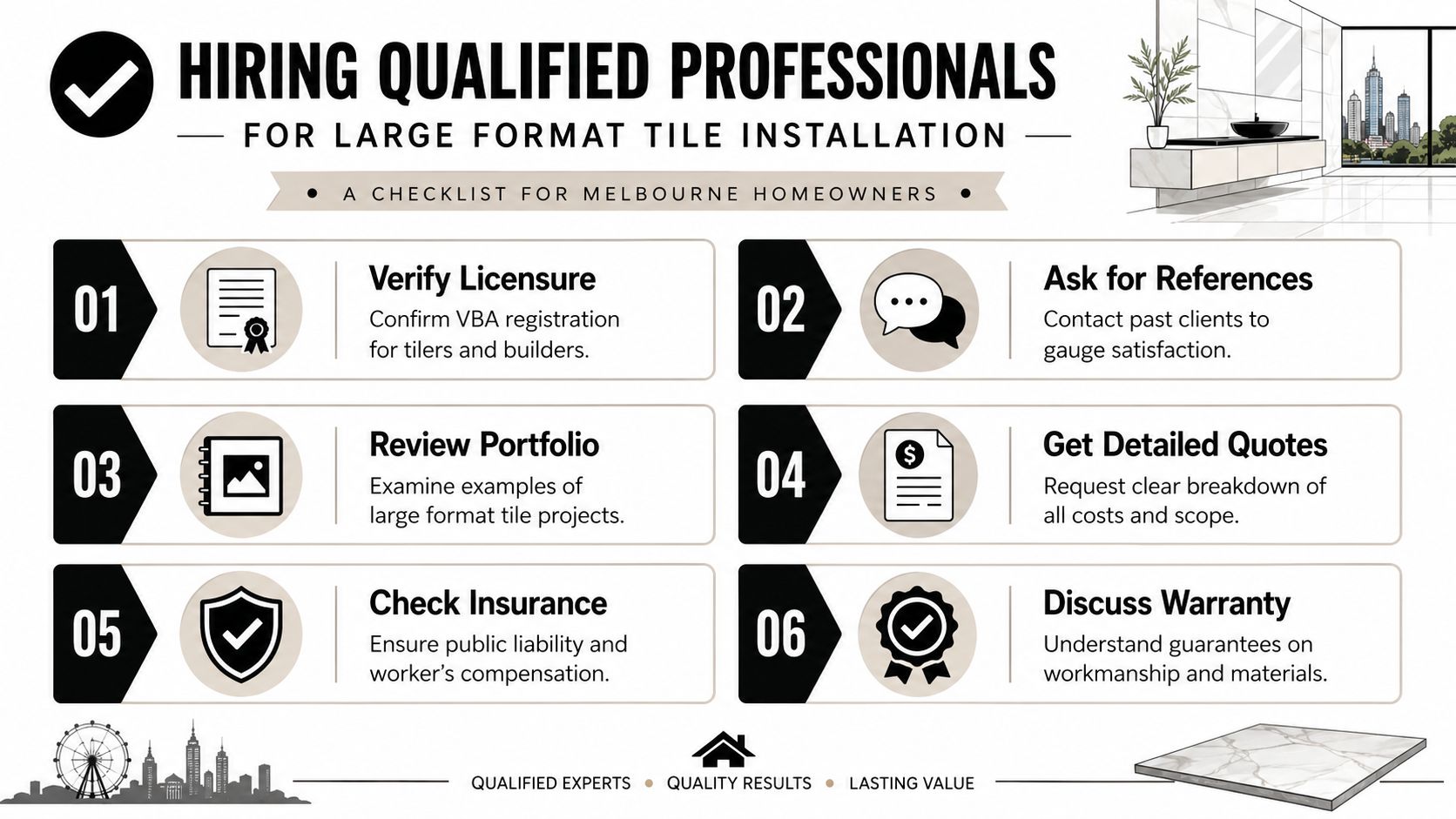
- Verify registration: Ask whether the builder is registered for the scope they are quoting, and whether the trades involved are licensed for waterproofing and other specialist work.
- Check waterproofing capability: Ask who applies the membrane, what system they use, and how they handle the junctions around shower bases, niches, and wall transitions.
- Review large-format experience: Ask for examples of bathrooms with similar tile sizes, especially jobs where the substrate needed correction before tiling started.
- Ask about insurance: Public liability and relevant worker cover should be current, and the contractor should be able to explain what each policy covers.
- Request detailed quotes: Scope, inclusions, exclusions, substrate preparation, waterproofing, and any allowance for levelling or screeding should be written down clearly.
- Discuss warranty terms: Know what is covered if the floor moves, tiles crack, or waterproofing fails, and who is responsible if a defect comes from another trade.
Ask how they will deal with flatness before tiling begins. The answer tells you a lot about whether they understand large-format work or are only pricing by habit.
For Melbourne apartment renovations, ask about lift bookings, loading access, site hours, and owners corporation bylaws before you approve the job. If the bathroom involves structural changes, plumbing relocation, or a permit-triggering alteration, confirm whether council approval or extra documentation is needed. That can affect the program as much as the tile choice itself.
If you want a practical place to start, use a local shortlist such as tiling contractors near me and compare how each contractor explains compliance, prep, and waterproofing. Melbourne Tiling Services P/L is one option for homeowners who want a team that handles bathroom renovation, waterproofing, screeding, self-levelling, and tiling as a coordinated scope. That structure matters when the tile finish depends on work that starts before the first tile is laid.
Are Large Format Tiles Worth the Extra Cost
If you are renovating a Melbourne bathroom and every dollar matters, large-format tiles are worth the extra cost only when the whole room is ready for them. The tile choice can look straightforward on paper, but the final bill usually comes down to what sits underneath, not just the tile itself. Flatness, waterproofing, screeding, access, and waste all push the total project cost up before a single tile is laid.
The premium is real. A practical benchmark puts large-format installs at a 20 to 40% installation premium over standard tile work because the setting-out takes longer, the tiles are harder to handle, and the installer needs tighter control over lippage and finish. On a bathroom renovation, that extra spend is easier to justify when the slab or subfloor is already in good shape. If the base needs correction first, the tile size matters less than the prep bill.
When the extra spend makes sense
Large-format tile is a strong choice when the room already suits the format and you are paying for a full renovation rather than a quick refresh.
- You want a calmer visual finish, and the room has enough size and layout simplicity to carry larger tiles well.
- The bathroom is being stripped back, so substrate preparation, waterproofing, and set-out are already part of the scope.
- You are paying for durability and easier cleaning, and you are prepared to spend more upfront for a finish that holds up better over time.
- The space is modern or open-plan, where larger tiles suit the proportions of the room and the rest of the renovation.
When standard tiles can be the smarter call
Standard tiles can be the better spend when the substrate is out of plane and the budget is tight. A smaller tile format can tolerate more of the room's existing movement and unevenness, which reduces the amount of correction work needed before tiling starts.
That decision is mostly about total cost, not style alone. If the substrate correction adds more than you can comfortably absorb, a standard 300 x 600 layout can often deliver most of the visual result for less money overall. In a tight Melbourne bathroom renovation, that trade-off is worth modelling before you approve the larger format.
The cleanest way to compare the options is to price the full job, not the tile line alone. Ask for the substrate work, waterproofing, screeding, tile laying, and finishing to be separated in the quote, then compare what each version costs once the base is corrected. The large-format tiles page at Melbourne Tiling Services is a useful reference if you want to see how the finish changes once the room is properly prepared.
If you want the project cost broken down before you commit, contact Melbourne Tiling Services P/L to discuss your bathroom, your tile size, and the work needed underneath the tiles.
Write a Comment