
Matte is a surface look, not a slip-safety certificate. Under AS/NZS 4586, a tile needs its own tested P-rating, with P3 commonly used as a baseline for a general bathroom floor and P4 or P5 typically specified for a shower recess, before you can judge it suitable for a wet area.
That distinction matters in Melbourne bathroom renovations. A sample can look subdued and feel lightly textured in a showroom, but neither appearance nor touch tells you how the exact tile performs under the relevant test conditions. Good results come from matching the tile's documented rating to its location, then getting the waterproofing, falls, substrate and installation right.
Table of Contents
- Why Matte Is Not the Same as Safe
- What a Matte Porcelain Finish Actually Is
- How Australian Slip Ratings Read in Plain English
- Matte Against Polished and Glazed Porcelain
- The Installation Assembly Behind a Good Tile
- Where Matte Porcelain Works Best in the Home
- Living With the Floor Day to Day
- When a Registered Builder Becomes Essential
Why Matte Is Not the Same as Safe
The common showroom shortcut is simple: choose matte for a bathroom and assume the floor will be safe. That's not a reliable way to specify a wet-area tile. Matte describes how a surface looks; slip resistance is a tested performance classification.
AS/NZS 4586:2013 includes wet-pendulum and ramp-based assessment methods. Australian classifications commonly use P ratings for barefoot wet conditions and R ratings for ramp testing. The relevant result belongs to the product's test documentation, not to a finish label on a display board. Australian guidance on tile and slip performance explains why the exact tile and intended location matter.
A tile's result can also depend on the surface treatment and the conditions in which it's used. Water, soap residue, cleaning chemicals and barefoot traffic all affect the practical experience of a bathroom floor. The same product may not be the right choice for both the open bathroom floor and the shower recess.
Practical rule: Ask for the test classification for the exact tile, including its size and surface treatment. “Matte,” “textured” and “anti-slip” aren't substitutes for that documentation.
The finish still matters. A matte porcelain surface can reduce glare, and its microtexture may improve traction compared with a polished surface. But it can't prove compliance by itself, and it can't correct poor drainage or unsuitable installation.
That's the distinction to keep in mind when comparing samples: visual finish and tested slip performance are separate decisions. Choose the look you want, then check that the documented rating suits the actual zone where the tile will be laid.
What a Matte Porcelain Finish Actually Is
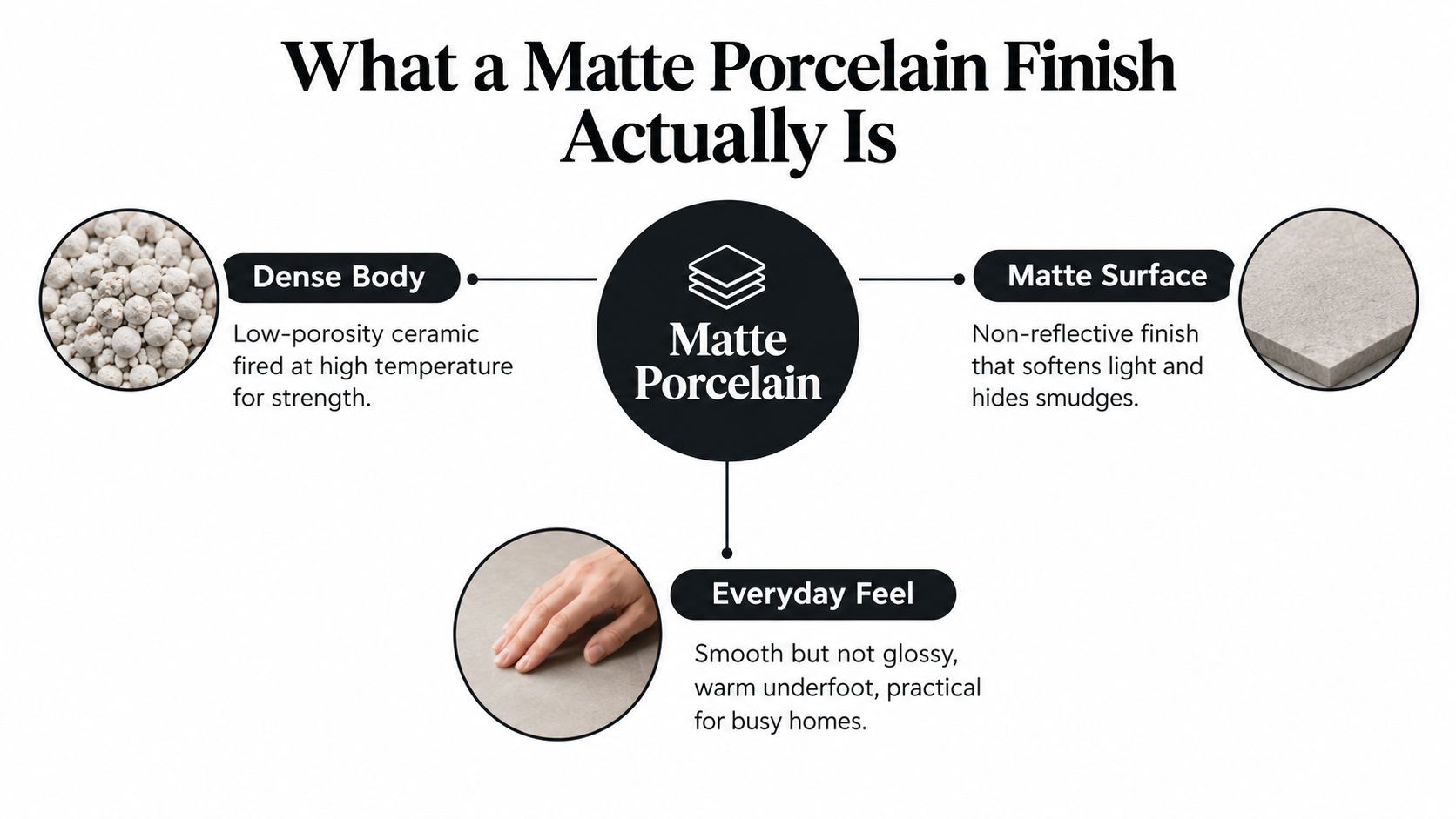
Porcelain is a ceramic tile body fired at high temperature and made to have low porosity. “Matte” describes the surface appearance: it reflects less light than a polished finish, giving the tile a quieter, softer look. In everyday use, that can mean less visible glare and fewer obvious footprints than on a highly reflective floor.
The difference between matte, polished and lappato porcelain comes from the way the surface is finished, not just the way a retailer describes it. Polished porcelain has a high sheen. Lappato sits between polished and matte, with some light-catching areas. A matte surface has little or no gloss, but its feel can range from smooth to noticeably textured.
Read the surface, not just the label
Pick up a sample and tilt it under a light. A polished tile sends back a sharper reflection; a matte tile softens it. Then run your fingers across the surface. Some matte tiles feel nearly smooth, while others have a fine texture you can detect by touch.
Two products can both be labelled matte yet look and feel quite different. One may have a restrained, even surface; another may have more pronounced texture or a pattern that changes how the floor reads once it's laid. Raking light from bathroom downlights can also reveal subtle variations that weren't obvious on a small sample under showroom lighting.
For this reason, don't choose from a photograph alone. Take a sample home and inspect it in the room's lighting, beside the grout colour and other finishes. Check the product information separately for its slip classification and cleaning requirements.
“Matte porcelain” isn't one fixed surface recipe, and it doesn't tell you how much grip the floor offers. Treat it as a useful description of appearance and feel, then verify performance for the application.
How Australian Slip Ratings Read in Plain English
The ratings make more sense when you connect each test to the way the floor will be used. Under AS/NZS 4586:2013, the wet-pendulum method is used for wet slip assessment, including barefoot wet conditions classified with P ratings. Ramp testing produces R ratings, which describe a different test condition. They aren't interchangeable labels.
For a Melbourne bathroom, the P rating is generally the more relevant starting point when people will be walking barefoot on wet porcelain. P ratings run from P2 to P5, with higher numbers indicating greater wet slip resistance. Australian industry guidance commonly identifies P3 as a baseline for residential bathroom floors, while shower recesses and other consistently wet barefoot areas are typically specified at P4 or P5. The Blue Space's tile guidance also emphasises checking the product's actual classification for the intended area.
| Rating | Typical Room | Notes |
|---|---|---|
| P3 | General bathroom floor | Commonly used as a baseline for residential wet floors. |
| P4 | Shower recess or wetter bathroom zone | A typical target for a barefoot area exposed to more consistent water. |
| P5 | Shower recess or heavily wet barefoot area | Higher wet slip resistance, with texture and cleaning trade-offs to consider. |
| R10 | Potentially relevant to a shod area | Ramp classification, not a direct replacement for a barefoot wet P rating. |
| R11 | Potentially relevant to a more demanding shod area | Confirm that the test condition matches the actual application. |
| R12 | Potentially relevant to a high-grip shod area | Don't use this alone to assess a barefoot shower floor. |
Ask for the test result that matches the room
When a supplier gives you an R rating for a bathroom tile, ask whether there's also a wet-pendulum P rating for the intended barefoot application. A result from a different test condition won't answer the same question.
Request documentation for the precise tile surface and treatment you're considering. If the tile is intended for a shower, ask for the P classification relevant to that use, and try a sample underfoot with wet feet before you commit. A guide to non-slip bathroom flooring can help frame the conversation, but the product's own tested result should guide the selection.
Ratings help you compare products; they don't remove the need to consider grout, drainage, contamination and cleaning. A high-grip surface that's left coated with soap film isn't a complete safety plan.
Matte Against Polished and Glazed Porcelain
Matte is often the comfortable-looking choice for a bathroom, but compare the finishes against the conditions they'll face rather than treating one as automatically superior.
Matte porcelain has lower glare and can make footprints and fine marks less obvious. Its microtexture may improve traction, but the actual slip result still needs to be confirmed for the specific tile. A rougher surface can also hold dirt, soap residue and cleaning film, so a more textured option may take more effort to keep clean.
Polished porcelain brings a bright, reflective appearance that can make colours look deeper and a space feel more open. It's often easier to wipe because the surface is smoother, but water, soap or other contamination can change how secure it feels underfoot. The shine also makes smudges and water marks more noticeable.
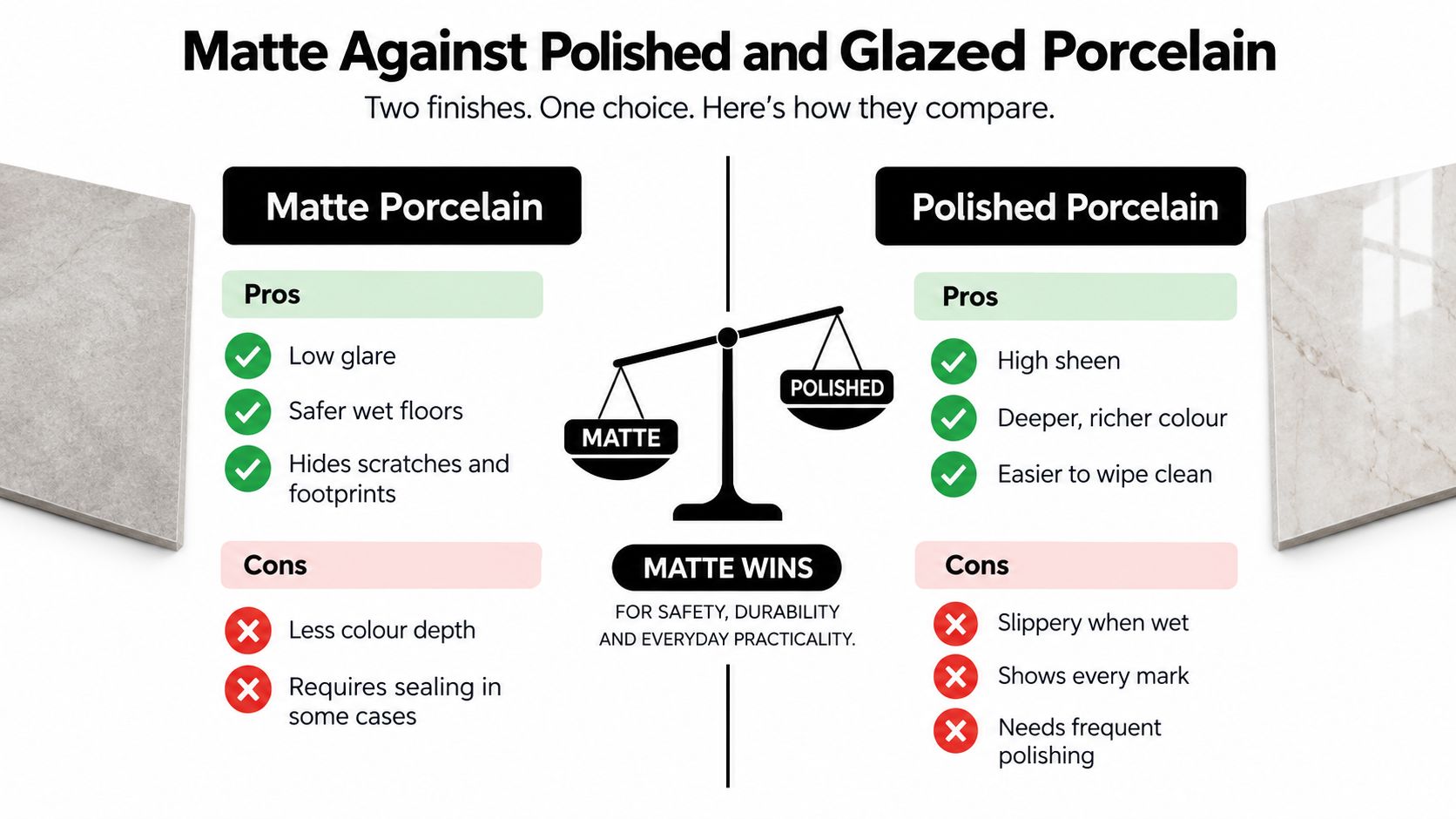
Glazed or lappato surfaces sit between those looks, depending on the product. They can catch more light than matte porcelain without appearing fully polished. Don't assume that a middle-ground finish delivers middle-ground slip performance; get the test documentation for the exact surface.
Weigh the trade-offs in the room
Under bathroom downlights, a matte surface tends to keep reflections subdued, while polished tiles reflect more light. For traction, don't choose on appearance alone: match the tested rating to whether the floor is walked on barefoot, wet, or both. For cleaning, the trade-off runs the other way. Smoother surfaces can be easier to wipe, while deeper texture may conceal marks but hold soil in its surface.
A sample board shows the colour and finish. It can't show how easily the tile will clean after regular use or how its slip test applies to your shower.
Grout layout affects the overall look and day-to-day upkeep too. For ideas on coordinating tile patterns with grout, Aureli Construction's advice on shower tile layout and grout tips offers a useful design reference. Keep the final choice grounded in the tile's tested classification and the cleaning routine you're prepared to maintain.
The Installation Assembly Behind a Good Tile
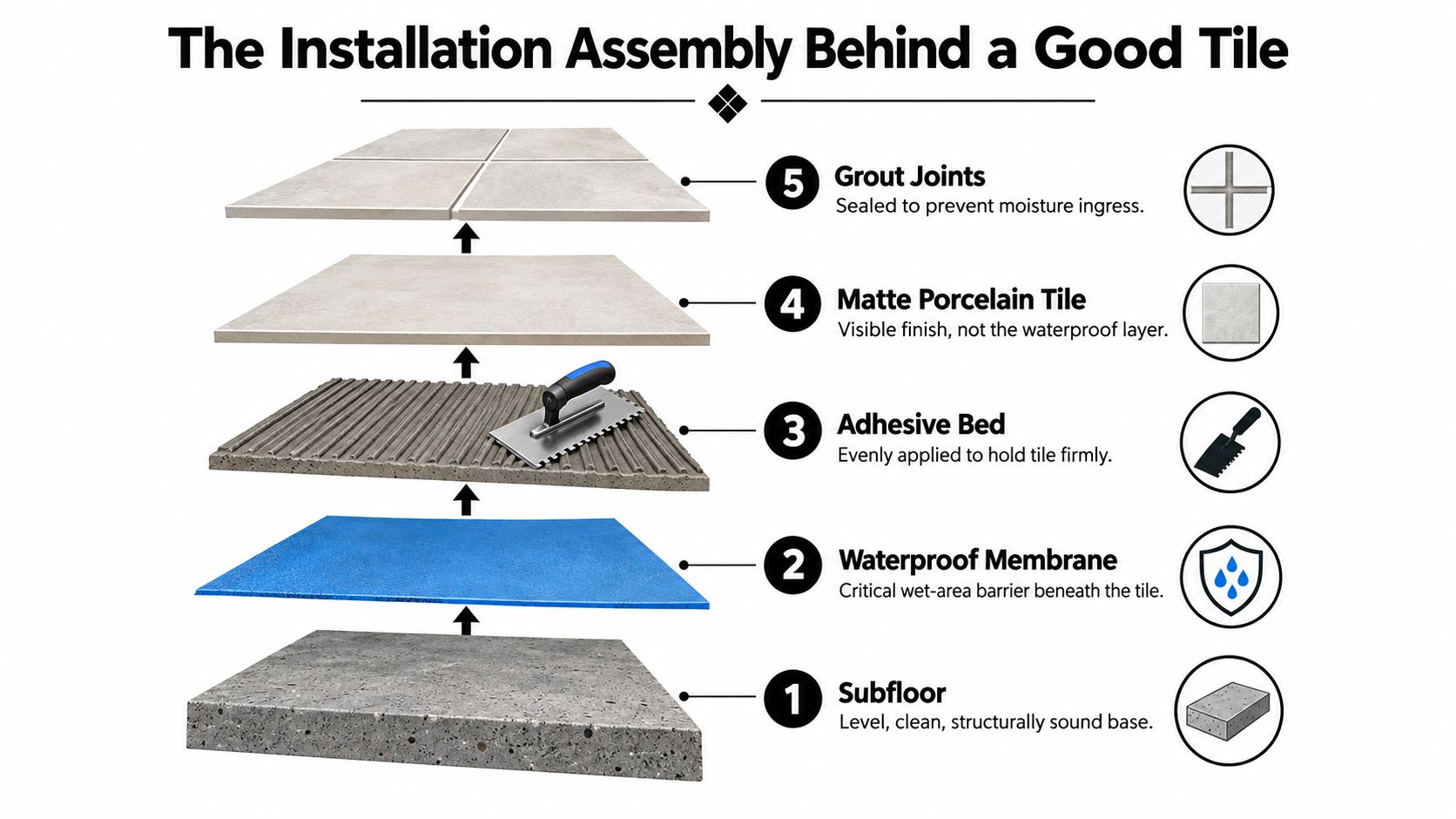
The tile is the visible finish, not the waterproofing system. A good matte porcelain floor starts with a sound base and a correctly detailed wet-area assembly. Australia's current installation reference for ceramic and stone tile fixing is AS 3958:2023, which includes porcelain; AS/NZS 4586:2013 separately covers slip-resistance testing. The National Construction Code also sets wet-area requirements. The ABCB's wet-area provisions make clear that a tile finish is only one part of the performance.
Prepare the base and waterproof it
Start by checking the substrate for cleanliness, stability and flatness. One Australian installation guide gives a benchmark of no more than 3 mm deviation under a 2 m straightedge; a flat base helps prevent rocking tiles and uneven joints. For large-format or flat-backed porcelain, adhesive contact becomes especially important.
Waterproofing goes in before tiling and must meet the applicable wet-area requirements. The shower floor, including any hob or step-down, must be waterproof, and shower walls must be waterproof to at least 1,800 mm above the floor substrate under the NCC provisions. Joints and wall junctions within the shower area also require waterproofing. The membrane may be placed above or below the tile bed or screed, subject to the applicable construction provisions. The NCC's current wet-area guidance sets out those requirements.
Falls need to lead water to the waste. Shower-floor guidance places the fall between 1:80 and 1:50 toward the drain. Form that fall in the substrate or screed rather than trying to create it by piling up adhesive.
Get adhesive contact and joints right
In wet areas, Australian technical guidance cited for installation specifies approximately 95–100% adhesive coverage, with no meaningful edge voids. Back-butter the tile where needed to achieve contact. Movement joints belong at perimeters and at suitable intervals; grout isn't a substitute for those joints.
Before laying, check tile calibration, thickness variation, batch consistency and adhesive compatibility. A premium tile laid over a moving or poorly prepared base can still crack, sound hollow or hold water where it shouldn't. For more detail on the preparation stage, see this guide to substrate preparation.
A bathroom renovation also needs coordination between trades and inspection points. A bathroom renovation steps checklist can help homeowners organise the work sequence, but confirm the local scope and compliance requirements with the people responsible for the project.
The assembly matters as much as the surface: substrate, membrane, falls, adhesive, tile and grout all have a job to do.
Where Matte Porcelain Works Best in the Home
The right rating depends on where water reaches the floor and how people use it. In an open bathroom, a P3 or P4 tile may suit the wet floor, provided its tested classification matches the product and use. The shower recess is more consistently wet, so P4 or P5 is typically the more appropriate target for barefoot use.
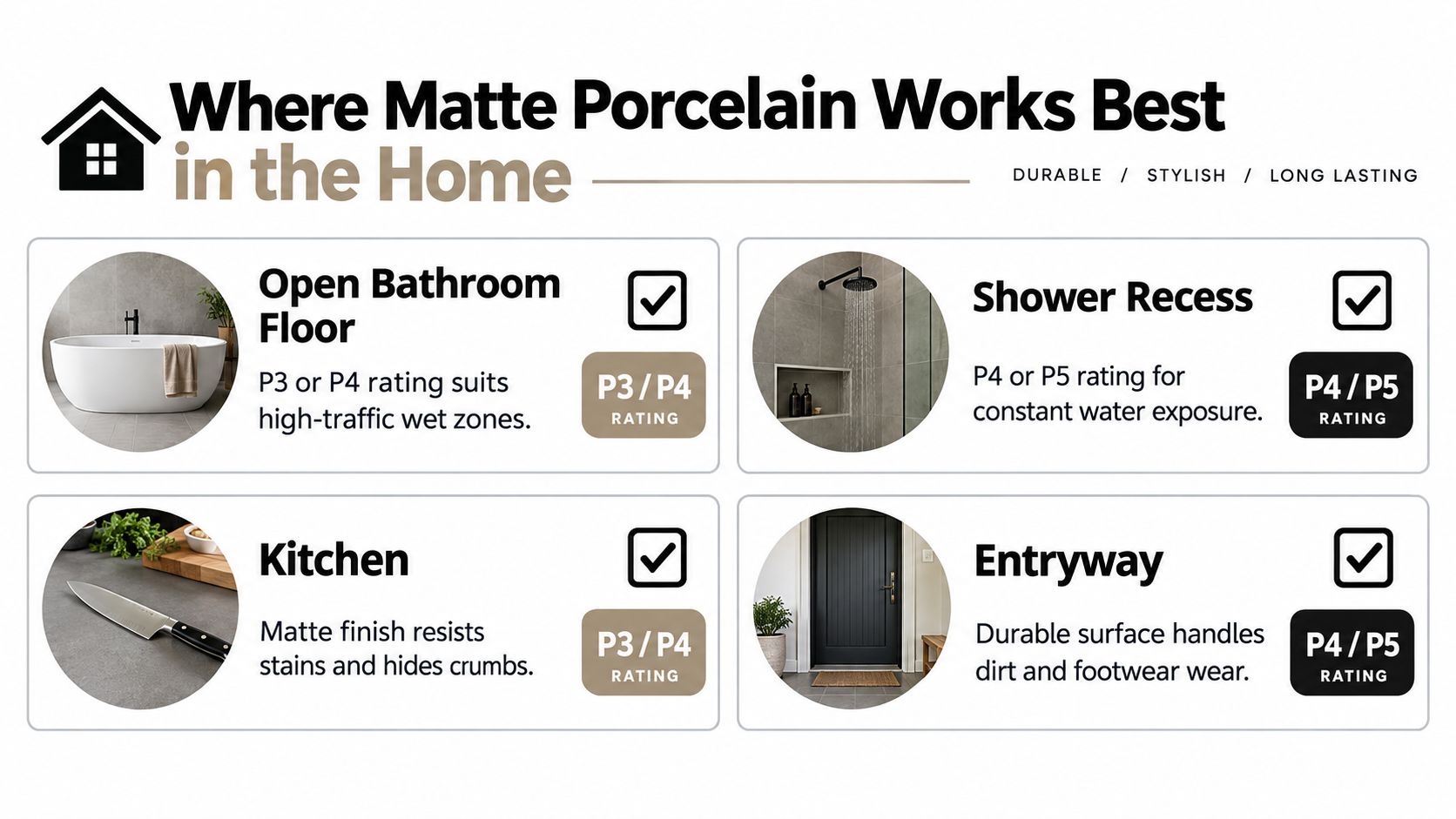
Bathroom and shower
Treat the shower as its own decision, even if you want one tile throughout the room. Ask for the actual P rating for that tile, then check whether its texture and cleaning needs are manageable. A hobless or unenclosed shower needs particular design attention: the NCC requires a waterstop at least 1,500 mm horizontally from the shower rose. Where the shower is unenclosed, the entire wet-area floor must be waterproofed and drained in the same manner as the shower area. The ABCB's unenclosed-shower guidance explains why the wet zone can extend well beyond the immediate shower footprint.
Ensuites follow the same wet-area logic as bathrooms. Don't assume a smaller room needs a different finish; focus on where water travels, the falls to the waste and the rating that suits each zone.
Laundry, balcony and alfresco
A laundry can see splashes and wet-foot traffic, so choose by its expected use and the product's documented result rather than by appearance alone. For balconies and alfresco areas, ramp-test R classifications may be relevant where people wear shoes, but select for the actual exposure and test condition. An R rating isn't a stand-in for a barefoot wet P rating in a shower.
Before ordering, take a sample home and walk on it barefoot with wet feet. Pay attention to the feel, then consider whether you can keep the surface clean without leaving soap or grime in the texture.
That simple check won't replace the test certificate, but it helps you judge comfort and cleanability. The right tile is one you can verify on paper and live with underfoot.
Living With the Floor Day to Day
A textured matte floor can feel secure when clean and still become unpleasant underfoot if it collects soap film, body oils or mineral deposits. Build cleaning into the routine rather than waiting until the tile looks dirty. A surface that hides marks can hide the early signs of residue too.
After showering, rinse away visible product where practical and let the floor dry. In regular cleaning, use a tile-safe cleaner suited to the manufacturer's advice, then rinse well so you don't leave a film in the texture. Avoid waxes or coatings that can fill the surface texture, and check the product guidance before using harsh or acidic cleaners.
Notice changes before they become a problem
Once the floor is clean, try a cautious wet-foot check in a safe position. If the surface feels unexpectedly slick, look for residue and clean it thoroughly before deciding the tile itself is at fault. This isn't a substitute for a formal slip assessment, but it's a useful household check on how the floor feels in use.
Inspect grout and movement-joint sealant as part of ordinary bathroom upkeep. If joints are breaking down, tiles sound hollow or persistent residue remains after routine cleaning, ask a tile-care specialist about deep cleaning or repairs. Don't treat a more aggressive texture as maintenance-free; it may hold soil more readily than a smoother finish.
For homeowners comparing cleaning approaches, this Dublin tile cleaning guide offers general bathroom-care ideas. Follow the tile manufacturer's product-specific advice where it differs, particularly for cleaners and surface treatments.
When a Registered Builder Becomes Essential
In Victoria, Consumer Affairs Victoria says a major domestic building contract is required when the total work is worth more than $10,000, including renovations, extensions and repairs. A builder or tradesperson generally must be registered with the Building and Plumbing Commission for work above that threshold, although individual tiling-only work is among the exemptions. When one person coordinates a combined renovation scope, such as carpentry, plumbing, waterproofing and tiling, registration requirements become relevant. Consumer Affairs Victoria's guidance on builders and tradespeople explains the distinction.
A bathroom renovation can involve several trades even when the homeowner thinks of it as a retile. Verify that the person coordinating the contracted work is registered and authorised for that scope. If a builder isn't properly registered, the homeowner can't obtain domestic building warranty insurance. Where a permit is required, the relevant building surveyor signs off after being satisfied that the work complies with the Building Act 1993 and Building Regulations 2018. The Victorian Building Authority also explains that waterproofing must meet current regulations and that a shower screen isn't mandatory where the entire bathroom has been practically waterproofed. The VBA's wet-area waterproofing fact sheet is useful when discussing scope and inspections.
Take these items to a quote meeting:
- Tile: the product's tested slip rating for the room where it'll be installed.
- Base: the substrate preparation and floor-fall specification.
- Waterproofing: the membrane scope, inspection arrangements and who signs off.
- Builder: the registration status of the person coordinating the combined work.
For help assessing the tiling scope and trade coordination, compare tiling contractors near you. A good renovation quote should make clear how the tile, rating, substrate and registration fit together.
Melbourne Tiling Services P/L provides porcelain tiling, substrate preparation, waterproofing and start-to-finish bathroom and ensuite renovations across Melbourne. For a quote that accounts for the tested tile rating and the wet-area assembly beneath it, visit Melbourne Tiling Services P/L.
Recent Comments