

You're probably looking at tile samples, Pinterest saves, and a bathroom that's overdue for work, while also wondering where the budget blows out and how to avoid a leak six months after handover. That's a normal place to start. Most Melbourne homeowners don't struggle with choosing a colour. They struggle with knowing what sits underneath the tile and whether the whole job is being built properly.
That matters more now because renovation costs have been moving the wrong way for homeowners. Australian Bureau of Statistics housing data for Victoria shows renovation spending rose 12% in 2025 due to inflation in materials like ceramic tiles, which is why clear planning and cost control matter from day one, as noted by Melbourne Tiling Services on renovation budgeting in Victoria.
Floor tiling melbourne projects go well when the finish is treated as the last step, not the first. In a proper bathroom renovation, the tile selection, subfloor preparation, waterproofing, drainage falls, and trade coordination all affect the final result. That's the difference between a floor that still looks right years later and one that starts sounding hollow, holding water, or cracking around movement points.
Table of Contents
- Starting Your Melbourne Tiling Renovation
- Choosing the Right Tile for Your Melbourne Home
- How to Budget for Floor Tiling Costs
- The Renovation Process From a Builder's Perspective
- Avoiding Common and Costly Tiling Disasters
- How to Hire a Reputable Melbourne Tiler or Builder
- Project Timelines and Long-Term Floor Care
Starting Your Melbourne Tiling Renovation
A bathroom floor rarely fails because the tile was unattractive. It fails because the planning was shallow. Homeowners often come in focused on pattern, size, and price per tile, then find out too late that the essential decisions were about substrate condition, shower falls, waterproofing details, and whether the person quoting the work can manage the whole renovation.
As a Registered Builder, the first thing I look at isn't the tile board. It's the room itself. Older Melbourne homes often have movement in the floor, previous water damage, patched plumbing penetrations, or walls that aren't square. If those issues aren't resolved before tiling starts, the finish will always be compromised no matter how expensive the tile is.
Start with the room, not the tile
A sound tiling plan should answer a few basic questions early:
- What is the subfloor made of: Concrete behaves very differently from timber.
- Is this a tile-only job or part of a bathroom renovation: The answer changes sequencing, access, and who carries responsibility.
- Will the drainage work properly: Wet area performance matters more than visual symmetry.
- Who is coordinating trades: Plumber, waterproofer, carpenter, electrician, screen installer, and tiler all affect the floor outcome.
Practical rule: If the quote talks a lot about finishes and very little about preparation, it's incomplete.
Builder thinking changes the result
A tiler can install a floor well. A builder has to think about compliance, sequencing, and risk across the entire room. That matters in bathroom renovations because one rushed trade can undo another. A plumbing change can alter falls. A poor patch can create movement. A missed waterproofing detail can send water behind finished surfaces.
That broader view is what keeps floor tiling melbourne projects from becoming repair jobs later. The best finish starts before a single tile is laid.
Choosing the Right Tile for Your Melbourne Home
Good tile selection is about where the tile is going and how the room will be used. A bathroom floor, laundry, hallway, and open-plan living area don't ask the same things from the material. Some homeowners choose based on showroom appearance alone, then end up with a product that needs more maintenance than expected or highlights every issue in the substrate.

If you're comparing finishes, these tiling materials used in bathroom renovations give a useful starting point. The ultimate test is matching the material to the room.
Porcelain for hard-wearing bathrooms and living areas
Porcelain is usually the safest all-round choice for Melbourne homes. It's dense, durable, and works well in wet areas, especially when you want a clean modern look without the upkeep of natural stone. For bathroom floors, it gives you a reliable surface that handles moisture well and suits both small formats and large-format layouts.
It also gives builders and tilers more flexibility in design without creating maintenance issues for the owner. In family homes, rentals, and busy ensuites, porcelain tends to be the material that causes the fewest long-term complaints.
Ceramic where design matters more than punishment
Ceramic still has a place. It can work well on walls and in lower-stress areas, and many homeowners like it because there's a wide range of colours and finishes. On floors, though, I'm more selective.
If the room takes regular foot traffic, gets wet often, or needs to stand up to daily wear, ceramic usually isn't my first recommendation. It can still perform well in the right application, but it's less forgiving of poor product choice and poor installation.
Marble when you want character and accept maintenance
Marble looks excellent when the design calls for softness, variation, and a more natural finish. It suits high-end bathrooms, entry spaces, and homes where the owners understand what natural stone involves.
That trade-off matters. Marble needs more care than porcelain. It can mark, it can require sealing, and it shows installation errors quickly because the eye reads natural stone differently than it reads a uniform manufactured tile. If the substrate isn't flat and the layout isn't carefully controlled, marble won't hide it.
Marble can look refined for years, but only if the owner accepts that natural stone is not a low-maintenance product.
Kerlite for large-format minimalism
Kerlite and other large-format slim porcelain products create a very different visual effect. Fewer grout lines, broader visual flow, and a more architectural finish. They can work beautifully in bathrooms and open-plan areas, but they demand a flat substrate and careful handling.
What works with standard porcelain doesn't always work with a large-format slab. Minor irregularities underneath become visible quickly. Adhesive selection, handling, coverage, and cutting technique all matter more. Installer experience becomes particularly evident.
A practical way to choose
When clients are torn between options, I narrow it down like this:
| Tile type | Best suited to | Main advantage | Main trade-off |
|---|---|---|---|
| Porcelain | Bathrooms, ensuites, living areas, hallways | Durable and low maintenance | Can feel plain if the selection is too safe |
| Ceramic | Selected floors, many wall applications | Broad style range | Less ideal for harder-wearing floor areas |
| Marble | Premium bathrooms and statement spaces | Natural variation and character | Higher maintenance and less forgiving |
| Kerlite | Large-format designer spaces | Minimal grout lines and sleek finish | Installation demands are much higher |
If you want one material that balances appearance, performance, and practicality, porcelain is often the steady choice. If you want a statement surface, marble or Kerlite can deliver it, but only when the preparation and installation standard match the material.
How to Budget for Floor Tiling Costs
A bathroom floor quote often looks reasonable until the old tiles come up. Then the actual costs appear. In Melbourne homes, especially older timber-frame houses, the floor can need straightening, stiffening, new sheeting, or a full rebuild of the wet area base before any tiling starts.
That is why I price bathroom floors as part of the renovation system, not as an isolated tiling job. Tile selection matters, but the bigger cost swings usually come from what is under the tile and how much coordination the room needs across demolition, plumbing, waterproofing, carpentry, and tiling.
Labour rates are only one part of the number
Recent Australian market guides published in late 2025 put tiler labour for standard floor tiling in a broad range, with natural stone and more complex layouts sitting above standard porcelain rates, as noted in this Australian tiler rates per square metre guide. Use that as a rough check only.
Small bathrooms rarely price neatly by square metre. A 10m² bathroom can involve dozens of cuts, set-outs around wastes and corners, waterproof detailing, trim work at doorways, and tighter tolerances than a much larger open floor. Builder-led pricing also has to allow for what happens before the tiler starts, because if the substrate is moving or the falls are wrong, the floor finish is already at risk.
What a proper quote should cover
A floor tiling allowance should break out the items that commonly get missed or underquoted:
- Demolition and strip-out: Removal of tiles, screed, bedding, sheet underlay, and any failed substrate material.
- Waste removal: Skip bin, tip fees, and labour to remove debris, especially where access is tight.
- Subfloor correction: Levelling, patching, new underlay, cement sheet, screed, or structural rectification on timber floors.
- Waterproofing: Membrane application, bond breakers, corners, penetrations, and curing time.
- Setting materials: Adhesives, grout, primers, trims, movement joints, silicone, and stone sealers where needed.
- Detailing: Floor waste cuts, threshold transitions, shower screen line-up, and final finish quality.
For wider project planning, this bathroom renovation cost guide for Melbourne homeowners helps place floor tiling inside the total bathroom budget.
Sample Budget Breakdown for a Standard Melbourne Bathroom (10m² Floor)
| Expense Item | Typical Cost Range (AUD) |
|---|---|
| Demolition and waste removal | $600 to $1,500 |
| Subfloor preparation and levelling | $800 to $2,500 |
| Waterproofing | $700 to $1,500 |
| Tiler labour for porcelain | $800 to $1,600 |
| Tiler labour for marble or other natural stone | $1,200 to $2,400 |
| Adhesives, grout, sealants, trims | $350 to $900 |
| Final detailing and clean | $150 to $400 |
These figures are examples, not fixed rates. Access, floor condition, tile size, pattern, drainage setup, and whether the bathroom sits on concrete or timber all shift the final number.
The biggest budgeting mistake is comparing quotes that do not include the same scope. A cheap price can mean no substrate repair, minimal waterproofing allowance, weak material specs, or no provision for correcting falls. That saving disappears fast if the bathroom floor has to be redone after handover.
The expensive part is not always the tile. In many bathroom renovations, the expensive part is fixing what was hidden underneath.
The Renovation Process From a Builder's Perspective
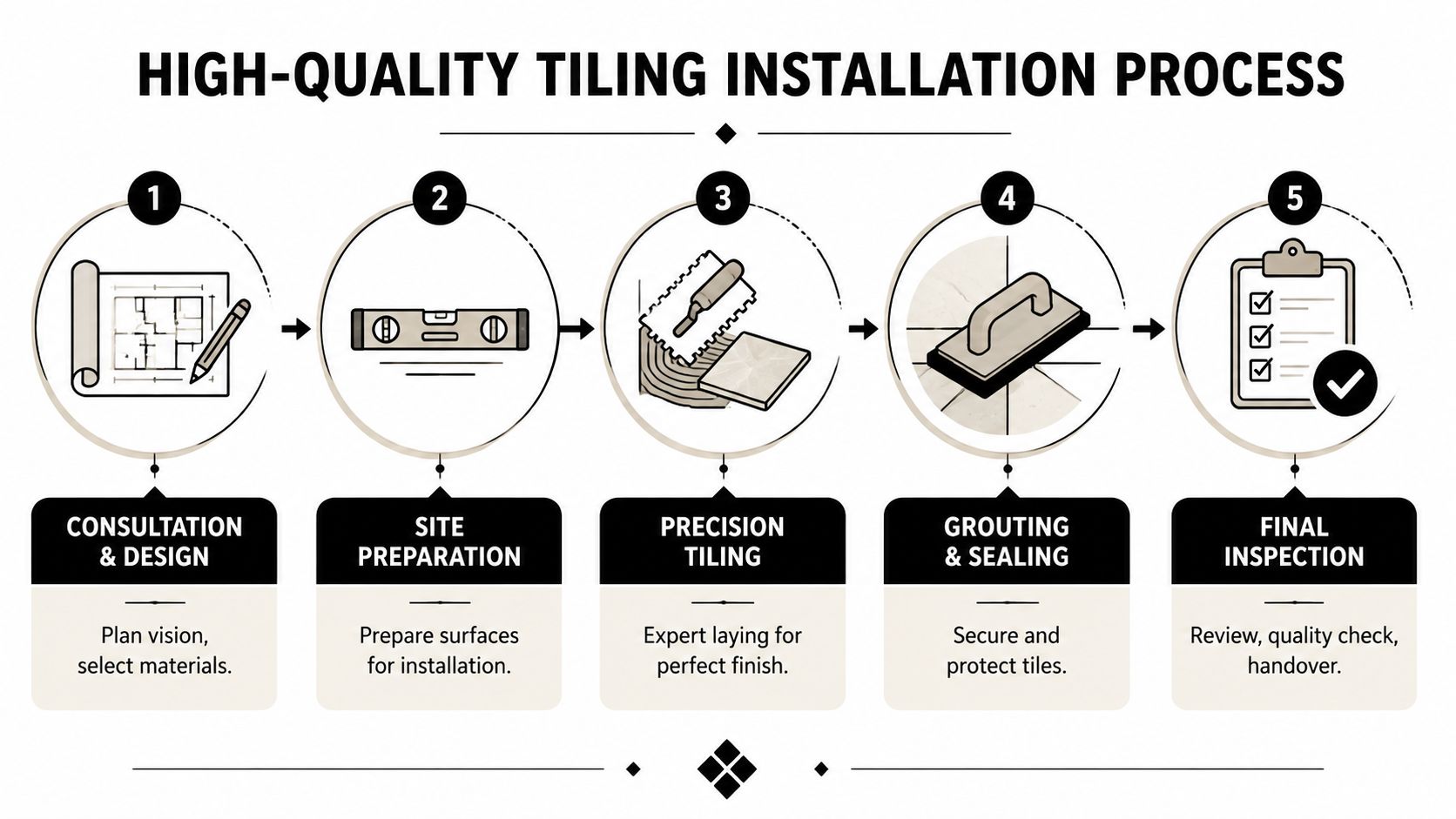
A floor tiling job inside a bathroom renovation needs the right order. Good trades can still produce a poor result if the sequence is wrong. Builder-led projects usually feel more controlled for this reason, because someone is responsible for the room as a whole, not just one part of it.
The sequence that prevents failure
The job usually starts with demolition and assessment. Once the existing floor is exposed, the substrate has to be checked for movement, damage, moisture issues, and level. On concrete, that often means grinding or patching. On timber, it may involve structural correction before any sheet underlay goes down.
Then comes forming the floor properly. In wet areas, this stage is essential because Australian Standard AS 3958.1 mandates a minimum floor fall of 1:80 in wet areas to ensure effective drainage, as outlined in this explanation of Australian tiling standards. If the floor doesn't drain, water sits. Once water sits, grout, tile bond, and adjacent finishes all start dealing with a problem they shouldn't have had.
After falls are established, waterproofing is applied in line with the room layout and penetrations. This stage needs clean surfaces, proper detailing, and curing time. Rushing straight from one step to the next is one of the most common reasons bathroom floors fail.
Why each layer matters
Each stage solves a different problem:
- Subfloor correction deals with movement and unevenness.
- Screeding or levelling establishes the geometry of the finished floor.
- Waterproofing protects the structure beneath the tile.
- Tiling and bedding create the wearing surface.
- Grouting, caulking, and final sealing where required finish the system.
When builders coordinate the room, they also coordinate the handover points between trades. The plumber can't leave penetrations messy. The carpenter can't leave a springy section under a premium tile. The waterproofer can't apply over a dirty or unstable base. Those details are where good bathroom renovations separate themselves from average ones.
The tile is the visible surface. The renovation quality sits underneath it.
Why trade coordination matters
This is also where a registered builder adds value over a tiling-only approach. In a bathroom renovation, the floor ties into shower screens, plumbing set-outs, cabinetry, door clearances, and sometimes underfloor heating or balcony thresholds. Those elements need to be coordinated before the tile goes down, not improvised after.
One example is Melbourne Tiling Services P/L, which handles bathroom renovations, waterproofing, screeding, self-levelling, and tile installation under a registered builder model. That type of setup can reduce confusion on site because one party is managing sequencing and accountability across the room.
Avoiding Common and Costly Tiling Disasters
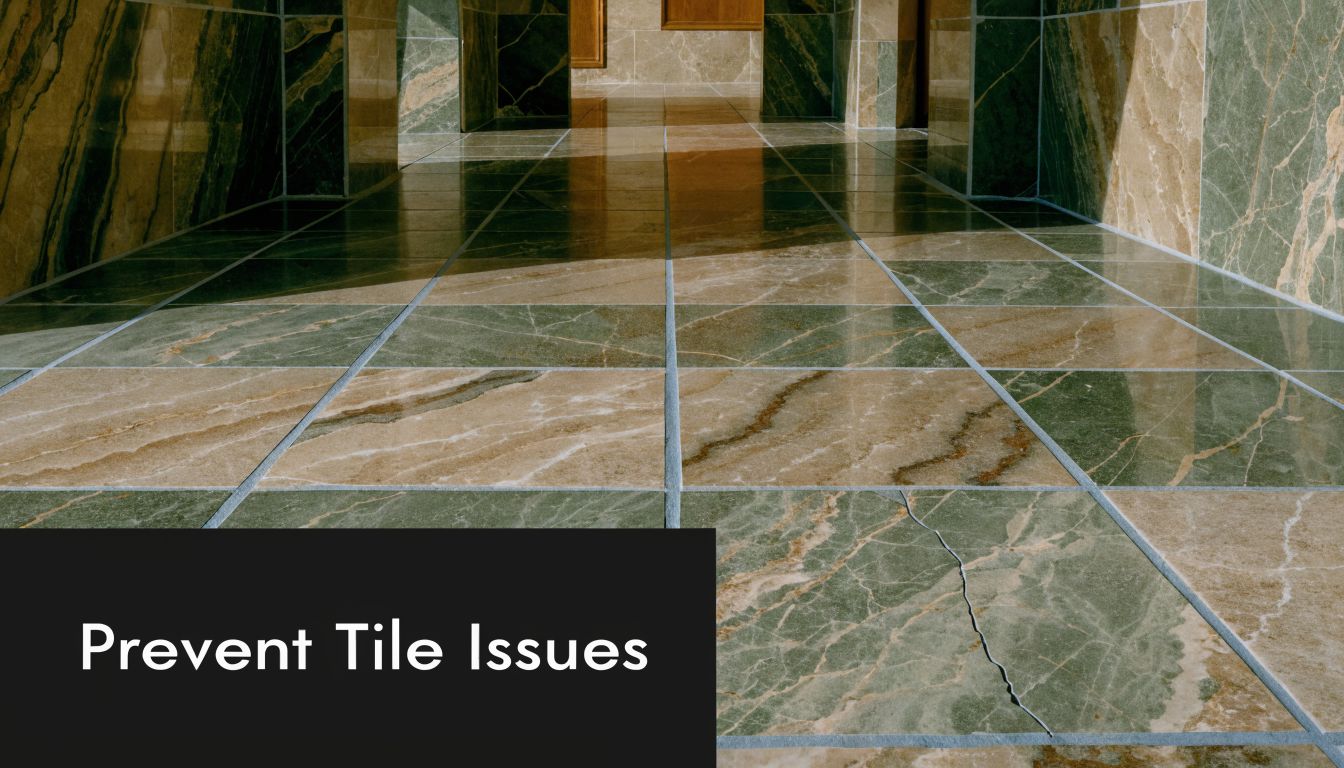
Most floor failures don't look dramatic on day one. They start small. A tile sounds hollow. Water sits near the shower entry. A hairline crack appears at a doorway. Then the owner starts chasing repairs in a finished bathroom.
Cracked and drummy tiles on timber floors
This is common in older Melbourne homes. The bathroom might look solid from above, but the timber subfloor underneath still moves. Tile and grout don't like movement. They want a stable base.
That's why Australian Standards require a fibre-cement underlay on timber floors and a maximum deflection of 1/360 of the span to prevent tile cracking from substrate movement, according to the Australian Tile Council tiling facts guide. If that requirement is ignored, the floor can flex under traffic and the finish starts to fail.
The fix is straightforward in principle, even if it isn't cheap. Stabilise the substrate, install the right underlay, fasten it correctly, and only then prepare for tiling. Skipping that process to save time is exactly how drummy floors and cracked grout lines show up.
Leaks that start below the tile
Homeowners often blame the tile when a shower leaks. Usually the tile isn't the main problem. The issue is below it. Failed waterproofing junctions, poor detailing at penetrations, and rushed floor preparation are much more common causes.
If you're reviewing methods before work starts, look at how bathroom waterproofing systems are applied in renovation work. The floor and wall junctions, waste locations, and transitions matter far more than the tile pattern.
A quick visual explanation can help if you're trying to spot the signs of poor practice on site.
Three red flags during installation
- Tiles laid over an obviously uneven base: The installer is asking the adhesive to fix a substrate problem.
- No clear discussion of movement and transitions: Floors need to cope with real building movement.
- Wet area work pushed through too fast: Curing time matters. A rushed bathroom often becomes a repair job.
If the person doing the work can't explain what sits under the tile, they probably shouldn't be laying it.
How to Hire a Reputable Melbourne Tiler or Builder
Melbourne gives homeowners plenty of choice, but choice can make vetting harder. Australia's tiling services industry has over 20,000 businesses, which makes it a fragmented market where reputation, licensing, and reliable process matter, based on IBISWorld's analysis of Australia's tiling and carpeting services industry.
That size is one reason low quotes and polished sales talk don't tell you much. You need to know who is legally responsible for the work, who is coordinating the other trades, and whether the contractor understands bathroom renovations as a system rather than a tile-laying task.

What to check before you sign
A reputable contractor should be comfortable being checked. If they get evasive about registration, insurance, or process, that's useful information.
Use a simple shortlist:
- Verify registration and licensing: For bathroom renovations, check whether you're dealing with a properly registered builder where required.
- Ask who manages the full scope: A solo tiler may do good work, but bathroom renovations involve more than tiling.
- Review wet area experience: Bathrooms, balconies, and leak rectification require a stronger process than a dry internal floor.
- Look at previous work carefully: Focus on drainage, detailing, finish consistency, and edge treatment, not just styling.
- Read the quote line by line: If preparation is vague, ask for detail in writing.
Questions worth asking on site
Don't ask generic questions like “Do you do quality work?” Ask questions that force a technical answer.
- How will you assess the existing subfloor before tiling starts
- How are floor falls formed in the shower and main bathroom area
- Who handles waterproofing and how is that coordinated with the tiling
- Have you installed the exact material I've selected before
- Who is responsible if another trade delays or affects the floor finish
- What happens if you uncover substrate damage after demolition
The main difference between hiring a tiler and engaging a registered builder is accountability. A tiler is responsible for tiling work. A registered builder on a bathroom renovation is responsible for how the whole project is organised, sequenced, and delivered. If your project involves plumbing changes, waterproofing, structural correction, or multiple trades, that difference matters.
Project Timelines and Long-Term Floor Care
A realistic bathroom floor timeline
A standard bathroom floor tiling job usually moves through demolition, substrate preparation, waterproofing, tiling, grouting, and final curing. The exact timing depends on access, substrate condition, product choice, and whether the floor is part of a larger bathroom renovation. The mistake homeowners make is assuming tiling starts the moment the old floor comes up.
The slow parts are often the important parts. Preparation has to be done properly. Waterproofing needs time. Adhesives and grout need to set before the room is put back into service. If the schedule sounds too compressed, ask what has been shortened.
How to keep the floor looking right
Long-term care is simple when the installation is sound.
- Use pH-neutral cleaners: Harsh products can damage grout, sealers, and some stone finishes.
- Keep sealant lines in good condition: Perimeter and transition joints should be inspected, not ignored.
- Don't drag heavy items across the floor: Chips usually come from impact, not normal foot traffic.
- Clean standing water promptly: Especially near screens, doorways, and edges.
A well-built tiled floor shouldn't need constant attention. It should just perform.
If you're planning floor tiling melbourne work as part of a bathroom or ensuite renovation, Melbourne Tiling Services P/L can help with builder-led advice on tile selection, budgeting, waterproofing, and full project coordination across Melbourne and greater Victoria.
Write a Comment