
Kitchen Tiling Melbourne: Your 2026 Ultimate Guide

You're probably standing in your kitchen right now looking at tired splashback tiles, chipped grout, dated colours, or a floor that never quite feels clean. The cabinets might still be serviceable, or you may be planning a full renovation and trying to work out where tiling fits into the bigger job.

That's where most Melbourne homeowners hit the same problem. They start by choosing a tile they like, then realise the important considerations are about movement, moisture, substrate condition, trade coordination, and who's responsible if something fails.

Good kitchen tiling in Melbourne isn't just about the surface. It's a system made up of the substrate, adhesive, grout, sealant, movement joints, tile selection, and the way the work is sequenced with plumbing, cabinetry, electrical, and sometimes bathroom renovations happening elsewhere in the home at the same time. From a registered builder's point of view, the result is only as good as what sits underneath.

Table of Contents

Your Dream Kitchen Starts with a Solid Plan

You pick a tile you love, get a quote, and expect the job to be straightforward. Then the old splashback comes off, the wall is out, the floor falls away near the pantry, and the neat price on page one no longer matches the work required on site. This is a common problem for Melbourne homeowners, especially in older homes where the visible finish hides the true condition underneath.

Good kitchen tiling starts with scope. Before anyone talks about grout colour or tile pattern, the job needs clear boundaries. Is the work limited to a splashback, or does it include the floor as well? Are the cabinets staying. Will plumbing or power points move. Is the kitchen being renovated on its own, or as part of a wider project where trade sequencing affects access, timing, and cost?

Those decisions change the method, the program, and the risk.

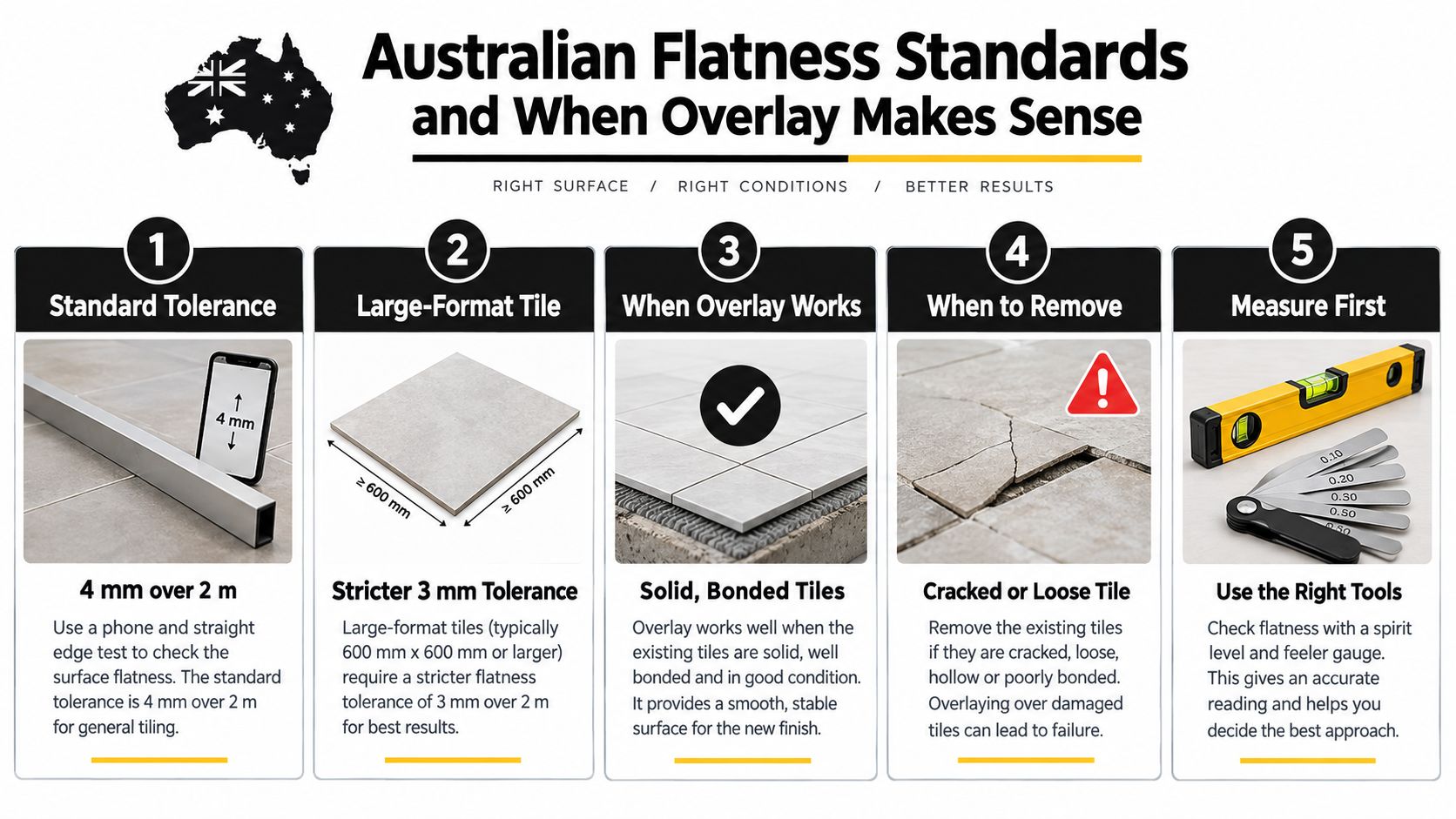
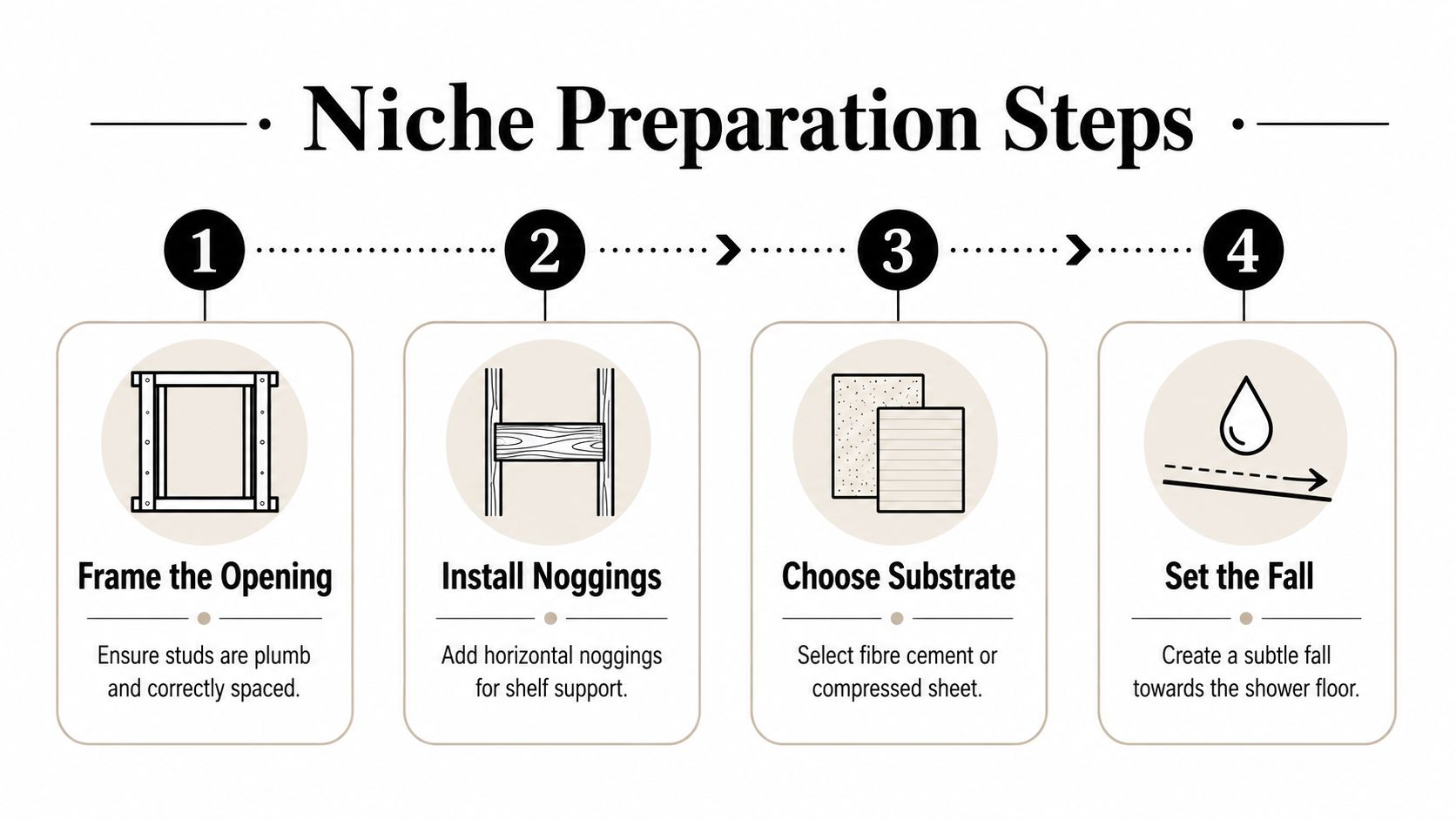
In Melbourne, planning matters because kitchens sit at the intersection of finishes and construction. A tiler may be the trade on site, but the result depends on what sits behind the tile, who prepares it, and whether the layout has been resolved before materials are ordered. I regularly see avoidable problems caused by late decisions on appliance sizes, cabinet set-out, and tile module. Large tiles are a good example. They can look clean and modern, but they also demand flatter surfaces, tighter setting-out, and sharper cutting around windows, rangehoods, and power points. That is why many owners benefit from reviewing the practical implications of large format kitchen tiles in Melbourne before locking in a product.

Start with function, not colour

A kitchen tile has to suit the way the room is used, cleaned, and maintained over time.

  • Cooking-heavy households: Usually need finishes that release grease easily and do not leave every splash visible.
  • Families with kids or pets: Often get a better result from hard-wearing tiles and grout colours that cope with traffic and daily mess.
  • Rental properties: Tend to suit practical materials that are easy to clean and easy to repair.
  • Higher-spec renovations: Can support more specialised products, but only when the owner is clear about sealing, cleaning, and long-term upkeep.

Practical rule: If the discussion is only about tile colour and price, key parts of the job are still missing. Substrate condition, movement, moisture exposure, edge treatment, and set-out all need to be addressed before work starts.

A solid plan also identifies who is responsible for each part of the build. Demolition, substrate repairs, waterproofing where required, tiling, caulking, and final fit-off need to line up properly. If responsibility is vague, defects and delays usually follow. The kitchen may still look good on handover day, but appearance alone is a poor measure of quality.

The better outcome comes from clear documentation, realistic allowances, and a build sequence that reflects the actual site conditions. That is how a tiled kitchen holds its line, stays serviceable, and remains compliant long after the renovation is finished.

Decoding Tile Types for Melbourne Kitchens

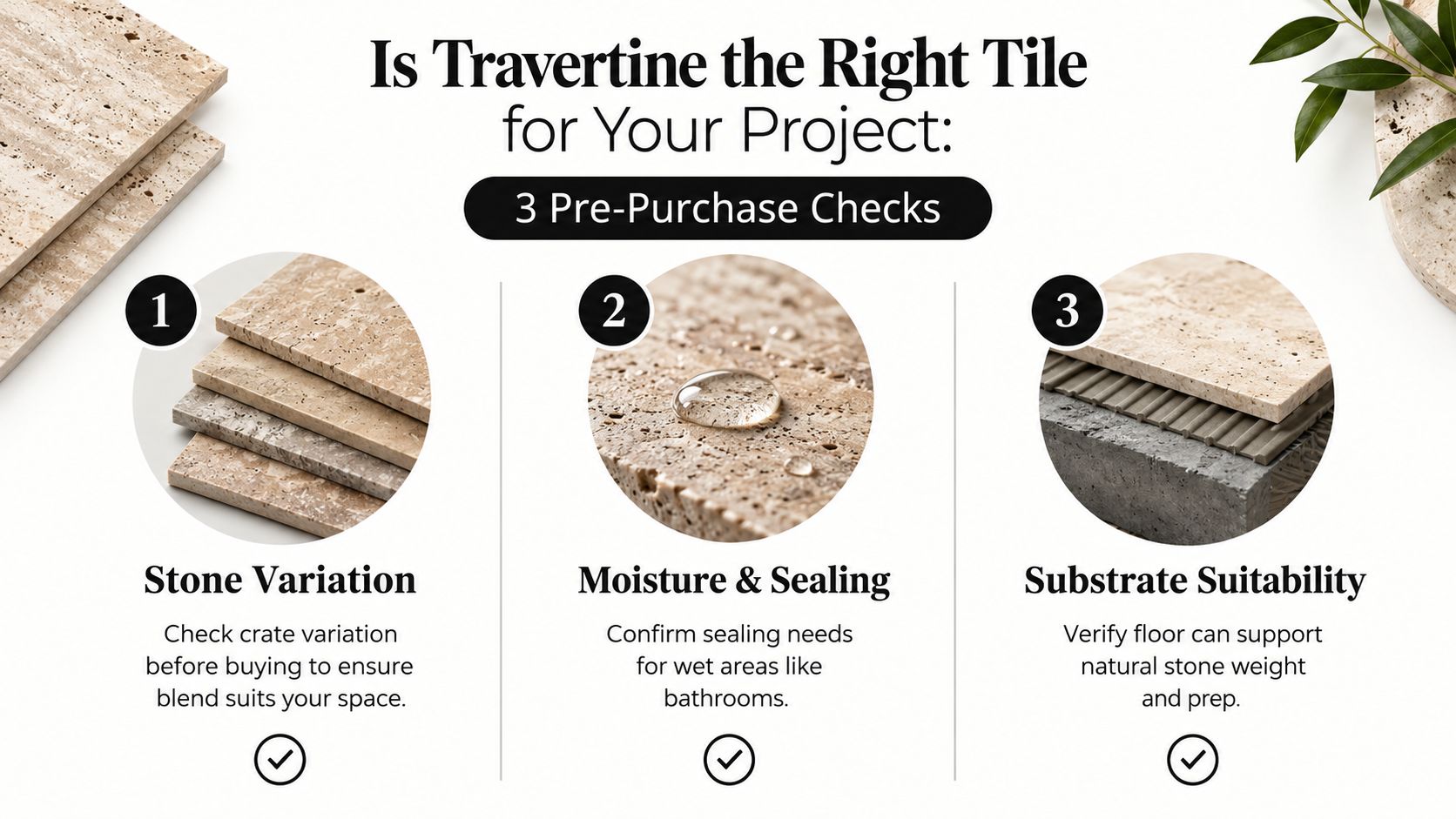
Most kitchen tile mistakes happen before the first tile is laid. The wrong material gets picked for the wrong reason. A polished surface is chosen for ease of cleaning without considering grip. A porous natural stone goes in behind a cooktop with no real thought about maintenance. A very large tile is selected for a wall that isn't flat enough to carry it cleanly.

Expert guidance puts the decision in the right order. Porcelain's strength and natural stone's need for sealing are useful starting points, but the better question is how finish, slip resistance, and grout strategy match the way your household uses the kitchen in Victoria (tile performance guidance for Australian conditions).

A comparison guide for different kitchen tile types including porcelain, ceramic, natural stone, and glass tiles.

What works well in a busy kitchen

Porcelain is the safe performer for many Melbourne kitchens. It's a strong choice for floors and splashbacks where the owner wants durability and lower day-to-day fuss. It also works well in homes where people want a stone look without the same maintenance burden.

Ceramic often suits splashbacks and lower-cost wall applications. It can be a sensible option where the wall is the visual feature and the wear demands are lower than the floor. It's less forgiving if someone expects premium impact resistance or wants a very hard-wearing floor finish.

Natural stone can look exceptional, but it's for owners who understand what they're buying. Stone can stain, can need sealing, and can develop visible wear that some people love and others regret. In a kitchen, that's not a styling issue. It's a maintenance decision.

Glass and decorative feature tiles are usually best kept to controlled applications such as splashback bands or feature walls. They can be effective, but they need a careful setting-out plan and the substrate has to be right because reflective finishes show every irregularity.

A practical comparison

Tile type Where it usually suits Main advantage Main trade-off
Porcelain Floors, splashbacks, family kitchens Strong performer with good durability Can cost more upfront and needs proper cutting tools
Ceramic Splashbacks, lower-wear wall areas Flexible design choice and often easier on budget Not always the first choice for heavy-duty floor use
Natural stone Premium renovations, feature areas Unique natural appearance Needs more maintenance and sealing awareness
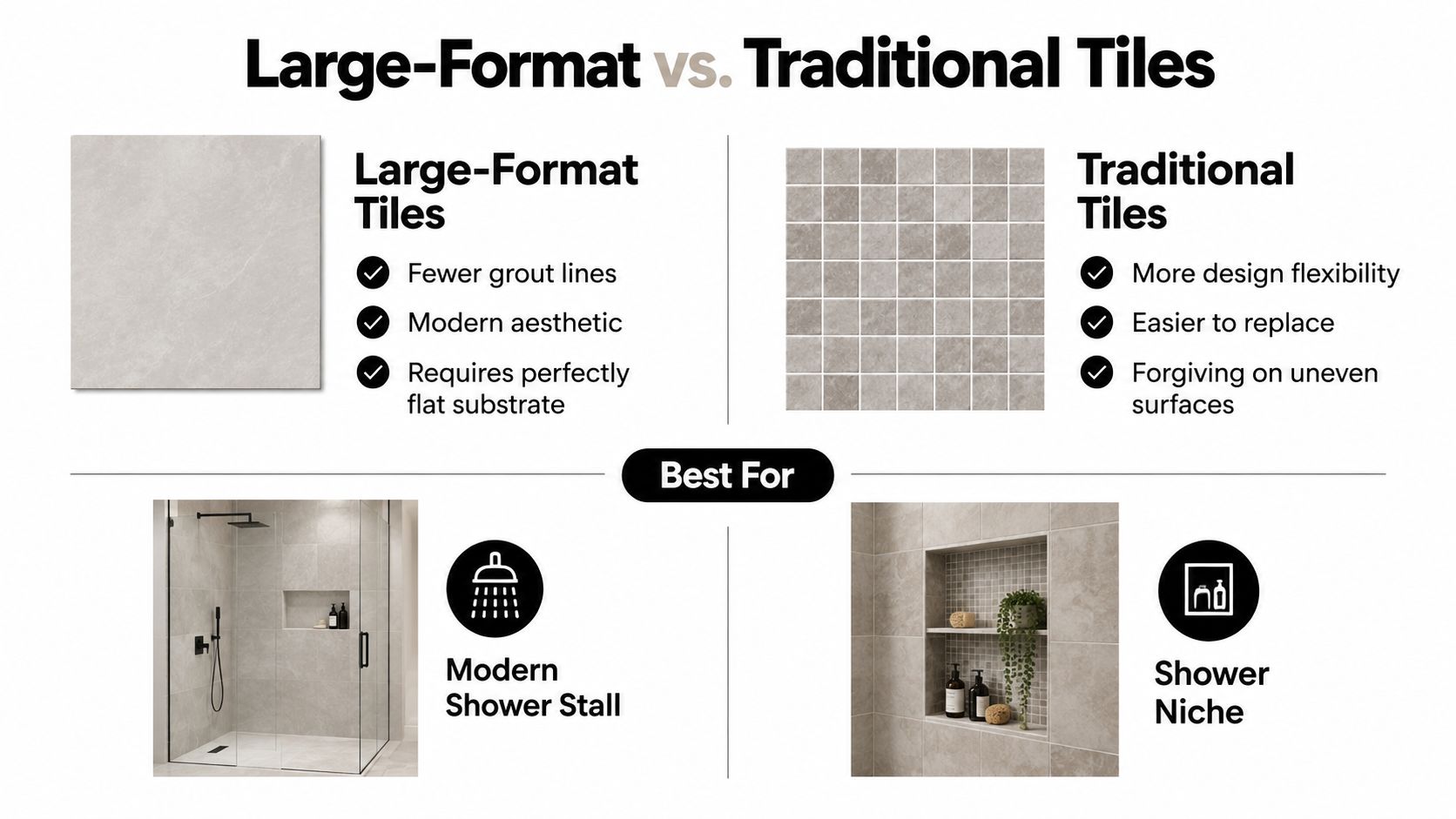
Large-format tiles Contemporary kitchens, minimal-joint look Fewer grout lines and a cleaner visual finish Requires flatter substrates and more precise installation

Large-format products deserve a separate mention. They look sharp, reduce grout lines, and can make a smaller kitchen feel calmer. They also expose poor prep instantly. If the wall bows or the floor has variation, large-format installation becomes more technical and less forgiving. If you're considering that route, it helps to understand the handling and setting demands involved with large-format tiles in Melbourne.

A tile that looks impressive in a sample board can be the wrong tile for a household that wants low maintenance, quick cleaning, and minimal visible wear.

For most kitchen tiling Melbourne projects, the right choice is the one that matches how the room will be lived in. That's usually a more useful filter than trend, resale talk, or what looked good on social media.

The Unseen Foundation Substrate and Waterproofing

A car with a beautiful paint job and a twisted chassis is still a bad car. Kitchen tiling works the same way. Homeowners see the finish, but the durability sits in the base.

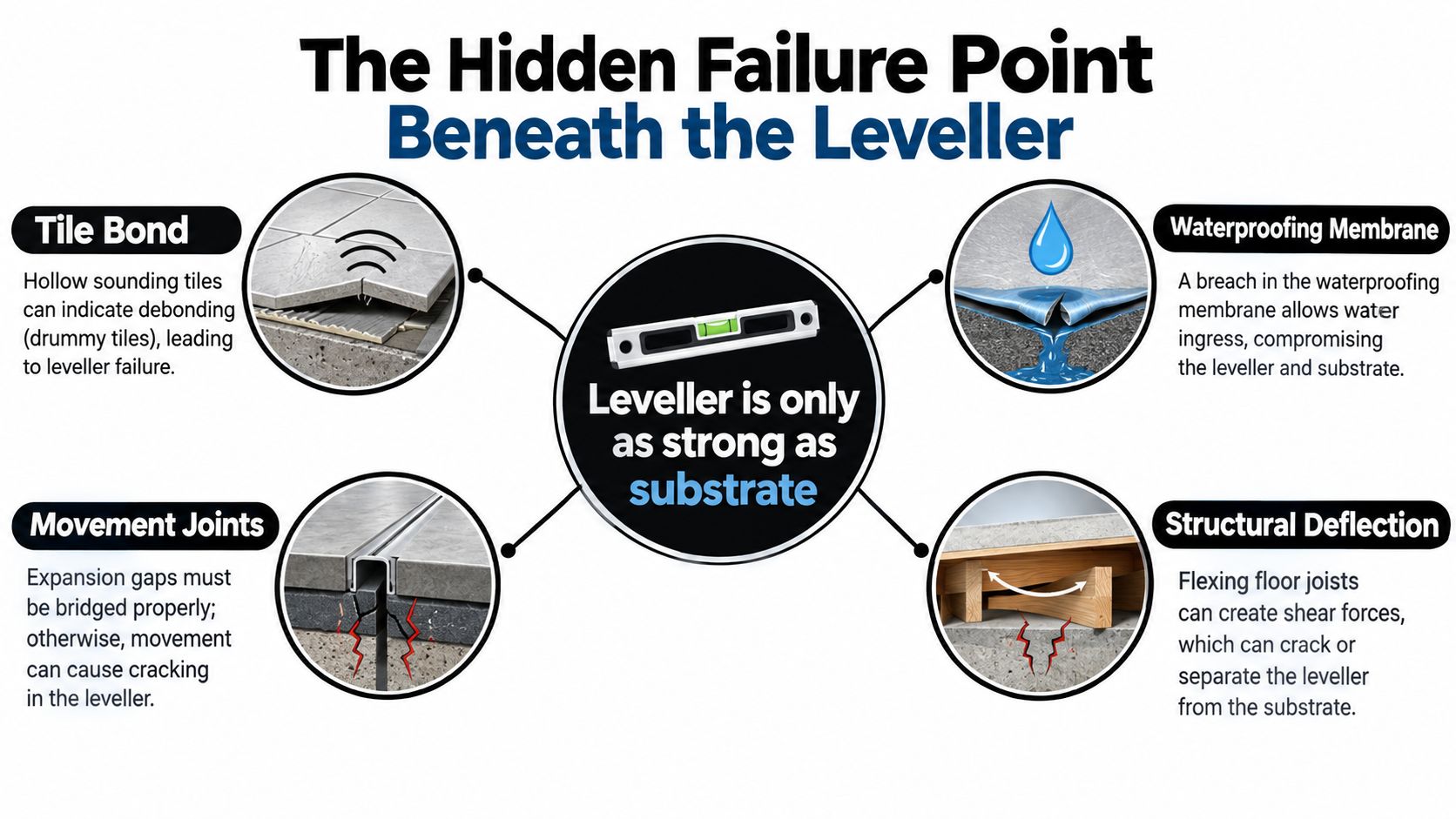
The critical issue in kitchen tiling is often moisture exposure near sinks and splashbacks, not because the whole kitchen is treated like a shower, but because intermittent water, steam, cleaning products, and movement can break down a poor system over time. Guidance on Australian tile systems for wet-area-adjacent surfaces stresses using a compatible package of substrate, adhesive, grout, and sealant, along with a properly prepared level base, polymer-modified adhesive, and movement joints at perimeters and changes of plane to reduce cracking and debonding risk in Melbourne's climate (wet-area-adjacent tile system guidance).

A professional installer lays down a blue waterproof membrane on a tiled surface during a home renovation.

Why the base matters more than the tile

Substrate preparation covers a lot of ground:

  • Levelling: Correcting uneven floors or walls so the finished tile sits properly.
  • Repairs: Replacing damaged sheeting, patching weak areas, or dealing with drummy old finishes.
  • Screeding or self-levelling: Bringing a floor into plane before tiling starts.
  • Moisture management: Detailing around sinks, junctions, and penetrations so water doesn't get where it shouldn't.

If any of those steps are skipped, the tile installer ends up trying to correct structural or substrate problems with adhesive. That doesn't work well. Adhesive is there to bond the tile, not to compensate for a bad base.

Where kitchens commonly fail

In kitchen tiling Melbourne work, failures often start in predictable locations:

  • Behind sinks: Water tracks into junctions, silicone fails, or the wall system was never detailed properly.
  • At corners and changes of plane: Rigid installations crack because movement wasn't allowed for.
  • Across uneven floors: Lippage appears, tiles sound hollow, or the finish looks untidy.
  • At interfaces with cabinetry and appliances: Poor planning leaves awkward cuts, weak edges, or trapped movement.

A lot of owners only discover these issues when they renovate an older home or apartment. That's why clear documentation matters. If the scope includes membrane work, levelling, or other moisture-control tasks, the quote should say so clearly. For a more project-specific view of that work, it's worth reviewing waterproofing in Melbourne.

When the foundation is done properly, the finished tiling looks cleaner, lasts longer, and gives you a much better chance of avoiding call-backs and repair work later.

Budgeting for Your Melbourne Kitchen Tiling Project

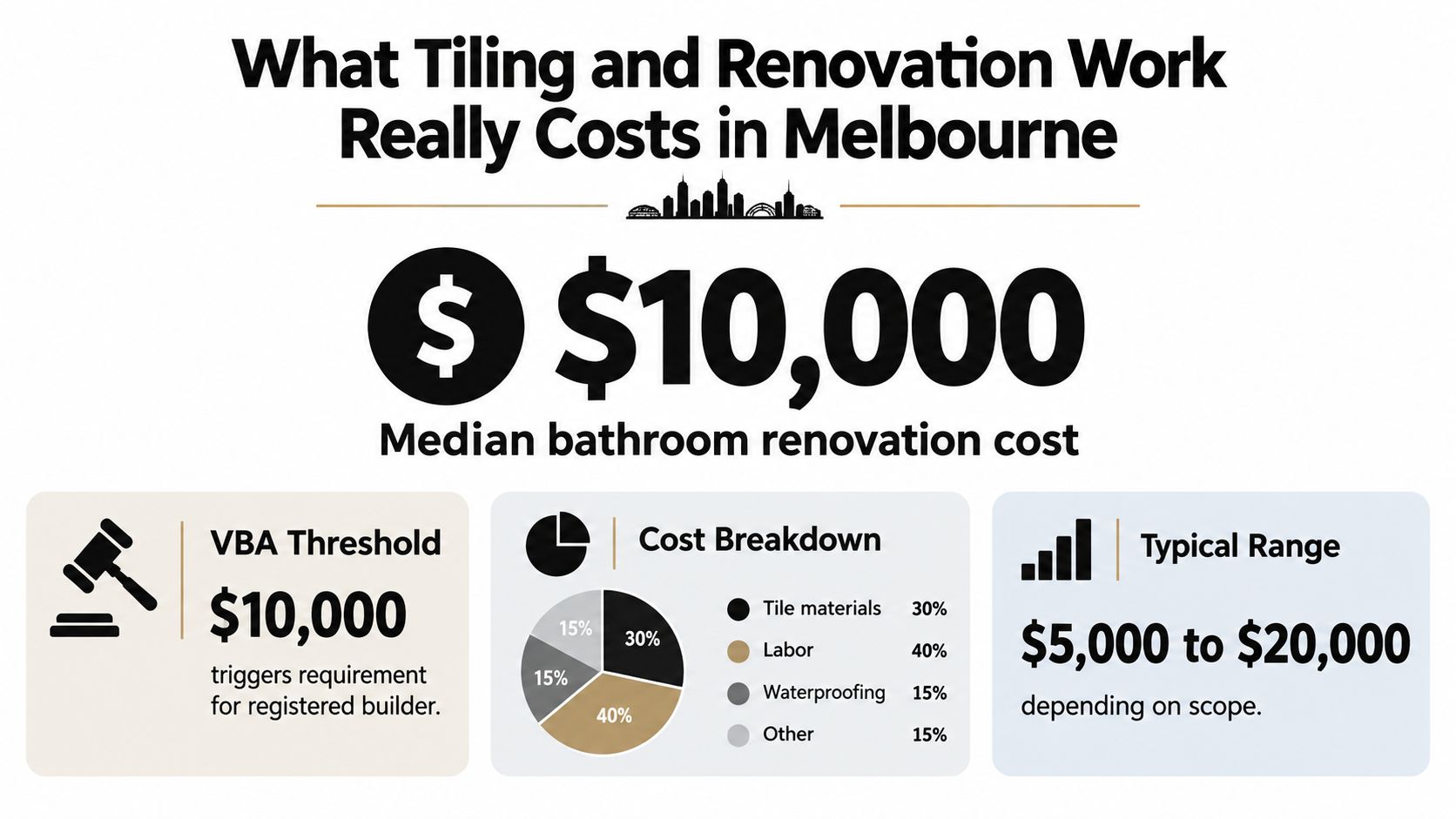
The cheapest tile quote is often the most incomplete one. A homeowner sees a price and assumes it covers the full job, but kitchen tiling costs are built from several moving parts. Some are visible, such as tile supply and labour. Others only become clear once demolition starts.

That matters in a market affected by broader construction and renovation conditions. IBISWorld estimates the Australian Tiling & Carpeting Services market at A$8.0 billion in 2026, down 4.8% from A$8.4 billion in 2025, which is a reminder that labour and material pricing don't move in isolation from housing conditions and the wider economy (IBISWorld tiling and carpeting services market size).

An infographic detailing six essential budget considerations for a kitchen tiling project in Melbourne, Australia.

What you are actually paying for

A proper kitchen tiling budget usually includes these components:

  • Tile supply: The material itself, plus trims, feature pieces, and any wastage allowance.
  • Installation labour: Setting out, cutting, laying, grouting, detailing, and clean-up.
  • Demolition and removal: Taking up old tiles, disposing of rubble, and protecting adjacent finishes.
  • Substrate preparation: Levelling, patching, screeding, sheet replacement, or repairs.
  • Moisture-related detailing: Sealants, membranes where required, and junction treatment.
  • Consumables: Adhesives, grout, primers, trims, and sealants.

The hidden cost is usually substrate correction. A kitchen wall that looks straight when painted can be far from straight once a large-format tile goes on it. An older floor can need more rectification than the owner expected.

How to think about budget levels

Rather than chasing a single price point, it's smarter to think in tiers.

Budget level What it often includes What can change the cost
Entry-level Standard ceramic or basic porcelain, simpler layout, limited prep Existing surfaces may still need more correction than expected
Mid-range Better-quality porcelain, cleaner trim details, more layout control Feature walls, niche cuts, and older substrates add labour
Premium Large-format tile, specialty finishes, more involved prep and detailing Precision installation, product handling, and edge detailing take longer

Budget warning: A quote that doesn't spell out demolition, preparation, tile type, trims, grout, and moisture-related work leaves too much open to dispute.

For homeowners planning both a kitchen and bathroom renovation, budgeting should be done across the whole trade sequence, not room by room in isolation. The tiling component often depends on plumbing rough-in, carpentry timing, and whether surfaces are being rebuilt before the finish trades arrive.

Choosing Your Tiler Why a Registered Builder Is Key

Kitchen tiling can look like a standalone trade, but many jobs aren't standalone at all. Once you move plumbing, alter cabinetry, remove bulkheads, touch electrical, rebuild walls, or combine the project with bathroom renovations, you're no longer just hiring someone to stick tiles on a surface. You're managing a construction process.

That's where registered builder oversight changes the job. A lone tiler may be excellent at installation, but if the project also needs demolition coordination, substrate repair, waterproofing interfaces, plumber and electrician sequencing, or compliance decisions, someone has to own the bigger picture.

Why builder oversight changes the outcome

Independent Australian consumer guidance urges homeowners to ask for a detailed written quote, check that the tiler has experience with the same tile type, and get clarity around practical issues such as subfloor levelling and waterproofing. That advice is particularly relevant in older Melbourne homes, where renovation risk is often hidden behind existing finishes (questions to ask when choosing a tiler).

A registered builder brings value in a few specific ways:

  • Scope control: The quote can identify what is included, what is excluded, and what happens if hidden defects are uncovered.
  • Trade coordination: Plumbers, electricians, carpenters, waterproofers, and tilers can be sequenced so one trade doesn't undo another.
  • Compliance focus: Wet-area-adjacent details, structural interfaces, and product compatibility are less likely to be treated as afterthoughts.
  • Accountability: One party manages the process instead of multiple contractors shifting responsibility.

For homeowners comparing options, a registered builder also makes sense when the tiling is only one part of the renovation. Melbourne Tiling Services P/L is one example of a contractor that handles tiling alongside broader renovation coordination as Registered Unlimited Builders, which is relevant if the kitchen works connect to waterproofing, structural preparation, or bathroom renovation staging.

Questions worth asking before you sign

Don't ask only for a price. Ask how the contractor thinks.

  • What condition do you expect the substrate to be in, and how will you deal with it if it isn't suitable?
  • Have you installed this exact tile type before, especially if it's large-format, natural stone, or a thin panel product?
  • Who is responsible for demolition, waste, and protection of adjacent areas?
  • How are movement joints, trims, and changes of plane being detailed?
  • What does the written scope say about exclusions and latent conditions?
  • If this is part of a kitchen and bathroom renovation, who is coordinating the trades?

A practical starting point is to compare contractors who specialise in this category of work, such as those offering tiling contractors near me in Melbourne, then narrow the list by documentation quality, project understanding, and how clearly they explain the substrate and compliance side of the job.

Good tilers talk about layout. Good builders talk about layout, substrate, sequencing, responsibility, and what happens when the walls aren't as straight as everyone hoped.

That difference usually shows up in the final result.

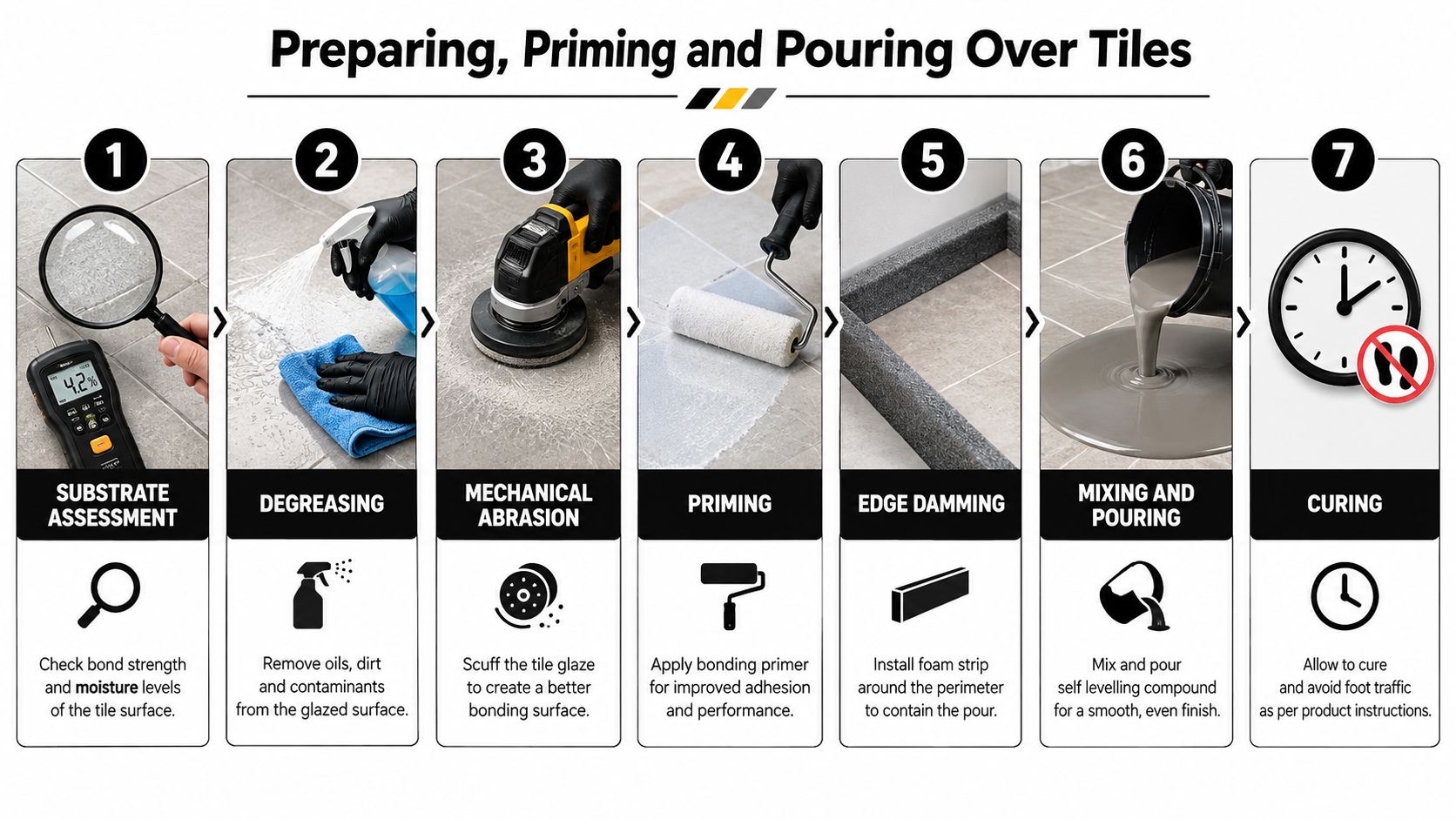
The Kitchen Tiling Process Step by Step

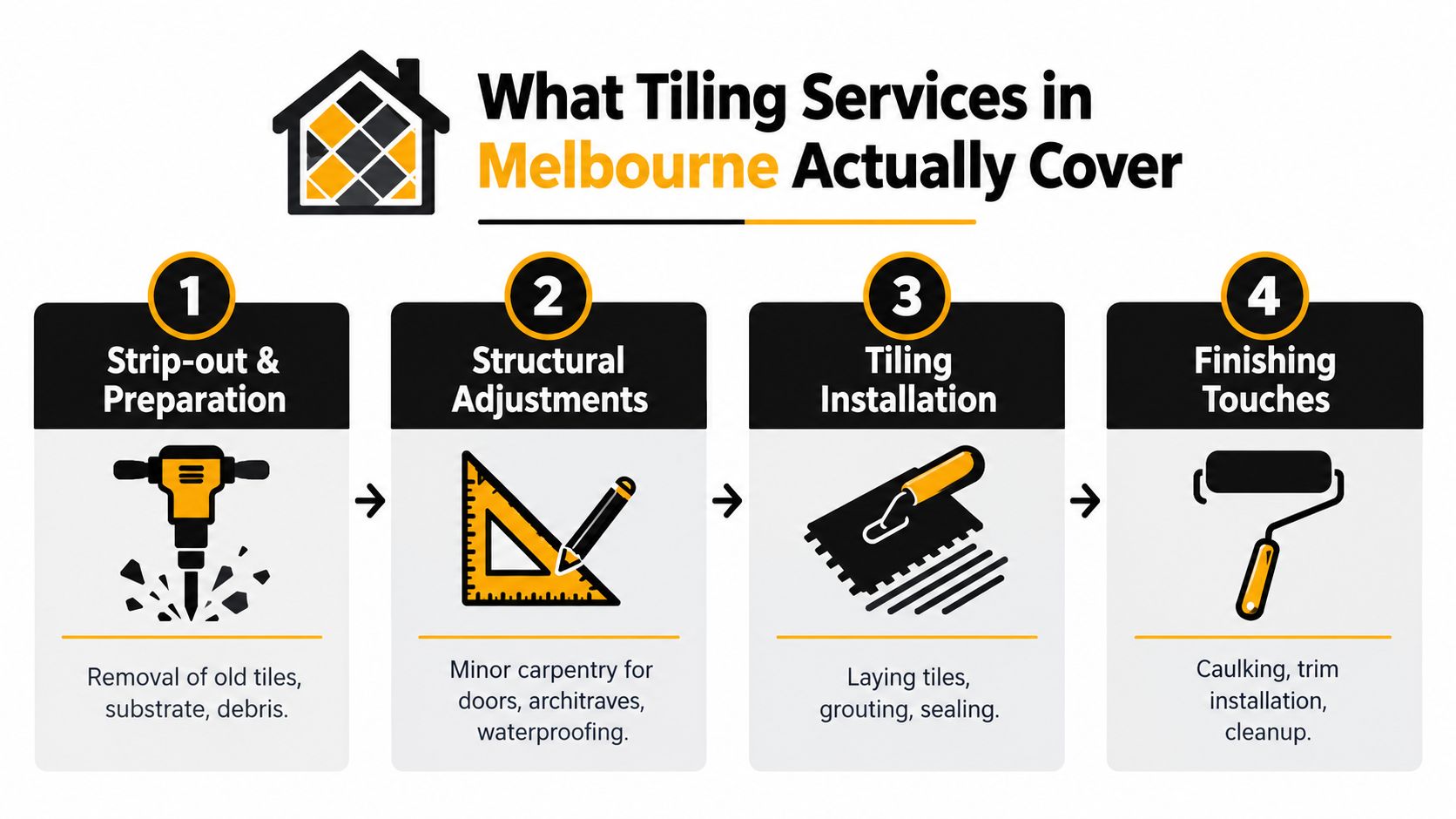
A kitchen tiling job usually looks simple on day one. Then the old finishes come off, the walls show their true condition, and the job either stays under control or starts drifting on cost, time, and quality. In Melbourne homes, the difference is rarely the tile itself. It comes from preparation, sequencing, and whether the installer treats the work as part of a building process rather than a cosmetic upgrade.

The visual flow is straightforward.

A step-by-step infographic illustrating the professional six-stage kitchen tiling process from preparation to final sealing.

From strip-out to setting out

  1. Site protection and set-up
    Protection goes in before demolition starts. That includes floors, joinery, benchtops, access paths, and adjoining rooms. In occupied homes and apartments, this step matters because dust, debris, and repeated foot traffic can damage finishes that are staying.

  2. Demolition and removal
    Existing tiles, splashbacks, adhesive build-up, or damaged sheet linings are removed. This is the point where hidden issues show up, such as loose plaster, uneven walls, moisture damage, or movement cracks.

  3. Substrate assessment and correction
    The exposed surface is checked for flatness, strength, cleanliness, and suitability for the tile selected. If the substrate is out of tolerance, the fix might be patching, levelling, screeding, or replacing the sheet material altogether. Skipping this step usually leads to lippage, poor bond, and visible layout problems later.

  4. Water-related detailing where required
    Kitchens are not bathrooms, but certain junctions and service areas still need careful treatment. Around sinks, benchtop returns, and vulnerable wall-floor transitions, the detailing must suit the risk and the construction. Any product that needs curing gets that time before adhesive is applied.

A small splashback can be completed quickly if the background is straight and stable. A kitchen floor, or a tiled kitchen that forms part of a wider renovation, takes longer because the prep stage sets the standard for everything that follows.

Here's a useful visual reference for how the workflow looks on site:

Laying grouting and handover

  1. Tile layout and setting out
    Set-out happens before adhesive hits the wall or floor. The layout should be checked against cabinets, appliances, power points, windows, and the main sightlines into the room. Good set-out reduces awkward cuts and keeps the finished work looking intentional rather than improvised.

  2. Tile installation
    Tiles are fixed using the adhesive, notch size, coverage method, and joint spacing suited to the material and substrate. Large-format porcelain, handmade products, mosaics, and stone all behave differently on site. That is where trade judgment matters.

  3. Grouting and cleaning
    Grouting starts only after the tiles are properly set. The surface then needs careful cleaning so grout haze, staining, and residue are not left behind. Rushed clean-up is one of the most common reasons a new tiled surface looks disappointing at handover.

  4. Sealing and final detailing if required
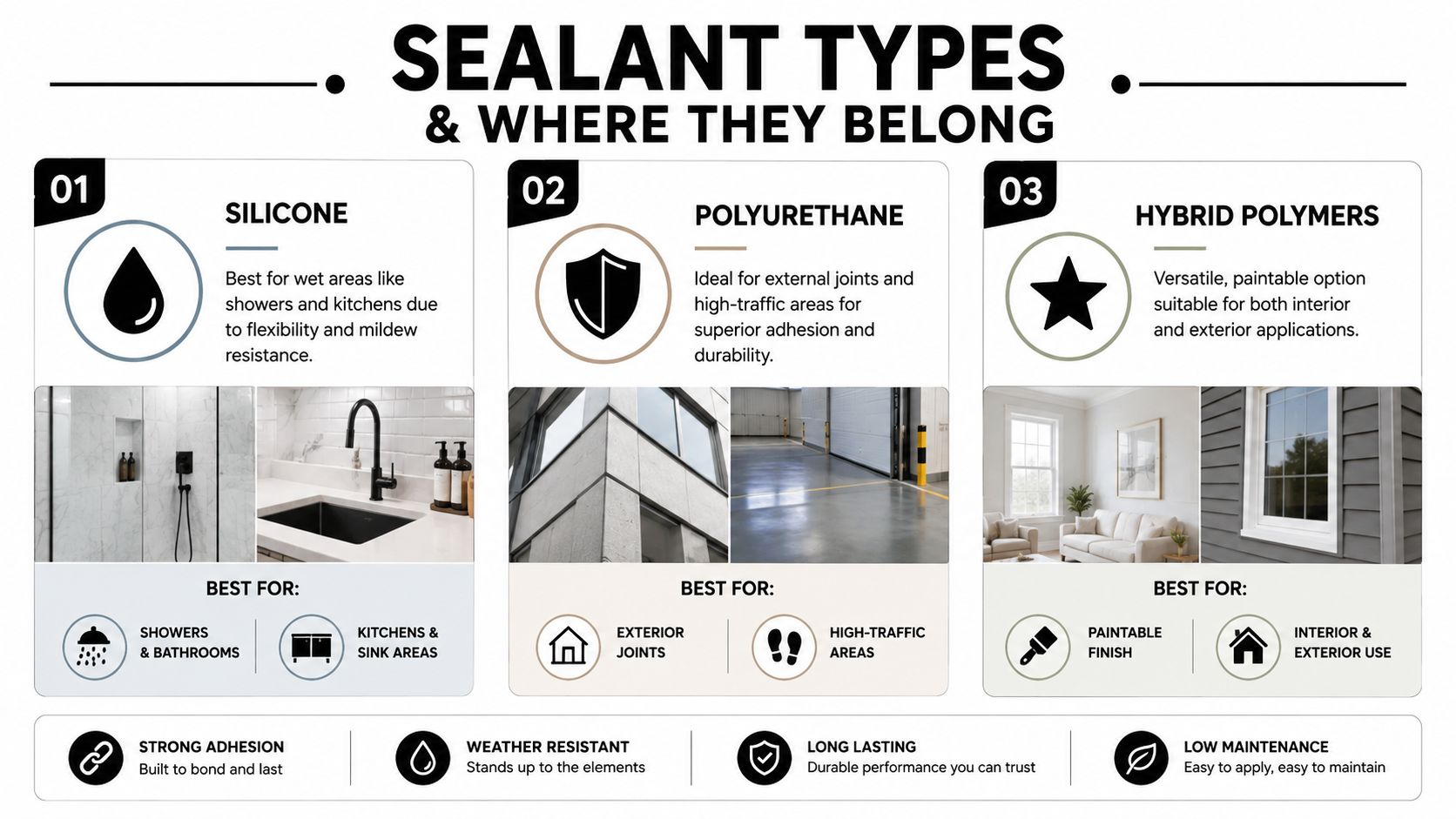
    Some materials need sealing, and some do not. Silicone joints, perimeter movement treatment, trims, edge finishes, and final defect checks are completed before the job is signed off. In a well-run project, this stage is tidy and predictable because the earlier steps were handled properly.

Many tiling businesses are small operators, and there is nothing wrong with that. The practical issue is consistency. On site, quality differences usually show up in preparation, cleanliness, communication, and how well the sequence is controlled. From a Registered Builder's perspective, that sequence matters because a kitchen tile finish has to look right, perform well, and sit properly within the wider renovation scope.

Maintaining Your New Tiles and Getting Started

A good installation still needs sensible care. The biggest maintenance mistake is using harsh products that do more harm than the everyday dirt ever would.

Simple maintenance that actually helps

For most kitchens, routine care is straightforward:

  • Use pH-appropriate cleaners: Especially if you have natural stone or specialty finishes.
  • Wipe spills early: Oils, sauces, and strongly coloured food are easier to remove before they sit.
  • Keep grout lines clean: A soft brush and the right cleaner usually beats aggressive scrubbing.
  • Avoid random chemicals: If a product isn't suitable for tile, grout, stone, or sealant, don't test it on your new renovation.

Natural stone needs more attention than porcelain or ceramic. If you chose stone for its character, accept that maintenance is part of ownership. If you wanted a simpler cleaning routine, that choice should have been made during selection.

What to do before work begins

Before signing off on a kitchen tiling Melbourne project, make sure you have:

  • A written scope that states what is being removed, prepared, tiled, sealed, and protected.
  • Tile details including size, finish, and any special handling requirements.
  • Clarification on substrate works so levelling and repairs aren't left vague.
  • A clear sequence if the kitchen job connects to bathroom renovations or other building works.
  • A workmanship discussion so you know what to inspect at handover.

A durable kitchen comes from good decisions made before the first tile arrives. Choose materials based on performance, insist on preparation being documented, and use a contractor who understands that compliance and craftsmanship go together.


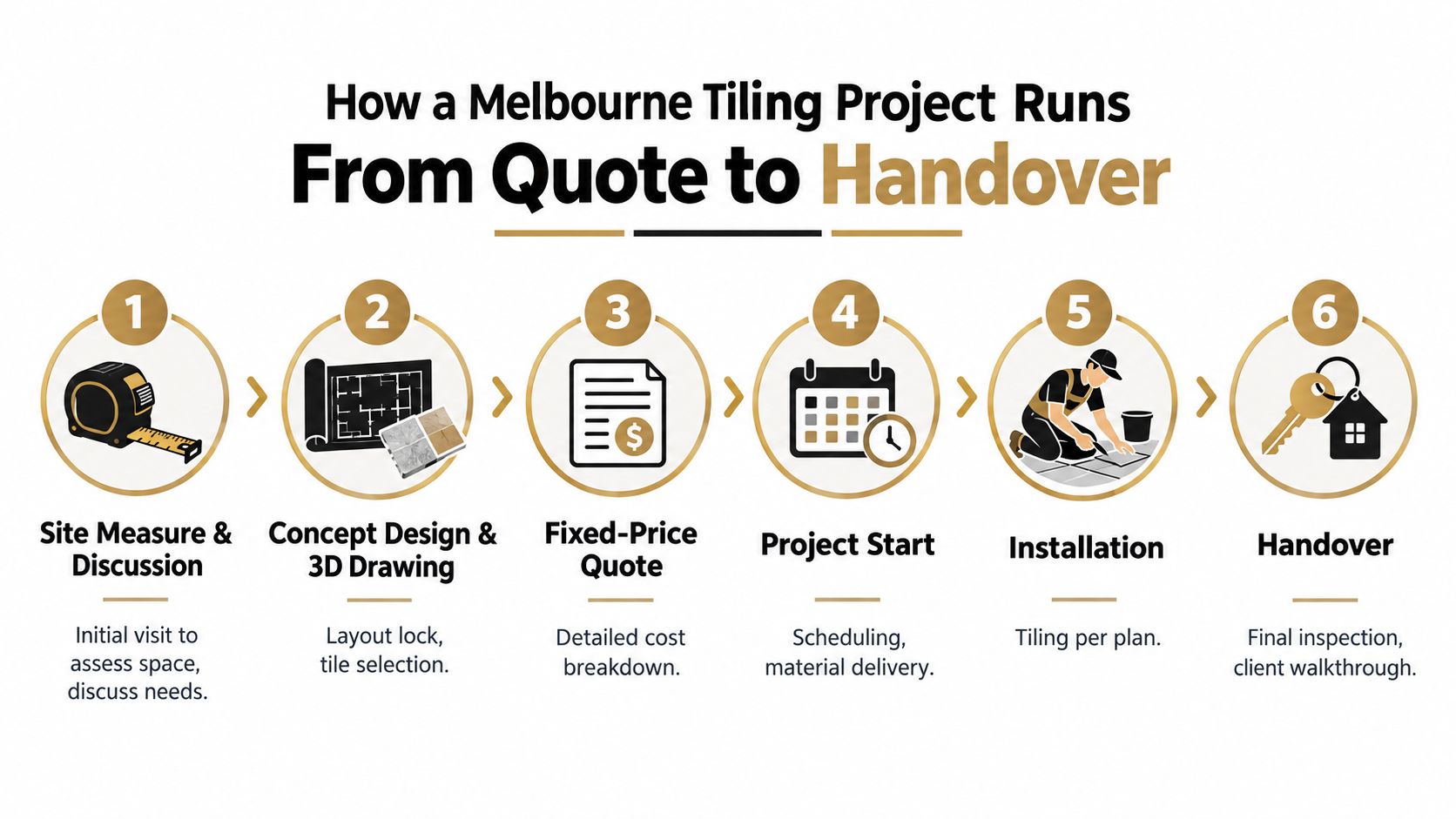
If you're planning a splashback, floor tiling, or a larger kitchen and bathroom renovation, Melbourne Tiling Services P/L can help you scope the work properly from the start. The team provides free quotes, 3D drawings, and a transparent renovation calculator so you can understand layout, finishes, and budget before construction begins.

Marble Tiles Melbourne: 2026 Buyer’s Guide

You've probably seen the photos already. White marble on the walls, soft veining across the vanity splashback, a shower that feels closer to a boutique hotel than a suburban bathroom. Then the practical questions start. Will it stain? Is it slippery? Can your existing bathroom even support it? And who's responsible if the waterproofing, screed or tile bed isn't right underneath an expensive stone finish?

That's where many Melbourne bathroom renovations go sideways. Marble is beautiful, but it's not forgiving. The finished look depends on decisions most homeowners never see once the room is complete. Falls to the drain, substrate flatness, movement joints, adhesive coverage, waterproofing detail around penetrations, and how the builder coordinates each trade all matter just as much as the tile selection.

In Melbourne homes, that's even more important because renovations often involve older structures, uneven floors, tight bathroom footprints and a mix of legacy plumbing and modern expectations. If you're planning a marble bathroom, feature wall or ensuite upgrade, you need more than a tile showroom opinion. You need a builder's view of the whole assembly.

Table of Contents

Your Guide to Melbourne Marble Renovations

A typical marble job starts with a client focused on the visible layer. They've chosen a stone, saved reference images, and know the mood they want. What they usually haven't considered yet is whether the bathroom floor is level enough, whether the wall framing is straight, or whether the shower area can be rebuilt to suit stone rather than just “accept tiles”.

That difference matters. A marble renovation isn't just a tiling job with a nicer product. It's a coordinated bathroom renovation where the registered builder has to manage demolition, substrate preparation, waterproofing, screeding, plumbing rough-in, electrical work, tile set-out and final fit-off so the stone performs properly.

In Melbourne, older homes often add another layer of complexity. Timber movement, out-of-square walls, patched floors and previous renovation shortcuts show up fast once demolition starts. Marble won't hide those issues. It highlights them.

Practical rule: If the room isn't prepared to a high standard before tiling starts, marble won't save it. It will expose it.

That's why homeowners looking for marble tiles in Melbourne should think about the full project lifecycle, not just the sample board. The right outcome comes from good planning, disciplined trade sequencing and realistic expectations about care and cost. If you treat marble like a premium finish sitting on top of an average bathroom build, you'll likely pay for the same work twice.

Choosing the Right Marble Type and Finish

Some people choose marble by name alone. That's risky. You're better off choosing by visual movement, colour temperature, finish, and intended use. Marble can read soft and quiet or bold and dramatic, and the same stone can feel completely different once it's polished, honed or cut into a smaller pattern.

Three rectangular marble stone samples in white, off-white with veining, and black displayed on a table surface.

How marble became a premium finish in Melbourne

Marble has never really been an ordinary material in Victoria. A documented marble tile from circa 1878 shows it was already used in the colonial era, but local deposits were small and uneconomic, so imported marble stayed comparatively expensive and helped establish marble as a premium architectural finish in Melbourne from the beginning, as noted in this history of Carrara marble and the Victorian record.

That legacy still affects buyer expectations now. People usually choose marble because they want a room that feels sophisticated, customized, and permanent. The stone carries that expectation with it.

How to choose the look

Start with the amount of variation you can live with.

  • Low-variation marble suits bathrooms where you want a calm, consistent backdrop. It works well with minimalist joinery, brushed metal tapware and softer lighting.
  • Higher-contrast marble suits feature walls, vanity zones and larger bathrooms where strong veining has room to read properly.
  • Warmer whites and creamy bases tend to soften a space. They pair better with brass, warm timber and off-white paint.
  • Cooler whites and grey veining feel sharper and more architectural. They often sit better with black fixtures, chrome and cleaner-lined joinery.

If you're selecting from small samples, ask to see multiple pieces laid together. Marble is a natural material. The tile you approve in your hand won't show the full spread of tone and veining across an entire bathroom.

Which finish works where

The finish changes both the look and the behaviour of the stone.

  • Polished gives you more reflection and a dressier look. On walls and low-contact feature areas, it can be very effective.
  • Honed gives a softer, flatter appearance. It usually feels less fussy in everyday bathrooms because it doesn't throw as much glare or highlight every mark the same way a highly reflective surface can.
  • Textured or grip-oriented finishes are worth discussing for floors where safety matters more than shine.

Marble selection should always be tied to location. A finish that looks excellent on a wall niche may be the wrong call on a shower floor.

The phrase marble tiles Melbourne gets searched because people want the look. The better question is whether your chosen stone and finish suit your bathroom layout, cleaning habits and household use.

Marble vs Marble-Look Porcelain Tiles

Natural marble isn't automatically the right answer. In plenty of Melbourne bathrooms, marble-look porcelain is the smarter specification. It won't give you the exact depth and random variation of real stone, but it does solve many of the maintenance concerns that frustrate homeowners after the renovation glow wears off.

A comparison chart showing the pros and cons of using marble tiles versus porcelain tiles in homes.

The honest comparison

Neutral Australian tile guidance points out that marble-look tiles are a durable, low-maintenance alternative, often chosen specifically to avoid the sealing and careful cleaning that natural stone demands in wet areas. You can see that position in this Australian guide to marble-look tiles.
Feature Natural Marble Marble-Look Porcelain
Appearance Unique veining and natural variation Consistent marble-inspired design
Surface character Cooler, more organic feel More manufactured feel, though often very convincing
Maintenance Needs more care in wet areas Lower maintenance day to day
Staining and etching risk Higher risk Lower risk
Installation Demands tighter handling and set-out Usually more forgiving overall
Best fit Design-led bathrooms where owners accept upkeep Family bathrooms, rentals, high-use spaces

For many households, porcelain is the practical win. That's especially true in children's bathrooms, investment properties, compact ensuites and homes where the owner wants the marble aesthetic without the care routine that comes with natural stone. If that's the direction you're considering, this guide to porcelain bathroom tiles is a useful next read.

When each option makes sense

Choose natural marble when the brief is led by material quality, uniqueness and a premium finish, and when the homeowner is comfortable with a more careful cleaning and maintenance approach.

Choose marble-look porcelain when the bathroom will be heavily used, when cleaning needs to stay simple, or when the project budget is better spent on layout improvements, custom joinery, under-tile heating or upgraded fixtures instead of the stone itself.

The wrong choice isn't porcelain. The wrong choice is specifying natural marble for a bathroom that will be used hard, cleaned casually and expected to behave like a non-porous product.

There's also an installation trade-off. Marble usually asks for more caution at every step, from tile sorting to cutting to edge alignment. Porcelain can still be demanding, especially in larger formats, but it usually gives renovators a wider margin for everyday use once the room is finished.

Using Marble in Bathrooms and Wet Areas

Bathrooms are where marble either proves itself or becomes a headache. Steam, soap residue, hair products, body oils and repeated wetting all test the surface and the installation underneath. A bathroom can absolutely be finished in marble, but it has to be approached as a wet area system, not just a decorative selection.

Wet area reality

The stone is only one part of the assembly. The more important questions are whether the substrate is sound, whether the waterproofing has been done properly, and whether the floor falls and detailing suit the room. If you're assessing a renovation scope, make sure waterproofing compliance is part of the conversation, not an afterthought. This overview of a waterproofing compliance certificate in Victoria is relevant for that reason.

Natural marble also asks more from the owner after handover. You can't treat it like a set-and-forget surface. If the household uses harsh cleaners, leaves products sitting on the stone, or expects the finish to stay pristine with no upkeep, problems tend to show up sooner.

Cleaning and sealing expectations

Marble needs a gentler maintenance mindset than porcelain. That doesn't mean it's unusable. It means the owner should expect ongoing care.

A practical bathroom maintenance plan usually includes:

  • Use stone-suitable cleaners: Avoid aggressive products that can dull or mark the surface.
  • Keep residues off the stone: Soap, shampoo and coloured products shouldn't be left to sit on floors or ledges.
  • Treat sealing as routine maintenance: Natural stone benefits from being checked and maintained over time rather than forgotten once the renovation is finished.

Those points sound minor, but they shape long-term satisfaction more than the initial tile selection does.

Safety on bathroom floors

Finish selection matters for more than appearance. For wet areas, the choice of finish is critical for safety. Public-facing supplier content often highlights polished marble because it photographs well, but guidance aimed at buyers notes that the slip resistance of honed or textured finishes should be considered for wet floors, especially in family bathrooms and showers. That concern is outlined in this Melbourne marble tile guide discussing finish options.

That's why polished marble is usually more comfortable on walls than on shower bases or main bathroom floors. On a vertical surface, it can add light and a refined finish. Underfoot, especially in a bathroom used by kids or older family members, a more slip-conscious finish is often the better call.

Don't choose a bathroom floor finish from a showroom spotlight. Choose it based on how it behaves when water, soap and bare feet are involved.

What to Expect During a Marble Renovation

A marble bathroom renovation usually looks slow from the outside. That's because the important work happens before the room starts looking expensive.

A professional construction worker carefully installing white marble bathroom wall tiles above a bathtub.

The build sequence matters

A proper sequence often runs like this:

  1. Demolition and strip-out
    The room is taken back so hidden issues can be found early. In older Melbourne bathrooms, that can include rotten sheet flooring, patch repairs, bad falls or wall framing that isn't straight.

  2. Structural and service preparation
    Plumbers and electricians do their rough-in work. The builder checks framing, sheeting and floor condition so the room is ready for wet area construction.

  3. Waterproofing and substrate preparation
    Many premium tile jobs are won or lost during this stage. Stone won't compensate for a poor base.

  4. Screeding, levelling and set-out
    The room needs to be prepared for the tile format, joint pattern and drain location chosen.

  5. Stone installation and finishing trades
    Tiling, grouting, sealing where relevant, fixture fit-off and final detailing happen after the room is properly prepared.

Why flatness is not optional

For stone tiles in wet areas, installation guidance requires 100% mortar contact to avoid voids where water can sit and degrade the bond. The same specification notes that for 3/8" stone tile, maximum mortar thickness after setting should be 3/32", and that lower contact allowance applies only to thicker stone in drier conditions. That's set out in these stone installation specifications for marble.

In practical terms, that means the floor and walls must already be very flat before the tile goes down. You can't rely on adhesive to fix a bad substrate.

A local product example also shows how tight these tolerances are. One marble tile line is supplied at 10 mm thickness, with 100 tiles per m² and 0.60 m² per box, which is the kind of format where substrate flatness and lippage control become very visible in finished work. That product detail appears on this 10 mm marble tile listing.

Here's the practical effect on site:

  • Uneven screeds create edge mismatch: Stone shows lippage fast, especially under downlights and side lighting.
  • Skinned-over adhesive creates hollow spots: Once that bond is compromised, the tile may sound hollow or fail over time.
  • Poor movement-joint handling causes stress: Joints need to function. Filling them incorrectly defeats the point.

A short installation video helps show the level of care premium stone work demands:

Project management is part of the finish

Modern marble tile work is also shaped by product evolution. According to Marble Systems, thin marble tiles only became widely available in the late 1980s, which changed how stone could be used across walls, floors and decorative surfaces and made precision installation more important in contemporary bathrooms, as described in these interesting facts about marble tiles.
That's one reason registered builders matter on stone bathrooms. The finished result depends on who coordinates demolition, waterproofing, levelling, tile sequencing and final fit-off. The marble is visible. The management discipline underneath it is what keeps it looking right.

How to Choose a Tiler and Registered Builder

If you're spending serious money on a bathroom, don't hire on tile photos alone. Marble asks for technical control, not just visual taste. The person pricing the work should understand wet area construction, tolerances, sequencing and who carries responsibility when multiple trades are involved.

What to check before signing

Screenshot from https://melbournetilingservices.com.au

Look for a contractor who can explain the build-up under the tile, not just the tile face. That usually means asking about:

  • Registration and scope: Can they manage the bathroom renovation as a whole, or only the tiling component?
  • Waterproofing responsibility: Who does it, how is it documented, and who stands behind it?
  • Substrate preparation: Do they allow for screeding, levelling and straightening where needed, or are they assuming the room is already ready?
  • Detailed quoting: Does the quote separate demolition, preparation, waterproofing, tiling and finishing items so you can see where money is going?

One practical option for homeowners comparing firms is Melbourne Tiling Services P/L, which operates as a bathroom renovation and tiling contractor rather than only a tile layer. That matters on marble work because the final result depends on the whole bathroom build sequence.

Questions worth asking

The quality of the answers tells you a lot.

Ask how they handle stone tile sorting, set-out and movement joints. Ask what happens if demolition reveals out-of-level floors or damaged sheeting. Ask whether they're comfortable refusing a polished marble floor in a family shower if they think it's the wrong specification. The right contractor won't just say yes to everything.

A good marble installer doesn't sell certainty where none exists. They identify risk early, price preparation properly, and explain where the finish will succeed or struggle.

It also helps to ask about design support. Marble is one of those materials where layout matters almost as much as the product. Vein direction, niche placement, mitred corners, feature walls and transitions all need to be resolved before installation starts, not improvised on site.

Thin marble tiles becoming common only in the late 1980s changed the skill set required for modern installations. Today's stone tiler needs tighter control than what older, thicker systems demanded. That product-history shift is one reason experience in premium bathrooms matters when you're choosing who handles the work.

Melbourne Marble Tile FAQs and Next Steps

Common questions from renovators

How much does a marble bathroom cost in Melbourne?
It depends on the tile itself, the tile format, how much preparation the room needs, and whether you're renovating the full bathroom or only retiling. Marble pushes cost up through both material and labour. The hidden variables are usually demolition, levelling, waterproofing rectification and detailing.

Can marble be used with underfloor heating?
It can be considered as part of a bathroom build, but the system has to be planned with the substrate, tile format and wet area construction in mind. This isn't something to add casually after tile selection.

Can chips or stains be repaired?
Sometimes. Minor damage may be improved, but the success of a repair depends on the stone type, finish, location and severity of the issue. Polished and honed surfaces can behave differently when repaired, so expectations need to be realistic.
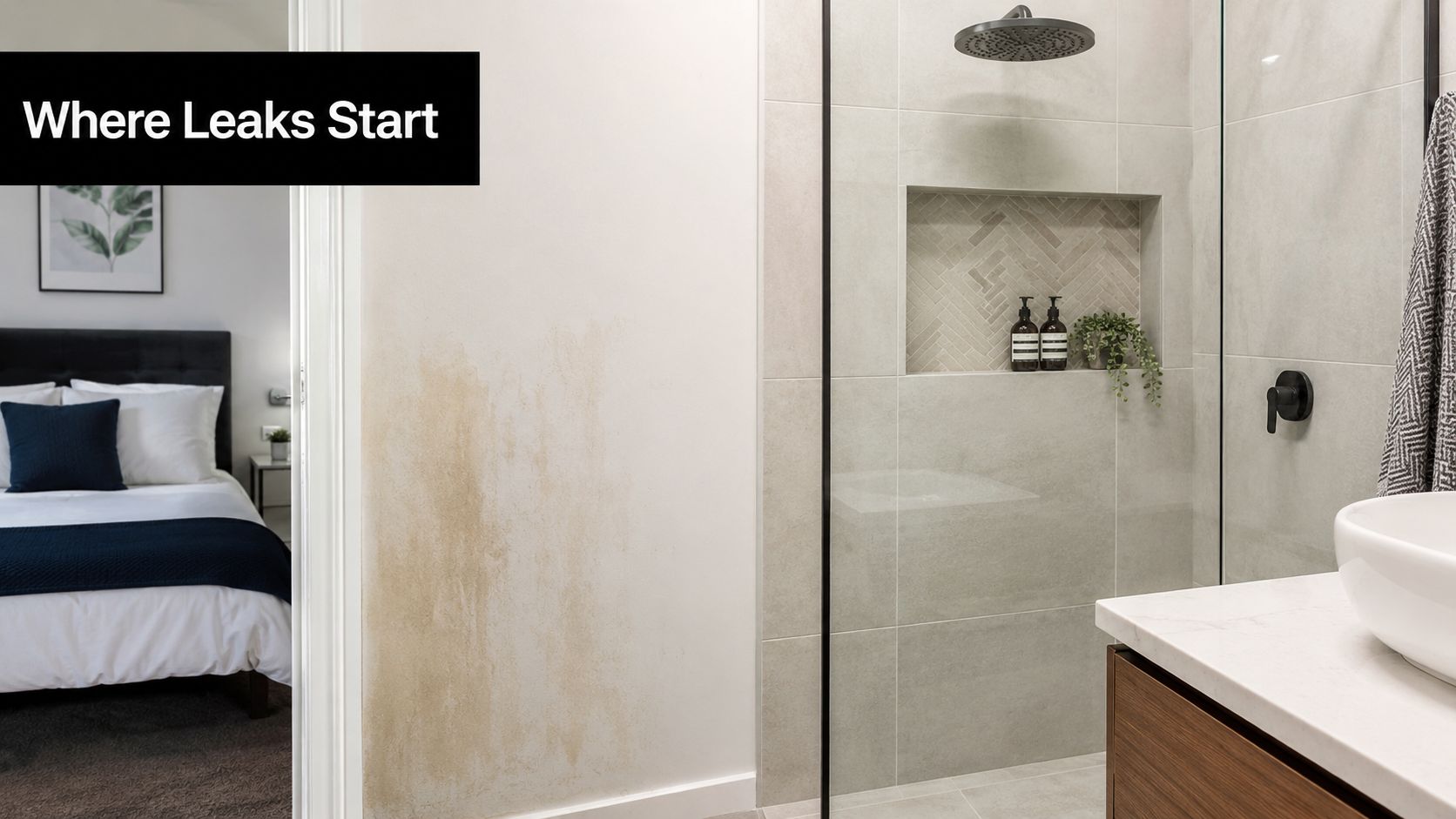
Is marble suitable for every bathroom?
No. It suits owners who value natural material and accept care requirements. In hard-working family bathrooms, rentals and lower-maintenance households, marble-look porcelain is often the safer long-term choice.

The main takeaway is simple. A marble bathroom can look exceptional, but only if the project is treated as a construction job first and a styling exercise second. The tile choice matters. The preparation underneath it matters more.


If you're planning a marble bathroom, ensuite, shower rebuild or full wet area upgrade, Melbourne Tiling Services P/L can help you assess the room properly, identify the preparation work required, and provide a free quote with 3D design support so you can make decisions before construction starts.

Floor Tiling Melbourne: Expert Guide to the Best Finish

You're probably looking at tile samples, Pinterest saves, and a bathroom that's overdue for work, while also wondering where the budget blows out and how to avoid a leak six months after handover. That's a normal place to start. Most Melbourne homeowners don't struggle with choosing a colour. They struggle with knowing what sits underneath the tile and whether the whole job is being built properly.

That matters more now because renovation costs have been moving the wrong way for homeowners. Australian Bureau of Statistics housing data for Victoria shows renovation spending rose 12% in 2025 due to inflation in materials like ceramic tiles, which is why clear planning and cost control matter from day one, as noted by Melbourne Tiling Services on renovation budgeting in Victoria.

Floor tiling melbourne projects go well when the finish is treated as the last step, not the first. In a proper bathroom renovation, the tile selection, subfloor preparation, waterproofing, drainage falls, and trade coordination all affect the final result. That's the difference between a floor that still looks right years later and one that starts sounding hollow, holding water, or cracking around movement points.

Table of Contents

Starting Your Melbourne Tiling Renovation

A bathroom floor rarely fails because the tile was unattractive. It fails because the planning was shallow. Homeowners often come in focused on pattern, size, and price per tile, then find out too late that the essential decisions were about substrate condition, shower falls, waterproofing details, and whether the person quoting the work can manage the whole renovation.

As a Registered Builder, the first thing I look at isn't the tile board. It's the room itself. Older Melbourne homes often have movement in the floor, previous water damage, patched plumbing penetrations, or walls that aren't square. If those issues aren't resolved before tiling starts, the finish will always be compromised no matter how expensive the tile is.

Start with the room, not the tile

A sound tiling plan should answer a few basic questions early:

  • What is the subfloor made of: Concrete behaves very differently from timber.
  • Is this a tile-only job or part of a bathroom renovation: The answer changes sequencing, access, and who carries responsibility.
  • Will the drainage work properly: Wet area performance matters more than visual symmetry.
  • Who is coordinating trades: Plumber, waterproofer, carpenter, electrician, screen installer, and tiler all affect the floor outcome.

Practical rule: If the quote talks a lot about finishes and very little about preparation, it's incomplete.

Builder thinking changes the result

A tiler can install a floor well. A builder has to think about compliance, sequencing, and risk across the entire room. That matters in bathroom renovations because one rushed trade can undo another. A plumbing change can alter falls. A poor patch can create movement. A missed waterproofing detail can send water behind finished surfaces.

That broader view is what keeps floor tiling melbourne projects from becoming repair jobs later. The best finish starts before a single tile is laid.

Choosing the Right Tile for Your Melbourne Home

Good tile selection is about where the tile is going and how the room will be used. A bathroom floor, laundry, hallway, and open-plan living area don't ask the same things from the material. Some homeowners choose based on showroom appearance alone, then end up with a product that needs more maintenance than expected or highlights every issue in the substrate.

A young couple reviewing various colored tile samples for home renovation on a bright kitchen table.

If you're comparing finishes, these tiling materials used in bathroom renovations give a useful starting point. The ultimate test is matching the material to the room.

Porcelain for hard-wearing bathrooms and living areas

Porcelain is usually the safest all-round choice for Melbourne homes. It's dense, durable, and works well in wet areas, especially when you want a clean modern look without the upkeep of natural stone. For bathroom floors, it gives you a reliable surface that handles moisture well and suits both small formats and large-format layouts.

It also gives builders and tilers more flexibility in design without creating maintenance issues for the owner. In family homes, rentals, and busy ensuites, porcelain tends to be the material that causes the fewest long-term complaints.

Ceramic where design matters more than punishment

Ceramic still has a place. It can work well on walls and in lower-stress areas, and many homeowners like it because there's a wide range of colours and finishes. On floors, though, I'm more selective.

If the room takes regular foot traffic, gets wet often, or needs to stand up to daily wear, ceramic usually isn't my first recommendation. It can still perform well in the right application, but it's less forgiving of poor product choice and poor installation.

Marble when you want character and accept maintenance

Marble looks excellent when the design calls for softness, variation, and a more natural finish. It suits high-end bathrooms, entry spaces, and homes where the owners understand what natural stone involves.

That trade-off matters. Marble needs more care than porcelain. It can mark, it can require sealing, and it shows installation errors quickly because the eye reads natural stone differently than it reads a uniform manufactured tile. If the substrate isn't flat and the layout isn't carefully controlled, marble won't hide it.

Marble can look refined for years, but only if the owner accepts that natural stone is not a low-maintenance product.

Kerlite for large-format minimalism

Kerlite and other large-format slim porcelain products create a very different visual effect. Fewer grout lines, broader visual flow, and a more architectural finish. They can work beautifully in bathrooms and open-plan areas, but they demand a flat substrate and careful handling.

What works with standard porcelain doesn't always work with a large-format slab. Minor irregularities underneath become visible quickly. Adhesive selection, handling, coverage, and cutting technique all matter more. Installer experience becomes particularly evident.

A practical way to choose

When clients are torn between options, I narrow it down like this:

Tile type Best suited to Main advantage Main trade-off
Porcelain Bathrooms, ensuites, living areas, hallways Durable and low maintenance Can feel plain if the selection is too safe
Ceramic Selected floors, many wall applications Broad style range Less ideal for harder-wearing floor areas
Marble Premium bathrooms and statement spaces Natural variation and character Higher maintenance and less forgiving
Kerlite Large-format designer spaces Minimal grout lines and sleek finish Installation demands are much higher

If you want one material that balances appearance, performance, and practicality, porcelain is often the steady choice. If you want a statement surface, marble or Kerlite can deliver it, but only when the preparation and installation standard match the material.

How to Budget for Floor Tiling Costs

A bathroom floor quote often looks reasonable until the old tiles come up. Then the actual costs appear. In Melbourne homes, especially older timber-frame houses, the floor can need straightening, stiffening, new sheeting, or a full rebuild of the wet area base before any tiling starts.

That is why I price bathroom floors as part of the renovation system, not as an isolated tiling job. Tile selection matters, but the bigger cost swings usually come from what is under the tile and how much coordination the room needs across demolition, plumbing, waterproofing, carpentry, and tiling.

Labour rates are only one part of the number

Recent Australian market guides published in late 2025 put tiler labour for standard floor tiling in a broad range, with natural stone and more complex layouts sitting above standard porcelain rates, as noted in this Australian tiler rates per square metre guide. Use that as a rough check only.

Small bathrooms rarely price neatly by square metre. A 10m² bathroom can involve dozens of cuts, set-outs around wastes and corners, waterproof detailing, trim work at doorways, and tighter tolerances than a much larger open floor. Builder-led pricing also has to allow for what happens before the tiler starts, because if the substrate is moving or the falls are wrong, the floor finish is already at risk.

What a proper quote should cover

A floor tiling allowance should break out the items that commonly get missed or underquoted:

  • Demolition and strip-out: Removal of tiles, screed, bedding, sheet underlay, and any failed substrate material.
  • Waste removal: Skip bin, tip fees, and labour to remove debris, especially where access is tight.
  • Subfloor correction: Levelling, patching, new underlay, cement sheet, screed, or structural rectification on timber floors.
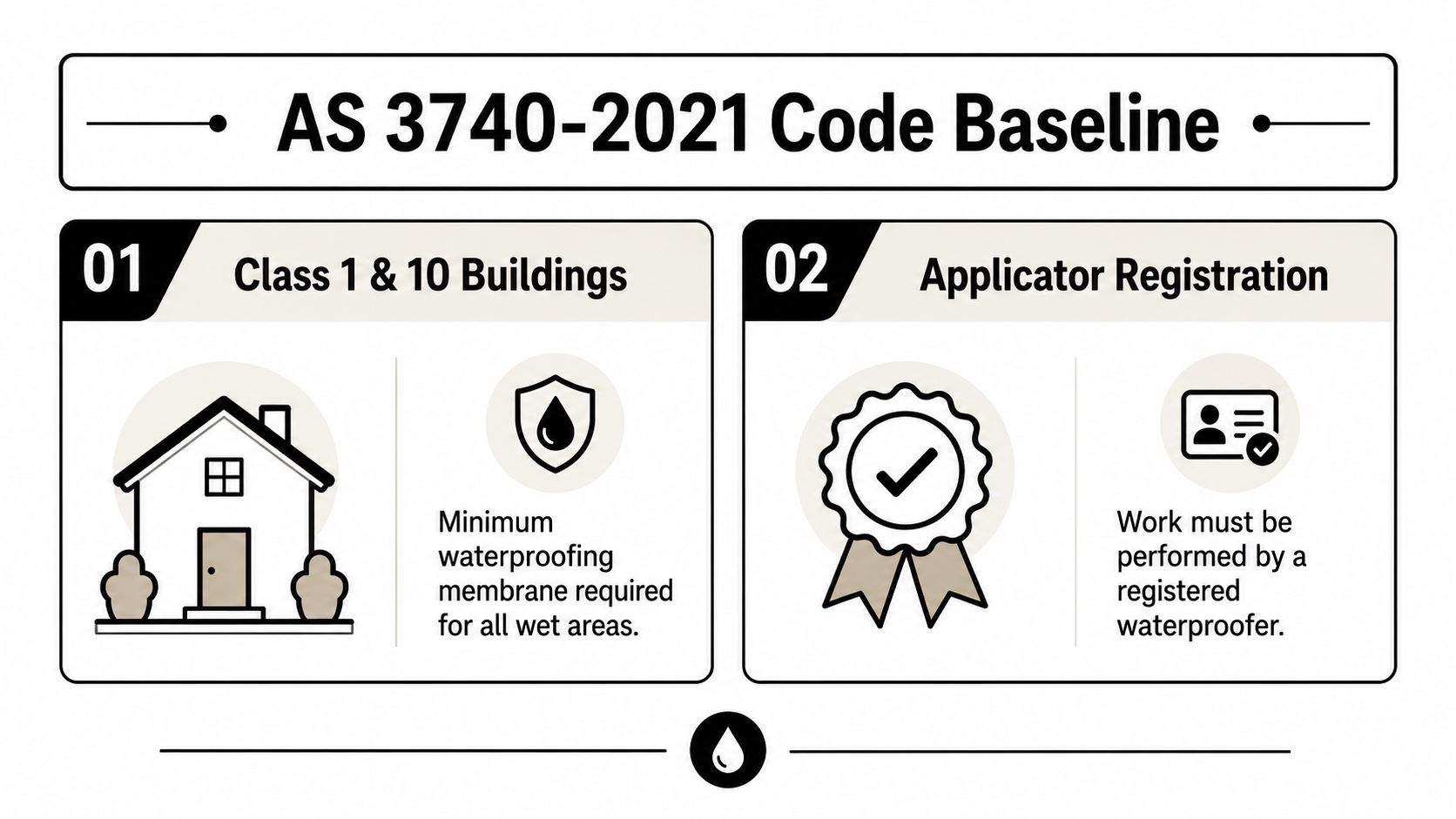
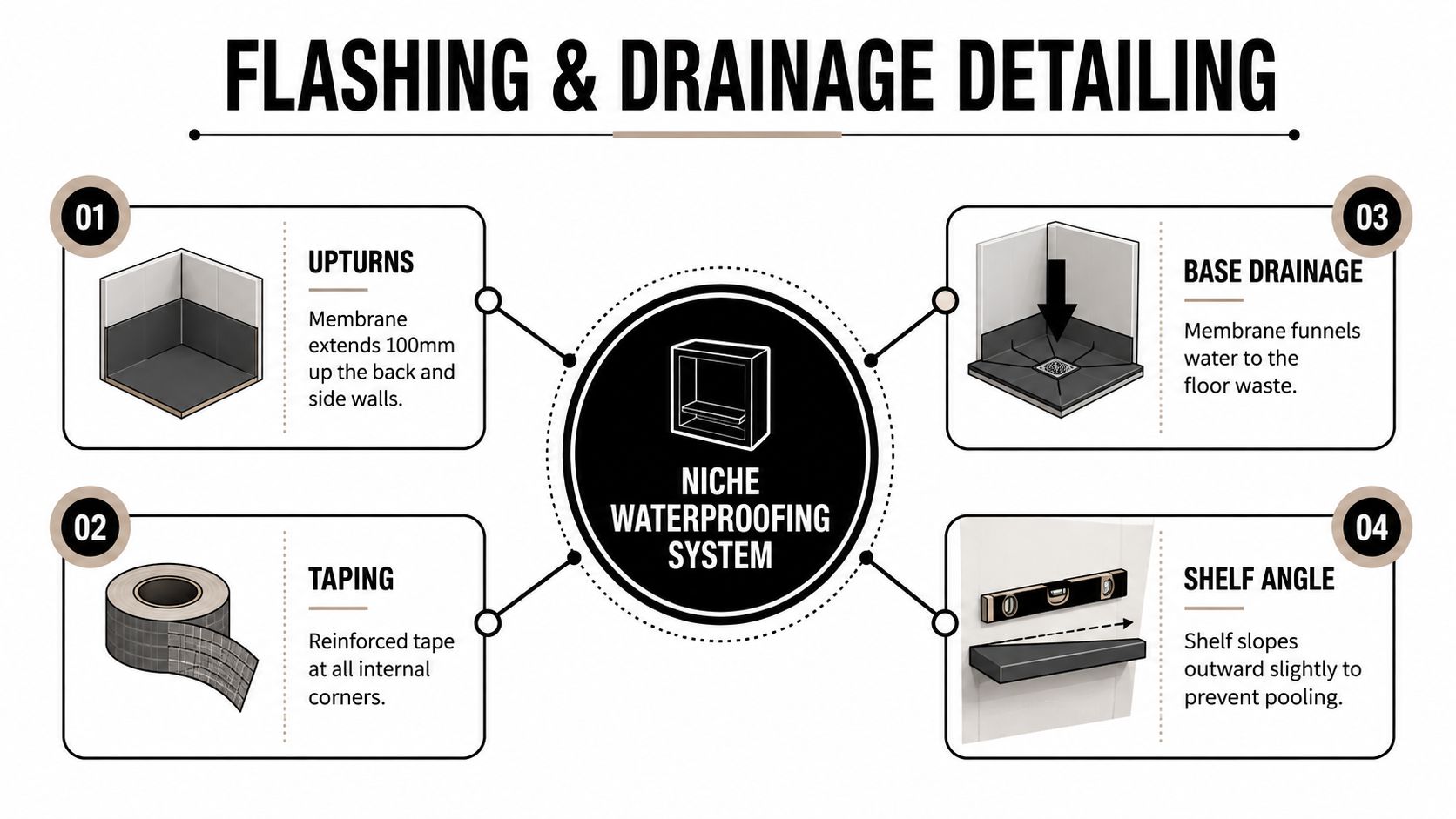
  • Waterproofing: Membrane application, bond breakers, corners, penetrations, and curing time.
  • Setting materials: Adhesives, grout, primers, trims, movement joints, silicone, and stone sealers where needed.
  • Detailing: Floor waste cuts, threshold transitions, shower screen line-up, and final finish quality.

For wider project planning, this bathroom renovation cost guide for Melbourne homeowners helps place floor tiling inside the total bathroom budget.

Sample Budget Breakdown for a Standard Melbourne Bathroom (10m² Floor)

Expense Item Typical Cost Range (AUD)
Demolition and waste removal $600 to $1,500
Subfloor preparation and levelling $800 to $2,500
Waterproofing $700 to $1,500
Tiler labour for porcelain $800 to $1,600
Tiler labour for marble or other natural stone $1,200 to $2,400
Adhesives, grout, sealants, trims $350 to $900
Final detailing and clean $150 to $400

These figures are examples, not fixed rates. Access, floor condition, tile size, pattern, drainage setup, and whether the bathroom sits on concrete or timber all shift the final number.

The biggest budgeting mistake is comparing quotes that do not include the same scope. A cheap price can mean no substrate repair, minimal waterproofing allowance, weak material specs, or no provision for correcting falls. That saving disappears fast if the bathroom floor has to be redone after handover.

The expensive part is not always the tile. In many bathroom renovations, the expensive part is fixing what was hidden underneath.

The Renovation Process From a Builder's Perspective

A floor tiling job inside a bathroom renovation needs the right order. Good trades can still produce a poor result if the sequence is wrong. Builder-led projects usually feel more controlled for this reason, because someone is responsible for the room as a whole, not just one part of it.

A five-step infographic showing the professional high-quality process for tiling installation from design to final inspection.

The sequence that prevents failure

The job usually starts with demolition and assessment. Once the existing floor is exposed, the substrate has to be checked for movement, damage, moisture issues, and level. On concrete, that often means grinding or patching. On timber, it may involve structural correction before any sheet underlay goes down.

Then comes forming the floor properly. In wet areas, this stage is essential because Australian Standard AS 3958.1 mandates a minimum floor fall of 1:80 in wet areas to ensure effective drainage, as outlined in this explanation of Australian tiling standards. If the floor doesn't drain, water sits. Once water sits, grout, tile bond, and adjacent finishes all start dealing with a problem they shouldn't have had.

After falls are established, waterproofing is applied in line with the room layout and penetrations. This stage needs clean surfaces, proper detailing, and curing time. Rushing straight from one step to the next is one of the most common reasons bathroom floors fail.

Why each layer matters

Each stage solves a different problem:

  1. Subfloor correction deals with movement and unevenness.
  2. Screeding or levelling establishes the geometry of the finished floor.
  3. Waterproofing protects the structure beneath the tile.
  4. Tiling and bedding create the wearing surface.
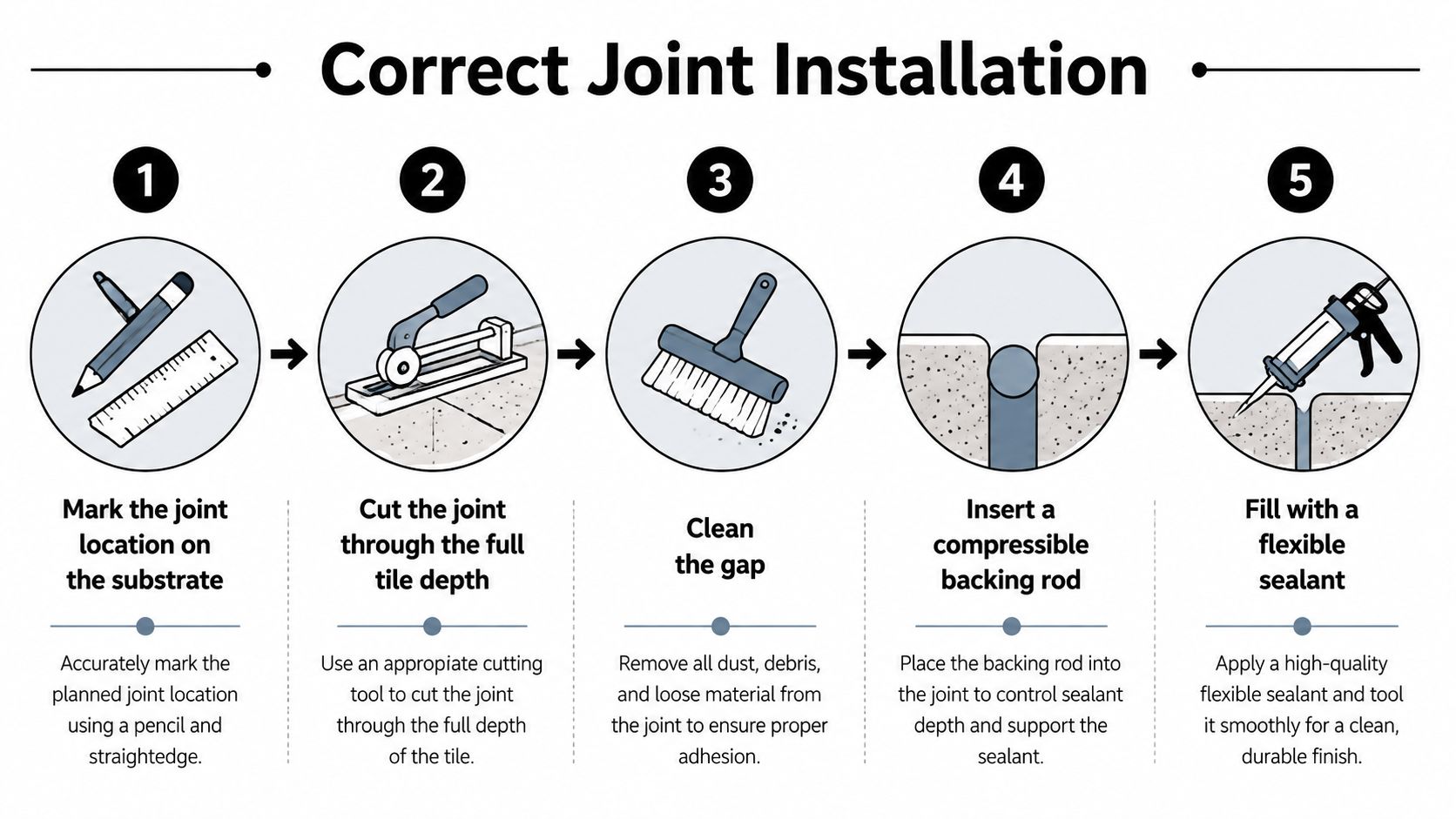
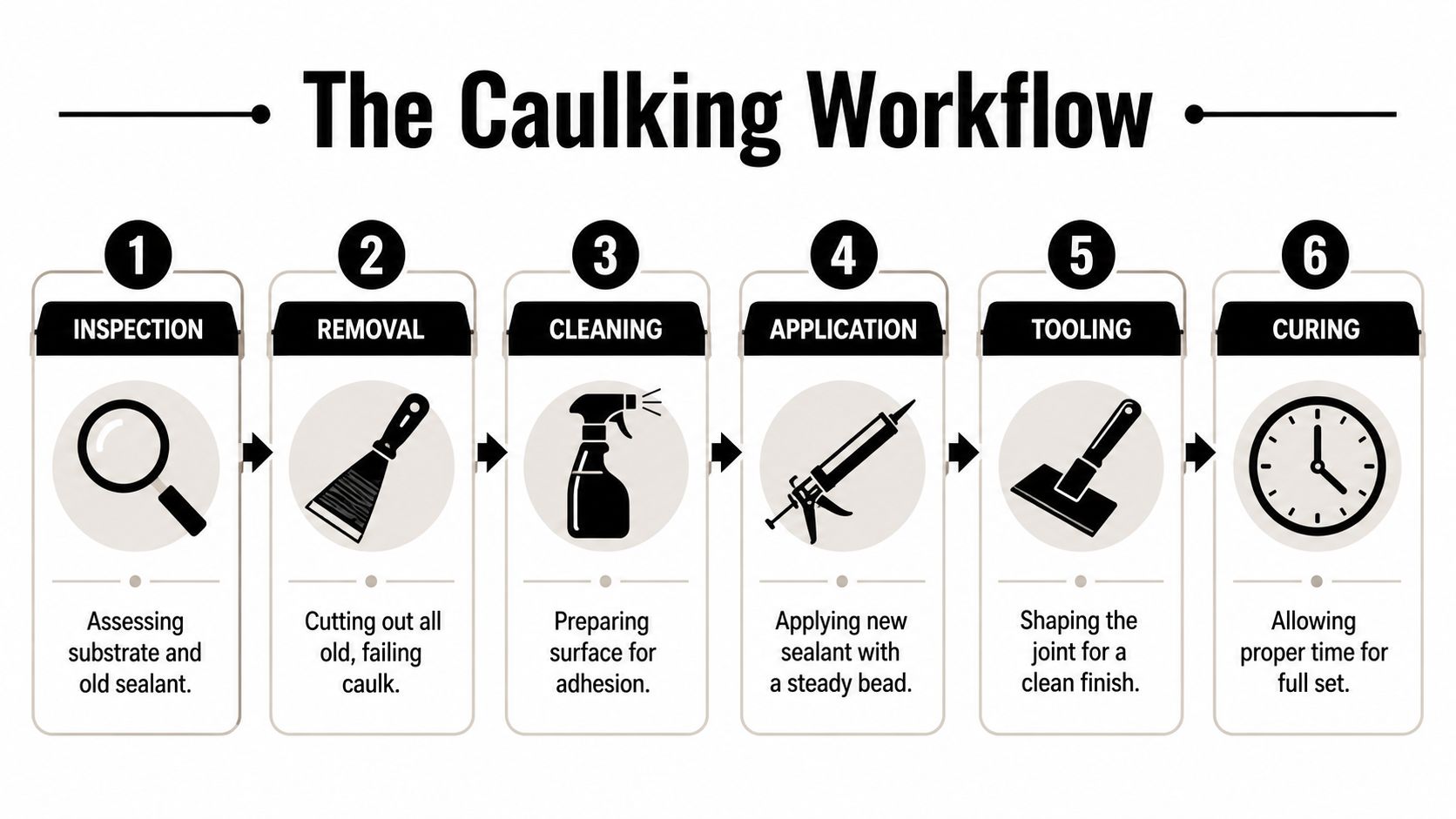
  5. Grouting, caulking, and final sealing where required finish the system.

When builders coordinate the room, they also coordinate the handover points between trades. The plumber can't leave penetrations messy. The carpenter can't leave a springy section under a premium tile. The waterproofer can't apply over a dirty or unstable base. Those details are where good bathroom renovations separate themselves from average ones.

The tile is the visible surface. The renovation quality sits underneath it.

Why trade coordination matters

This is also where a registered builder adds value over a tiling-only approach. In a bathroom renovation, the floor ties into shower screens, plumbing set-outs, cabinetry, door clearances, and sometimes underfloor heating or balcony thresholds. Those elements need to be coordinated before the tile goes down, not improvised after.

One example is Melbourne Tiling Services P/L, which handles bathroom renovations, waterproofing, screeding, self-levelling, and tile installation under a registered builder model. That type of setup can reduce confusion on site because one party is managing sequencing and accountability across the room.

Avoiding Common and Costly Tiling Disasters

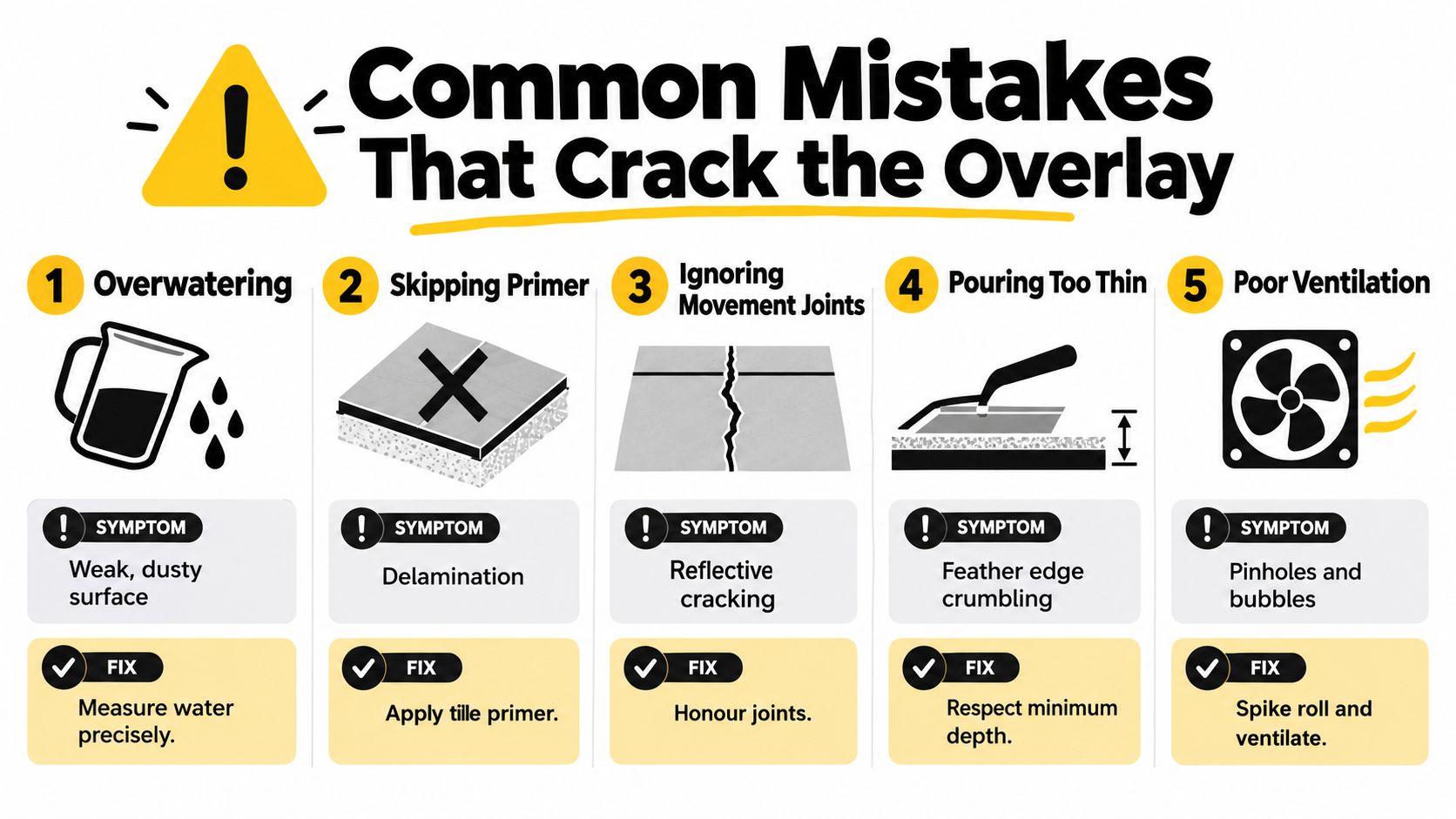
Most floor failures don't look dramatic on day one. They start small. A tile sounds hollow. Water sits near the shower entry. A hairline crack appears at a doorway. Then the owner starts chasing repairs in a finished bathroom.

A close-up view of a cracked marble floor tile in a hallway with modern interior design.

Cracked and drummy tiles on timber floors

This is common in older Melbourne homes. The bathroom might look solid from above, but the timber subfloor underneath still moves. Tile and grout don't like movement. They want a stable base.

That's why Australian Standards require a fibre-cement underlay on timber floors and a maximum deflection of 1/360 of the span to prevent tile cracking from substrate movement, according to the Australian Tile Council tiling facts guide. If that requirement is ignored, the floor can flex under traffic and the finish starts to fail.

The fix is straightforward in principle, even if it isn't cheap. Stabilise the substrate, install the right underlay, fasten it correctly, and only then prepare for tiling. Skipping that process to save time is exactly how drummy floors and cracked grout lines show up.

Leaks that start below the tile

Homeowners often blame the tile when a shower leaks. Usually the tile isn't the main problem. The issue is below it. Failed waterproofing junctions, poor detailing at penetrations, and rushed floor preparation are much more common causes.

If you're reviewing methods before work starts, look at how bathroom waterproofing systems are applied in renovation work. The floor and wall junctions, waste locations, and transitions matter far more than the tile pattern.

A quick visual explanation can help if you're trying to spot the signs of poor practice on site.

Three red flags during installation

  • Tiles laid over an obviously uneven base: The installer is asking the adhesive to fix a substrate problem.
  • No clear discussion of movement and transitions: Floors need to cope with real building movement.
  • Wet area work pushed through too fast: Curing time matters. A rushed bathroom often becomes a repair job.

If the person doing the work can't explain what sits under the tile, they probably shouldn't be laying it.

How to Hire a Reputable Melbourne Tiler or Builder

Melbourne gives homeowners plenty of choice, but choice can make vetting harder. Australia's tiling services industry has over 20,000 businesses, which makes it a fragmented market where reputation, licensing, and reliable process matter, based on IBISWorld's analysis of Australia's tiling and carpeting services industry.

That size is one reason low quotes and polished sales talk don't tell you much. You need to know who is legally responsible for the work, who is coordinating the other trades, and whether the contractor understands bathroom renovations as a system rather than a tile-laying task.

A professional contractor in a green uniform shakes hands with a female client in a kitchen.

What to check before you sign

A reputable contractor should be comfortable being checked. If they get evasive about registration, insurance, or process, that's useful information.

Use a simple shortlist:

  • Verify registration and licensing: For bathroom renovations, check whether you're dealing with a properly registered builder where required.
  • Ask who manages the full scope: A solo tiler may do good work, but bathroom renovations involve more than tiling.
  • Review wet area experience: Bathrooms, balconies, and leak rectification require a stronger process than a dry internal floor.
  • Look at previous work carefully: Focus on drainage, detailing, finish consistency, and edge treatment, not just styling.
  • Read the quote line by line: If preparation is vague, ask for detail in writing.

Questions worth asking on site

Don't ask generic questions like “Do you do quality work?” Ask questions that force a technical answer.

  • How will you assess the existing subfloor before tiling starts
  • How are floor falls formed in the shower and main bathroom area
  • Who handles waterproofing and how is that coordinated with the tiling
  • Have you installed the exact material I've selected before
  • Who is responsible if another trade delays or affects the floor finish
  • What happens if you uncover substrate damage after demolition

The main difference between hiring a tiler and engaging a registered builder is accountability. A tiler is responsible for tiling work. A registered builder on a bathroom renovation is responsible for how the whole project is organised, sequenced, and delivered. If your project involves plumbing changes, waterproofing, structural correction, or multiple trades, that difference matters.

Project Timelines and Long-Term Floor Care

A realistic bathroom floor timeline

A standard bathroom floor tiling job usually moves through demolition, substrate preparation, waterproofing, tiling, grouting, and final curing. The exact timing depends on access, substrate condition, product choice, and whether the floor is part of a larger bathroom renovation. The mistake homeowners make is assuming tiling starts the moment the old floor comes up.

The slow parts are often the important parts. Preparation has to be done properly. Waterproofing needs time. Adhesives and grout need to set before the room is put back into service. If the schedule sounds too compressed, ask what has been shortened.

How to keep the floor looking right

Long-term care is simple when the installation is sound.

  • Use pH-neutral cleaners: Harsh products can damage grout, sealers, and some stone finishes.
  • Keep sealant lines in good condition: Perimeter and transition joints should be inspected, not ignored.
  • Don't drag heavy items across the floor: Chips usually come from impact, not normal foot traffic.
  • Clean standing water promptly: Especially near screens, doorways, and edges.

A well-built tiled floor shouldn't need constant attention. It should just perform.


If you're planning floor tiling melbourne work as part of a bathroom or ensuite renovation, Melbourne Tiling Services P/L can help with builder-led advice on tile selection, budgeting, waterproofing, and full project coordination across Melbourne and greater Victoria.