

In Melbourne, a standard frameless shower screen installation usually sits between AUD 1,200 and AUD 3,500, and the final figure changes with glass thickness, hardware, labour, waterproofing, and how complex the bathroom is. If you're planning a renovation, that shower screen price only makes sense when you look at it as part of the full bathroom build, not as a stand-alone product.
That's where many homeowners get caught. They start by pricing a nice piece of glass, then later discover the real job includes site measure, tile tolerances, waterproofing interfaces, hardware choice, compliance, and the sequencing of trades. By the time the screen goes in, the room should already be built correctly for it.
A shower screen is one of the last visible items in a bathroom renovation, but it depends on almost everything that came before it. If the walls are out, the tiles aren't plumb, or the waterproofing hasn't been handled properly, the glazier inherits a problem and you inherit a bigger invoice.
Table of Contents
- Planning Your Bathroom Renovation Budget
- Typical Shower Screen Installation Costs in Melbourne
- Deconstructing Your Quote Materials vs Labour
- Key Factors That Influence Your Final Cost
- Sample Quote Scenarios for Melbourne Homes
- Compliance Timelines and The Role of a Registered Builder
- How to Hire the Right Installer and Save Money
Planning Your Bathroom Renovation Budget
Homeowners typically begin in the same place. They're standing in an older bathroom, looking at dated aluminium frames, tired silicone, and tiles that have seen better years. They search for shower screen installation cost and get pages of pricing that don't match what local trades are quoting.
That confusion isn't your fault. A lot of online content still leans on US pricing, and that's a poor guide for a Melbourne renovation. As noted by This Old House's shower glass door cost guide, much of the content in circulation cites US averages of $530 to $1,390, while Victorian homeowners face different labour rates, Australian standards, and the added cost of bundling shower screens with tiling and waterproofing. The same source notes that homeowners here can underestimate total costs by 50%+ when they treat the screen as an isolated purchase.
The practical way to budget is to start with the whole bathroom, then place the shower screen inside that scope. If you're comparing options early, a bathroom renovation calculator for Melbourne projects is a better starting point than a generic product page because it forces you to consider waterproofing, tiling, labour coordination, and finish level together.
Why isolated pricing causes trouble
A shower screen doesn't sit on its own. It touches wall straightness, floor level, tile layout, hob detail, drainage, and the condition of the substrate behind the tiles.
If one of those elements is off, the screen may still be installable, but the job becomes slower and more delicate. That extra labour often surprises owners who thought they were just buying glass and hinges.
Practical rule: Budget for the screen after you've decided the renovation scope, not before. In bathrooms, sequence drives cost.
What a realistic budget mindset looks like
A homeowner planning a basic refresh may still choose a simpler screen to control cost. A homeowner doing a full ensuite renovation usually gets better value by coordinating the screen with the tiling and waterproofing package from the start.
That's the key trade-off. The cheaper decision at the product stage can become the expensive decision once rework, delays, and compliance are added to the project.
Typical Shower Screen Installation Costs in Melbourne
If you want a clean starting point, use local ranges rather than overseas examples. In Melbourne, a premium frameless shower screen installation typically ranges from AUD 1,200 to AUD 3,500, with cost influenced by 10 to 12 mm tempered safety glass required by AS/NZS 1288 and certified glazier labour at AUD 80 to 120 per hour, according to HomeAdvisor's shower door installation cost reference.
What most homeowners actually pay for
There isn't one universal number because “shower screen” covers very different products. A compact replacement with standard hardware is a different job from a custom frameless panel with premium fittings and exact tile alignment.
The table below is the most practical way to compare options.
| Screen Type | Typical Cost Range (AUD) | Pros | Cons |
|---|---|---|---|
| Framed | 800 to 1,500 | Lowest upfront cost, more forgiving on uneven walls, easier to source | Bulkier look, more frame lines to clean, less suited to high-end bathroom renovations |
| Semi-frameless | Around 2,100 median for common installs | Good balance of cost and appearance, lighter visual feel, suits many standard bathrooms | Still has visible framing, less seamless than full frameless |
| Frameless | 1,200 to 3,500 | Premium finish, open look, strong resale appeal, works well in modern bathrooms | Highest cost, relies on accurate walls and tiles, hardware quality matters more |
Choosing between framed, semi-frameless, and frameless
A lot of homeowners start out wanting frameless, then pull back when they see the top end of the range. That's reasonable. Frameless looks excellent, but it only performs properly when the bathroom has been prepared to suit it.
Semi-frameless is often the middle ground that makes sense. It gives a cleaner result than framed, but it usually places less pressure on the room being perfectly true.
You can also compare local style and product options through Melbourne shower screen installation services, especially if you're still deciding which format suits your renovation scope.
Frameless is usually the right choice when the rest of the bathroom is being rebuilt properly. It's often the wrong place to spend if the room around it is still compromised.
For budget-focused projects, framed screens still have a place. They can be practical in rental properties, basic updates, or where the goal is to replace a failing enclosure without rebuilding the room.
For a full bathroom renovation, though, most owners want the cleaner line and lighter feel of semi-frameless or frameless. The screen becomes part of the design, not just a barrier to keep water in.
Deconstructing Your Quote Materials vs Labour
A proper quote should tell you more than the total. It should show where the money is going and why. That's how you compare one proposal against another without getting fooled by a low headline number.

In Melbourne, frameless shower screen labour can range from $100 to $276 per task, and bundling installation with waterproofing membranes and self-levelling screeds through a registered builder can reduce total outlay by 10 to 15% by coordinating trades and avoiding rework, according to Airtasker's shower screen installation cost guide.
What you are paying for in materials
The glass itself is only the starting point. In a frameless setup, thicker toughened safety glass, cut-outs, polished edges, and exact sizing all push the materials cost upward.
Then there's hardware. Hinges, brackets, channels, handles, and finish colour all matter. Cheaper hardware can look fine on day one and start showing play, corrosion, or poor door movement later.
A better quote usually spells out items such as:
- Glass specification. Thickness, safety compliance, edge finish, and whether the panels are standard or custom.
- Hardware finish. Chrome, matte black, or another finish that matches tapware and bathroom fittings.
- Sealing components. Channels, silicone, and any junction detail needed where the screen meets tile, hob, or wall.
What labour should include
Labour is where experience shows. Good installers don't just arrive and mount the panel. They check dimensions, wall condition, tile plumb, fixing points, and clearances before they start drilling.
For integrated bathroom renovations, labour may also include site protection, coordination with the tiler or waterproofer, and making sure the screen sits correctly against finished surfaces. That's why bundled jobs often cost less overall than separately managed trades.
Cheap labour usually means one of two things. The scope is missing important steps, or someone else will be asked to fix the result later.
A decent quote should account for measuring, handling heavy glass, installation, sealant work, and cleanup. If those items are vague, ask for them in writing.
Later in the process, homeowners often find it useful to watch a clear installation overview before signing off on the scope:
Key Factors That Influence Your Final Cost
Two shower screens can look similar in photos and land at very different prices on a quote. The difference usually comes down to hidden complexity, not sales padding.
The biggest cost drivers
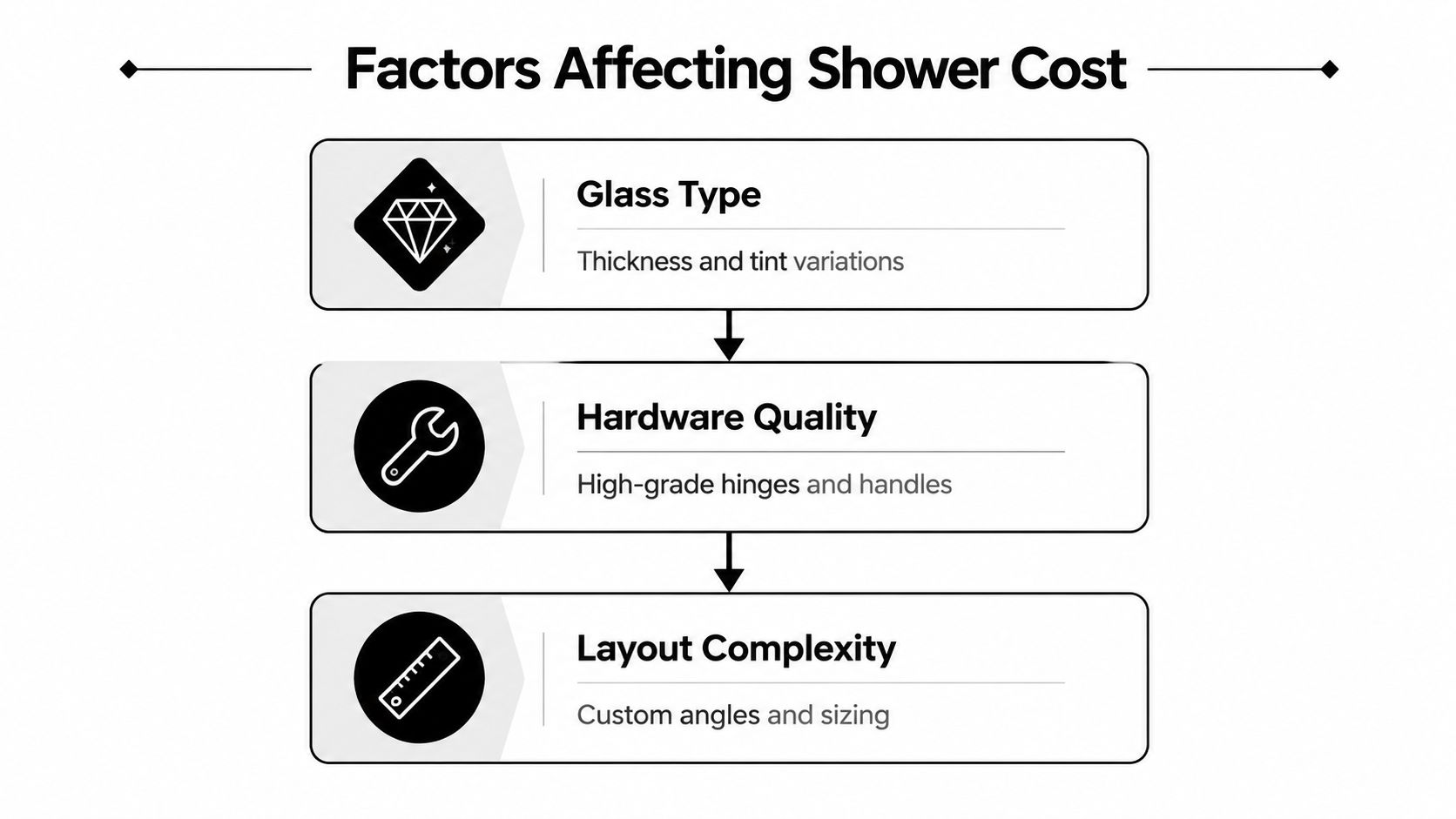
The first driver is glass specification. Frameless designs rely on thicker glass and tighter tolerances. If the opening is non-standard, the panel often needs custom fabrication rather than a stock size.
The second driver is hardware quality. Better hinges and brackets cost more, but they also handle heavy glass better and hold alignment longer. In a bathroom, that matters.
The third is layout complexity. A straight screen on square walls is one thing. A screen that has to work around an awkward nib wall, a sloping ceiling, a recessed channel, or a tight door swing becomes a more exact installation.
Here's the hierarchy most homeowners should keep in mind:
Custom sizing and shape
Custom panels, unusual returns, and non-standard openings generally move the quote faster than any cosmetic choice.Bathroom condition before the screen arrives
Out-of-plumb walls, bowed substrates, poor tile cuts, and inconsistent floor level all make the glazier's work harder.Finish selections
Premium hardware finishes and higher-spec components lift cost, but they're often easier to justify in a quality renovation because they stay visible every day.
What works and what usually doesn't
What works is designing the shower screen with the bathroom, not after it. If the tiler knows the screen detail in advance, grout lines, falls, hob size, and wall build-up can all support a clean fit.
What usually doesn't work is trying to “make frameless fit” into a room that wasn't set up for frameless. That's when installers start compensating for poor surfaces, and the final result can still look compromised.
A shower screen exposes errors. Frames can hide some of them. Frameless rarely does.
Another practical point is restraint. Not every bathroom needs multiple panels, expensive coatings, or boutique fittings. In many homes, a standard layout with solid hardware gives the best result for the money.
Sample Quote Scenarios for Melbourne Homes
The easiest way to understand shower screen installation cost is to look at real-world renovation patterns. Not exact invoices. The shape of the job.
Scenario one simple replacement
A small apartment bathroom in Kew has an old framed screen that's leaking at the corners and looks tired. The owner isn't rebuilding the whole room. They want a neat replacement that improves appearance without opening up the walls.
A framed or semi-frameless option usually makes sense in this context. The lower-cost path is framed, commonly sitting around AUD 800 to AUD 1,500 based on the verified Melbourne and Victorian ranges already noted earlier in this article. It suits a like-for-like replacement because it's more forgiving if the bathroom isn't perfectly square.
Typical quote shape:
- Supply of standard screen with basic hardware
- Removal of old enclosure
- Installation and resealing
- Minor making-good where practical
The mistake here is forcing a premium frameless screen into an older bathroom with existing tiles and limited rectification scope. The product can be good and still be the wrong fit for the room.
Scenario two full ensuite renovation
A family home in Highett is doing a complete ensuite renovation. The walls are being rebuilt, waterproofing is redone, large-format porcelain is going in, and the owners want a custom frameless screen in a dark hardware finish.
This is exactly the type of project where a frameless screen earns its keep. The room is being prepared correctly, so the screen isn't trying to solve existing defects. Because the bathroom renovation is integrated, the builder can coordinate the waterproofing, screeding, tiling, and final glass measure in the right order.
The total bathroom spend matters more than the isolated screen number here. Homeowners who focus only on the cost of glass usually miss the value in sequencing and avoiding rework.
Scenario three architectural feature
A Brighton new build has a larger shower zone, more open space, and a strong design brief. The screen is no longer just a practical divider. It's a visible architectural element in the bathroom.
This kind of job often pushes toward the upper end of the local frameless range because the design asks more of the materials and the installation. The panel spans are larger, the visual lines matter more, and the tolerance for imperfect alignment is lower.
A premium result here usually depends on three things:
- Early detailing with the bathroom design
- High-grade hardware that suits heavier glass
- An installer working from true surfaces, not patched ones
The common thread across all three scenarios is simple. The right screen is the one that matches the condition of the bathroom and the scope of the renovation, not the one with the best showroom photo.
Compliance Timelines and The Role of a Registered Builder
A shower screen is fitted late in the job, but compliance starts much earlier. If the waterproofing, substrate prep, plumbing positions, and tiling sequence aren't managed properly, the shower screen stage becomes slower, riskier, and more expensive.
In Victoria, shower screen installation costs rose 18% annually from 2022 to 2025, driven by standards including AS 3740 for waterproofing, and those compliance requirements add 10 to 15% to labour fees because certified installers are needed, according to Wellfor's 2025 shower door installation cost breakdown.
Why timing matters
The screen installer should be arriving to a bathroom that is ready, dry, tiled, and dimensionally reliable. If waterproofing certificates are unclear, tile set-out hasn't considered fixing points, or wall lines are inconsistent, everyone starts improvising.
That's when jobs drift. The glazier delays. The owner waits. Another trade gets called back. Small sequencing mistakes create expensive friction.
For homeowners dealing with renovation paperwork, waterproofing records and certification matter as much as the visible finish. If you're unsure what should be documented in Victoria, it helps to review a waterproofing compliance certificate guide for Victorian bathroom works.
Why registered builder coordination saves money
A registered builder brings order to the sequence. The builder doesn't just appoint trades. They manage handover points between waterproofing, screeding, tiling, plumbing, and final screen installation.
That matters because shower screens rely on all of those earlier stages. A registered builder can catch issues before the glass is measured, not after.
Good bathroom renovations are coordinated backwards from the finish. If the final screen needs straight lines and clean fixing points, the builder has to protect that outcome from day one.
Trying to run separate trades yourself can work on a very simple job. On anything more substantial, it often creates overlap, uncertainty, and avoidable cost.
How to Hire the Right Installer and Save Money
The cheapest quote isn't always the cheapest job. If the installer doesn't understand how the screen interacts with waterproofing, tile tolerances, and compliance, you can save at the front and pay later.
Australia's BCA and NCC-related waterproofing obligations are often missed in basic online pricing. As noted in Horow's 2025 installation cost guide, compliance items tied to strict mandates can add 20 to 35% or $400 to $1,200 to base costs for certificates and leak-testing. That's why cutting corners on who manages the work can be expensive.
A shortlist that protects your budget
When you speak to installers or builders, ask for the basics in writing:
- Registration and insurance. If bathroom renovations are involved, confirm they're appropriately registered and insured for the scope.
- A detailed written quote. You want materials, labour, inclusions, and exclusions clearly listed.
- Recent Melbourne bathroom work. Not generic gallery photos. Recent work in homes similar to yours.
- Trade coordination plan. Ask who handles waterproofing, tiling, measurements, and final installation timing.
Where to save and where not to
There are sensible ways to reduce shower screen installation cost without lowering the standard of the bathroom.
- Keep the layout standard if you can. Straight runs and standard panel sizes are usually easier to price and install.
- Spend on preparation. Plumb walls and good tile work make every later trade more efficient.
- Avoid bargain hardware in wet areas. It's touched daily and carries the stress of heavy glass.
- Bundle works under one manager when the bathroom is being fully renovated. That usually prevents call-backs and mismatch between trades.
A good installer protects the bathroom. A good registered builder protects the whole sequence.
If you're planning a bathroom renovation and want a realistic view of shower screen installation cost in Melbourne, Melbourne Tiling Services P/L can help you price the full project properly. Their team handles bathroom renovations, waterproofing, tiling, screeding, and frameless shower screens as an integrated build, which is the safest way to avoid leaks, delays, and expensive rework.
Write a Comment