
You've probably seen the photos already. White marble on the walls, soft veining across the vanity splashback, a shower that feels closer to a boutique hotel than a suburban bathroom. Then the practical questions start. Will it stain? Is it slippery? Can your existing bathroom even support it? And who's responsible if the waterproofing, screed or tile bed isn't right underneath an expensive stone finish?
That's where many Melbourne bathroom renovations go sideways. Marble is beautiful, but it's not forgiving. The finished look depends on decisions most homeowners never see once the room is complete. Falls to the drain, substrate flatness, movement joints, adhesive coverage, waterproofing detail around penetrations, and how the builder coordinates each trade all matter just as much as the tile selection.
In Melbourne homes, that's even more important because renovations often involve older structures, uneven floors, tight bathroom footprints and a mix of legacy plumbing and modern expectations. If you're planning a marble bathroom, feature wall or ensuite upgrade, you need more than a tile showroom opinion. You need a builder's view of the whole assembly.
Table of Contents
- Your Guide to Melbourne Marble Renovations
- Choosing the Right Marble Type and Finish
- Marble vs Marble-Look Porcelain Tiles
- Using Marble in Bathrooms and Wet Areas
- What to Expect During a Marble Renovation
- How to Choose a Tiler and Registered Builder
- Melbourne Marble Tile FAQs and Next Steps
Your Guide to Melbourne Marble Renovations
A typical marble job starts with a client focused on the visible layer. They've chosen a stone, saved reference images, and know the mood they want. What they usually haven't considered yet is whether the bathroom floor is level enough, whether the wall framing is straight, or whether the shower area can be rebuilt to suit stone rather than just “accept tiles”.
That difference matters. A marble renovation isn't just a tiling job with a nicer product. It's a coordinated bathroom renovation where the registered builder has to manage demolition, substrate preparation, waterproofing, screeding, plumbing rough-in, electrical work, tile set-out and final fit-off so the stone performs properly.
In Melbourne, older homes often add another layer of complexity. Timber movement, out-of-square walls, patched floors and previous renovation shortcuts show up fast once demolition starts. Marble won't hide those issues. It highlights them.
Practical rule: If the room isn't prepared to a high standard before tiling starts, marble won't save it. It will expose it.
That's why homeowners looking for marble tiles in Melbourne should think about the full project lifecycle, not just the sample board. The right outcome comes from good planning, disciplined trade sequencing and realistic expectations about care and cost. If you treat marble like a premium finish sitting on top of an average bathroom build, you'll likely pay for the same work twice.
Choosing the Right Marble Type and Finish
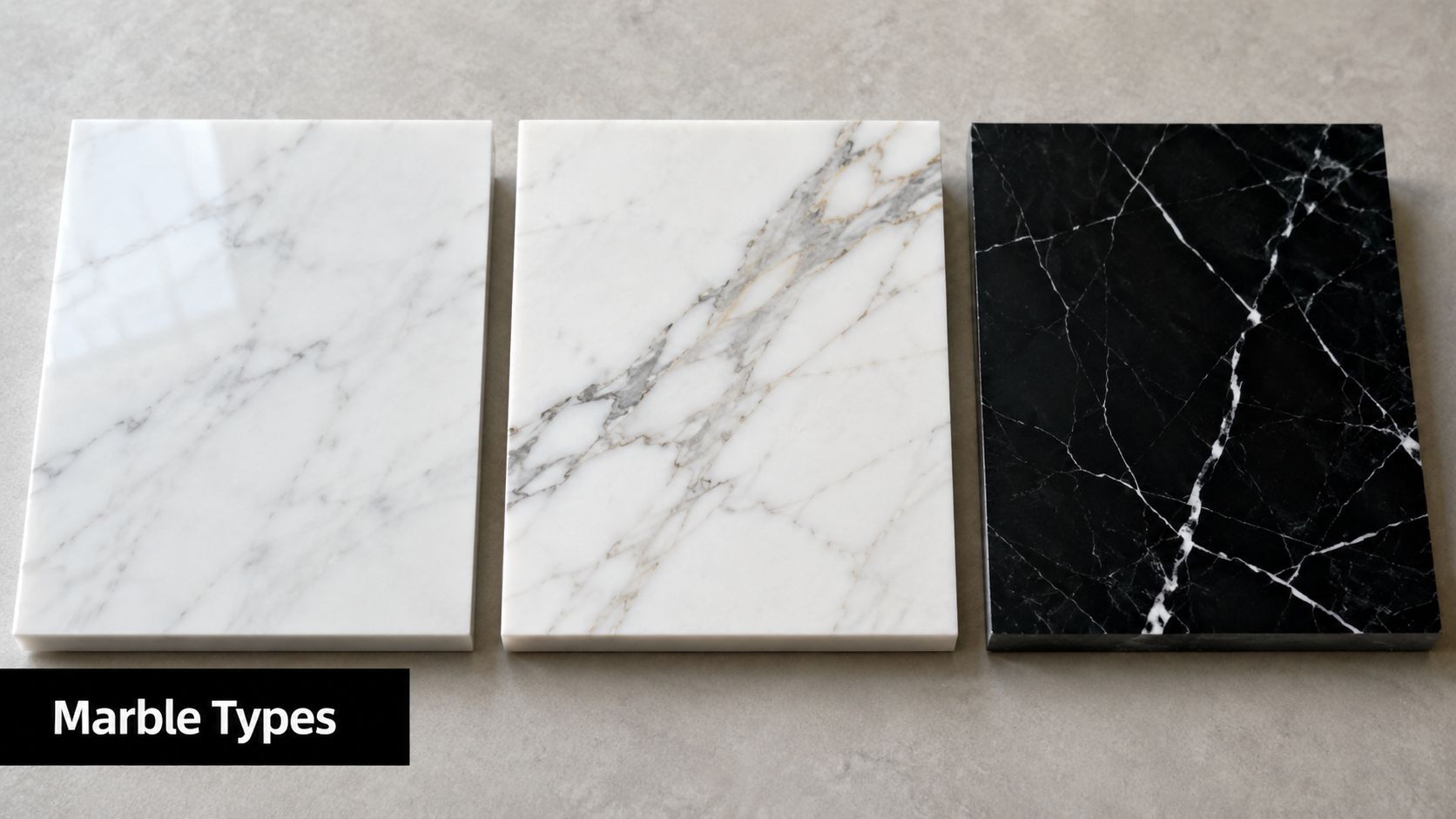
Some people choose marble by name alone. That's risky. You're better off choosing by visual movement, colour temperature, finish, and intended use. Marble can read soft and quiet or bold and dramatic, and the same stone can feel completely different once it's polished, honed or cut into a smaller pattern.
How marble became a premium finish in Melbourne
Marble has never really been an ordinary material in Victoria. A documented marble tile from circa 1878 shows it was already used in the colonial era, but local deposits were small and uneconomic, so imported marble stayed comparatively expensive and helped establish marble as a premium architectural finish in Melbourne from the beginning, as noted in this history of Carrara marble and the Victorian record.
That legacy still affects buyer expectations now. People usually choose marble because they want a room that feels sophisticated, customized, and permanent. The stone carries that expectation with it.
How to choose the look
Start with the amount of variation you can live with.
- Low-variation marble suits bathrooms where you want a calm, consistent backdrop. It works well with minimalist joinery, brushed metal tapware and softer lighting.
- Higher-contrast marble suits feature walls, vanity zones and larger bathrooms where strong veining has room to read properly.
- Warmer whites and creamy bases tend to soften a space. They pair better with brass, warm timber and off-white paint.
- Cooler whites and grey veining feel sharper and more architectural. They often sit better with black fixtures, chrome and cleaner-lined joinery.
If you're selecting from small samples, ask to see multiple pieces laid together. Marble is a natural material. The tile you approve in your hand won't show the full spread of tone and veining across an entire bathroom.
Which finish works where
The finish changes both the look and the behaviour of the stone.
- Polished gives you more reflection and a dressier look. On walls and low-contact feature areas, it can be very effective.
- Honed gives a softer, flatter appearance. It usually feels less fussy in everyday bathrooms because it doesn't throw as much glare or highlight every mark the same way a highly reflective surface can.
- Textured or grip-oriented finishes are worth discussing for floors where safety matters more than shine.
Marble selection should always be tied to location. A finish that looks excellent on a wall niche may be the wrong call on a shower floor.
The phrase marble tiles Melbourne gets searched because people want the look. The better question is whether your chosen stone and finish suit your bathroom layout, cleaning habits and household use.
Marble vs Marble-Look Porcelain Tiles
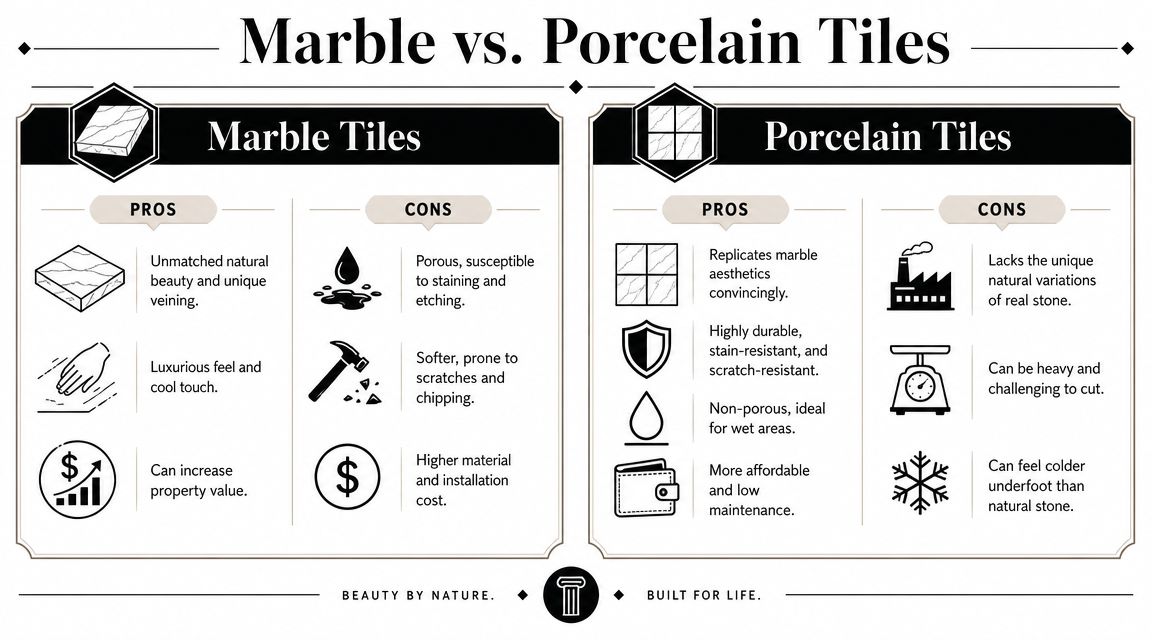
Natural marble isn't automatically the right answer. In plenty of Melbourne bathrooms, marble-look porcelain is the smarter specification. It won't give you the exact depth and random variation of real stone, but it does solve many of the maintenance concerns that frustrate homeowners after the renovation glow wears off.
The honest comparison
Neutral Australian tile guidance points out that marble-look tiles are a durable, low-maintenance alternative, often chosen specifically to avoid the sealing and careful cleaning that natural stone demands in wet areas. You can see that position in this Australian guide to marble-look tiles.
| Feature | Natural Marble | Marble-Look Porcelain |
|---|---|---|
| Appearance | Unique veining and natural variation | Consistent marble-inspired design |
| Surface character | Cooler, more organic feel | More manufactured feel, though often very convincing |
| Maintenance | Needs more care in wet areas | Lower maintenance day to day |
| Staining and etching risk | Higher risk | Lower risk |
| Installation | Demands tighter handling and set-out | Usually more forgiving overall |
| Best fit | Design-led bathrooms where owners accept upkeep | Family bathrooms, rentals, high-use spaces |
For many households, porcelain is the practical win. That's especially true in children's bathrooms, investment properties, compact ensuites and homes where the owner wants the marble aesthetic without the care routine that comes with natural stone. If that's the direction you're considering, this guide to porcelain bathroom tiles is a useful next read.
When each option makes sense
Choose natural marble when the brief is led by material quality, uniqueness and a premium finish, and when the homeowner is comfortable with a more careful cleaning and maintenance approach.
Choose marble-look porcelain when the bathroom will be heavily used, when cleaning needs to stay simple, or when the project budget is better spent on layout improvements, custom joinery, under-tile heating or upgraded fixtures instead of the stone itself.
The wrong choice isn't porcelain. The wrong choice is specifying natural marble for a bathroom that will be used hard, cleaned casually and expected to behave like a non-porous product.
There's also an installation trade-off. Marble usually asks for more caution at every step, from tile sorting to cutting to edge alignment. Porcelain can still be demanding, especially in larger formats, but it usually gives renovators a wider margin for everyday use once the room is finished.
Using Marble in Bathrooms and Wet Areas
Bathrooms are where marble either proves itself or becomes a headache. Steam, soap residue, hair products, body oils and repeated wetting all test the surface and the installation underneath. A bathroom can absolutely be finished in marble, but it has to be approached as a wet area system, not just a decorative selection.
Wet area reality
The stone is only one part of the assembly. The more important questions are whether the substrate is sound, whether the waterproofing has been done properly, and whether the floor falls and detailing suit the room. If you're assessing a renovation scope, make sure waterproofing compliance is part of the conversation, not an afterthought. This overview of a waterproofing compliance certificate in Victoria is relevant for that reason.
Natural marble also asks more from the owner after handover. You can't treat it like a set-and-forget surface. If the household uses harsh cleaners, leaves products sitting on the stone, or expects the finish to stay pristine with no upkeep, problems tend to show up sooner.
Cleaning and sealing expectations
Marble needs a gentler maintenance mindset than porcelain. That doesn't mean it's unusable. It means the owner should expect ongoing care.
A practical bathroom maintenance plan usually includes:
- Use stone-suitable cleaners: Avoid aggressive products that can dull or mark the surface.
- Keep residues off the stone: Soap, shampoo and coloured products shouldn't be left to sit on floors or ledges.
- Treat sealing as routine maintenance: Natural stone benefits from being checked and maintained over time rather than forgotten once the renovation is finished.
Those points sound minor, but they shape long-term satisfaction more than the initial tile selection does.
Safety on bathroom floors
Finish selection matters for more than appearance. For wet areas, the choice of finish is critical for safety. Public-facing supplier content often highlights polished marble because it photographs well, but guidance aimed at buyers notes that the slip resistance of honed or textured finishes should be considered for wet floors, especially in family bathrooms and showers. That concern is outlined in this Melbourne marble tile guide discussing finish options.
That's why polished marble is usually more comfortable on walls than on shower bases or main bathroom floors. On a vertical surface, it can add light and a refined finish. Underfoot, especially in a bathroom used by kids or older family members, a more slip-conscious finish is often the better call.
Don't choose a bathroom floor finish from a showroom spotlight. Choose it based on how it behaves when water, soap and bare feet are involved.
What to Expect During a Marble Renovation
A marble bathroom renovation usually looks slow from the outside. That's because the important work happens before the room starts looking expensive.
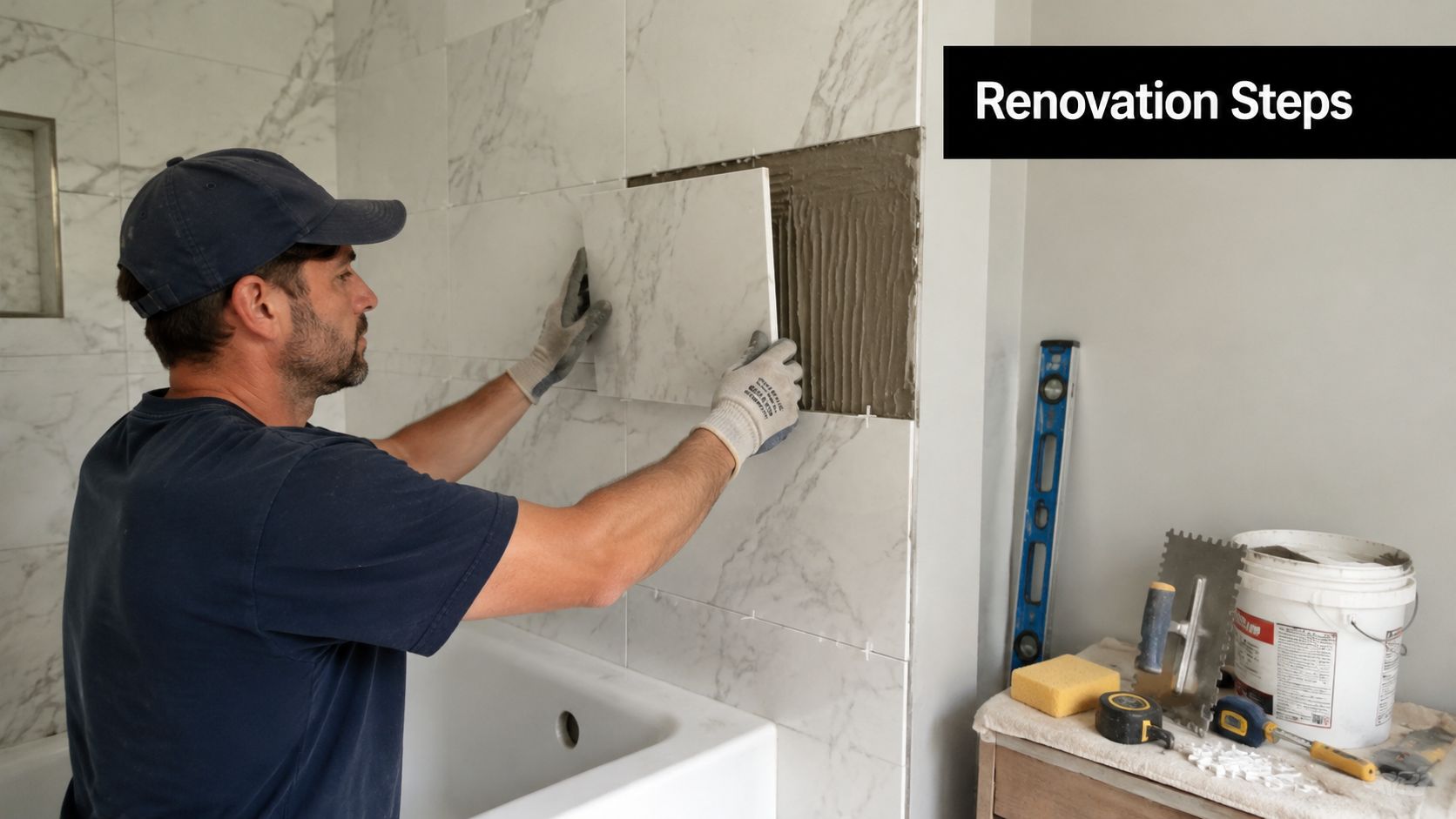
The build sequence matters
A proper sequence often runs like this:
Demolition and strip-out
The room is taken back so hidden issues can be found early. In older Melbourne bathrooms, that can include rotten sheet flooring, patch repairs, bad falls or wall framing that isn't straight.Structural and service preparation
Plumbers and electricians do their rough-in work. The builder checks framing, sheeting and floor condition so the room is ready for wet area construction.Waterproofing and substrate preparation
Many premium tile jobs are won or lost during this stage. Stone won't compensate for a poor base.Screeding, levelling and set-out
The room needs to be prepared for the tile format, joint pattern and drain location chosen.Stone installation and finishing trades
Tiling, grouting, sealing where relevant, fixture fit-off and final detailing happen after the room is properly prepared.
Why flatness is not optional
For stone tiles in wet areas, installation guidance requires 100% mortar contact to avoid voids where water can sit and degrade the bond. The same specification notes that for 3/8" stone tile, maximum mortar thickness after setting should be 3/32", and that lower contact allowance applies only to thicker stone in drier conditions. That's set out in these stone installation specifications for marble.
In practical terms, that means the floor and walls must already be very flat before the tile goes down. You can't rely on adhesive to fix a bad substrate.
A local product example also shows how tight these tolerances are. One marble tile line is supplied at 10 mm thickness, with 100 tiles per m² and 0.60 m² per box, which is the kind of format where substrate flatness and lippage control become very visible in finished work. That product detail appears on this 10 mm marble tile listing.
Here's the practical effect on site:
- Uneven screeds create edge mismatch: Stone shows lippage fast, especially under downlights and side lighting.
- Skinned-over adhesive creates hollow spots: Once that bond is compromised, the tile may sound hollow or fail over time.
- Poor movement-joint handling causes stress: Joints need to function. Filling them incorrectly defeats the point.
A short installation video helps show the level of care premium stone work demands:
Project management is part of the finish
Modern marble tile work is also shaped by product evolution. According to Marble Systems, thin marble tiles only became widely available in the late 1980s, which changed how stone could be used across walls, floors and decorative surfaces and made precision installation more important in contemporary bathrooms, as described in these interesting facts about marble tiles.
That's one reason registered builders matter on stone bathrooms. The finished result depends on who coordinates demolition, waterproofing, levelling, tile sequencing and final fit-off. The marble is visible. The management discipline underneath it is what keeps it looking right.
How to Choose a Tiler and Registered Builder
If you're spending serious money on a bathroom, don't hire on tile photos alone. Marble asks for technical control, not just visual taste. The person pricing the work should understand wet area construction, tolerances, sequencing and who carries responsibility when multiple trades are involved.
What to check before signing
Look for a contractor who can explain the build-up under the tile, not just the tile face. That usually means asking about:
- Registration and scope: Can they manage the bathroom renovation as a whole, or only the tiling component?
- Waterproofing responsibility: Who does it, how is it documented, and who stands behind it?
- Substrate preparation: Do they allow for screeding, levelling and straightening where needed, or are they assuming the room is already ready?
- Detailed quoting: Does the quote separate demolition, preparation, waterproofing, tiling and finishing items so you can see where money is going?
One practical option for homeowners comparing firms is Melbourne Tiling Services P/L, which operates as a bathroom renovation and tiling contractor rather than only a tile layer. That matters on marble work because the final result depends on the whole bathroom build sequence.
Questions worth asking
The quality of the answers tells you a lot.
Ask how they handle stone tile sorting, set-out and movement joints. Ask what happens if demolition reveals out-of-level floors or damaged sheeting. Ask whether they're comfortable refusing a polished marble floor in a family shower if they think it's the wrong specification. The right contractor won't just say yes to everything.
A good marble installer doesn't sell certainty where none exists. They identify risk early, price preparation properly, and explain where the finish will succeed or struggle.
It also helps to ask about design support. Marble is one of those materials where layout matters almost as much as the product. Vein direction, niche placement, mitred corners, feature walls and transitions all need to be resolved before installation starts, not improvised on site.
Thin marble tiles becoming common only in the late 1980s changed the skill set required for modern installations. Today's stone tiler needs tighter control than what older, thicker systems demanded. That product-history shift is one reason experience in premium bathrooms matters when you're choosing who handles the work.
Melbourne Marble Tile FAQs and Next Steps
Common questions from renovators
How much does a marble bathroom cost in Melbourne?
It depends on the tile itself, the tile format, how much preparation the room needs, and whether you're renovating the full bathroom or only retiling. Marble pushes cost up through both material and labour. The hidden variables are usually demolition, levelling, waterproofing rectification and detailing.
Can marble be used with underfloor heating?
It can be considered as part of a bathroom build, but the system has to be planned with the substrate, tile format and wet area construction in mind. This isn't something to add casually after tile selection.
Can chips or stains be repaired?
Sometimes. Minor damage may be improved, but the success of a repair depends on the stone type, finish, location and severity of the issue. Polished and honed surfaces can behave differently when repaired, so expectations need to be realistic.
Is marble suitable for every bathroom?
No. It suits owners who value natural material and accept care requirements. In hard-working family bathrooms, rentals and lower-maintenance households, marble-look porcelain is often the safer long-term choice.
The main takeaway is simple. A marble bathroom can look exceptional, but only if the project is treated as a construction job first and a styling exercise second. The tile choice matters. The preparation underneath it matters more.
If you're planning a marble bathroom, ensuite, shower rebuild or full wet area upgrade, Melbourne Tiling Services P/L can help you assess the room properly, identify the preparation work required, and provide a free quote with 3D design support so you can make decisions before construction starts.
Write a Comment