Waterproofing Balcony in Melbourne: A Builder’s Guide 2026

If you're reading this after seeing a damp ceiling below your balcony, loose tiles at the doorway, or white chalky marks creeping across the grout, you're already past the cosmetic stage. Most leaking balconies in Melbourne don't fail because someone chose the wrong brand of membrane. They fail because the whole assembly wasn't assessed, detailed, drained, and finished as one system.

That's the part many owners only discover after paying for a balcony to be "waterproofed" once already. The tiles look new. The joints are fresh. Then winter arrives, water tracks into the room below, paint blisters, and everyone starts blaming the membrane. In practice, the actual fault often sits at the wall junction, the drain, the balustrade penetrations, the substrate, or the falls.

As a Melbourne Registered Builder, I've seen the same pattern in balcony repairs and in bathroom renovations. Water doesn't care which trade touched the job last. If the substrate moves, the flashing is wrong, the outlet isn't integrated, or the tiling team covers a membrane before it's ready, the leak returns. Waterproofing balcony areas properly is never a one-product decision. It's a building-envelope decision.

Table of Contents

How to Properly Assess Your Balcony's Condition

A common Melbourne callout goes like this. The balcony was "waterproofed" a few years ago, the tiles still look serviceable, yet the ceiling below is stained and the door frame is starting to swell. In that situation, the membrane brand is rarely the first question. The primary question is where the assembly is failing. Movement, drainage, junctions, and termination details cause many of the leaks I see, and a surface-level inspection misses them.

Start by reading the symptoms as a builder would, not as a painter or tiler would. Efflorescence on grout lines, tile edges, concrete soffits, or nearby walls means moisture is travelling through the build-up and evaporating at the surface. Drummy tiles matter too. A hollow sound often points to bond failure after water has sat beneath the finish or after the substrate has moved beyond what the tile system can tolerate.

Ponding is another giveaway. If water sits after rain, especially at corners, door thresholds, or around outlets, the balcony may have poor falls, blocked drainage, or a badly set outlet height. That is how a balcony can leak even after someone has applied a membrane. The water is still being trapped and pushed toward weak points.
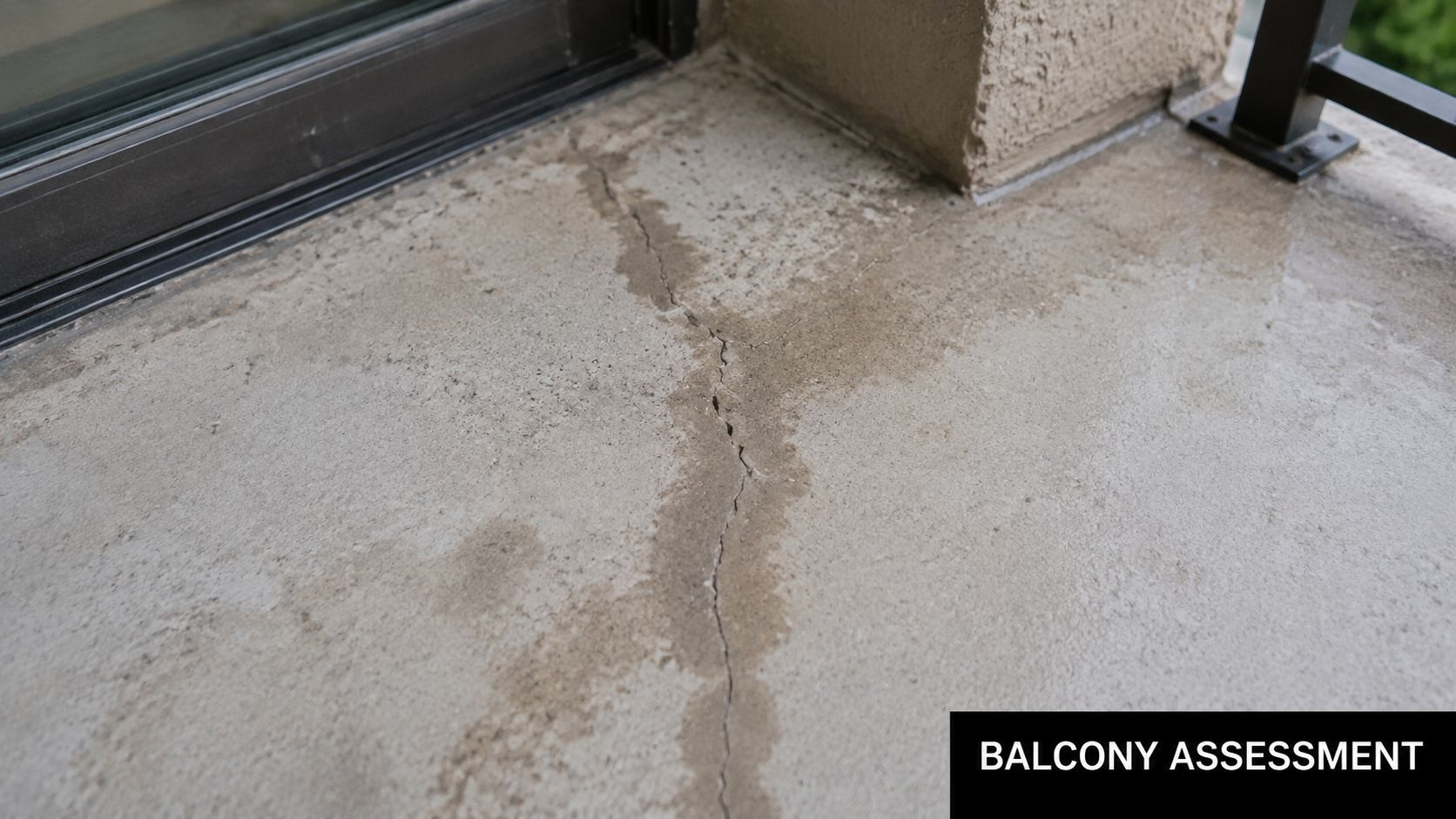
Close up view of a concrete balcony floor showing a significant structural crack and water damage.

The inspection has to go beyond the walking surface. Check the soffit and the room below for staining, swollen plaster, mould, or peeling paint. Check the wall-to-floor junction, door threshold, balustrade posts or base plates, edges, and drip details. These are the spots where unqualified repairs usually fall short. A quick reseal over grout or a coating over old tiles does nothing if water is entering at a threshold, a cracked screed, or a poorly detailed penetration. If internal damage is already showing, arrange leak detection in Melbourne before approving any repair scope.

One rule saves a lot of money. Assess the whole system before touching the finish.

Separate surface wear from system failure

Some defects are maintenance issues. Others point to a failed assembly that needs demolition and rebuilding in line with Australian Standards, including AS 4654.1 and AS 4654.2. The skill is knowing the difference.

Warning signs that usually indicate more than cosmetic wear include:

  • Recurring cracks in grout or tiles: Repeated cracking often points to structural movement, substrate deflection, or missing movement joints.
  • Loose edge tiles, lifted trims, or failing balcony fronts: Perimeters cop a lot of water and movement. If the edge is failing, the detailing below it often is too.
  • Persistent damp below the balcony: Water has usually passed the tile layer and is affecting the substrate, framing, soffit, or adjacent wall.
  • Blocked, undersized, or badly integrated outlets: Drainage defects place constant pressure on the membrane and surrounding junctions.
  • Sealant failure at doors and wall junctions: Once these interfaces open up, water tracks into the areas that are hardest to dry and hardest to repair.

DIY repairs and cheap trade fixes often target the visible symptom. Regrout the tiles. Replace a bead of sealant. Roll on a coating. Those methods can tidy the surface, but they do not address falls, substrate cracking, membrane termination heights, outlet integration, or movement. As a Registered Builder, I treat a balcony with multiple symptoms as a building-envelope problem, not a tiling problem. The remedy may involve strip-out, substrate repair, re-screeding to correct falls, compliant waterproofing, flood testing, and only then re-tiling. That full sequence is what stops repeat leaks.

Choosing the Right Waterproofing System for Melbourne

The right system depends on the substrate, exposure, detailing complexity, traffic, finish requirement, and whether you're dealing with new work or remediation. Melbourne conditions make that choice more demanding because balconies cop wind-driven rain, temperature swings, and strong UV over time.

Compliance comes before product selection

In Australia, balcony waterproofing isn't just a product selection exercise. It must comply with AS 4654.1 and AS 4654.2, and cited Australian guidance notes that membranes used as part of external wall construction should terminate at least 150 mm above finished floor level, with balcony materials also needing to meet relevant fire-performance expectations in the cited guidance. The same guidance recommends inspecting balcony waterproofing and rainwater outlets twice yearly because these areas sit within the external envelope and are exposed to ongoing weather and UV stress, as outlined in this Australian best-practice waterproofing reference.

That requirement alone rules out a lot of casual repair methods. If someone suggests coating over the tile surface without dealing with upturns, terminations, outlets, thresholds, and interfaces, the job is already heading in the wrong direction.

For owners comparing systems, it helps to understand the trade-offs rather than chasing a miracle product. Melbourne projects often involve liquid-applied membranes, sheet membranes, or cementitious systems. The better question is whether the chosen system suits the substrate and detailing conditions. For a broader overview of waterproofing systems used in Melbourne projects, look at the whole build-up, not just the membrane label.

Balcony Waterproofing System Comparison

System Type Best For Pros Cons
Liquid membrane Complex shapes, detailed junctions, renovations with multiple penetrations Seamless application, good for irregular layouts, practical around corners and penetrations Heavily dependent on substrate prep, coverage control, curing, and detailing discipline
Sheet membrane Larger open areas, projects where consistent thickness is critical Factory-made thickness, reliable for broad spans, useful where flat planes dominate Junctions and laps need very careful execution, less forgiving on awkward geometry
Cementitious system Specific concrete-based applications and selected remediation scopes Compatible with some mineral substrates, useful in certain assemblies Not a universal answer for every balcony, still depends on crack repair, detailing, and drainage

What usually works and what usually doesn't

What works is a system matched to the actual balcony. Porous concrete and non-porous sheeted surfaces don't behave the same way, so primers and membranes need to be paired properly. Australian technical guidance also stresses that the substrate must be clean, dry, and sound before any membrane goes on. That applies just as much to balconies as it does to wet areas inside a home.

What doesn't work is selecting a membrane first and hoping the rest of the balcony adapts to it. That approach is common with DIY jobs and unqualified trades. They see a leak, buy a coating, and ignore the failed falls, the wall flashing, or the post penetrations. The balcony looks refreshed for a short period, then the same water path reappears.

A compliant balcony isn't defined by the bucket or the roll. It's defined by how the entire assembly sheds water.

The Critical Steps of a Compliant Installation

Most failed balcony jobs don't fail at the obvious stage. They fail earlier, when the substrate wasn't properly prepared, when details were left unresolved, or when the finish trade moved too quickly. A compliant installation has a sequence, and each part relies on the one before it.

Preparation decides the result

Surface preparation is where many DIY and low-cost jobs fall apart. Australian technical guidance is clear that adhesion failures often start with poor preparation. The surface must be confirmed as clean, dry, and sound, joints and penetrations must be treated before membrane application, and allowing a 48-hour weather buffer before starting is common field practice so moisture and rain don't compromise bond or curing, as described in this Australian substrate preparation guidance.

That means a proper installer doesn't just sweep the balcony and start rolling on product. The substrate gets inspected for contamination, laitance, cracks, hollows, weak patches, and movement. Unsound screed is removed. Cracks and gaps are repaired. Falls are checked. If the balcony needs grinding, patching, or corrective screeding, that happens first.

Details are where balconies are won or lost

Once the base is ready, the membrane system only succeeds if the details are resolved properly. Corners, wall-floor junctions, drain flanges, threshold transitions, movement joints, and balustrade penetrations all need deliberate treatment. That's where bond breakers, reinforcement bandage, compatible primers, puddle flanges, angle fillets, and flashing integration matter.

A professional sequence usually looks like this:

  1. Substrate correction first: Repair cracks, stabilise weak areas, and create proper falls if the balcony holds water.
  2. Primer matched to surface: The primer has to suit the substrate and membrane combination. Wrong pairing is a common cause of failure.
  3. Detail treatment before field coating: Corners, joints, and penetrations get reinforced ahead of the main membrane area.
  4. Drainage elements integrated early: Outlets, flashings, edge trims, and thresholds are set so the membrane can tie into them continuously.
  5. Membrane applied in controlled stages: Coverage is checked carefully instead of trying to rush the whole balcony in one pass.
  6. Protection before finishes: The membrane must be protected from damage by following trades during tiling or topping works.

For larger or more complex jobs, a Victorian waterproofing compliance certificate process can be part of the documentation trail owners should ask about.

If a penetration is added after the membrane goes down and nobody re-details it properly, the waterproofing system has already been compromised.

Curing, protection, and paperwork

A membrane that looks dry isn't always ready for the next trade. Installers need to respect manufacturer cure windows and site conditions. They also need to keep other trades off the surface or protect it properly. A dropped trowel, dragged tile stack, or rushed adhesive application can damage a sound membrane before the balcony is even finished.

Builder-led coordination matters. On balcony and bathroom renovations alike, sequencing avoids the classic handover dispute where every trade blames the one before. A compliant job leaves behind more than new tiles. It leaves behind evidence that the balcony was assessed, prepared, waterproofed, protected, and finished in the right order.

Why Properly Waterproofed Balconies Still Fail

The most frustrating balcony leaks are the ones that happen after the owner has already paid for waterproofing. In many of those cases, the membrane wasn't the actual weakness. The weak point was somewhere the eye doesn't go first.

The membrane isn't always the real problem

Australian technical commentary consistently points to junctions, penetrations, and drainage points as the main failure locations. It also makes a point many homeowners miss. Adding more membrane doesn't fix structural movement or incorrect slope. Those underlying issues have to be corrected first, as highlighted in this Australian commentary on balcony failure points.

That's why a balcony can leak even when the installed product itself is compliant. A few common examples:

  • Wall interfaces fail: Water gets behind the system where the balcony meets the wall because the flashing or termination is wrong.
  • Balustrade posts are the weak link: A post fixed through the waterproofing layer creates an obvious risk if the penetration wasn't detailed properly.
  • Movement cracks open new paths: If the substrate or structure moves, the stress often shows up at corners, joints, or edges.
  • Poor falls keep water in the wrong place: A membrane under constant ponding pressure is being asked to do more than it should.
  • Drainage details are incomplete: The outlet might exist, but the membrane isn't properly tied into it.
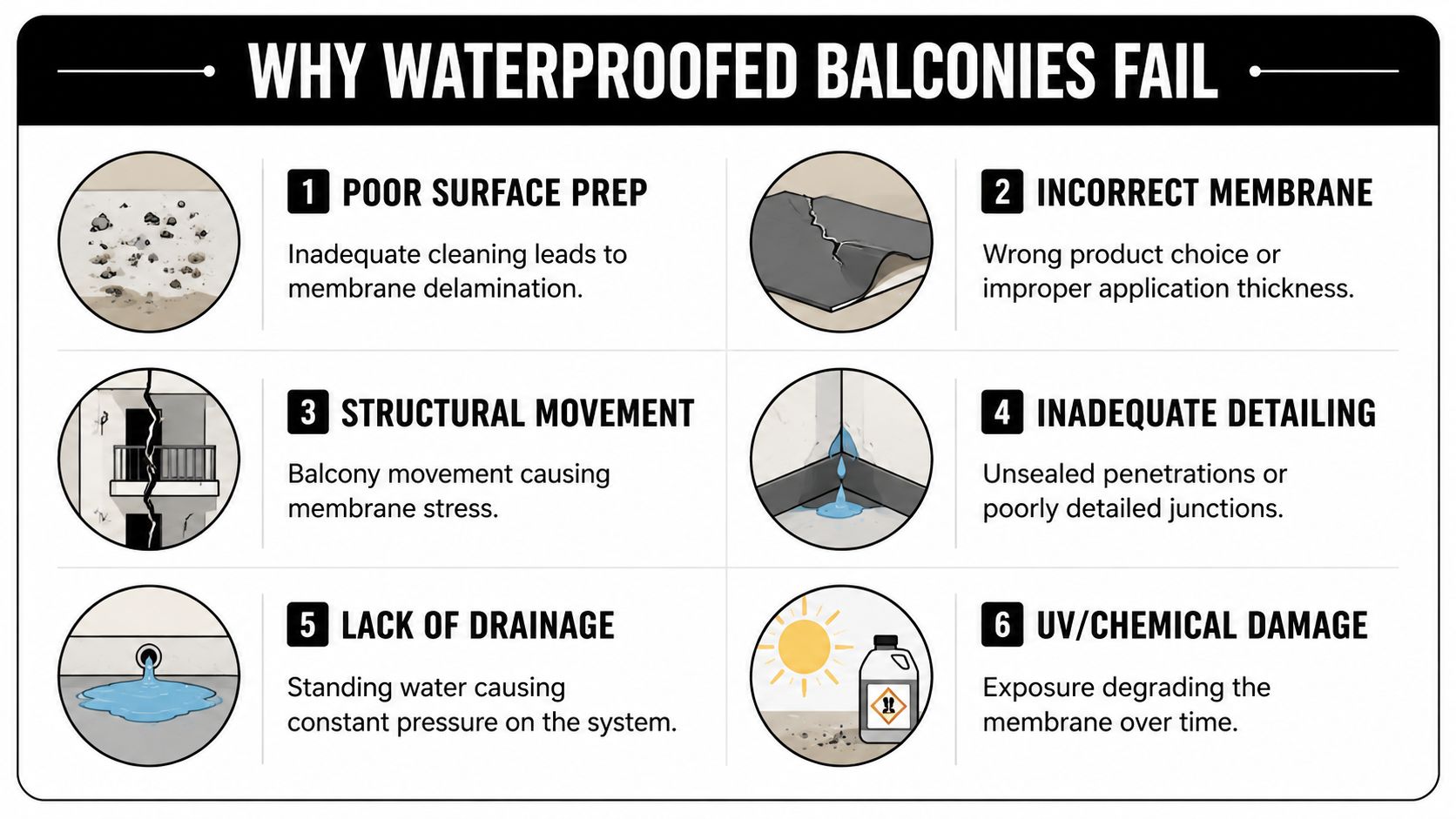
An infographic titled Why Waterproofed Balconies Fail, listing six common causes of structural waterproofing system failures.

When a contractor looks only at the visible surface, these causes get missed. A Registered Builder looks at the assembly as a whole. That often changes the remedy from "apply another coat" to "remove the finish, correct the falls, repair the flashing, then rebuild the system properly."

Why overlays over old tiles often disappoint

Waterproofing over existing tiles sounds attractive because it appears faster and less disruptive. Sometimes an overlay system can be viable. Often it isn't. The issue isn't whether an overlay product exists. The issue is whether the existing tiles, screed, bond, falls, and drainage can support a compliant new system.

If the old balcony has ponding, drummy tiles, trapped moisture, cracked screed, or failed edges, covering it can lock defects into the build-up. The leak path may shift rather than disappear. Owners then end up paying for demolition later, after already paying once for the shortcut.

A balcony can be freshly coated and still be fundamentally wrong underneath.

This is the point many unqualified trades miss. They treat waterproofing balcony work like painting. It isn't. It's remediation of an exposed structural surface over occupied space.

Tiling and Testing for a Bulletproof Finish

A balcony can look finished on Friday and leak by the first decent rain if the membrane was tiled over too early, damaged during installation, or locked under a tile bed that cannot cope with movement. I see that sequence often in Melbourne remedial work. The failure is then blamed on the membrane product, even though the underlying problem sits in the handover between waterproofing, testing, and tiling.

Testing before the tiles go down

Once the membrane has cured in line with the manufacturer's requirements, it needs to be inspected before any adhesive goes on. That means checking corners, upturns, puddle flanges, door thresholds, terminations, and any patched areas. Small defects at this stage are still easy to fix. After tiling, they are expensive to find and harder to prove.

Where the system and site conditions allow it, flood testing is a practical way to confirm the membrane is holding water and draining as intended. It can expose pinholes, weak junctions, and areas where detailing looked acceptable dry but fails under standing water. On a balcony over habitable space, that test is worth doing properly.

Patience matters here. A membrane that feels dry to the touch is not always ready for traffic, adhesive, or trapped moisture above it.

Tiling has to work with the waterproofing below

The tile finish is part of the weather-exposed assembly. If the tiler treats it as a cosmetic layer only, the waterproofing below is put at risk from day one. Exterior balconies in Melbourne move with temperature changes, moisture, and normal building settlement. The tiling system has to allow for that movement, not fight it.

Good practice includes:

  • Using exterior-rated compatible materials: Adhesive, grout, primer, sealant, and tile type need to suit the substrate, the membrane, and external exposure.
  • Protecting the membrane during tiling: Dropped tools, ladders, sharp tile edges, and stacked materials can puncture or bruise a cured membrane before the finish is even laid.
  • Keeping movement joints clear and correctly located: If a tiler bridges control joints or fills movement joints with rigid materials, cracking usually returns through the tiled surface.
  • Maintaining drainage through the finish: Adhesive build-up, poor tile selection, or bad set-out around outlets can reduce falls and create ponding that should have been avoided.
  • Finishing perimeters and penetrations properly: Balconies often leak at edges, balustrade bases, and threshold interfaces where the tile work looks neat but the waterproofing continuity has been compromised.

In balcony waterproofing, a lot of DIY jobs and unqualified trade-led jobs frequently come undone. The membrane may be compliant on paper, but the balcony still fails because the tiling stage ignored movement, blocked drainage, or damaged a detail that was already doing a hard job. A bulletproof finish comes from treating assessment, membrane installation, testing, and tiling as one controlled build sequence, not four separate tasks.

Hiring a Licensed Expert vs a DIY Disaster in Melbourne

A leaking balcony often pulls in more than one trade. You may need demolition, substrate repair, screeding, waterproofing, carpentry, plumbing attention to outlets, and then external tiling. That's exactly why these jobs go wrong when owners hire individual trades without anyone taking responsibility for the full sequence.
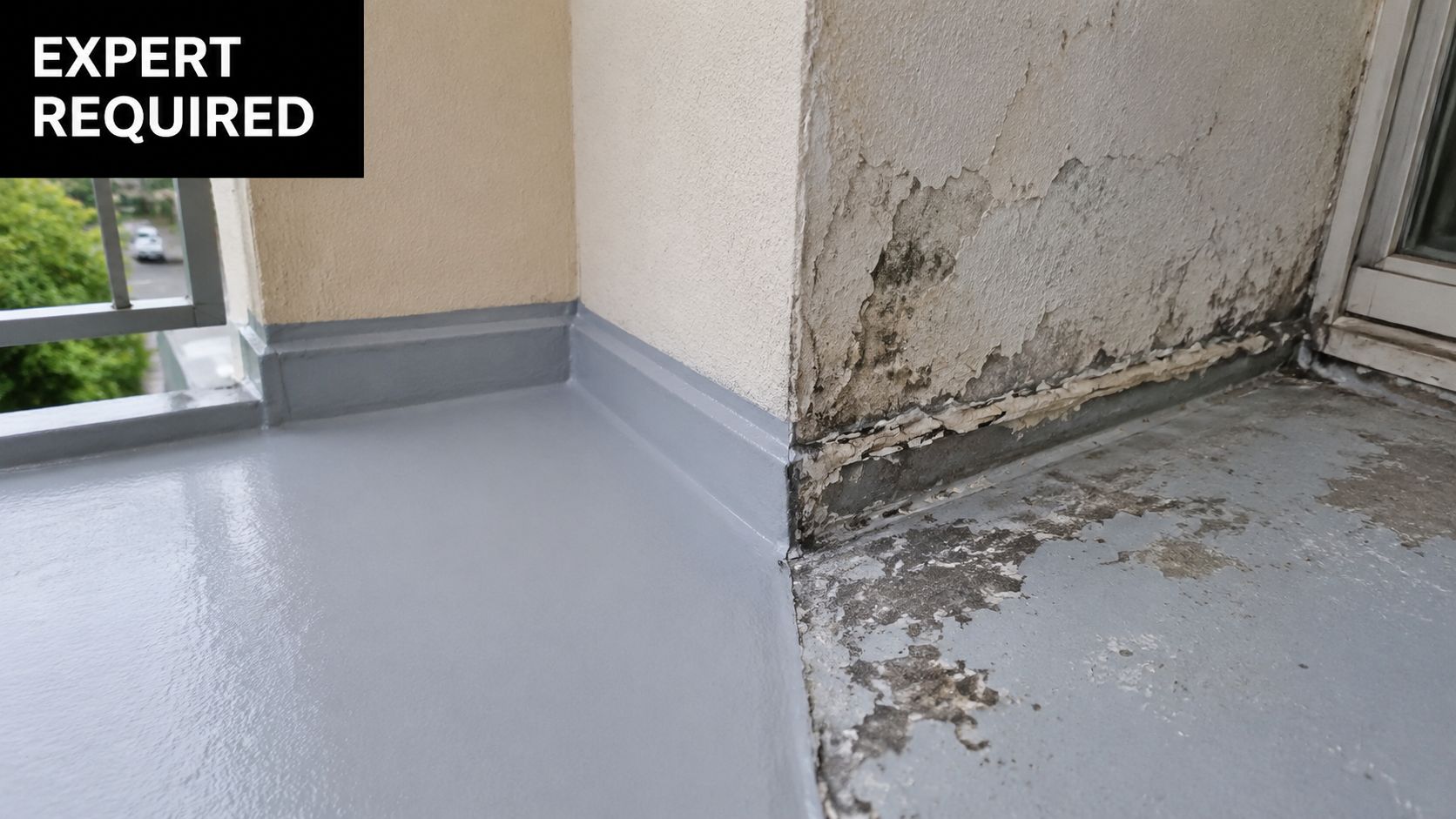
A close up view of a balcony showing damaged, peeling wall paint and concrete near a waterproofed section.

Why builder oversight matters

A tiler can lay tiles. A waterproofer can apply a membrane. A plumber can deal with outlet components. But once the balcony needs diagnosis, demolition decisions, fall correction, flashing review, and coordination between trades, a Registered Builder is often the person who can hold the whole job together.

That matters even more when owners ask whether they can waterproof over existing tiles. Industry guidance on remediation notes that this is only viable when the existing tiles, screed, and slope are sound. Where ponding or extensive cracking is present, partial demolition and re-profiling are commonly required before a compliant new system can be installed, as discussed in this balcony remediation guidance for tiled substrates.

In practice, builder oversight reduces a common problem. One trade says the leak is in the grout. Another says it's in the flashing. Another says the membrane failed. A builder looks at all of it, works out the sequence, and makes sure the remedial scope matches the cause.

For owners comparing providers, Melbourne Tiling Services P/L is one example of a contractor that combines tiling, waterproofing, screeding, and registered builder oversight for renovation and leak-rectification work. That's relevant on balconies for the same reason it matters in bathroom renovations. The wet-area risk sits across multiple trades, not one.

What to ask before you hire anyone

Use a short checklist before signing anything:

  • Ask who is responsible for the full scope: If screeding, waterproofing, tiling, and rectification are split between unrelated subcontractors, ask who carries final accountability.
  • Ask how they assess overlays versus demolition: Anyone who recommends coating over old tiles without discussing slope, substrate soundness, and trapped moisture is skipping the hard part.
  • Ask about standards and documentation: They should be comfortable discussing Australian Standards, membrane compatibility, detail treatment, and completion records.
  • Ask how they sequence trades: A good answer should include substrate prep, membrane curing, protection, and final finishes.
  • Ask about similar leak rectification work: Balcony remediation is different from simple external tiling.

The video below gives useful context on what professional balcony work should look like when failures have already appeared.

DIY balcony waterproofing usually fails for the same reason cheap repair scopes fail. They focus on the surface symptom and ignore the build-up underneath. By the time water shows inside, the job has already moved beyond a weekend coating fix.


If you need practical advice on a leaking or ageing balcony, Melbourne Tiling Services P/L can help assess whether the issue is a surface repair, a drainage and detailing defect, or a larger remediation job involving screeding, waterproofing, and re-tiling under registered builder oversight.
Expert Waterproofing Balconies Melbourne Guide

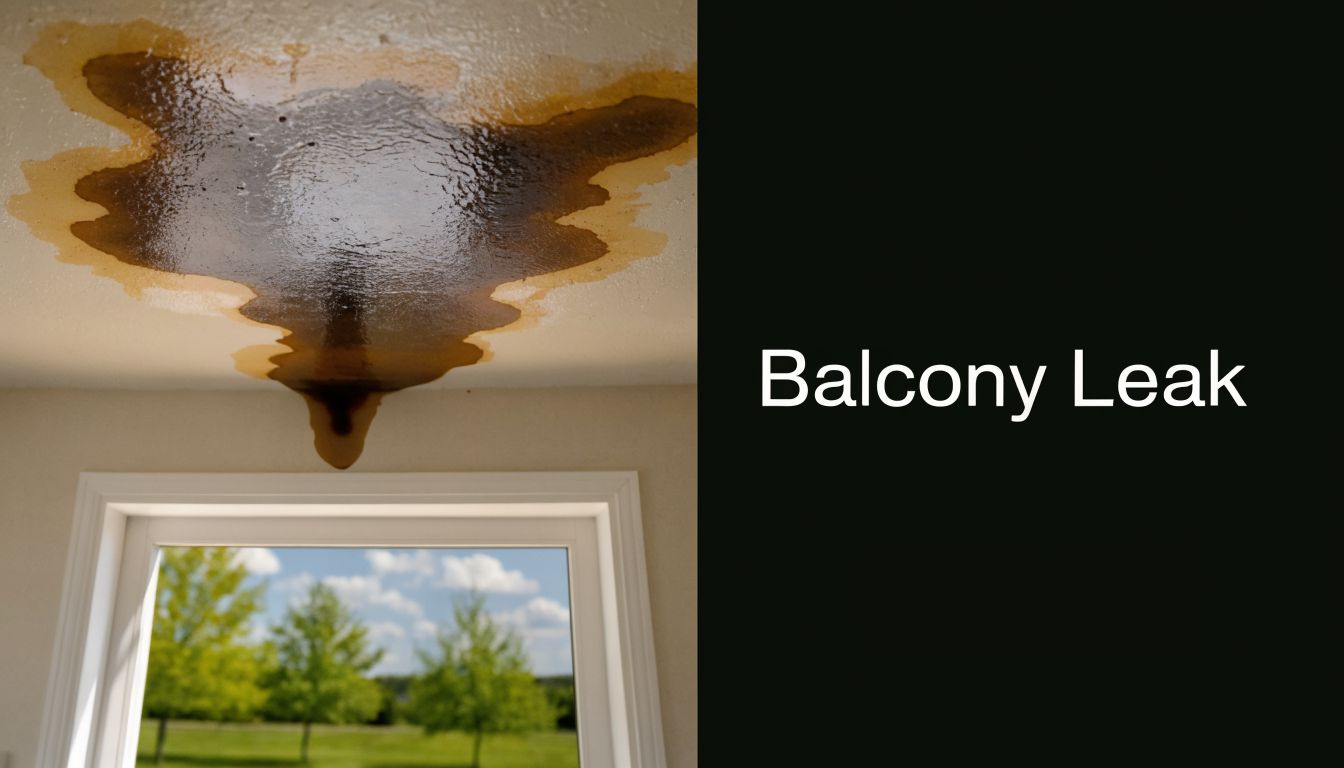
A balcony leak usually starts with something small. A brown ceiling stain under the slab. A tile that sounds hollow underfoot. A musty smell near the door after rain. Homeowners often hope it's just grout, silicone, or one cracked tile. Sometimes it is. Often it isn't.

In Melbourne, balcony leaks regularly trace back to deeper construction and waterproofing defects, not just tired finishes. A Victorian government study found that 52% of assessed balcony defect cases were caused by water ingress, and another 19% involved insufficient waterproofing in the assessed buildings across Victoria, as set out in the Victorian government balcony defects research paper. That's why waterproofing balconies melbourne isn't a “seal it and forget it” trade task. It's often a rectification job that needs proper diagnosis, compliance checks, and coordinated trades.

If the balcony ties into doors, balustrades, drainage, structural concrete, or tiled finishes, the job starts to look more like a compact external renovation than a simple maintenance repair. That's also why homeowners planning bathroom renovations should pay attention. The same lesson applies. Waterproofing only works when the substrate, detailing, drainage, and finish trades all line up.

Table of Contents

Your Guide to Waterproofing Balconies in Melbourne

You notice the stain after heavy rain. It sits on the inside ceiling below the balcony door, dark and spreading at the edges. The top tiles still look mostly fine, so the first instinct is to blame grout or a failed bead of silicone. That's where plenty of Melbourne owners lose time and money. Surface symptoms rarely tell you the full story.

A large brown water stain leaking from a ceiling above a window, indicating a balcony leak problem.

A leaking balcony can involve tiles, screed, membrane, flashings, drainage, door thresholds, slab movement, or balustrade penetrations. Once water gets past one weak point, it travels. The visible damage often appears well away from where the failure started.

That's why waterproofing balconies melbourne should begin with triage. Is this a targeted leak repair, or has the balcony reached the point where it needs full remediation under a registered builder?

The first question to ask

Ask what has failed. Not what looks tired, but what allows water through.

A practical site review usually checks:

  • Surface clues: Hollow tiles, cracked grout, loose skirtings, salt deposits, or ponding after rain.
  • Edge details: Terminations, balcony lips, flashings, drip edges, and any low points near doors.
  • Penetrations: Balustrade posts, outlets, thresholds, and service points.
  • Movement and substrate condition: Cracking in screed, differential movement, rust marks, and concrete spalling.

Practical rule: If the leak keeps returning after sealing, grouting, or replacing isolated tiles, treat it as a system failure until proven otherwise.

Owners often ask whether balcony work is really that different from bathroom renovations. The answer is yes and no. The sequencing discipline is similar. The risk exposure is not. External balconies take direct weather, UV, thermal movement, and drainage load, so mistakes get punished faster.

For straightforward membrane replacement on a sound substrate, a specialist trade team may be enough. If the balcony needs demolition, structural repair, regrading, drainage correction, or trade coordination, a registered builder should control the scope, sequence, and compliance. That's the difference between a patch and a durable fix.

Why Melbourne Balconies Fail Signs and Root Causes

The visible signs are usually easy to spot. The hard part is understanding which ones matter, and which ones point to a deeper failure in the build-up below the tiles.

What owners usually notice first

Some symptoms are cosmetic. Others are warning signs that the membrane, substrate, or drainage design has already failed.

Common signs include:

  • Drummy or loose tiles: Water may have broken the bond between tile and screed, or movement may have fractured the bed.
  • Efflorescence: White salts usually mean moisture is moving through cement-based materials and evaporating at the surface.
  • Cracked grout and recurring joint failure: Grout isn't a waterproof layer. Repeated cracking often points to movement or water pressure below.
  • Swollen skirtings, peeling paint, or stains below: Water has already travelled beyond the balcony finish.
  • Concrete damage and rust staining: Moisture may be reaching reinforcement or exposed metal components.
  • Persistent ponding: Water sits where it should drain away, increasing pressure on joints and terminations.

What actually sits behind the symptoms

The Victorian Building Authority's balcony leakage research points to a bigger issue. Balcony leaks often come from systemic problems such as poor design choices, unclear accountability during construction, and misinterpretation of waterproofing requirements, as noted by the Victorian Building Authority balcony leakage research. In plain terms, the membrane may not be the only thing that failed. The balcony may have been difficult to waterproof properly from the start.

Three root causes show up again and again on Melbourne projects:

Bad geometry

If the balcony doesn't shed water cleanly, the membrane lives under constant stress. Low spots, blocked outlets, and poor edge detailing trap water where it shouldn't sit.

Weak detailing

Corners, door thresholds, balustrade penetrations, and wall junctions are common failure points. These areas need reinforcement, compatible materials, and correct termination heights. Shortcuts here are expensive later.

Trade disconnect

A plumber may set drainage points. A builder forms the substrate. A waterproofer applies the membrane. A tiler installs the finish. If those trades don't work to one coordinated detail, the balcony ends up with gaps in responsibility.

A useful visual explainer on leak patterns and rectification is below.

A cracked tile doesn't prove the leak started at the tile. It only proves the balcony moved, deteriorated, or stayed wet long enough for the finish to fail.

Melbourne's weather adds another layer. Balconies cycle through sun, rain, cold nights, and thermal movement. Older tiled balconies are especially vulnerable because each layer may have aged differently. The top looks serviceable. The build-up below often tells a different story.

A Homeowners Guide to Balcony Waterproofing Systems

A homeowner calls after the first winter storm. Water has marked the ceiling below the balcony, a few tiles have sounded hollow for months, and another contractor has already suggested “just resealing it.” At that point, the job is not choosing a product off a shelf. The job is working out whether the balcony needs a localised repair or a full rebuild scope under a registered builder.

That is how balcony waterproofing should be assessed in Melbourne. Product names come later. Start with the balcony's condition, how it sheds water, how much movement it sees, and whether you are dealing with a new build, a strip-and-rebuild retrofit, or a balcony with hidden structural risk.

For a broader overview of external and internal waterproofing systems used in Melbourne projects, compare systems by where they are being used and what sits above and below them, not by brand label.

Liquid membranes

Liquid-applied membranes are common on remediation work for a reason. They suit awkward shapes, changes in level, door thresholds, corners, and penetrations better than many sheet products, provided the substrate is properly prepared and the applicator controls film thickness and curing.

They are also less forgiving of poor workmanship. If the falls are wrong, if reinforcement is skipped at junctions, or if the membrane is tiled over before it has cured, the system can fail even though the product itself was suitable. On older balconies, I often see liquid membranes nominated for jobs that also need screed correction, threshold review, and drainage changes. Without that broader scope, the membrane is carrying a problem it was never designed to solve on its own.

Sheet membranes

Sheet systems offer predictable material thickness and can perform well on clean, regular substrates. On new work, or on balconies that have been stripped back far enough to create a controlled base, they can be a sound option.

The trade-off is in the detailing. Laps, corners, upturns, terminations, and penetrations need disciplined installation. On an older Melbourne balcony with patched concrete, mixed materials, balustrade fixings, and irregular edges, that detail work can become the hardest part of the job. A tidy quote for a sheet membrane is not much comfort if the balcony geometry and junctions have not been resolved first.

Cementitious systems and clear coatings

These systems are often oversold.

Cementitious waterproofing has a place in some assemblies, but it is not a default answer for every exposed balcony. Clear coatings and penetrating sealers can reduce surface water entry in limited cases, and they may buy time on a balcony that is otherwise sound. They do not replace a failed membrane. They do not correct poor falls. They do not fix low door thresholds, cracked screed, or movement at wall junctions.

If a balcony is leaking into the room below, surface treatment is rarely the full answer.

How to choose the right system

The right question is simple. Why does this system suit this balcony, and what other work has to happen for it to last?

That means looking at movement, exposure, drainage, substrate condition, finished height, and the tile build-up as one assembly. Trade guidance on rectification also notes that failure often comes from using a system that does not suit the movement or drainage demands of the building, as discussed in this balcony waterproofing comparison from Blackwell Construction.

A practical way to assess it is below.

Balcony condition What usually suits Main caution
Older tiled retrofit Liquid-applied systems with strong detailing capacity Surface prep, reinforcement, and thickness control decide the result
Simple new substrate Sheet or liquid systems, depending on junction details Regular field areas are easy. Penetrations and edges still control performance
High movement areas Flexible systems with reinforced corners and planned movement detailing Rigid patch repairs around joints tend to crack and telegraph through
Highly exposed balconies A membrane system paired with drainage and edge redesign Membrane choice alone will not overcome bad falls or trapped water

One factual option in the local market is Melbourne Tiling Services P/L's waterproofing systems work, which includes balcony applications within wider tiling and remedial scopes. That matters on jobs where the waterproofing cannot be separated from the screed, the drainage set-out, and the tile reinstatement. In practice, that is the primary dividing line for homeowners. Some balconies need a membrane replacement. Others need a builder-led remediation scope with the waterproofer, tiler, and plumber all working to one detail.

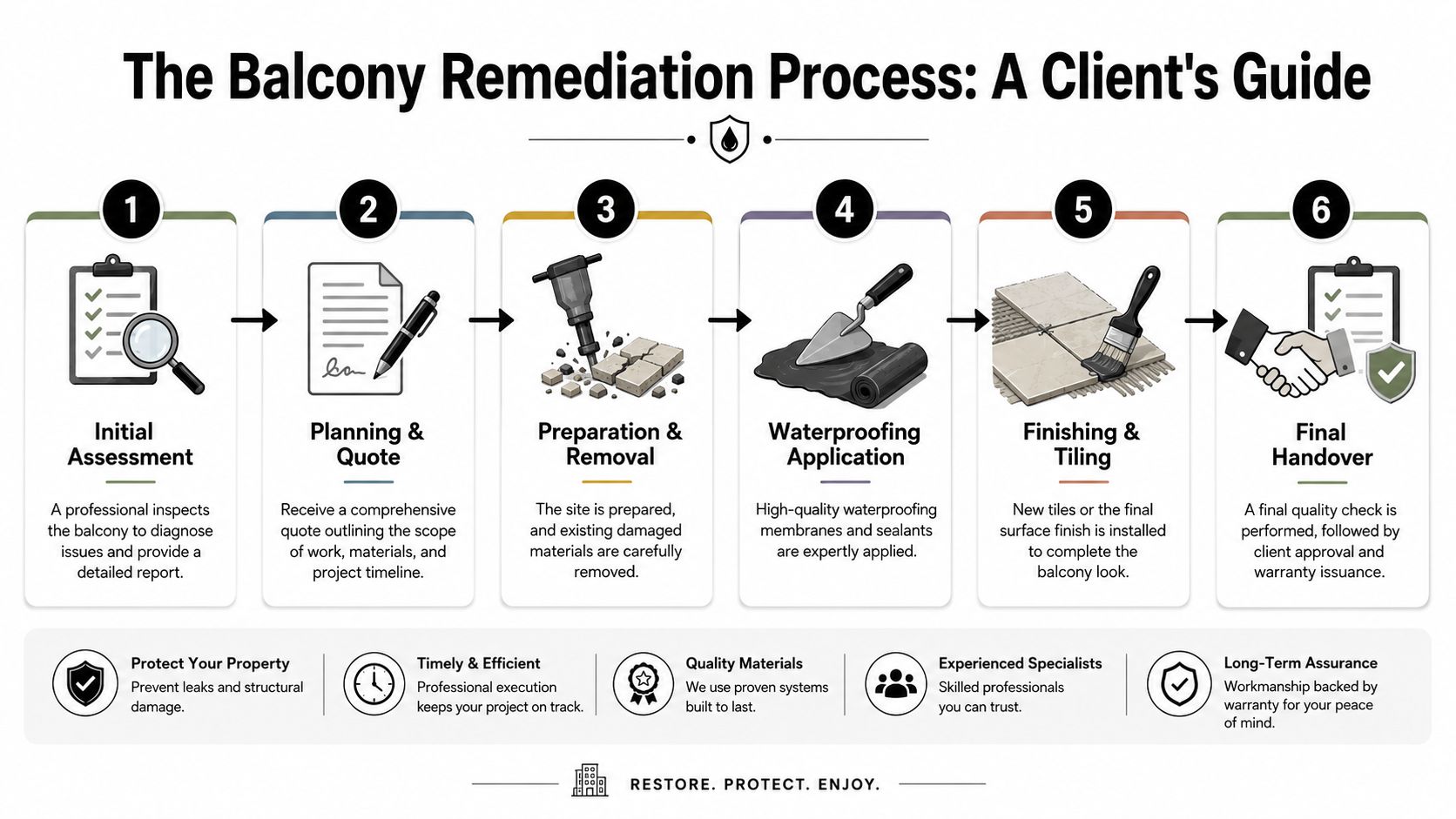
The Balcony Remediation Process An Overview

A proper balcony rectification job is staged. That's what separates durable work from patch-up work. If someone proposes to reseal the surface without understanding the substrate, falls, and edge detailing, you're not getting remediation. You're getting delay.

A six-step infographic guide detailing the professional balcony remediation, waterproofing, and restoration process for property owners.

Step by step on a proper rectification job

A full scope doesn't always mean structural rebuilding, but it does mean the team follows a disciplined sequence.

  1. Investigation and scope definition
    The balcony is inspected for tile bond failure, drainage behaviour, threshold heights, cracking, and moisture pathways. If the leak is entering occupied areas below, the underside damage gets reviewed too.

  2. Demolition and strip-out
    Existing tiles, adhesives, screed, and failed membrane layers are removed as required. Partial demolition sounds cheaper, but it can leave hidden defects trapped at interfaces.

  3. Substrate repair and fall correction A lot of long-term performance is won or lost during this stage. The team repairs damaged concrete or substrate issues, then reforms the balcony so water drains properly toward outlets and edges.

  4. Membrane application and detailing
    Corners, junctions, upturns, penetrations, and transitions are reinforced and waterproofed as a continuous system. This stage demands patience and documentation.

  5. Protection, finishes, and sealing
    Once cured, the membrane is protected by the specified finish build-up. That may include screed, adhesive, tiles, movement joints, caulking, and edge finishing. External joint detailing often overlaps with broader balcony and wet area caulking and sealing practice, especially around thresholds and perimeter junctions.

  6. Testing, handover, and maintenance advice
    The contractor checks continuity, finish quality, and drainage behaviour before handover. Owners should also get clear advice on what to monitor after completion.

Where balcony jobs usually go wrong

The biggest failures usually happen in the “small” details. Corners get under-reinforced. Membranes go on too thin. Upturns are cut short because the door threshold is tight. Tilers bridge joints that should move independently.

Trade guidance aligned with AS 4654.2 notes that membrane work is typically verified by inspection and either dry-film-thickness checking or a controlled water test, because performance depends on continuity and installed thickness. The same guidance describes liquid membrane application in two coats with poly-cloth reinforcement and return heights up walls, with post-cure thickness confirmation, as outlined in SCR Melbourne's balcony waterproofing under AS 4654.2 guidance.

On site reality: A balcony can fail with a decent membrane if the team leaves weak corners, skimps on thickness, or doesn't resolve the drainage geometry first.

A homeowner doesn't need to supervise each coat. But you should expect a contractor to explain substrate preparation, reinforcement, cure times, terminations, and how the installation is checked before tiles go back on. If they can't explain that clearly, the scope probably isn't mature enough.

Melbourne Building Codes Costs and Warranties

Balcony jobs get mispriced when owners compare them to a simple reseal. They get understood properly when owners compare them to a small external renovation. That's often a better mental model, especially if demolition, substrate repair, and new finishes are involved. The same budgeting logic comes up in bathroom renovations, where waterproofing is only one line item inside a larger coordinated build.

Compliance starts with falls and detailing

On balconies, compliance is not just about whether a membrane exists. The substrate still has to move water away. The Victorian Building Authority points practitioners to AS 4654.2 for external above-ground waterproofing and notes a minimum fall of 1:100 on a horizontal balcony substrate to shed water to drainage points, as set out in the VBA's water ingress research insights fact sheet.

That single requirement explains a lot of recurring failures. If water ponds, it loads the system for longer. It finds pinholes, weak laps, low terminations, and poor flashing details. A balcony can have a membrane and still be defective.

If you need project documentation around that process, owners often ask for a Victorian waterproofing compliance certificate or similar records showing what standard was followed and how the work was checked.

Why balcony budgets vary so much

There isn't one standard price because the scope can swing from localised repair to near-complete rebuild. Cost changes with access, demolition, disposal, substrate condition, drainage relocation, balustrade interfaces, finish selection, and whether adjoining rooms are affected.

A practical triage looks like this:

  • Targeted repair scope: Suitable where the substrate is sound, the leak source is isolated, and geometry is broadly workable.
  • Full re-membrane scope: Needed when the membrane has failed generally, but structural elements remain serviceable.
  • Registered builder remediation scope: Necessary when the balcony needs structural repair, fall correction, balustrade removal, threshold work, or multiple coordinated trades.

The budget usually follows the diagnosis. If the diagnosis is shallow, the quote will be too.

That's why very cheap balcony quotes should be treated carefully. Low pricing often means the contractor has excluded demolition depth, substrate repair, drainage correction, or testing. Those exclusions become variations later, or the defect remains.

What a warranty should actually cover

Owners often hear “product warranty” and assume the whole balcony is protected. It isn't that simple.

Ask three separate questions:

  • Product warranty: What does the membrane manufacturer cover, and under what installation conditions?
  • Workmanship warranty: What does the contractor stand behind in labour and detailing?
  • Scope warranty: What parts of the assembly were renewed, and what existing elements were excluded?

If old door thresholds, metal flashings, or structural cracks remain outside the contracted scope, they may also sit outside the warranty. Get that clarified in writing before work begins.

Choosing Your Expert Licensed Waterproofer vs Registered Builder

This is the decision that saves people the most grief. A skilled waterproofer is the right trade for membrane installation. A registered builder is the right lead when the problem extends beyond membrane installation.

A female painter and a male construction worker holding building tools and blueprints on black background.

When a waterproofer is enough

If the balcony issue is narrowly defined, the substrate is confirmed sound, falls are already correct, and no structural or trade coordination issues sit in the background, a waterproofing specialist may be the right fit.

That usually means work such as:

  • Membrane renewal on a prepared substrate
  • Local junction rectification
  • Minor detailing repairs around edges or penetrations
  • Testing and remedial waterproofing where the construction build-up is otherwise stable

When a registered builder should run the job

Once the job involves demolition, structural repair, screed replacement, drainage changes, door threshold risks, balustrade interfaces, or full tile reinstatement, the smarter move is to appoint a registered builder. That gives the owner one party responsible for sequencing carpenters, plumbers, tilers, waterproofers, and any concrete or metal repair trades.

A few blunt questions help decide:

  • Will tiles and screed be removed fully?
  • Do falls need to be corrected?
  • Is there damage below the balcony or at the slab edge?
  • Do balustrades, flashings, or thresholds need alteration?
  • Will more than one trade need to sign off on the result?

If the answer to several of those is yes, don't under-scope it.

A balcony leak can start as a waterproofing problem and end as a builder's job. The trick is recognising that before the first quote is accepted.

Registered builders also matter when the balcony forms part of a larger upgrade. On homes where leaking balconies sit beside failed wet areas, owners often roll the work into bathroom renovations so waterproofing standards, tiling finishes, and trade coordination get handled consistently across the property.

FAQs About Balcony Waterproofing in Melbourne

Can I fix a leaking balcony by resealing the grout or applying a clear coating

Sometimes that helps briefly, but it's rarely a durable answer if the leak comes from failed membrane detailing, bad falls, movement, or drainage defects. Grout is not the waterproof layer. Clear coatings can be maintenance products, not full rectification.

How do I know if I need a rebuild instead of a repair

Look at the scope, not just the symptom. If the balcony has recurring leaks, drummy tiles, ponding, cracked screed, damage below, or problematic thresholds and balustrade penetrations, the job often moves beyond simple repair.

Is balcony waterproofing similar to bathroom waterproofing

The principles overlap. Both depend on substrate prep, membrane continuity, and correct detailing. External balconies are more demanding because they face weather, UV, thermal movement, and drainage exposure directly.

Should I retile over existing tiles

Sometimes contractors propose it, but that only works in limited conditions and doesn't solve hidden substrate or membrane failures below. If the cause is unknown, tiling over the top can bury the defect.

What should I ask before accepting a quote

Ask what's included in demolition, whether falls will be checked and corrected, how corners and penetrations are reinforced, how the membrane installation is verified, what is excluded from warranty, and who coordinates the trades if the scope expands.

Will insurance cover a leaking balcony

That depends on the policy and the cause. Insurers often distinguish between sudden damage and defects, wear, or poor construction. Owners should confirm the policy wording early and document the condition carefully.


If you need a practical diagnosis before committing to repairs, Melbourne Tiling Services P/L handles balcony leak rectification, waterproofing, tiling, and bathroom renovations under registered builder oversight, which is useful when the job involves more than just reapplying a membrane.