
Individuals often start in the same place. They stand in an outdated bathroom, look at the stained grout, the tired wall tiles, the crooked lines around the shower mixer, and think tiling a new wall can't be that hard. Buy the tiles, grab some adhesive, watch a few videos, and get stuck in.
That's the part where bathroom renovations usually split into two paths. One becomes a clean, durable finish that still looks right years later. The other looks fine for a few weeks, then the corners crack, a row drifts out, or moisture finds its way behind the wall because the prep was wrong from the start.
In Melbourne, the second path is common in older homes. Solid-looking bathrooms often hide walls that are out of plumb, patched substrates, old movement cracks, and framing that was never set up for large-format wall tile. That's why knowing how to tile a bathroom wall properly means understanding more than tile adhesive and a spirit level. It means knowing where tiling ends and compliant wet-area construction begins.
Table of Contents
- The Reality of a Flawless Tiled Wall
- Planning Your Layout and Materials
- Wall Preparation and Waterproofing
- Setting Tiles From Adhesive to Final Cut
- Applying Grout and Sealing for a Perfect Finish
- Troubleshooting and When to Call a Registered Builder
The Reality of a Flawless Tiled Wall
A flawless tiled wall is built long before the first tile goes up. The visible part is the finish. The real work sits behind it in the set-out, substrate correction, waterproofing, and movement detailing.
In older Melbourne homes, I regularly see bathrooms where the wall looks serviceable until a long straight edge goes on it. Then the problems show up fast. One side bellies out, the corner isn't square, the nib wall leans, or an old repair has left a hump exactly where a large porcelain tile needs to sit flat. None of that gets fixed by pushing on more adhesive.
There's also a big difference between a cosmetic re-tile and a proper bathroom renovation. If you're replacing a splashback outside a wet zone, a capable DIYer can sometimes manage it. If you're working inside a shower area, around penetrations, niches, wall-to-floor junctions, and waterproofed surfaces, the stakes go up sharply. A pretty finish won't save a wall system that isn't compliant.
Practical rule: If water will regularly hit the wall, treat the job as wet-area construction first and tiling second.
A lot of online guides miss that distinction because they assume flat walls, generic room layouts, and standards that don't apply in Australia. Melbourne bathrooms don't always play nicely. Period homes, post-war homes, and fast-renovated investment properties all throw up their own versions of the same issue. The wall behind the tile often needs more work than the tile itself.
That's also why registered builders matter in bathroom renovations. A proper builder doesn't just look at tile colour and grout width. They coordinate substrate repair, waterproofing, plumbing penetrations, and sequencing so the wall system works as one assembly.
A good tiled bathroom wall should do three things at once:
- Look balanced: full tiles or larger cuts land where the eye goes first.
- Stay bonded: no hollow spots, sagging, lippage, or weak bedding.
- Manage movement and moisture: corners, junctions, and wet zones are detailed correctly.
If one of those is missing, the job usually tells on itself.
Planning Your Layout and Materials
The cleanest bathroom wall jobs are usually won before any adhesive is opened. Planning decides how the wall will look, how much material you'll need, and whether the install can be built without ugly compromises.
Start with the wet area rules
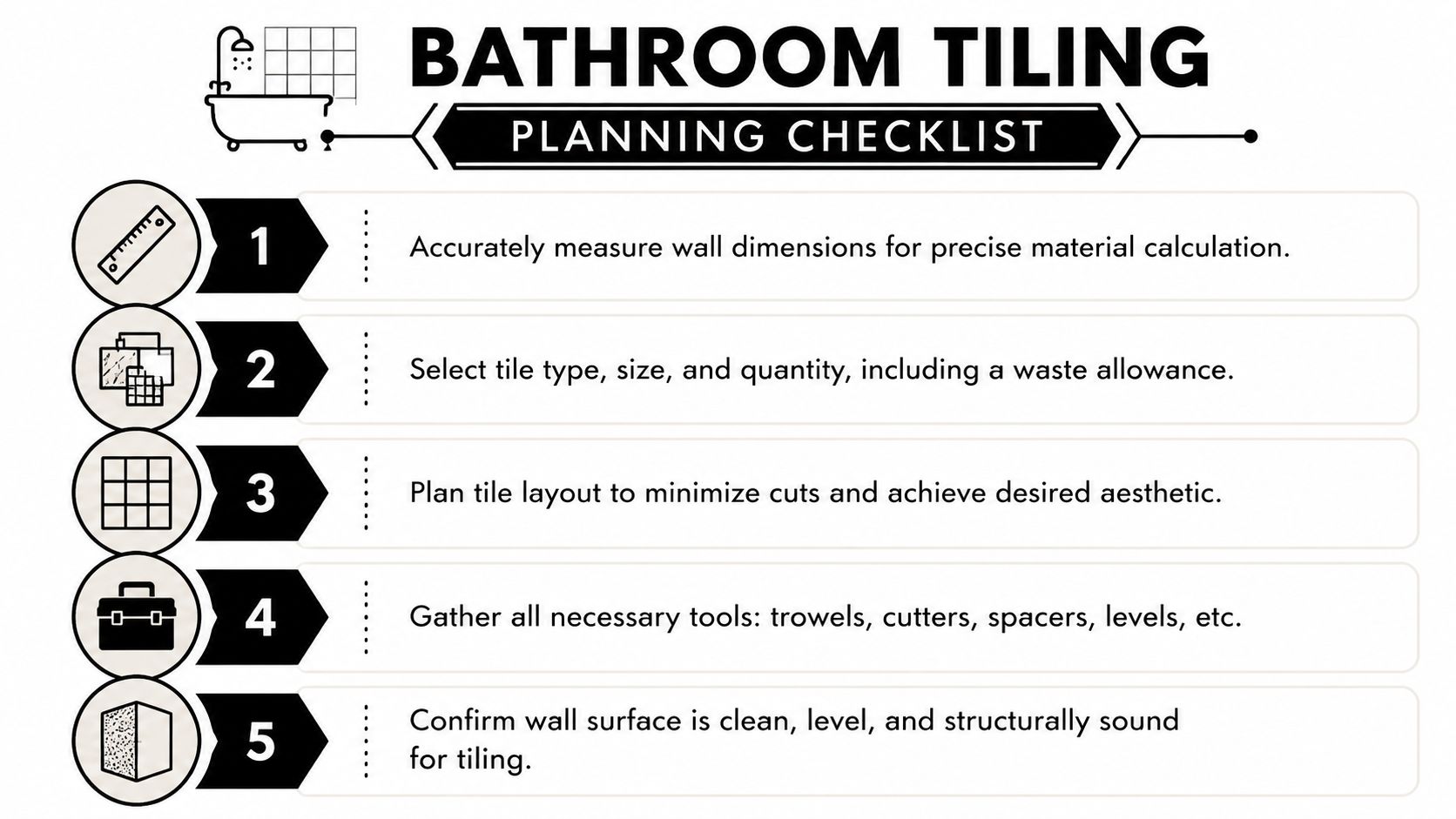
In Australia, bathroom wall tiling sits within the framework of the National Construction Code and AS 3740, and shower wall linings are commonly detailed to extend to at least 1800 mm above the finished floor. For estimating, a standard allowance is at least 10% extra tile, with 20% or more often needed for complex layouts, patterned tile, or difficult cuts, as outlined in this bathroom tile measurement guide.
That matters at the planning stage because your tile height, waterproofing extent, substrate, trim selection, and fixture set-out all need to line up. If they don't, the wall can end up looking improvised even when the workmanship is neat.
For homeowners choosing finishes, a practical place to compare options is this guide to tiling materials for bathroom renovations.
Measure the wall like a tiler, not a shopper
Don't just measure width by height and order off that. Measure each wall separately, then note every interruption.
Use a tape, laser, and a notepad. Record:
- Openings and penetrations: windows, doors, niches, mixer bodies, shower outlets, and power points.
- Termination points: where tile stops at architraves, ceilings, benchtops, screens, or trims.
- Out-of-square conditions: check the width at the top, middle, and bottom, not only once.
Then lay out the tile grid on paper or with a story pole. Dry planning tells you where your cuts will land. The goal is simple. Keep cut tiles larger and place them in lower-visibility areas instead of creating thin slivers in the first thing people see.
Narrow cuts at eye level are rarely a tile problem. They're usually a planning problem.
Choose tile size with the wall in mind
Ceramic wall tile is forgiving. Porcelain is tougher and often cleaner looking, but it's less forgiving to cut and heavier on the wall. Large-format panels and Kerlite can look excellent in a modern ensuite, but they demand a flatter substrate and tighter control over set-out.
A quick trade-off table helps:
| Tile type | What works well | What catches people out |
|---|---|---|
| Ceramic | Easier cutting, good for standard walls | Can look busy with many grout joints |
| Porcelain | Dense finish, sharp modern look | Harder cuts, heavier handling |
| Large-format or Kerlite | Fewer joints, premium appearance | Exposes uneven walls fast |
If the wall is patchy, bowed, or out of plumb, a smaller format often gives you more forgiveness. If the design calls for large-format tile, sort the wall first. Don't expect adhesive to rescue the finish.
Wall Preparation and Waterproofing
The best-looking tile in the showroom won't compensate for a bad wall. If the substrate moves, is damp, is powdery, or is out of plane, the tiled finish is already in trouble.
A tiled wall only performs as well as the substrate
Start with a hard inspection. Tap the wall. Check for drummy patches, loose sheeting, old swelling from moisture, soft plaster, or cracked cement render. Then check flatness and plumb with a straight edge and level.
If the wall is visibly uneven, fix the wall. Don't try to hide it with thick blobs of adhesive. That approach creates inconsistent bedding, poor bond, and a much higher chance of lippage on the face.
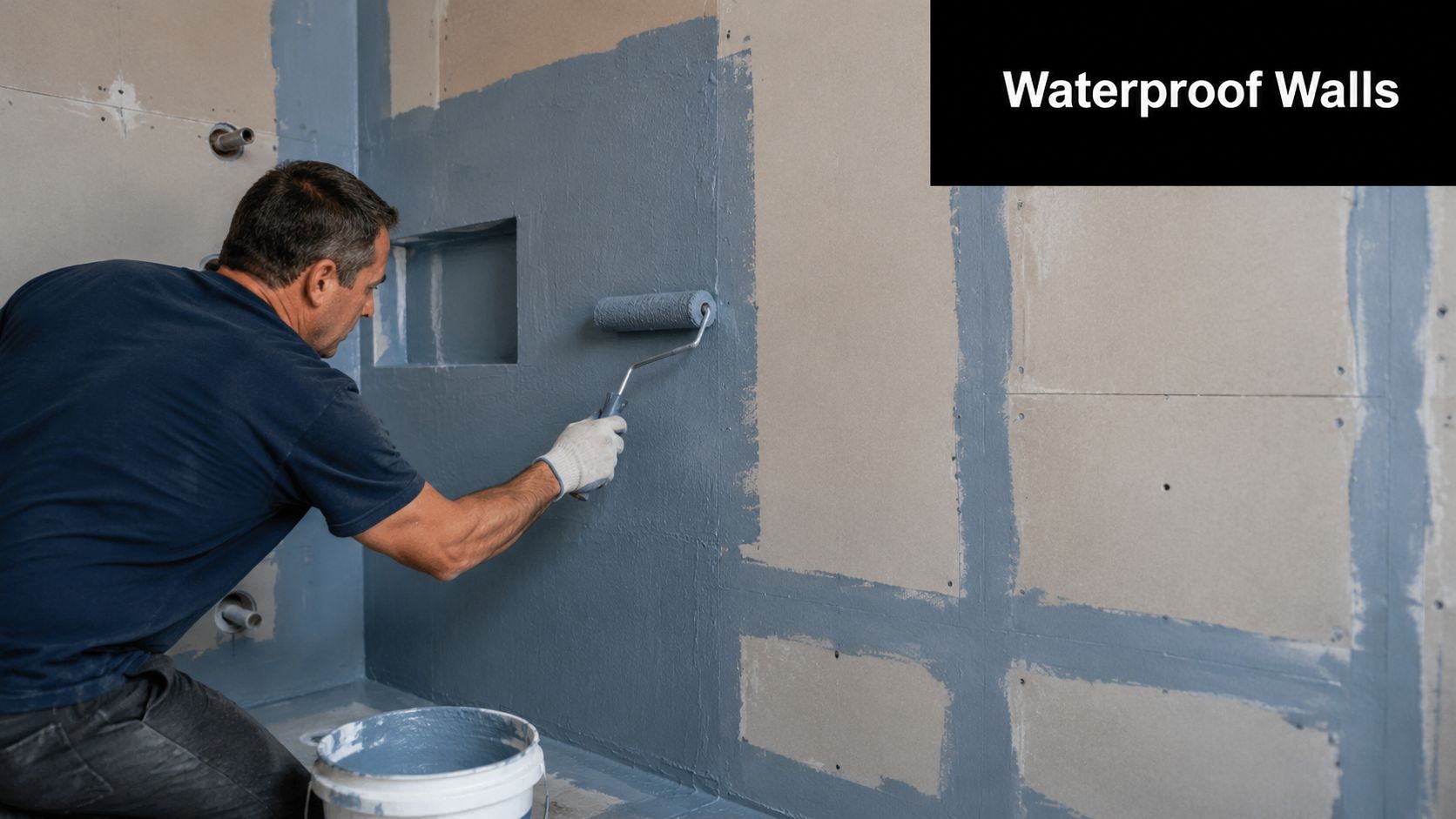
In older Melbourne bathrooms, this stage often decides whether the project stays DIY-friendly. Minor patching is one thing. Re-sheeting walls, correcting bad framing, and rebuilding shower substrates is another.
Waterproofing isn't a decorative extra
In wet areas, waterproofing is part of the system. It isn't something you squeeze in because the tiles are nearly ready to go. Corners, wall-to-floor junctions, and changes of plane all need to be treated as movement points, and expert guidance is clear that these areas should use flexible sealant, not grout. The same guidance also recommends back-buttering tiles when coverage is uncertain so you don't leave voids on vertical surfaces, which can lead to bond failure, as explained in this bathroom wall tile installation guide.
If you're working on a full renovation, at this stage many homeowners should stop and bring in the right trade team. Waterproofing compliance is not the place to guess. If there's any doubt about membrane selection, penetration treatment, or wet-area detailing, get a qualified waterproofer involved and have the work coordinated properly. For system-level context, this page on bathroom waterproofing systems is a useful reference point.
What DIYers usually get wrong
The common failures are nearly always behind the tile, not on it.
- They tile over a poor base: dusty sheeting, weak old plaster, or walls that aren't flat enough.
- They grout movement joints: internal corners and fixture junctions crack later because the assembly can't move.
- They ignore penetrations: mixer points, outlets, and niche corners need careful detailing before the finish goes on.
If the wall needs waterproofing, sealant strategy should be decided before tile layout, not after grouting.
Another trap is sequencing. Plumbing rough-in, sheeting, waterproofing, set-out, tile installation, grouting, and silicone all need to happen in the right order. Registered builders are useful here because they don't treat the tiler in isolation. They coordinate the whole bathroom renovation so one trade doesn't undo the next.
Setting Tiles From Adhesive to Final Cut
This is the stage commonly thought of when considering how to tile a bathroom wall. It's also the stage where rushed work becomes visible immediately.
Set out first, then mix adhesive
A reliable wall-tiling method starts with set-out, not adhesive. Dry-lay the field tiles, establish a reference line from the most visible area, and push smaller cuts into less noticeable corners. On bathroom walls, pros also recommend using a notched trowel at about 45° and pressing each tile with a slight twist to collapse the ridges properly. For ordering, a practical benchmark is about 15% extra tile to cover cuts, breakage, and pattern matching, especially where penetrations and niches increase waste, as noted in this tile-setting guide.
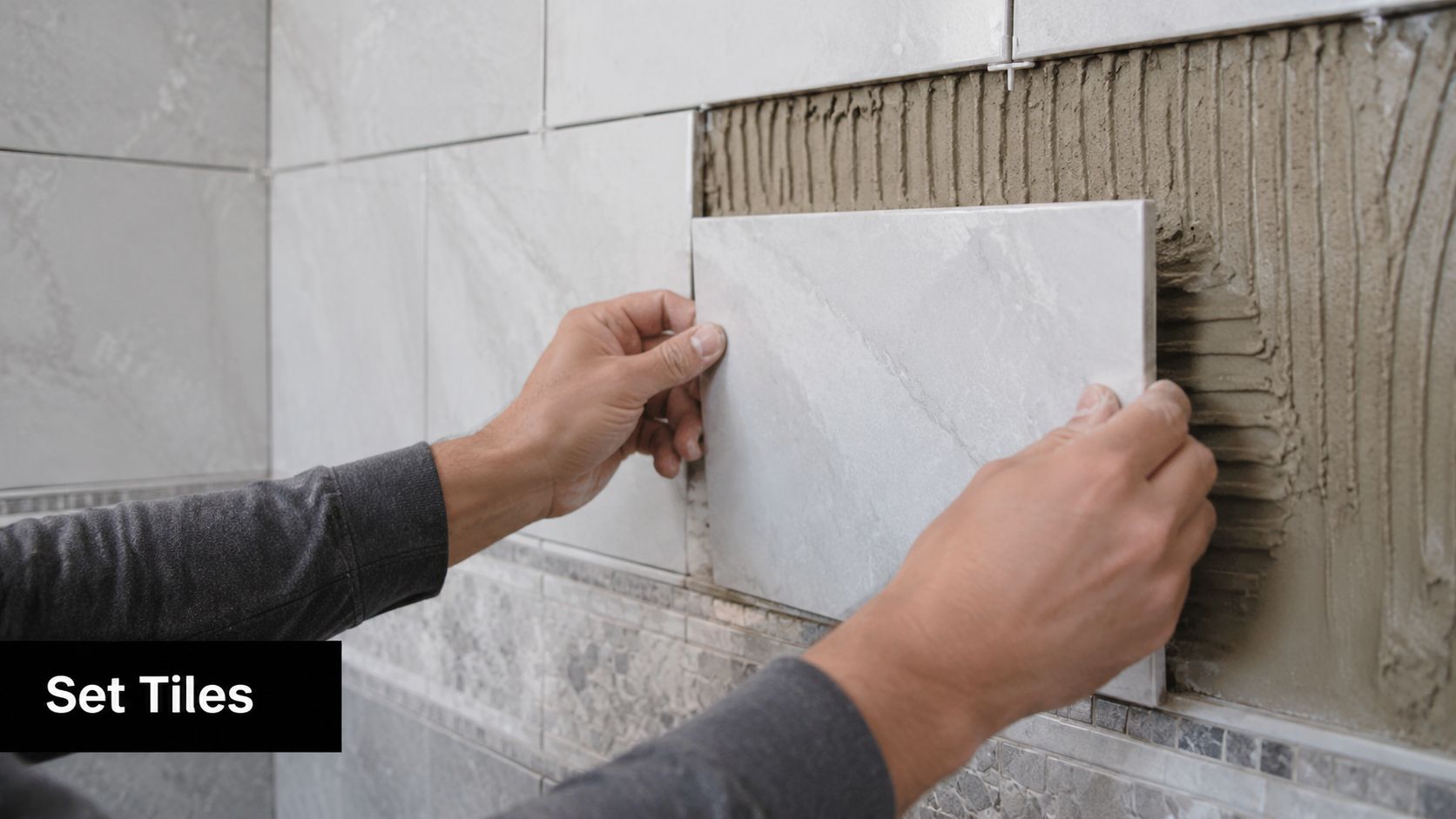
Mark your verticals and horizontals clearly. If the floor isn't perfectly level, don't trust it as your starting point. Use a straight batten or laser line and build the wall from a known level reference.
For the actual setup, I'd keep the process disciplined:
- Dry-check the layout so you know where your cuts, trims, and fixture openings will fall.
- Mix adhesive in small batches so it doesn't skin over while you're still adjusting tiles.
- Spread only what you can tile in a short run on a vertical wall.
- Comb in one direction and keep the notch lines consistent.
- Use spacers and keep checking level rather than assuming the first row will carry the rest.
How to place each tile so it actually bonds
The tile has to be bedded properly, not just stuck on. Press it in, give it a slight twist, and check the first few pieces by lifting one back off if needed. You're looking for proper adhesive transfer, especially on porcelain and large-format tile.
Back-buttering helps when the tile back pattern or wall condition makes full contact less certain. It's a simple habit that prevents hollow spots and weak corners.
The biggest practical mistakes happen fast:
- Over-spreading adhesive: the surface skins and the bond suffers.
- Letting joints wander: one bad line multiplies across the wall.
- Forcing a tile to correct a crooked wall: the face may look close, but the bedding will be inconsistent.
This video shows the kind of careful handwork wall tiling needs, especially around alignment and tile placement.
Large-format tiles on Melbourne walls
Large-format tile is where many bathroom wall jobs stop being forgiving. On a straight, well-prepared wall, it can look sharp and modern. On an older Melbourne wall with a belly, twist, or patched substrate, it exposes every flaw.
That's why set-out and substrate correction matter more with bigger tiles. A small ceramic can ride over slight inconsistency. A large porcelain tile won't. It will telegraph the defect, bridge a low area, or leave a void if the installer tries to cheat the wall with adhesive thickness.
For cuts around taps, outlets, windows, and niches, measure twice and cut with the finished edge in mind. Good wall jobs aren't judged only by the full tiles. They're judged by the cuts around the details.
Good tilers don't just install the field neatly. They make the awkward cuts look intentional.
If the room has sloping ceilings, angled walls, difficult niches, or premium large-format panels, that's often the point where a professional install makes more sense than learning on the wet wall of your own bathroom.
Applying Grout and Sealing for a Perfect Finish
A tiled wall can be set well and still be spoiled in the final stage. Grouting and sealing need patience, clean timing, and a clear understanding of where grout belongs and where it doesn't.
Grouting without ruining the joints
Wait until the tiles are properly set before you start. Then mix the grout to a smooth, workable consistency and apply it with a rubber float on an angle, forcing it firmly into the joints from more than one direction.
The cleanup matters as much as the application. Wipe too early and you drag grout back out of the lines. Wipe too aggressively and you wash out the face of the joint so it dries shallow and patchy.
A tidy routine works best:
- Pack the joints fully: don't skim over them and hope the sponge fixes it.
- Strike off diagonally: this helps avoid pulling grout from the gaps.
- Use a well-wrung sponge: too much water weakens the finish and makes a mess of the joints.
If haze forms later, deal with it carefully. Don't panic and flood the wall. Most grout cleanup problems come from using too much water, too early.
Where grout must stop
Many DIY bathroom walls fail early at internal corners, wall-to-floor junctions, and the edges around fixtures. These are movement points. They should be sealed with a quality flexible silicone sealant, not filled with grout.
As noted earlier, grout in those areas will crack because the wall system moves. Once that line opens up, moisture has a path.
A simple division keeps the finish durable:
| Area | Use |
|---|---|
| Tile joints in the field | Grout |
| Internal corners | Flexible sealant |
| Around fixtures and changes of plane | Flexible sealant |
The neatest bathroom wall finish usually comes from restraint. Clean joints, clean silicone lines, and no attempt to grout every gap in sight.
Colour matching also matters. If the silicone clashes with the grout, the finish looks patched even when the detailing is correct. Professional tilers spend time here because this is the point the client stares at from close range.
Troubleshooting and When to Call a Registered Builder
Some bathroom wall problems are cosmetic. Others are warning signs that the system behind the tile isn't right.
Problems you can sometimes fix
Minor grout haze can often be cleaned up. A small low spot in a grout line can usually be repaired. A chipped edge at a trim may be improved if it's isolated and accessible.
Other issues are more serious:
- Lippage: one tile sits proud of the next. This usually points to poor substrate prep or poor bedding.
- Hollow-sounding tiles: often a sign of inadequate adhesive coverage or voids behind the tile.
- Cracked corner joints: commonly caused by grout being used where flexible sealant should have been used.
If a shower has angled planes or tricky drainage geometry, caution matters even more. Recent VBA data shows that 22% of bathroom leak complaints in 2024–2025 stemmed from improper tile-to-drain alignment in angled showers, which is exactly the kind of issue generic tutorials usually ignore.
Red flags that need a professional
If any of these apply, I'd stop treating the project as a casual DIY wall-tiling job:
- The walls aren't straight or plumb: common in older Melbourne homes and hard to correct without proper prep work.
- The shower area needs full wet-area compliance: membrane detailing, penetrations, and junctions can't be guessed.
- You're using large-format tile or Kerlite: these materials demand better substrate control and handling.
- The layout includes niches, windows, sloping ceilings, or awkward returns: the cutting and sequencing get technical quickly.
A registered builder earns their keep when the bathroom renovation needs coordination across trades, not just tile setting. That includes sheeting, waterproofing, plumbing points, screeding, electrical clearances, and final finish alignment. One practical option for homeowners dealing with failed sections or localised defects is to start with a tile repair assessment in Melbourne.
For full bathroom renovations, Melbourne Tiling Services P/L is one example of a registered builder-led contractor that handles tiling as part of the broader wet-area build sequence rather than as a standalone cosmetic trade.
If you're confident, organised, and working on a straightforward wall outside the highest-risk wet areas, some parts of the job are achievable. If the bathroom has movement, moisture risk, uneven walls, or premium finishes, professional help isn't overkill. It's good judgement.
If your bathroom wall project has moved beyond a simple DIY refresh and into full wet-area work, Melbourne Tiling Services P/L can help with bathroom renovations, waterproofing, substrate preparation, tile installation, and repair work across Melbourne. As registered builders, they coordinate the full process so the finished wall looks right and performs properly.
Recent Comments