
You might be standing in a half-finished Melbourne bathroom right now, trying to decide whether the floor should gleam like a showroom or feel calmer, safer, and easier to live with. That choice gets more complicated when the tiles are marble, because the finish changes how the room looks, how it feels under wet feet, and how the work needs to be handled by your builder.
Marble floor tiles matt sit in that sweet spot between luxury and practicality. In Australia, the domestic consumption of marble and travertine reached 810,000 tons in 2024, valued at $195 million AUD, with matte finishes increasingly favoured for their slip resistance in wet areas like bathrooms and ensuites (IndexBox market overview). For Melbourne homeowners, that means the finish isn't just a style choice, it's part of the safety and renovation conversation.
Table of Contents
- Introduction to Matte Marble Floor Tiles
- Understanding What Matt Marble Floor Tiles Are
- Comparing Matt and Polished Finishes
- Safety and Slip Resistance in Wet Zones
- Sealing Maintenance and Longevity
- Choosing Tile Sizes Grout and Cost Framework
- Design Inspiration and Local Sourcing Tips
- Conclusion and Next Steps
Introduction to Matte Marble Floor Tiles
Sarah and Tom had just finished their ensuite, and the first thing they noticed wasn't the vanity or the tapware. It was the floor. Their builder had suggested a softer marble finish instead of a glossy one, and once the bathroom filled with daylight, the difference was obvious, less glare, calmer tone, and a more grounded feel underfoot.
That reaction is common. People often fall in love with marble for its natural movement, then realise the finish changes the whole room. Matt marble tiles don't shout for attention, they allow the stone's natural character to emerge, which is why they suit bathrooms where comfort, safety, and restraint matter just as much as appearance.
The market data backs up the wider shift in demand for marble materials, including floor tiles across residential and commercial spaces in Victoria and nationwide. When you're planning a bathroom renovation, that matters because your tile choice affects not only the visual outcome but also the materials your registered builder needs to specify, install, seal, and sign off correctly.
If you're weighing up finishes, start with the basics, then let the bathroom do the talking. A wet-zone floor needs to look good on day one and still make sense after daily use, cleaning, and winter mornings.
Understanding What Matt Marble Floor Tiles Are
Matt and honed are often used for the same kind of finish, and in practical conversation they usually point to a surface that has lost the mirror-like shine of polished stone. Much like sanding raw timber, the wood doesn't become fake; it just becomes softer to the eye and easier to live with.
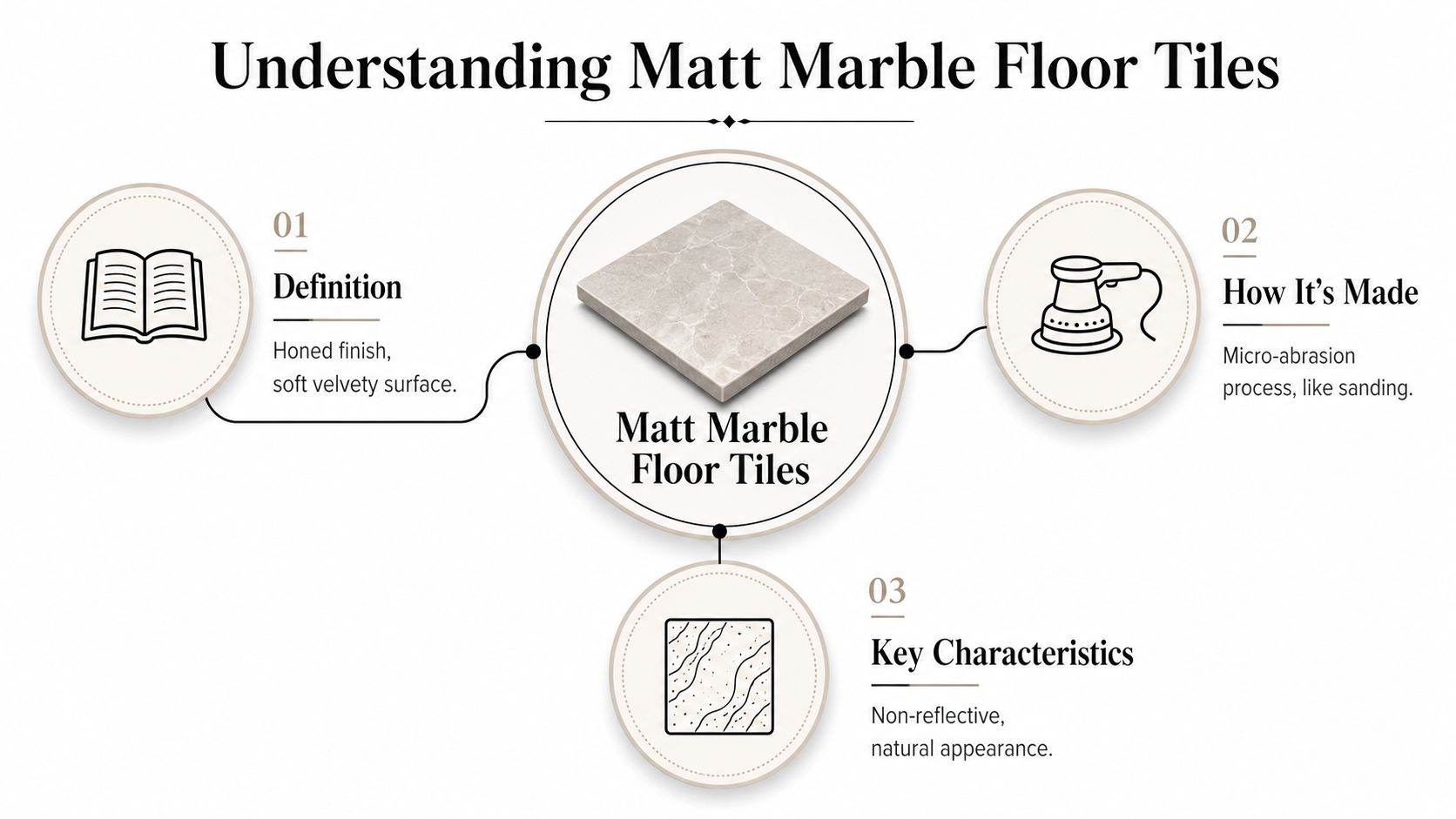
The finish comes from micro-abrasion, where the stone's surface is gently worked so it scatters light rather than reflecting it sharply. That creates the velvety look many Melbourne homeowners want in bathrooms, because it reads as natural rather than glossy, and it tends to hide the busy visual noise that polished stone can throw back at you under bright downlights.
How the surface changes the room
The main effect is visual comfort. A matt surface reduces glare from windows, mirrors, and ceiling lights, so the floor feels more settled. That's especially useful in en suites and compact bathrooms where every shiny surface can add to the sense of crowding.
The term also covers how the room feels emotionally. A polished floor can feel formal and dramatic, while a matt floor usually feels softer and more grounded. That's one reason people compare it to honed timber, it still has character, but it doesn't try to dominate the room.
What to ask before you buy
If you're shopping in Melbourne, ask whether the tile is a matt marble finish or a marble-look porcelain product. Both can work well, but they behave differently in installation and maintenance.
Practical rule: ask for the tile's finish description, its cleaning requirements, and whether it's meant for floor use in a wet area before you commit.
For local examples and product categories, this Melbourne marble tile resource can help you see how the finish sits within a broader bathroom design context. The key is to judge the tile by how it will function in your room, not just by how it looks under showroom lighting.
Comparing Matt and Polished Finishes
A glossy marble floor makes a strong first impression. It reflects light, highlights veining, and can make a bathroom feel formal or high-end. A matt floor does something different, it calms the room, softens contrast, and keeps attention on the texture of the stone rather than the shine.
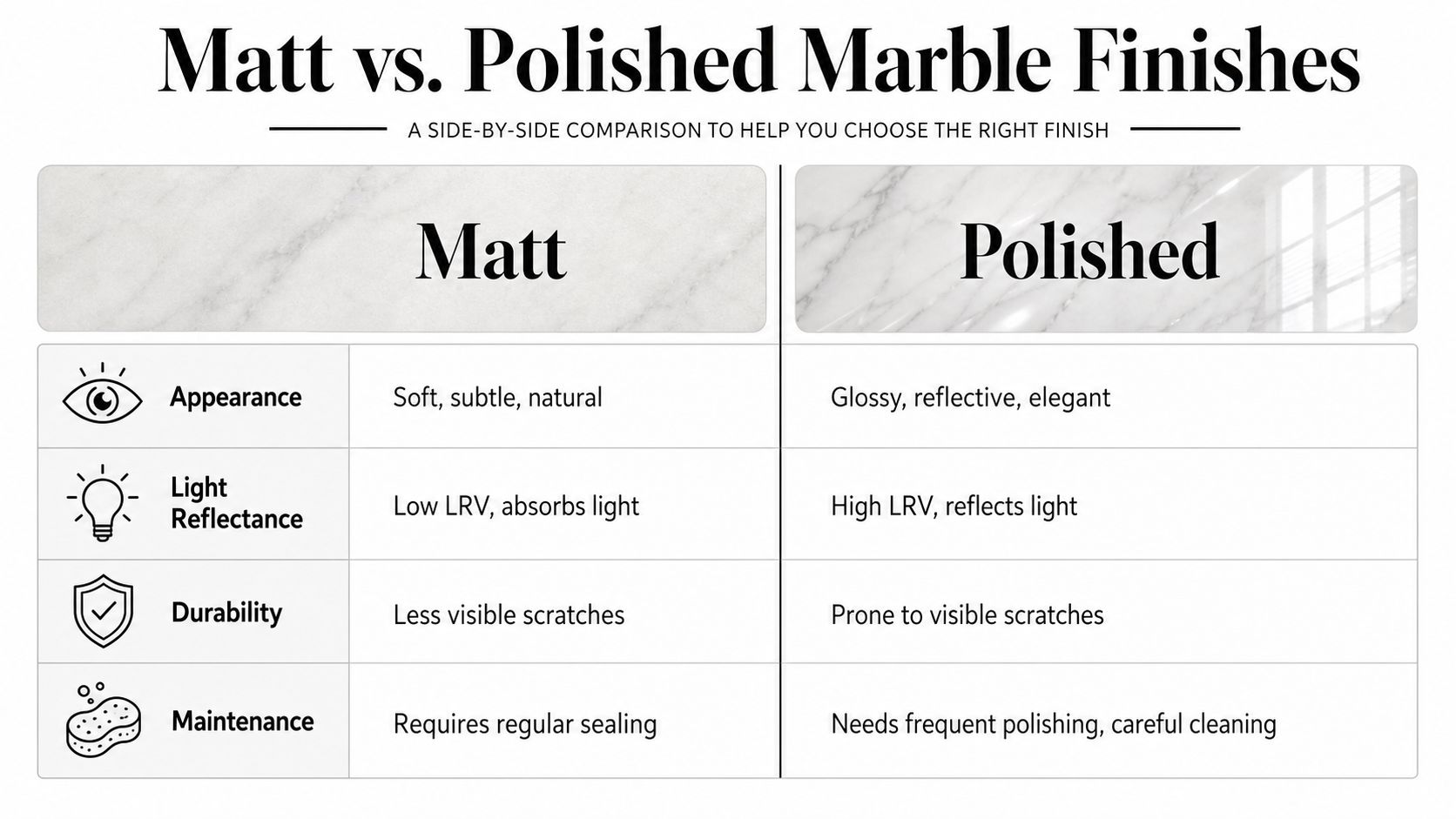
The biggest technical divide is reflectance. True matt-finish marble floor tiles in Australia typically exhibit an LRV between 5% and 15%, while polished marble can exceed 30% LRV, which means the polished surface bounces much more light back into the room (WD Tiles). That difference sounds abstract, but in a bathroom it changes how every towel, tap, and shadow reads against the floor.
Appearance and mood
Matt marble gives you a quieter palette. It suits bathrooms where you want the floor to frame the vanity, bath, or shower screen without competing for attention. Polished marble is more theatrical, and that can work beautifully in the right space, but it tends to announce itself first.
Wear, cleaning, and daily life
Matt surfaces usually hide small scuffs and incidental marks more easily because they don't catch every reflection. Polished stone can look spectacular when freshly cleaned, but once water spots, streaks, or surface wear appear, you notice them faster.
A recent Melbourne ensuite project I reviewed in design terms, not as a published case study, used matt marble on the floor and a brighter wall finish above. The result felt balanced, because the floor anchored the room while the walls kept it lively. That's the kind of split many architects prefer when the client wants softness underfoot without losing visual energy.
Choosing by user needs
If the bathroom is used by children, older adults, or anyone who values a more forgiving floor surface, matt usually makes more sense. If the space is a display bathroom with minimal wet traffic and a strong preference for gloss, polished may still fit.
A good tile choice should suit the person using the room every day, not just the photo you'll take after installation.
For a closer look at bathroom tile categories and layout ideas, the porcelain bathroom tile guide is a useful comparison point when you're deciding whether a marble-look or natural marble route is better for your budget and maintenance tolerance.
Safety and Slip Resistance in Wet Zones
Bathroom floors expose weak tile choices quickly. A tile that looks calm and elegant in a showroom can feel very different once water, soap, and steam are part of everyday use. That is why matt marble floor tiles are discussed as much for safety as for appearance.
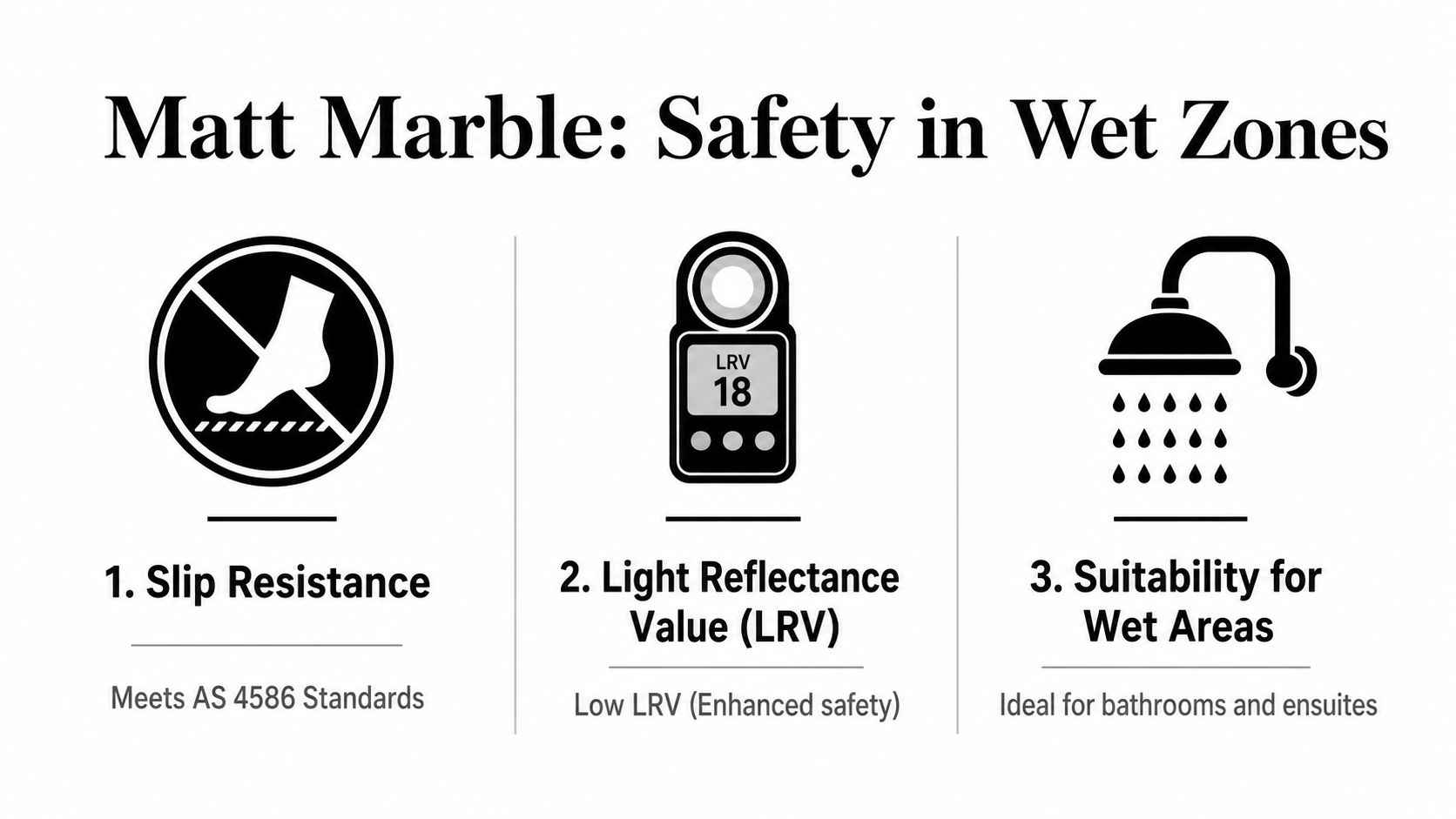
A matt surface reduces glare, so the floor reads as calmer and less shiny under bathroom lighting. That lower reflectance can help a wet room feel less visually slippery, which is one reason matt finishes are often preferred in practical wet zones. The point is not that the tile alone makes a bathroom safe. It is that the finish supports the overall safety of the room.
Why texture matters
A matt finish uses a fine surface texture that scatters light and gives the foot a little more purchase than a highly reflective surface. That matters when the floor is damp, your hands are full, or steam has softened visibility in the room. In Melbourne bathrooms, where family members often want a floor that feels forgiving without looking rough, that added surface control can make daily use easier.
The finish also needs to be considered alongside Australian slip-resistance expectations under AS 4586 and the wet-area requirements in the NCC waterproofing provisions. In a shower zone, or anywhere the floor is regularly exposed to water, the tile choice cannot be judged on appearance alone. It has to be checked as part of the full system, including substrate preparation, waterproofing, and drainage fall.
For a broader look at tile categories and bathroom layout ideas, the porcelain bathroom tile guide is useful when you are comparing a marble-look option with natural marble for maintenance and budgeting.
What to verify before you order
- Ask for the slip data: The tile should come with technical information showing it suits wet-area use.
- Read the surface description carefully: Matt, honed, textured, and anti-slip do not always mean the same thing, so check the specification sheet rather than relying on the brochure.
- Confirm the installation plan: Even a better-performing tile still depends on proper substrate preparation, waterproofing, and drainage fall.
A secure-feeling surface is only one part of the decision. The installer still has to match the tile to the room conditions, and that is where careful planning matters just as much as the material itself.
Sealing Maintenance and Longevity
Marble asks for a bit more discipline than some other floor coverings, and matt marble asks for it in a slightly different way. The texture that gives it character also means dirt, soap residue, and cleaning products can sit differently on the surface, so maintenance needs to be intentional, not casual.
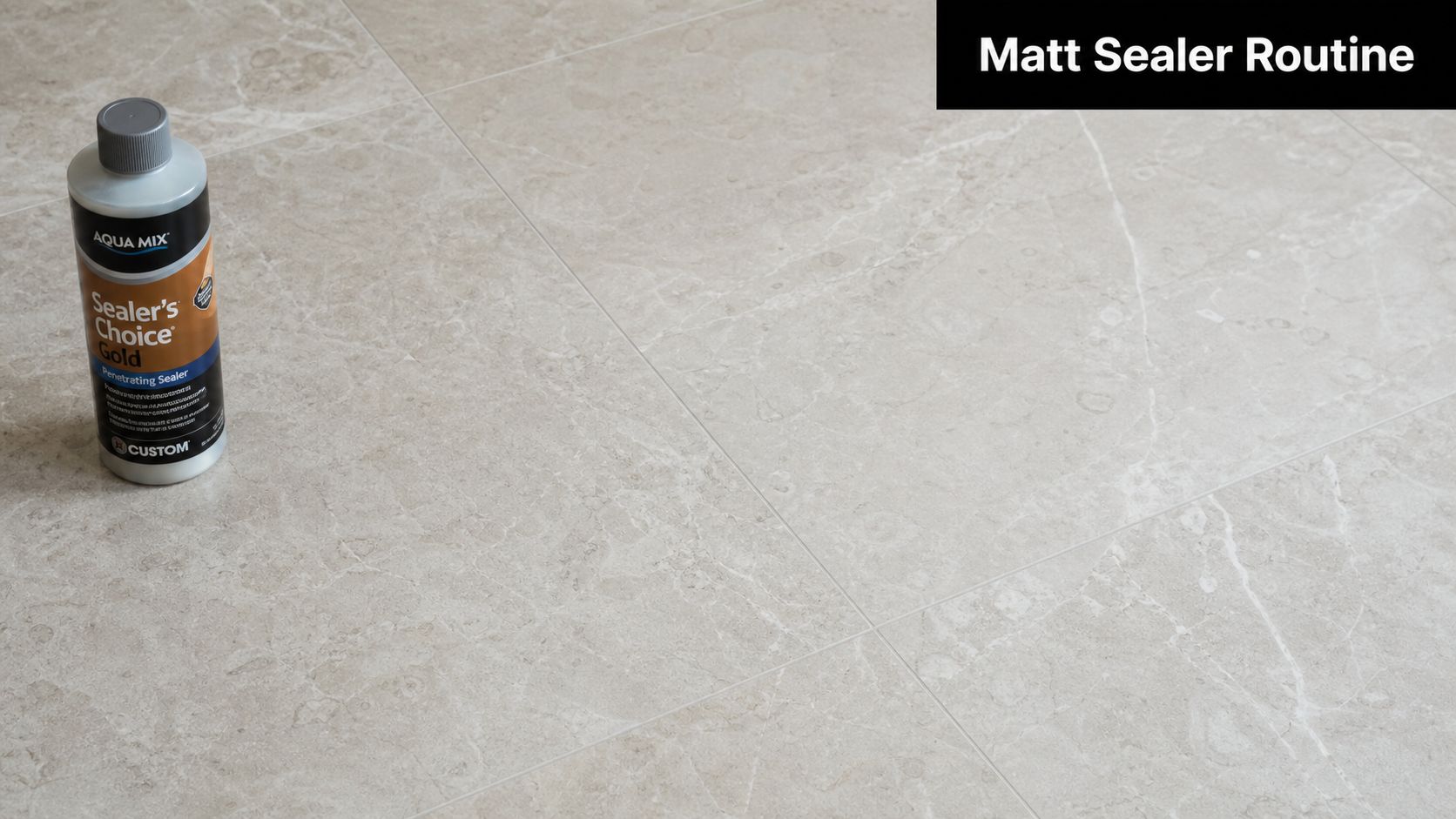
For Melbourne homeowners, the main goal is to preserve the look without flattening the stone. A penetrating sealer is usually preferred over a topical coating because it works inside the surface rather than sitting as a film on top. That matters on a matt finish, where you want to protect the stone without creating a plastic sheen.
A simple maintenance rhythm
Start with the first clean after installation, then wait for the sealer and grout advice from your tiler or stone supplier. From there, use a gentle, pH-neutral cleaner and avoid anything acidic, because acids can attack marble and make the surface dull or patchy.
Practical rule: if a cleaner is strong enough to strip soap scum in seconds, it's probably too aggressive for marble.
The day-to-day routine should be boring, and that's a good thing. Wipe down standing water, use soft mops, and keep harsh scrub pads away from the stone. A matt surface can look beautifully understated for years, but only if the cleaning process respects the finish.
What Melbourne homeowners often get wrong
People sometimes assume matt means maintenance-free. It doesn't. It can be forgiving in appearance, but it still needs sealing and sensible cleaning. That said, many homeowners prefer the way matt marble ages because small marks don't jump out the way they do on polished stone.
There's also a comfort question that comes up often in Melbourne's cooler months. Insufficient coverage exists on the specific acoustic and thermal comfort advantages of matt-finish marble versus polished marble in Melbourne's cooler climate, despite anecdotal reports of a softer underfoot feel in winter months (Stonemasons installation guide). So if comfort is part of your buying decision, treat it as a lived experience point rather than a fully quantified claim.
If your renovation includes both tiling and waterproofing, the tiling and waterproofing overview is a useful reminder that the floor finish, membrane, falls, and cleaning plan all belong in the same conversation.
Choosing Tile Sizes Grout and Cost Framework
Tile size changes the room more than many homeowners expect. A large-format tile can make a bathroom feel calmer because there are fewer grout lines. A smaller tile can add texture and flexibility, but it also introduces more joints, which means more visual interruption and potentially more maintenance.
Matte marble tiles in Australia are often manufactured as rectified porcelain in 600×1200 mm format with ±0.5 mm edge precision, allowing 2 mm grout joints that reduce water ingress (TileMob). That precision matters in bathrooms because narrow, even joints support cleaner lines and a more disciplined finish.
Tile sizes and grout recommendations
| Tile Size | Grout Width | Use Case |
|---|---|---|
| Large-format rectified 600×1200 mm | 2 mm | High-end en suites, minimal grout look, contemporary bathrooms |
| Traditional marble format | Wider joints | Older homes, more irregular rooms, classic layouts |
| Smaller modular sizes | Wider joints | Feature floors, tighter rooms, detailed patterns |
The narrower joint on rectified tile also helps reduce the chance of water finding its way into vulnerable edges, provided the waterproofing and substrate are done properly. That's why many Melbourne builders favour rectified products in premium bathrooms, especially when the visual goal is a visually continuous floor.
Budget thinking without guesswork
Price can vary widely depending on the stone type, fabrication, rectification, sealing, and labour, so it's better to price the whole bathroom rather than the tile alone. If you're comparing quotes, make sure each one includes the same assumptions about substrate preparation, waterproofing, trim details, grout, and sealing.
Ask for a quote that separates supply, install, waterproofing, and finishing work. If those items are bundled vaguely, it becomes hard to compare one builder against another.
A practical buying mindset helps here. If you want a restrained, upscale look and easy-to-read grout lines, large-format rectified tile is often the cleanest option. If your room has awkward angles or heritage details, a different format may be easier to fit neatly without forcing cuts into visible areas.
Design Inspiration and Local Sourcing Tips
A good marble bathroom does not need much decoration. In Melbourne homes, the strongest examples usually rely on proportion, restraint, and one clear material choice. A matt floor can carry much of that visual weight on its own, like a calm backdrop that lets the rest of the room speak clearly.
A Fitzroy renovation might use matt marble floor tiles with simple wall tile and compact brass fittings, so the old-house character stays intact. In Southbank, the same finish might sit under slimline fixtures and a frameless screen, which makes the room feel cleaner and more architectural. In a suburban family bathroom, the floor may become the quietest part of the room, while storage and easy cleaning take priority.
What local sourcing should look like
Good sourcing starts with touch and light. Ask to see the tile in natural light and under artificial light, then check how the veining and surface finish read from standing height. A matt finish can look richer in one showroom and flatter in another, depending on the lighting and the size of the room.
Trade compliance matters at the same time. In Victoria, any domestic building work valued over $10,000 in labour and materials requires the contractor to hold appropriate VBA registration, so homeowners need a registered builder for many bathroom renovations (CertifyMe VBA guide). If the total contract value exceeds $16,000, domestic building insurance becomes legally required for the registered builder, which gives the homeowner protection for structural defects and non-completion (builders warranty discussion).
A builder checklist worth keeping
- Confirm registration early: Do not wait until the quote is accepted.
- Ask about project scope: Cosmetic retiling is one thing, but structural changes, plumbing moves, electrical updates, or major waterproofing can change permit requirements.
- Check experience level: Domestic Builder (Unlimited) Registration in Victoria requires at least three years of practical experience within the seven years before application, while Domestic Builder (Limited) Registration requires two years (HIA Victoria licence guide).
A building permit in Melbourne is required when the renovation includes structural modifications, plumbing system changes, electrical updates, or major waterproofing work needed to meet Australian standards. Purely cosmetic updates like retiling or replacing taps in the same location generally do not require a permit (Melbourne permit guide). That distinction matters because the finish you choose can affect the scope of the job, which in turn affects who can legally do the work.
Conclusion and Next Steps
Matt marble works best when you want a bathroom that feels calm, safe, and timeless rather than bright and glossy. It suits wet areas because the finish lowers glare, supports better slip resistance, and gives the room a more grounded look, but the installation still has to be handled by the right registered builder.
If you're planning bathroom renovations in Melbourne, compare finish, grout, sealing, and builder credentials together, not separately. Then ask for a clear quote, confirm the registration details, and choose the tile that fits the way your household lives.
A CTA for Melbourne Tiling Services P/L.
Recent Comments