

You're probably staring at a bathroom that's become harder to ignore. Cracked grout, dated tiles, a shower that never quite feels clean, maybe a balcony that's started showing signs of water getting where it shouldn't. The initial thought for many is that they need “a tiler”. In Melbourne, that's rarely the whole job.
A proper tiling project is usually a chain of connected building tasks. Demolition affects waterproofing. Waterproofing affects screeding. Screeding affects falls. Falls affect whether water drains or sits. Then plumbing, electrical, carpentry, shower screens, silicone and final fit-off all have to land in the right order. If one part is rushed, the finished room can look good for a month and fail for years.
That's why homeowners searching for tiling jobs in Melbourne Australia need more than tile samples and a rough quote. They need a clear view of budget, process, materials, and who should run the project.
Table of Contents
- Your Melbourne Tiling Project What Is Possible
- Decoding Your Melbourne Renovation Budget and Timeline
- The Renovation Roadmap From Demolition to Delight
- Choosing Your Materials Porcelain Marble and Kerlite
- Hiring The Right Team Tilers vs Registered Builders
- From Quote to Completion The Hallmarks of a Professional
- Frequently Asked Questions
Your Melbourne Tiling Project What Is Possible
Most homeowners start with one room in mind, usually the bathroom. What they want is broader. They want a space that's easier to clean, better sealed, more comfortable to use, and more in step with the rest of the home. Good tiling helps do that, but only when the job is treated as part of the larger build.
In Melbourne, tiling work generally falls into three practical categories. Bathroom renovations are the obvious one. They combine waterproofing, drainage, wall preparation, floor falls and finish selection in a tight space where mistakes are expensive. Then there are balconies and outdoor areas, where the main issue often isn't appearance but water management and substrate movement. The third category is commercial fit-outs, where durability, cleaner lines and consistent installation matter just as much as the visual finish.
There are plenty of people offering tiling services. That's part of the challenge. As of 2026, there are 29,317 people employed across the Tiling & Carpeting Services sector in Australia, which shows how large the field is and why homeowners need a sharper filter when choosing who'll work on their property (IBISWorld employment data for the Australian Tiling & Carpeting Services sector).
What a successful job usually involves
A sound Melbourne tiling project tends to follow a simple logic:
- Define the underlying problem. Is this a cosmetic update, a leak issue, or a full rebuild?
- Check the hidden layers. Substrate condition, waterproofing history, drainage and movement joints matter more than tile colour.
- Match the finish to the space. A family bathroom needs different priorities from a feature ensuite or a café fit-out.
- Get all trades coordinated. Tiling sits in the middle of a build sequence. It doesn't work in isolation.
Practical rule: If your project affects water, drainage, fixtures or structural linings, it's no longer “just a tiling job”.
That's the shift many homeowners need to make early. Once you treat the work as a managed renovation instead of a tile swap, the decisions become clearer and the outcome is usually far better.
Decoding Your Melbourne Renovation Budget and Timeline
Budget shock usually happens when people compare a small tile replacement with a full bathroom rebuild as if they're the same kind of job. They're not. Replacing a few surface finishes can be straightforward. Stripping a bathroom back, correcting substrate issues, waterproofing it properly and rebuilding it with multiple trades is a different scope entirely.
For a realistic starting point, the average cost for a full bathroom renovation in Melbourne ranges from $24,000 to $38,000, which sits above the national average. Within that budget, labour and trades account for 40 to 50% of the total cost, with tiling and waterproofing the largest line items (Melbourne bathroom renovation cost data).
A visual summary helps frame the common project types homeowners compare:
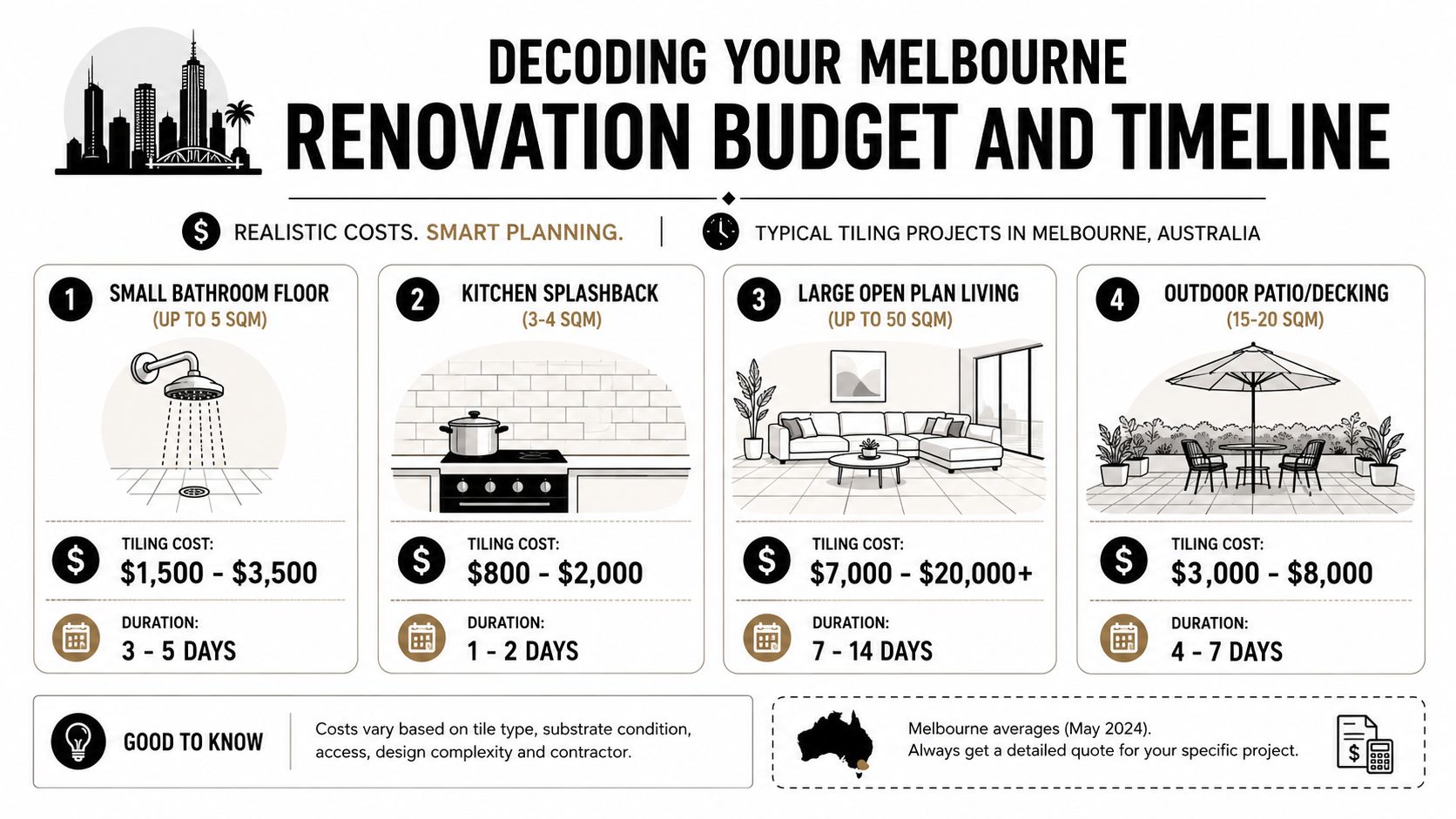
Where the money usually goes
The expensive parts of a bathroom aren't always the parts people notice first. Homeowners often focus on tile choice, but hidden work drives a large share of the budget.
- Demolition and disposal matter when the existing room has to be stripped safely and carted away.
- Waterproofing and substrate preparation are where corners cause long-term failures.
- Tiling labour rises with small-format tiles, tricky layouts, niches, mitred edges, patterned installation and large-format handling.
- Plumbing and electrical work can expand fast once walls are opened and old work is exposed.
- Fixtures and glazing affect the final figure more than many first-time renovators expect.
What changes the timeline
The timeline depends less on how fast tiles can be laid and more on sequencing. Trades can't overlap because one stage often needs inspection, curing or set time before the next begins.
A small surface-only update can move quickly if the substrate is sound and materials are ready. A full bathroom renovation takes longer because demolition, rough-ins, waterproofing, screeding, tiling, grouting, silicone, fit-off and final clean all need to happen in order.
This video gives a useful visual sense of how full renovation work comes together on site:
Cheap quotes often leave out the work that keeps the room dry, flat and serviceable. That missing detail usually returns later as variation costs or repair bills.
Cosmetic refresh versus full rebuild
A simple way to think about it is this:
| Project type | What it usually includes | Main risk |
|---|---|---|
| Cosmetic update | New tiles or selected surface changes | Old waterproofing and uneven substrate remain underneath |
| Partial renovation | Some fixture changes, localised repair, selected retiling | New work may still be constrained by old room layout |
| Full renovation | Demolition, new preparation, waterproofing, tiling, fit-off | Higher upfront spend, but better control over quality and compliance |
If you're planning bathroom renovations in Melbourne, start by deciding which of those three jobs you're buying. That answer shapes every other decision.
The Renovation Roadmap From Demolition to Delight
Bathroom work succeeds when the sequence is right. The easiest way to understand it is like a recipe. If ingredients go in at the wrong time, the dish fails no matter how good the final garnish looks. Tiling is the visible finish, but it depends on everything underneath.
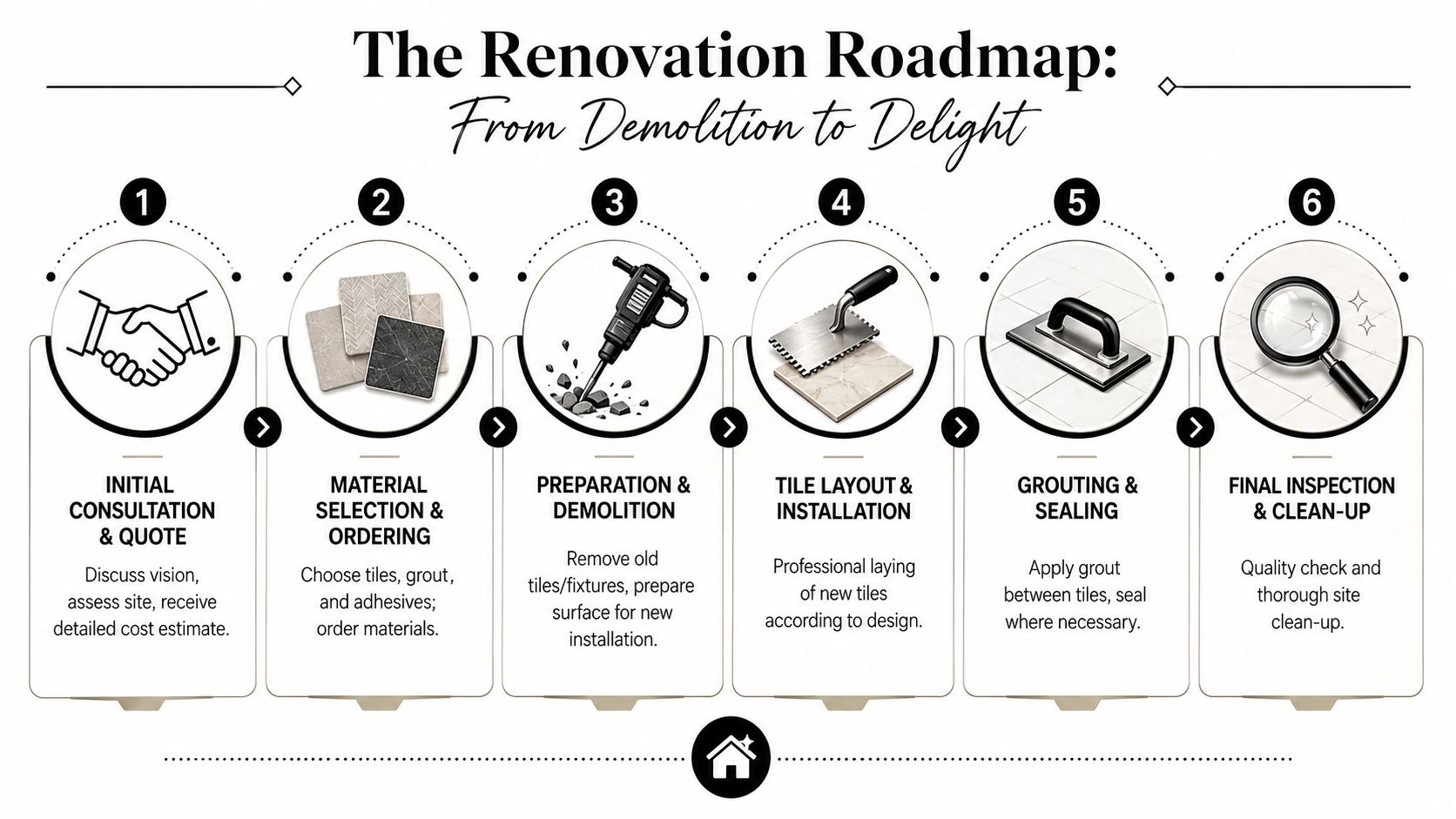
The site work that comes first
The first stage is inspection and planning. Measurements are taken, levels are checked, fixture positions are reviewed and material selections begin. If the room has awkward corners, poor falls or signs of movement, that has to be addressed before demolition starts. A proper tiling and waterproofing process begins well before the first tile is opened.
Then the room is stripped out. Old tiles, fittings, screens and damaged linings are removed. At this stage, hidden problems usually show themselves. Rotten sheeting, failed membranes, bad patch jobs and out-of-square framing are common. Good teams don't panic at that point. They document the issue, explain it clearly and correct it before rebuilding.
The trades have to land in order
After demolition, rough-in work happens. Plumbers shift wastes or tap locations. Electricians sort lighting, fans, power and heating points. Carpenters or builders adjust framing and sheeting where needed.
Only then does the waterproofing stage make sense. After that comes screeding or floor preparation to create proper falls and a stable base for tile installation.
A clean sequence usually looks like this:
- Consult and measure so the scope is based on the room, not assumptions.
- Demolish and expose the substrate to see what condition the bathroom is in.
- Rough-in services before surfaces are closed again.
- Waterproof and allow proper cure time because rushing this stage creates expensive failures.
- Tile with a set layout plan so cuts, joints and lines look intentional.
- Fit off and finish with fixtures, screens, silicone and final defect checks.
On site reality: A bathroom goes wrong when someone treats each trade as separate. A bathroom goes right when one person manages the sequence.
Why the final finish depends on the hidden work
Homeowners often judge a room by straight grout lines and stylish tiles. Fair enough. But the professional test is broader. Do the falls work? Are the corners true? Has movement been allowed for? Do niches line up? Are edges protected? Does the shower drain properly without ponding?
Those details don't happen by luck. They come from supervision, timing and trade coordination. That's why the cleanest jobs in Melbourne usually aren't the ones with the flashiest brochure. They're the ones where demolition, preparation, waterproofing and tiling all follow a disciplined order.
Choosing Your Materials Porcelain Marble and Kerlite
Tile selection goes wrong when people choose with their eyes only. The room doesn't live on a sample board. It lives with steam, soap, cleaning products, movement, dropped objects and wet feet. The right material has to suit the room as much as the design.
Porcelain for most everyday bathrooms
For many Melbourne homes, porcelain is the practical choice. It gives homeowners a broad design range, from stone-look finishes to concrete and timber visuals, without the higher maintenance demands of natural stone. It's also well suited to bathrooms, laundries and many living areas because it handles regular wear and moisture well.
If you're weighing up styles for a wet area, this guide to porcelain tiles for bathrooms is a useful reference point for how they're commonly used in renovation projects.
Marble for appearance first
Marble delivers a look that manufactured products still try to imitate. It suits feature bathrooms, powder rooms and higher-end spaces where the owner understands the upkeep. The trade-off is maintenance. Marble is more sensitive, it benefits from sealing, and it isn't the best fit for every busy family bathroom.
That doesn't make it a poor choice. It just means it should be selected deliberately. If you want marble, you need an installer who understands layout, veining, edges and how to handle natural variation without making the room feel chaotic.
Kerlite for large-format precision
Kerlite and similar large-format products suit modern projects with cleaner lines and fewer grout joints. They can look excellent in bathrooms, walls, floors and some exterior applications, but they're less forgiving to install. The substrate has to be prepared properly, the handling has to be careful, and the set-out needs to be resolved before the first panel goes down.
Here's a simple side-by-side view of the practical trade-offs:
| Material | Best for | Watch for |
|---|---|---|
| Porcelain | Family bathrooms, ensuites, broad style range | Quality varies between products |
| Marble | Premium finish, natural character, feature spaces | More upkeep and careful cleaning |
| Kerlite | Large-format contemporary work | Requires precise preparation and installation |
Choose the tile that suits the room you actually have, not the showroom photo you liked for ten seconds.
Slip resistance matters too, especially on bathroom floors, balconies and entries. So does grout colour, edge trim detail and whether the selected tile size works with the room dimensions. A huge tile in a cramped room can create awkward cuts if the layout isn't planned properly. A small mosaic can look great, but it increases labour and joints to maintain.
Hiring The Right Team Tilers vs Registered Builders
The tiling phase often presents challenges for many Melbourne renovations. Homeowners ask, “How do I find a good tiler?” The better question is, “Who is legally and practically responsible for the whole job?”
In Victoria, no formal qualification is legally mandatory for tilers, which creates a real hiring gap for homeowners dealing with wet areas and complex bathroom renovations (Victorian tiler qualification gap and skills assessment discussion). That doesn't mean every tiler is unskilled. It means the homeowner has to do more due diligence because confidence and competence aren't the same thing.
Why a single-trade hire can become a project problem
A tiler can lay tiles. But a full bathroom renovation usually needs far more than tile laying. It may involve demolition, framing adjustment, plumbing, electrical, waterproofing, shower screen installation and defect management. If you hire each trade separately, you become the site coordinator. That sounds manageable until a drain is in the wrong place, the floor is out, or one trade blames the previous one.
That's why a Registered Builder changes the risk profile.
A builder running bathroom renovations should be able to:
- Coordinate licensed trades so plumbing and electrical work happen in the right order.
- Control sequencing so waterproofing, curing and tiling aren't rushed.
- Carry responsibility for the build as one managed project.
- Provide insurance and documentation that match the scope of work.
- Deal with variations properly when hidden issues are uncovered after demolition.
What that means in practice
A homeowner usually notices the benefit in three places. First, communication is simpler because there's one point of contact. Second, defects are easier to resolve because accountability isn't scattered across five separate contractors. Third, the finished bathroom tends to be more cohesive because the set-out, fixtures and finishes were planned together.
If you're comparing local options, a useful starting point is reviewing established tiling contractors in Melbourne and checking whether they only lay tiles or can legally manage the full renovation pathway.
Melbourne Tiling Services P/L is one example of a company structured as a Registered Builder that coordinates tilers, plumbers, electricians, carpenters and waterproofers under one renovation scope. That model won't suit every project, but it is the safer fit when the work extends beyond surface replacement.
The questions worth asking before signing
Don't stop at “Are you available?” Ask sharper questions.
- Who manages the whole project? If the answer is vague, expect confusion on site.
- Who organises waterproofing and trade sequencing? Those two items make or break wet-area work.
- What happens if demolition reveals damage? A professional should have a process, not a shrug.
- Are you insured for this scope? The answer should be direct.
- Is the quote itemised? If it isn't, you can't compare it properly.
If a contractor talks only about tile patterns and never about substrate, waterproofing or trade order, they're discussing the least risky part of the job.
For complex bathroom renovations, the safest route isn't finding the cheapest tiler. It's hiring the right project lead.
From Quote to Completion The Hallmarks of a Professional
The first professional signal is the quote. A vague one-line price is a warning. It tells you the contractor either hasn't thought through the scope or doesn't want to commit to detail. Both are problems.
A proper quote should separate demolition, preparation, waterproofing, tiling, fit-off items and exclusions. It should also make clear what happens if the room contains hidden damage. You don't need a novel. You need enough detail to understand what you are and aren't buying.
What to look for before work begins
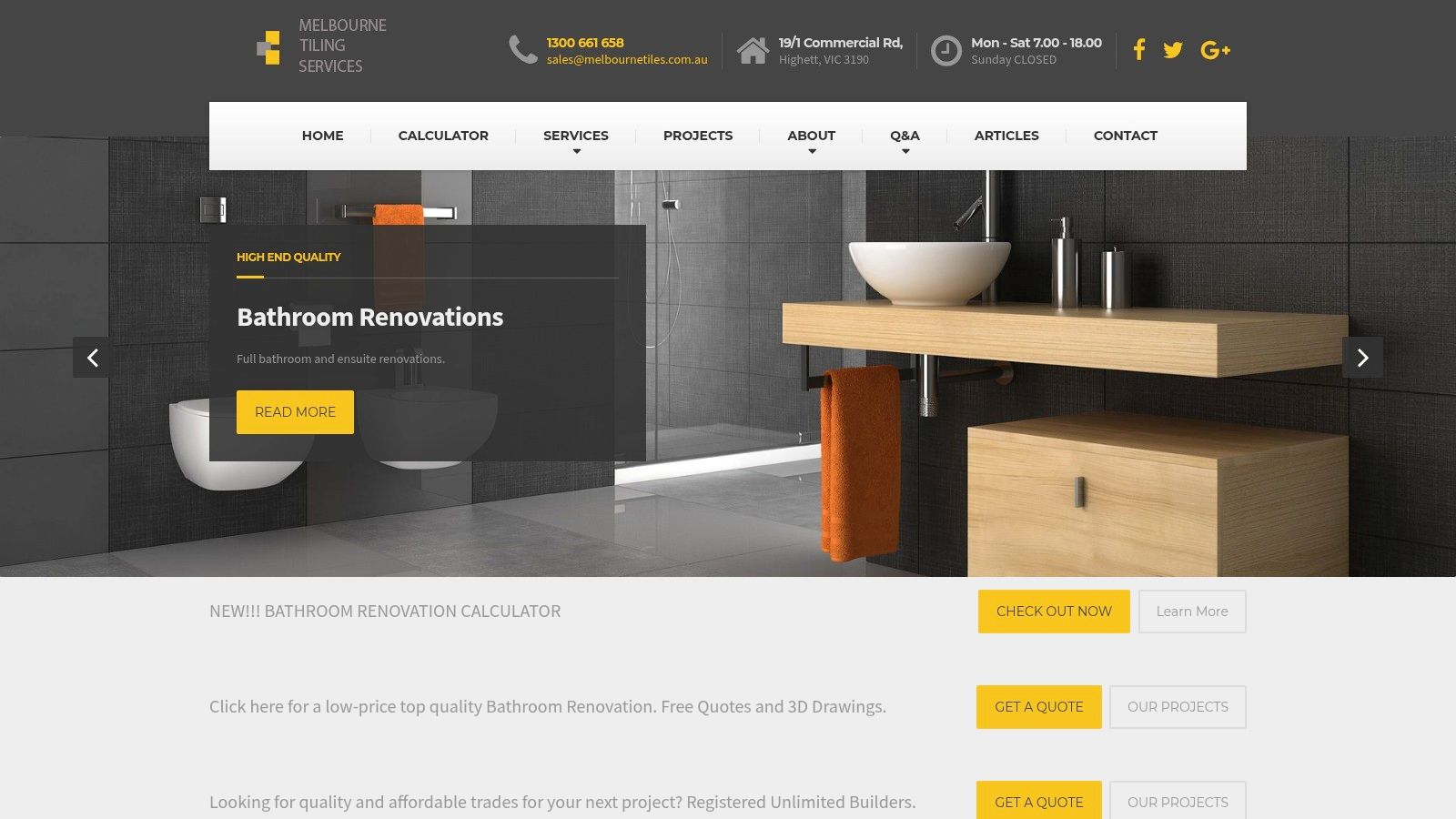
The strongest renovation teams usually show their process early. That might include site measurement, finish samples, layout advice and sometimes 3D drawings so the homeowner can see how niches, feature walls, vanities and tile lines will work before materials are fixed.
Check for these signs:
- Clear scope language so demolition, disposal, preparation and finishing aren't hidden.
- Material clarity so you know who supplies tiles, adhesives, trims, grout and fixtures.
- Variation process so unexpected issues don't turn into on-site arguments.
- Site standards covering cleanliness, protection and end-of-day organisation.
How professionals handle surprises
No honest builder can promise that an existing bathroom will reveal no issues once it's opened. Old leaks, bad patching, rotten board, poor falls and out-of-plumb walls are common. The difference is how the team responds.
An amateur treats surprises as chaos. A professional treats them as managed scope changes. They explain the problem, show the cause, outline the fix and update cost or timing in a way the owner can follow.
Good renovation work isn't just about installing new finishes. It's about reducing the chance that hidden defects survive under those finishes.
There's also a financial reason to care about process. Thoughtfully executed bathroom renovations in Melbourne can return 85 to 90% of the investment, which is why they're often viewed as one of the stronger value-adding upgrades in a home (Melbourne renovation return data).
That return doesn't come from choosing the most expensive tapware. It comes from making durable, sensible decisions and having the work carried out properly from the first quote through to final clean.
Frequently Asked Questions
Do I need a registered builder for a bathroom tiling project?
If the work is limited to straightforward surface tiling, the answer can be different from a full renovation. But once the job includes demolition, waterproofing, plumbing, electrical, structural lining changes or coordinated trade scheduling, having a registered builder in charge is the safer path. It gives you one party responsible for the build sequence and the finish.
Is the cheapest quote ever worth taking?
Sometimes a lower quote means a leaner business. Often it means something has been omitted. In bathroom work, the missing items are usually the parts you can't see later, preparation, waterproofing detail, waste removal, trim work, or proper time allocation. Cheap at the start can become expensive once rework begins.
Which tile is easiest to live with in a family bathroom?
Porcelain is usually the most practical choice for many homes because it balances appearance, durability and maintenance. That said, the right answer depends on the room, the finish, the slip requirements and how the tile size works with the layout. The wrong tile in the right colour is still the wrong tile.
How do I know if a balcony or shower problem is just cosmetic?
You usually don't know until someone with the right experience inspects it properly. Cracked grout, drummy tiles, staining and recurring mould can all point to a deeper issue, but they can also appear in less severe situations. The mistake is assuming it's only surface-level because the visible damage seems minor.
If you're planning bathroom renovations, leak repairs, balcony remediation or premium tiling work, Melbourne Tiling Services P/L is one Melbourne-based option to consider for a fully managed project. They operate as Registered Unlimited Builders and handle start-to-finish bathroom renovation and tiling work across Melbourne, which is useful when your job needs coordinated trades rather than a tiler alone.
Recent Comments