

You notice it in stages. First, a damp smell that lingers after the bathroom should've dried out. Then a paint blister on the wall outside the shower, or a yellowish mark on the ceiling below. In some homes, the clue is underfoot. A hollow tile, a grout joint that keeps darkening, or skirting that starts to swell.
That's usually the point where worry kicks in. Is it the grout. A pipe. The shower base. The whole bathroom.
In Melbourne homes, the answer isn't always obvious from what you can see. A shower can look fine on the surface while water is moving into framing, flooring, or adjacent walls behind the tiles. That's why the smart approach is calm and methodical. Confirm the symptoms. Isolate the likely source. Then decide whether you're dealing with a local repair, a waterproofing failure, or a bathroom that's reached the point where broader rectification makes more sense.
Table of Contents
- The Unwelcome Discovery A Guide for Melbourne Homeowners
- Telltale Signs and Common Causes of Shower Leaks
- Simple DIY Checks to Isolate the Problem
- How Melbourne Professionals Find Hidden Shower Leaks
- Beyond Detection Repair Waterproofing and Renovation
- Shower Leak Detection Costs and Timelines in Melbourne
- Frequently Asked Questions About Shower Leaks
- Can I claim shower leak repairs on insurance
- Are shower leaks more common in older Melbourne homes
- What's different in apartments and townhouses
- Can regrouting fix a leaking shower
- Should I keep using the shower if I suspect a leak
- When should I call a registered builder instead of a leak detector alone
The Unwelcome Discovery A Guide for Melbourne Homeowners
A lot of shower leak calls start the same way. Someone has cleaned the bathroom, regrouted a small section, maybe replaced a shower rose, and still the stain gets bigger or the smell comes back. They're not careless. They're trying to solve the problem before it spreads.
The trouble is that shower leaks don't behave neatly. Water follows gaps, gravity, framing, and old building materials. The wet patch you can see may be well away from the defect that caused it. In a tiled shower, moisture can travel behind finishes and show up in the hallway, in a robe on the other side of the wall, or on the ceiling below.
That's especially true across Melbourne's mixed housing stock. A newer ensuite can have a junction detail problem. A period home may have movement, ageing substrates, and an old membrane that no longer performs. An apartment can involve common property concerns and access limits that make diagnosis harder.
Practical rule: Don't assume the first visible symptom is the source. Treat it as a clue.
The right mindset is simple. Don't panic. Don't start ripping tiles off blindly. Don't keep applying surface products in the hope that one of them will magically stop water moving behind the scenes.
Use a structured process instead. Confirm whether the leak is active. Work out whether it points to supply plumbing, waste, or waterproofing. Then look at the bathroom as a whole. If the shower is leaking because the assembly itself is at the end of its serviceable life, the smartest fix may be broader than the original stain suggested.
Telltale Signs and Common Causes of Shower Leaks
Some signs are obvious. Others are easy to dismiss until the damage becomes harder to ignore. If you're searching for shower leak detection Melbourne, these are the symptoms worth taking seriously early.
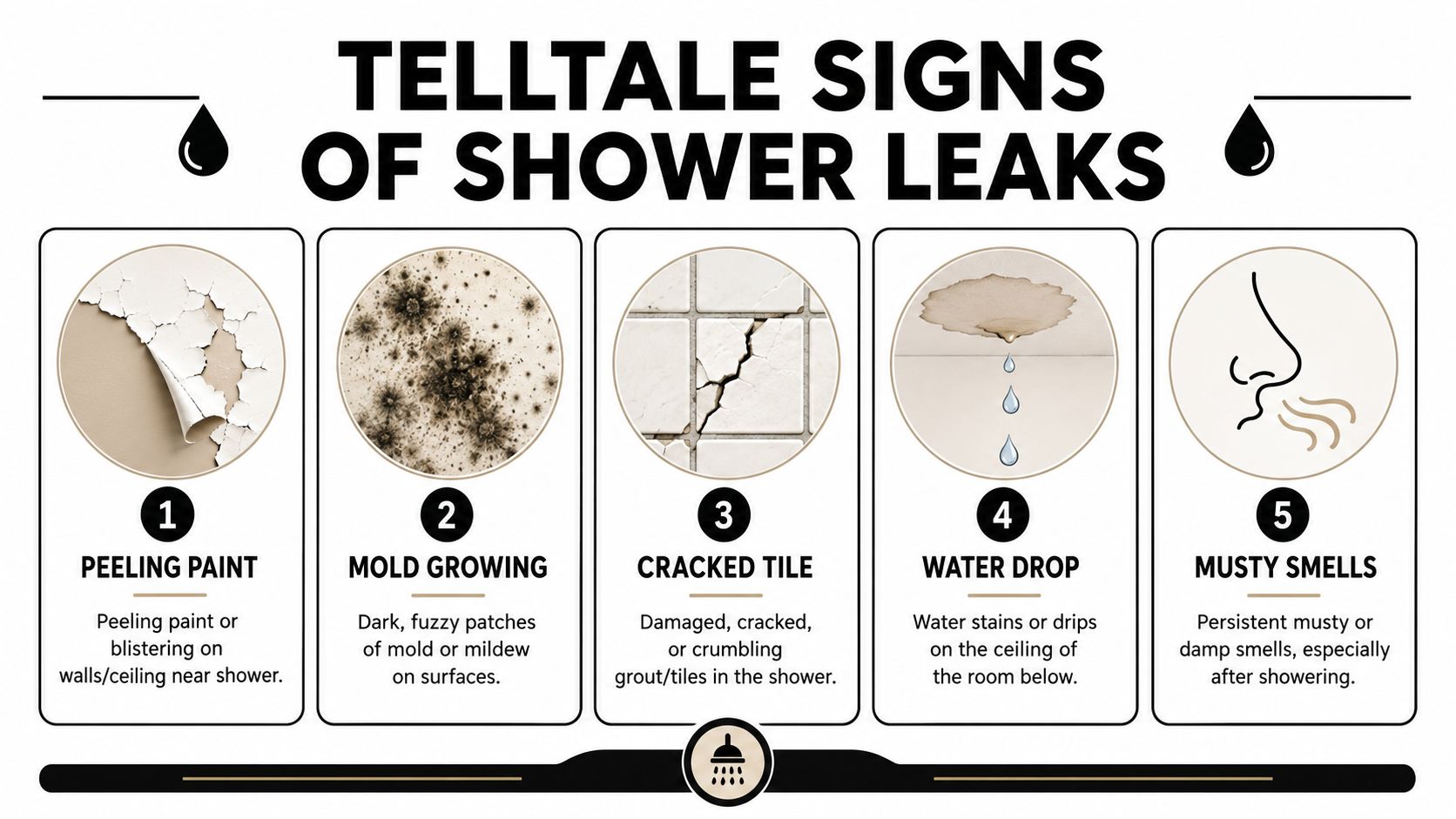
What you can usually see and smell
The first category is visual damage outside the shower itself. That includes:
- Peeling paint or blistering finishes on nearby walls or the ceiling below
- Mould or mildew that keeps returning after cleaning
- Darkened grout lines that stay wet long after use
- Swollen skirtings or trim outside the bathroom
- Water marks in adjoining rooms or downstairs areas
Then there are the structural clues inside the shower.
- Loose tiles can mean moisture has affected the bond.
- Cracked grout often signals movement or water entry points.
- Failed silicone at junctions around wall-to-floor changes and screens can let water into vulnerable areas.
- A soft or drummy feel underfoot may suggest substrate trouble beneath the tile layer.
The smell matters too. A persistent musty odour, especially after showering, usually means moisture is sitting where it shouldn't.
What's often causing it underneath
Not every leak is a burst pipe. In Melbourne bathrooms, many shower leaks come back to the shower assembly itself rather than a visible plumbing fixture.
A common culprit is failed waterproofing. In Victoria, the minimum plumbing work standard for shower waterproofing is governed by AS 3740-2021 and the National Construction Code, and practical leak detection guidance puts early focus on waterproofing failures, junctions, and membrane defects because water can track into walls or floors while the surface still looks relatively dry. That same guidance explains why staged testing is used to separate pressurised supply leaks from waste or waterproofing failures in a shower cubicle (Victorian shower waterproofing guidance and staged leak testing).
Other common causes include:
| Likely cause | What it tends to look like |
|---|---|
| Worn silicone joints | Localised leakage near corners, screens, or penetrations |
| Cracked tiles or grout | Water entry through repeated wetting and movement |
| Plumbing fixture issues | Leaks linked to tapware, mixers, shower roses, or supply lines |
| Drainage defects | Problems that show up during use rather than when the shower sits idle |
| Ageing bathroom build-up | Multiple small failures happening at once |
One practical reason to avoid guessing is the DIY trap. A Melbourne shower leak page notes that 68% of Australian shower leak complaints involve homeowners attempting DIY fixes first, leading to a 42% increase in secondary damage costs (DIY shower leak attempts and secondary damage costs). That doesn't mean you can't inspect carefully. It means cosmetic fixes often come before proper diagnosis, and that's when time and money get lost.
Simple DIY Checks to Isolate the Problem
A lot of Melbourne homeowners reach the same point. They notice a damp skirting outside the bathroom, a stain on the ceiling below, or silicone that never quite dries out, and they want to know whether this is a simple maintenance issue or the start of a bigger bathroom problem.
That is the right time for a few careful checks at home. Keep them non-destructive. The job here is to narrow the possibilities and decide whether the shower needs a registered builder or leak specialist to assess the full bathroom assembly, not just the obvious wet spot.
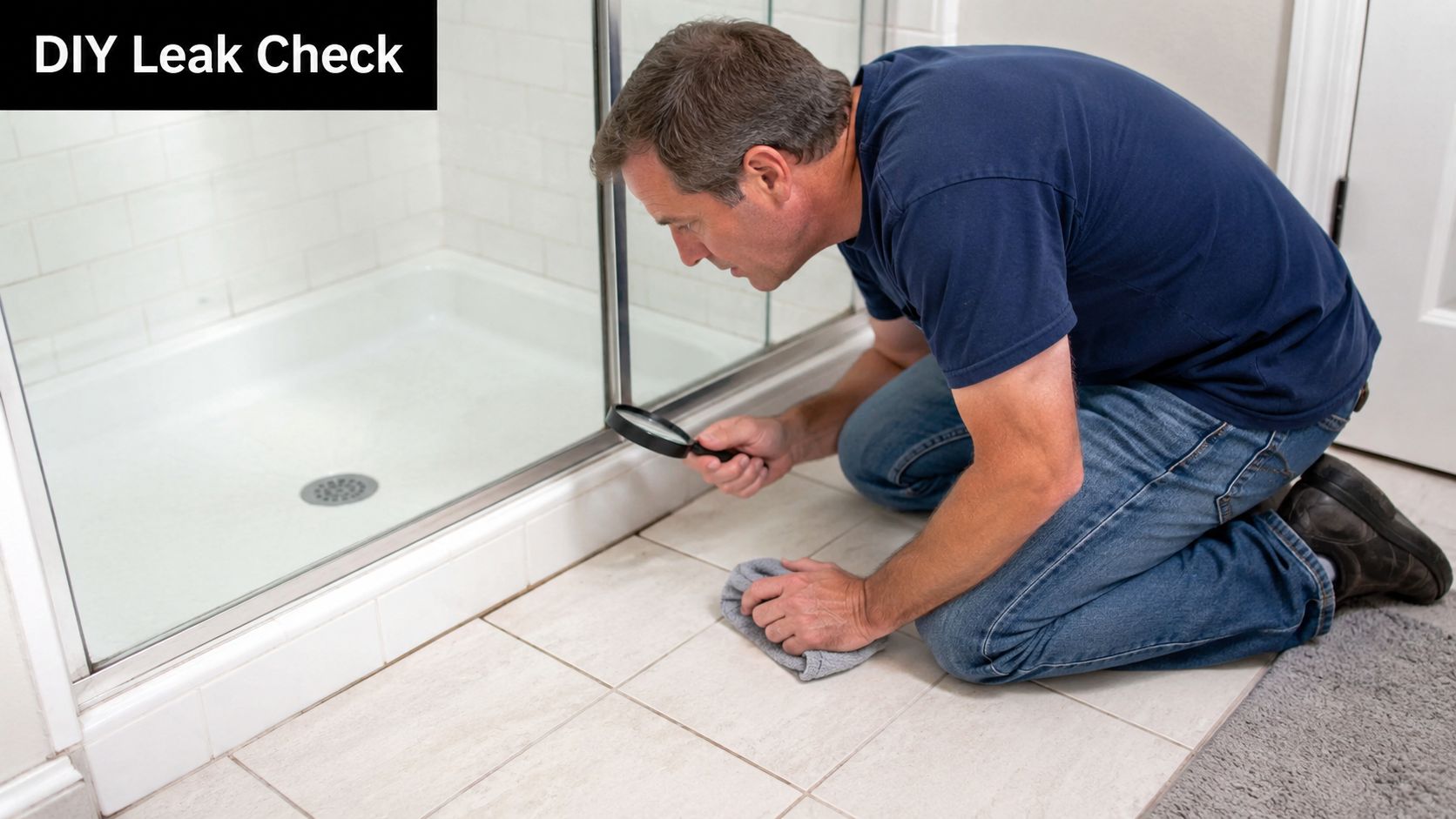
Safe checks worth doing first
Start by drying the shower and the floor outside it, then leave it unused for a day if you can. If fresh moisture appears while the shower has not been used, the problem may sit with a pressurised plumbing connection, tapware, or water tracking from another source. If the area stays dry until someone showers, that points more towards the enclosure, waste, or waterproofed areas.
Then inspect the obvious weak points closely. Check silicone in the internal corners, around the base, where the screen meets tile, and around penetrations such as taps and outlets. Look for splits, lifting edges, mould that returns quickly after cleaning, swollen trims, or grout that stays dark long after the rest of the shower dries.
A basic isolation check also helps. Run water straight into the waste with as little splash as possible for a few minutes. Later, use the shower normally. If the leak only shows up during normal showering, the drain itself may not be the main issue. The problem can sit higher up, where water hits walls, junctions, or screen connections under regular use.
Check the fixtures too. Dry around the mixer, shower rose, rail mounts, and any exposed joints. Come back later and look again. Moisture showing up around fittings without a full shower points to a different repair path than water escaping only when the enclosure is wet.
For homeowners trying to understand what a minor repair might involve, this guide on how to fix leaking showers gives a useful overview.
When DIY needs to stop
DIY checking has a limit. Once the next step involves removing tiles, cutting into walls, resealing over damp materials, or guessing which product might hold, the risk goes up fast.
If the pattern is unclear, damage is spreading outside the shower, or the leak keeps returning after small repairs, stop patching and get the bathroom assessed properly.
That matters because a shower leak is not always a shower-only problem. In older Melbourne bathrooms, I often find more than one failure at the same time. A leaking screen junction might be obvious, but there can also be movement in the substrate, degraded waterproofing, poor falls, or water damage in adjacent walls. Patching the visible point buys time at best and traps moisture at worst.
A short demonstration can help you understand what professionals are trying to isolate before they recommend repairs.
The decision point is simple. If your checks suggest a single maintenance issue, a targeted repair may be enough. If the signs overlap, or the bathroom is older and showing wear in several places, it is time to bring in a registered builder for a whole-of-bathroom assessment. That approach looks at the leak, the waterproofing, the condition of the substrate, and whether a proper renovation will cost less than repeated repairs over the next few years.
How Melbourne Professionals Find Hidden Shower Leaks
A proper leak investigation starts with one question. Are we dealing with a plumbing fault, a drainage issue, failed waterproofing, building movement, or a mix of them?
That matters because hidden shower leaks rarely announce themselves at the source. Water can travel under tiles, through screed, along framing, and into the room next door before a stain shows up. In older Melbourne bathrooms, I often see the visible damage sitting well away from the actual entry point.
Why staged testing matters in Victorian bathrooms
Good operators work in stages because each test rules something in or out. They start with the history of the leak, when it happens, how long it has been going on, whether it shows after showering or all the time, and what sits on the other side of the shower wall. Then they check the bathroom layout, likely water paths, and the condition of joints, penetrations, wastes, and adjoining finishes.
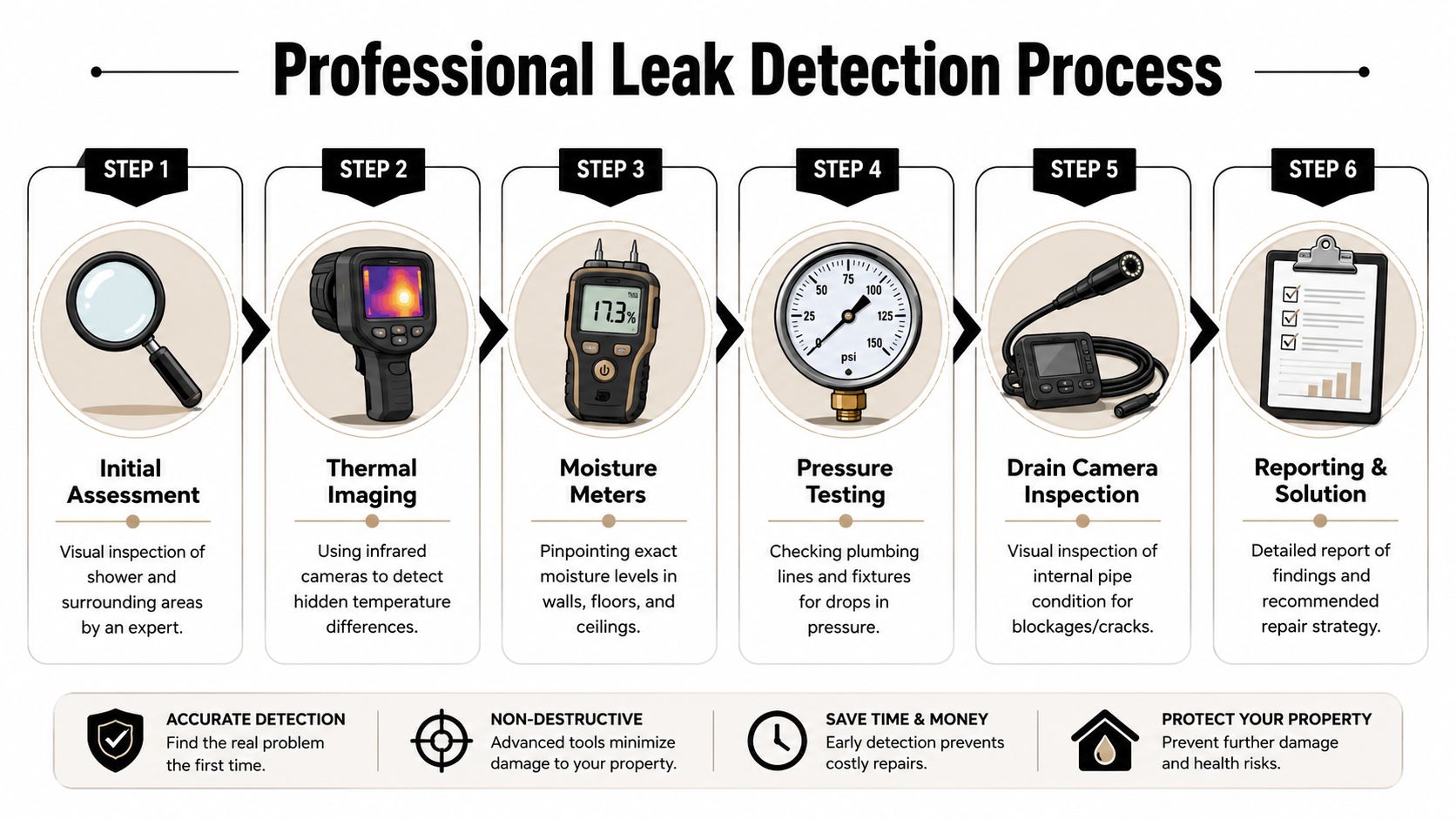
After that, non-invasive testing helps narrow the field before anything is opened up. The point is not to confirm that moisture exists. By the time a homeowner calls, that part is usually obvious. The point is to identify the likely source, trace the path, and work out whether a local repair makes sense or whether the bathroom needs broader rectification.
That distinction saves money.
If the issue is a loose outlet, failed seal at a screen junction, or a pressure-side plumbing defect, the repair scope can stay tight. If testing points to membrane failure, poor falls, damaged substrate, or moisture spread into adjacent materials, the conversation changes. At that stage, a builder needs to assess the bathroom as a whole, including the condition of the waterproofing system and whether proper bathroom waterproofing in Melbourne can be reinstated through a repair or only through renovation.
The tools that narrow the search
Different tools answer different questions, so professionals use them together instead of relying on a single reading.
- Thermal imaging helps spot cooler areas that may show moisture movement or water tracking behind finishes.
- Acoustic listening equipment is useful for active pressurised leaks where sound can help locate the defect.
- Pressure testing checks whether supply lines hold pressure or lose it over time.
- Drain cameras help inspect waste lines and traps where access is limited.
- Moisture meters help map how far water has moved into plaster, timber, skirtings, or nearby wall linings.
Used properly, those tests give a clearer picture before demolition starts. They also reduce the chance of pulling up the wrong section of tile or opening a wall that was never the problem.
On site: The best result is a clear diagnosis with a repair scope. Homeowners need to know where the water is getting in, where it has travelled, and whether the fix belongs to a plumber, a waterproofer, or a registered builder managing a larger bathroom repair.
The final step is judgment. Tools help locate moisture and isolate defects, but someone still needs to read the pattern of failure in the context of the bathroom's age, construction, and overall condition. That is usually the point where DIY should stop. If the findings suggest more than one failing component, the smart call is a registered builder who can assess the leak and the long-term health of the bathroom before money goes into patchwork.
Beyond Detection Repair Waterproofing and Renovation
Finding the leak is only half the job. The bigger question is what the leak says about the overall state of the bathroom.
When a patch is enough and when it isn't
Some defects are local. A failed fitting, a minor penetration issue, or an isolated screen junction can sometimes be rectified without rebuilding the shower. But many leaking showers aren't failing at a single visible point. They're failing as a system.
That's why a practical detection workflow uses non-invasive methods first. When thermal imaging, acoustic testing, and pressure testing are used together, the value is in narrowing the source before demolition starts. This kind of triangulation improves the odds of removing only what's necessary and avoiding false assumptions about the leak path (non-invasive leak localisation and triangulation).
Once the issue points to waterproofing, repair usually moves beyond cosmetic work. The process may involve removing tiles, checking the screed or substrate, replacing damaged materials, reinstating a compliant membrane, and then retiling and resealing. If moisture has affected adjacent framing, flooring, architraves, or skirtings, those items need attention too.
A good decision test is whether the shower has one isolated fault or several signs of age at once:
- Patch repair may suit a contained issue with otherwise sound bathroom construction.
- Broader rectification is often smarter if tiles are loose, substrates are compromised, or the waterproofing assembly has plainly failed.
- Full renovation deserves consideration when the bathroom is dated, access is poor, or you're facing repeat work on finishes that are already near the end of their life.
Why registered builders matter on bigger bathroom repairs
Homeowners often make an incorrect comparison. They compare the cost of a tube of sealant to the cost of a proper repair. That's not the actual trade-off. The actual trade-off is between a short-term patch and a bathroom that's sound again.
In Melbourne, larger shower leak repairs often cross trades. There may be plumbing, waterproofing, carpentry, tiling, shower screen reinstatement, and finish work. If the leak has spread, there can also be subfloor or wall rectification. That's where registered builders become valuable. They can assess the leak in the context of the whole bathroom, coordinate the right licensed trades, and decide whether the sensible path is a local repair or a proper renovation.

If you're already weighing up whether to repair or rebuild, it's worth understanding what compliant waterproofing involves in a renovation context. This overview of waterproofing in Melbourne is a sensible place to start.
A leaking shower often isn't just a leak. It's the bathroom telling you the original build-up no longer has enough life left in it.
For many homeowners, that's the decision point. Keep patching and hope. Or treat the leak as the prompt to create a dry, durable bathroom that won't need revisiting every time another small failure appears.
Shower Leak Detection Costs and Timelines in Melbourne
The honest answer on cost is that it depends on where the leak is, how far water has travelled, and whether the fix is local or structural. Without testing, any firm number is guesswork. That's why good operators inspect first and scope second.
What affects the final cost
The cost of shower leak detection in Melbourne is usually shaped by a few practical factors:
| Cost driver | Why it changes the scope |
|---|---|
| Leak location | A fixture issue is different from failed waterproofing |
| Access | Apartments, tight bathrooms, and occupied homes can slow work |
| Extent of damage | Adjacent rooms, ceilings, or framing add repair scope |
| Bathroom age and condition | Older bathrooms often reveal more than one defect |
| Repair standard | Temporary patching and full compliant rectification are not the same job |
If you're budgeting, think in stages rather than one line item. There's the initial assessment and testing. Then there's the repair itself. In some homes, that repair is minor. In others, leak detection leads directly into partial rebuild work or a full bathroom renovation.
That's why the useful question isn't “what does a leak cost”. It's “what level of work does this leak require”.
For a closer look at service scope, this page on leak detection in Melbourne helps frame what inspection and rectification can involve.
How long the process usually takes
Detection is usually the shortest part of the job. A site visit, testing sequence, and findings can often be worked through in a relatively contained appointment, especially when access is straightforward and the symptoms are clear.
Repairs take longer because bathrooms need proper sequencing. If tiles have to come up, the area must be prepared correctly. Waterproofing needs to be applied to the right standard. Materials need curing and drying time before retiling, grouting, and sealing. If there's hidden substrate damage, the timeline stretches because the room has to be made sound before finishes go back on.
A practical way to plan is this:
- Diagnosis first
- Scope confirmed second
- Drying, waterproofing, and reinstatement allowed the time they need
Rushing the repair phase is one of the easiest ways to end up paying for the same bathroom twice.
Frequently Asked Questions About Shower Leaks
Can I claim shower leak repairs on insurance
It depends on your policy and the cause of the damage. Insurers often distinguish between sudden damage and defects related to wear, deterioration, or maintenance issues. The safest approach is to document the symptoms, keep records of testing and findings, and ask your insurer what evidence they need before repair work begins.
Are shower leaks more common in older Melbourne homes
Older homes do tend to raise more leak questions because bathrooms may have ageing membranes, movement in the structure, older plumbing, and finishes that have been repaired multiple times. That doesn't mean newer bathrooms are immune. Newer showers can still fail at junctions, penetrations, screens, falls, or workmanship details.
What's different in apartments and townhouses
Apartments and townhouses add access, strata, and neighbour impact. A shower leak can present in another lot or in common areas, which complicates responsibility and timing. In those settings, it's important to confirm the source before authorising work, because the visible damage and the original defect may sit in different places.
Can regrouting fix a leaking shower
Sometimes regrouting improves appearance, but it often doesn't solve the underlying leak if water is already getting past the tile layer or through failed junctions and membrane defects. Grout is not a substitute for a sound waterproofing system.
Should I keep using the shower if I suspect a leak
If moisture is spreading, a ceiling below is staining, or finishes are deteriorating, continued use usually increases the damage. Limiting or stopping use until the issue is tested is often the safer choice.
When should I call a registered builder instead of a leak detector alone
Call a registered builder when the leak appears tied to the broader bathroom build-up, when there's visible movement or substrate damage, or when you're already considering bathroom renovations. At that point, you don't just need the source identified. You need someone to assess the repair pathway for the whole room.
If you need a clear answer on whether your shower needs local rectification or a broader rebuild, Melbourne Tiling Services P/L can help. As Registered Unlimited Builders, they handle bathroom renovations, waterproofing, leak rectification, tiling, and full trade coordination across Melbourne, with free quotes, 3D drawings, and a renovation calculator to help you plan the next step with confidence.
Write a Comment