
A typical Melbourne bathroom renovation lands between A$10,000 and A$35,000, and a mid-range project often sits around that A$10,000 baseline before layout changes, waterproofing complexity and trade coordination push it higher. That's the number most homeowners need first, because the swing factor isn't bathroom size alone, it's what you keep in place, what you move, and how much of the room gets stripped back.
A first conversation usually starts with a simple question. The homeowner wants to know whether they're looking at a tidy update, a like-for-like rebuild, or a full trade-coordinated renovation that opens walls, moves services and brings the whole room up to code. In Australian budgeting terms, bathrooms are not a niche spend, they're one of the most commonly planned renovation targets, and the cost spread is wide enough that two bathrooms of the same dimensions can end up in very different brackets (Australian renovation market context).
Table of Contents
- What a Bathroom Renovation Actually Costs in Melbourne
- The Line Items That Make Up a Bathroom Quote
- Why Waterproofing Is the Cost You Cannot Afford to Undercut
- Three Project Scopes and What Each One Costs
- How to Use a Renovation Calculator Without Getting Burned
- Registered Builders, Contracts and Why Registration Affects Price
- A Median A$10,000 Bathroom Project in Real Life
- Budgeting Moves That Move the Number
What a Bathroom Renovation Actually Costs in Melbourne
A homeowner may start with a compact Melbourne bathroom and a simple replacement brief. Keep the toilet, shower and vanity in their current positions, choose standard finishes, and the job can stay controlled. Move plumbing, repair a damaged subfloor or coordinate several trades in a tight sequence, and the same room can become far more expensive.
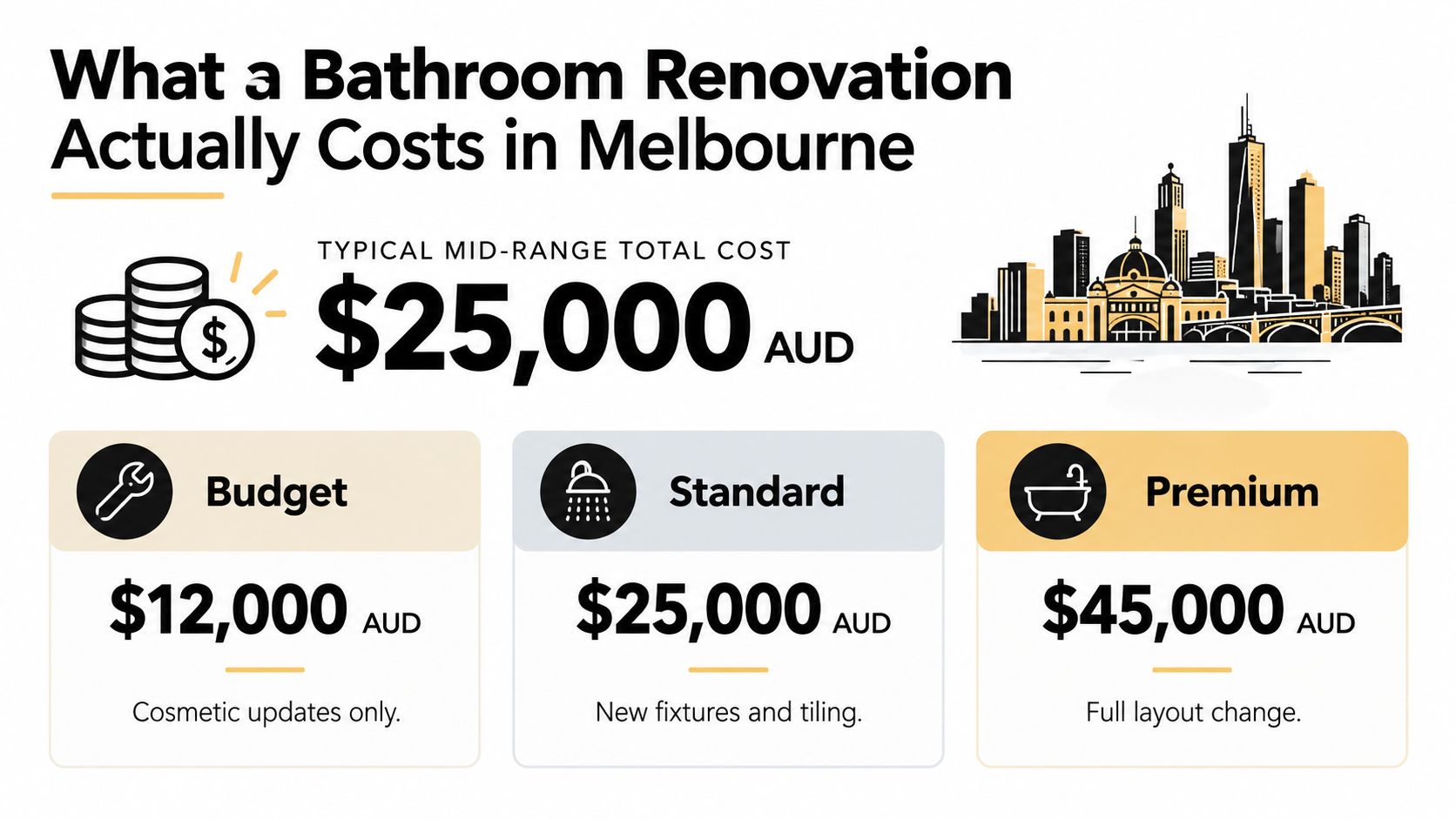
The working range most Melbourne owners face
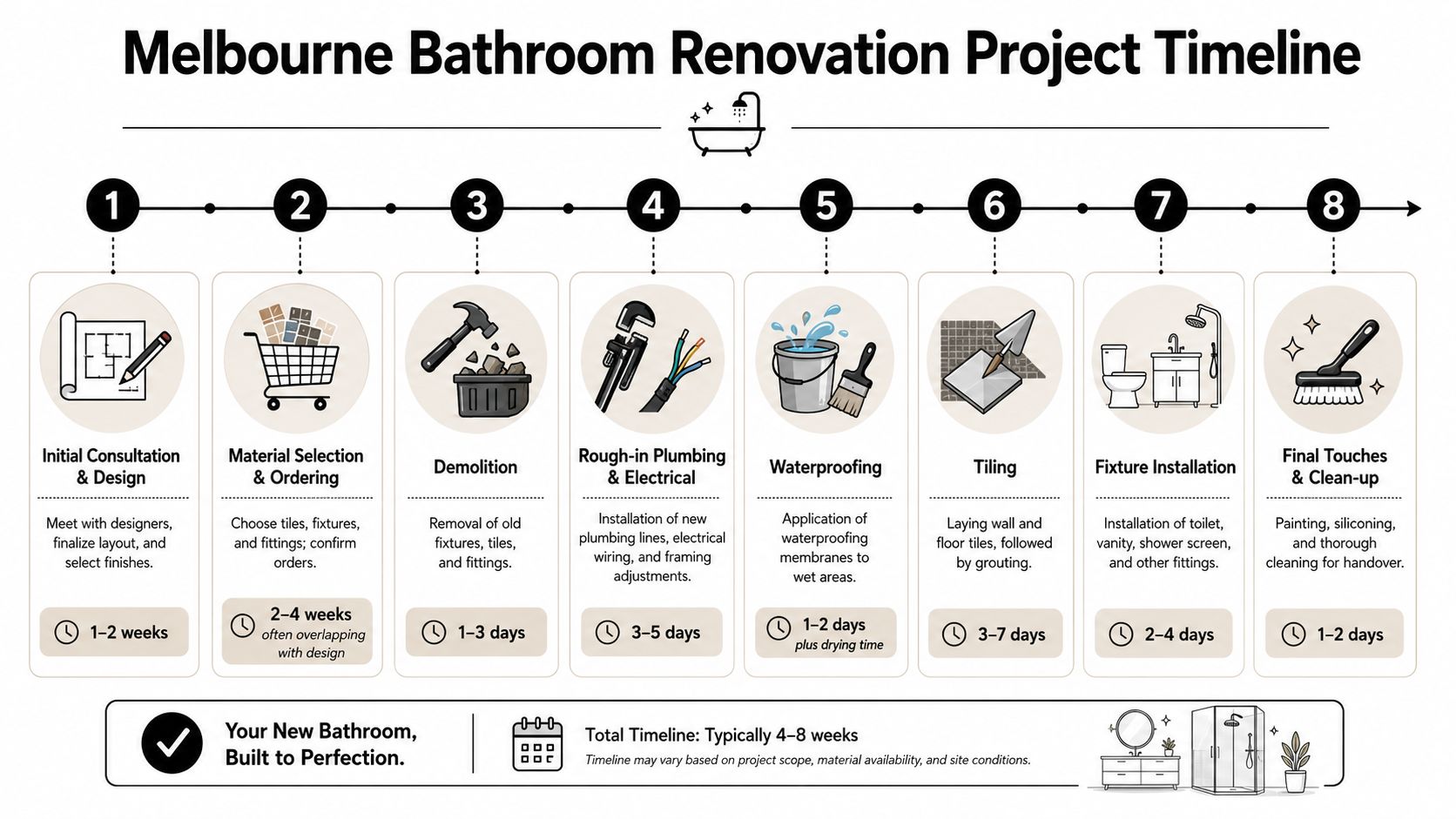
Australian cost guidance places a complete bathroom renovation at roughly A$10,000 to A$35,000 or more, with a typical project lasting one to three weeks (Australian renovation cost guidance for 2026). I use that as an early budgeting range, not a fixed quote, because the final figure depends on access, existing conditions, selections and the work required behind the finishes.
A refresh is mainly cosmetic. A like-for-like renovation replaces the room while keeping the toilet, shower and vanity connections in place. A full strip-out may involve relocated services, new substrates, additional reinstatement and tighter trade coordination. Those decisions affect the price more directly than floor area alone.
A bathroom quote tells you more about the builder's assumptions than the room's floor area.
The 2024 Budget Direct survey found that kitchens and bathrooms were the two most popular rooms to renovate. More than 30% of respondents planned to spend A$5,000–A$15,000, while nearly one-quarter planned A$15,000–A$30,000. The figures are not a Melbourne-only average, but they show the budget brackets many homeowners were considering.
Keep a separate allowance for waterproofing repairs, substrate preparation and unexpected demolition. Those items remain hidden until the room is opened, and cutting them from the scope can create a much larger repair bill later.
Heating and ventilation also affect the finish level and comfort brief. If you are comparing options during the renovation, find electric radiators for bathrooms before finalising the electrical and wall layout.
The Line Items That Make Up a Bathroom Quote
A proper quote is a stack of trades, not one amorphous bathroom number. The cleanest example I've seen is a small Australian bathroom that totals A$21,630, with individual allowances for demolition, waterproofing, tiling, plumbing, electrical, carpentry, plastering, the shower screen and rubbish removal (itemised example).
Where the money actually goes
The biggest lessons are straightforward. Tiling is often the largest single trade cost, plumbing is never just a fixture swap if services move, and waterproofing looks small until a bad substrate or failed membrane forces you to reopen the room. Demolition and waste removal are also easy to underestimate because they don't look “new”, but they're part of getting the room to a buildable state.
Here's the kind of split I want homeowners to be able to read at a glance.
| Line Item | Approx. Cost (AUD) | What It Covers |
|---|---|---|
| Demolition | A$2,000 | Strip-out, removal of old materials, site prep |
| Waterproofing | A$1,500 | Wet-area membrane and compliant preparation |
| Tiling | A$5,480 | Labour, setting out, cutting, finish work |
| Plumbing | A$4,500 | Rough-in, fit-off, connections, adjustments |
| Electrical Work | A$1,600 | Lighting, power points, compliant installation |
| Carpentry | A$1,300 | Framing, backing, minor structural adjustments |
| Plastering | A$1,200 | Wall repair and surface finishing |
| Shower Screen | A$1,200 | Supply and installation |
| Rubbish Removal | A$1,000 | Cart-away and disposal |
If you want a quote template that separates those costs properly, this bathroom renovation quote guide is the kind of structure to look for. A single square-metre number looks neat, but it hides the levers. Once the room opens up, you're paying for who touches what, how many times they touch it, and how much reinstatement is needed after the trades are done.
Why Waterproofing Is the Cost You Cannot Afford to Undercut
A bathroom can look finished while water is already reaching the wall framing. After years of quoting Melbourne renovations, I treat waterproofing as the work that protects every finish installed above it.
What compliance is really doing
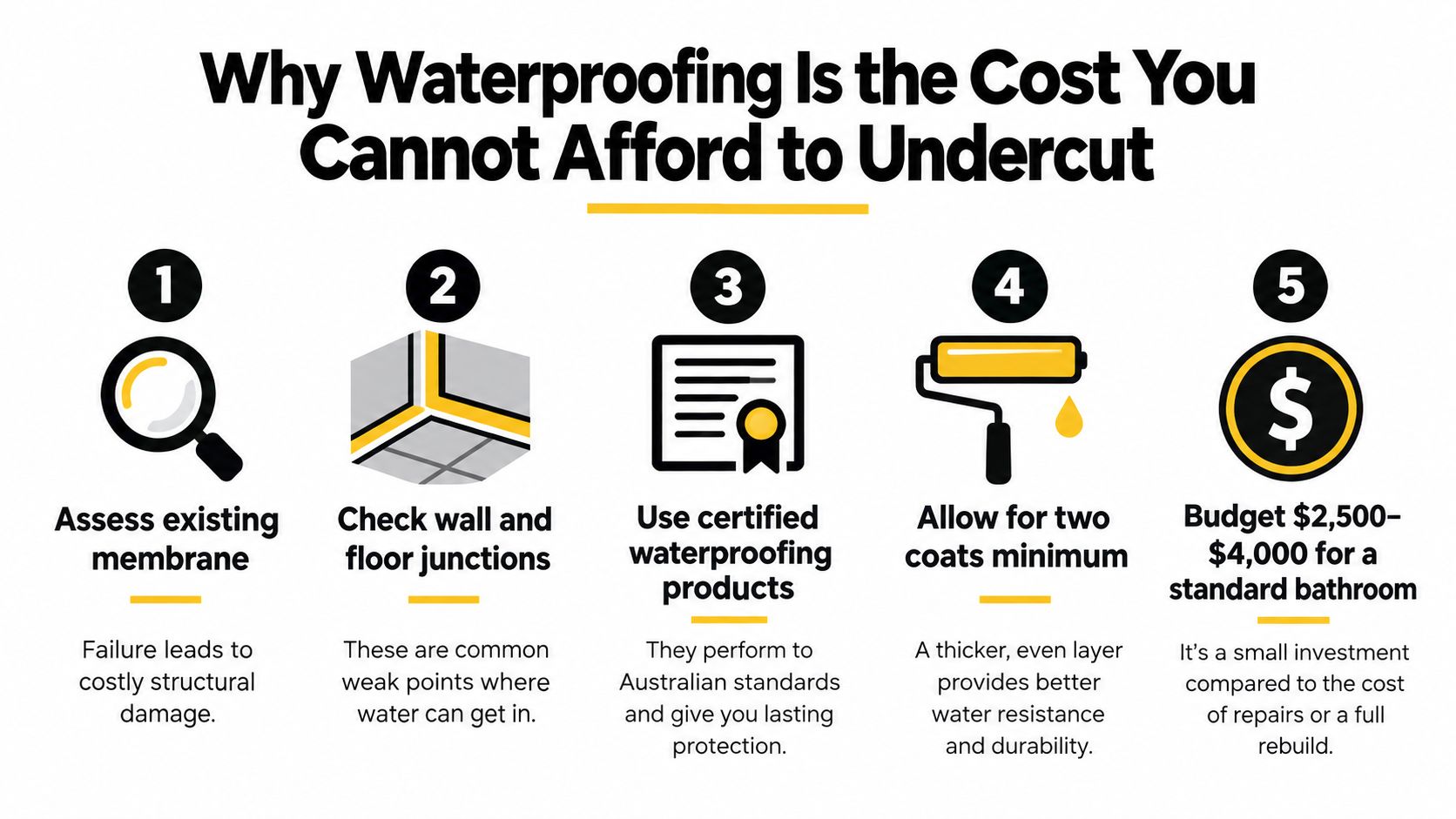
Australian wet-area work follows the National Construction Code and AS 3740. The process goes well beyond rolling on a membrane. A compliant job includes substrate preparation, priming, at least two membrane coats, reinforcing tape at corners and junctions, plus inspection or certification (waterproofing guidance).
Typical pricing for a single wet area sits around A$1,000 to A$3,000. Victorian shower recess work is around A$400 to A$700, while a larger fully tiled bathroom can reach A$1,500 to A$3,000. The cost reflects preparation and access as much as membrane material.
Preparation is usually the line that separates a durable job from an expensive reopening. Failed waterproofing can require tiles and fixtures to be removed before the membrane is inspected and rebuilt.
The cheapest membrane quote is often the one that leaves out the expensive part, preparation.
Before signing, ask whether the price covers substrate repairs, shower recesses, wall-to-floor junctions, penetrations, curing time, certification and tile removal. If those items are excluded, the low figure may only describe the simplest part of the work. For a practical local breakdown, this bathroom waterproofing cost guide provides a useful scope check.
Design decisions still affect the total. Planning lighting and ventilation early can reduce rework around wet areas. The guide to 10 designs to brighten your bathroom can help compare finish ideas while keeping compliance and trade sequencing in view.
Three Project Scopes and What Each One Costs
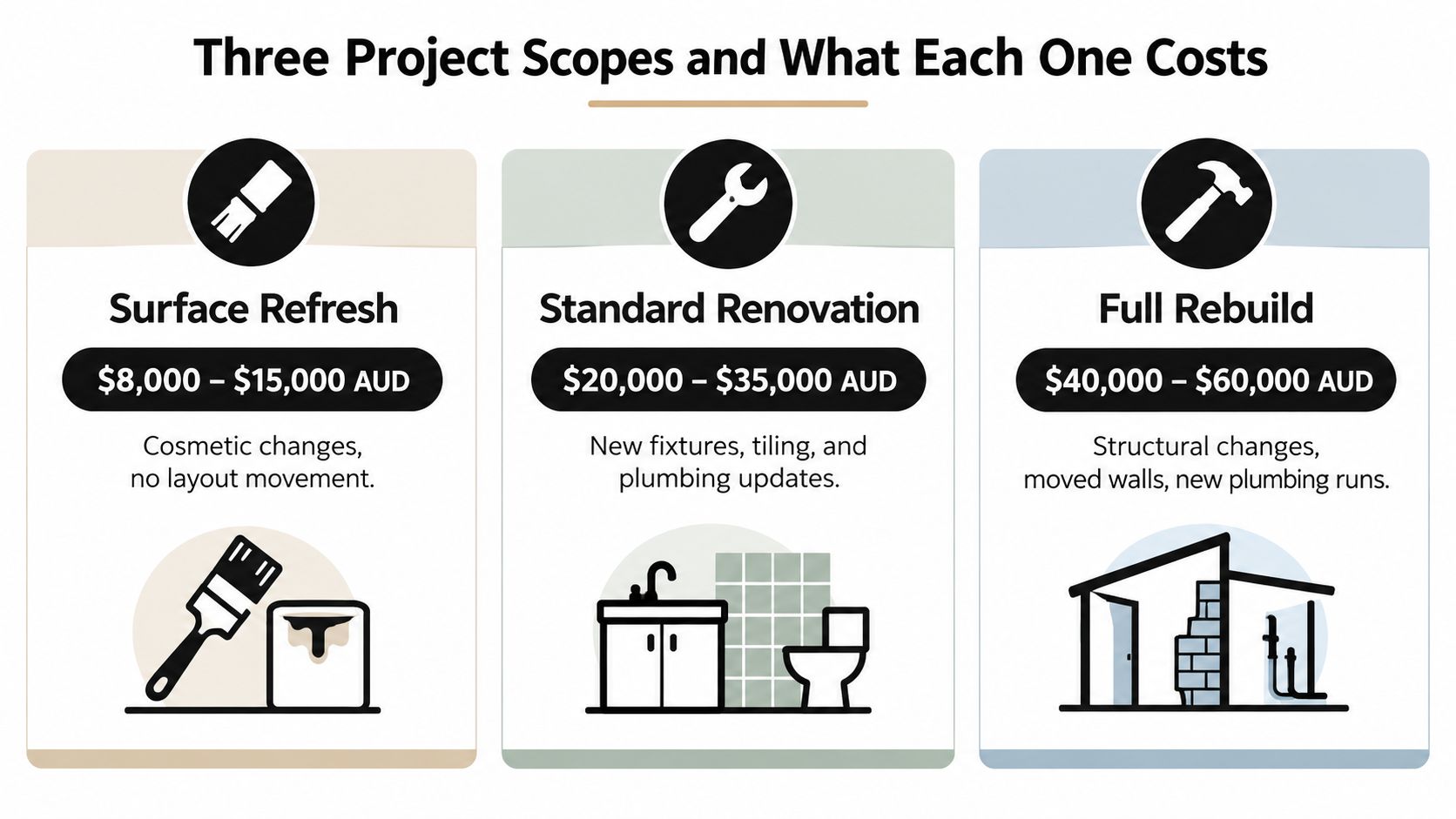
The easiest way to compare bathroom renovation cost is to stop using vague labels like “budget” and “premium” and replace them with actual scopes. In the market, published Australian estimates vary materially, with small projects at A$8,000–A$15,000, mid-range work at A$22,000–A$24,000, and premium projects at A$30,000–A$35,000 in one guide, while another source cites a 2025 national average of about A$26,747 and A$2,300–A$4,600 per square metre (pricing comparison).
Surface refresh
A surface refresh is cosmetic. It keeps the existing layout and usually avoids major plumbing or electrical changes, so the spend stays closer to the lower end of the range. Here you repaint, re-grout, swap fittings and update the look without opening the room up.
Like-for-like renovation
A like-for-like renovation is the most common serious bathroom job. The room gets stripped back, waterproofed, tiled and fitted out again, but the toilet, shower and vanity stay in roughly the same positions. This is the scope that tends to give the most predictable result, because you're not paying to relocate services.
Layout-changing renovation
A layout-changing renovation is where costs jump. Moving plumbing means more rough-in work, more wall and floor reinstatement, more coordination and more risk of hidden issues once the room is opened. That's the kind of project where a budget number can disappear quickly if the subfloor or old services aren't as clean as expected.
If you want price control, keep the layout. If you want freedom, be ready for the trades to charge for it.
How to Use a Renovation Calculator Without Getting Burned
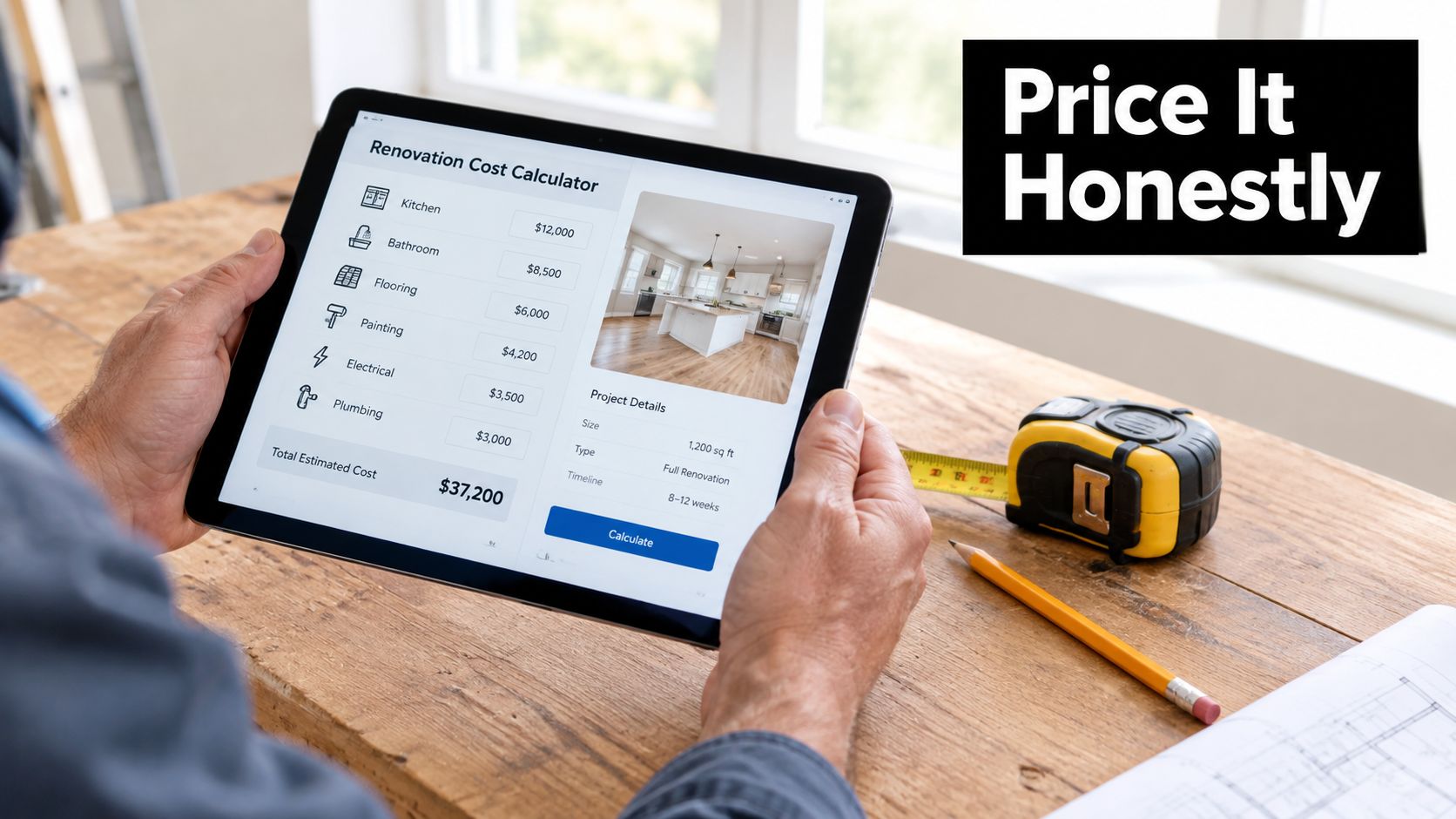
A calculator is useful only if it behaves like a builder's estimate. If it doesn't separate demolition, waterproofing, plumbing, electrical work and waste, it's just a dressing-up exercise.
What to test in the estimate
Start with the scope. A good calculator should let you test whether you're doing a refresh, a like-for-like renovation or a layout change. If the number barely moves when you change the scope, the calculator is probably too shallow to trust.
Then compare the estimate against the quote structure above. If demolition, waterproofing, licensed plumbing, electrical work, permits where applicable, tile wastage and contingency aren't visible somewhere in the total, the number is probably optimistic.
Use the calculator to stress-test these variables:
- Layout retention. Keeping the toilet, shower and vanity in place usually lowers cost.
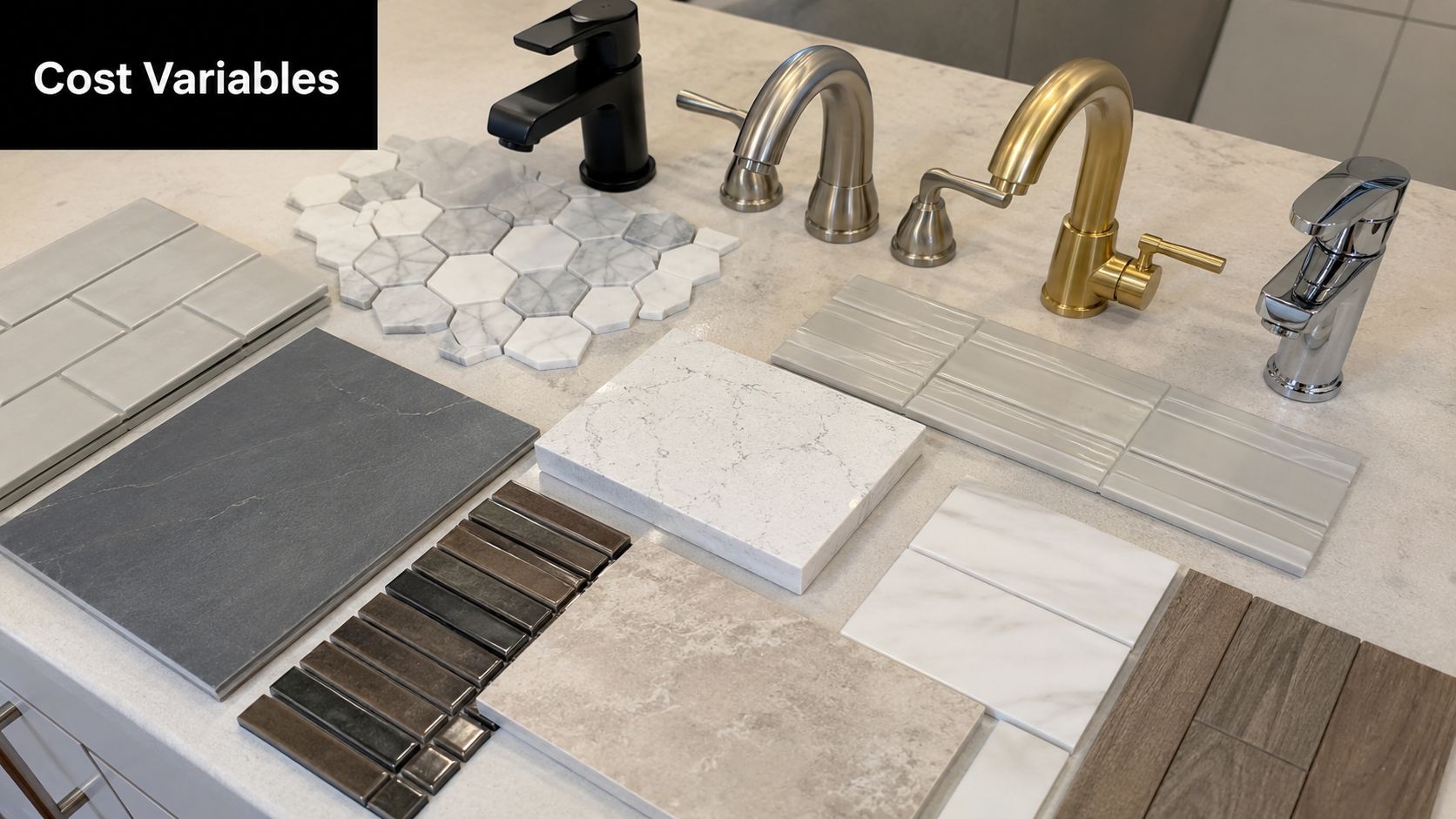
- Tile specification. Standard ceramic or porcelain is a different budget conversation from premium stone.
- Fixture grade. Stock fittings and custom pieces don't live in the same price bracket.
- Waste and overage. Tiles, adhesives and membrane products need realistic allowances.
- Trade coordination. A room that needs multiple trades to return for follow-up work is never priced like a simple cosmetic update.
A transparent calculator is most useful when it warns you where the quote can break. For a local planning tool that mirrors this approach, the bathroom renovation calculator is the right kind of starting point. The goal isn't to guess the final figure to the dollar. The goal is to find out whether the quote has room for the work.
Registered Builders, Contracts and Why Registration Affects Price
In Victoria, bathroom renovation cost depends partly on who accepts legal responsibility for the complete job, not only on the materials and labour listed in the quote.
For renovations costing more than A$10,000, a written major domestic building contract is generally required, and the builder must be registered with the Building and Plumbing Commission. The Victorian building rules also require a current certificate of domestic building insurance for projects over A$16,000, before the builder accepts a deposit and starts work.
Why that changes the quote
A tiler, plumber or electrician may be completing a trade-specific package without taking responsibility for the entire renovation. A bathroom project usually combines demolition, carpentry, waterproofing coordination, plumbing, electrical work and tiling. The contractor quoting that combined scope is the person homeowners need to verify carefully.
Registration affects price because it places broader obligations on the builder. A registered builder coordinates licensed trades, manages the contract and remains accountable for how the separate parts fit together. A cheaper handyman-style package may omit that coordination or leave homeowners exposed when a defect involves more than one trade.
Ask for the insurance certificate before paying a deposit, not after work starts.
For a project above the insurance threshold, check that the certificate identifies the property address, contract price and builder registration details. The paperwork does not make a poor scope good, but it shows who is carrying the contract risk. Treat missing documents as a warning sign, especially where the quote combines several trades under one price.
A Median A$10,000 Bathroom Project in Real Life
A median A$10,000 bathroom job isn't luxury, and it isn't a band-aid. It's usually a sensible, well-scoped room that keeps the existing layout and spends the money where the performance matters.
The room starts with strip-out and demolition. The subfloor and walls get checked, repaired where needed, then waterproofed properly before tiling begins. The tiling is usually standard ceramic or porcelain rather than premium stone, and the plumbing and electrical work are generally like-for-like rather than a full relocation.
What stays in budget
The vanity is often off-the-shelf rather than custom. The shower screen is typically basic but compliant. The plaster and paint finish are clean, but not decorative in a high-end sense. That's how the budget stays realistic without cutting corners where water can get in.
What's usually left out is just as important. Premium stone, feature walls, structural alterations and major plumbing movement belong in a different budget bracket. If a quote is pretending those things can fit inside a tidy number without trade-offs, it's not being honest.
A sensible project also keeps room for contingency. Older Melbourne homes, especially, can hide issues that don't show up until the demolition starts. The best quotes allow for that possibility up front, because the difference between a controlled project and a stressful one is often whether the builder has space to deal with surprises properly.
Budgeting Moves That Move the Number
The cheapest way to control bathroom renovation cost is to make a few decisions early and stick to them. The most expensive way is to keep changing the brief after the room is opened.
Choices that usually lower the price
- Keep the existing layout. Retaining the toilet, shower and vanity locations limits plumbing work and reduces reinstatement.
- Choose standard fittings. Stock vanities, mixers and screens are easier to price than custom pieces.
- Use tile sizes that suit the room. Smaller, simpler formats can reduce cutting and waste, while some large-format options need more prep.
- Avoid structural changes. Moving walls, altering floors or changing falls adds complexity fast.
Choices that usually raise the price
- Move plumbing. Every relocated waste or water point adds labour and coordination.
- Specify premium stone. Material and installation effort both climb.
- Ask for custom frameless screens. Special hardware and fit-out detail cost more.
- Turn a refresh into a rebuild. The demolition and reinstatement bill grows every time the scope expands.
The smartest habit is simple. Ask for an itemised quote that separates demolition, waterproofing, substrate preparation, tiling labour, materials and waste, then verify the registration and insurance status of the person signing the contract. That's how you keep the renovation grounded in real numbers instead of wishful thinking.
If you're planning bathroom renovations and want the work handled by registered builders who quote scope clearly, Melbourne Tiling Services P/L can help with waterproofing, tiling, full bathroom renovations and practical planning from the start. Visit Melbourne Tiling Services P/L to request a quote and compare your project against a proper Melbourne bathroom budget.

Recent Comments