
Approximately 73% of identified balcony defects in Victoria were attributed to water ingress, and 33% involved insufficient waterproofing. The balcony waterproofing Australian standard therefore requires more than selecting a compliant membrane, it requires a properly designed substrate, reliable drainage and correctly sequenced installation.
A membrane can be the right product and still fail when the slab holds water, the outlet is poorly integrated or a door threshold leaves the system vulnerable to wind-driven rain. Melbourne's changing weather exposes these weaknesses repeatedly, especially on tiled balconies where the waterproof layer disappears beneath the finished surface and repairs begin only after staining appears inside.
Table of Contents
- Why Balcony Leaks Persist in Melbourne Despite Compliant Membranes
- Understanding AS 4654.2 Design and Installation Requirements
- National Construction Code Requirements for Falls and Drainage
- Comparing Balcony Standards with Bathroom Waterproofing Rules
- Hidden Failure Points in Balcony Waterproofing Systems
- Navigating Renovations with Registered Builders in Victoria
Why Balcony Leaks Persist in Melbourne Despite Compliant Membranes
The hard truth is that membrane selection doesn't guarantee a watertight balcony. Victorian government research identified water ingress as the cause of approximately 73% of identified balcony defects, while 33% involved insufficient waterproofing (Victorian Building Authority research insights).
That finding changes how a leaking balcony should be investigated. A failed membrane is only one possible cause. Water may be entering through a balcony outlet, movement joint, balustrade penetration, threshold junction or crack in the substrate, then travelling beneath tiles before appearing at a ceiling or internal wall.
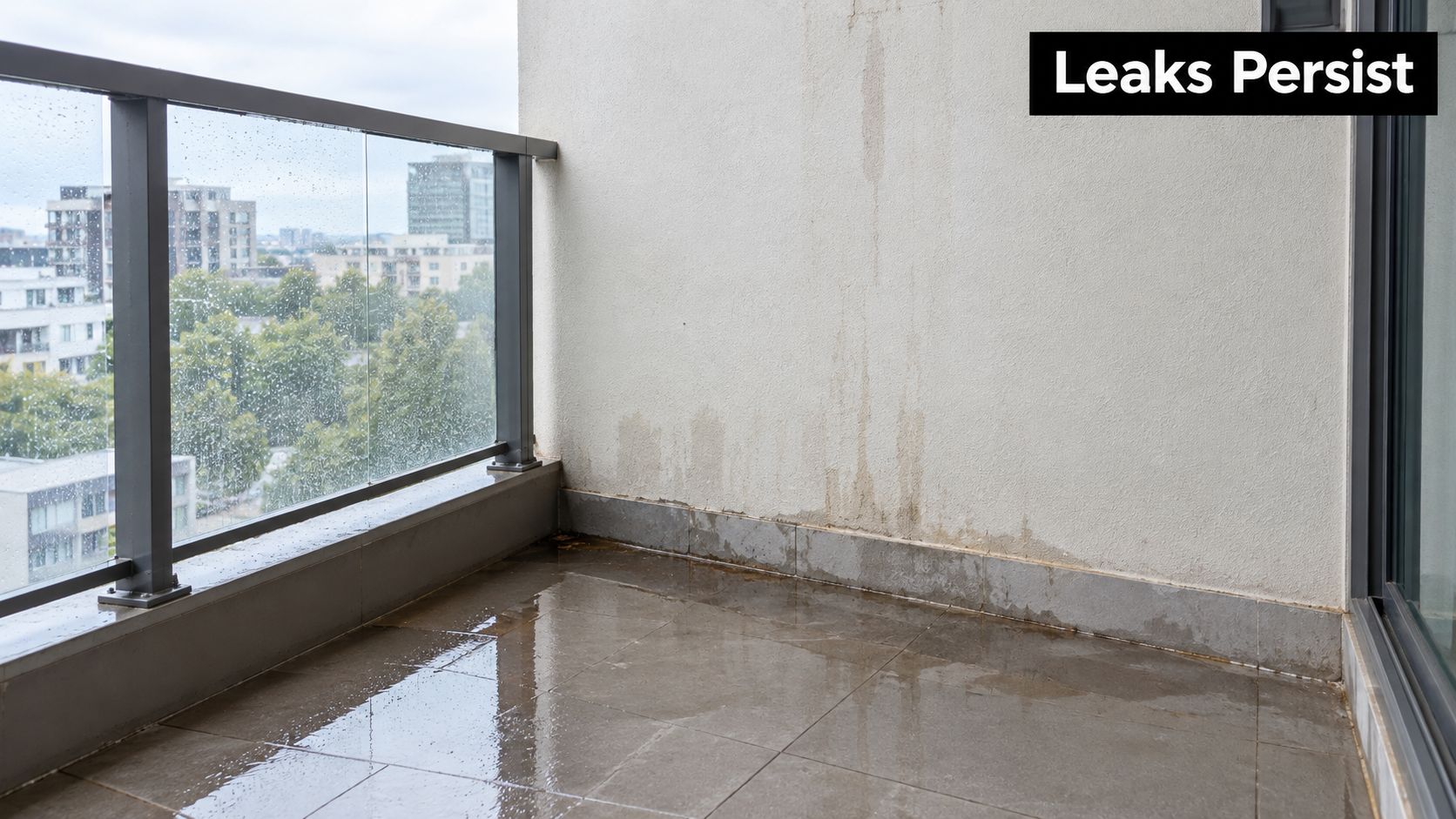
The system matters more than the tub
A balcony works as a connected assembly. The slab or screed must direct water towards an outlet, the membrane must remain continuous across changes in direction, and the finished surface must not obstruct drainage or damage the waterproof layer.
Common failures include:
- Flat or inconsistent falls: Water remains on the surface instead of reaching the outlet.
- Poor sequencing: Trades install the membrane, screed, tiles or fixtures without protecting the preceding work.
- Weak junction detailing: Door sills, wall edges and penetrations receive less attention than open floor areas.
- Blocked drainage: Leaves, tile adhesive, grout or construction debris restrict the outlet.
- Unverified substrate condition: Dust, moisture, movement or incompatible materials prevent proper adhesion.
Practical rule: A product datasheet proves what a membrane is designed to do. It doesn't prove that the balcony was prepared, detailed, installed and drained correctly.
The most reliable Melbourne repairs start with the complete water path. Before anyone quotes for regrouting or applies a surface coating, the inspection should establish where water lands, where it should flow, where the membrane terminates and which junctions could allow concealed entry.
Understanding AS 4654.2 Design and Installation Requirements
Australia's principal technical benchmark for external balcony waterproofing is AS 4654.2-2012, titled Waterproofing membranes for external above-ground use, Part 2: Design and installation. Standards Australia published the 2012 edition on 14 September 2012, and it applies to membrane systems used above ground on balconies, decks, roofs and similar building elements (Standards Australia, AS 4654.2-2012).
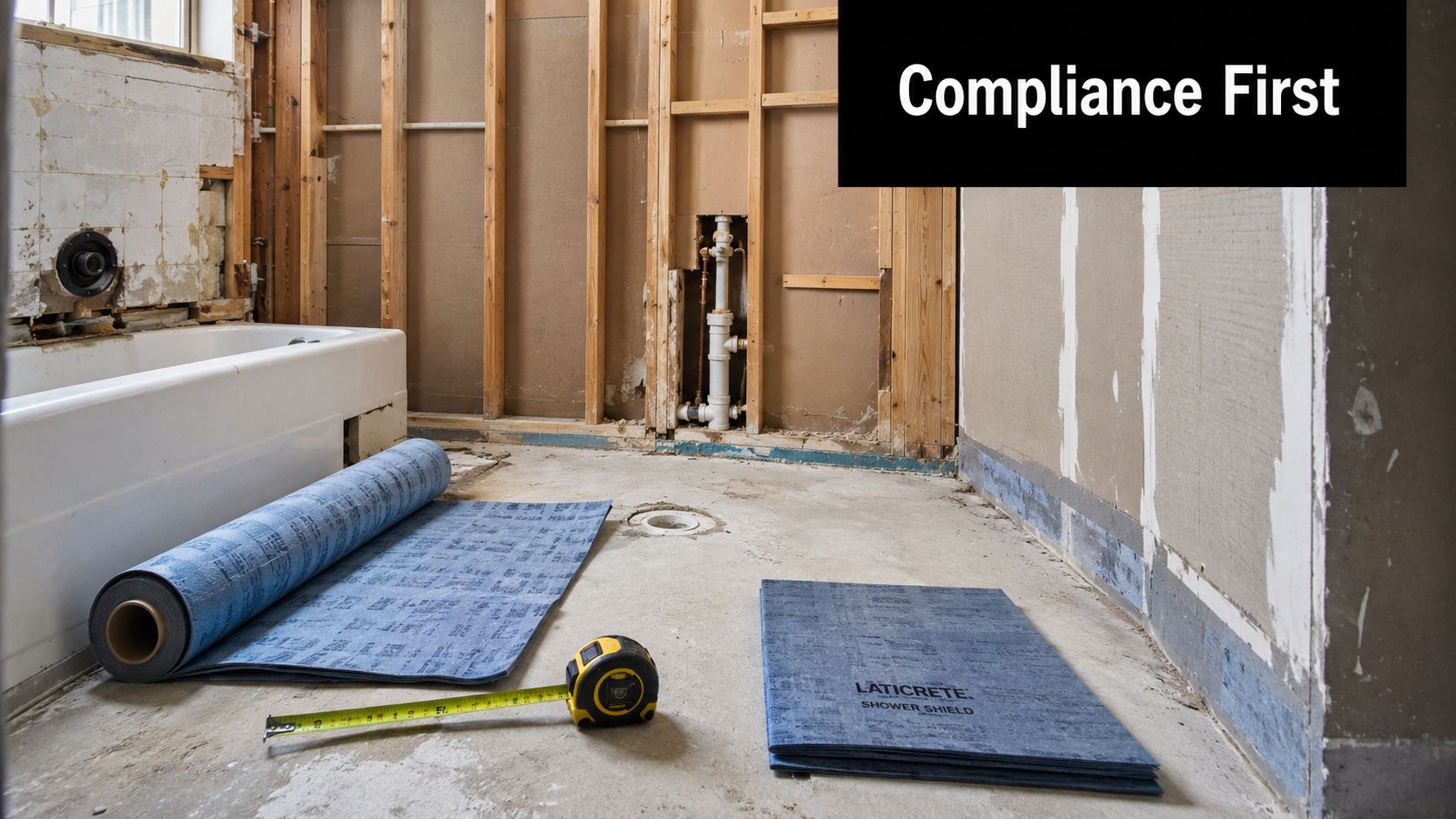
The important distinction is between AS 4654.1, which sets material requirements, and AS 4654.2, which addresses design and installation. Buying a membrane that meets material requirements is only one part of the compliance pathway. The substrate, falls, membrane placement, curing, movement control, drainage, overflows and detailing around openings and junctions must also be considered.
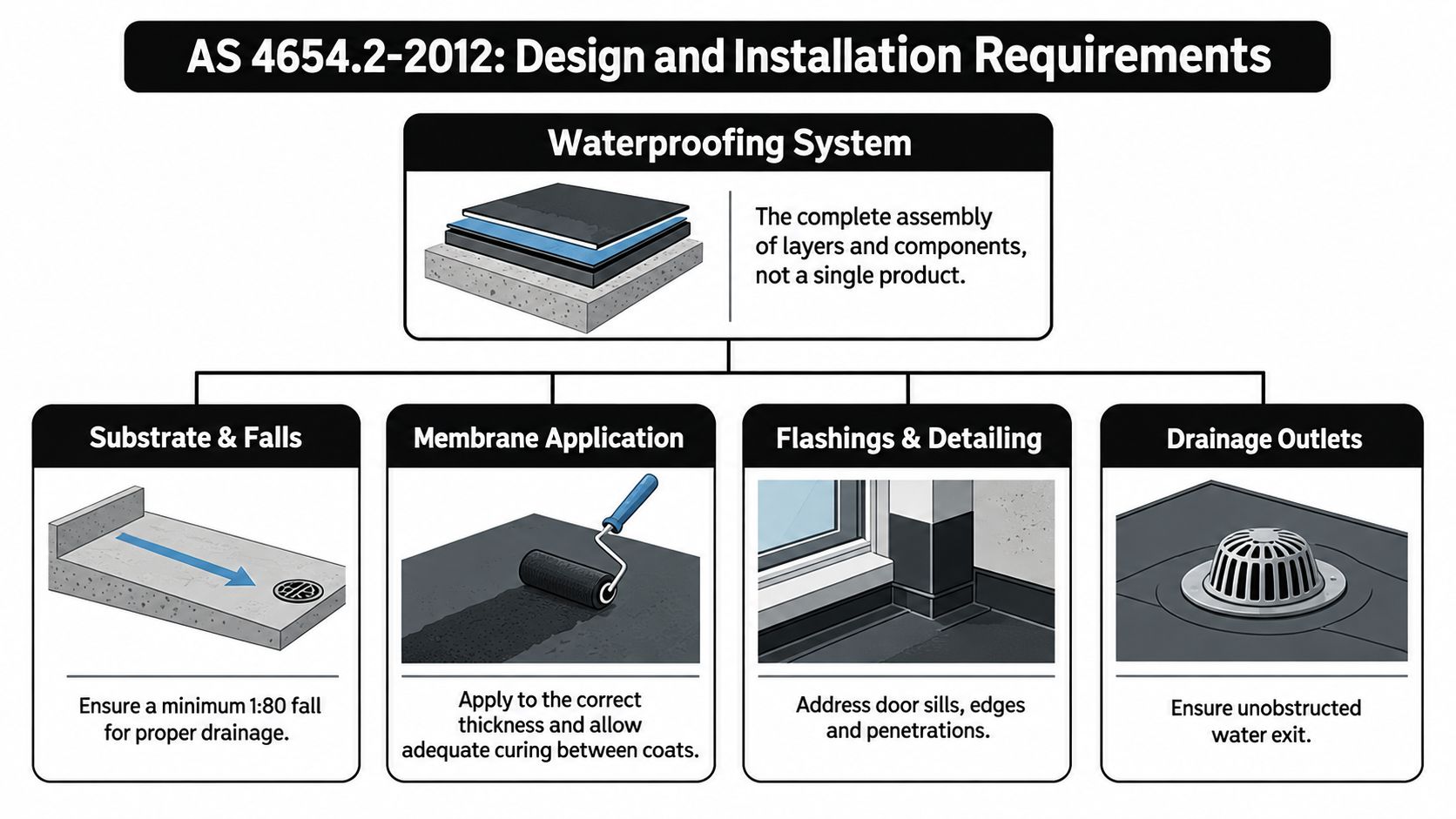
What compliant sequencing looks like
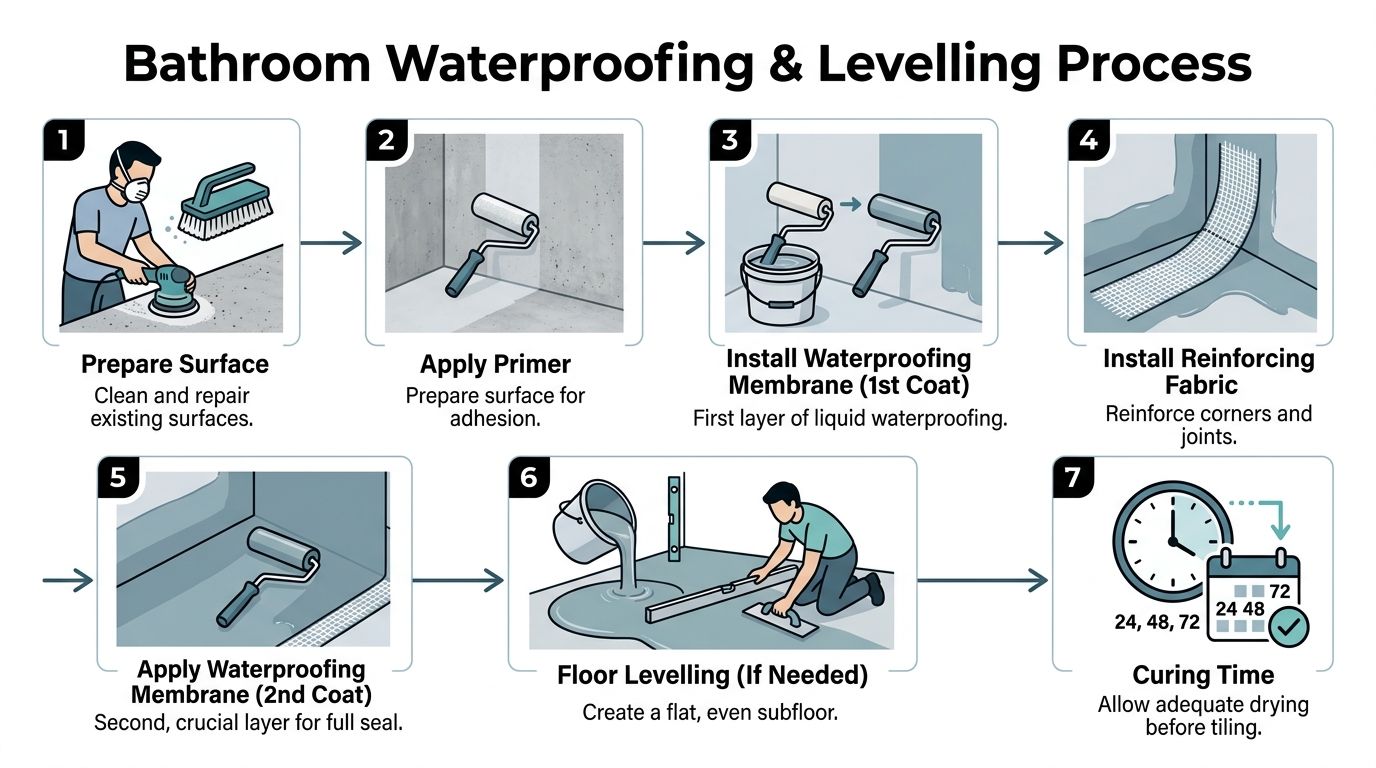
The installation sequence should protect each completed layer from damage and preserve the intended drainage geometry.
-
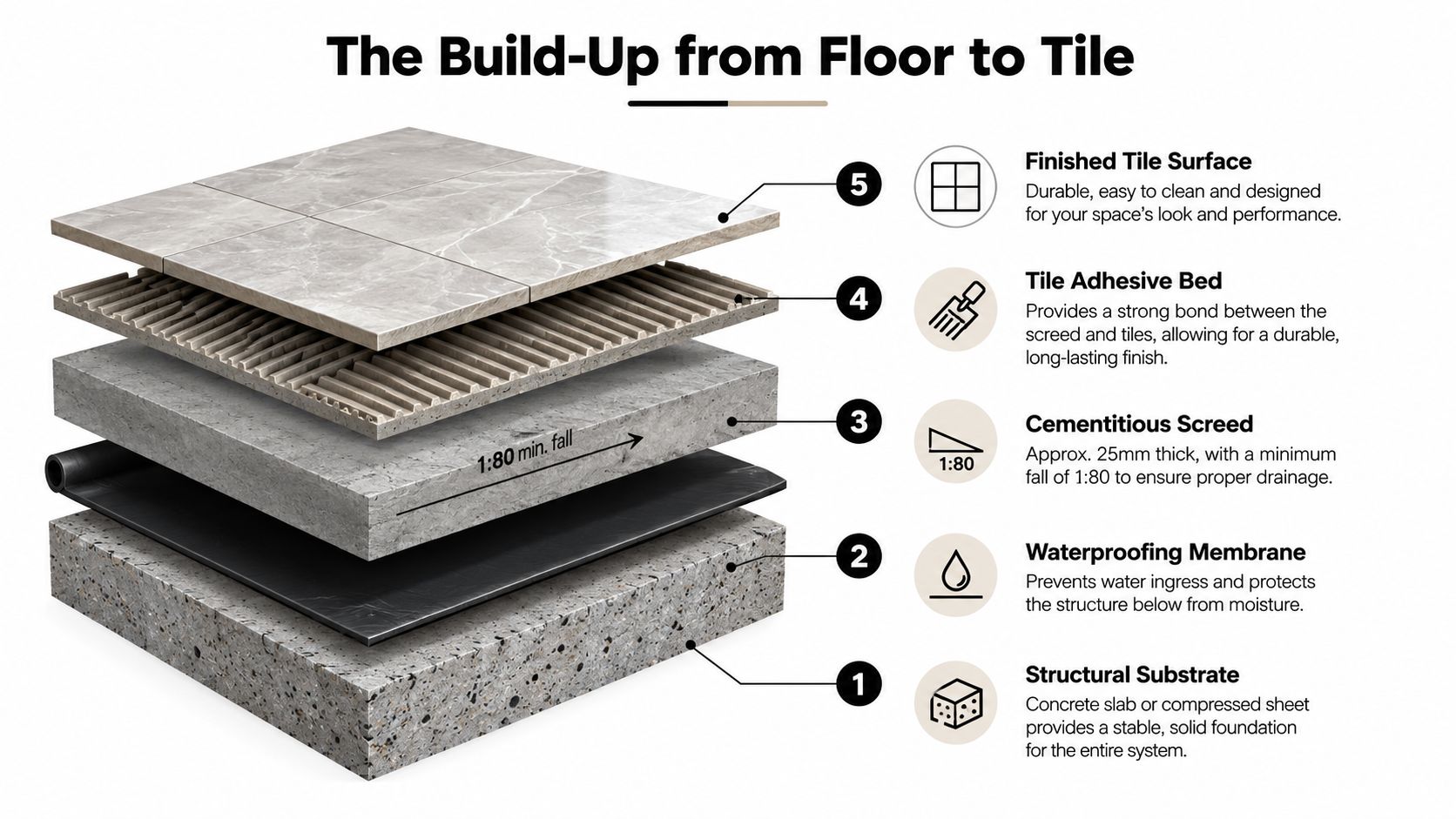
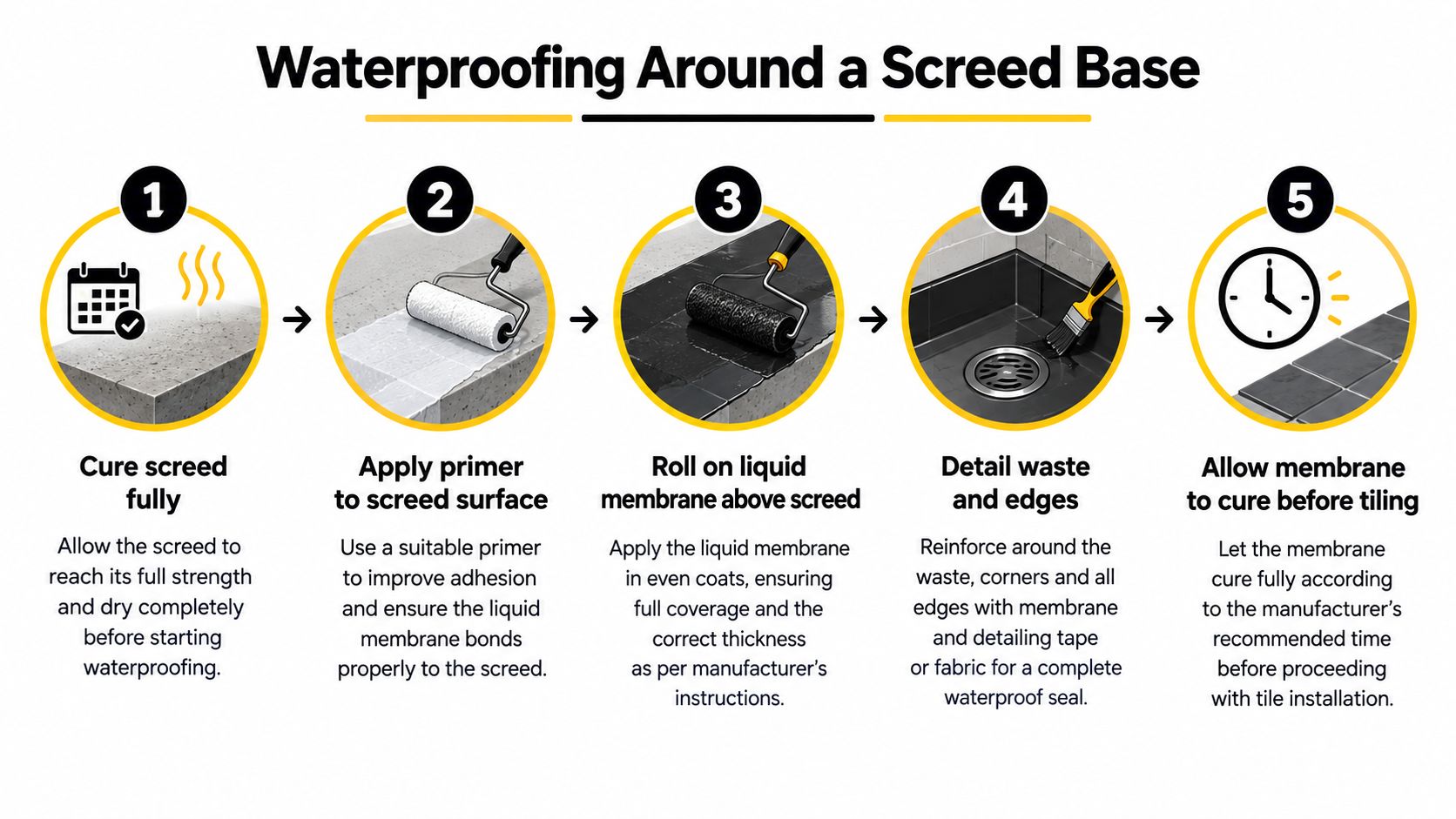
Assess the substrate first. It must be suitable, stable, clean and compatible with the selected membrane system. Dust, contamination, moisture and cracking can undermine adhesion before the membrane is ever exposed to rain.
-
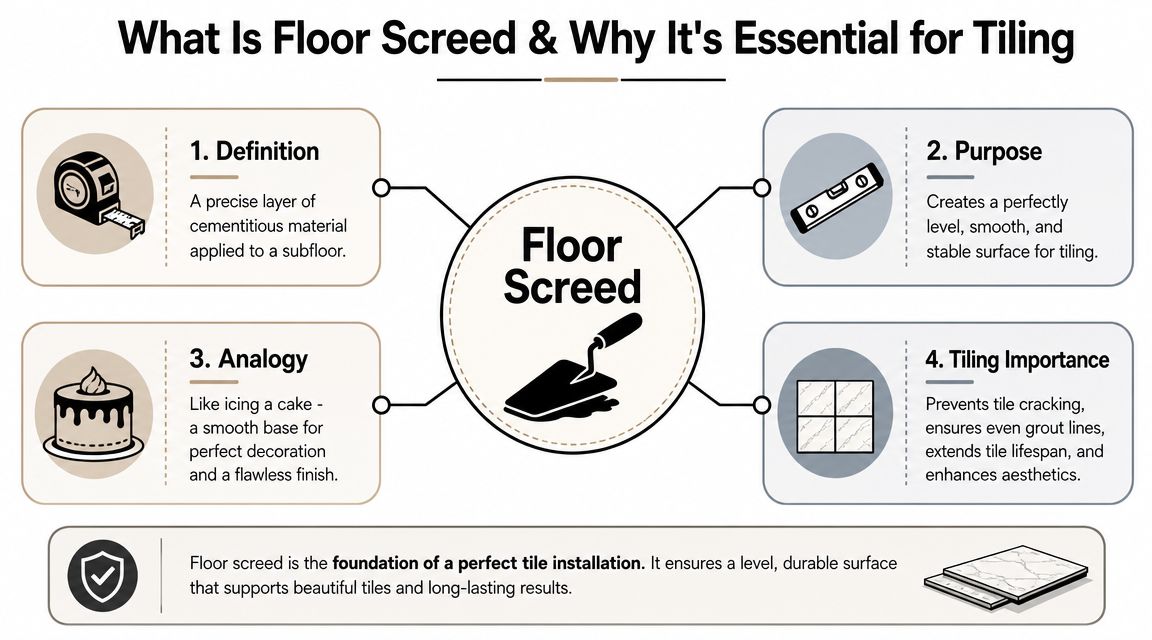
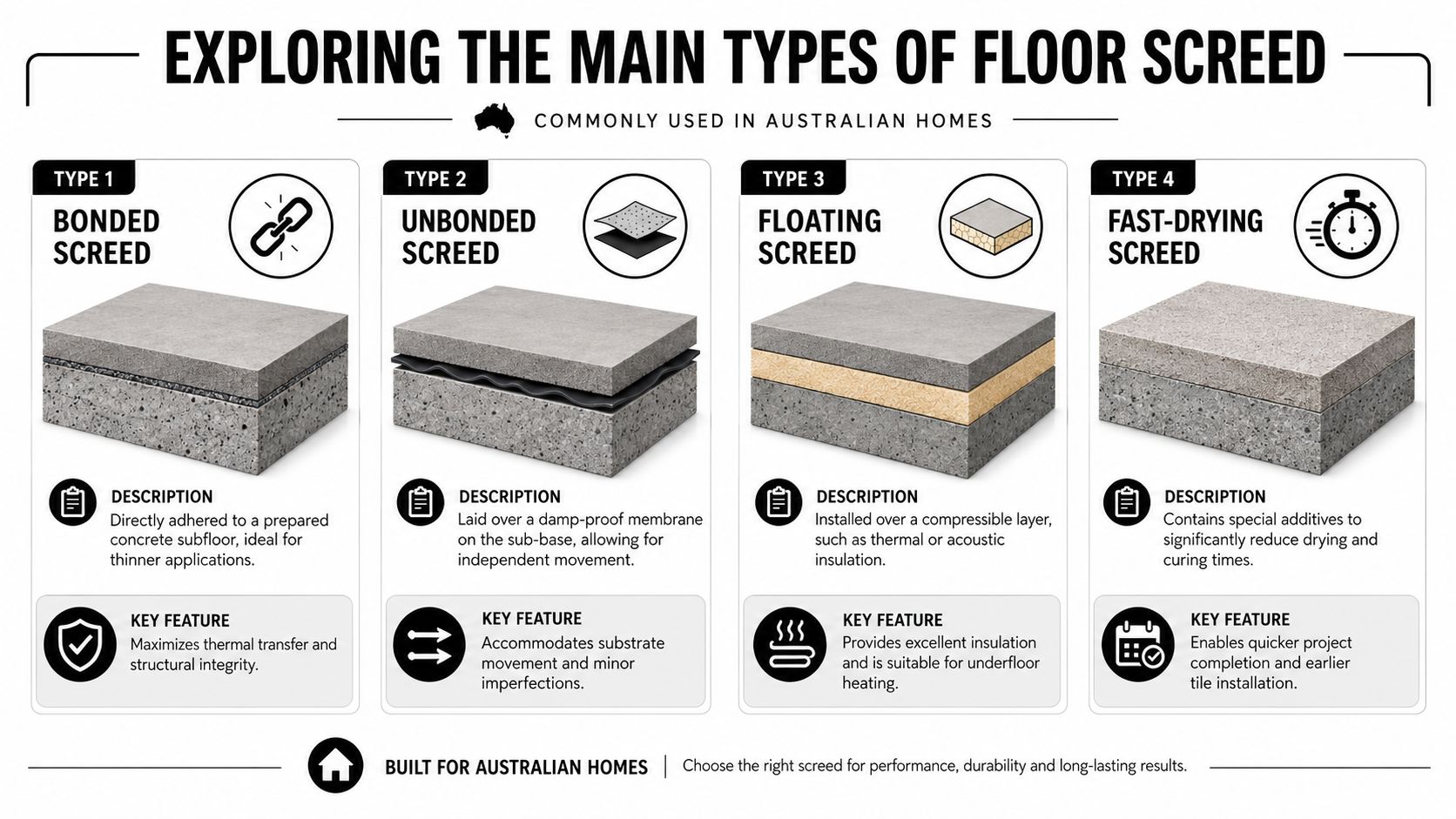
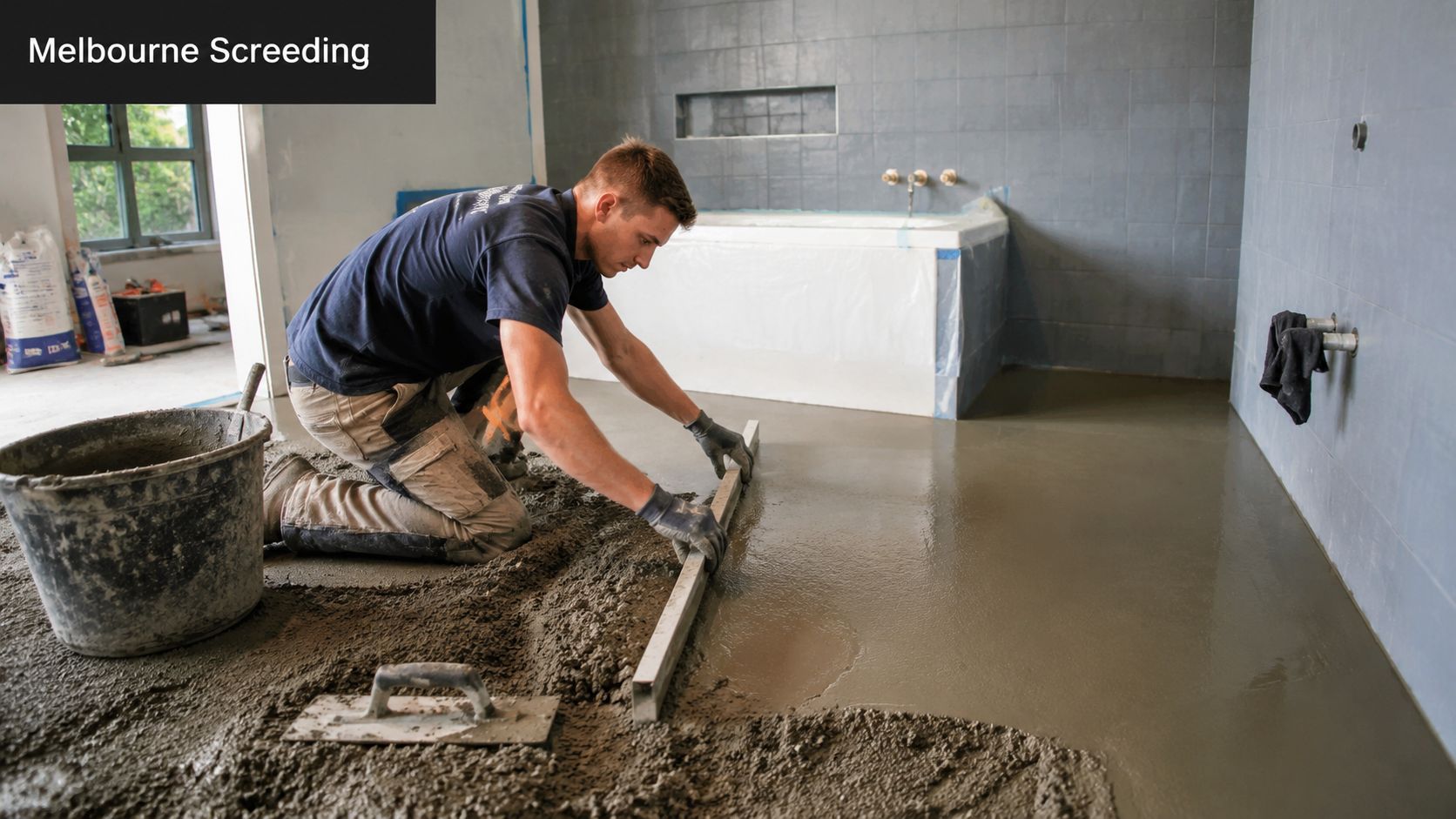
Form the falls in the substrate. Don't rely on a tile layer to correct a flat balcony. A mortar screed placed over the membrane may conceal the geometry problem rather than solve it, particularly if water can remain beneath the finished surface.
-
Detail changes of direction and penetrations. Corners, wall junctions, door openings, outlets and balustrade fixings require continuity. These are not places to compensate for poor preparation with extra sealant.
-
Respect curing and protection requirements. Liquid membranes need the manufacturer's specified application conditions and curing time. Trades walking across an uncured or unprotected membrane can create damage that won't be visible after tiling.
For related guidance on how standards affect connected plumbing work, Ring Hot Water plumbing standards provides useful background on compliance considerations around plumbing systems. For balcony-specific application details, review the balcony waterproofing membrane guide before comparing products.
A sheet membrane summary identifies a minimum 100 mm vertical downward termination from the junction for roofs and similar structures. The exact detail must be checked against the applicable standard, system design and site conditions, but the principle is straightforward: water needs a controlled termination, not an exposed edge that can be overtopped or bypassed.
National Construction Code Requirements for Falls and Drainage
The National Construction Code treats balcony waterproofing as a building-performance issue, particularly where a balcony, terrace or podium sits above an internal space. NCC provisions link membrane materials to AS 4654.1 and require the system to be designed and installed in accordance with AS 4654.2.
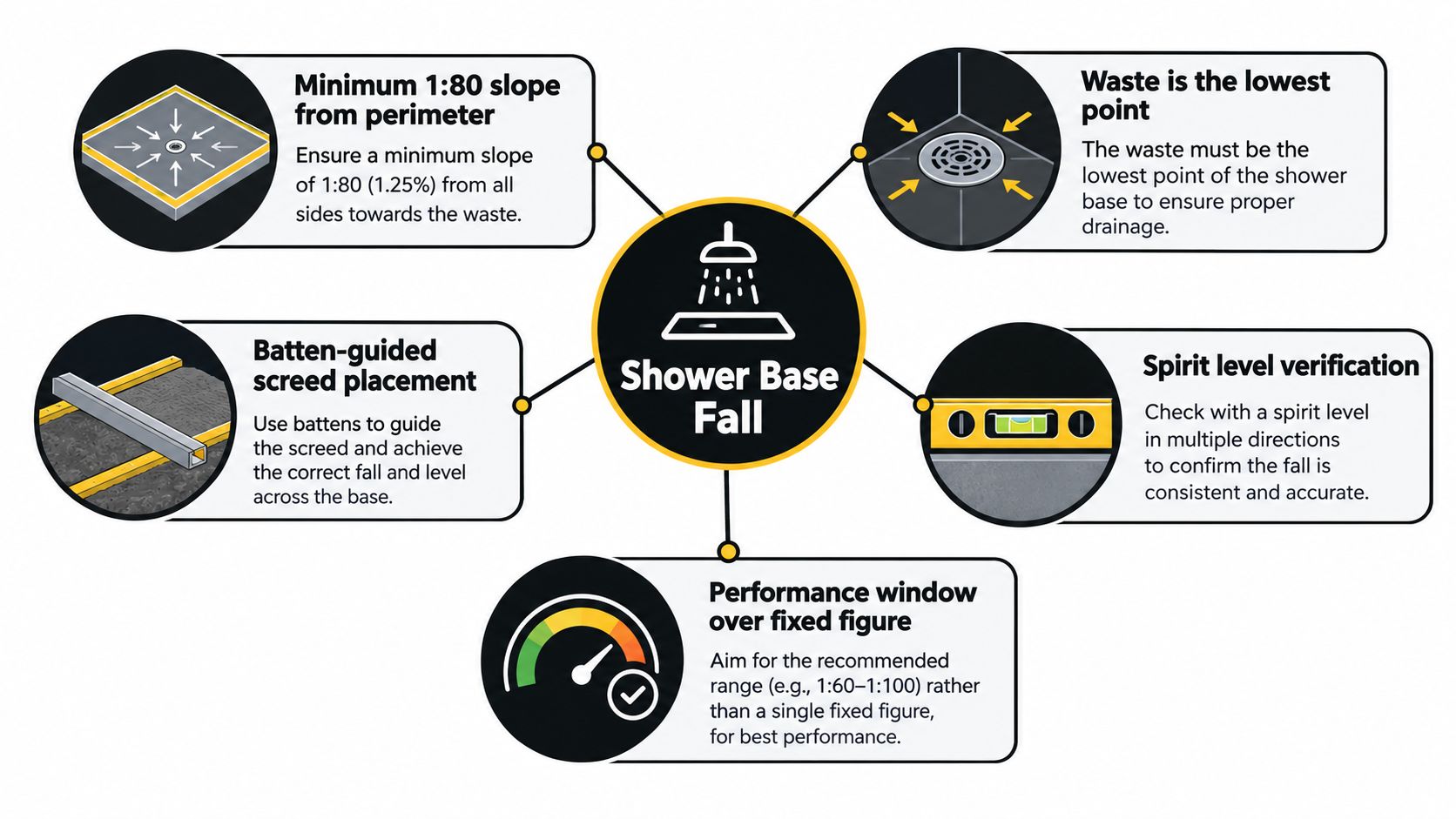
For concrete roofs, balconies and similar surfaces, NCC 2025 reform material proposes a minimum structural-substrate fall of 1:80 towards a floor drain, rainwater outlet or another drainage outlet (ABCB provisions on damp and weatherproofing). The same material identifies a 70 mm step-down from the inside of a building to the outside and the use of integral perimeter hobs in relevant balcony construction.
Why the fall must be built in
A balcony should shed water because its underlying geometry directs it to the outlet. If the structural substrate is effectively flat, tiles and grout can't reliably create a compliant drainage system. Water may pond beneath the finished surface, remain against the membrane for extended periods and find weak points at joints or penetrations.
The practical inspection sequence is simple, although the remedial work may not be:
- Measure the substrate: Use a suitable level before tiling or demolition decisions are finalised.
- Trace the outlet path: Confirm that water has a clear route to the drain or rainwater outlet.
- Check the threshold: Inspect the step-down, membrane termination and door sill detailing together.
- Inspect the hob and perimeter: Confirm that the edge treatment controls water rather than directing it into the wall or interior.
- Protect the outlet: Keep tile adhesive, grout and debris out of the drainage opening during installation.
A broader explanation of how drainage geometry affects wet-area performance is available in this floor slope for drainage guide. For a different roof context, Aastro Roofing Company's commercial roof drainage guide also illustrates why outlet capacity and planned flow paths matter, although balcony details must be assessed under the applicable Australian requirements.
Site observation: Regrouting a balcony with poor falls may improve its appearance, but it won't remove ponding or repair a discontinuous membrane.
The NCC framework focuses on preventing water penetration that could cause unhealthy or dangerous conditions, loss of amenity, undue dampness or deterioration of building elements. That makes drainage geometry a performance requirement, not a finishing preference.
Comparing Balcony Standards with Bathroom Waterproofing Rules
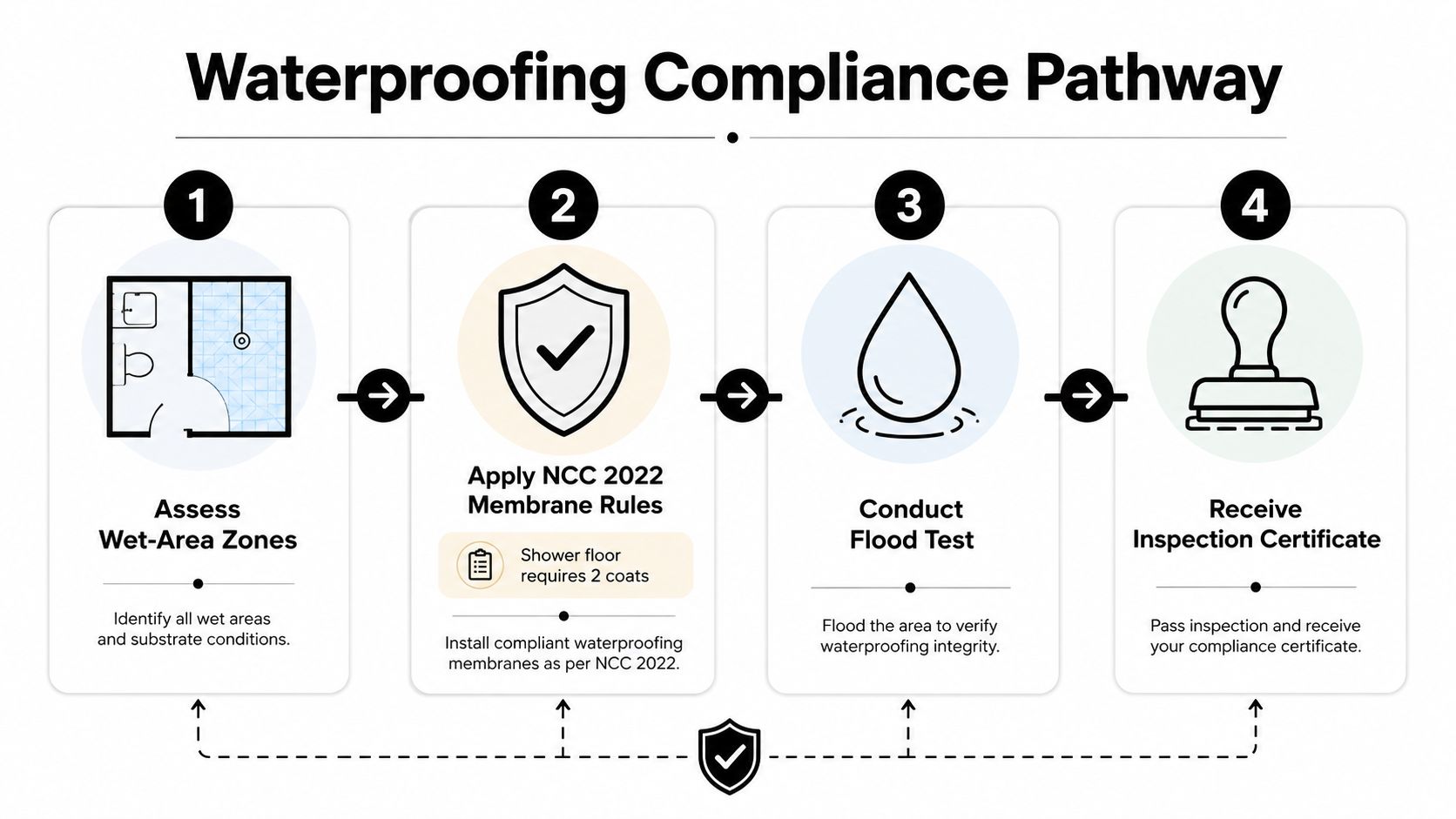
Balconies and bathrooms both need continuous waterproofing, but they don't follow the same compliance pathway. External above-ground balcony systems are governed through AS 4654.1 and AS 4654.2, as referenced by the NCC. Residential bathroom renovations generally use the NCC Housing Provisions and AS 3740 as a Deemed-to-Satisfy pathway, subject to the applicable clauses and limitations.
The dimensions make the difference clear. Under the NCC 2022 Housing Provisions, a shower floor, including a hob or step-down, must be waterproof, while shower walls must be waterproof to at least 1,800 mm above the floor substrate (NCC wet-area waterproofing provisions).
For baths and spas, the walls must be waterproof to at least 150 mm above the vessel lip, and an adjoining shelf must be waterproof with a waterstop beneath the vessel lip. These dimensions address predictable splash, overflow and wetting patterns inside a controlled room, whereas balcony design must manage weather, exposed joints, drainage and wind-driven rain.
Don't mix pathways casually
A common renovation mistake is to borrow a balcony detail for a bathroom or assume that a bathroom membrane product automatically satisfies external balcony requirements. The applicable building class, substrate, exposure and system design determine which requirements apply.
For houses, selecting AS 3740 under NCC Volume Two still requires compliance with the specified Housing Provisions clauses. For an unenclosed shower, the NCC requires a waterstop at least 1,500 mm horizontally from the shower rose (ABCB waterproofing FAQ).
Bathroom renovations also sit within Victoria's building-control framework. A homeowner arranging a combined bathroom and balcony project should keep the scopes separate in the documentation, then have the builder and relevant practitioners confirm the permits, waterproofing details and inspection records for each area.
Hidden Failure Points in Balcony Waterproofing Systems
Tiles are a poor diagnostic tool. They can look sound while water enters at a location hidden beneath the surface, then travels laterally through bedding, screed or the substrate before showing up elsewhere.
The first places I check are the outlet, movement joints, balustrade penetrations and external door openings. Each interrupts the broad, simple plane of the membrane. Each also carries a higher risk of movement, mechanical damage or poor hand detailing.
Follow the drainage path
A leak investigation should work backwards from the internal damage and forwards from the point where rain lands. Look for ponding, blocked outlets, cracked junctions, loose edge tiles, failed sealant and fixings that pass through the waterproofing layer. Surface cracks may be symptoms, not the entry point.
The NCC requires exposed joints in the drainage surface to be protected in accordance with AS 4654.2 Section 2.9, and those joints must not be located beneath or pass through planter boxes or water features (NCC surface-water management provisions).
That rule matters on apartment balconies where landscaping, planter boxes or decorative water features can hide inspection points and load joints with persistent moisture. A joint placed in the wrong location can remain problematic even when the surrounding membrane application appears neat.
A balcony outlet isn't just a hole in the tile. It is the point where the surface, membrane, drainage fitting and downstream water path must operate as one detail.
The repair method should follow the cause. A localised junction defect may need careful exposure and reinstatement. Widespread ponding may require substrate correction and removal of the finished surface. Applying a coating over tiles can hide the evidence, restrict future diagnosis and leave the original drainage problem untouched.
Navigating Renovations with Registered Builders in Victoria
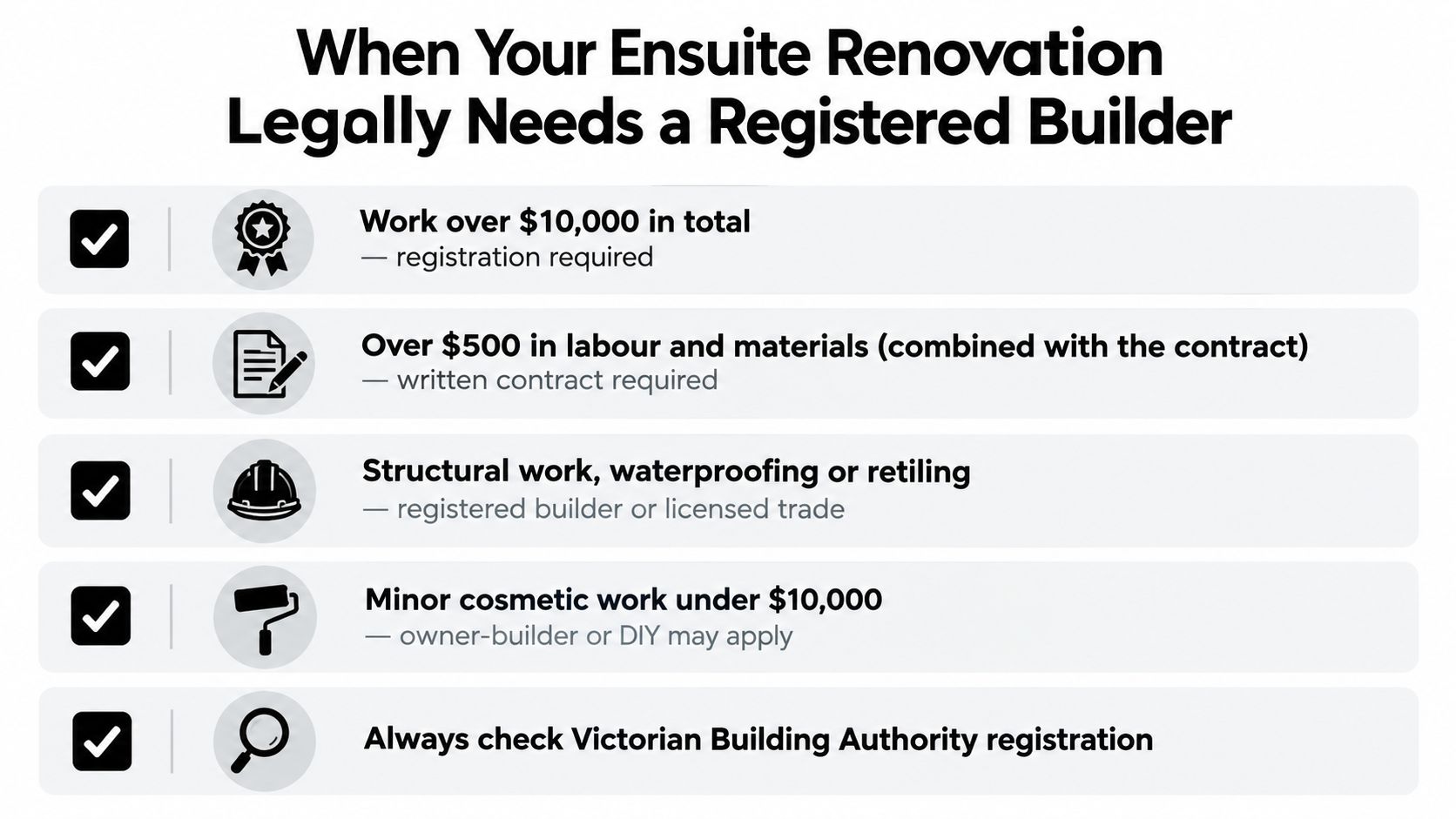
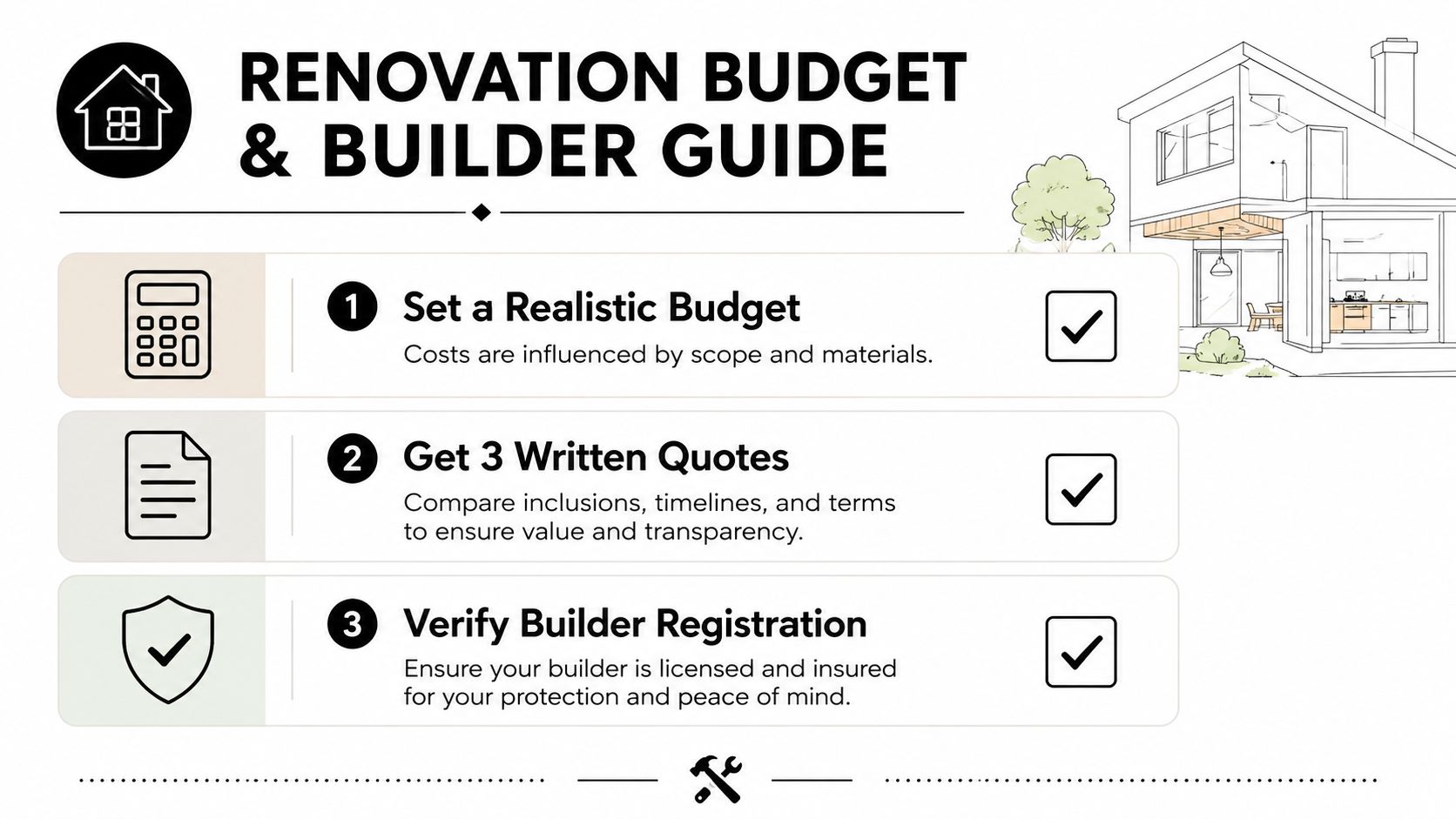
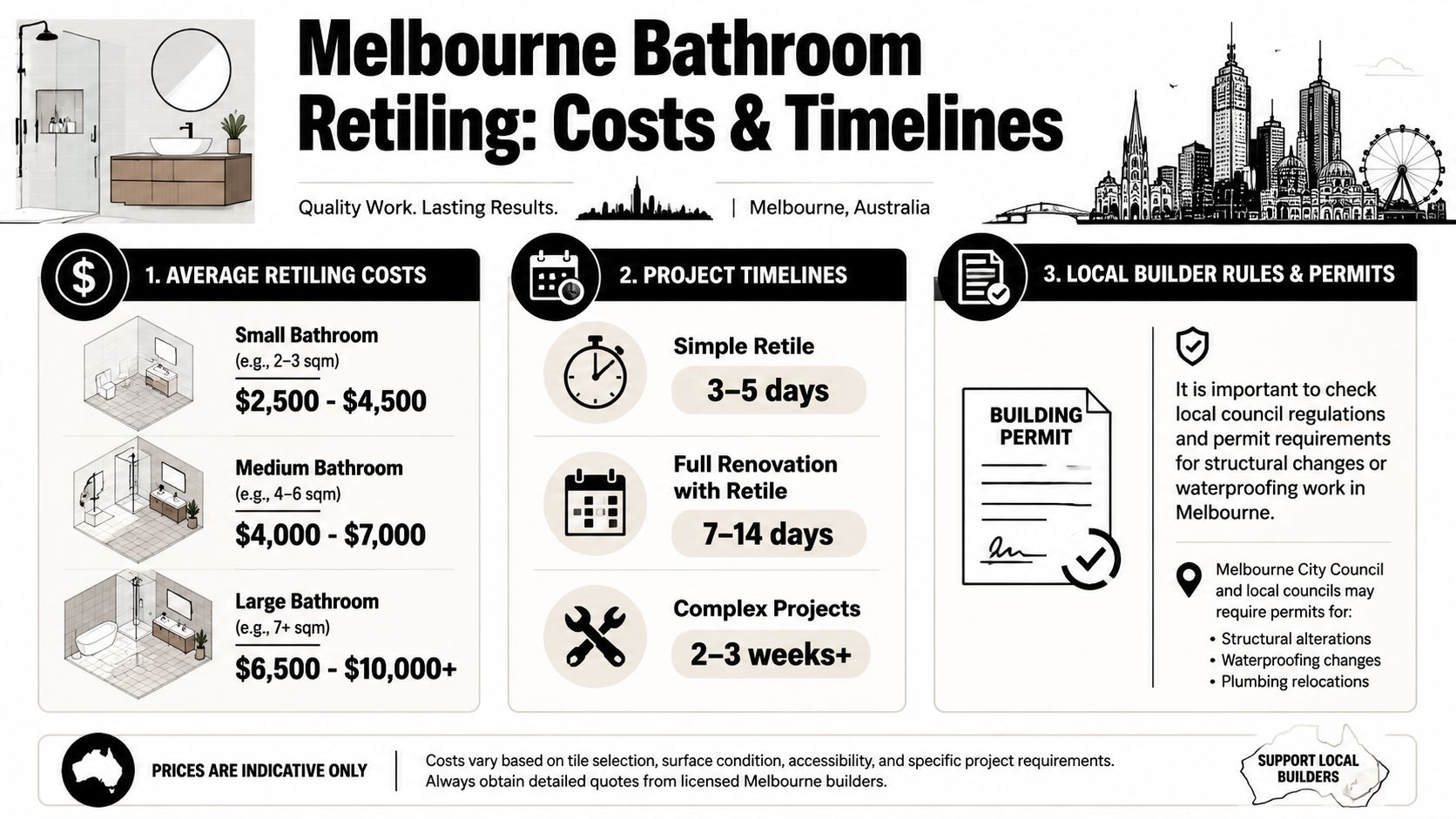
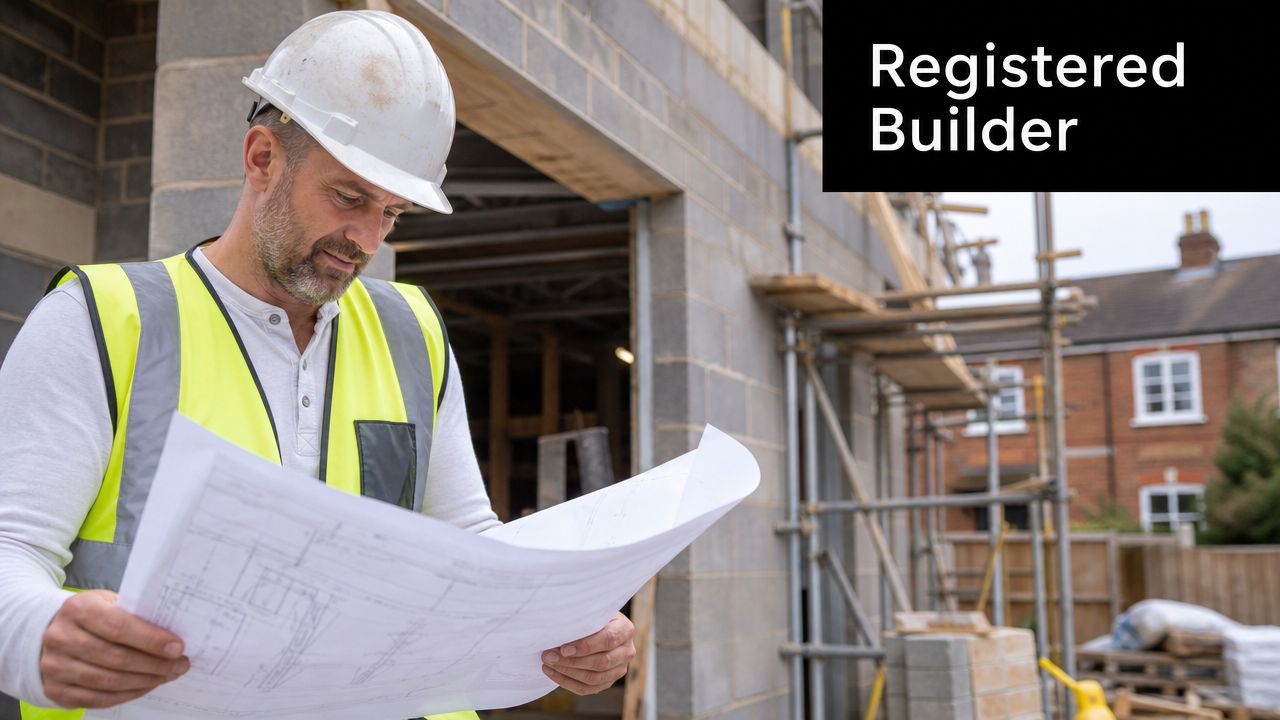
Standards only protect a project when someone takes responsibility for applying them. In Victoria, the Building and Plumbing Commission requires registration when building work is valued at more than $10,000, and structural work triggers registration regardless of project cost. A building permit may also be required (Consumer Affairs Victoria guidance on builders and practitioners).
The homeowner remains responsible for determining whether permits are needed, ensuring they're obtained and obtaining the Certificate of Final Inspection or Occupancy Permit when the work is complete. That responsibility makes the builder's registration, scope and authority important checks before demolition begins.

A practical Melbourne project pathway
For a leaking or deteriorated balcony, organise the work in this order:
- Contain the immediate risk. Protect the room below, remove unsafe loose materials and prevent further water entry where practical.
- Collect the records. Locate the permit, approved drawings, previous waterproofing information and maintenance history.
- Inspect the full system. Assess the substrate, falls, outlets, thresholds, junctions, penetrations and structural condition.
- Define the scope. Separate maintenance from substantial reconstruction or new work, then confirm the applicable NCC edition and approval pathway.
- Document the installation. Keep product evidence, preparation details, photographs, inspection records and completion documentation before the tiles conceal the membrane.
A general trade-licensing overview from TP Training can help homeowners understand why registration and authorised work matter. For Victoria-specific waterproofing records, use this waterproofing compliance certificate guide.
Melbourne Tiling Services P/L handles balcony leak rectification, substrate repairs, screeding, waterproofing, flood testing and retiling, with external balcony work aligned to the applicable AS 4654 requirements. The team also coordinates bathroom renovations with registered builders and relevant trades, so visit Melbourne Tiling Services P/L to arrange an assessment and discuss the documentation needed for your project.














Recent Comments