Screeding for Tiles: Flawless Finish Guide

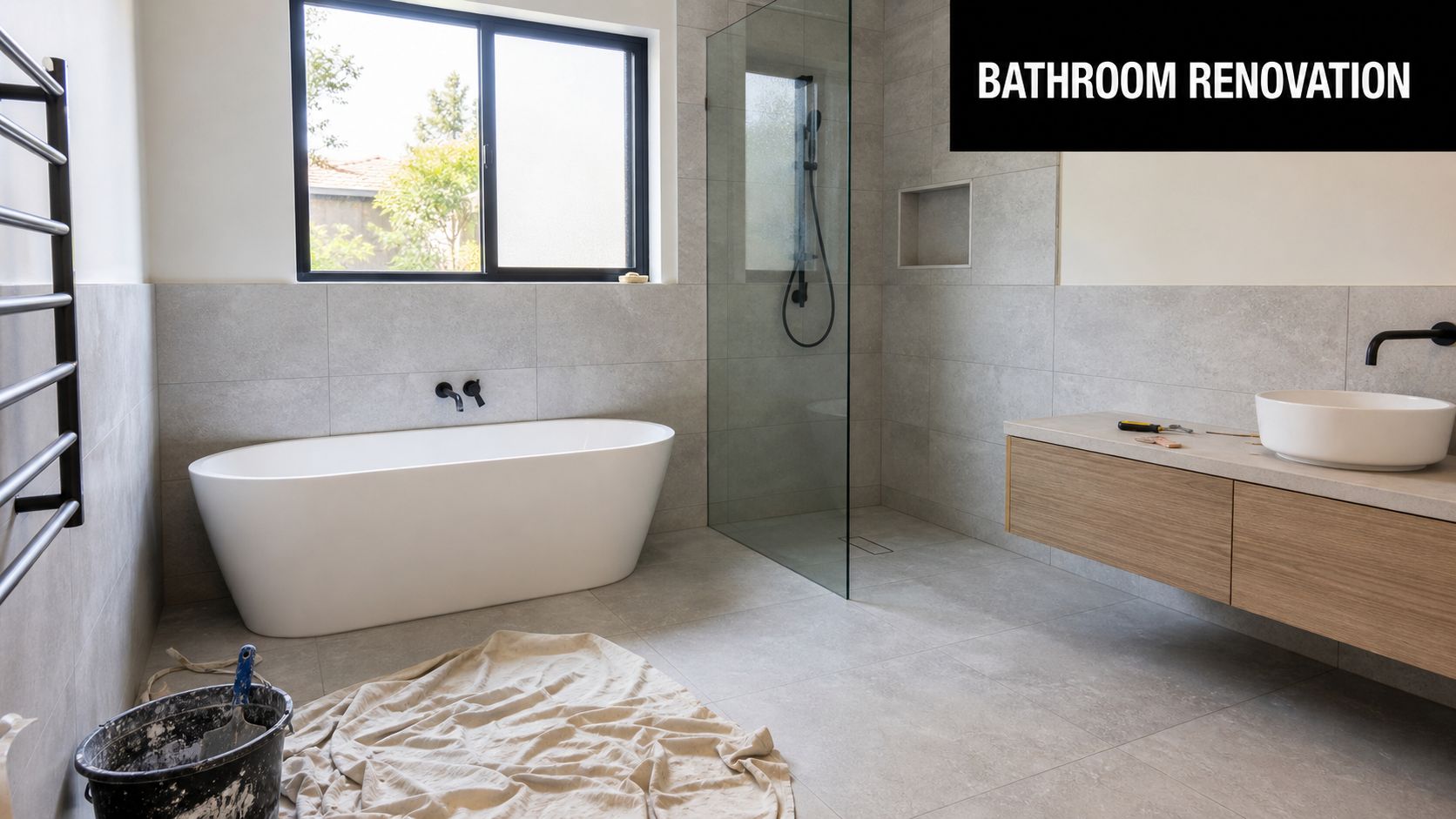
You're probably choosing tiles right now. Maybe you've shortlisted a soft stone-look porcelain, or you're weighing up a large-format Kerlite panel against a more forgiving standard tile. The exciting part of a bathroom renovation is always what you can see. The part that decides whether that finish still looks right years later is what sits underneath it.

That hidden layer is often where good renovations separate themselves from expensive call-backs. A bathroom floor can look close enough before tiling, but “close enough” is how you end up with poor falls, proud tile edges, drummy spots, and water that hangs around where it shouldn't. In Melbourne homes, especially in older properties with uneven slabs or awkward transitions, the floor usually needs correction before the first tile goes down.

That's where screeding for tiles matters. In practical terms, it gives the tiler a controlled base to work from and gives the homeowner a better chance of getting the finish they paid for. In renovation work, that base also has to work with waterproofing, existing floor heights, shower set-downs, and door clearances. Those aren't decorative details. They affect whether the bathroom performs properly.

A registered builder looks at screed differently from someone treating it as a quick prep step. It isn't just about making the floor look flatter. It's about coordinating levels, drainage, curing time, and sequencing so the finished room works as a whole. If you're planning floor tiling in a wet area, the standard of the base will often decide the standard of the result, including the quality of the floor tiling outcome in Melbourne homes.

Table of Contents

Your Foundation for a Flawless Renovation

A bathroom renovation often starts with a clean visual idea. Better tiles. Cleaner lines. A walk-in shower. Maybe a stone niche and a frameless screen. Then demolition starts, the old finishes come out, and the actual condition of the floor shows itself.

In Melbourne renovations, it's common to uncover a slab that's not flat, not true, or not suitable for direct tiling. Sometimes the issue is subtle. A dip near the doorway. A high edge where an old wall sat. A floor that seems acceptable until you start setting large-format tiles and every minor variation telegraphs straight through the finish. Other times the problem is obvious. Water has nowhere sensible to run, or the shower area can't be formed properly without rebuilding the substrate.

That's why screeding for tiles isn't a luxury step. It's the part that turns an uneven, unpredictable base into one that can support a premium finish.

Good tile work starts before tile work

Homeowners usually notice tile colour, grout lines, and feature walls. Trades notice the base first. A floor that's out of shape forces compromise into every stage after it.

A proper screed can help resolve practical renovation problems such as:

  • Floor build-up control: It helps manage the finished height where the new bathroom meets adjoining rooms.
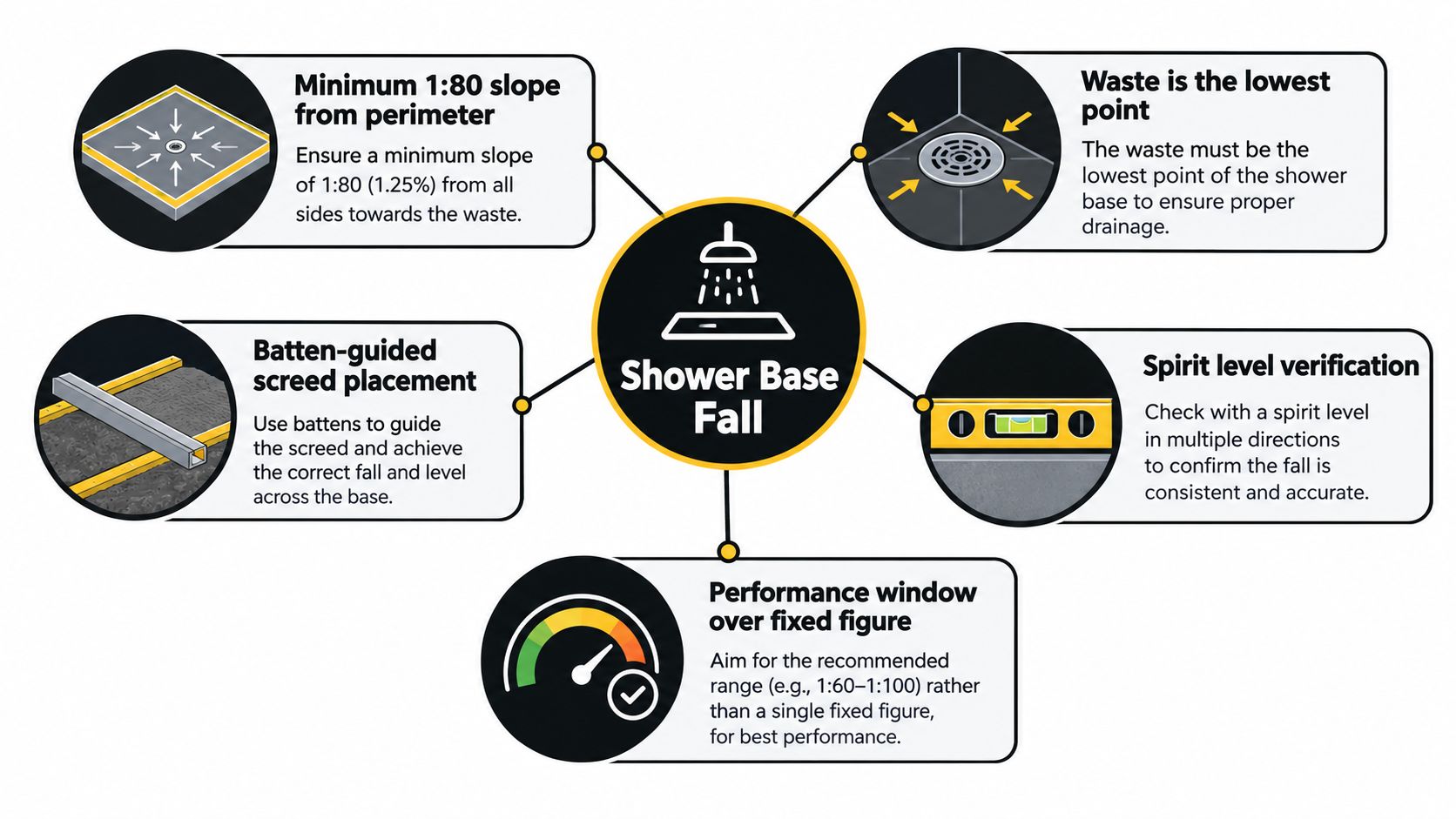
  • Drainage formation: It gives the installer the ability to create the right falls in shower and wet zones.
  • Tile presentation: It reduces the chance of visible lippage, especially with long or large-format pieces.
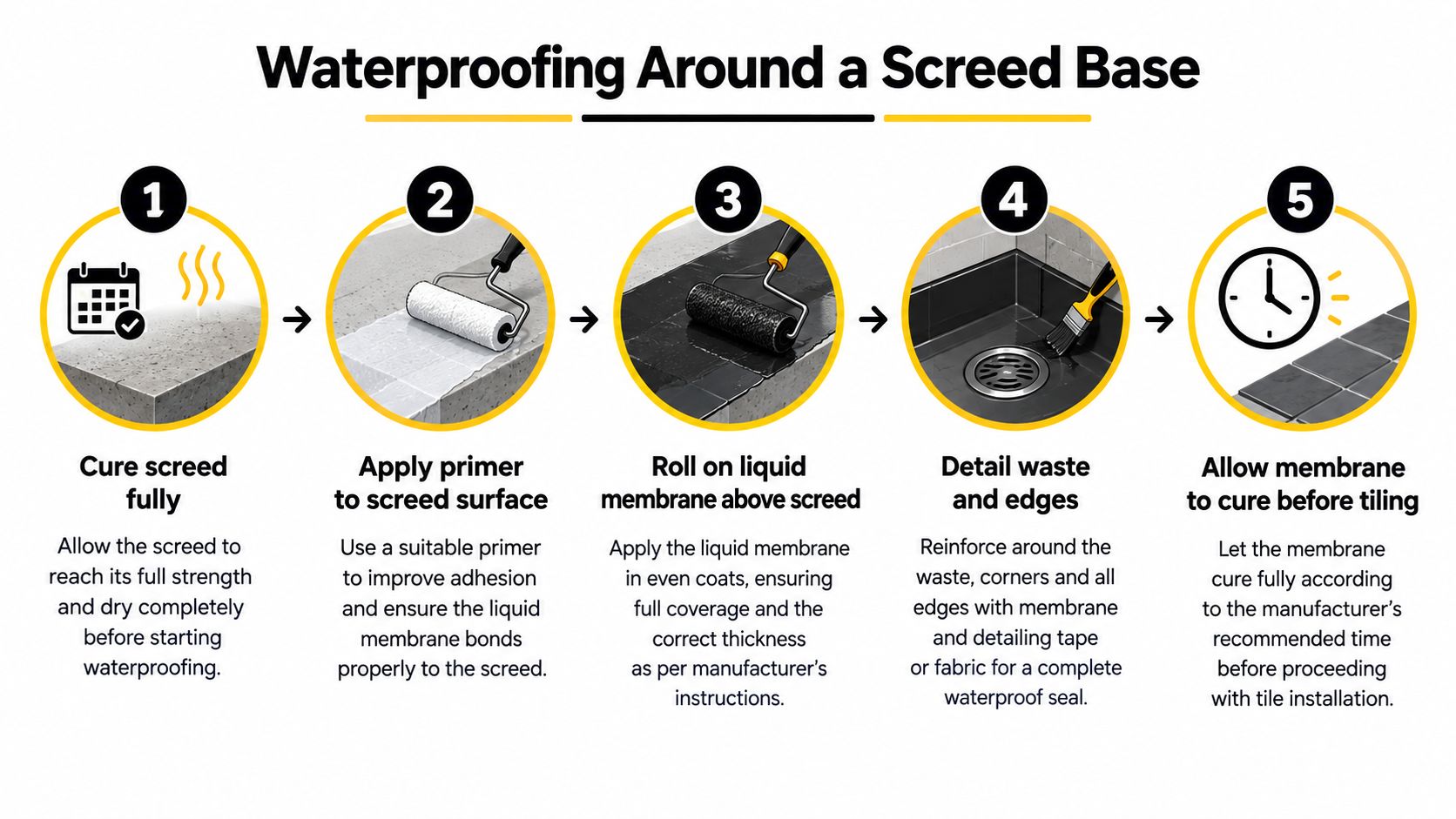
  • Waterproofing compatibility: It allows the floor preparation to be coordinated with membrane work rather than treated as an afterthought.

A beautiful bathroom can still be a poor renovation if the water doesn't move properly and the tile bed isn't stable.

Why registered builder oversight matters

In a bathroom, the floor can't be assessed in isolation. Screed thickness affects transitions, waterproofing detail, fixtures, and scheduling. A registered builder is accountable for how those pieces interact, not just for whether one trade completed one task.

That matters most in renovation work, where every existing condition pushes against the plan. The difference between a tidy result and a recurring defect often comes down to whether someone looked at the whole system early enough.

What Is Floor Screed and Why Is It Essential for Tiling

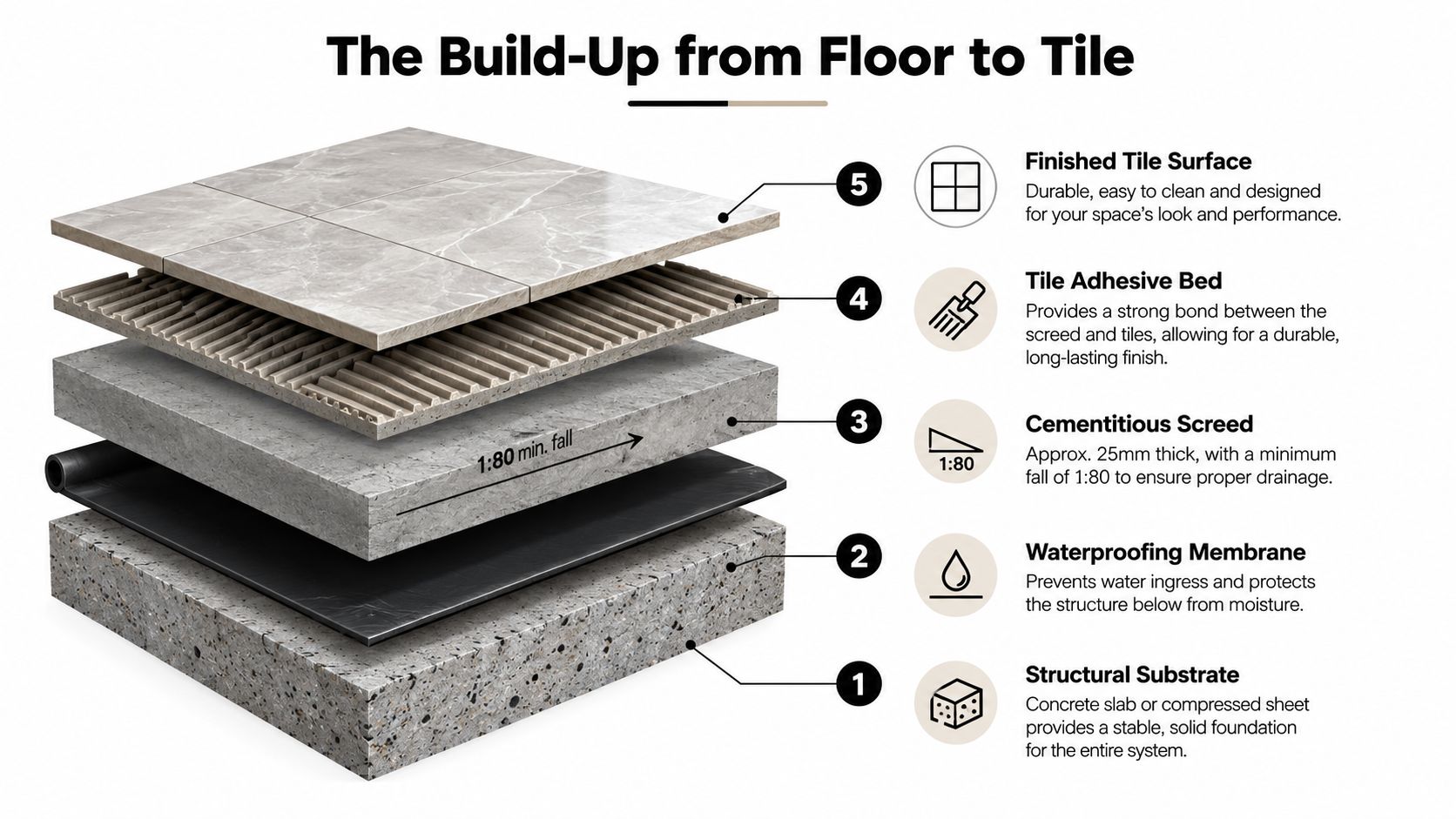
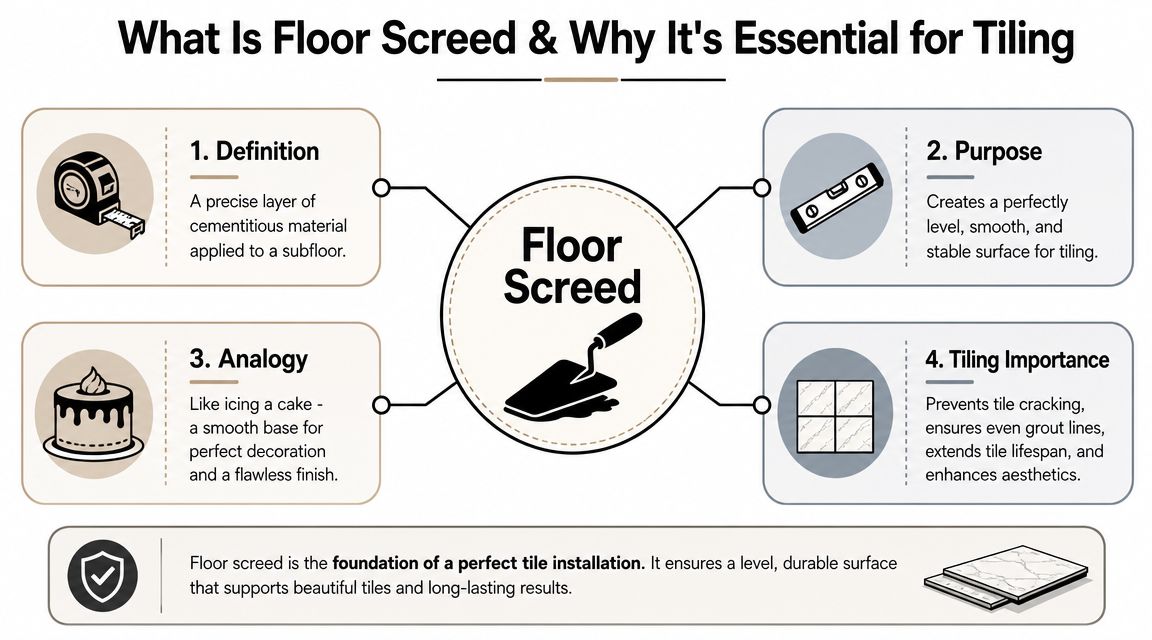
Floor screed is a cementitious layer applied over a subfloor to create a surface that's flatter, more stable, and more usable for tile installation. If the slab underneath is the structure, the screed is the correction layer that gives the tiler control.

The simple way to think about screed

The easiest analogy is cake icing. You can have a solid cake underneath, but if the top is uneven, the final decoration won't sit or present properly. Tiles behave the same way. They need a base that has been brought into line before the finish goes on.

An infographic explaining what floor screed is, its purpose, an analogy, and its importance for tile installation.

In Australian tiling practice, screed is used to create a smooth, level base before tiles are fixed, and the minimum thickness depends on whether the screed is bonded or unbonded. A bonded screed is typically laid at a minimum of 20 mm, while an unbonded screed must be at least 40 mm thick. The same guidance notes that a slurry coat is used before laying screed and that the floor should be allowed to cure properly before operational use, which affects renovation timing and floor build-up in bathrooms and wet areas (Mapei screed guidance for tiling works).

That thickness matters more than most homeowners expect. It influences the finished floor level, the threshold at the door, the relationship to the shower waste, and whether the renovation can tie neatly into the rest of the home.

Why flatness and falls both matter

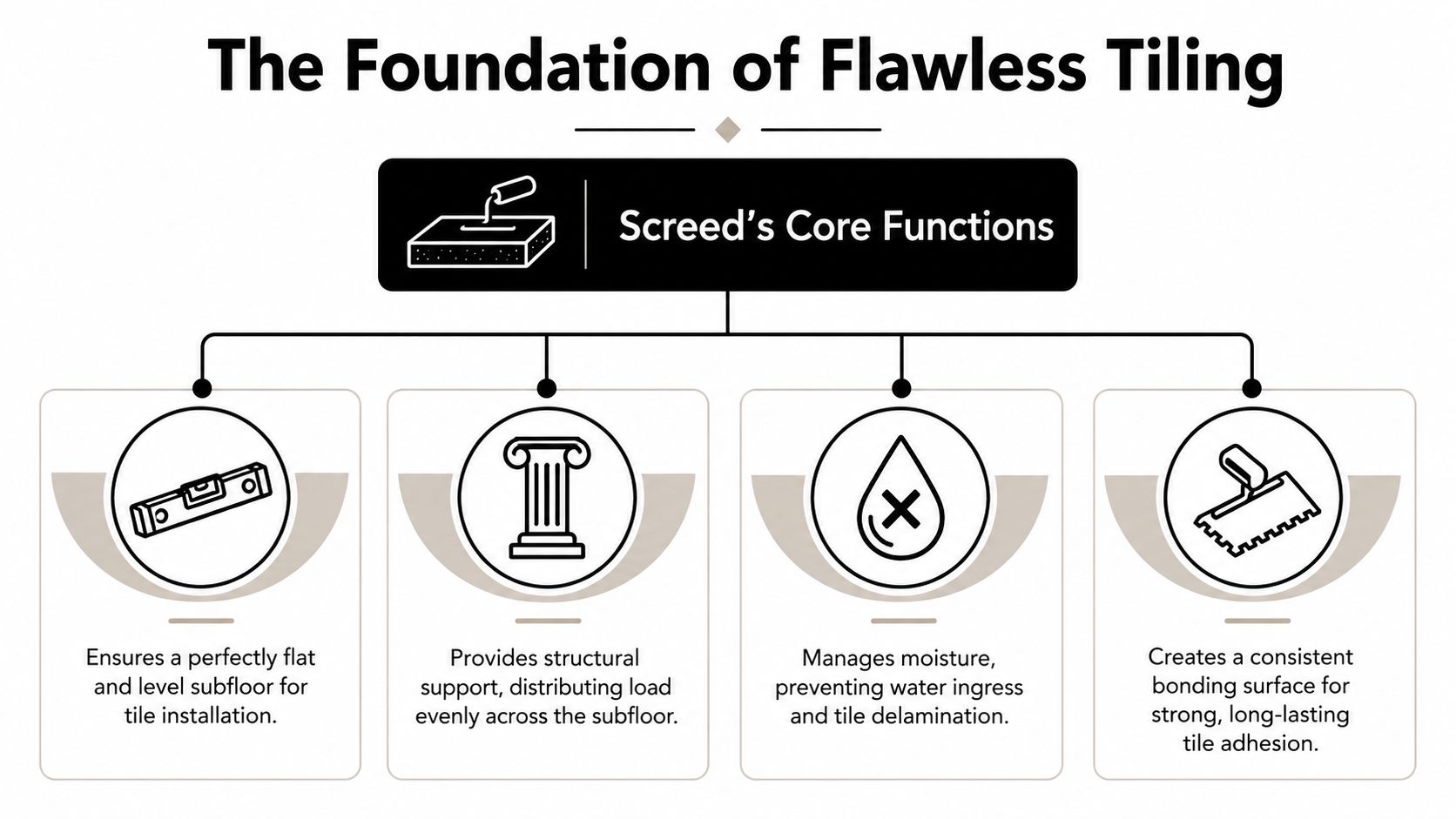
Screeding for tiles has two jobs. The first is flatness. The second is falls.

Flatness matters because tiles don't hide substrate problems. They expose them. That becomes even more important with large-format porcelain and thin panel products where the eye picks up every irregularity. Guidance on tile substrate preparation notes that bumps bigger than 4 to 5 mm over a 2 m straight edge should be rectified before tiling, and that a liquid or traditional screed is often needed to make the surface tile-ready for a professional finish (UK Screeds guidance on common tiling mistakes).

Falls matter because wet areas must drain. A bathroom floor isn't meant to be flat everywhere. It needs intentional shape. Around showers, that shape has to send water where it belongs without creating birdbaths, awkward edge conditions, or tile cuts that look forced.

Here's what screed does well when it's planned properly:

  • Corrects uneven slabs: Minor highs and lows can be brought under control before tiling starts.
  • Forms drainage paths: Shower floors and wet area transitions can be built with purpose rather than guessed on the day.
  • Supports premium materials: Kerlite, natural stone, and rectified porcelain all benefit from a better substrate.
  • Reduces finish compromise: The tiler doesn't have to “fix” substrate problems with adhesive thickness and hope.

Practical rule: If the floor only looks flat by eye, it hasn't been assessed properly for tile.

Exploring the Main Types of Floor Screed

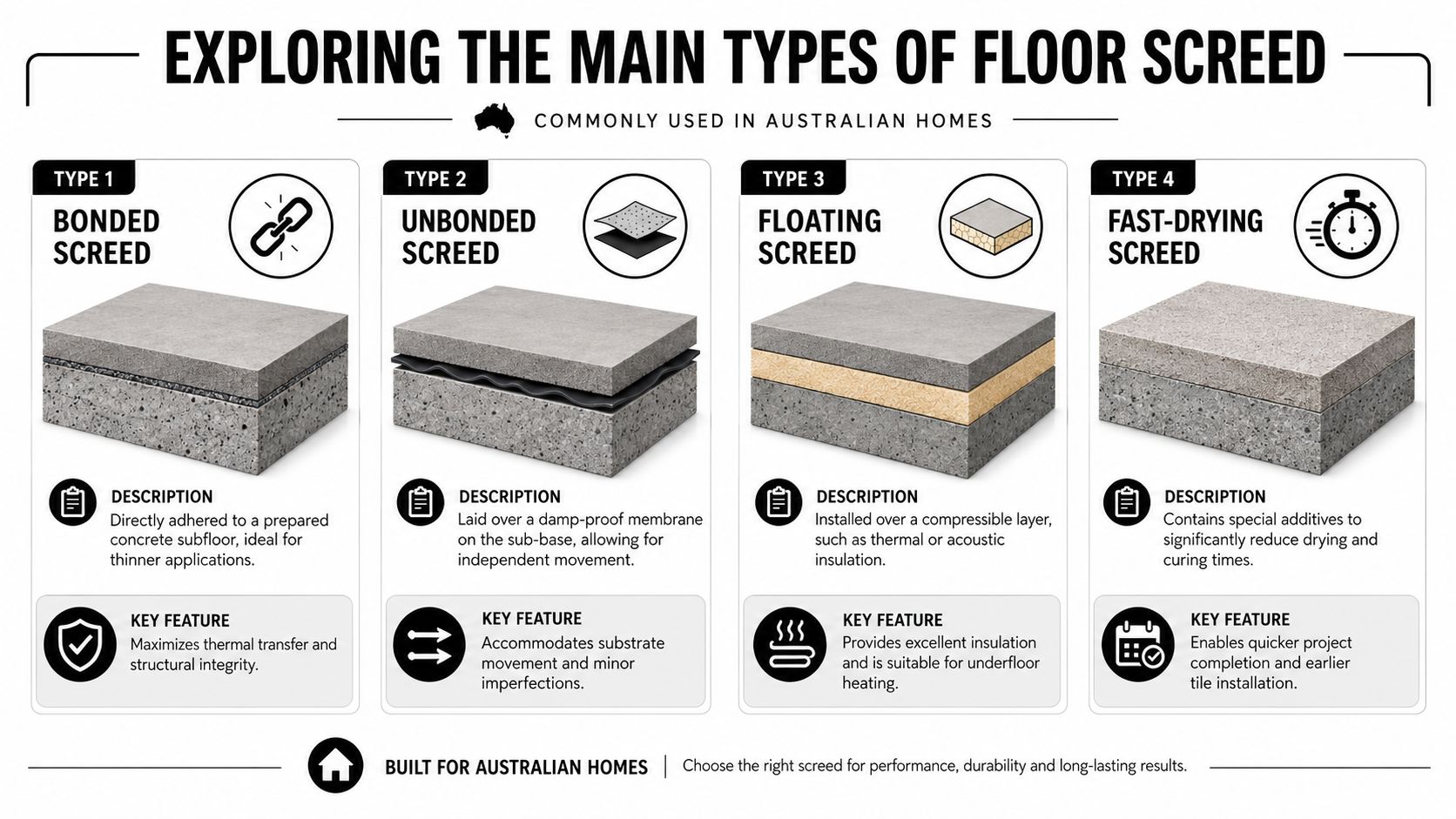
Not every screed does the same job. The right choice depends on the substrate, the room, the thickness available, and what sits under or over it. Homeowners often hear terms like bonded, unbonded, floating, and self-levelling as though they're interchangeable. They're not.

A diagram illustrating the four main types of floor screed commonly used in Australian residential construction.

How the main systems differ

A simple comparison helps.

Screed type What it sits on Typical use Key consideration
Bonded screed Directly bonded to prepared concrete Renovations where build-up needs to be kept tighter Substrate prep is critical because the screed relies on adhesion
Unbonded screed Separated from the base by a membrane or layer Floors needing movement separation or where direct bond isn't suitable Needs more thickness and movement control
Floating screed Over insulation or a compressible layer Areas with acoustic or thermal requirements, including some heated floors The whole build-up must be designed as a system
Self-levelling compound Over a prepared substrate as a correction layer Fine correction where the floor is close but not tile-ready It's not a substitute for every full screed application

In Australian practice, a bonded screed is typically laid at a minimum of 20 mm, while an unbonded screed requires at least 40 mm. For external areas, ARDEX technical guidance specifies bonded screeds at about 15 to 65 mm and unbonded screeds at about 40 to 80 mm, with welded wire mesh required for unbonded systems under AS 3958.1 to control movement (ARDEX Australia external floor screed detail).

That split is practical, not academic. Bonded systems transfer load through adhesion to the slab. Unbonded and floating arrangements need more depth because they behave more independently and have to deal with bending and shrinkage differently.

Which type suits which renovation

For a standard bathroom renovation, bonded screed is often the starting point if the slab can be prepared properly and the build-up needs to stay controlled. It's commonly the right answer when a registered builder is trying to maintain sensible transitions into the hall or adjacent bedroom.

An unbonded screed makes more sense where a membrane, substrate condition, or movement concern means direct adhesion isn't the best path. That extra separation can be helpful, but it comes with thickness implications. In a tight renovation, those extra millimetres can affect everything from threshold trims to vanity clearances.

A floating screed is usually part of a bigger build-up decision. If you're incorporating insulation or looking at under-tile heating in bathroom renovations, the floor assembly needs to be considered as one package rather than pieced together trade by trade.

Self-levelling compounds sit in a different category. They're useful when the substrate is close to acceptable but still outside what the tile finish needs. They don't replace every screed, and they're not a cure for major structural or drainage problems.

More material isn't automatically better. Too much build-up can create drying delays and compatibility issues with later waterproofing and adhesive stages.

A good contractor doesn't start by asking, “Should we screed?” The better question is, “What type of correction does this floor need?”

The Screeding Process in a Melbourne Bathroom Renovation

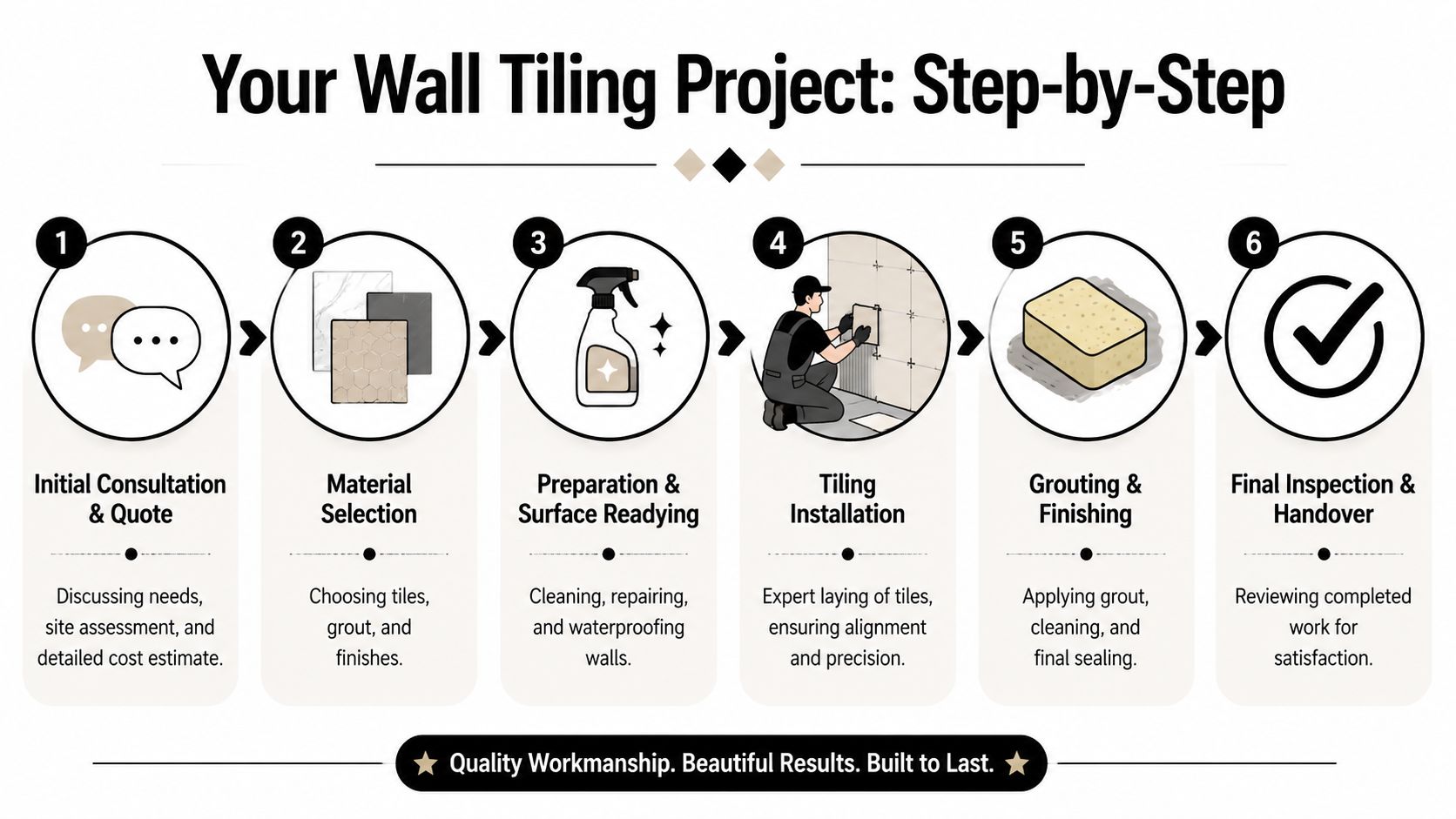
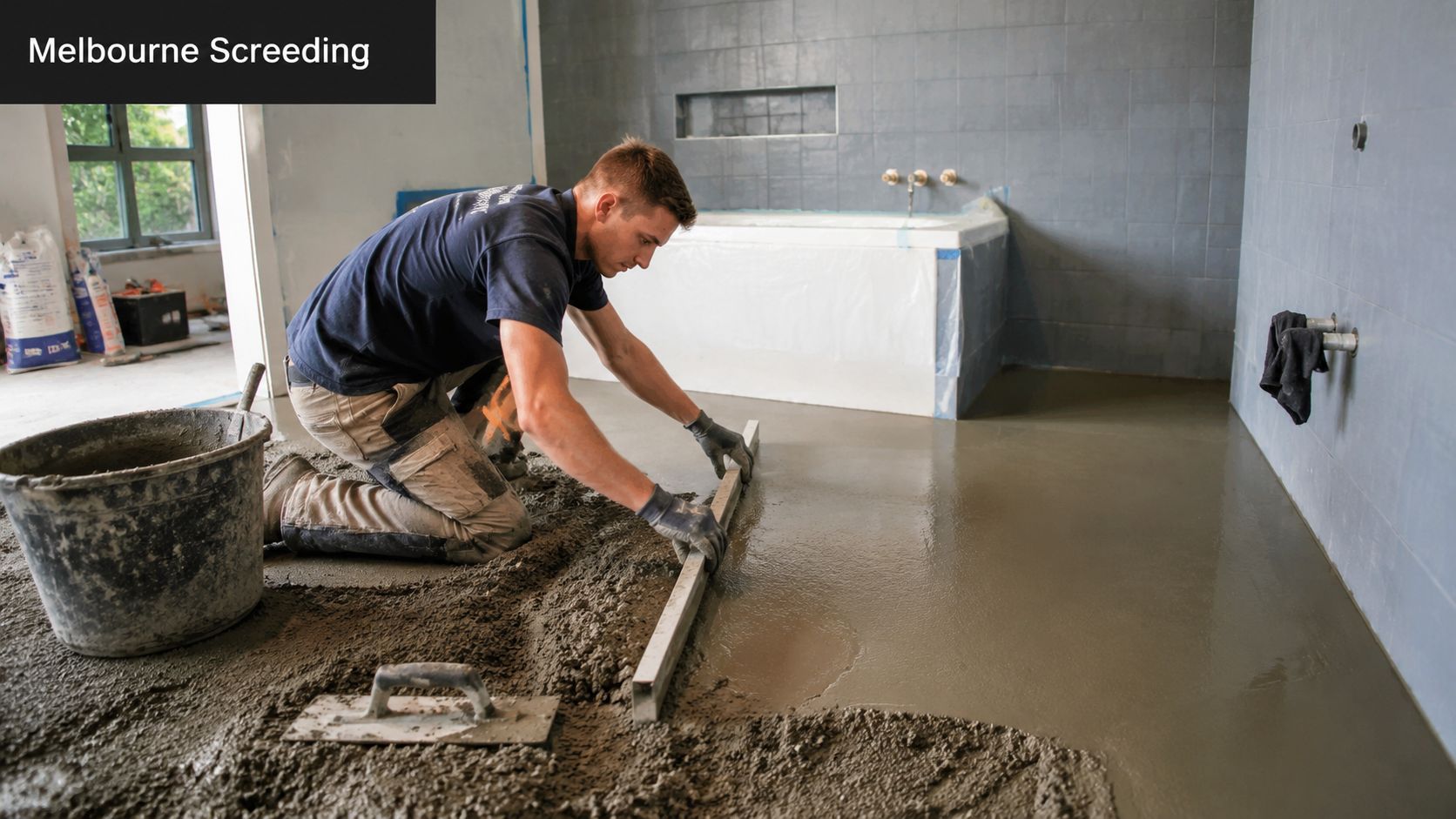
A proper screeding job on a bathroom floor is methodical. It isn't a bag of mix tipped on the slab and shaped by eye. The quality comes from assessment, preparation, sequencing, and patience.

Early in the renovation, the floor needs to be checked for height, condition, cleanliness, and how it relates to the rest of the room. That includes the shower area, doorway, waste positions, and any transition into adjoining finishes.

A professional construction worker kneeling on the floor, leveling wet cement screed in a modern bathroom renovation.

What happens before the screed goes down

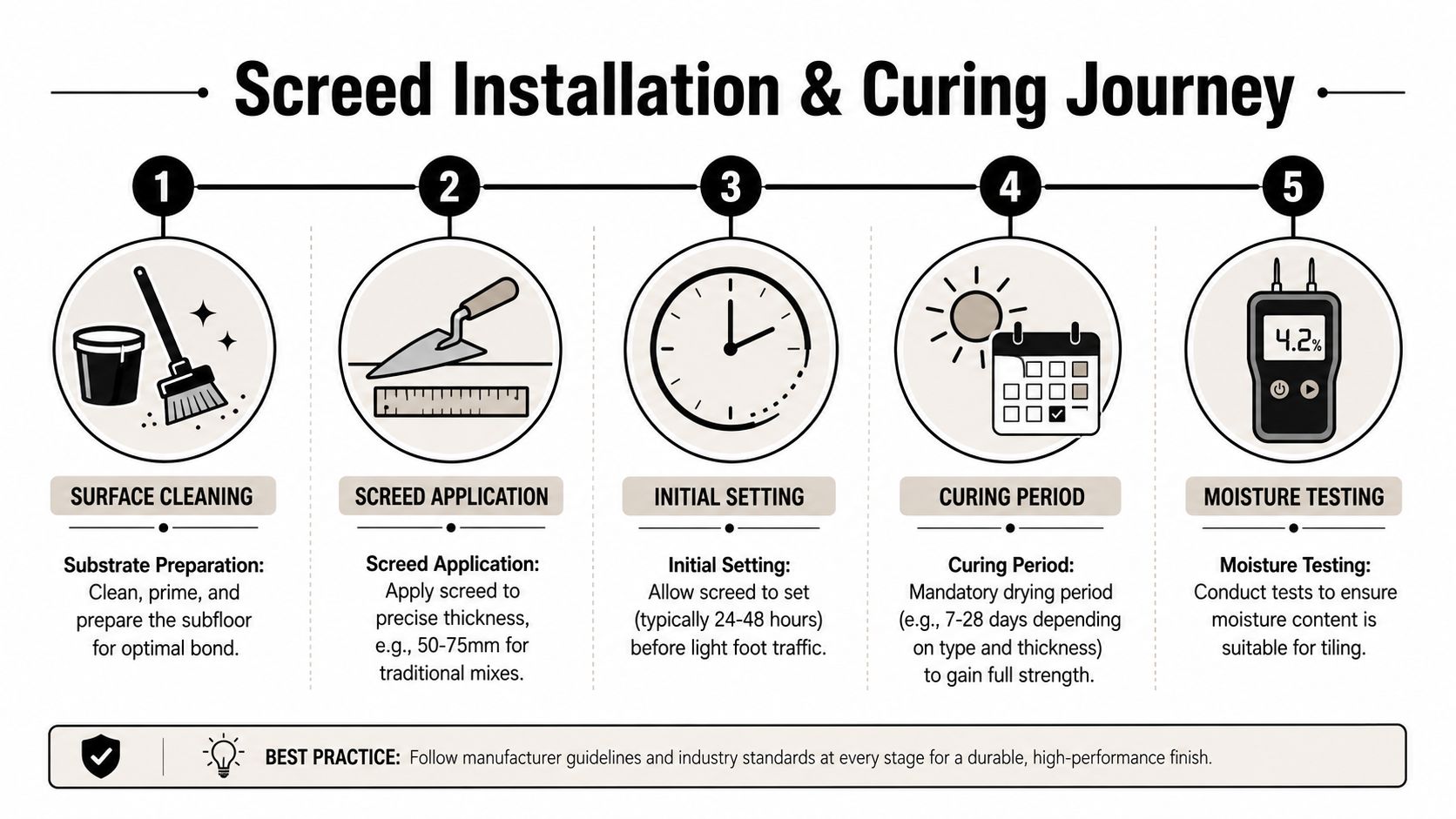
The first serious step is substrate preparation. If the base is dusty, contaminated, weak, or poorly keyed, the screed won't perform the way it should. In Australian guidance for tiling works, a slurry coat is used before laying screed, which shows how important the bond interface is in practice.

On site, the process usually looks like this:

  1. Assess the substrate: Check flatness, soundness, levels, and whether the base is suitable for bonded correction or needs another system.
  2. Prepare the floor: Remove contamination, loose material, and anything that could interfere with adhesion or consistency.
  3. Set heights and falls: Establish where the finished tile level needs to land and how water will move in the wet area.
  4. Place and shape the screed: Work to the planned lines, not to visual guesswork.
  5. Protect the area: Keep traffic and follow-on work from damaging the fresh screed.

Australian product data also shows how controlled modern screeding materials have become. One local screed mix product specifies a pot life of about 1 hour at 20°C, an open time of about 20 minutes at 20°C, a final setting time of 24 hours at 20°C, a coverage rate of approximately 3.7 m² per 20 kg bag at 3 mm thickness, an application temperature range of 5°C to 30°C, and a shelf life of 6 months from production (Australian screed product data sheet).

Those figures are useful because they explain why experienced installers pay attention to batch size, room temperature, and staging. Screed has a working window. Once you miss it, finish quality suffers.

Why timing is part of the build quality

The part homeowners most want shortened is curing. It's also the part that shouldn't be rushed.

For ceramic floor finishes in Australia, AS 3958-based guidance cited in local construction commentary recommends continuous curing for at least 7 days followed by about 2 weeks of air-drying before tiling can commence. The same commentary notes movement joints at roughly 4.5 m intervals and that AS 4654.2 prefers a 50 mm minimum unbonded screed, above the 40 mm minimum referenced elsewhere for AS 3958.1. The reason is practical: proper curing and jointing help reduce curling, shrinkage cracking, debonding, and tile tenting (This is Construction on floor screed design).

That's why registered builders and disciplined tilers protect this stage in the programme. Drying time isn't wasted time. It's part of what makes the floor dependable.

A short visual on site practice helps most homeowners understand what that shaping stage involves:

Common Screed Failures and How to Prevent Them

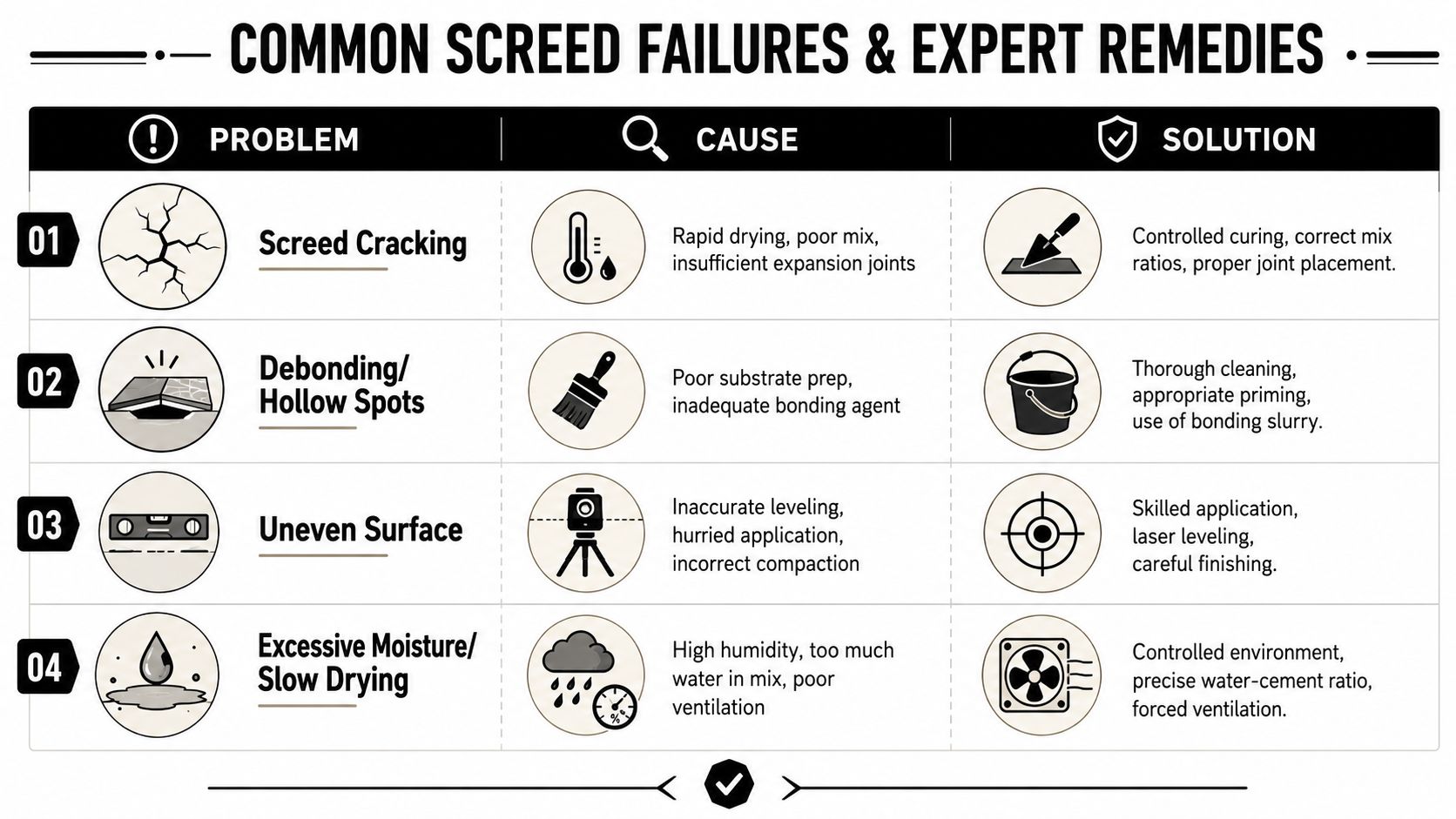
When screeds fail, the symptom is often seen in the tiles. The underlying cause usually started underneath. That's why defects can be misread. Homeowners see cracked grout, hollow sounds, water sitting in the wrong place, or movement at tile edges. The earlier mistake may have been poor prep, wrong product choice, bad curing practice, or rushed sequencing.

Where failures usually begin

Some failures are material-related. A screed can end up weak or crumbly if the mix or application is wrong. Others come from movement and moisture. A floor that dries unevenly or is tiled over too soon can create problems that don't fully show until the bathroom is back in service.

Common failure patterns include:

  • Weak surface strength: The screed powders, breaks down, or doesn't provide a reliable bed for adhesive.
  • Cracking and curling: The floor moves as it dries, especially if curing and protection were poor.
  • Poor drainage: Falls weren't formed correctly, so water ponds instead of clearing.
  • Tile lippage and debonding: The substrate wasn't flat enough, or movement wasn't controlled properly.
  • Tenting or stress transfer: Expansion and contraction weren't managed across the floor build-up.

Poor subfloor preparation has a habit of showing up later as a “tile problem” even when the root cause sits below the adhesive.

Prevention starts before the screed is mixed. The floor has to be assessed thoroughly. If the base needs repair first, it should be repaired. If it only needs local correction, don't overspecify the build-up. If the wet area needs engineered falls, don't leave them to be improvised during tiling.

Why screeding is a risk decision not a line item

General tiling guidance links many failures, from cracking to leaks, to poor subfloor preparation and unsuitable substrate decisions. It also stresses that surfaces need to be properly prepared and free of contaminants before tile work starts. That's why investing in professional screeding is better viewed as a risk-management decision, especially in bathrooms and balconies where later rectification can become far more disruptive than the original prep work (Rubi guidance on common tile-laying mistakes).

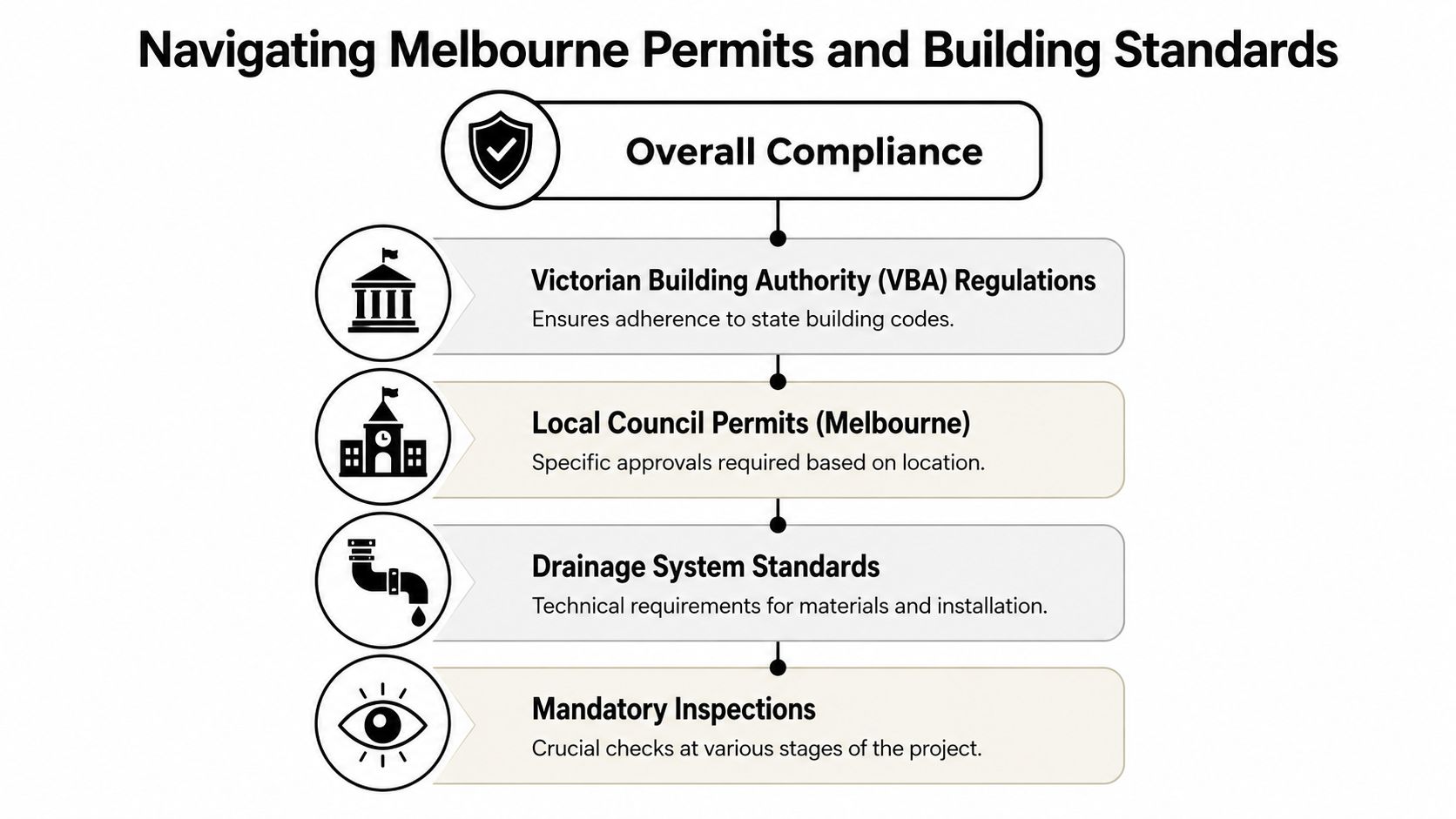
For wet areas, this connects directly to the broader relationship between tile, substrate, and membrane. Homeowners comparing quotes should pay close attention to how the contractor handles tiling and waterproofing integration, because that interface is where a lot of avoidable problems begin.

The cheap version of screeding usually isn't cheaper. It just delays the bill until the bathroom is finished and occupied.

Hiring a Screeding and Tiling Expert in Melbourne

A lot of bathroom problems are locked in before the first tile is laid. I see it regularly in Melbourne renovations. The tiles look like the issue, but the underlying problem is an uneven floor, poor set-out, or a screed that was done without enough thought to levels, drainage, and the finish being installed.

That matters even more if the project includes large-format Kerlite or natural stone. Those materials don't hide errors. They show lipping, inconsistent falls, and movement quickly, which is why hiring the right screeding and tiling expert is less about finding someone to spread mud and more about choosing who takes responsibility for the floor build-up as a whole.

Questions worth asking before work starts

A good contractor should be able to explain the floor build-up in plain terms and tell you why they are choosing one method over another. If the answers are vague, or everything is treated as “standard,” treat that as a warning.

Ask questions like:

  • How will you assess whether the floor needs patching, self-levelling, or a full screed?
  • How will the finished height affect the doorway, shower recess, waste position, and adjoining floors?
  • How will falls be formed and checked in the wet area?
  • How will the screed work with the waterproofing system and the tile type selected?
  • What curing time is allowed before waterproofing or tiling starts?

In bathroom work, coordination matters as much as installation skill. A registered builder brings value here because the screed, waste location, membrane detail, and tile layout all have to line up. If those decisions are made in isolation, the risk usually shows up later in the finish.

Screenshot from https://melbournetilingservices.com.au

What to look for in the quote

A useful quote should show how the contractor is thinking, not just give you a price.

Look for detail around:

  • Scope clarity: whether substrate prep, screeding, and any floor correction are included
  • Wet area planning: whether falls, waste positioning, and membrane sequencing have been allowed for
  • Material suitability: whether the screed system suits the room conditions and the tile being installed
  • Programme realism: whether enough time has been allowed for curing, drying, and trade coordination

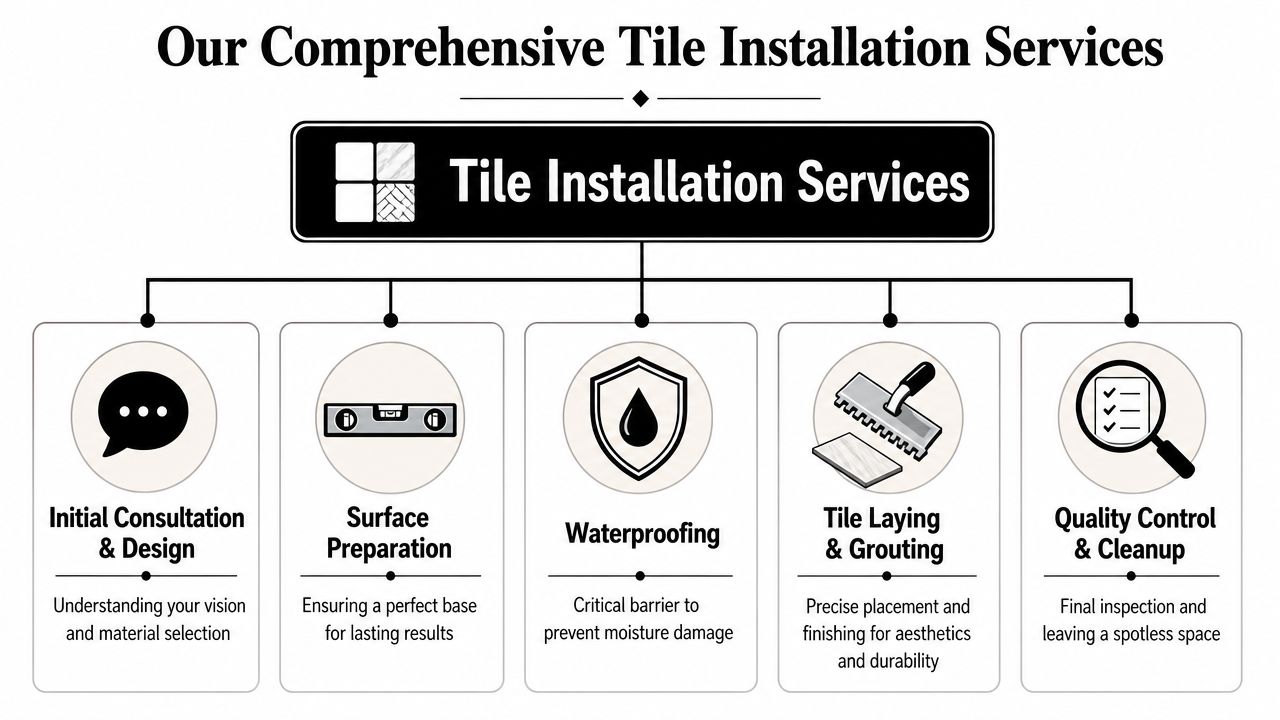
One local example is Melbourne Tiling Services P/L, which includes screeding within its broader bathroom renovation and floor preparation work. The more important point is who owns the result. For a high-end bathroom, especially one using thin porcelain panels or stone, the right contractor should be able to explain the build-up clearly, identify the risks early, and stand behind how the finished floor performs after handover.

If a contractor talks only about tile selection and not about levels, substrate condition, and falls, they are missing the part that usually causes the defect.

Frequently Asked Questions About Screeding for Tiles

Can I tile straight onto my concrete slab

Sometimes, yes. Often, no.

If the slab is sound, clean, appropriately flat, and already gives you the right levels and drainage, direct tiling may be possible. In many bathroom renovations, though, the existing slab isn't good enough for the finish being installed. Large-format porcelain, Kerlite, and natural stone are less forgiving than people expect. If the floor is out, the tiles will show it.

How much does screeding a bathroom floor cost in Melbourne

The price depends on the condition of the existing floor, the thickness required, access, the type of screed or levelling product, and how the work fits into the wider renovation. There isn't one honest number that suits every bathroom.

A better way to assess value is to compare the scope. Is the quote allowing for substrate preparation, proper falls, curing time, and coordination with waterproofing? A low figure can leave out exactly the work that prevents defects later.

Is screeding a DIY job

For a laundry or a simple utility area, some homeowners attempt minor floor correction themselves. In a bathroom, especially a shower area, DIY screeding is risky. The margin for error is small, and the consequences sit under every layer that follows.

The hard part isn't only spreading the mix. It's reading the substrate, setting the heights, forming reliable falls, and sequencing the work with waterproofing and tiling. That's why this step is usually better handled by an experienced tiler or a registered builder managing the renovation.

Is self-levelling the same as screeding

Not really. Self-levelling compounds are useful correction products, but they don't replace every screed application. If a bathroom floor needs shaped falls or a more substantial build-up, a traditional screed system is often the more appropriate solution.

Is screeding always worth it

No. If the floor is already suitable, unnecessary build-up can create new problems. The right approach depends on the substrate, tile format, wet area detail, and renovation constraints. The point isn't to add screed by default. The point is to correct the floor properly, and only as much as needed.


If you're planning a bathroom or ensuite and want clear advice on whether your floor needs patching, self-levelling, or full screeding for tiles, speak with Melbourne Tiling Services P/L. As registered builders handling bathroom renovations, waterproofing, screeding, and tiling, they can assess the full floor build-up and explain the practical options before work begins.

Terrazzo Bathroom Tiles: 2026 Melbourne Design Guide

You're probably in the same spot as a lot of Melbourne homeowners. You want a bathroom that feels sharper than the standard white box, but you don't want to spend good money on something that dates quickly, stains easily, or starts showing movement cracks after a couple of winters and a few hot showers.

That's where terrazzo bathroom tiles come into the conversation. They've got character, they work in both older Victorian homes and newer apartments, and they can look either quiet and refined or bold enough to carry the whole room. But terrazzo only performs well when the renovation is handled properly from the framing and substrate through to waterproofing, slip resistance, tile selection, and final finishing.

In Melbourne, that matters more than most style-led blogs admit. Bathroom renovations here often involve uneven floors, old timber structures, moisture issues, and compliance requirements that can't be left to guesswork. A registered builder who understands the whole assembly, not just the tile face, is what separates a polished result from an expensive rectification job.

Table of Contents

Why Terrazzo Is the Timeless Choice for Melbourne Bathrooms

You see it most clearly five or ten years after the renovation. The bathroom still looks current, the floor still feels solid underfoot, and the tile choice has not dated the room.

That long life is why terrazzo keeps turning up in well-planned Melbourne bathroom renovations. It has visual movement, so it does not read flat or cheap, but it also avoids the short shelf life that comes with many highly patterned trends. A good terrazzo selection can blend into the background or carry the whole design, depending on the chip size, base colour, and finish.

Melbourne homes benefit from that flexibility. In an Edwardian or Californian bungalow, terrazzo can pick up the softer, heavier character of the house without feeling faux-heritage. In a new apartment or townhouse, the same material can look sharp and restrained. If you are still comparing options, it helps to understand how terrazzo sits alongside stone, porcelain, and ceramic in a bathroom renovation. This guide to bathroom tiling materials and finishes is a useful starting point.

It suits both period homes and modern apartments

The material gives you range without losing durability. Fine-chip terrazzo in warm white, pale grey, or muted beige works well in bathrooms where the joinery, tapware, or lighting is doing the heavy lifting. Larger aggregate, stronger contrast, or coloured chips bring more energy and suit powder rooms, feature walls, and bolder schemes.

That matters in Melbourne, where many renovations are trying to balance resale, daily use, and the character of the existing home.

Practical rule: If you want a bathroom to hold up visually, choose a finish that gives you design flexibility without creating maintenance headaches. Terrazzo usually does that better than trend-driven decorative tiles.

It rewards a full renovation approach

Terrazzo performs best in bathrooms that are rebuilt properly, not patched around old problems. In Melbourne, that often means dealing with uneven subfloors, tired wall linings, out-of-level framing, and wet area details that no longer meet current expectations.

As a registered builder and tiler, I look at terrazzo as part of the whole bathroom build. Floor waste position, falls, sheet set-out, waterproofing build-up, movement joints, and transition heights all affect whether the finished room looks premium or disappointing. The tile may be the feature people notice first, but the result depends on the structure and preparation underneath it.

That is one reason terrazzo has stayed relevant. It rewards good design, but it also rewards proper construction, which is exactly what a full bathroom renovation should deliver.

What Exactly Are Terrazzo Tiles?

Terrazzo is easiest to understand as a recipe. You've got decorative chips, called aggregate, and you've got a binder that holds those chips together. Once the mix cures, the surface is ground and polished or honed to expose the pieces and create the finished pattern.

An infographic showing the four-step production process of terrazzo including ingredients and finishing techniques.

The basic recipe

The aggregate is where the look comes from. That can include marble, quartz, granite, or glass fragments. The binder is what changes the behaviour of the tile.

Most homeowners will come across three categories:

  • Cement-based terrazzo uses a cement matrix with aggregate mixed through it. It has a more traditional feel and more natural variation.
  • Epoxy-based terrazzo uses a resin binder. It's commonly chosen where a more uniform, less porous finish is wanted.
  • Terrazzo-look porcelain isn't true terrazzo, but it reproduces the look on a porcelain body and is often the simpler option for standard residential bathrooms.

If you're comparing materials for a renovation, it helps to understand the broader differences between stone, porcelain, ceramic and specialty tile products before locking anything in. This guide to bathroom tiling materials and finishes is useful for that early selection stage.

Comparison of terrazzo tile types

Attribute Cement-Based Terrazzo Epoxy-Based Terrazzo Terrazzo-Look Porcelain
Composition Cement binder with stone or glass aggregate Resin binder with decorative aggregate Porcelain tile with terrazzo-style printed surface
Look Natural, solid-body, traditional depth Cleaner, more uniform, often more seamless in appearance Highly consistent and easier to match across batches
Best use Floors and feature areas where mass and authenticity matter Commercial-style wet areas and low-maintenance surfaces Standard residential walls and floors
Maintenance May need more ongoing attention depending on finish and sealing Lower maintenance in many wet-area applications Straightforward everyday care
Installation demands Heavier and more dependent on sound substrate prep Demands proper system selection and adhesion Usually the most familiar format for residential tilers
Budget position Often premium Often premium Usually the easier entry point

Terrazzo isn't one single product. Clients often use one word for three very different materials, and that's where bad selections start.

The important part is this. If you change the binder, the tile body, or the way the face is made, you also change weight, installation method, maintenance, and cost. That's why the selection shouldn't be based on appearance alone.

Is Terrazzo a Good Choice for Your Bathroom?

A client walks into a period home in Melbourne, points at a terrazzo sample, and says they want that same finish across the floor, shower, and vanity wall. The right answer depends on more than the sample board. It depends on the structure under the room, the slip rating of the selected tile, the waterproofing build-up, and whether the product suits the way the bathroom will be used.

In a well-managed renovation, terrazzo is a strong bathroom choice. It wears well, it has real visual depth, and it suits both contemporary and older Melbourne homes. But it only performs properly when the tile selection, substrate preparation, falls, waterproofing, and movement control are handled like part of the building work, because that is exactly what they are.

A modern bathroom vanity featuring black cabinets, a marble countertop, and colorful terrazzo style wall tiles.

Where terrazzo performs well

Terrazzo earns its place in bathrooms that need to last.

It handles regular foot traffic, cleaning, moisture exposure, and the knocks that come with family use. It also gives a room more character than a flat plain tile, without forcing a loud pattern into a small space. In tight ensuites, that balance matters. You get movement and texture, but the room can still feel calm and controlled.

It also works well when the bathroom is being planned as a full renovation rather than a cosmetic update. If comfort is part of the brief, terrazzo can be incorporated with under tile heating in a bathroom renovation, provided the floor build-up, adhesive system, and expansion allowances are set out properly from the start.

Where terrazzo can go wrong

The failures are usually predictable.

The first is structural. Many Melbourne bathrooms sit over older timber floors or mixed substrates that have already moved over time. Cement-based terrazzo and larger-format terrazzo tiles are far less forgiving than clients expect. If the floor has deflection, poor sheet fixing, patchy levelling, or inconsistent screed thickness, the finished surface will show it.

The second is safety. A polished terrazzo sample can look excellent under showroom lighting and still be the wrong floor for a wet area. For bathroom floors, the product has to be checked against the required slip resistance classification, including the practical realities of bare feet, soap residue, and regular water exposure. In Australia, that means looking closely at AS 4586 test information before the tile is approved for use.

The third is maintenance expectation. Some clients want authentic cementitious terrazzo because they like the natural depth and variation. They also want porcelain-level simplicity and a lower install cost. Those goals can conflict. A builder should set that out early, before the tile order is placed and before waterproofing heights and floor transitions are locked in.

The practical decision

Terrazzo suits owners who want a bathroom built for long-term use and are prepared to spend money where it counts. That means stable substrates, compliant waterproofing, correct adhesives, proper falls to waste, and a finish selected for the right location.

If the project budget is tight, the existing floor is marginal, or the bathroom is being refreshed without correcting underlying building issues, terrazzo may not be the smartest choice. In those cases, a more forgiving tile can produce a better result.

Used in the right bathroom, and installed properly, terrazzo is not a risky design move. It is a durable, high-end finish that rewards good building practice.

Designing Your Dream Bathroom with Terrazzo

A good terrazzo bathroom doesn't happen by choosing a random speckled tile from a display wall. It comes from controlling three design decisions properly. Finish, aggregate, and base colour.

A modern bathroom featuring a terrazzo sink and matching bathtub set against a large decorative terrazzo wall.

Start with the finish

On walls, a smoother and more polished face can work beautifully because it reflects light and lifts the room. On floors, the decision has to be more disciplined. In a wet bathroom, safety and feel underfoot matter more than showroom shine.

A honed or matte finish usually gives the room a more grounded, architectural look anyway. It also hides water spotting better than an overly glossy finish. That matters in family bathrooms where the room gets used hard, not staged for photos.

If you're planning comfort features at the same time, terrazzo also sits well within a broader bathroom build that includes heating and upgraded floor systems. If that's part of your renovation brief, look at under tile heating for bathroom renovations before final tile selections are locked in.

Choose the aggregate and base colour

The room's personality shows up here.

Small aggregate in a close-toned base gives a quieter finish. That suits compact ensuites, bathrooms with strong brassware, or homes where you want the tile to feel expensive without shouting. Larger chip terrazzo is bolder. It's great for a feature wall, vanity splashback, or a powder room where you want more energy.

A straightforward approach:

  • Fine chip plus soft grey or warm white base gives a more refined, almost monolithic feel.
  • Mid-size marble aggregate adds classic texture without looking busy.
  • High-contrast or multicolour chip works best when the rest of the room is restrained.

Don't choose from a tiny sample alone. View the tile beside your vanity finish, tapware colour, shower screen trim, and actual bathroom lighting. Terrazzo changes character a lot depending on the surrounding materials.

Where large format terrazzo-look panels fit

Large-format terrazzo-look slabs are becoming more common in Melbourne bathrooms, especially on walls where clients want fewer grout joints and a cleaner visual plane. A recent Melbourne-focused trend is the use of Kerlite slabs up to 3 x 1.5m, with imports reported to have surged 40% in 2025, and the attraction is obvious because fewer grout lines mean easier cleaning and a more continuous finish. The trade-off is that they need precise substrate preparation and licensed installation in humid Victorian conditions, as noted in this discussion of modern terrazzo-look slab applications.

This short video gives a useful visual reference for the kind of finish clients are often trying to achieve with terrazzo in contemporary bathrooms.

Large format surfaces can look outstanding, but they're less forgiving than standard tile modules. If the walls aren't straight, the corners aren't true, or the substrate hasn't been prepared correctly, the result won't look premium no matter how expensive the slab is.

Getting the Terrazzo Installation Right

A terrazzo bathroom can look first-rate on handover and still fail early if the build-up underneath is wrong. In Melbourne renovations, I see the same causes come up again and again. Poor falls, movement in old timber floors, the wrong finish under wet feet, and waterproofing that was treated as a paperwork item instead of a construction sequence.

Slip resistance comes before shine

Clients often start with the face of the tile. In a bathroom, I start with how it performs when wet.

Terrazzo on bathroom floors needs to suit AS 4586 slip resistance requirements. That usually points to a honed or otherwise slip-rated finish on the floor, especially in shower zones and on the main bathroom path where people step out with wet feet. A polished surface can still work well on walls, vanity cladding, or other low-risk areas, but floor selections need a different standard.

That trade-off matters in real use. A finish that photographs well under showroom lighting can feel risky at 6am on a cold winter morning.

A bathroom floor should feel secure every day, not just look good on install day.

Waterproofing and adhesion decide whether the room lasts

Tiles are the wear surface. They are not the waterproofing system.

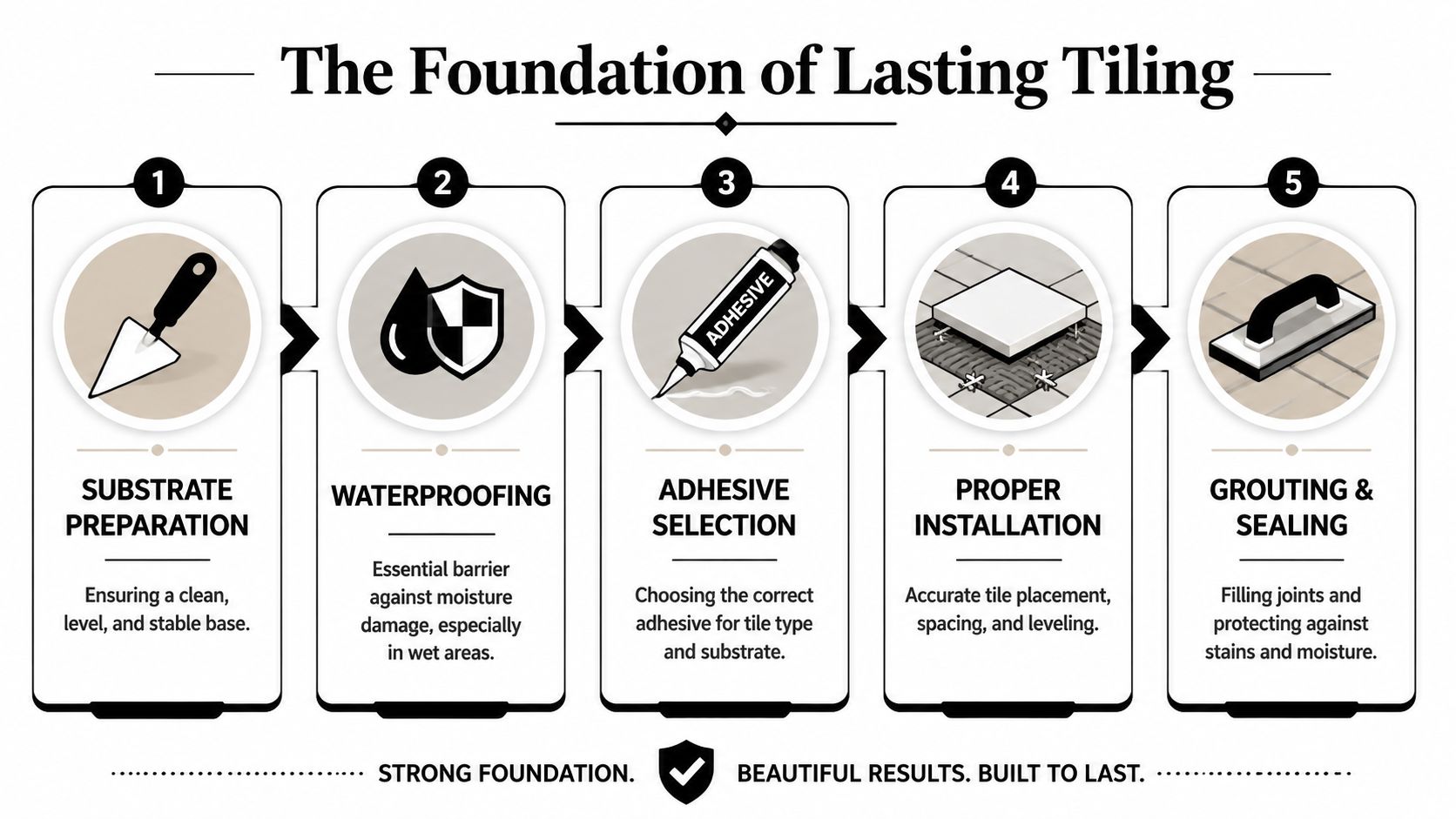
In a full bathroom renovation, the sequence matters. Substrate correction comes first, then falls, sheeting, junction treatment, membrane application, and only then tiling. If those steps are out of order, or if products are mixed without checking compatibility, terrazzo will not hide the mistake. It usually highlights it through drummy tiles, cracked grout, stained edges, or moisture showing up in adjoining rooms.

For that reason, I always look closely at:

  • Substrate stiffness and deflection, especially in older Victorian and post-war homes with timber floors
  • Falls to wastes, so water moves to the drain instead of sitting against walls or glass
  • Membrane detailing at corners, hobs, niches, and penetrations
  • Adhesive selection and coverage, particularly with heavier terrazzo or low-porosity terrazzo-look porcelain
  • Movement joints and perimeter allowances, so the tiled surface has room to behave properly

If you are reviewing a renovation scope, ask who is responsible for waterproofing compliance and what documentation is issued at completion. A proper Victorian waterproofing compliance certificate for wet areas is part of a properly managed build, not an optional extra.

Substrate prep in Melbourne homes

At this stage, many bathroom budgets are often strained.

A lot of Melbourne homes have floors and walls that are out of plane before demolition even starts. Once the old finishes come off, you can find bouncing joists, patched sheet substrates, old screeds, or previous work laid over surfaces that should have been removed. Terrazzo, particularly larger modules and heavier material, wants a stable base. If the floor moves or the walls are not true, the finished room never looks as crisp as the sample board.

In practice, that can mean sistering or correcting joists, resheeting walls, rebuilding shower bases, screeding for proper falls, or using levelling compounds to get walls and floors within tolerance. None of that is decorative work. It is the part that allows the visible finish to sit flat, drain properly, and stay bonded.

Tile thickness matters too, but it needs to be assessed against the product type, substrate, and application rather than treated as a shortcut on price. In a builder-managed renovation, the right question is not “what is the thinnest tile we can use?” It is “what assembly suits this room, this structure, and this waterproofing system?”

The installation standard has to match the tile choice

Terrazzo can be natural cement-based material, resin-based product, or terrazzo-look porcelain. They do not all install the same way.

Cementitious terrazzo is heavier and less forgiving of movement. It also needs good handling, clean cutting, and proper sealing where specified. Porcelain terrazzo-look tiles are usually easier to maintain and more dimensionally consistent, but they still need proper substrate prep, full adhesive support, and accurate set-out if you want the room to read as premium rather than patched together. Large chips, directional patterns, and strong colour variation all need planning before the first tile is fixed.

Set-out is often overlooked. I would rather spend more time resolving grout lines, drains, niches, and threshold transitions on paper than try to solve them with small cuts on the day. That is usually the difference between a bathroom that feels resolved and one that looks close, but not quite right.

Good terrazzo installation is careful work. The finish gets the attention, but the result comes from the prep, the sequence, and the compliance behind it.

Budgeting and Caring for Your Terrazzo Bathroom

A terrazzo bathroom can look expensive for the right reasons, or expensive for the wrong ones. The difference usually comes down to what was allowed for before the first tile was ordered.

Clients often focus on the tile rate per square metre. In a full Melbourne bathroom renovation, that is only one part of the budget. The bigger swings usually come from floor correction in older homes, wall straightening, waterproofing, drainage detailing, and the labour needed to set terrazzo out properly so the room reads clean and intentional.

Where the money actually goes

Terrazzo sits across a wide price range. Cementitious terrazzo, resin-based products, and terrazzo-look porcelain all carry different supply costs, handling requirements, and maintenance demands. The right choice depends on the room, the substrate, and how much ongoing care you are comfortable with.

In practice, budget pressure tends to show up in four places:

  • Substrate repairs and preparation for movement, deflection, out-of-level floors, or poor past renovation work.
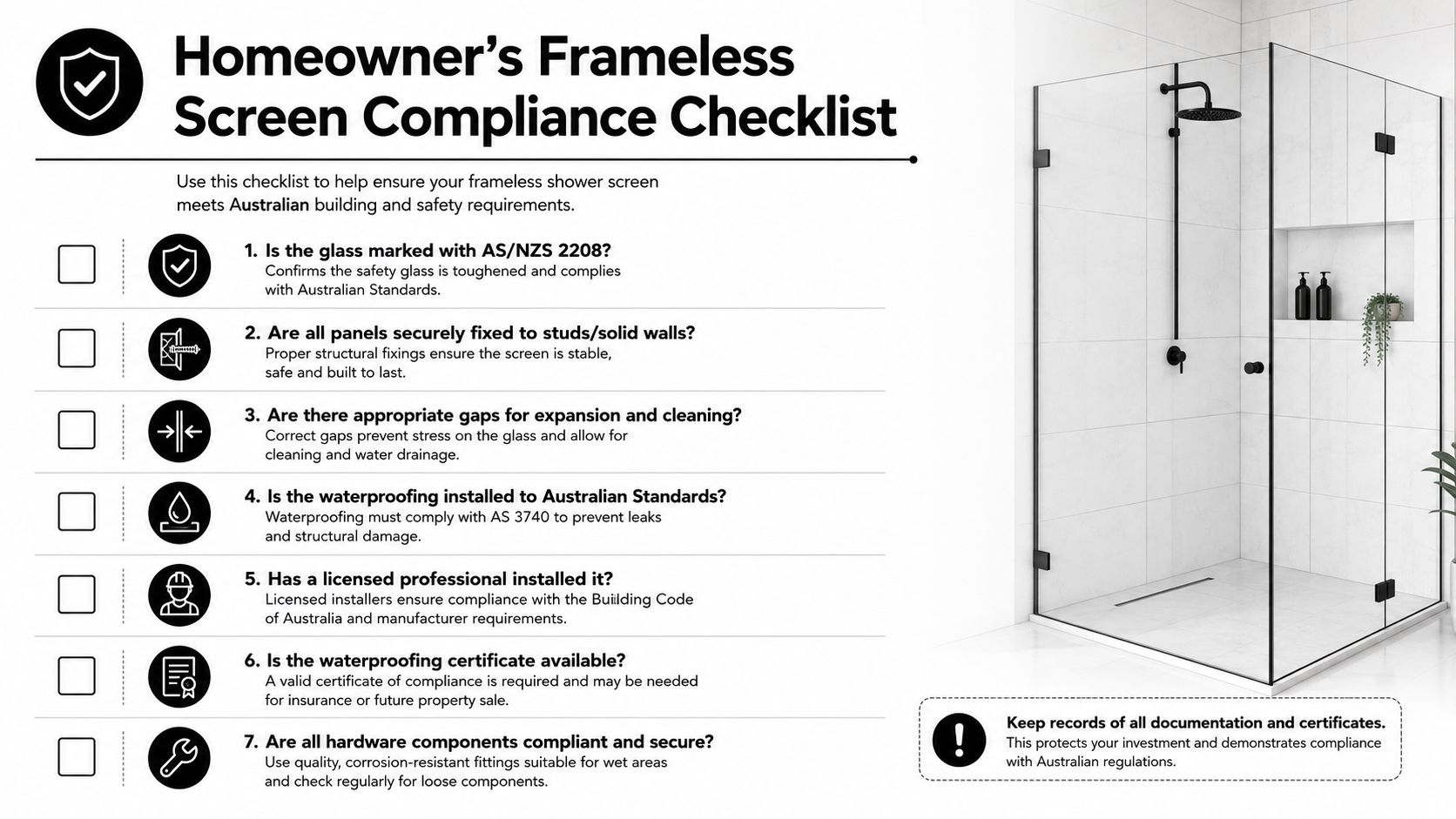
  • Wet-area construction including screeds, shower falls, waterproofing, and compliant junction detailing.
  • Tile size, weight, and cutting complexity, especially around linear drains, niches, hobless entries, and tight bathroom footprints.
  • Finishing work such as trims, mitres, expansion joints where required, and cleaner transitions at doorways and fixtures.

I often observe poor decisions made. Cheapening the build by reducing prep, rushing set-out, or choosing a product unsuited to the structure rarely saves money once rectification is on the table.

A good quote should break the job into clear parts: demolition, carpentry or builder's rectification work, plumbing, electrical, waterproofing, tiling, glazing, cabinetry, and fittings. If those items are bundled too loosely, it becomes hard to see whether the allowance is realistic or whether costs have been pushed to variations later.

How to look after it properly

Maintenance is straightforward if the material is matched to the bathroom and installed properly.

  • Use pH-neutral cleaners on a regular basis. Acidic cleaners can mark or dull some terrazzo surfaces.
  • Keep soap scum and mineral build-up under control with routine cleaning, especially in showers and around basins.
  • Reseal cement-based terrazzo if the manufacturer calls for it. Maintenance schedules vary by product.
  • Repair chips, cracked grout, or failed sealant early so water does not track into the assembly.

Porcelain terrazzo-look tiles are usually the easiest option for busy households. They are consistent, simple to clean, and less demanding over time. Cementitious terrazzo has more depth and character, but it asks for better product selection, more care during installation, and a bit more attention after handover.

That trade-off is worth making for some bathrooms. It is not the right move for every one. A builder-managed renovation should price the material accurately, explain the upkeep clearly, and match the specification to the way the bathroom will be used.

Your Next Steps for a Perfect Terrazzo Bathroom in Melbourne

A Melbourne bathroom can look straight, clean, and ready for tile, then show its real condition the moment demolition starts. I see it often in older homes. Uneven floors, patched sheeting, out-of-square walls, and tired framing all affect whether terrazzo will finish sharply or fight the build the whole way.

Start with the room, not the colour chart. Check the substrate, the shower set-down or floor waste layout, the amount of natural light, and who will use the bathroom every day. A terrazzo tile that looks refined in a showroom can read busy in a compact ensuite, especially under warm downlights or against veined stone and brushed metal finishes.

Get samples in hand. Put them on the floor and against the wall finish. View them morning, afternoon, and at night with the actual lighting switched on. That simple step avoids a lot of second-guessing once the tile order is placed.

Then choose the team who will carry the whole wet-area build. Terrazzo works best when the builder, waterproofer, tiler, plumber, and electrician are working to one plan and one set of tolerances. In a full renovation, that matters more than the tile itself. Falls need to be right, junctions need to be clean, movement needs to be allowed for, and the waterproofing system needs to suit the substrate and layout.

That is why a registered builder is often the right lead on a terrazzo bathroom in Melbourne. Victorian homes regularly need correction before tile goes down, and those adjustments sit across several trades, not just tiling. One party coordinating demolition, rectification, compliance, and finishes usually gives a better result than splitting the job between separate contractors.

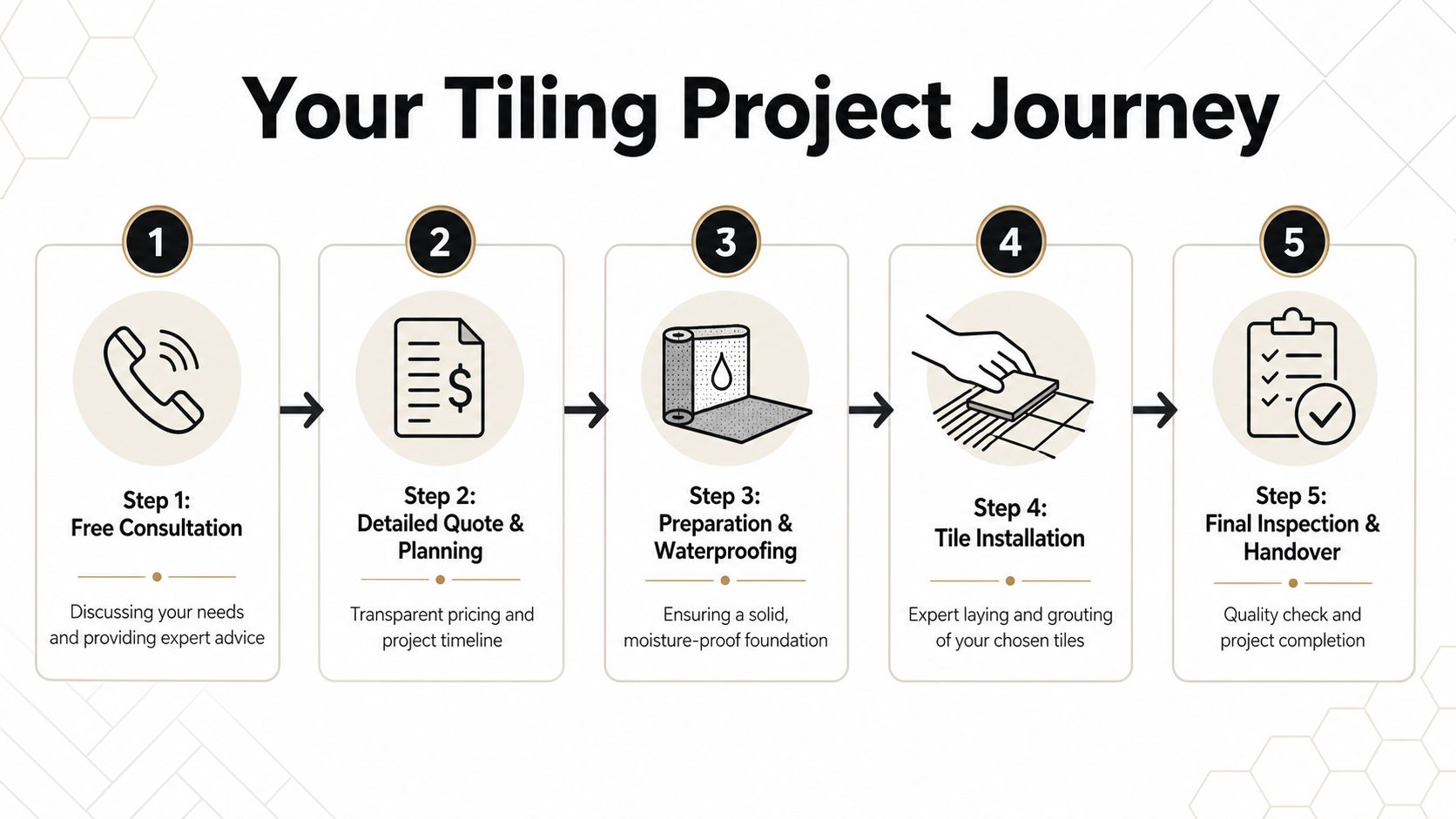
Ask for a quote that shows the build sequence clearly, the tile specification, who is responsible for substrate preparation, and how waterproofing and slip resistance will be handled. If those items are vague, the risk usually turns up later as delays, variations, or finishing compromises.

A terrazzo bathroom can look outstanding for years. The projects that stay that way are the ones where the builder gets the structure, the wet-area detailing, and the tile setting right before anyone starts talking about styling.

If you're planning a terrazzo bathroom renovation and want one team to handle the design, waterproofing, substrate prep, tiling, and builder coordination properly, talk to Melbourne Tiling Services P/L. They deliver start-to-finish bathroom renovations across Melbourne and greater Victoria, with registered builder oversight, compliant wet-area systems, and the kind of detail work terrazzo demands.