

You're probably standing in a bathroom that still works, but only just. The shower leaks around the screen, the vanity never had enough storage, the tiles look tired, and every quote you've seen online feels either too vague or too good to be true. That's a common starting point for homeowners in Caroline Springs, especially when the bathroom has reached the point where patch repairs no longer make sense.
The good news is that a successful renovation isn't mysterious. It comes down to clear scope, realistic budgeting, proper sequencing, and using registered builders and licensed trades who understand Victorian compliance. In a suburb like Caroline Springs, where many homes are owner-occupied and upgrades are often driven by family needs, maintenance issues, and value-adding improvements, those practical decisions matter more than flashy finishes.
Table of Contents
- Your Guide to Bathroom Renovations in Caroline Springs
- Planning Your Budget What a Renovation Really Costs
- The 7 Stages of a Bathroom Renovation Project
- Why You Need Registered Builders and What Permits to Expect
- Choosing Durable Materials and Finishes
- Avoiding Common Renovation Pitfalls and Costly Mistakes
- Start Your Caroline Springs Bathroom Renovation Today
Your Guide to Bathroom Renovations in Caroline Springs
Caroline Springs isn't a fringe pocket with a handful of homes. It's a substantial outer-western Melbourne growth suburb, with a population of 20,365 recorded in the 2021 Census, and bathroom upgrades here are usually shaped by practical household decisions rather than luxury-for-luxury's-sake. A useful local planning benchmark is around $10,000 for a mid-range project, which reflects the fact that many suburban renovations focus on better function, better storage, and solving wet-area issues without completely overcomplicating the layout, according to Melbourne-based renovation planning for Caroline Springs.
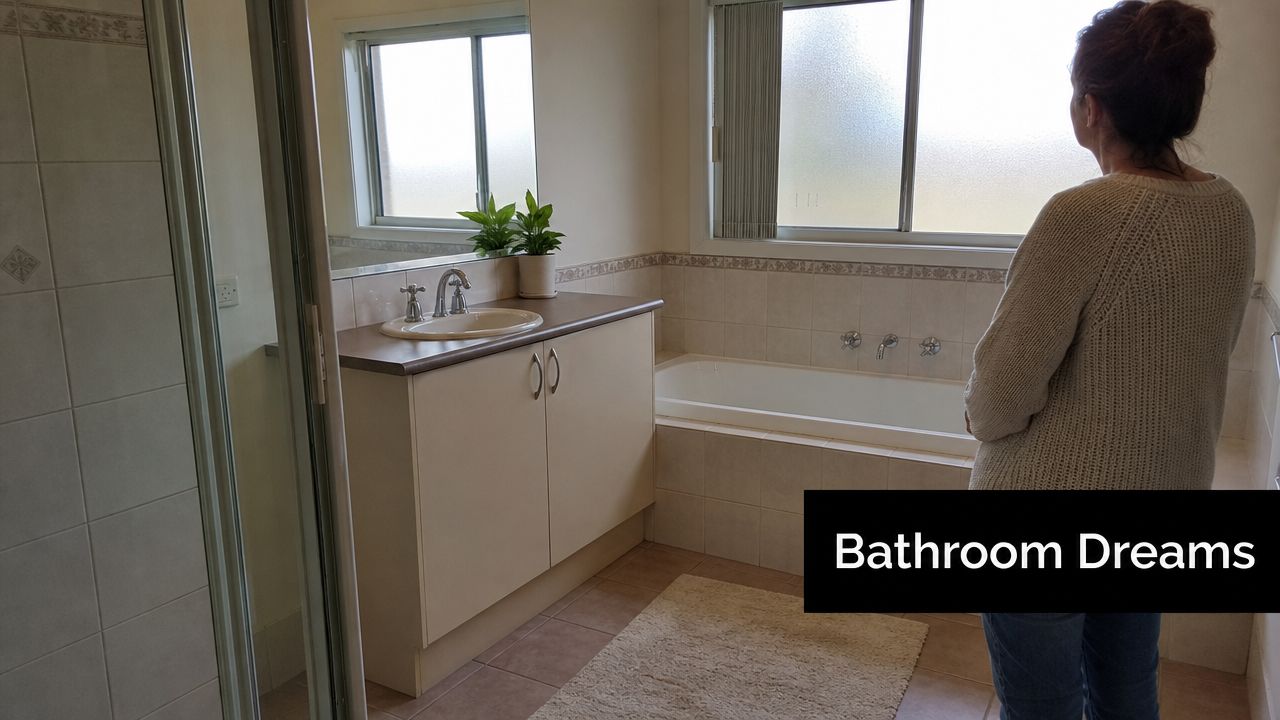
A bathroom renovation in Caroline Springs usually starts with one of three triggers. The room no longer suits the family. Water is getting where it shouldn't. Or the bathroom is dragging down the rest of an otherwise well-kept home. Each trigger points to a different scope, and getting that scope right early is what keeps the project efficient.
Start with function, not mood boards
The first job is to decide what the room must do better. That might mean a larger shower, more drawer storage, better lighting at the vanity, a wall-hung toilet to free up floor space, or a layout that gives you cleaner movement through the room.
If you start with tiles and tapware, you can end up dressing up a bad plan. If you start with movement, storage, and water containment, the design decisions become easier and more coherent.
- Fix the daily frustration: Identify what annoys you now. Poor storage, hard-to-clean corners, weak ventilation, or a cramped shower all point to where money should go first.
- Separate cosmetic from structural work: Replacing fittings is one thing. Moving plumbing points, changing walls, or rectifying leaks is a different job altogether.
- Treat waterproofing as core scope: In bathrooms, hidden work matters more than decorative work.
Practical rule: If the bathroom has leak history, drummy tiles, mouldy corners, or movement around the shower base, plan for investigation before you commit to finishes.
What works in Caroline Springs homes
Many homes in Caroline Springs were built for family living, which means the best bathroom renovations often improve usability rather than chase trends. Keeping the plumbing layout broadly similar can control costs. Upgrading to better storage, larger mirrors, modern lighting, and a properly built shower often delivers more day-to-day value than a dramatic redesign.
For homeowners searching for bathroom renovations Caroline Springs, the right mindset is simple. Build for durability, compliance, and clean detailing first. The visual result follows from that.
Planning Your Budget What a Renovation Really Costs
Bathroom budgets go wrong when homeowners compare unlike jobs. A cosmetic refresh and a full strip-out aren't the same project, even if both end with new tiles and fixtures. The labour, risk, and hidden conditions are very different.
The broad context matters. For 2026 projections, a mainstream bathroom remodel is commonly priced between $8,000 and $45,000, with a national average around $16,500. The same source says most homeowners spend $29,000 to $50,000 on a primary bathroom renovation, and estimates a 4% to 6% year-on-year increase from 2025, based on 2026 bathroom remodelling cost projections. Those figures are broad, but they're useful because they show how quickly costs can shift once a project moves past simple replacement work.
What the broad market numbers actually mean
For a Caroline Springs project, budget pressure usually comes from five areas:
- Extent of demolition
- Plumbing changes
- Tile selection and tile size
- Waterproofing and substrate repairs
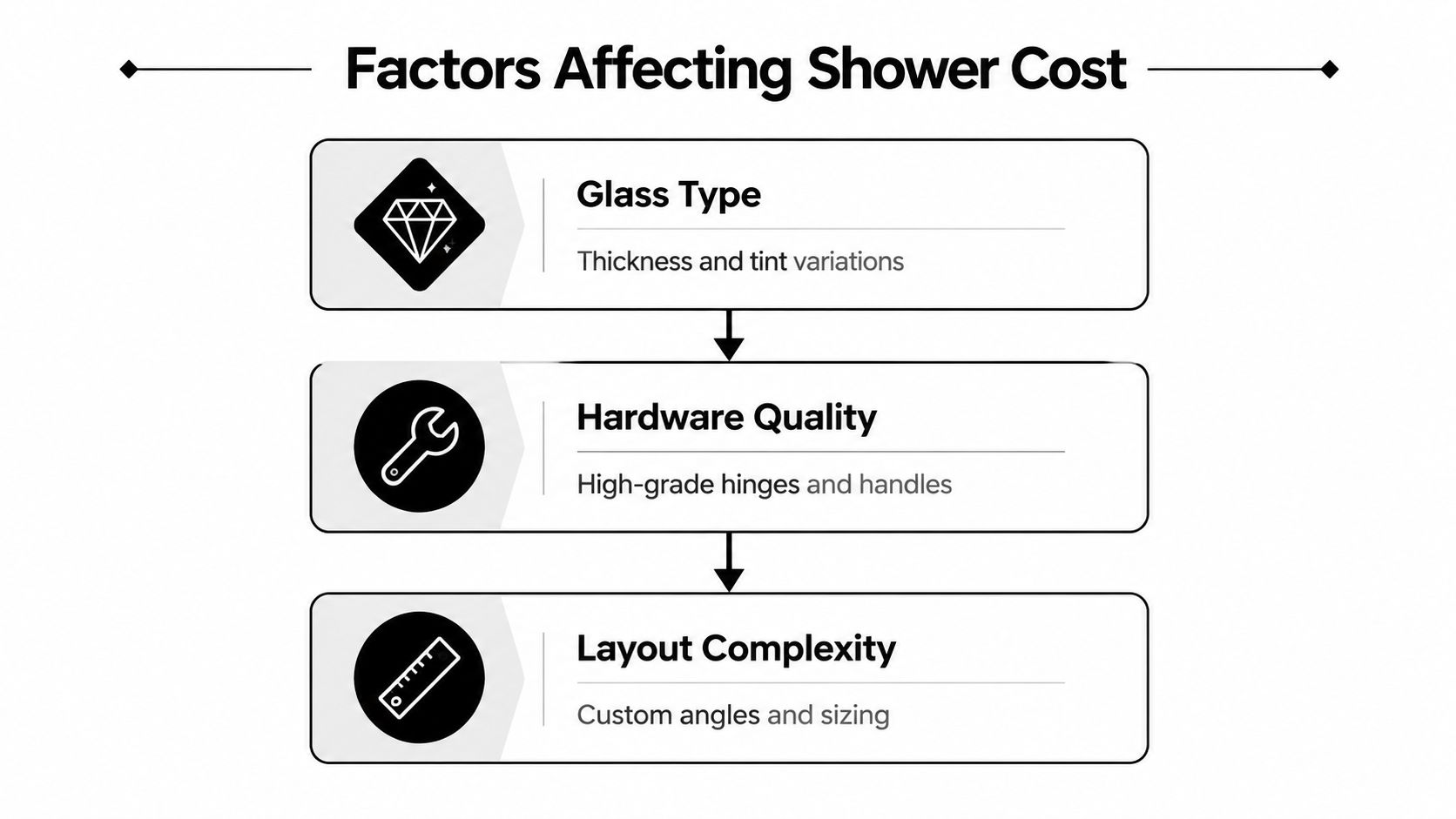
- Joinery and glazing choices
A room that keeps its existing layout will usually be simpler to price and manage. Once you move the shower, relocate the toilet, or discover damaged wall linings or flooring, the budget naturally expands because more trades and more compliance steps get involved.
Cheap quotes often leave out the parts of the job that only appear after demolition. That's where owners get caught. A realistic quote allows for the invisible work, not just the visible finish.
Sample budget breakdown for a mid-range project
The table below is a planning tool, not a fixed quote. It shows how costs are typically distributed across the main trades and work packages in a mid-range bathroom renovation.
| Item / Trade | Estimated Cost Range (AUD) | % of Total Budget |
|---|---|---|
| Demolition and strip-out | Qualitative, varies by scope | Qualitative |
| Waste removal | Qualitative, varies by site access and volume | Qualitative |
| Plumbing rough-in and fit-off | Qualitative, depends on fixture changes | Qualitative |
| Electrical rough-in and fit-off | Qualitative, depends on lighting and power changes | Qualitative |
| Carpentry and substrate preparation | Qualitative, depends on wall and floor condition | Qualitative |
| Waterproofing | Qualitative, core compliance cost | Qualitative |
| Screeding and floor preparation | Qualitative, depends on falls and levels | Qualitative |
| Wall and floor tiling | Qualitative, driven by tile type, size, and layout | Qualitative |
| Shower screen and glazing | Qualitative, framed vs frameless affects spend | Qualitative |
| Vanity, basin, toilet, tapware and accessories | Qualitative, product selection drives variation | Qualitative |
| Painting, sealants and finishing | Qualitative, final presentation cost | Qualitative |
| Project management and coordination | Qualitative, reflects scope and trade scheduling | Qualitative |
If you want a faster early-stage estimate before collecting full quotes, a bathroom renovation calculator for Melbourne projects can help you test different scopes.
Where to spend and where to save
Some line items deserve protection. Waterproofing, substrate preparation, good plumbing fit-off, and capable tiling are not where you trim the budget. If those fail, you pay twice.
Good saving opportunities usually sit in specification choices instead:
- Vanities: Off-the-shelf can work well if dimensions suit the room.
- Tapware: Choose a solid, serviceable range rather than chasing unusual finishes that can be harder to match later.
- Tiles: A clean porcelain tile often gives better long-term value than chasing a high-maintenance feature finish.
- Layout: Keeping waste points close to their current location can reduce unnecessary disruption.
The smartest budget is the one that protects the wet-area build-up first and styles the room second.
The 7 Stages of a Bathroom Renovation Project
A bathroom renovation feels chaotic when you only see individual trades coming and going. It feels manageable when you understand the sequence. Order matters because one stage sets up the next, and mistakes early on are expensive to correct once walls are closed and tiles are laid.
A simple visual summary helps before the detail.
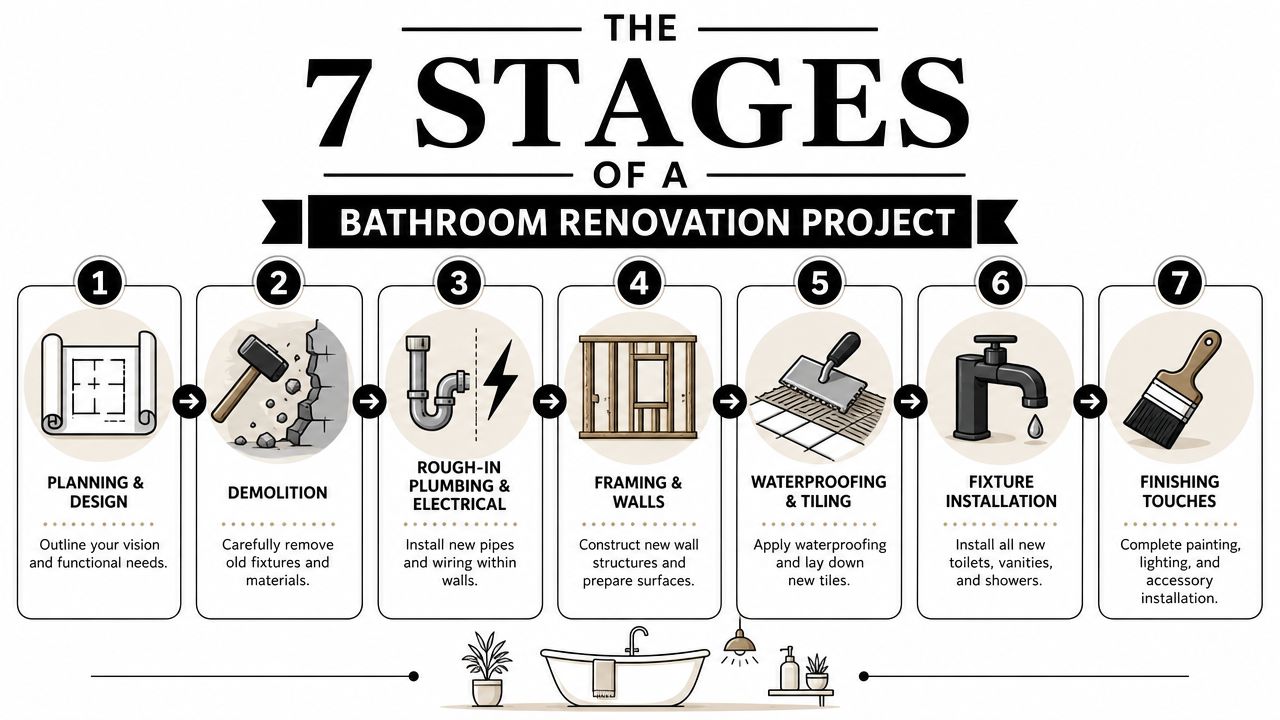
What happens at each stage
1. Design and planning
Layout, fixtures, materials, and scope are locked in. Good planning also confirms what's staying, what's moving, and what level of investigation the room needs before demolition starts.
2. Demolition
The old bathroom is stripped carefully. Fixtures, tiles, sheet linings, shower screens, and damaged materials come out. This stage often reveals the actual condition of the room, including moisture damage, poor past repairs, or uneven substrates.
3. Structural work and rough-in
Carpenters, plumbers, and electricians do their hidden work here. Wall framing may be adjusted, plumbing points are moved or renewed, and electrical rough-ins are completed before walls are closed.
4. Sheeting and waterproofing
The room is lined and prepared for wet-area treatment. This stage is one of the most important in the whole project because it determines whether the finished bathroom can manage repeated moisture exposure without damaging the structure.
5. Screeding and tiling
The floor is set up with proper falls, then tiles are installed to the agreed layout. At this stage, quality trades make the room look precise. Tile set-out, cuts, grout joints, and fall lines all become visible.
A short walkthrough of the process can help if you haven't been through a renovation before.
6. Fit-off
The room starts looking like a bathroom again. Vanity, toilet, tapware, shower fittings, mirror, lighting, and accessories are installed, and trades return to complete final connections.
7. Final touches and handover
Sealants are finished, surfaces are cleaned, defects are checked, and the room is reviewed for completeness. This stage should never be rushed. Small finishing details are what separate a job that merely looks new from one that feels properly built.
Why waterproofing is the stage you can't afford to rush
In Australian wet areas, the technical requirement is clear. Bathroom renovations in Caroline Springs must comply with AS 3740, which requires waterproofing in shower recesses, across bathroom floors, and at wall and floor junctions in defined wet-area zones through a continuous membrane system, as outlined in the AS 3740 wet-area waterproofing reference.
That matters because bathrooms fail from behind the tile, not on the tile face. When membranes are missing, broken, badly sequenced, or poorly detailed around penetrations and junctions, moisture gets into substrates, framing, and screeds. The visible signs often show up much later as loose tiles, swollen skirtings, stained adjacent rooms, or mould smells.
- Correct sequencing matters: The membrane must go onto a properly prepared substrate.
- Penetrations matter: Mixers, outlets, wastes, and shower fittings all need proper detailing.
- Falls matter: Waterproofing doesn't compensate for a floor that doesn't drain properly.
A bathroom can look flawless on handover day and still fail early if the waterproofing and falls weren't built correctly.
For bathroom renovations Caroline Springs homeowners often focus on layout and tile choice first. From a project management perspective, the safer order is waterproofing method, drainage detail, substrate condition, then finishes.
Why You Need Registered Builders and What Permits to Expect
The most overlooked part of a bathroom renovation in Victoria isn't style. It's compliance. That's where many online guides fall short. They treat the job like a shopping exercise when, in practice, a full renovation can involve regulated building work, waterproofing obligations, trade licensing, inspections, and documentation that affect future resale and defect risk.
Industry guidance points to a key gap in online advice. For bathroom renovations in Caroline Springs, a significant risk often sits in non-compliance, and Victorian regulations often require a registered builder for work beyond cosmetic updates where waterproofing, structural changes, and inspections become part of the job, as noted in this guidance on bathroom renovation compliance and expert FAQs.
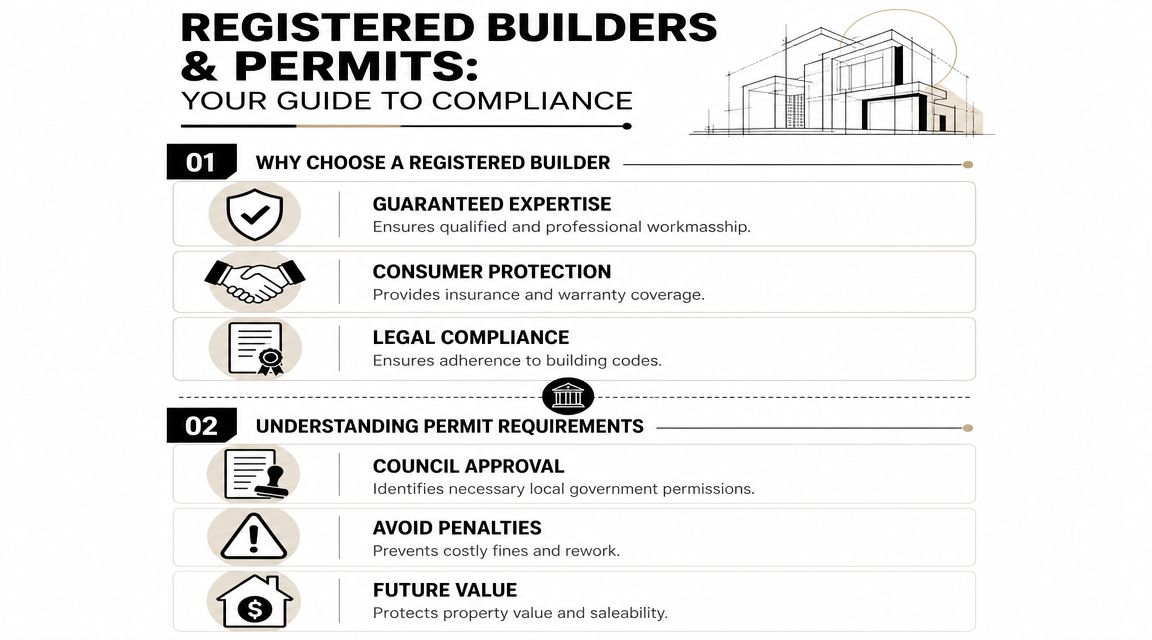
Why registered builders matter in Victoria
A registered builder isn't just someone who can organise trades. They're responsible for managing work that must be carried out to the required standard, in the correct sequence, with the right subcontractors and documentation.
That matters in bathrooms because the room brings multiple trades together in a small footprint. Plumbing, electrical, carpentry, sheeting, waterproofing, tiling, glazing, and finishing all overlap. If one trade gets the sequencing wrong, the next trade inherits the problem.
A registered builder helps reduce that risk by managing:
- Trade coordination: Plumbing rough-in can't clash with framing, and waterproofing can't be applied over poor preparation.
- Compliance oversight: Wet-area work must align with applicable standards and approved methods.
- Defect prevention: The builder sees the whole build-up, not just one trade's piece of it.
If you're comparing renovation teams, ask who takes responsibility for the full wet-area assembly. If nobody clearly owns that answer, that's a warning sign.
When permits and approvals can become part of the job
Not every bathroom renovation needs the same approvals. A straightforward replacement of fixtures and finishes is very different from a project that changes structure, alters walls, changes openings, or intersects with broader building work.
In practice, permit questions tend to appear when the project includes:
- Structural changes: Altering walls, openings, or framing beyond simple replacement.
- Major reconfiguration: Work that shifts the bathroom beyond like-for-like renovation.
- Inspection-sensitive work: Jobs where waterproofing, building scope, or associated works need formal oversight.
A practical way to think about it is this. If the project is more than cosmetic, treat permit and builder registration questions as part of the planning stage, not as something to check after demolition.
For homeowners wanting more background on wet-area risk, waterproofing in Melbourne bathrooms and wet areas is worth reviewing before you finalise scope.
Compliance isn't a paperwork add-on. It shapes who should do the work, how the room is built, and what problems you avoid later.
One factual example of a provider in this space is Melbourne Tiling Services P/L, which operates as a Registered Unlimited Builder and coordinates bathroom renovations, waterproofing, tiling, shower screens, and related trades across Melbourne. That kind of builder-led model is useful on bathroom projects where sequencing and wet-area compliance are central.
Choosing Durable Materials and Finishes
A bathroom can look current on completion day and still age badly if the material choices were driven only by trend. The better approach is to choose finishes that suit repeated moisture, daily cleaning, and the way the room is used.
Where durability starts
Tiles do more than set the style. They affect cleaning, slip resistance, visual scale, and long-term maintenance. In many bathrooms, a good porcelain tile is the most balanced option because it's consistent, practical, and available in finishes that don't date quickly.
Large-format tiles can work especially well in contemporary bathrooms because they reduce grout lines and create a cleaner visual field. That doesn't automatically make them the right choice for every room. Small bathrooms with awkward corners, nib walls, or multiple penetrations sometimes need more careful set-out to avoid messy cuts.
If you're comparing tile options, this guide to porcelain bathroom tiles and their practical uses is a useful starting point.
- Porcelain tiles: Strong all-round choice for floors and walls.
- Large-format panels or tiles: Cleaner look, fewer grout joints, more demanding installation.
- Feature tiles: Best used sparingly so the room doesn't date too quickly.
Finishes that still work years later
The longest-lasting bathrooms usually rely on a restrained material palette. One floor tile, one main wall tile, simple joinery, and a small number of accents often produce a sharper result than mixing too many statements.
Frameless shower screens are a good example of form and function working together. They open up the room visually and remove the heavier framing that tends to collect grime. That said, they need accurate walls, careful set-out, and good hardware. If the room or budget doesn't support that, a simpler screen can still perform well.
Vanities should be selected with cleaning and storage in mind, not just appearance. Drawers generally outperform cupboards for daily access. Wall-hung vanities make the floor easier to clean and can make smaller rooms feel less crowded.
Good material selection is less about luxury and more about reducing the number of surfaces that trap moisture, soap residue, and clutter.
A few practical selection rules help:
- Choose timeless tapware colours: Standard finishes are usually easier to service and coordinate later.
- Use lighting in layers: Task lighting at the mirror, general ceiling lighting, and shower lighting all play different roles.
- Keep grout practical: Very light grout can look sharp at handover but may require more maintenance in heavy-use bathrooms.
- Think about edge details: Niches, trims, hob lines, and transitions need to be easy to clean and easy to waterproof.
The best finish schedule is the one that still feels sensible after years of steam, cleaning, and family traffic.
Avoiding Common Renovation Pitfalls and Costly Mistakes
Most bathroom problems don't come from one dramatic error. They come from a series of small decisions that seemed harmless at the time. A vague quote. A rushed waterproofing stage. A layout that looked fine on paper but doesn't work with a real person using the room every day.
Three mistakes that keep showing up
The first is waterproofing failure. A homeowner chooses a lower quote, demolition happens quickly, tiling goes in, and everything looks finished. Months later, moisture shows up in the adjoining room, tiles begin to sound hollow, or the shower never quite smells dry. The problem wasn't the tiles. It was the hidden build-up.
The second is budget blowout through unclear scope. An owner thinks they've approved a renovation, but the quote didn't clearly separate product supply, demolition surprises, substrate repair, or fixture upgrades. Every site discovery becomes a variation because the project was never properly defined.
The third is poor layout judgment. A room can be expensive and still awkward. The vanity drawer hits the toilet. The shower opening is too tight. The mirror lighting throws shadows onto the face. None of these are catastrophic, but together they make the room feel wrong every day.
A simple prevention checklist helps:
- Before signing anything: Confirm exactly what is included in demolition, preparation, waterproofing, tiling, fit-off, and waste removal.
- Before ordering finishes: Check final set-out against actual room dimensions, not showroom assumptions.
- Before waterproofing starts: Make sure all substrate repairs, penetrations, and falls are resolved.
- Before handover: Inspect sealant lines, fixture alignment, drainage behaviour, and tile finish in natural and artificial light.
If the quote is light on detail, expect heavy conversations later.
Bathroom renovations Caroline Springs homeowners are happiest with usually have one thing in common. The team solved problems on paper before trying to solve them on site.
Start Your Caroline Springs Bathroom Renovation Today
A good bathroom renovation isn't just about replacing old tiles with new ones. It's about making the room work better, building it to the right standard, and avoiding the kind of shortcuts that create leaks, rework, and stress later. If you get the scope right, protect the wet-area work, and engage registered builders and the right licensed trades, the project becomes much more predictable.
That's the key advantage of approaching bathroom renovations Caroline Springs the way a project manager would. Budget first. Scope clearly. Confirm compliance early. Then choose finishes that suit how the room will be used.
If you're still deciding between a cosmetic update and a full renovation, start by listing what must change and what can stay. That one exercise usually tells you whether the budget should go into layout improvement, leak rectification, new fixtures, or a complete rebuild of the wet area.
The next step should be practical. Get your likely scope priced properly, compare inclusions carefully, and ask direct questions about waterproofing, sequencing, and who is responsible for the whole job. That's how you avoid expensive surprises and end up with a bathroom that looks right because it was built right.
If you're ready to explore options for your home, Melbourne Tiling Services P/L offers bathroom renovation support including quotes, design input, waterproofing, tiling, and project coordination for Melbourne homeowners.



Recent Comments