
Frameless Shower Screen Installation: A Builder’s Guide

You're often at the same point when a frameless shower screen becomes a real decision. The tiles are in, the room finally looks like a bathroom, and the last major piece seems simple enough: measure the opening, order the glass, fix it in place, run a bead of silicone, done.
That's where plenty of problems start.

A frameless shower screen installation looks clean because there's nowhere for mistakes to hide. No aluminium frame to disguise a crooked wall. No chunky channel to distract from a floor that falls the wrong way. In bathroom renovations, the screen doesn't forgive poor prep. It exposes it. As a Melbourne registered builder, I'm often brought into bathrooms where the glass wasn't the first mistake. The fundamental issue was earlier: out-of-plumb walls, weak substrate, rushed waterproofing, or hardware fixed without thinking through movement and load.

Table of Contents

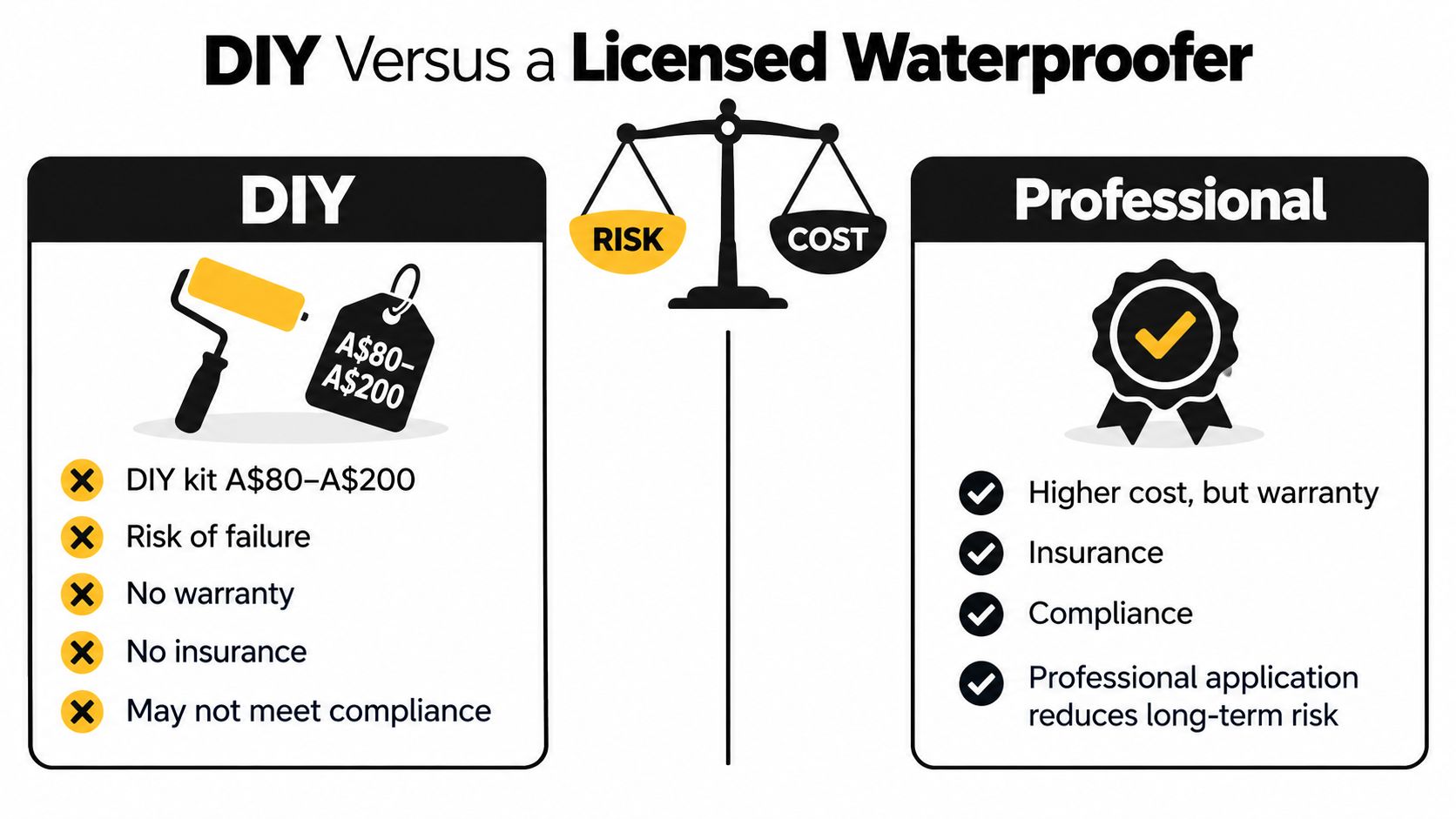
Is DIY Frameless Shower Screen Installation for You

If your shower opening is square, the walls are plumb, the hob is solid, and you've handled delicate drilling into finished tile before, a simple install might look manageable. If any of those conditions are uncertain, DIY gets risky quickly.

A frameless shower screen installation isn't hard because there are lots of parts. It's hard because the tolerances are tight. The screen has to line up with finished surfaces that are rarely perfect, and every small error ends up visible in the final reveal. The door binds. The gaps look uneven. Water escapes where you didn't expect it to. In the worst jobs, the panel is put under stress from the day it's installed.

The real DIY question

The right question isn't “Can I fit a shower screen?” It's “Is my bathroom ready for frameless glass?”

That means checking a few things:

  • Wall accuracy matters: If the wall leans or bellies, frameless glass won't hide it.
  • Tile drilling needs control: One rushed hole near an edge can crack a finished tile.
  • Substrate strength is essential: Heavy glass needs a stable fixing point and a rigid base.
  • Water management has to be understood: A clean-looking screen can still produce a wet bathroom if placement and sealing are wrong.

Practical rule: If you're relying on silicone to make up for bad alignment, the job is already off track.

Homeowners also underestimate how much cost sits behind a failed attempt. Replacing one cracked tile in a completed shower can be awkward. Reworking waterproofing after hardware has been drilled through the wrong spot is worse. If you're still deciding whether to DIY or hand it over, it helps to compare the broader shower screen installation cost considerations against the cost of rework, not just the cost of the initial labour.

What tends to work and what doesn't

A straightforward opening with good site prep can work with a basic frameless layout.

What doesn't work well is confidence without checking the conditions first. In bathroom renovations, that's usually how people end up paying twice. The visual simplicity of frameless glass gives the impression that the install is forgiving. It isn't. It's one of the least forgiving items in the room.

Preparing Your Site for a Perfect Installation

The screen is the last thing people see, but site preparation is what determines whether it performs properly. By the time the glass arrives, most of the important decisions should already be settled.

A six-step site preparation checklist infographic for installing a frameless shower screen in a bathroom.

What has to be true before glass is ordered

Start with the opening itself. Check the walls for plumb with a long spirit level or laser. Check the hob or floor for level. Check the corners for square. If there's a bow in the wall, a dip in the base, or a twist through the opening, note it before anyone measures for glass.

Industry guidance used in frameless work sets a clear threshold for panel sizing. For 3/8-inch glass, about 10 mm, the maximum recommended height is 84 inches, about 2134 mm, while 1/2-inch glass, about 12 mm, can extend to 120 inches, about 3048 mm, when the panel is supported on two vertical edges and the base or on two horizontal edges, as outlined in Glass Magazine's discussion of frameless design limits. That matters in Melbourne bathroom renovations because the glass choice isn't just a design preference. It has to suit the support conditions and the actual geometry on site.

Here's the basic site checklist I use before signing off on measurement:

  • Plumb walls: Hardware must sit flat and true.
  • Level base or hob: The panel should sit evenly on packers, not rock or twist.
  • Rigid fixing zones: Know where brackets, clamps, or channels will anchor.
  • Finished tile quality: Lipping, hollow spots, and weak edges create drilling problems.
  • Clear drainage logic: Water has to fall back into the shower area, not toward the room.

Why waterproofing and substrate come first

Many DIY guides become insufficient here. They show the glass going in, but skip the fact that frameless hardware is being installed into a wet area assembly that already has layers doing important work.

Your waterproofing membrane must be intact and properly planned before the screen goes anywhere near the room. In bathroom renovations, the screen isn't a substitute for waterproofing. It's a finishing element that sits on top of a waterproofed and properly graded substrate. If the membrane is poor, the glass won't save the bathroom. If the falls are wrong, the screen won't solve that either.

For homeowners comparing methods and materials, a proper understanding of waterproofing in Melbourne bathrooms helps more than any generic installation checklist.

Good frameless installs start before the tiler leaves site. If the screed, tile set-out, and hob details are wrong, the glass installer inherits a problem rather than a clean opening.

A solid hob or tiled substrate is critical because the panel load needs to transfer into something stable. Movement under the panel leads to failed seals, poor alignment, and stress in the glass and hardware.

If you're doing a full renovation rather than a simple replacement, treat the shower screen as part of the bathroom build. That's how registered builders and experienced bathroom renovations teams avoid the common chain reaction where one trade finishes neatly, but leaves the next trade an impossible fixing condition.

The Art of Measurement and Hardware Selection

A lot of the call-backs I see start here. The bathroom looks ready, the tiles are in, and someone has taken a quick measure off the widest points of the opening. The glass arrives, the gaps are wrong, the door binds, or the panel needs to be forced into position. Frameless glass does not forgive that kind of guesswork.

A professional installer measures a bathroom wall for a frameless shower screen installation with tools and hardware.

How professionals measure openings

A proper measure-up is taken from the finished room, not from the plan and not from a rough set-out. Walls are rarely perfectly plumb, hobs can drift out of level, and tiled corners often carry small variations that become obvious once clear glass is installed. On a framed screen, some of that can be hidden. On a frameless screen, it stays visible every day.

The opening needs to be checked at several points because the dimension often changes from bottom to top. The smallest usable measurement usually controls the panel size, and then allowances are worked out for hardware, door swing, and the clearances needed so the glass does not clip tile, stone, or adjoining glass.

A measure-up usually includes:

  1. Width at the bottom, middle, and top
  2. Height on both sides
  3. Plumb check on each fixing wall
  4. Level check across the base, hob, or floor
  5. Door swing path and clearance to vanities, toilets, and tapware
  6. Locations of niches, taps, shower heads, and any projections that affect the glass line

Good installers also check how the door will behave in the room. A door can fit on paper and still be wrong on site if it opens into a towel rail, misses the preferred entry path, or leaves an awkward gap at the return panel.

Choosing glass thickness and hardware

Glass thickness is a structural decision as much as a visual one. In residential work, the common discussion is usually 10 mm versus 12 mm toughened safety glass. The heavier panel can suit taller screens and give a more solid feel, but the extra weight increases the demand on hinges, fixings, and the wall or hob receiving that load.

That trade-off matters. Heavier glass is not automatically better if the substrate is marginal or the opening leaves very little tolerance.

Hardware selection also changes how much adjustment is available during installation. A wall channel gives more room to deal with slight irregularities in the opening, but it adds visible bulk. Clamps and brackets give a cleaner frameless look, but they rely on tighter set-out and a truer fixing surface. Hinges and pivots need accurate positioning, solid fixing points, and enough clearance for the door to operate without stressing the glass.

Hardware type Best suited to Main trade-off
Wall channel Openings with minor variation or limited tolerance More visible aluminium
Clamps or brackets Cleaner frameless appearance Less adjustment on uneven walls
Pivot or hinge sets Door panels that need a full swing path Higher demand on fixing accuracy and substrate strength

Cheap hardware often causes expensive problems later. I have seen covers loosen, clamp pressure vary across the glass, and hinge sets lose alignment because the tolerances were poor from the start. Good hardware costs more, but it gives a more stable install and a better chance of keeping the door true over time.

For custom bathroom renovations, some homeowners engage a specialist glass contractor directly. Others have the screen coordinated through Melbourne Tiling Services P/L as part of wider bathroom works. The practical benefit is coordination across trades. The final measurements, the tile set-out, the fixing locations, and the hardware choice are handled as one build sequence instead of being split between separate contractors who may never check each other's work.

Fitting and Fixing the Glass Panels

A lot of the call-backs I get happen after the glass is already on site, the holes are already drilled, and the bathroom already looks finished. Then the door drags, the fixed panel sits under stress, or water starts working into places it should never reach. By that stage, the expensive part is not the glass. It is correcting the substrate, the fixings, and sometimes the waterproofed surfaces around them.

A seven-step instructional diagram for installing a frameless glass shower screen with tools and safety tips.

What goes wrong on site

Frameless panels have no trim to hide bad set-out. Every millimetre shows.

The usual problems are not dramatic at first. A bracket gets fixed from a reference line that looked straight but was taken off a wall that was out. A panel gets set hard onto tile without proper packers. A hinge is tightened before the door position is fully checked. Each mistake looks minor on its own. Together, they create twisted glass, uneven margins, dropped doors, and stress on tiles and fixings.

These are the failures I see most often on Melbourne renovation jobs:

  • Fixings marked from the room, not the actual glass position: The panel ends up true to the wrong line.
  • No isolation under the glass: Direct contact with tile or stone puts the glass edge at risk.
  • Forced alignment during install: If pressure is needed to make it sit, the opening or fabrication is wrong.
  • Weak or unknown fixing points behind tile: Hardware may hold initially, then loosen with use.
  • Rushed drilling through brittle finishes: Chips, cracks, and broken waterproof details are common results.

The structural side gets ignored in DIY guides. Frameless hardware transfers load into a small number of fixing points, especially at hinges and pivots. If the wall build-up is weak, if the tile adhesive bed is inconsistent, or if the fixing lands in the wrong place, the screen can move even when the glass itself is cut correctly.

This is the video I'd show a client who wants to understand the handling side of the process before trying it themselves:

The professional fitting sequence

A proper install starts with a dry fit and a hard look at how the load will be carried. The fixed panel should sit on packers or setting blocks so the glass is isolated from the floor or hob. From there, the installer checks reveals, plumb, door clearance, and whether the hardware still lands on sound fixing points. If any of that is off, drilling should wait.

I have stopped installs at this stage more than once. It is far cheaper to pause and correct a wall, a nib, or a tile edge than to hang toughened glass into a bad opening and hope adjustment will save it.

A sound sequence usually looks like this:

  1. Stand the fixed panel on packers and confirm the opening suits the fabricated glass.
  2. Check plumb, level, and reveal lines off the actual panel position.
  3. Confirm fixing locations into solid backing before any hole is drilled.
  4. Mark and drill tiled surfaces carefully with the correct bit, speed, and support.
  5. Install channels, brackets, or hinges without distorting the hardware.
  6. Set the fixed panel back in place with isolation maintained at all contact points.
  7. Hang and adjust the door until the swing, gap, and latch line are all consistent.
  8. Tighten hardware in a controlled sequence so clamp pressure stays even across the glass.

One trade-off matters here. Channels can forgive a little variation, but clamp-fixed panels and hinge sets demand a truer opening and better fixing accuracy. The cleaner the look, the less tolerance the installation usually has.

The other issue is restraint. Over-tightening hardware is a common mistake. Installers trying to remove a small rattle or pull a panel into line can load the glass, crush packers, or stress the tile face. The right result comes from correct set-out, correct support, and controlled fixing pressure, not brute force.

Where perimeter support or finishing details are being coordinated with professional shower screen caulking and sealing work, the glass installation needs to stay clean and deliberate so the final sealing stage works as intended.

One simple test applies on every job. If the panel only works when somebody is holding it, pushing it, or pulling the door back into line, the installation is not ready to fix off.

Sealing, Finishing, and Common Pitfalls to Avoid

A lot of shower screens look fine on the day they go in. Then the first long shower sends water under the panel, the silicone skins over unevenly, and a door that seemed acceptable starts clipping or drifting out of line. I get called to these jobs after the tiles, waterproofing, and glass are already finished, which is exactly why the sealing stage needs more discipline than many DIY guides suggest.

An infographic detailing best practices and common pitfalls for sealing and finishing frameless shower screen installations.

Where sealing works and where it causes trouble

Silicone is a finishing material, not a fix for poor set-out, movement, or bad water control. On a frameless screen, the goal is a neat perimeter seal where the system is meant to be sealed, with clean junctions and no contamination under the bead. If the panel is under stress, the wall is out, or the floor falls the wrong way, more silicone will not solve it.

Neutral-cure silicone is generally the right product around glass, tile, and metal hardware. Cure time matters. A bathroom that looks complete still should not be used until the sealant has cured properly, or the bead can tear, lift, or trap moisture against the edge.

Good finishing usually comes down to a few disciplined steps:

  • Seal only where the detail calls for it: Random beads around hinges, brackets, and channels usually create a mess and can interfere with drainage paths.
  • Keep the bead small and consistent: Heavy silicone lines attract dirt and announce every mistake.
  • Clean and dry all contact surfaces first: Dust, soap residue, or moisture under the bead shortens the life of the seal.
  • Test the door and fixed panels before sealing: Adjustment after silicone goes in is slower, dirtier, and more likely to damage the finish.

If you want a clear reference for what neat, durable wet-area finishing should look like, this guide to professional shower screen caulking and sealing is useful.

Mistakes that lead to leaks, movement, and broken glass

The biggest errors at this stage usually started earlier and only become obvious once water hits the enclosure.

A common one is relying on the screen to compensate for a bad substrate. Frameless glass needs a stable base and reliable fixing points. If the hob moves, the wall packs out inconsistently, or the tile build-up changes across the opening, the screen can twist under load. What shows up first is often a failing silicone joint. What follows can be chipped tile, loose hardware, or a cracked panel.

Another frequent problem is sealing before the shower has been checked as a working system. Water should fall back to the drain, not sit against the outside edge of the screen or run toward a bathroom floor junction. If the falls are wrong, or if the bottom detail has been chosen for appearance without enough containment, the leak is not a sealant problem. It is a design or construction problem.

Watch for these finish-stage mistakes:

  • Forcing a panel to close a gap: Glass should sit in its natural position. If it only lines up under pressure, the opening or the fabrication is wrong.
  • Ignoring wall taper or tile lippage: Small variations matter with frameless glass, especially on premium clamp-fixed installations.
  • Sealing the inside and outside indiscriminately: That can trap water where the system is supposed to shed it.
  • Using silicone to hide poor cuts or oversized holes: It looks rough and usually fails early.
  • Installing frameless glass over movement-prone bases: Flex at the base transfers stress into the screen and the sealant joints.

My rule on site is simple. If the screen needs persuasion to sit right before sealing, it is not ready to finish.

A frameless shower screen should look restrained and boring at this stage. Straight lines, even gaps, controlled sealant, no visible stress, and no water path that relies on luck. That is what keeps a high-end bathroom looking sharp six months later, not just on handover day.

When to Hire a Registered Builder for Your Installation

Some frameless shower screen jobs are straightforward. Many aren't. The point where DIY should stop is earlier than commonly believed.

Projects that should not be treated as a kit install

If the opening is angled, the niche is out of plumb, the shower is doorless, or the layout uses return panels and custom reveals, you're no longer dealing with a basic enclosure. You're dealing with a design and construction problem that happens to involve glass.

A known gap in DIY advice is the treatment of non-standard openings such as angled walls and out-of-plumb niches, which are common in premium Melbourne renovations. These installations can be feasible, but they require professional verification of wall geometry, fall to drain, and waterproofing details, and getting that wrong can compromise water control and trigger expensive rework, as shown in this discussion of angled frameless shower layouts.

That's where a registered builder becomes useful, not because builders are the only people who can fit glass, but because complex bathroom renovations are never just about the glass.

What a registered builder coordinates

In a proper bathroom renovation, the screen sits at the end of a chain:

  • Structural support for where the hardware loads go
  • Waterproofing integrity before the finished tile goes on
  • Screed and falls that return water to the drain
  • Tiling set-out so hardware lands in sensible positions
  • Glass specification that suits the opening and support conditions

When those elements are coordinated, the frameless screen looks effortless because the room has been built to receive it. When they aren't, the installer ends up trying to solve structural or waterproofing defects with hardware and silicone. That never ends well.

If your bathroom involves custom geometry, movement concerns, premium finishes, or any uncertainty about the substrate, professional involvement isn't an admission that you can't do it. It's the sensible way to protect the bathroom, the waterproofing, and the value of the renovation.


If you're planning a frameless shower screen installation as part of bathroom renovations in Melbourne, Melbourne Tiling Services P/L can coordinate the full scope through registered builders, tilers, waterproofers, and shower screen installation within one project workflow.

Expert Shower Leak Repair Melbourne: Fix Leaks Fast

You notice it after a normal shower. Maybe it's peeling paint on the wall outside the bathroom. Maybe it's a damp smell that won't leave. Maybe it's a stain on the ceiling below. Most Melbourne homeowners hope it's just old grout or a bit of tired silicone.

Sometimes it is. Often it isn't.

A leaking shower is rarely just a plumbing annoyance. In many bathrooms, the fault often sits in the waterproofing system, the tile assembly, the wall and floor junctions, or the drain detail. That's why proper shower leak repair in Melbourne often needs more than a quick visit from a plumber. It can involve a registered builder, a waterproofer, a tiler, and sometimes bathroom renovation work if the leak has been active for a while.

If you've found a leak, the main thing is to stop guessing. A cheap surface patch on the wrong problem usually means more water in the walls, more damage to adjoining rooms, and a bigger job later.

Table of Contents

That Sinking Feeling Discovering a Shower Leak

You step out of the shower and notice the skirting outside the bathroom has swollen. A patch of paint near the door is bubbling. In a two-storey home, the first sign is often a stain on the ceiling below. By the time those symptoms show up, water has usually been escaping the shower area for a while.

That is what catches homeowners off guard. The shower can look serviceable while moisture is already moving into plaster, timber, tile bedding, and adjoining finishes. The taps still run. The screen still closes. The problem often sits in the construction behind the surface, where failed waterproofing, poor falls, movement at junctions, or a badly detailed waste connection let water travel.

Practical rule: If water is appearing outside the shower recess, treat it as a building defect until proven otherwise.

That distinction matters in Melbourne. A leaking shower is often approached as a plumbing job because water is involved, but many failures sit in the wet-area system itself. That means tiles, grout, sealant, substrate, drainage falls, and waterproofing all need to be assessed together. If you want a plain-language overview before arranging inspections, this guide on how to fix leaking showers properly explains the common failure points.

In Victoria, the repair method also has to line up with VBA registration requirements and NCC wet-area waterproofing provisions where rectification or rebuild work is involved. If the membrane has failed, or if parts of the shower need to be opened up and rebuilt, the job moves beyond a quick maintenance fix. It becomes building work that must be scoped, sequenced, and signed off correctly.

Why homeowners often get the wrong first advice

The understandable first instinct for many homeowners is to call a plumber. That makes sense if the leak is coming from a pipe, mixer body, shower arm connection, or waste fitting. But a plumber-only response will not fix water getting through cracked grout, failed junction sealant, defective waterproofing, or an underbuilt shower base.

I see this mistake often. Fresh silicone gets applied over a leaking junction, or a fitting gets replaced, and the wall keeps getting wetter because the actual fault is under the tile finish. The repair then costs more because the water has had extra time to spread.

What ongoing moisture actually does

The visible stain is a symptom. The greater issue is what moisture does once it gets into the surrounding structure. Plaster softens, skirtings swell, timber can distort, tile adhesive loses bond, and mould can develop in concealed areas with little airflow.

A small leak can stay local for a short time. Left alone, it rarely stays small.

That is why fast diagnosis matters more than fast patching. A proper repair deals with the source of the leak, checks the condition of nearby materials, and decides whether local rectification is realistic or whether the shower needs a partial or full rebuild. In many Melbourne bathrooms, that decision is also the point where a repair should be weighed against a full renovation, especially if the bathroom is already dated or the shower was not built to a standard you would want to preserve.

How to Diagnose Your Shower Leak Before You Call Anyone

The best first step is to narrow the problem down before anyone starts cutting, resealing, or quoting. A proper diagnosis follows a sequence. First isolate whether the fault is in the plumbing penetrations or the waterproofing and tile envelope. Then test in that order. That workflow is reflected in this guide to isolating shower leaks with pressure checks and flood testing.

A man inspecting a shower glass door base with a flashlight to diagnose a water leak.

Start with what you can see

Don't start by applying fresh silicone. Start by looking closely at the shower as a system.

Check these areas carefully:

  • Grout lines: Look for cracking, fretting, missing sections, or spots that stay dark after the rest of the shower dries.
  • Silicone joints: Focus on wall-floor junctions, vertical corners, and where the shower screen meets tile.
  • Tiles: Tap lightly and listen for hollow spots or movement underfoot.
  • Drain area: Look for cracking around the waste, staining, or loose fittings.
  • Shower fittings: Inspect the shower arm, head connection, mixer penetrations, and any obvious moisture around them.

If you want a plain-language walkthrough of common symptoms, this page on how to fix leaking showers is a useful reference point before booking trades.

Separate plumbing faults from waterproofing faults

A lot of confusion comes from treating every leak as the same type of leak. They aren't.

Use a simple sequence:

  1. Run the shower briefly and observe. If water appears quickly near tap penetrations or behind the wall opposite the mixer, the supply side needs checking.
  2. Inspect the shower arm and fittings. Even a small leak at a penetration can track internally.
  3. Stop using the shower and monitor. If dampness reduces when the shower isn't used, that confirms the shower as the trigger but not the exact source.
  4. Arrange a controlled flood test of the base and drain area. This helps distinguish a base or membrane issue from a fitting issue.

If a flood test passes but water still appears on the opposite side of the wall or below the room, the likely problem is wall membrane continuity, junction detailing, or a concealed penetration, not the mixer itself. That's why Australian Standard AS 3740 matters. Wet-area membranes must be installed as a system, not treated as isolated patch points.

Don't read cracked grout as a diagnosis. Read it as a clue.

A short demonstration can help you picture the process before you speak with a contractor:

What your findings usually mean

The pattern matters more than any single defect.

Sign you notice What it can point to
Moisture near shower arm or mixer area Plumbing penetration or fitting issue
Dampness at skirting outside bathroom Failed junction, poor falls, or membrane breakdown
Water below bathroom after shower use Base, drain, or wall-floor waterproofing failure
Recurrent mouldy silicone in corners Ongoing moisture movement, not just old sealant
Loose tiles or hollow sound Moisture affecting the tiled assembly or substrate

A homeowner can do useful observation, but not full diagnosis. Once water is moving beyond the shower line, don't rely on guesswork. The point of checking first is to make the next conversation more precise, not to self-certify the repair scope.

Permanent Shower Leak Repair Options

A permanent repair starts with the right scope. If the leak is coming from a failed joint, a local repair can hold. If water has been getting past the tiled surface for some time, patching grout or silicone usually just delays the rebuild.

A diagram outlining three progressive options for permanent shower leak repair, ranging from minor fixes to major overhauls.

Option one reseal and local surface repair

This repair suits showers where the waterproofing system is still doing its job and the problem is limited to the exposed finish.

The work involves cutting out failed silicone completely, removing loose or cracked grout where needed, drying the area properly, and resealing with a suitable sanitary-grade silicone. Surface preparation matters. New sealant over old residue, soap film, or damp corners fails early, and that is why quick handyman-style bead-over jobs rarely last.

This option can make sense when:

  • The leak is recent and minor: no swelling, no soft substrate, no damp transfer outside the shower area.
  • The defect is visible: a failed corner joint, a gap around a penetration, or isolated grout loss.
  • Testing points to the surface layer: there is no sign that water is tracking through the wall or floor assembly.

It is a maintenance repair, not a cure for failed waterproofing.

Option two targeted rectification

Some showers sit in the middle ground. The leak is beyond simple resealing, but the failure is still confined to one area such as a wall junction, niche, hob, or drain surround.

In that case, the sensible repair is to open the affected section, remove damaged tile and substrate, rebuild the local area properly, and re-waterproof it as part of the surrounding system. The trade-off is clear. This costs more than resealing, but it avoids paying for a full strip-out when the defect is isolated.

For homeowners trying to understand what a compliant wet-area build-up should include, this guide to bathroom waterproofing systems in Victoria shows how membranes, junction treatment, drainage, and tile finishes are meant to work together.

Targeted rectification only holds when the leak path is well defined. If water has reached multiple junctions, the repair area often grows once tiles come off.

Option three full shower rebuild

A full rebuild is usually the right call where the leak is systemic, long-running, or already causing substrate damage.

In Melbourne homes, I see this after years of minor patch-ups. The grout gets redone. The silicone gets replaced. The leak keeps returning because the underlying problem sits behind the tiles. Failed membrane detailing, poor falls to waste, movement in the substrate, and wet wall sheeting are building defects, not cosmetic defects. At that point, the repair should be handled as regulated building work with the right licensed trades and clear compliance to Victorian requirements.

A full rebuild usually includes:

  • Strip-out of the shower area: tiles, adhesives, screed, trims, and affected wall linings are removed.
  • Assessment of hidden damage: wet or deteriorated substrate is replaced rather than covered up.
  • Correction of falls and drainage: water must be directed to the waste, not allowed to pond at edges or corners.
  • New waterproofing system: the membrane is installed as a complete system across the required junctions and penetrations.
  • Retiling and finishing: tiles, movement joints, and sealant are reinstated to match the new build-up.

This is the option that protects the structure. It also gives the cleanest path if the shower leak is the trigger for a wider bathroom renovation, which is often the smarter investment once demolition exposes age, non-compliant work, or dated finishes.

What works, and what wastes money

Homeowners usually want the least disruptive fix. That is reasonable. The trouble starts when the chosen repair is based on hope instead of the failure point.

Repair approach Usually works when Usually fails when
Re-silicone only A joint has failed and water has not moved behind the system Moisture is already tracking through wall or floor junctions
Re-grout only Surface wear is light and local Cracks are a symptom of movement or membrane breakdown
Local rectification The defect is contained to one accessible area Multiple details are failing, especially at the base and penetrations
Full rebuild The shower has systemic defects or hidden damage The scope is cut back to save on upfront cost

The cheapest quote often becomes the expensive one. If a shower leak is tied to waterproofing, substrate condition, or drainage set-out, the permanent repair is the one that addresses the full cause and is carried out by the right registered, compliant trades.

Melbourne Repair Costs and Builder Licensing Explained

The price of a shower leak repair in Melbourne can range from a small maintenance bill to a full building rectification job. The gap is wide because homeowners are often comparing different scopes, not different prices for the same work.

A simple reseal might suit a shower with an isolated sealant failure and no evidence of moisture behind the tiles. Once the leak has reached the substrate, framing, adjoining wall, or floor junction, the work changes. At that point the quote usually includes demolition, waste removal, drying time, substrate replacement, waterproofing, tiling, and coordination between trades.

What Melbourne shower leak repairs often cost

These are broad 2026 market ranges for Melbourne. Site access, tile selection, hidden damage, and how far the water has travelled will shift the final number.

Repair Type Typical Cost Range (AUD) Typical Scope
Silicone and minor grout rectification $350 to $900 Remove failed sealant, clean joints, re-silicone, minor grout touch-up where the waterproofing system is still performing
Leak investigation and targeted opening-up works $600 to $1,800 Moisture testing, inspection, limited demolition to confirm where water is entering and what has been damaged
Localised shower rectification $2,500 to $5,500 Open one section of the shower, repair local substrate or waterproofing defects, then reinstate finishes
Full shower rebuild $6,500 to $12,000+ Strip-out, substrate repair, new waterproofing, fall correction where needed, retiling, and refit of shower area
Shower repair as part of broader bathroom works $15,000 to $35,000+ Leak rectification integrated into a larger bathroom renovation with new finishes, fittings, and possible layout changes

Those figures are a guide, not a shortcut around inspection. I have seen showers that looked like a $700 reseal from the outside and turned into a full rebuild once the base was opened and the wall sheet behind the tiles had gone soft.

Why one quote is $800 and another is $8,000

The cheaper quote is often pricing the symptom. The higher quote is usually pricing the cause and the reinstatement.

That difference matters in leaking showers. Cracked grout, mouldy silicone, and swollen skirting boards are what the homeowner sees. The actual failure may sit at the wall-floor junction, around penetrations, at the hob, or in the membrane system below the tile finish. If the leak has been active for months, drying time and substrate replacement can become part of the job as well.

Two quotes can both be honest and still be miles apart. One contractor may be offering a cosmetic repair. Another may be taking responsibility for a compliant wet-area rebuild.

Why registered builders matter in Victoria

In Victoria, many shower leaks are not just plumbing defects. They are building defects involving waterproofing, substrate failure, set-out, falls, and trade sequencing. That is why a registered builder is often the right lead contractor, especially where more than one trade is needed or the shower needs to be stripped and rebuilt.

A licensed plumber still has a clear role where the leak involves pipework, outlets, mixers, wastes, or drainage connections. But a plumber alone does not take over the whole wet-area rectification if the problem sits in the shower assembly itself. The membrane, sheeting, screed, tile bed, movement joints, and finish layers all need to work as one system.

For homeowners comparing quotes, paperwork matters too. If the scope includes regulated wet-area work, review what is being allowed for and what compliance records will be provided. This guide to a Victorian waterproofing compliance certificate explains the sort of documentation many owners do not ask about until there is a dispute.

What to check before you accept a quote

Ask what is included.

A proper quote for a serious leak should state whether the contractor is allowing for demolition, disposal, substrate repair, waterproofing, flood or cure time where required, tiling, sealant, plumbing refit, and making good to adjoining finishes. It should also make clear who is responsible for compliance and trade coordination.

Low prices can still be reasonable for small maintenance work. They become expensive when they delay a lasting fix, allow moisture to keep spreading, and leave you paying for the same shower twice.

Repair Your Shower or Renovate the Whole Bathroom

Sometimes the right answer is to repair the shower and leave the rest of the bathroom alone. Sometimes that's false economy.

A leaking shower often exposes the age and condition of the entire room. Once tiles are dated, fittings are tired, falls are poor, and the waterproofing is at the end of its life, the repair scope starts overlapping with bathroom renovation work anyway.

A man stands in a dated bathroom, contemplating whether to repair or renovate the shower area.

When a repair makes sense

A focused shower repair is usually the sensible move when the rest of the bathroom is in good condition and the defect is limited.

That often applies if:

  • The bathroom still performs well: Tiles, fittings, ventilation, and layout are all serviceable.
  • Damage is contained: The leak hasn't affected adjacent rooms or broader finishes.
  • You're not planning a renovation soon: There's no point rebuilding the whole room if you'd only be replacing good work.

When renovation is the smarter move

The decision shifts when the shower leak is one part of a bigger story.

The Melbourne market has moved toward treating shower leaks as specialised building-envelope problems, with providers commonly offering full remediation for water damage and mould. That reflects a mature local market where a leak repair is often the starting point for a regulated, multi-trade bathroom renovation project, as described in this overview of Melbourne shower and bathroom leak services.

Renovation is often worth serious consideration if:

  • The bathroom is dated overall: You'd be rebuilding a new shower inside an old room.
  • Water has spread beyond the recess: Repairs now affect walls, flooring, trim, or adjacent spaces.
  • You want one disruptive project, not two: It's often easier to rectify the leak and upgrade the bathroom in the same build.
  • You're improving value and liveability: New waterproofing, better layout, cleaner detailing, and fresh finishes solve more than the immediate leak.

A lot of owners resist renovation because they only wanted the leak gone. Fair enough. But once a registered builder is opening up the shower, assessing substrate, coordinating trades, and reinstating finishes, it makes sense to ask whether a broader bathroom renovation will give you a better long-term result than rebuilding one corner of a tired room.

Partnering With Melbourne Tiling Services for a Lasting Fix

When a shower leak turns out to be more than a sealant issue, the primary need is usually coordination. Someone has to diagnose the failure properly, define the scope, organise the right licensed trades, and carry the job through to compliant completion.

One accountable path from leak to completion

That's where a builder-led service is useful. Melbourne Tiling Services P/L operates as a bathroom renovation and leak rectification contractor with Registered Unlimited Builders overseeing start-to-finish work across waterproofing, tiling, shower repairs, and full bathroom renovations. That matters when the leak isn't isolated to a bead of silicone and the fix may involve substrate repair, drainage correction, membrane work, and reinstatement of finishes.

Another gap many homeowners run into is what happens after the leak is found. Responsibility can get messy. In Victoria, rental providers have duties under the Residential Tenancies Act, and owners corporations may become involved if common property or neighbouring lots are affected. Guidance on landlord, strata, and leaking shower responsibilities in Victoria highlights why compliant documentation and rectification matter when disputes or adjoining damage are in play.

If you're engaging any contractor for shower leak repair in Melbourne, ask practical questions:

  • Who diagnoses the cause: Are they testing before quoting a repair method?
  • Who manages waterproofing compliance: Is regulated wet-area work being handled properly?
  • Who coordinates the trades: Is there one point of accountability?
  • Can the work scale up if needed: If the leak reveals larger bathroom issues, can the same team handle the renovation?

The right partner isn't just someone who can stop the water today. It's someone who can stop it properly, document the work, and leave you with a bathroom that won't need the same argument again in a few months.


If your shower is leaking, don't settle for a surface patch before the cause is clear. Melbourne Tiling Services P/L handles shower leak rectification, waterproofing, bathroom repairs, and full renovations under registered builder oversight, with free quotes, transparent scope planning, and coordinated trade management across Melbourne.

How to Fix Leaking Showers: DIY & Expert Tips

You've probably seen it happen. You step out of the shower, towel off, and notice a small puddle creeping across the bathroom floor. Maybe it's near the screen. Maybe it's showing up on the other side of the wall. Maybe the silicone looks tired, so you wipe it up and tell yourself you'll deal with it later.

That's how a lot of shower leaks begin. Not with a dramatic burst pipe, but with a small, repeat problem that keeps showing up after every shower. The mistake is treating every leak like the same job. Some are straightforward DIY repairs. Others are signs that water has already moved past the tiles and into the structure behind them.

As a Melbourne-based Registered Builder, I use a triage approach. First, find the leak path. Second, decide whether it's a surface repair or something deeper. Third, act at the right level. If you get that sequence right, you avoid wasting time on patchwork that won't last. If you get it wrong, a simple shower leak can turn into a bathroom rectification job or even a full bathroom renovation.

Table of Contents

That Puddle on the Floor is a Warning Sign

A puddle beside the shower door doesn't tell you much on its own. It could be a failed bead of silicone, water escaping at the frame, a leaking showerhead connection, or a drain problem. It could also be the first visible clue that water has been getting past the tiled surface for some time.

A puddle of water leaking from the base of a shower door onto the bathroom tile floor.

In practice, homeowners usually focus on where the water appears. Builders and plumbers focus on where the water starts and how it travels. Those are not always the same place. Water can move along framing, under tiles, behind skirtings, and through joints before it becomes visible.

A leaking shower also isn't only about property damage. Even a minor fixture leak is worth dealing with early. A showerhead leaking at 10 drips per minute wastes more than 1,900 litres per year, which is why plumbers usually begin with simple checks before assuming a major failure, as noted in this water leak reference.

Practical rule: Don't start with sealant. Start with diagnosis.

The triage approach is simple:

  1. Find the source. Check whether the leak comes from the showerhead, tapware, screen, grout lines, corners, base, or waste.
  2. Judge the severity. A localised seal failure is very different from a soft shower floor or staining outside the shower.
  3. Choose the right response. Some jobs suit a careful DIY repair. Others need licensed trades and a registered builder because the waterproofing system itself may have failed.

If you want to know how to fix leaking showers properly, that sequence matters more than any single product from the hardware store. Silicone has its place. So does regrouting. But neither one is a cure-all.

First Response Diagnosing Your Shower Leak Source

The first job is to stop guessing. Most wasted money on shower leaks comes from fixing the wrong thing first. If you don't isolate the leak path, you can re-caulk the whole shower and still end up with water outside the bathroom.

A five-step infographic guide on how to diagnose the source of a leaking shower at home.

Start with the simplest leak path

Dry the bathroom floor completely. Dry the shower base, the lower frame, the corners, and the wall outside the shower. Put down a few dry paper towels around likely exit points so you can see where water shows up first.

Then check the easy items before touching tiles.

  • Showerhead and hose connection: Run the shower and look for drips at the head, hose, and wall outlet.
  • Tapware and spout area: Watch around penetrations where fittings enter the wall.
  • Screen and door edge: Check whether water escapes only when spray hits the door seal or frame.
  • Corners and floor junctions: Look for cracked, missing, mouldy, or detached silicone.
  • Waste area: Watch for water appearing around the drain or at the base after water starts pooling.

Use isolation tests, not guesswork

A proper diagnosis uses controlled tests. Change one condition at a time and watch what happens.

Test one. Spray test
Run the showerhead for several minutes and aim the water only at the wall tiles, away from the door and corners. If no leak appears, repeat while directing water at the screen junctions and then the floor junctions. This helps separate a screen leak from a wall or floor leak.

Test two. No-spray base test
Don't use the showerhead. Plug the drain and add a small amount of water to the tray or shower floor. If water appears outside the shower without wall spraying, the issue is more likely around the base, waste, tray, or lower perimeter.

Test three. Door and frame test
Open and close the shower door, then run water directly against the frame-to-tile junction. For shower bases, the system matters. Frame alignment, channel fit, perimeter sealing, and membrane continuity all affect whether the enclosure stays watertight. A common failure point is the junction between the shower frame and the tiles, which often needs resealing with sanitary-grade silicone, not just the floor perimeter, as shown in this shower base installation and leak guidance.

If the leak only shows when water hits one specific area, that area becomes your first repair target. If the leak appears regardless of where the spray lands, suspect something deeper.

What your results usually mean

Here's a practical read on the patterns:

Test result Likely issue Typical next step
Leak appears at showerhead or fitting connection Washer, O-ring, thread seal, loose connection Minor fixture repair
Leak appears when water hits screen or frame Failed seal at frame, door sweep issue, water deflection problem Reseal frame junctions
Leak appears when water hits corners or floor junctions Failed silicone or cracked grout lines nearby Cut out and reseal properly
Leak appears during base fill test Waste, tray, perimeter, or floor assembly problem Stop DIY if base feels compromised
Leak appears outside shower with no clear local source Hidden wall or floor path Professional assessment

Homeowners often ask whether grout itself is waterproof. It isn't the right way to think about it. Grout and silicone are part of the surface management of water. The primary defence is the waterproofing system beneath and behind the tiled finish.

The DIY Fix Toolkit For Common Shower Leaks

Once you've isolated a minor leak, a careful DIY repair can work well. The key word is careful. Most failed shower repairs don't fail because the product was wrong. They fail because the preparation was poor.

A person holding a tube of silicone caulk alongside a bag of sanded grout and a scraping tool.

What belongs in your kit

For common shower leak repairs, keep the toolkit simple and specific:

  • Silicone removal tool or sharp scraper: For cutting out failed sealant cleanly.
  • Methylated spirits and clean cloths: For removing residue before resealing.
  • 100% sanitary-grade silicone: For corners, movement joints, and shower screen junctions.
  • Caulking gun: For controlled, even application.
  • Masking tape: Helps keep beads neat on visible joints.
  • Grout rake or oscillating tool attachment: For removing loose or cracked grout in small sections.
  • Vacuum and soft brush: To clear debris from joints before repair.
  • Gloves and ventilation: Important when using solvents and sealants.
  • Adjustable spanner and replacement washers or O-rings: For minor fixture leaks.

If the issue is limited to failed sealant lines, professional caulking and sealing services are one option if you don't want to handle the finish work yourself, but the same principles apply whether you DIY or hire it out.

How to reseal silicone properly

This is the part many people rush, and it's usually why the leak returns.

The most reliable DIY sequence is to remove all old failed silicone, clean off the residue with methylated spirits, make sure the joint is completely dry, then apply 100% sanitary-grade silicone. Sealing over old, dirty, or damp material is the most common reason a new bead fails early, as outlined in this leaking shower repair guide.

Use this sequence:

  1. Cut out the old bead fully
    Don't leave thin strips behind. New silicone won't bond properly over patches of old material.

  2. Clean the joint thoroughly
    Remove soap film, loose particles, mould residue, and silicone smears. The new bead needs a clean bonding surface.

  3. Let it dry properly
    This matters more than people think. If moisture is trapped in the joint, adhesion suffers.

  4. Apply an even bead
    Keep pressure steady. A smaller neat bead placed correctly works better than a large messy one sitting on the surface.

  5. Tool the bead once
    Smooth it in one pass where possible. Reworking it too much drags contaminants back into the joint.

  6. Leave it alone to cure
    Don't use the shower too soon. A rushed return to service ruins otherwise decent work.

Sanitary silicone works when it bonds to clean, stable edges. It doesn't work as a cosmetic layer over movement, dampness, or breakdown underneath.

A visual walkthrough can help if you haven't done this before:

Small grout and fixture repairs

Cracked grout in a localised area can also be a leak path, especially where movement or wear has opened the joint.

For a small grout repair:

  • Remove all loose or deteriorated grout rather than filling over the crack.
  • Vacuum the joint so dust doesn't weaken the bond.
  • Regrout the area according to product directions.
  • Keep water off the repair until it has set and dried properly.

Keep expectations realistic. Regrouting is suitable for a small isolated section where tiles are still firm and the substrate feels solid. If the crack keeps returning, there's usually movement underneath, and the grout is only the symptom.

For a leaking showerhead or tap fitting, the fix is often simpler. Check the connection, inspect the washer or O-ring, and replace worn parts. If the fitting body is cracked or corroded, replacement is usually more sensible than repeated tightening.

DIY works best when the leak is clearly superficial, the area is sound, and the repair target is obvious. Once the floor feels soft, the frame moves, or the leak path isn't clear, stop there.

Red Flags When a Leak Signals Major Trouble

Some shower leaks are repair jobs. Others are warnings that the bathroom assembly has already been compromised. The difference matters because surface repairs won't fix a failed waterproofing system.

Severe water damage showing peeling paint and mold on a bathroom wall corner next to tiled floor

Signs the membrane may have failed

Look closely at what the shower is telling you.

  • A spongy or bouncy floor underfoot usually means the substrate has taken on water or deteriorated.
  • Peeling paint, swollen architraves, or staining outside the shower suggests moisture has moved beyond the enclosure.
  • Persistent musty odour points to long-term dampness, not a one-off splash issue.
  • Loose tiles or drummy sounding tiles can indicate loss of bond or movement in the base.
  • Repeated failure of silicone or grout in the same location often means you're patching a symptom, not solving the cause.

When I inspect older bathrooms in Melbourne, the pattern is often the same. The owner has already tried re-caulking once or twice. The leak improves briefly, then comes back because water is bypassing the tiled surface entirely.

Why patching can make it worse

A major gap in common online advice is that it doesn't clearly separate a surface seal issue from a waterproofing failure. In Australia, that distinction is critical. Waterproofing of domestic wet areas is governed by AS 3740-2021, and in Victoria, rectifying a failed membrane is regulated building work. A DIY patch can hide the underlying problem and lead to much greater remediation later, as discussed in this overview of tracking down shower leaks.

If water has already passed the membrane line, the job is no longer about neat silicone. It's about rectification.

Homeowners often lose time by being optimistic. They see mould in a corner and treat it as a cleaning issue. They see cracked grout and treat it as a cosmetic issue. They smell dampness and blame poor ventilation. Sometimes those things are true. But when they occur together, especially with movement or staining, they usually point to a failed wet-area system.

In Victoria, that's the point where you should stop experimenting and bring in a professional who understands waterproofing compliance, substrate repair, and full bathroom rectification.

Calling the Pros Rectification Renovations and Registered Builders

Once a shower leak moves beyond a simple seal failure, the cheapest option is rarely the lowest quote. The right option is the one that fixes the cause and leaves you with compliant work.

Minor fixes like re-caulking often sit around $150 to $500, according to this shower repair pricing guide. That's a useful benchmark for small maintenance jobs. But when water has bypassed the waterproofing membrane, the work becomes a full remediation project and can cost significantly more because the structure, substrate, and waterproofing system may all need attention.

What professional rectification involves

A proper rectification process usually includes several stages.

First comes investigation. That may involve moisture tracing, opening up adjoining areas, and checking whether the leak is localised or widespread. Good diagnosis prevents unnecessary demolition, but some opening-up is often needed once membrane failure is suspected.

Then comes removal. Tiles, screed, sheeting, shower bases, or damaged substrate may need to come out so the underlying condition is visible. This is one reason surface-only pricing can be misleading. You can't price hidden damage accurately until the affected area is exposed.

After that, the build-back starts:

  • Substrate repair: Replace damaged materials and correct movement or instability.
  • Falls and drainage review: Make sure water sheds to waste properly.
  • Waterproofing installation: Rebuild the wet area as a system, not as a patch.
  • Tiling and sealing: Refinish the shower with proper movement joints and detailing.
  • Compliance documentation: Important for owners, landlords, and future sale records.

For Victorian owners dealing with membrane failure, waterproofing compliance certificate information in Victoria is worth reviewing because compliance isn't just paperwork. It's part of proving the wet area has been rectified correctly.

Hiring a registered builder for significant shower rectification isn't about adding formality. It's about making sure the repair is coordinated, compliant, and insurable.

DIY Fix vs. Professional Rectification at a Glance

Aspect DIY Fix (e.g., Re-caulking) Professional Rectification (Membrane Failure)
Best suited to Local seal failure, minor fixture leak, isolated cracked grout Ongoing leaks, soft floor, water damage, failed membrane
Main goal Stop water at visible surface joints Rebuild the wet area system correctly
Typical work scope Remove and replace silicone, minor grout or washer replacement Demolition, substrate repair, waterproofing, retiling, reassembly
Risk if misapplied Leak returns Further hidden damage if delayed
Compliance issue Usually maintenance level Regulated building work in Victoria when waterproofing rectification is involved
Outcome Can be effective for the right minor issue Required when the waterproofing system has failed

When rectification becomes a renovation decision

There's also a practical point many owners overlook. Once the shower is being opened up, it can make sense to look at the whole bathroom. If the tiles are dated, the screen is tired, or the layout never worked well, a leak rectification can become the trigger for a broader bathroom renovation.

That doesn't mean every leak should turn into a renovation. It means if major demolition is already necessary, you should at least consider whether partial repair or full upgrade makes better long-term sense. In many Melbourne homes, especially older stock, the shower leak is only the first visible sign that the bathroom has reached the end of its serviceable life.

A registered builder helps weigh that decision properly. Not by pushing a bigger job, but by telling you which parts can be retained, which can't, and where money spent on patchwork won't hold its value.

Protecting Your Home With the Right Shower Repair

The right way to approach how to fix leaking showers is to stop thinking about “the fix” as one thing. It isn't. A leaking shower can be a loose connection, a failed silicone joint, cracked grout, a tray problem, a waste issue, or a failed waterproofing system. The repair only works when it matches the actual defect.

That's why triage matters. Diagnose first. Repair second. Escalate when the signs tell you the problem is beyond surface level. A neat bead of silicone can be the correct solution for one shower and a complete waste of time for the next one.

For homeowners, landlords, and property managers in Melbourne and across Victoria, the smartest move is knowing where your line is. If the issue is minor and clearly isolated, a careful DIY repair can do the job. If there's movement, staining, odour, recurrent leakage, or signs of membrane failure, treat it as a building problem, not a handyman problem.

If you're planning a longer-term solution, it also helps to understand how compliant bathroom waterproofing systems fit into a durable shower build. That's what protects the structure, not just the visible finish.

A small puddle doesn't always mean a major rebuild. But it always means you should pay attention.


If your shower is leaking and you need clear advice on whether it's a simple seal repair or a full rectification issue, Melbourne Tiling Services P/L can assess the problem, carry out bathroom renovation and waterproofing work where required, and help you decide on the right repair path for your property in Melbourne and greater Victoria.

Best Commercial Tiler Melbourne: 2026 Guide

You're often not looking for “a tiler”. You're looking at a tenancy handover date, a leaking bathroom block, a retail floor that can't fail under foot traffic, or a café refit where the plumber, electrician, waterproofer and tiler all need to work in the right order. That's a different problem entirely.

In Melbourne, commercial tiling sits inside a large and crowded trade market. The Australian tiling and carpeting services industry is forecast to reach $8.0 billion in revenue in 2026, with 20,099 businesses operating in the sector, after annualised growth over the five years through 2025–26, according to IBISWorld's Australian tiling and carpeting services industry data. For clients, that doesn't make selection easier. It makes due diligence more important.

The finish people notice is the tile. The work that decides whether it lasts is underneath it.

Table of Contents

Why Your Melbourne Commercial Project Needs More Than a Tiler

A shopfront re-tile or office bathroom renovation looks simple on paper. Remove old finishes, prepare the area, waterproof if needed, lay tiles, grout, clean up. On site, it rarely runs that neatly.

Commercial work usually involves live services, access constraints, after-hours scheduling, compliance requirements, and surfaces that have already moved, cracked, settled, or been altered by other trades. If the floor falls are wrong, water sits. If the substrate is out, large-format tiles show every defect. If penetrations aren't planned early, you end up cutting around mistakes instead of building properly.

That's why a commercial tiler melbourne clients can rely on often needs to be more than a tile installer. The better fit for many projects is a contractor who understands the whole build sequence and can manage the work as a system.

The difference between a tiler and a registered builder

A tiler-only scope can work on straightforward jobs where the substrate is already right, waterproofing is complete, services are set, and the layout has been resolved. Commercial jobs often aren't in that condition when the tiling package begins.

A Registered Builder brings a different lens:

  • Trade coordination: plumbing rough-ins, electrical penetrations, carpentry framing, shower screen set-outs and tiling all need to align.
  • Structural judgement: not every cracked screed or loose sheet is a “tile problem”. Sometimes the base needs remediation before any adhesive is opened.
  • Risk control: defects in bathrooms, balconies and amenities blocks don't stay cosmetic for long.
  • Program management: sequencing matters when tenancies, staff access and inspections are in play.

Commercial tiling failures usually start before the first tile is laid.

Why this matters in bathroom renovations

Bathroom renovations are where weak project management gets exposed fast. Commercial bathrooms need more than neat joints and square cuts. They need consistent falls, reliable waterproofing interfaces, service penetrations that are planned instead of improvised, and fixtures that land where the tile set-out says they should.

For builders, facility managers and owners, that means the question isn't just “Who lays tiles well?” It's “Who can deliver the wet area properly, coordinate the trades, and leave a compliant, durable result?”

A good-looking finish can hide poor construction for a while. It can't protect you from a failed membrane, a hollow floor, or recurring movement.

Verifying Your Tiler's Credentials in Victoria

If someone is taking control of a commercial wet area, bathroom renovation, amenities upgrade or leak rectification job, credentials aren't paperwork for later. They're part of the selection process.

A professional man in a suit reviewing construction documents and a digital tablet in an office.

Why registration changes the job

The practical gap between an installer and a Registered Builder shows up when the site stops being straightforward. A builder is used to looking at substrate defects, framing tolerances, sequencing between trades, wet-area detailing and responsibility across the whole package, not just the tile face.

That matters on projects such as:

  • Office bathroom upgrades: where plumbing, waterproofing, partitions and tiling all intersect
  • Retail refits: where speed matters but rework costs more than a careful start
  • Hospitality wet areas: where drainage, hygiene and durability all have to work together
  • Commercial leak repairs: where a cosmetic re-tile won't solve a membrane or fall problem

If a contractor can only discuss tile selection and grout colour, you're probably talking to the wrong scope holder for a complex commercial job.

Practical rule: If the project involves waterproofing, rectification, bathroom renovations, structural preparation or multiple trades, treat registration and insurance as baseline requirements.

What to check before work starts

The right checks are simple, but they need to be done before deposits, demolition or material orders.

Item What you want to confirm Why it matters
Registration Current builder registration in Victoria Confirms the contractor is operating within the proper framework for broader building work
Insurance Public liability and any other project-relevant cover Protects the site, client and contractor if something goes wrong
Scope clarity Written inclusions, exclusions, sequencing and responsibility Stops disputes over who handles prep, waterproofing, trims, penetrations and defects
Wet-area documentation What will be provided for waterproofing and compliance Important for handover, records and future defect discussions
Trade coordination Who manages plumbers, electricians, carpenters and glazing Reduces delay and finger-pointing between trades

For wet-area work, it also helps to ask how documentation will be handled. If your project needs evidence of compliant waterproofing work in Victoria, ask early about records and certificates rather than trying to chase them after the tiles are on. This guide on a waterproofing compliance certificate in Victoria is a useful reference point for what clients should clarify before work proceeds.

A careful contractor won't resist these questions. They'll answer them clearly, in writing, and with defined responsibility.

A Guide to Specialised Commercial Tiling Services

Commercial tiling stops being basic the moment the project has performance requirements. That can mean chemical resistance, heavy cleaning cycles, large-format specification, disabled-access transitions, wet-area compliance, leak rectification, or a bathroom renovation where the finish has to look sharp and hold up under constant use.

The broad service list matters less than whether the contractor understands what each system is meant to solve.

An infographic titled Commercial Tiling Services highlighting industrial flooring, epoxy grouting, waterproofing, custom mosaic, and repair services.

Where specialised work matters most

Not every commercial surface should be built the same way.

Large-format tile installation needs tight substrate tolerances and disciplined layout control. On walls and open-plan floors, large tiles reduce visual breaks, but they also make lippage, bowing and poor set-out more obvious. Projects using slim or architectural large-format systems need installers who understand handling, cutting and bedding methods rather than treating them like standard ceramics. For clients considering oversized finishes, this overview of large-format tiles is a useful starting point.

Epoxy grouting suits environments where hygiene, chemical resistance or dense cleaning cycles matter more than ease of install. It's not a default choice for every site, but in commercial kitchens, service areas and some amenities spaces, the extra care at install can make sense.

Feature walls and custom mosaic work have branding value in hospitality, retail and reception spaces. They also need better planning than plain field tiling. Sheet alignment, lighting, reveals and edge treatment become part of the finish.

Bathroom renovations need integration, not patchwork

Commercial bathroom renovations fail when they're approached as disconnected tasks. Demolition happens first, then someone discovers framing movement, bad falls, damaged sheeting, poor service positions or a membrane that can't be trusted. At that point, the cheapest quote on tiling usually becomes the most expensive pathway.

Waterproofing deserves special attention. In Victoria, scrutiny over building waterproofing has tightened significantly, and defects in wet areas like bathrooms and balconies remain a major source of rectification work, as noted in this discussion of Melbourne tiling companies and waterproofing concerns. In practice, the key decisions are rarely cosmetic. They sit around membrane selection, correct falls to drainage, crack-isolation, self-levelling where needed, and whether the job is a true leak repair or just a re-finish.

A few practical distinctions matter:

  • A cosmetic re-tile replaces the visible finish.
  • Leak rectification starts by identifying where the system failed and rebuilding the assembly properly.
  • Balcony and exterior work needs movement planning and drainage attention, not just exterior-rated tiles.
  • Wet-area bathroom upgrades need service penetrations and waterproofing interfaces resolved before set-out is locked in.

If a contractor talks about waterproofing as an add-on instead of part of the system, that's a warning sign.

One provider in this space is Melbourne Tiling Services P/L, which states that it handles bathroom renovations, waterproofing, screeding, self-levelling, frameless shower screens, leak rectification, and large-format installations as part of a coordinated registered-builder service. That integrated model suits projects where tiling depends on broader building control rather than standalone install labour.

Your Commercial Tiling Project Stages and Timeline

Most commercial clients want the same thing at the start. They want to know what happens first, what can hold the job up, and who is responsible for each stage. That's reasonable. Tiling is one trade package, but on site it sits between demolition, framing, waterproofing, services, fit-off and handover.

A clean project usually follows a disciplined sequence. Melbourne commercial tilers consistently work through site consultation and assessment, material selection, substrate preparation, installation, grouting and sealing, then final inspection and cleanup. Industry guidance also treats substrate preparation as the critical stage because a base that isn't flat, clean, dry and structurally sound is where debonding, cracking and movement issues begin, as outlined in this Melbourne guide to commercial tiling process and substrate preparation.

A six-stage infographic illustrating the commercial tiling project process from consultation to final handover.

How a commercial job actually unfolds

A typical job starts with the site visit. That's where the actual scope is checked against the assumed scope. Existing levels, drainage positions, substrate condition, access, tile format, edge details, penetrations and staging all need to be looked at on site. On bathroom renovations, this is also where fixture locations and service conflicts get picked up.

After that comes pricing and take-off. Good estimating is not guesswork. Quantities need to reflect layout, waste, format and the actual geometry of the site. On builder-focused take-off guidance, each wall elevation should be measured separately, small penetrations usually aren't deducted unless the scope calls for it, and adhesive coverage changes with tile format. For example, guidance cited for take-offs notes roughly 10 pods per m² for 300×300 mm tiles, 8 pods per m² for 300×600 mm, and 6 pods per m² for 600×600 mm tiles in the relevant application context, which is why poor ordering can stall labour and delay the program, according to this guide on professional tile take-offs for builders and tiling companies.

Here's a useful visual summary of the process:

Once the quote and scope are agreed, the schedule gets built around site readiness. On a builder-managed project, that includes plumbers, electricians, carpenters, waterproofers and glazing where needed. This stage decides whether the job runs once or gets revisited in pieces.

Where timelines usually slip

It's rarely the tile laying itself that causes the biggest problem. Delays usually come from conditions that weren't resolved early.

  1. Substrate defects discovered late
    Uneven slabs, damaged sheets, loose screeds and contaminated surfaces stop installation. If the base isn't right, the finish won't be right.

  2. Trade overlap
    Tilers can't work cleanly around unfinished rough-ins, changing plumbing points or late electrical penetrations.

  3. Material mismatch
    Large-format and premium tiles often require more careful handling, planning and edge detailing than standard stock lines.

  4. Unclear authority on site
    If no one is clearly managing the sequence, small issues become site-wide stoppages.

A realistic timeline is built from dependencies, not optimism.

The final stages should be predictable. Install, grout, seal where required, clean, inspect, defect-check, then hand over with any agreed documentation. Clients usually value this stage most when the earlier planning has been disciplined, because handover becomes confirmation rather than argument.

The Ultimate Site Preparation Checklist

A commercial tiling crew can only move as fast as the site allows. If access is blocked, rough-ins are incomplete, lighting is poor, or the substrate is still dirty from other trades, the program slows down and everyone starts paying for avoidable downtime.

This checklist is the practical version of “site ready”.

A six-step checklist for professional tile site preparation to ensure a high-quality installation process.

What the site manager should confirm

  • Clear access
    Confirm the crew can move tiles, cutters, adhesives and protection materials from unloading point to work zone without obstruction.

  • Other trades are completely finished
    Plumbing and electrical rough-ins should be complete, tested where relevant, and not likely to shift after set-out starts.

  • Substrate is ready for inspection
    The floor or wall base should be exposed, not partly covered by debris, packaging, temporary fixings or leftover demolition material.

  • Power and water are available
    Don't assume this. Confirm it. Cutting, mixing, cleaning and general site workflow depend on it.

  • Adjoining finishes are protected
    Commercial sites often have joinery, glazing, painted surfaces or live circulation paths close to the work area.

  • Access timing is agreed
    If the site is occupied, lock in when the crew can work, where materials can be stored, and what noise restrictions apply.

What shouldn't be left to guesswork

Some site conditions sound minor but create expensive friction.

Site item Why it matters
Lighting Set-out, lippage checks and finish inspection all suffer in poor light
Ventilation Important for curing conditions, worker safety and wet-area drying
Waste path Demolition and packaging need a clear removal route
Floor protection outside the work zone Stops damage claims from traffic, trolleys and tools
Wet-area shutdown planning Bathrooms and amenities need a clear temporary-use plan if the business is operating

For bathroom renovations and commercial amenities upgrades, one more point matters. Confirm who has authority to approve discoveries once demolition exposes the underlying condition of the base. If no one can approve remedial work quickly, the crew waits and the sequence breaks.

A prepared site doesn't guarantee a good outcome on its own. It does remove the avoidable problems that should never have reached the tiling stage.

Melbourne Commercial Tiling FAQs

Common questions from owners and project managers

How much does a commercial bathroom renovation in Melbourne cost?
It depends on scope, access, demolition, fixture changes, waterproofing needs, tile selection, substrate condition and whether the business stays operational during works. A simple amenities refresh is a very different job from full wet-area rectification. The useful way to price it is by clarified scope, not by square metre alone.

How long does a commercial tiling project take?
That depends on demolition, drying times, site access, substrate remediation, waterproofing requirements, tile format and trade coordination. Small jobs can move quickly if the site is properly ready. Projects involving bathroom renovations, leak repairs or live business environments need more careful staging.

What's the main difference between commercial and residential tiling?
Commercial work is less forgiving. Foot traffic is higher, cleaning is harsher, downtime matters more, and failures affect staff, customers, tenants or compliance obligations. There's also more coordination with builders, facility managers and other trades.

Why do some commercial tiling quotes vary so much?
Because not every quote includes the same work. One may assume a perfect substrate and no remedial preparation. Another may include demolition, levelling, waterproofing, trims, sealants, protection and coordination. If the inclusions schedule is vague, the cheapest number usually isn't the cheapest finished job.

How important are material take-offs?
They're central to cost and program control. Builder-focused guidance notes that adhesive coverage changes with tile size, with approximately 6 pods per m² for 600×600 mm tiles and approximately 10 pods per m² for 300×300 mm tiles in the cited method, which is why poor calculations can stop a project and inflate labour costs. If you want a plain-English overview of the questions clients usually ask before booking work, this commercial tiling questions and answers page is a practical reference.

Can tiling be done while the business keeps operating?
Often yes, but only with staging. That usually means isolating work zones, controlling dust and waste routes, protecting adjacent finishes, and scheduling noisy or disruptive tasks carefully. It works best when one person has authority over sequencing.

Do I need a registered builder for a tiling project?
If the job is a straightforward tile replacement with no wider building implications, maybe not. If it includes bathroom renovations, wet-area rebuilding, structural preparation, waterproofing risk, or multiple trades, a registered builder is usually the safer choice because the job needs broader responsibility, not just installation labour.

What should I ask before accepting a quote?
Ask who is responsible for substrate preparation, waterproofing, material ordering, penetrations, trims, movement joints, sealing, cleanup, defect rectification and coordination with other trades. Also ask what isn't included. That answer is often more useful than the headline price.


If you're planning a commercial fit-out, bathroom renovation, leak rectification job or wet-area upgrade and need a contractor who can manage the build sequence as well as the finish, Melbourne Tiling Services P/L is one option to contact for a detailed site assessment and written quote.

Balcony Waterproofing Melbourne: A Builder’s Guide (2026)

A lot of Melbourne homeowners first notice a balcony problem from inside the house, not outside it. It's the water stain on the ceiling below, the bubbling paint near a door, the musty smell after a run of rain, or the grout line that never seems to dry out. By the time those signs appear, water has usually been getting in for a while.

That's why balcony waterproofing melbourne isn't a cosmetic job. It's a building-envelope job. If the cause is diagnosed properly and the system is rebuilt properly, the balcony stays dry and the rooms below stay protected. If the cause is guessed at, you end up paying twice.

Table of Contents

Your Guide to a Leak-Free Melbourne Balcony

If you're reading this because your balcony has started leaking, don't assume the fix is just “paint on a new membrane”. That's one of the most expensive mistakes owners make. A balcony is a full assembly made up of slab, falls, drainage, membrane, terminations, tile bed, tiles, grout, sealants and penetrations. If one part is wrong, the whole system is compromised.

This isn't a fringe problem either. A Victoria-focused balcony defects study found that 52% of assessed apartment buildings had defective balconies caused by water ingress, with a further 19% showing explicit waterproofing issues. For homeowners and apartment owners in Melbourne, that tells you two things. First, balcony leaks are common. Second, you need a methodical repair, not a rushed patch-up.

What a proper starting point looks like

A seasoned builder won't begin by talking about brands and colours. The first job is diagnosis.

A proper site inspection should look at:

  • Where the water shows up: Ceiling below, internal wall, door threshold, slab edge, balustrade fixing or tile joints.
  • How the balcony sheds water: Whether water runs to drains cleanly or ponds on the surface.
  • What's been done before: Regrouting, silicone touch-ups, patch membranes or retiling over an old problem.
  • Whether movement is involved: Cracks at corners, wall junctions and around posts usually point to stress points, not just surface wear.

Practical rule: If someone quotes to re-waterproof your balcony before checking falls, drainage and penetrations, they're pricing a symptom, not the cause.

What homeowners need to demand

You don't need to know every clause in a standard to make a good decision. You do need to insist on a contractor who can explain the failure path in plain English.

Ask them to identify:

  1. where water enters,
  2. how it travels,
  3. why the existing system failed,
  4. what has to be removed,
  5. how the repaired system will be verified before finishes go back on.

That's the difference between a temporary improvement and a durable repair.

Why Balconies Really Leak The Culprits Beyond the Membrane

The membrane gets blamed for almost every balcony leak in Melbourne. Sometimes that's fair. Often it isn't. In practice, balconies usually leak because several small failures combine. Water ponds where it shouldn't, a sealant line cracks, a threshold is poorly detailed, or a drain can't cope because the geometry was wrong from the start.

The Victorian Building Authority guidance on water ingress in balconies, decks and terraces says balcony water ingress is often caused by poor design, inadequate water diversion, blocked drains, failed sealants, inappropriate external materials and other drainage-related defects, not just membrane failure. That's the most important mindset shift for owners. Replacing the membrane without fixing the water path often means the leak comes back.

An infographic detailing five primary causes of balcony leaks including poor design, installation, materials, movement, and penetrations.

The failure points that show up most often

Some causes are obvious once you know where to look.

  • Poor falls: Water sits on the surface instead of moving to the outlet. Standing water always finds weakness.
  • Blocked or badly located drains: Even a sound membrane struggles if the outlet arrangement is poor.
  • Failed sealants: Door frames, balustrade bases and threshold joints are frequent entry points.
  • Penetrations: Every post, flange and pipe passing through the surface creates a risk point.
  • Surface cracking and movement: Buildings move. Rigid details fail first at corners and junctions.

Many owners focus on cracked grout because that's what they can see. Grout matters, but it's usually not the primary waterproof layer. If the balcony underneath has poor falls or bad detailing at a threshold, regrouting won't solve the leak.

Why patch jobs usually disappoint

Silicone over joints. A waterproof paint from the hardware store. Replacing a few cracked tiles. These fixes can reduce symptoms for a while, but they rarely address the assembly underneath.

A proper diagnosis usually includes checking the balcony in wet conditions if possible, reviewing the edge details, examining drain setup, and tracing whether the leak appears after heavy rain, routine washing, or only wind-driven weather. Those patterns help identify whether the issue is surface ponding, overflow, a threshold problem or a penetration failure.

The best repair isn't the one with the biggest product list. It's the one that removes the actual entry point and controls where water goes.

If you want balcony waterproofing melbourne done properly, start with water management. The membrane matters. The drainage path matters just as much.

Choosing Your Waterproofing System A Melbourne Perspective

A leaking balcony often gets sold a membrane before anyone has chosen the right system for the build. That is how owners pay twice. The product matters, but the better question is whether the system suits the substrate, the finish, the movement in the structure, and the way the balcony sheds water in Melbourne weather.

For many projects here, a liquid-applied membrane with reinforced corners and junctions, installed in at least two coats to achieve the required dry-film thickness, is a practical choice, as described in this Melbourne balcony waterproofing guide. It works well on balconies with awkward edges, multiple penetrations, and detailed junctions. It also leaves less room for sloppy application. If the installer guesses coverage rates or rushes recoat times, the membrane can fail even though the surface looks finished.

An infographic comparing different balcony waterproofing systems suitable for the variable climate in Melbourne, Australia.

What builders usually compare first

Balcony Waterproofing Systems Compared Best For Pros Cons
Liquid-applied membrane Concrete balconies, complex shapes, detailed junctions A continuous, joint-free surface, good around corners and penetrations, widely used in remediation Thickness must be controlled properly, cure times matter, poor application creates weak spots
Sheet membrane Larger open areas where consistent sheet installation is practical Factory-controlled thickness, durable when seams and terminations are done properly Seams are critical, detailing around penetrations can be more demanding
Tile-over remediation systems Existing tiled balconies where demolition may be avoidable in limited cases Can reduce disruption when the substrate and existing finish are genuinely suitable Only works if the underlying structure is stable and the existing problem is not trapped below

The trade-off is straightforward. Liquid systems are more forgiving of complex shapes. Sheet systems are more controlled across big open runs. Tile-over systems can save time on the right balcony, but they are often oversold to owners who should be opening the assembly up and fixing the causes underneath.

That last point matters in Melbourne strata buildings. If the leak involves a balcony over another lot, a threshold tied into the building envelope, or balustrade fixings connected to common property, system choice is not just a product decision. It affects scope, access, approvals, and who should be carrying out the repair.

Where each system works and where it doesn't

Liquid systems suit many Melbourne balconies because they can be worked into drain flanges, floor-to-wall junctions, door upstands, and irregular slab edges without forcing extra joins into risky spots. I use them often in remedial work for that reason. The catch is quality control on site. Wet film thickness, reinforcement at change-of-plane areas, and curing conditions all need to be checked, not assumed.

Sheet membranes can be excellent on a new build or a stripped-back balcony with clean geometry. The material gives consistent thickness straight off the roll. The risk sits at the laps, terminations, and penetrations. One poor seam or badly finished outlet detail can undo an otherwise sound installation.

Tile-over remediation systems need the hardest scrutiny. They only make sense where the existing substrate is stable, the adhesion is reliable, moisture is not trapped below, and the balcony geometry already works. If the falls are wrong, if the threshold height is marginal, or if movement has already broken the surface assembly, going over the top usually hides the defect rather than fixing it.

A proper scope usually includes more than selecting the membrane:

  • Substrate preparation: remove contaminants, weak material, and anything that will interfere with adhesion
  • Crack and joint treatment: detail movement areas before the field membrane goes down
  • Drain and edge integration: make sure outlets, drips, terminations, and threshold details work with the chosen system
  • Compatibility checks: confirm primers, adhesives, screeds, tiles, and sealants are approved to work together
  • Verification: check dry-film thickness, inspect the finished work, and use flood testing where the detail allows it

Melbourne Tiling Services P/L handles balcony waterproofing together with tiling, screeding, and renovation work. That broader scope matters because balcony failures are often shared between trades. The membrane installer, tiler, screeder, and builder all affect whether the finished balcony stays dry.

The Rules of the Game Australian Standards and VBA Compliance

Balcony waterproofing isn't just a trade preference. It sits inside a compliance framework. If the work is external above-ground waterproofing, the technical benchmark in Melbourne is AS 4654.2, and the Victorian Building Authority notes that NCC compliance for balconies requires membranes to comply with AS 4654.1 and AS 4654.2 in a complete system, not just as a coating product. The VBA fact sheet on water ingress research insights also points directly to AS 4654.2 for the minimum details needed to comply.

That matters because many failed balconies weren't undone by the middle of the membrane field. They were undone at a transition, an edge, a drain, a post or a door.

What compliance means on site

Compliance in practical terms means the builder has to think in assemblies.

That includes checking:

  • Substrate suitability: The base must be sound and appropriate for the selected system.
  • Termination heights: Membrane returns and upturns have to be detailed so water can't overrun them.
  • Penetration detailing: Balustrade fixings, pipes and outlets need proper sealing and integration into the waterproofing system.
  • Evidence of installation quality: Inspection, thickness confirmation and testing matter more than a glossy finished look.

On-site reality: A balcony can look perfectly tiled and still be non-compliant underneath.

Many cheap quotes often fall apart. They price demolition, membrane, tile and grout as if the job is linear. Real waterproofing work isn't linear. It's detail-heavy. The slow parts are usually the parts that prevent leaks later.

Why registered builders matter

For homeowners, engaging registered builders matters because balcony leak repairs often touch more than one trade. You may need demolition, carpentry repairs, screeding, waterproofing, tiling, plumbing around drains, and joinery or threshold adjustments at door openings.

That's also why the overlap with bathroom renovations is so strong. The same discipline applies. Membranes have to suit the substrate. Falls have to be formed correctly. Penetrations have to be planned before finishes lock everything in. A contractor who understands only one layer of that process often misses the defect that sits in the next layer down.

More Than a Balcony Why Your Waterproofing Expert Should Be a Renovation Pro

A leaking balcony and a failed shower recess usually come from the same kind of mistake. Somebody treated waterproofing as a product instead of a system. In both settings, water is controlled by falls, junctions, penetrations, drainage, movement detailing and finish sequencing. That's why the best balcony repairers are often the same people who understand bathroom renovations at a high level.

A professional tiler carefully installing a large dark ceramic floor tile onto adhesive in a bathroom.

Balconies and bathrooms fail in similar ways

The principle is identical. Water sits on or behind a finished surface, then moves through the weakest detail.

Common crossover issues include:

  • Bad falls: Water doesn't move to the waste or outlet.
  • Weak corners: Floor-to-wall junctions crack first if they aren't reinforced and detailed properly.
  • Poor penetration sealing: Shower fittings and balcony posts create similar risk points.
  • Finish-first thinking: People focus on the tile they can see, not the waterproofing they can't.

That's why a contractor who also handles bathroom renovations often has a stronger grip on sequencing. They know the screed can't be an afterthought. They know the drain detail can't be improvised once tiling starts. They know movement joints aren't optional just because the tile layout looks cleaner without them.

One trade alone usually isn't enough

Owners sometimes hire a tiler because tiles are cracking, or a waterproofer because there's a leak, or a handyman because the job “looks minor”. That can work for small surface maintenance. It usually doesn't work for recurring failures.

A durable balcony repair often needs coordinated work across:

  1. Assessment and strip-out
  2. Substrate repair and fall correction
  3. Drainage and threshold detailing
  4. Waterproofing installation
  5. Tiling, sealing and final verification

If the person quoting can only talk about membrane brand but not screed, drainage, door heights or tile build-up, they probably don't control the whole risk.

That's why homeowners are usually better served by a renovation-minded contractor who understands wet-area systems from slab to finish.

Hiring Your Contractor Questions to Ask and Red Flags to Avoid

Choosing the contractor is where most owners either protect themselves or create a bigger problem. Balcony waterproofing melbourne attracts everyone from capable registered builders to people who mainly sell “quick reseals”. The difference isn't always obvious from a photo gallery.

Use the checklist below before you accept a quote.

An infographic titled Hiring Your Contractor listing five essential questions and five red flags for waterproofing.

Questions that reveal real competence

  • Registration and insurance: Ask for the builder registration details and proof of current insurance. A professional won't hesitate.
  • Failure diagnosis: Ask what they believe is causing the leak. If they can't explain the likely path of water entry, keep looking.
  • System build-up: Ask exactly what layers are included. Demolition, substrate prep, screed correction, membrane, flood or water testing, tiling, sealant and finishes should be clear.
  • Compliance evidence: Ask how they verify membrane thickness, terminations and penetrations before tiling over.
  • Occupied-apartment experience: If you're in strata, ask how they deal with access, approvals, neighbours below and Owners Corporation communication.

For apartment owners, responsibility is a major part of the conversation. The Melbourne balcony repair FAQ notes that the waterproofing membrane is often the lot owner's responsibility, while the structural slab underneath may be common property, depending on the title, plan and source of the defect. A competent contractor should be able to explain where their scope starts and where Owners Corporation involvement may be needed.

A short explainer can help if you're comparing quotes:

Red flags that usually lead to trouble

Some warning signs are consistent across bad waterproofing jobs.

Red flag Why it matters
Verbal quote only If the scope isn't written down, exclusions and shortcuts appear later
Focus on regrouting alone Regrouting may improve appearance, but it rarely solves a system failure by itself
No discussion of falls or drainage That usually means the contractor is treating the symptom
No mention of testing or inspection Good work is verified, not assumed
Pressure to choose the cheapest option Cheap waterproofing often becomes expensive rectification

Ask one simple question: “What are you doing to stop water getting in at the threshold, corners and penetrations?” The answer tells you a lot.

In strata buildings, also ask who they want copied into communication. Good contractors are usually comfortable dealing with owners, building managers, and Owners Corporations because responsibility can be split across finishes, membrane and structure.

Your Next Steps to a Dry and Durable Balcony

You usually find out a balcony has been leaking after the water has already travelled. A stained ceiling below, swollen skirting near the adjoining room, loose tiles at the doorway, rust marks on the slab edge. By then, the membrane may be only part of the problem.

The next step is to get the cause identified properly. On Melbourne balconies, leaks often start with poor drainage, blocked outlets, failed junctions at thresholds and balustrade penetrations, or movement that has opened up the system over time. If the balcony sits in a strata building, confirm who is responsible before work starts. The surface finishes may sit with the lot owner, while the slab, structure, or parts of the defect may involve the Owners Corporation.

Good repair work starts with a written scope. It should set out what will be removed, whether falls need correcting, how drainage will be dealt with, what waterproofing system will be installed, and how the work will be checked before tiles or finishes go back on.

Do not approve a patch job unless the contractor can show why it will work.

I tell owners the same thing on site. If the quote jumps straight to resealing grout lines or adding more silicone, the leak path probably has not been traced. Water rarely respects the visible crack. It follows the easiest route, then shows up somewhere else.

For homeowners, landlords, and apartment owners, the safest option is to use registered builders who understand waterproofing, screeding, tiling, and renovation sequencing together. Balcony failures are often assembly failures, not just membrane failures, so the repair needs to be coordinated that way.

If you need a practical assessment of a leaking balcony, Melbourne Tiling Services P/L can inspect the issue, identify the likely cause, and provide a written scope for compliant repair work, including related tiling, screeding, waterproofing, and renovation requirements.

Bathroom Renovations Altona 2026: Your Dream Space

If you're in Altona and your bathroom still has ageing tiles, poor ventilation, a shower that never quite drains properly, or a leak you've been putting off, you're not alone. A lot of homes in Melbourne's west have solid bones but tired wet areas. The bathroom is often the room that shows its age first, and it's also the room where shortcuts cause the most expensive damage.

Bathroom renovations altona projects aren't just about making the room look newer. In older coastal suburbs, the primary concern is usually what sits behind the tiles. Movement in the substrate, past patch jobs, failed waterproofing, and hidden moisture damage can turn a simple upgrade into a rectification job if the work isn't assessed properly from day one. That's why homeowners who want a result that lasts usually focus less on showroom styling and more on build quality, compliance, and who's managing the trades.

Table of Contents

Why Renovate Your Altona Bathroom Now?

Many Altona homeowners are in the same position. They like the area, they know the street, the home still works, but the bathroom doesn't. It might be cramped, dated, hard to clean, or showing early signs of water entry around the shower base or corners.

That's one reason bathroom work stays high on the renovation list. In Australia, bathroom work remains one of the most common remodelling categories, and many homeowners are renovating instead of moving because they're locked into low mortgage rates. That's especially relevant in Victoria, where updating an older bathroom in a suburb like Altona can be more practical than selling and rebuying in a high-price market, according to HIRI's discussion of master bathroom remodelling trends.

In practical terms, that changes the way people should look at a bathroom renovation. It isn't just a cosmetic spend. It's a decision to improve daily use, avoid leak risk, and upgrade one of the most heavily used rooms in the house without taking on the cost and disruption of moving.

Why Altona homes need a more careful approach

Altona has plenty of older housing stock, and older bathrooms often come with mixed substrates, previous repairs, uneven floors, and moisture-related wear. Coastal conditions don't help. Salt air, dampness, and years of use can expose weaknesses faster than many owners expect.

A good renovation deals with that reality upfront. It checks the room as a wet area, not just as a style project.

Practical rule: If a bathroom already has staining, loose tiles, cracked grout, swollen skirtings, or a shower that smells damp, treat it as a building issue first and a design project second.

That's where registered builders make a real difference. They look at the whole sequence, the whole room, and the whole risk profile before any tile or tapware gets selected.

Budgeting for Your Bathroom Renovation in Altona

Budget conversations are where many bathroom projects either become clear or become messy. The biggest mistake homeowners make isn't spending too much on tiles or tapware. It's accepting a quote that looks cheaper because key work hasn't been fully included.

In Victoria, the building sector faces higher costs, and a major factor in bathroom budgets is the coordination of licenced trades. A cheap quote can become expensive when carpentry, plumbing, electrical, and waterproofing aren't managed together from the start, leading to delays and rework, as noted in this discussion of trade coordination and transparent renovation budgeting.

An infographic showing the percentage breakdown of a typical bathroom renovation budget in Altona, Australia.

What actually changes the price

Price depends on scope first, finishes second.

A bathroom that keeps the same layout is usually simpler than one that moves the shower, vanity, or toilet. Once plumbing locations shift, the build becomes more involved. The same applies when walls are out of square, floors need correction, or old damage appears during demolition.

The main cost drivers usually include:

  • Extent of demolition: A full strip-out costs more than a surface refresh, but it gives the builder access to the structure, substrate, and wet area details that matter.
  • Condition of the base: If the floor needs screeding or self-levelling to create proper falls and a flat tiling surface, that's necessary work, not an optional extra.
  • Tile selection: Standard ceramics and large-format porcelain don't install the same way. Premium products demand better substrate preparation and tighter set-out.
  • Joinery and fixtures: Wall-hung vanities, recessed niches, in-wall cisterns, and custom storage all increase complexity.
  • Access and protection: Tight sites, occupied homes, and limited access add labour and handling time.

For early planning, a tool like this bathroom renovation calculator can help you think through scope before you compare formal quotes.

How to compare quotes properly

Don't compare the total only. Compare the inclusions line by line.

Ask whether the quote covers:

Item What you want to see
Demolition Removal, disposal, and site protection
Substrate prep Levelling, screeding, and rectification if required
Waterproofing Wet area waterproofing included, not provisional wording
Trades Plumbing, electrical, carpentry, tiling, fit-off
Fixtures Clear allowance or nominated products
Variations Process for hidden damage or owner changes

If one quote looks much lower, check whether it has simply pushed risk back onto you.

The better quote is usually the one that identifies likely issues early and prices the work in a way that reflects the actual build, not just the attractive version of it.

The A-to-Z Renovation Process with Registered Builders

A well-run renovation feels organised because the order is organised. Bathroom work has to follow a strict sequence. If the early stages are rushed, every finish installed after that carries the defect.

A seven-step visual roadmap showing the professional bathroom renovation process from initial consultation to final handover.

What happens before any tiling starts

The process starts with inspection and set-out. The builder checks the room, confirms dimensions, reviews the existing floor and wall condition, and works through layout decisions that affect plumbing, electrical, and tile lines.

Then comes demolition. This has to be controlled and clean, especially in occupied homes. Once the old bathroom is stripped, the underlying condition of the room becomes visible. That's when movement cracks, patch repairs, rotten sheet material, or poor past workmanship often show up.

After demolition, the room is prepared for rough-in works. That can include:

  1. Structural checks and framing adjustments where walls or niches need correction.
  2. Plumbing rough-in for shower, vanity, bath, or toilet changes.
  3. Electrical rough-in for lighting, exhausts, heating, power points, and mirrors.
  4. Floor correction through screeding or self-levelling where required.

The non-negotiable wet area sequence

In Victoria, waterproofing must comply with AS 3740, and the critical sequence is structural set-out → waterproofing → tile installation → fit-off. If that sequence is broken, the result can be tile lippage or latent leaks, especially in older Altona homes where substrate movement is common, as outlined in this explanation of bathroom renovation sequencing and wet area performance.

That sequence matters for simple reasons. Waterproofing needs a sound, prepared substrate. Tiles need a flat, stable surface. Fit-off should happen only after the wet area is correctly sealed and the tiling is complete.

Large-format porcelain and Kerlite are far less forgiving than small-format ceramic. If the floor isn't right underneath, the finish won't hide it.

A registered builder coordinates those handovers properly. The waterproofer isn't guessing what the tiler needs. The tiler isn't trying to correct structural problems with adhesive. The plumber isn't returning to fit fixtures into a room that still has unresolved substrate issues.

Typical Altona Bathroom Renovation Timeline

The exact program depends on scope, access, product availability, and whether hidden rectification work is uncovered after demolition. Still, the workflow usually follows a clear pattern.

Phase Typical Duration Key Activities
Planning and selections Varies by project Site inspection, layout review, materials, fixtures, quote sign-off
Demolition and strip-out Several days Remove old fixtures, wall linings, floor coverings, waste disposal
Rough-in works Several days Plumbing, electrical, carpentry, structural corrections
Surface preparation Several days Screeding, self-levelling, substrate checks, set-out
Waterproofing and curing Several days Membrane application to wet areas, junction detailing, protection
Tiling Several days Wall and floor tiling, trims, grout, finish checks
Fit-off and handover Several days Vanity, screen, tapware, toilet, accessories, final inspection

The timeline stays tighter when decisions are made early and all trades are booked under one managed program. It slows down when fixtures arrive late, variations are introduced mid-build, or the quote didn't allow for the room's actual condition.

Key Decisions in Design Tiling and Waterproofing

A bathroom should look good, but the finish you choose has to suit the room underneath. In Altona, that matters more than people think. Premium products expose bad preparation very quickly.

A person installs a white rectangular wall tile onto a blue mesh surface with wet mortar.

Large format tiles and what they demand

Large-format porcelain and Kerlite can make a bathroom feel calmer, cleaner, and more open because there are fewer grout lines breaking up the surfaces. They also reduce the visual clutter that smaller modular tiles can create in compact bathrooms.

But they only work when the substrate is properly prepared. If walls are bowed or the floor has poor falls, bigger tiles won't forgive that. They'll highlight it. That's why the smartest design decision is often to spend more attention on the base than on decorative extras.

A few material choices consistently work well:

  • Large-format wall tiles for a more continuous look and easier cleaning.
  • Slip-conscious floor tiles that still feel refined underfoot.
  • Simple tile layouts that age well and don't date quickly.
  • Quality grout and trim details because edge finishing changes how professional the whole room feels.

If you're weighing membrane systems, junction treatment, or wet area build-ups, this overview of bathroom waterproofing systems is useful background before final selections are made.

Frameless screens and cleaner layouts

Frameless shower screens remain popular for good reason. They open the room up visually and make smaller bathrooms feel less boxed in. They also work well with floor-to-ceiling tiling and linear, minimal layouts.

That said, frameless glass isn't a magic fix for poor planning. The screen position has to suit the shower falls, water containment, and door swing. The bathroom needs to be designed so the screen helps water stay where it should. Otherwise, the room looks sharp on day one and becomes annoying to use every day after that.

The best bathroom design choice is the one that still works properly on a cold weekday morning when everyone is in a rush.

The Critical Role of a Registered Builder

The biggest difference between a smooth renovation and a stressful one often comes down to accountability. When one registered builder manages the project, there's one party responsible for sequence, compliance, trade coordination, and defect prevention.

A professional construction worker in a hard hat reviewing architectural plans at a building site.

Why single point accountability matters

Bathrooms combine multiple trades in a very small footprint. Carpenters, plumbers, electricians, waterproofers, tilers, screen installers, and fixture suppliers all affect the final result. If each one is operating separately, small errors become expensive quickly.

A registered builder's role is to control those interfaces. That includes:

  • Set-out control: making sure the layout works before services are moved
  • Trade timing: getting rough-in, substrate prep, waterproofing, and tiling in the right order
  • Compliance oversight: checking that wet area work is completed to the required standard
  • Defect prevention: resolving issues before they're buried behind finishes

Melbourne Tiling Services P/L operates as a registered builder and coordinates bathroom renovations, waterproofing, screeding, tiling, frameless shower screens, and associated licensed trades from start to finish.

When a cosmetic update is the wrong fix

In Victoria, faulty bathroom waterproofing is a major driver of defect claims, and the Victorian Building Authority requires wet-area work to meet national standards. A common mistake is assuming a cosmetic refresh is enough when hidden water damage or non-compliant membranes require a full strip-out and rectification by a licenced professional, as discussed in this article on wet area defect risk and rectification.

That's why registered builders matter most on the jobs that look simple at first glance. New tiles over an unstable base don't solve anything. A fresh vanity doesn't fix a failed shower recess. Silicone is not a waterproofing strategy.

If you need formal documentation around wet area requirements, compliance, or certification issues, this guide to a waterproofing compliance certificate in Victoria is a good place to start.

A builder who says a bathroom can be refreshed without checking the condition underneath is asking you to fund a gamble.

See the Potential Altona Renovation Examples

Most homeowners don't need abstract ideas. They need to picture what a finished job could look like in a home similar to theirs, and what choices make sense.

Example one family bathroom in an older brick home

A typical older family bathroom in Altona often has a small shower recess, a bulky vanity, mixed tile repairs, and a floor that's no longer draining cleanly. In that kind of renovation, the best outcome usually comes from a full strip-out, correction of the floor falls, fresh waterproofing, and a simpler tile selection that makes the room feel larger.

The design might include a walk-in shower with a frameless screen, a wall-hung vanity to improve visual space, recessed storage, and lighter large-format wall tiles. The important value isn't just the updated appearance. It's the fact that the room is rebuilt as a proper wet area rather than patched again.

Example two compact ensuite with a premium finish

A different project might be a tight ensuite where the owner wants a cleaner, more architectural finish. Here, large-format porcelain or Kerlite, concealed plumbing details, and minimal hardware can transform the room. But this type of finish only works if the builder gets the set-out, wall straightness, and tile planning right before installation begins.

This is also where return on investment becomes relevant. Widely cited data reported by Zillow from JLC shows a national average bathroom remodel cost of US$26,138, an average return of US$20,915, and 80% ROI for midrange projects. Australian market commentary reflects the same general trend toward value-focused professional renovations, which supports investing in durable waterproofing, correct screeding, and quality tiling rather than superficial upgrades alone, according to Zillow's bathroom remodel ROI analysis.

For Altona owners, that's the practical takeaway. The renovation choices that protect value are usually the least glamorous parts of the job. The membrane, the falls, the screed, the tile set-out, and the quality of the fit-off are what stop today's project becoming tomorrow's repair bill.

Your Renovation Questions Answered and Next Steps

Homeowners usually ask the same questions once they move from browsing to planning. The answers depend on the room, the scope, and the age of the property, but the decision-making framework stays fairly consistent.

Common questions from Altona homeowners

Do I need a permit?
Sometimes. It depends on the scope of the work and whether structural changes or broader building issues are involved. That needs to be checked at the quoting stage, not guessed halfway through the job.

How disruptive is a bathroom renovation?
There will be noise, dust control, trade movement, and periods where the room is completely unusable. In occupied homes, site protection, clean sequencing, and realistic scheduling matter just as much as workmanship.

Can I keep the same layout and still get a good result?
Yes, if the existing layout works. Keeping services in place can reduce complexity. But if the room has drainage problems, access issues, or poor use of space, holding onto the old layout just to save money can be false economy.

Are 3D drawings worth it?
For many projects, yes. They help confirm proportions, tile direction, niche placement, vanity size, and visual balance before work starts. That reduces late changes and avoids buying fixtures that don't suit the room.

What to do before you ask for a quote

You don't need a fully resolved design before contacting a builder. You do need clarity on the basics.

Bring these points to the first discussion:

  • Your main problem: leak risk, outdated finishes, poor layout, accessibility, storage, or resale preparation
  • Your must-haves: walk-in shower, bath, larger vanity, niche, underfloor heating, frameless screen
  • Your finish level: practical and durable, or more architectural and premium
  • Your site realities: only bathroom in the home, apartment access, investment property, older house with known issues

A good quote starts with a proper site assessment. If the builder asks detailed questions about substrate condition, waterproofing, falls, access, and trade scope, that's usually a sign the project is being priced as a real build, not as a rough guess.

Bathroom renovations altona projects go better when the homeowner treats the build as a wet-area construction job first and a styling project second. That mindset usually leads to better decisions, fewer surprises, and a bathroom that still performs properly years after the handover.


If you're planning a bathroom upgrade and want clear advice on scope, waterproofing, tiling, and trade coordination, Melbourne Tiling Services P/L offers bathroom renovation planning, 3D drawings, and detailed quotes for homeowners across Melbourne and greater Victoria. A proper first consultation can tell you whether your Altona bathroom needs a straightforward renovation, a full strip-out, or targeted leak rectification before any new finishes go in.

Waterproofing in Melbourne: Expert Guide to VIC Standards

A lot of homeowners still treat waterproofing like a line item under tiles. That's backwards. A 2023 New South Wales survey found 42% of new strata apartment buildings had serious waterproofing issues, and a federal 2021 report estimated that roughly 30% of all buildings had external leaks. The annual economic cost of these defects in new residential apartment construction has been estimated at between AUD 121 million and AUD 314 million across Australia according to this review of waterproofing failures in Australia.

In Melbourne, that matters long before you see a stained ceiling or swollen skirting board. By the time water shows up outside the bathroom, the failure usually started earlier, underneath the tiles, at a junction, around a penetration, or where one trade assumed another had handled the detail. In a major bathroom renovation, waterproofing isn't a separate task. It's part of a system that has to be designed, sequenced, installed, and documented properly.

That's why registered builder oversight matters. A good membrane product helps. Good detailing matters more. Good supervision matters most.

Table of Contents

The Hidden Risk in Melbourne Homes

Waterproofing failures rarely begin with a dramatic leak. Most start out of sight. A shower floor holds water a little longer than it should. A balcony edge lets moisture creep behind the finish. A wall-floor junction looks fine after handover, then movement opens a path water can follow.

That's why waterproofing in melbourne should be treated as risk management, not decoration support. The damage doesn't stop at grout or tiles. Water ingress can lead to mould, swollen framing, stained ceilings, damaged adjoining rooms, and disputes over who is responsible for fixing what.

For landlords, the stakes are broader again. If a tenant reports persistent moisture, mould, or a leaking wet area, the issue can affect habitability, maintenance obligations, and insurance discussions. It's worth understanding how comprehensive landlord coverage across Victoria fits around maintenance, leak events, and property protection, especially if you manage an older apartment or a recently renovated unit.

Why failures keep happening

In practice, most failures come from one of four places:

  • Bad sequencing: Plumbing, screeding, waterproofing, and tiling weren't coordinated properly.
  • Poor surface prep: The substrate moved, cracked, stayed contaminated, or wasn't ready to receive the membrane.
  • Weak detailing: Corners, penetrations, hob transitions, and door thresholds were rushed.
  • No real oversight: Each trade did its own piece, but no one checked whether the whole assembly worked together.

Poor waterproofing usually isn't one big mistake. It's a chain of small ones that line up in the same room.

Melbourne homes bring their own complications. Renovations often happen in older houses with movement in timber floors, or in apartments where access, strata constraints, and shared structures make rectification harder. By the time a defect becomes visible, repairs can involve demolition, drying, re-waterproofing, and re-tiling.

Why homeowners get caught out

Many owners assume that if a bathroom looks new, it must be sound. That assumption causes expensive trouble. A bathroom can have quality tapware, neat grout lines, and premium tiles, yet still be non-compliant underneath.

The same problem shows up on balconies and podium decks. Surface coatings can hide bad falls, failed upturns, and weak detailing around balustrades. The visible finish often distracts from the part that matters most, which is the concealed system underneath.

Victoria's Mandatory Waterproofing Standards

In Victoria, compliant waterproofing isn't a preference. It's a building requirement. The Victorian Building Authority states that waterproofing of wet areas is required to prevent mould growth and structural damage, and its guidance makes clear that bathrooms and other wet areas must meet prescriptive requirements under the applicable building framework, as outlined in the VBA's wet-area waterproofing requirements.

The practical point for a homeowner is simple. If you're renovating a bathroom, ensuite, laundry, or similar wet area, the job needs more than a membrane brushed on before tiling. It needs compliant detailing across the whole assembly.

Why compliance isn't optional

The industry has repeated the same lesson for years because it remains true. The Australian Institute of Waterproofing has been noted as saying waterproofing may account for just 1% of a building's cost, yet failures can drive a disproportionate amount of repair cost. That's why experienced registered builders don't treat waterproofing as a place to save money.

Here are some of the details that matter in real jobs:

  • Waterstops: The membrane has to terminate correctly. If you want a plain-English primer, this bathroom waterstops guide is useful for understanding why that small detail matters so much.
  • Junctions and transitions: Wall-to-floor corners, shower entries, and penetrations all need careful treatment.
  • Hobless and step-free design: These layouts can work well, but only when the falls, drainage, and threshold detailing are resolved properly.
  • Documentation: You should ask how compliance will be recorded, not just how the membrane will be applied.

A homeowner doesn't need to memorise every clause. You do need to understand that compliance lives in the details that are hidden once tiling starts.

What a registered builder should control

A registered builder's role is broader than hiring a waterproofer. On a full bathroom renovation, the builder should control the sequence and check that each trade leaves the next one a workable, compliant substrate.

That includes:

Stage What needs to be controlled
Demolition Removal back to a sound substrate without leaving hidden damage in place
Plumbing works Penetrations and set-outs that suit the waterproofing layout
Floor preparation Falls, levels, and screeds that allow water to drain properly
Waterproofing Correct product selection, detailing, curing, and extent
Pre-tiling review Visual confirmation before the membrane gets covered

If you want a record-focused explanation of what owners should request at handover, this page on a waterproofing compliance certificate in Victoria is a practical starting point.

Practical rule: If the contractor can explain the membrane brand but can't explain the waterstop, the falls, and the documentation, you're not hearing the full story.

Choosing the Right Waterproofing System

People often ask which membrane is best. That's not the right question. The right question is which system suits the substrate, the movement you expect, and the exposure the area will face.

Successful waterproofing in melbourne depends on matching the membrane system to the job. According to this guide to waterproofing systems and membrane methods, liquid membranes are versatile for complex shapes like showers and balconies, while sheet systems offer high dimensional stability. The same source also notes that poor detailing at joints and transitions is a primary cause of failure.

A guide illustrating four common types of waterproofing systems for construction and building maintenance projects.

Liquid membranes versus sheet membranes

Liquid-applied membranes are common in bathroom renovations for a reason. They suit awkward geometries. Niches, corners, mixer penetrations, shower bases, and small floor areas are easier to treat when the membrane can be rolled or brushed continuously around the detail.

Sheet membranes have a different strength. They offer consistent thickness and dimensional stability, which can be an advantage on larger or more uniform areas where movement, vapour management, or system design points in that direction.

A simple comparison helps:

System Tends to suit Watch-outs
Liquid-applied membrane Showers, bathrooms, irregular layouts, complex penetrations Thickness control, curing, and detailing must be disciplined
Sheet membrane Larger areas, some external assemblies, jobs needing stable sheet properties Seams, terminations, and substrate preparation must be exact

What actually decides the right system

The membrane type is only one decision. The better conversation is about the full build-up.

  • Substrate movement: Timber floors and mixed-material junctions behave differently from stable concrete.
  • Exposure: Internal wet areas don't face the same UV, temperature cycling, or weather load as an external balcony.
  • Traffic and finish: A trafficable surface needs a different approach from a tiled shower underlay.
  • Drainage design: If falls are wrong, a premium membrane won't rescue the job.
  • Detail complexity: Balustrade posts, channels, corners, and door thresholds all increase risk.

That's also why some contractors specify more than one system across a property. One product may suit the ensuite. Another may suit the balcony. Another may suit a retaining wall or podium edge.

For homeowners comparing options, a more useful discussion starts with the types of waterproofing systems used in Melbourne projects and then narrows down based on the room, substrate, and exposure.

A membrane doesn't fail because the brochure was wrong. It fails because the selected system didn't suit the build-up, or because the installer lost control of the detail work.

The Waterproofing Process in a Bathroom Renovation

In a proper bathroom renovation, waterproofing sits in the middle of the job, not at the start and not as an afterthought. By the time the membrane goes on, demolition should be complete, plumbing rough-in should be resolved, and the substrate should be sound, clean, and ready.

A professional construction worker using a paint roller to apply blue waterproof membrane to wooden wall frames.

On builder-managed jobs, coordination earns its keep. If the plumber leaves penetrations in the wrong place, if the floor isn't formed to drain properly, or if damaged sheeting stays in place, the waterproofer is being asked to bridge problems that should've been fixed earlier.

Where waterproofing sits in the renovation sequence

A sound sequence usually looks like this:

  1. Strip-out and inspection
    Old tiles, screeds, fittings, and damaged linings come out. Hidden moisture damage gets identified before new finishes go in.

  2. Structural and substrate correction
    Loose sheeting, movement, cracking, poor framing support, or unsuitable surfaces are dealt with first.

  3. Plumbing and set-out confirmation
    Waste locations, tap penetrations, shower positions, bath interfaces, and screen lines are checked against the layout.

  4. Floor preparation and falls The substrate must allow water to move where it should. Waterproofing over a badly prepared floor locks in the defect.

  5. Membrane detailing and application
    Corners, junctions, penetrations, and terminations are treated first. Then the field areas are coated or sheeted as required.

  6. Pre-tiling inspection
    This is the point where the hidden work is still visible. It matters more than most owners realise.

If you miss the pre-tile check, you lose your best chance to verify what's underneath the finish.

The inspection point that matters most

The most important inspection in a bathroom renovation is after waterproofing and before tiling. Once tile adhesive, tiles, grout, and fittings cover the membrane, you're relying on paperwork and trust.

That's why experienced builders photograph this stage, record products used, and confirm the detail work before the tiler starts. On larger or more technical jobs, that check becomes even more important because multiple trades intersect in a very small room.

A short visual overview of membrane application helps homeowners understand what they should be asking to see:

For bathroom renovations, one practical advantage of using a company with registered builder oversight is that the waterproofing stage isn't isolated from the rest of the project. For example, Melbourne Tiling Services P/L handles bathroom renovations, waterproofing, tiling, and related wet-area works under coordinated builder-led management rather than treating membrane application as a standalone trade event.

Beyond the Bathroom Waterproofing Balconies and Decks

A bathroom membrane lives in a controlled environment. A balcony doesn't. External waterproofing has to deal with rain, UV, temperature swings, surface traffic, wind-driven water, and movement at edges and penetrations. That's why a system that performs well in a shower may be the wrong choice outside.

For leaking balconies and external walls in Melbourne, the critical decision is choosing the right system based on substrate movement and use. Local specialists working in this space use liquid-applied, sheet, and trafficable systems, including products such as polyurea, polyurethane, and liquid rubber, especially around balustrades and penetrations where failures often occur, as discussed in this Melbourne guide to roofs and deck waterproofing.

Why external waterproofing fails differently

External areas fail for different reasons than bathrooms:

  • Weather exposure: Rainfall keeps testing the system from above, not just from intermittent use.
  • UV degradation: Some coatings and details deteriorate faster when exposed.
  • Thermal movement: Sun and shade cycles expand and contract the substrate and finish.
  • Access limitations: Repairing a podium deck or occupied apartment balcony is harder than fixing a bathroom under renovation.

That changes the design conversation. On a balcony, the builder has to think about the entire path water will take. Surface finish, falls, drainage outlets, door thresholds, upturns, and terminations all need to work together.

What to check before choosing a system

If you're dealing with a leaking balcony or deck, ask these questions first:

  • Is the surface trafficable: Some systems are designed to be exposed, others need protection or a tiled finish.
  • Where is the movement: Long spans, cracked screeds, mixed materials, and post penetrations all change the specification.
  • Can drainage be improved: A membrane won't fix a balcony that holds water because the fall is wrong.
  • What disruption is acceptable: Some rectification methods involve full removal. Others aim to target isolated failure points.

For apartment owners and managers, the practical issue often isn't product chemistry. It's whether the proposed method fits the access constraints, the occupied building, and the long-term maintenance plan. A detailed look at balcony waterproofing in Melbourne is useful when you're comparing remedial options rather than new-build assemblies.

External waterproofing punishes shortcuts more quickly than internal wet areas. The weather keeps testing the weak point until it opens up.

Hiring a Pro Costs, Licensing, and Your Warranty

The cheapest waterproofing quote often excludes the part that protects you. It may price membrane application as if the substrate is already perfect, the detailing is straightforward, and no one needs to document the result. Real projects aren't that tidy.

A compliant Melbourne waterproofing job isn't just about product selection. The VBA's guidance highlights details such as membrane termination to a waterstop, and the key homeowner question is: How will you document that the installation meets Victorian standards? That point comes directly through the VBA's practitioner guidance on waterproofing details for wet areas.

A professional business meeting with a firm handshake between two men in a bright modern office.

Why builder oversight changes the outcome

A sole waterproofer may do competent membrane work. The problem is that bathroom failures often begin outside the membrane application itself.

A registered builder overseeing the renovation is in a stronger position to manage:

Risk area Why oversight matters
Substrate condition Damaged or moving backgrounds need correction before waterproofing starts
Trade coordination Plumbing, carpentry, screeding, waterproofing, and tiling affect one another
Compliance detail Waterstops, thresholds, penetrations, and junctions must line up with the full design
Records Photos, scope notes, product information, and completion documentation should be collected systematically

That oversight matters even more in major bathroom renovations, where layout changes, enlarged showers, hobless entries, recessed niches, underfloor heating, or stone finishes can increase complexity.

Good waterproofing documentation protects you twice. It helps prevent disputes during the job, and it gives you a record after the tiles are on.

Questions worth asking before work starts

Don't ask only what membrane they use. Ask how the whole job will be controlled.

  • Who is supervising the full renovation: If several subcontractors are involved, who carries the responsibility for sequence and compliance?
  • How will falls and drainage be checked: A membrane laid over bad falls is still a bad system.
  • What details will be photographed: Ask for photos before tiling, especially at corners, penetrations, and threshold areas.
  • What documentation will I receive: You want a clear record of what was installed and how compliance was addressed.
  • Who do I call if there's a defect: One responsible party is better than three trades blaming each other.

If you're comparing quotes, treat unusually cheap pricing carefully. In waterproofing, missing scope often hides behind vague words like “standard prep” or “allowance for membrane”. A clear, builder-led scope usually reads more like a construction plan than a trade-only quote.

Signs of Failure and How to Maintain Your System

Waterproofing failure doesn't always announce itself with water running across the floor. Most owners notice secondary symptoms first. If you know what to look for, you can catch problems earlier and limit the spread.

A yellow wall with visible water damage, salt deposits, and condensation next to a glass shower door.

Early signs people miss

Keep an eye out for these:

  • Recurring mould: If mould keeps coming back after cleaning, moisture may be sitting behind the surface.
  • Loose or drummy tiles: Hollow sounds can point to debonding or moisture-related movement below.
  • Cracked grout at junctions: Repeated cracking at the same spot usually means movement or water-related failure underneath.
  • Peeling paint on the other side of a wall: Bathroom leaks often show up in the adjoining room first.
  • White salty residue: Efflorescence suggests moisture is moving through masonry or cement-based materials.
  • Musty odour: A room that smells damp even when it looks clean deserves investigation.

Some of these signs can also relate to plumbing leaks or ventilation issues. That's why diagnosis matters before anyone starts patch repairs.

Simple maintenance that helps

Maintenance won't fix a failed membrane, but it can reduce stress on a sound system.

  • Keep drains clear: Standing water gives every weak detail more time under load.
  • Check sealant joints: Silicone around screens, baths, and fixtures doesn't last forever.
  • Use gentle cleaners: Harsh products can shorten the life of sealants and some finishes.
  • Act early on movement: A cracked tile or recurring grout split shouldn't be ignored for months.
  • Watch external areas after rain: Balconies that pond water are telling you something useful.

Small maintenance habits don't replace proper construction. They do help preserve it.

Melbourne Waterproofing Frequently Asked Questions

Can I waterproof my own bathroom in Melbourne

You can physically apply a membrane yourself, but that doesn't mean the job will be compliant or easy to verify later. In a major renovation, the bigger risk is usually not the coating itself. It's the falls, the substrate, the terminations, and the lack of reliable documentation once the room is tiled.

Is waterproofing only important in the shower

No. In bathroom renovations, failures often occur at the edges of the obvious wet zone. Door thresholds, around baths, floor waste areas, wall-floor junctions, and penetrations all deserve attention. In some bathrooms, especially those with more movement or greater wet-area exposure, the surrounding floor area becomes just as important as the shower.

How do I know if the work is compliant

Ask for evidence before the tiles go on. You want to know what product system is being used, where the membrane starts and stops, how terminations are handled, and what photos or records will be provided. A compliant job should be explainable in plain English by the builder or installer.

What's more important, the membrane brand or the installer

The installer and the supervision. Good products are widely available. Failures still happen because the wrong system was chosen for the substrate, or because the detailing and sequencing were poor.

Are balconies waterproofed the same way as bathrooms

No. External areas face weather, UV, movement, and often foot traffic. That usually pushes the specification toward a different system and a different level of detail.

When should I involve a registered builder

At the start. If you're changing layout, removing walls or linings, updating plumbing locations, building a hobless shower, or doing a full ensuite or bathroom renovation, builder oversight should be part of the planning, not something added after demolition.

If you're planning a renovation or dealing with a leak, talk to a team that can assess the substrate, the detailing, and the compliance pathway before tiles go down.


If you need practical advice on waterproofing in melbourne, bathroom renovations, or leak rectification, Melbourne Tiling Services P/L can inspect the job, explain the trade-offs, and quote the work with registered builder oversight so the waterproofing is treated as part of the whole system, not a standalone afterthought.

Expert Waterproofing Balconies Melbourne Guide

A balcony leak usually starts with something small. A brown ceiling stain under the slab. A tile that sounds hollow underfoot. A musty smell near the door after rain. Homeowners often hope it's just grout, silicone, or one cracked tile. Sometimes it is. Often it isn't.

In Melbourne, balcony leaks regularly trace back to deeper construction and waterproofing defects, not just tired finishes. A Victorian government study found that 52% of assessed balcony defect cases were caused by water ingress, and another 19% involved insufficient waterproofing in the assessed buildings across Victoria, as set out in the Victorian government balcony defects research paper. That's why waterproofing balconies melbourne isn't a “seal it and forget it” trade task. It's often a rectification job that needs proper diagnosis, compliance checks, and coordinated trades.

If the balcony ties into doors, balustrades, drainage, structural concrete, or tiled finishes, the job starts to look more like a compact external renovation than a simple maintenance repair. That's also why homeowners planning bathroom renovations should pay attention. The same lesson applies. Waterproofing only works when the substrate, detailing, drainage, and finish trades all line up.

Table of Contents

Your Guide to Waterproofing Balconies in Melbourne

You notice the stain after heavy rain. It sits on the inside ceiling below the balcony door, dark and spreading at the edges. The top tiles still look mostly fine, so the first instinct is to blame grout or a failed bead of silicone. That's where plenty of Melbourne owners lose time and money. Surface symptoms rarely tell you the full story.

A large brown water stain leaking from a ceiling above a window, indicating a balcony leak problem.

A leaking balcony can involve tiles, screed, membrane, flashings, drainage, door thresholds, slab movement, or balustrade penetrations. Once water gets past one weak point, it travels. The visible damage often appears well away from where the failure started.

That's why waterproofing balconies melbourne should begin with triage. Is this a targeted leak repair, or has the balcony reached the point where it needs full remediation under a registered builder?

The first question to ask

Ask what has failed. Not what looks tired, but what allows water through.

A practical site review usually checks:

  • Surface clues: Hollow tiles, cracked grout, loose skirtings, salt deposits, or ponding after rain.
  • Edge details: Terminations, balcony lips, flashings, drip edges, and any low points near doors.
  • Penetrations: Balustrade posts, outlets, thresholds, and service points.
  • Movement and substrate condition: Cracking in screed, differential movement, rust marks, and concrete spalling.

Practical rule: If the leak keeps returning after sealing, grouting, or replacing isolated tiles, treat it as a system failure until proven otherwise.

Owners often ask whether balcony work is really that different from bathroom renovations. The answer is yes and no. The sequencing discipline is similar. The risk exposure is not. External balconies take direct weather, UV, thermal movement, and drainage load, so mistakes get punished faster.

For straightforward membrane replacement on a sound substrate, a specialist trade team may be enough. If the balcony needs demolition, structural repair, regrading, drainage correction, or trade coordination, a registered builder should control the scope, sequence, and compliance. That's the difference between a patch and a durable fix.

Why Melbourne Balconies Fail Signs and Root Causes

The visible signs are usually easy to spot. The hard part is understanding which ones matter, and which ones point to a deeper failure in the build-up below the tiles.

What owners usually notice first

Some symptoms are cosmetic. Others are warning signs that the membrane, substrate, or drainage design has already failed.

Common signs include:

  • Drummy or loose tiles: Water may have broken the bond between tile and screed, or movement may have fractured the bed.
  • Efflorescence: White salts usually mean moisture is moving through cement-based materials and evaporating at the surface.
  • Cracked grout and recurring joint failure: Grout isn't a waterproof layer. Repeated cracking often points to movement or water pressure below.
  • Swollen skirtings, peeling paint, or stains below: Water has already travelled beyond the balcony finish.
  • Concrete damage and rust staining: Moisture may be reaching reinforcement or exposed metal components.
  • Persistent ponding: Water sits where it should drain away, increasing pressure on joints and terminations.

What actually sits behind the symptoms

The Victorian Building Authority's balcony leakage research points to a bigger issue. Balcony leaks often come from systemic problems such as poor design choices, unclear accountability during construction, and misinterpretation of waterproofing requirements, as noted by the Victorian Building Authority balcony leakage research. In plain terms, the membrane may not be the only thing that failed. The balcony may have been difficult to waterproof properly from the start.

Three root causes show up again and again on Melbourne projects:

Bad geometry

If the balcony doesn't shed water cleanly, the membrane lives under constant stress. Low spots, blocked outlets, and poor edge detailing trap water where it shouldn't sit.

Weak detailing

Corners, door thresholds, balustrade penetrations, and wall junctions are common failure points. These areas need reinforcement, compatible materials, and correct termination heights. Shortcuts here are expensive later.

Trade disconnect

A plumber may set drainage points. A builder forms the substrate. A waterproofer applies the membrane. A tiler installs the finish. If those trades don't work to one coordinated detail, the balcony ends up with gaps in responsibility.

A useful visual explainer on leak patterns and rectification is below.

A cracked tile doesn't prove the leak started at the tile. It only proves the balcony moved, deteriorated, or stayed wet long enough for the finish to fail.

Melbourne's weather adds another layer. Balconies cycle through sun, rain, cold nights, and thermal movement. Older tiled balconies are especially vulnerable because each layer may have aged differently. The top looks serviceable. The build-up below often tells a different story.

A Homeowners Guide to Balcony Waterproofing Systems

A homeowner calls after the first winter storm. Water has marked the ceiling below the balcony, a few tiles have sounded hollow for months, and another contractor has already suggested “just resealing it.” At that point, the job is not choosing a product off a shelf. The job is working out whether the balcony needs a localised repair or a full rebuild scope under a registered builder.

That is how balcony waterproofing should be assessed in Melbourne. Product names come later. Start with the balcony's condition, how it sheds water, how much movement it sees, and whether you are dealing with a new build, a strip-and-rebuild retrofit, or a balcony with hidden structural risk.

For a broader overview of external and internal waterproofing systems used in Melbourne projects, compare systems by where they are being used and what sits above and below them, not by brand label.

Liquid membranes

Liquid-applied membranes are common on remediation work for a reason. They suit awkward shapes, changes in level, door thresholds, corners, and penetrations better than many sheet products, provided the substrate is properly prepared and the applicator controls film thickness and curing.

They are also less forgiving of poor workmanship. If the falls are wrong, if reinforcement is skipped at junctions, or if the membrane is tiled over before it has cured, the system can fail even though the product itself was suitable. On older balconies, I often see liquid membranes nominated for jobs that also need screed correction, threshold review, and drainage changes. Without that broader scope, the membrane is carrying a problem it was never designed to solve on its own.

Sheet membranes

Sheet systems offer predictable material thickness and can perform well on clean, regular substrates. On new work, or on balconies that have been stripped back far enough to create a controlled base, they can be a sound option.

The trade-off is in the detailing. Laps, corners, upturns, terminations, and penetrations need disciplined installation. On an older Melbourne balcony with patched concrete, mixed materials, balustrade fixings, and irregular edges, that detail work can become the hardest part of the job. A tidy quote for a sheet membrane is not much comfort if the balcony geometry and junctions have not been resolved first.

Cementitious systems and clear coatings

These systems are often oversold.

Cementitious waterproofing has a place in some assemblies, but it is not a default answer for every exposed balcony. Clear coatings and penetrating sealers can reduce surface water entry in limited cases, and they may buy time on a balcony that is otherwise sound. They do not replace a failed membrane. They do not correct poor falls. They do not fix low door thresholds, cracked screed, or movement at wall junctions.

If a balcony is leaking into the room below, surface treatment is rarely the full answer.

How to choose the right system

The right question is simple. Why does this system suit this balcony, and what other work has to happen for it to last?

That means looking at movement, exposure, drainage, substrate condition, finished height, and the tile build-up as one assembly. Trade guidance on rectification also notes that failure often comes from using a system that does not suit the movement or drainage demands of the building, as discussed in this balcony waterproofing comparison from Blackwell Construction.

A practical way to assess it is below.

Balcony condition What usually suits Main caution
Older tiled retrofit Liquid-applied systems with strong detailing capacity Surface prep, reinforcement, and thickness control decide the result
Simple new substrate Sheet or liquid systems, depending on junction details Regular field areas are easy. Penetrations and edges still control performance
High movement areas Flexible systems with reinforced corners and planned movement detailing Rigid patch repairs around joints tend to crack and telegraph through
Highly exposed balconies A membrane system paired with drainage and edge redesign Membrane choice alone will not overcome bad falls or trapped water

One factual option in the local market is Melbourne Tiling Services P/L's waterproofing systems work, which includes balcony applications within wider tiling and remedial scopes. That matters on jobs where the waterproofing cannot be separated from the screed, the drainage set-out, and the tile reinstatement. In practice, that is the primary dividing line for homeowners. Some balconies need a membrane replacement. Others need a builder-led remediation scope with the waterproofer, tiler, and plumber all working to one detail.

The Balcony Remediation Process An Overview

A proper balcony rectification job is staged. That's what separates durable work from patch-up work. If someone proposes to reseal the surface without understanding the substrate, falls, and edge detailing, you're not getting remediation. You're getting delay.

A six-step infographic guide detailing the professional balcony remediation, waterproofing, and restoration process for property owners.

Step by step on a proper rectification job

A full scope doesn't always mean structural rebuilding, but it does mean the team follows a disciplined sequence.

  1. Investigation and scope definition
    The balcony is inspected for tile bond failure, drainage behaviour, threshold heights, cracking, and moisture pathways. If the leak is entering occupied areas below, the underside damage gets reviewed too.

  2. Demolition and strip-out
    Existing tiles, adhesives, screed, and failed membrane layers are removed as required. Partial demolition sounds cheaper, but it can leave hidden defects trapped at interfaces.

  3. Substrate repair and fall correction A lot of long-term performance is won or lost during this stage. The team repairs damaged concrete or substrate issues, then reforms the balcony so water drains properly toward outlets and edges.

  4. Membrane application and detailing
    Corners, junctions, upturns, penetrations, and transitions are reinforced and waterproofed as a continuous system. This stage demands patience and documentation.

  5. Protection, finishes, and sealing
    Once cured, the membrane is protected by the specified finish build-up. That may include screed, adhesive, tiles, movement joints, caulking, and edge finishing. External joint detailing often overlaps with broader balcony and wet area caulking and sealing practice, especially around thresholds and perimeter junctions.

  6. Testing, handover, and maintenance advice
    The contractor checks continuity, finish quality, and drainage behaviour before handover. Owners should also get clear advice on what to monitor after completion.

Where balcony jobs usually go wrong

The biggest failures usually happen in the “small” details. Corners get under-reinforced. Membranes go on too thin. Upturns are cut short because the door threshold is tight. Tilers bridge joints that should move independently.

Trade guidance aligned with AS 4654.2 notes that membrane work is typically verified by inspection and either dry-film-thickness checking or a controlled water test, because performance depends on continuity and installed thickness. The same guidance describes liquid membrane application in two coats with poly-cloth reinforcement and return heights up walls, with post-cure thickness confirmation, as outlined in SCR Melbourne's balcony waterproofing under AS 4654.2 guidance.

On site reality: A balcony can fail with a decent membrane if the team leaves weak corners, skimps on thickness, or doesn't resolve the drainage geometry first.

A homeowner doesn't need to supervise each coat. But you should expect a contractor to explain substrate preparation, reinforcement, cure times, terminations, and how the installation is checked before tiles go back on. If they can't explain that clearly, the scope probably isn't mature enough.

Melbourne Building Codes Costs and Warranties

Balcony jobs get mispriced when owners compare them to a simple reseal. They get understood properly when owners compare them to a small external renovation. That's often a better mental model, especially if demolition, substrate repair, and new finishes are involved. The same budgeting logic comes up in bathroom renovations, where waterproofing is only one line item inside a larger coordinated build.

Compliance starts with falls and detailing

On balconies, compliance is not just about whether a membrane exists. The substrate still has to move water away. The Victorian Building Authority points practitioners to AS 4654.2 for external above-ground waterproofing and notes a minimum fall of 1:100 on a horizontal balcony substrate to shed water to drainage points, as set out in the VBA's water ingress research insights fact sheet.

That single requirement explains a lot of recurring failures. If water ponds, it loads the system for longer. It finds pinholes, weak laps, low terminations, and poor flashing details. A balcony can have a membrane and still be defective.

If you need project documentation around that process, owners often ask for a Victorian waterproofing compliance certificate or similar records showing what standard was followed and how the work was checked.

Why balcony budgets vary so much

There isn't one standard price because the scope can swing from localised repair to near-complete rebuild. Cost changes with access, demolition, disposal, substrate condition, drainage relocation, balustrade interfaces, finish selection, and whether adjoining rooms are affected.

A practical triage looks like this:

  • Targeted repair scope: Suitable where the substrate is sound, the leak source is isolated, and geometry is broadly workable.
  • Full re-membrane scope: Needed when the membrane has failed generally, but structural elements remain serviceable.
  • Registered builder remediation scope: Necessary when the balcony needs structural repair, fall correction, balustrade removal, threshold work, or multiple coordinated trades.

The budget usually follows the diagnosis. If the diagnosis is shallow, the quote will be too.

That's why very cheap balcony quotes should be treated carefully. Low pricing often means the contractor has excluded demolition depth, substrate repair, drainage correction, or testing. Those exclusions become variations later, or the defect remains.

What a warranty should actually cover

Owners often hear “product warranty” and assume the whole balcony is protected. It isn't that simple.

Ask three separate questions:

  • Product warranty: What does the membrane manufacturer cover, and under what installation conditions?
  • Workmanship warranty: What does the contractor stand behind in labour and detailing?
  • Scope warranty: What parts of the assembly were renewed, and what existing elements were excluded?

If old door thresholds, metal flashings, or structural cracks remain outside the contracted scope, they may also sit outside the warranty. Get that clarified in writing before work begins.

Choosing Your Expert Licensed Waterproofer vs Registered Builder

This is the decision that saves people the most grief. A skilled waterproofer is the right trade for membrane installation. A registered builder is the right lead when the problem extends beyond membrane installation.

A female painter and a male construction worker holding building tools and blueprints on black background.

When a waterproofer is enough

If the balcony issue is narrowly defined, the substrate is confirmed sound, falls are already correct, and no structural or trade coordination issues sit in the background, a waterproofing specialist may be the right fit.

That usually means work such as:

  • Membrane renewal on a prepared substrate
  • Local junction rectification
  • Minor detailing repairs around edges or penetrations
  • Testing and remedial waterproofing where the construction build-up is otherwise stable

When a registered builder should run the job

Once the job involves demolition, structural repair, screed replacement, drainage changes, door threshold risks, balustrade interfaces, or full tile reinstatement, the smarter move is to appoint a registered builder. That gives the owner one party responsible for sequencing carpenters, plumbers, tilers, waterproofers, and any concrete or metal repair trades.

A few blunt questions help decide:

  • Will tiles and screed be removed fully?
  • Do falls need to be corrected?
  • Is there damage below the balcony or at the slab edge?
  • Do balustrades, flashings, or thresholds need alteration?
  • Will more than one trade need to sign off on the result?

If the answer to several of those is yes, don't under-scope it.

A balcony leak can start as a waterproofing problem and end as a builder's job. The trick is recognising that before the first quote is accepted.

Registered builders also matter when the balcony forms part of a larger upgrade. On homes where leaking balconies sit beside failed wet areas, owners often roll the work into bathroom renovations so waterproofing standards, tiling finishes, and trade coordination get handled consistently across the property.

FAQs About Balcony Waterproofing in Melbourne

Can I fix a leaking balcony by resealing the grout or applying a clear coating

Sometimes that helps briefly, but it's rarely a durable answer if the leak comes from failed membrane detailing, bad falls, movement, or drainage defects. Grout is not the waterproof layer. Clear coatings can be maintenance products, not full rectification.

How do I know if I need a rebuild instead of a repair

Look at the scope, not just the symptom. If the balcony has recurring leaks, drummy tiles, ponding, cracked screed, damage below, or problematic thresholds and balustrade penetrations, the job often moves beyond simple repair.

Is balcony waterproofing similar to bathroom waterproofing

The principles overlap. Both depend on substrate prep, membrane continuity, and correct detailing. External balconies are more demanding because they face weather, UV, thermal movement, and drainage exposure directly.

Should I retile over existing tiles

Sometimes contractors propose it, but that only works in limited conditions and doesn't solve hidden substrate or membrane failures below. If the cause is unknown, tiling over the top can bury the defect.

What should I ask before accepting a quote

Ask what's included in demolition, whether falls will be checked and corrected, how corners and penetrations are reinforced, how the membrane installation is verified, what is excluded from warranty, and who coordinates the trades if the scope expands.

Will insurance cover a leaking balcony

That depends on the policy and the cause. Insurers often distinguish between sudden damage and defects, wear, or poor construction. Owners should confirm the policy wording early and document the condition carefully.


If you need a practical diagnosis before committing to repairs, Melbourne Tiling Services P/L handles balcony leak rectification, waterproofing, tiling, and bathroom renovations under registered builder oversight, which is useful when the job involves more than just reapplying a membrane.

Bathroom Floor Tiling: A Melbourne Renovation Guide

You're probably at the point where the bathroom looks worse before it looks better. Old tiles are out, the floor feels uneven underfoot, and every showroom visit makes it easy to focus on colour, pattern and finish. That's normal. It's also where plenty of bathroom renovations go off track.

Bathroom floor tiling isn't just about what you see on the surface. In a Melbourne home, a tiled bathroom floor only performs properly when the subfloor, screed, falls, waterproofing, adhesive and movement detailing all work together. If one layer is wrong, the prettiest tile in the room won't save the job.

Homeowners usually start with tile choice. Registered builders start lower down. They ask whether the floor is stable, whether the falls can be formed properly, whether the waterproofing detail will comply, and whether the selected tile suits the room and substrate. That is the correct order of work if you want a bathroom that looks sharp on handover and still performs properly years later.

Table of Contents

Choosing the Right Bathroom Floor Tiles

The tile is the part you'll notice every day, but the right choice starts with safety and suitability. In Australia, bathroom floor tiling should be specified around the wet-area slip-resistance benchmark in AS 4586, not just the tile's appearance. For internal wet areas such as bathroom floors, a common practical target is at least P3, as explained in this guide to choosing the right floor tile.

A comprehensive comparison chart of various bathroom floor tile materials including porcelain, ceramic, stone, vinyl, and mosaic.

Start with grip, not colour

A bathroom floor gets wet. That sounds obvious, but plenty of selections are still made as if the room were a dry hallway. The safest bathroom floors usually combine a textured matt finish, sensible tile sizing, and good drainage. Smaller mosaics can help with traction because they create more grout joints underfoot. Large glossy tiles can look clean in a showroom and feel risky in a real shower area.

Practical rule: If a tile looks slippery when it's dry, don't expect it to behave better when soap and water hit it.

Slip resistance also works together with the rest of the floor build-up. A compliant waterproofed floor with poor falls is still a problem. A grippy tile over a badly prepared substrate is still a problem. Good bathroom floor tiling is always a system.

What different tile types do well

Homeowners in Melbourne usually compare a small group of materials.

Bathroom Floor Tile Comparison Best For Durability Maintenance
Porcelain Family bathrooms, ensuites, heavy daily use High Low
Ceramic Budget-conscious bathrooms with straightforward layouts Good Low to moderate
Natural stone Premium bathrooms where appearance is the priority Good, but depends on stone Higher
Mosaic Shower floors and smaller wet zones needing more grip Good Moderate
Large-format tiles Contemporary bathrooms with minimal grout lines Good, but installation-sensitive Low to moderate

Porcelain is usually the practical workhorse. It suits busy bathrooms, it's consistent, and it's available in finishes that can meet wet-area slip requirements.

Ceramic can work well in many domestic bathrooms, particularly where the budget is tighter and the room isn't asking the tile to do too much visually or structurally.

Natural stone such as marble gives a high-end finish, but it asks for more care. It's less forgiving on maintenance, and the selection has to be made carefully for a wet floor.

Large-format tiles look excellent in modern bathroom renovations, but they're less tolerant of imperfect floors. If you're considering slim-profile panels or oversized porcelain, it helps to understand the installation demands before you buy. This overview of large-format tiles gives a good sense of where they work and what they require.

The Critical Foundation Below Your Tiles

Most failed tile jobs don't start with the tile. They start underneath it.

That's the part homeowners rarely see once the renovation is finished, but it's the part that decides whether the floor feels solid, drains properly and stays crack-free. If the substrate is uneven, weak, damp, moving, or out of level, the tile layer above it inherits every one of those problems.

A comparison illustration showing natural stone versus cracked concrete as foundations for tiled floor surfaces.

Why the floor prep decides the result

Think of the substrate the same way you'd think about a house footing. You can spend money on finishes, but if the base is wrong, the finish won't stay right for long.

In bathroom renovations, the common trouble spots are familiar. An old timber floor has too much movement. A slab has dips and high points. Previous renovation work leaves patches, adhesive residue or weak areas. The room might also need falls corrected so water moves to the waste instead of sitting in corners.

Australian practice places real weight on this stage. A common but critical question for Victorian renovators is whether screeding or self-levelling is needed before tiling. The answer is often yes, because AS 3958.1 places heavy emphasis on substrate flatness and stability, especially for large-format tiles that show every imperfection, as noted in this article on uneven tile in bathroom renovations.

When screeding and self-levelling are needed

Screeding is used when the floor needs shape, especially falls to the waste. It creates a stable mortar bed and gives the tiler something consistent to work over.

Self-levelling compounds are used when the floor needs flatness more than slope correction. They're useful for smoothing out local irregularities before tile goes down.

A builder or tiler might recommend one, both, or neither depending on the room. What matters is the diagnosis. A lot of bad bathroom floor tiling comes from skipping that step and trying to fix a structural or substrate issue with adhesive thickness alone.

  • Use screeding when the room needs corrected falls, a shower recess needs forming, or the floor plane is broadly wrong.
  • Use self-levelling when the floor is structurally sound but locally uneven and needs flattening for tile installation.
  • Pause the tiling altogether when the floor needs structural repair first. That might mean strengthening timber, replacing damaged sheet flooring, or resolving movement before any wet-area build-up starts.

A perfectly laid tile on a poor base is still a poor job. It just takes longer to reveal itself.

Waterproofing Your Melbourne Bathroom to Code

If there's one part of bathroom floor tiling that should never be treated as a shortcut, it's waterproofing. Homeowners often focus on visible finishes because that's what they live with day to day. The structure below the tile doesn't get the same attention until a leak shows up in the hallway, the ceiling below, or the skirting outside the bathroom.

A professional bathroom waterproofing service in Melbourne demonstrating before and after results on brickwork.

What the membrane actually does

The modern benchmark in Australia changed significantly with AS 3740:2010, which standardised waterproofing requirements in domestic wet areas. It requires specific membrane coverage and detailing to prevent water ingress, which is treated as a leading cause of internal building damage in Australia in this discussion of the history of tile flooring and wet-area standards.

That matters because the tile and grout aren't the waterproof layer. The membrane is. The tiled finish above it takes wear, cleaning and foot traffic. The membrane below it protects the structure.

A compliant bathroom floor build-up usually includes prepared substrate, any required screed, the waterproofing membrane, and then the tile assembly above. Junctions, floor-to-wall transitions, penetrations and shower areas need the right detailing. This isn't decorative work. It's protective work.

Why registered builders matter

Registered builders add real value in bathroom renovations through this specialized expertise. The job isn't just to lay tiles. It's to manage the wet-area construction properly, coordinate the right licensed trades, and make sure the sequence is correct from demolition to certification.

If you're trying to understand what proper documentation and sign-off look like in Victoria, this overview of a waterproofing compliance certificate in Victoria is useful. It explains the compliance side that many homeowners only discover after asking for proof late in the project.

  • Bad waterproofing hides well at first. The bathroom can look finished and still be vulnerable.
  • Repairs are rarely local. Once water gets past the system, remediation often means removing tiles and rebuilding layers.
  • Cheap shortcuts are expensive later. Saving money on membrane work usually shifts the cost into leak detection, demolition and reinstatement.

The Tiling Installation Process From Start to Finish

A professional installation rarely begins with opening adhesive bags. It starts with checking the room, confirming dimensions, reviewing the set-out and making sure the floor is ready to receive tile. That's especially important in a bathroom where one crooked line at the doorway can make the whole room feel off.

Layout comes before glue

Good layout work isn't about making every room perfectly centred. In many Melbourne bathrooms, especially older homes with alcoves, nib walls or off-square entries, the smarter decision is to protect the most visible sightline.

For odd-shaped bathrooms, the first decision isn't just visual layout but how to manage cuts at doorways and waterproofing upturns. The aim is to start from a focal point so the most visible lines, such as the threshold, stay clean, even if that means sacrificing a perfectly centred pattern elsewhere, as discussed in this guide to tiling floors in irregularly sized rooms.

That planning usually covers:

  • Entry view: what you see first when the bathroom door opens
  • Perimeter cuts: whether tiny slivers will appear at walls, nibs or the vanity line
  • Drain location: whether the tile size and pattern work with the waste position
  • Fixtures: how the floor lines relate to the toilet pan, vanity and shower screen

The cleanest bathrooms usually don't come from the most symmetrical plan. They come from the smartest compromise.

Setting, curing and finishing

Once the layout is locked in, the installer selects the adhesive to suit the tile type, format and substrate. Large-format porcelain doesn't get treated the same way as a small mosaic floor. Natural stone may need different handling again.

Tiles are then bedded carefully, aligned, checked for lippage and kept consistent across changes of plane. After that, the floor needs curing time. Rushing this stage causes trouble. Walking on fresh work too early, grouting too early, or loading the room with other trades before the bond is ready can undo good installation.

A registered builder coordinates all of this with plumbing, electrical, shower screen measuring and extras such as under tile heating for bathroom renovations. That coordination matters because the bathroom isn't a tiling job in isolation. It's a sequence of trades that need to hand over cleanly.

Costs and Timelines for Melbourne Bathroom Renovations

A bathroom can look like a simple tile update until the old floor comes up. Then the actual cost shows itself. Out-of-level sheeting, water-damaged framing, poor falls, and patchwork repairs are what push budgets and timelines off track in Melbourne bathrooms.

That is why the finish should never be priced in isolation. Floor tiling sits inside a renovation sequence that often includes demolition, plumbing, electrical, carpentry, substrate repairs, waterproofing, screeding, glazing, painting and final fit-off. The tile is visible. The work underneath determines whether the result lasts.

What changes the cost

Cost usually rises with preparation, detailing and coordination.

A straightforward bathroom with a stable substrate and standard porcelain tile is one price. A bathroom that needs floor correction, shower recess work, under-tile heating, stone, large-format tiles, or difficult drainage detailing is another. The labour is heavier, the set-out is tighter, and the margin for error is smaller.

These items commonly push the budget up:

Cost factor Why it matters
Substrate repair Damaged or moving floors need correction before tiling
Screeding or levelling The room may need falls or flattening before tile installation
Waterproofing detail Complex shower areas and transitions require more labour
Tile format Large-format and premium materials need tighter execution
Layout complexity More cuts, awkward edges and drain work take more time
Trade coordination Full bathroom renovations involve multiple licensed trades

For a full bathroom renovation, Melbourne Tiling Services P/L notes a typical median project cost around $10,000 in its planning material. Use that as a rough reference only. Some bathrooms stay close to that range. Others climb quickly once remedial work, compliance upgrades, premium finishes, or structural corrections are included.

Small rooms can be deceptive. They often cost more per square metre because every junction matters, access is tighter, and there is less room to hide bad planning.

What affects the timeline

Timelines follow condition and sequencing more than room size. I have seen compact bathrooms take longer than larger ones because the base was out of tolerance and several trades had to return in the right order.

A realistic program usually allows for:

  1. Demolition and strip-out
  2. Subfloor assessment and repairs
  3. Screeding or levelling where required
  4. Waterproofing and curing
  5. Tiling and adhesive cure time
  6. Grouting, sealing and fit-off by other trades

Curing time is where schedules often go wrong. Adhesives, screeds, waterproofing membranes and sealants all need their proper window. If the job gets rushed to save a day or two, the risk of bond failure, cracked grout, trapped moisture or remedial work goes up.

If you want an early budget figure, a renovation calculator can help with planning. Site inspection is still what confirms scope. That is how you separate a cosmetic tile replacement from a bathroom that needs proper preparation, code-compliant waterproofing, and repairs before a single new tile goes down.

Long-Term Care and When to Call for Remediation

A newly tiled floor doesn't need fuss, but it does need sensible care. Most long-term problems come from neglected joints, harsh cleaning, movement underneath the floor, or a leak that went unnoticed for too long.

A split image showing healthy food ingredients for daily routines and a bench for assistive living.

Simple maintenance that protects the floor

The day-to-day routine should be uncomplicated.

  • Use pH-neutral cleaners: They're less likely to damage grout, sealers or stone finishes.
  • Keep water moving: Wipe down standing water if the room stays damp for long periods.
  • Check silicone joints: Junctions around the shower, wall base and fixtures should stay intact.
  • Watch grout condition: Cracking, powdering or persistent discolouration usually means something needs attention.

If the floor is natural stone, the maintenance approach may be a bit stricter. If it's porcelain, the routine is usually simpler. Either way, cleaning should support the finish, not strip or etch it.

Signs the floor needs attention

Small symptoms often show up before major failure.

Large-format tiles are especially unforgiving here. Per AS 3958.1, deviations in the subfloor can telegraph through the tile, creating lippage and stress points that lead to cracks, which is one reason professional remediation is often required, as outlined in this article on ceramic tile installation standards and flatness.

Watch for these warning signs:

  • Loose or drummy tiles: The bond may be failing.
  • Cracked grout lines: Movement can be transferring into the tile field.
  • Lippage that seems to worsen: The substrate may be shifting or the original prep may have been poor.
  • Musty odours or staining outside the bathroom: Water may be escaping the wet area.
  • Repeated silicone failure: There may be movement or moisture pressure behind the joint.

If one tile cracks, that might be local damage. If joints, tiles and seals start failing together, treat it as a system problem.

That's the point to bring in someone who can diagnose the cause, not just patch the symptom.

Start Your Bathroom Renovation with Confidence

The main lesson with bathroom floor tiling is simple. The finish only performs as well as the build-up below it. Homeowners see the grout lines, tile colour and pattern. Registered builders look at structure, flatness, falls, waterproofing, movement and sequencing because that's what keeps the floor sound.

A durable bathroom floor isn't produced by one good decision. It comes from a chain of good decisions made in the right order. Choose a tile that suits a wet floor. Prepare the substrate properly. Form the falls correctly. waterproof to code. Use the right adhesive and movement detailing. Then allow the installation to cure and finish properly before the room is handed over.

That's why bathroom renovations work better when one accountable party manages the process. Instead of having separate trades make isolated decisions, registered builders can coordinate the demolition, plumbing, electrical, waterproofing and tiling so the room is built as one system. That reduces guesswork and helps avoid the common situation where everyone blames the layer before them.

If you're planning a new ensuite, updating a tired family bathroom, or dealing with a floor that has already started to fail, start with the parts that matter most. Ask what condition the subfloor is in. Ask how the waterproofing will be handled. Ask who is responsible for compliance. Those questions will tell you more about the likely result than any tile sample board ever will.


If you're planning bathroom floor tiling and want the whole renovation considered properly, Melbourne Tiling Services P/L can help you organise the next step. You can book a free, no-obligation quote, request 3D drawings to visualise the layout, or use the online renovation calculator to map out budget and scope before work begins.

Shower Screen Installation Cost: 2026 Melbourne Guide

In Melbourne, a standard frameless shower screen installation usually sits between AUD 1,200 and AUD 3,500, and the final figure changes with glass thickness, hardware, labour, waterproofing, and how complex the bathroom is. If you're planning a renovation, that shower screen price only makes sense when you look at it as part of the full bathroom build, not as a stand-alone product.

That's where many homeowners get caught. They start by pricing a nice piece of glass, then later discover the real job includes site measure, tile tolerances, waterproofing interfaces, hardware choice, compliance, and the sequencing of trades. By the time the screen goes in, the room should already be built correctly for it.

A shower screen is one of the last visible items in a bathroom renovation, but it depends on almost everything that came before it. If the walls are out, the tiles aren't plumb, or the waterproofing hasn't been handled properly, the glazier inherits a problem and you inherit a bigger invoice.

Table of Contents

Planning Your Bathroom Renovation Budget

Homeowners typically begin in the same place. They're standing in an older bathroom, looking at dated aluminium frames, tired silicone, and tiles that have seen better years. They search for shower screen installation cost and get pages of pricing that don't match what local trades are quoting.

That confusion isn't your fault. A lot of online content still leans on US pricing, and that's a poor guide for a Melbourne renovation. As noted by This Old House's shower glass door cost guide, much of the content in circulation cites US averages of $530 to $1,390, while Victorian homeowners face different labour rates, Australian standards, and the added cost of bundling shower screens with tiling and waterproofing. The same source notes that homeowners here can underestimate total costs by 50%+ when they treat the screen as an isolated purchase.

A person in a green hoodie stands in a modern bathroom looking at a glass shower enclosure.

The practical way to budget is to start with the whole bathroom, then place the shower screen inside that scope. If you're comparing options early, a bathroom renovation calculator for Melbourne projects is a better starting point than a generic product page because it forces you to consider waterproofing, tiling, labour coordination, and finish level together.

Why isolated pricing causes trouble

A shower screen doesn't sit on its own. It touches wall straightness, floor level, tile layout, hob detail, drainage, and the condition of the substrate behind the tiles.

If one of those elements is off, the screen may still be installable, but the job becomes slower and more delicate. That extra labour often surprises owners who thought they were just buying glass and hinges.

Practical rule: Budget for the screen after you've decided the renovation scope, not before. In bathrooms, sequence drives cost.

What a realistic budget mindset looks like

A homeowner planning a basic refresh may still choose a simpler screen to control cost. A homeowner doing a full ensuite renovation usually gets better value by coordinating the screen with the tiling and waterproofing package from the start.

That's the key trade-off. The cheaper decision at the product stage can become the expensive decision once rework, delays, and compliance are added to the project.

Typical Shower Screen Installation Costs in Melbourne

If you want a clean starting point, use local ranges rather than overseas examples. In Melbourne, a premium frameless shower screen installation typically ranges from AUD 1,200 to AUD 3,500, with cost influenced by 10 to 12 mm tempered safety glass required by AS/NZS 1288 and certified glazier labour at AUD 80 to 120 per hour, according to HomeAdvisor's shower door installation cost reference.

What most homeowners actually pay for

There isn't one universal number because “shower screen” covers very different products. A compact replacement with standard hardware is a different job from a custom frameless panel with premium fittings and exact tile alignment.

The table below is the most practical way to compare options.

Screen Type Typical Cost Range (AUD) Pros Cons
Framed 800 to 1,500 Lowest upfront cost, more forgiving on uneven walls, easier to source Bulkier look, more frame lines to clean, less suited to high-end bathroom renovations
Semi-frameless Around 2,100 median for common installs Good balance of cost and appearance, lighter visual feel, suits many standard bathrooms Still has visible framing, less seamless than full frameless
Frameless 1,200 to 3,500 Premium finish, open look, strong resale appeal, works well in modern bathrooms Highest cost, relies on accurate walls and tiles, hardware quality matters more

Choosing between framed, semi-frameless, and frameless

A lot of homeowners start out wanting frameless, then pull back when they see the top end of the range. That's reasonable. Frameless looks excellent, but it only performs properly when the bathroom has been prepared to suit it.

Semi-frameless is often the middle ground that makes sense. It gives a cleaner result than framed, but it usually places less pressure on the room being perfectly true.

You can also compare local style and product options through Melbourne shower screen installation services, especially if you're still deciding which format suits your renovation scope.

Frameless is usually the right choice when the rest of the bathroom is being rebuilt properly. It's often the wrong place to spend if the room around it is still compromised.

For budget-focused projects, framed screens still have a place. They can be practical in rental properties, basic updates, or where the goal is to replace a failing enclosure without rebuilding the room.

For a full bathroom renovation, though, most owners want the cleaner line and lighter feel of semi-frameless or frameless. The screen becomes part of the design, not just a barrier to keep water in.

Deconstructing Your Quote Materials vs Labour

A proper quote should tell you more than the total. It should show where the money is going and why. That's how you compare one proposal against another without getting fooled by a low headline number.

A refreshing green drink with ice cubes and lemon slices beside a technical drawing diagram.

In Melbourne, frameless shower screen labour can range from $100 to $276 per task, and bundling installation with waterproofing membranes and self-levelling screeds through a registered builder can reduce total outlay by 10 to 15% by coordinating trades and avoiding rework, according to Airtasker's shower screen installation cost guide.

What you are paying for in materials

The glass itself is only the starting point. In a frameless setup, thicker toughened safety glass, cut-outs, polished edges, and exact sizing all push the materials cost upward.

Then there's hardware. Hinges, brackets, channels, handles, and finish colour all matter. Cheaper hardware can look fine on day one and start showing play, corrosion, or poor door movement later.

A better quote usually spells out items such as:

  • Glass specification. Thickness, safety compliance, edge finish, and whether the panels are standard or custom.
  • Hardware finish. Chrome, matte black, or another finish that matches tapware and bathroom fittings.
  • Sealing components. Channels, silicone, and any junction detail needed where the screen meets tile, hob, or wall.

What labour should include

Labour is where experience shows. Good installers don't just arrive and mount the panel. They check dimensions, wall condition, tile plumb, fixing points, and clearances before they start drilling.

For integrated bathroom renovations, labour may also include site protection, coordination with the tiler or waterproofer, and making sure the screen sits correctly against finished surfaces. That's why bundled jobs often cost less overall than separately managed trades.

Cheap labour usually means one of two things. The scope is missing important steps, or someone else will be asked to fix the result later.

A decent quote should account for measuring, handling heavy glass, installation, sealant work, and cleanup. If those items are vague, ask for them in writing.

Later in the process, homeowners often find it useful to watch a clear installation overview before signing off on the scope:

Key Factors That Influence Your Final Cost

Two shower screens can look similar in photos and land at very different prices on a quote. The difference usually comes down to hidden complexity, not sales padding.

A flowchart infographic titled Factors Affecting Shower Cost, listing glass type, hardware quality, and layout complexity.

The biggest cost drivers

The first driver is glass specification. Frameless designs rely on thicker glass and tighter tolerances. If the opening is non-standard, the panel often needs custom fabrication rather than a stock size.

The second driver is hardware quality. Better hinges and brackets cost more, but they also handle heavy glass better and hold alignment longer. In a bathroom, that matters.

The third is layout complexity. A straight screen on square walls is one thing. A screen that has to work around an awkward nib wall, a sloping ceiling, a recessed channel, or a tight door swing becomes a more exact installation.

Here's the hierarchy most homeowners should keep in mind:

  1. Custom sizing and shape
    Custom panels, unusual returns, and non-standard openings generally move the quote faster than any cosmetic choice.

  2. Bathroom condition before the screen arrives
    Out-of-plumb walls, bowed substrates, poor tile cuts, and inconsistent floor level all make the glazier's work harder.

  3. Finish selections
    Premium hardware finishes and higher-spec components lift cost, but they're often easier to justify in a quality renovation because they stay visible every day.

What works and what usually doesn't

What works is designing the shower screen with the bathroom, not after it. If the tiler knows the screen detail in advance, grout lines, falls, hob size, and wall build-up can all support a clean fit.

What usually doesn't work is trying to “make frameless fit” into a room that wasn't set up for frameless. That's when installers start compensating for poor surfaces, and the final result can still look compromised.

A shower screen exposes errors. Frames can hide some of them. Frameless rarely does.

Another practical point is restraint. Not every bathroom needs multiple panels, expensive coatings, or boutique fittings. In many homes, a standard layout with solid hardware gives the best result for the money.

Sample Quote Scenarios for Melbourne Homes

The easiest way to understand shower screen installation cost is to look at real-world renovation patterns. Not exact invoices. The shape of the job.

Scenario one simple replacement

A small apartment bathroom in Kew has an old framed screen that's leaking at the corners and looks tired. The owner isn't rebuilding the whole room. They want a neat replacement that improves appearance without opening up the walls.

A framed or semi-frameless option usually makes sense in this context. The lower-cost path is framed, commonly sitting around AUD 800 to AUD 1,500 based on the verified Melbourne and Victorian ranges already noted earlier in this article. It suits a like-for-like replacement because it's more forgiving if the bathroom isn't perfectly square.

Typical quote shape:

  • Supply of standard screen with basic hardware
  • Removal of old enclosure
  • Installation and resealing
  • Minor making-good where practical

The mistake here is forcing a premium frameless screen into an older bathroom with existing tiles and limited rectification scope. The product can be good and still be the wrong fit for the room.

Scenario two full ensuite renovation

A family home in Highett is doing a complete ensuite renovation. The walls are being rebuilt, waterproofing is redone, large-format porcelain is going in, and the owners want a custom frameless screen in a dark hardware finish.

This is exactly the type of project where a frameless screen earns its keep. The room is being prepared correctly, so the screen isn't trying to solve existing defects. Because the bathroom renovation is integrated, the builder can coordinate the waterproofing, screeding, tiling, and final glass measure in the right order.

The total bathroom spend matters more than the isolated screen number here. Homeowners who focus only on the cost of glass usually miss the value in sequencing and avoiding rework.

Scenario three architectural feature

A Brighton new build has a larger shower zone, more open space, and a strong design brief. The screen is no longer just a practical divider. It's a visible architectural element in the bathroom.

This kind of job often pushes toward the upper end of the local frameless range because the design asks more of the materials and the installation. The panel spans are larger, the visual lines matter more, and the tolerance for imperfect alignment is lower.

A premium result here usually depends on three things:

  • Early detailing with the bathroom design
  • High-grade hardware that suits heavier glass
  • An installer working from true surfaces, not patched ones

The common thread across all three scenarios is simple. The right screen is the one that matches the condition of the bathroom and the scope of the renovation, not the one with the best showroom photo.

Compliance Timelines and The Role of a Registered Builder

A shower screen is fitted late in the job, but compliance starts much earlier. If the waterproofing, substrate prep, plumbing positions, and tiling sequence aren't managed properly, the shower screen stage becomes slower, riskier, and more expensive.

In Victoria, shower screen installation costs rose 18% annually from 2022 to 2025, driven by standards including AS 3740 for waterproofing, and those compliance requirements add 10 to 15% to labour fees because certified installers are needed, according to Wellfor's 2025 shower door installation cost breakdown.

A construction worker uses a green level to ensure a glass shower screen is perfectly vertical.

Why timing matters

The screen installer should be arriving to a bathroom that is ready, dry, tiled, and dimensionally reliable. If waterproofing certificates are unclear, tile set-out hasn't considered fixing points, or wall lines are inconsistent, everyone starts improvising.

That's when jobs drift. The glazier delays. The owner waits. Another trade gets called back. Small sequencing mistakes create expensive friction.

For homeowners dealing with renovation paperwork, waterproofing records and certification matter as much as the visible finish. If you're unsure what should be documented in Victoria, it helps to review a waterproofing compliance certificate guide for Victorian bathroom works.

Why registered builder coordination saves money

A registered builder brings order to the sequence. The builder doesn't just appoint trades. They manage handover points between waterproofing, screeding, tiling, plumbing, and final screen installation.

That matters because shower screens rely on all of those earlier stages. A registered builder can catch issues before the glass is measured, not after.

Good bathroom renovations are coordinated backwards from the finish. If the final screen needs straight lines and clean fixing points, the builder has to protect that outcome from day one.

Trying to run separate trades yourself can work on a very simple job. On anything more substantial, it often creates overlap, uncertainty, and avoidable cost.

How to Hire the Right Installer and Save Money

The cheapest quote isn't always the cheapest job. If the installer doesn't understand how the screen interacts with waterproofing, tile tolerances, and compliance, you can save at the front and pay later.

Australia's BCA and NCC-related waterproofing obligations are often missed in basic online pricing. As noted in Horow's 2025 installation cost guide, compliance items tied to strict mandates can add 20 to 35% or $400 to $1,200 to base costs for certificates and leak-testing. That's why cutting corners on who manages the work can be expensive.

A shortlist that protects your budget

When you speak to installers or builders, ask for the basics in writing:

  • Registration and insurance. If bathroom renovations are involved, confirm they're appropriately registered and insured for the scope.
  • A detailed written quote. You want materials, labour, inclusions, and exclusions clearly listed.
  • Recent Melbourne bathroom work. Not generic gallery photos. Recent work in homes similar to yours.
  • Trade coordination plan. Ask who handles waterproofing, tiling, measurements, and final installation timing.

Where to save and where not to

There are sensible ways to reduce shower screen installation cost without lowering the standard of the bathroom.

  • Keep the layout standard if you can. Straight runs and standard panel sizes are usually easier to price and install.
  • Spend on preparation. Plumb walls and good tile work make every later trade more efficient.
  • Avoid bargain hardware in wet areas. It's touched daily and carries the stress of heavy glass.
  • Bundle works under one manager when the bathroom is being fully renovated. That usually prevents call-backs and mismatch between trades.

A good installer protects the bathroom. A good registered builder protects the whole sequence.


If you're planning a bathroom renovation and want a realistic view of shower screen installation cost in Melbourne, Melbourne Tiling Services P/L can help you price the full project properly. Their team handles bathroom renovations, waterproofing, tiling, screeding, and frameless shower screens as an integrated build, which is the safest way to avoid leaks, delays, and expensive rework.