Expert Waterproofing Balconies Melbourne Guide

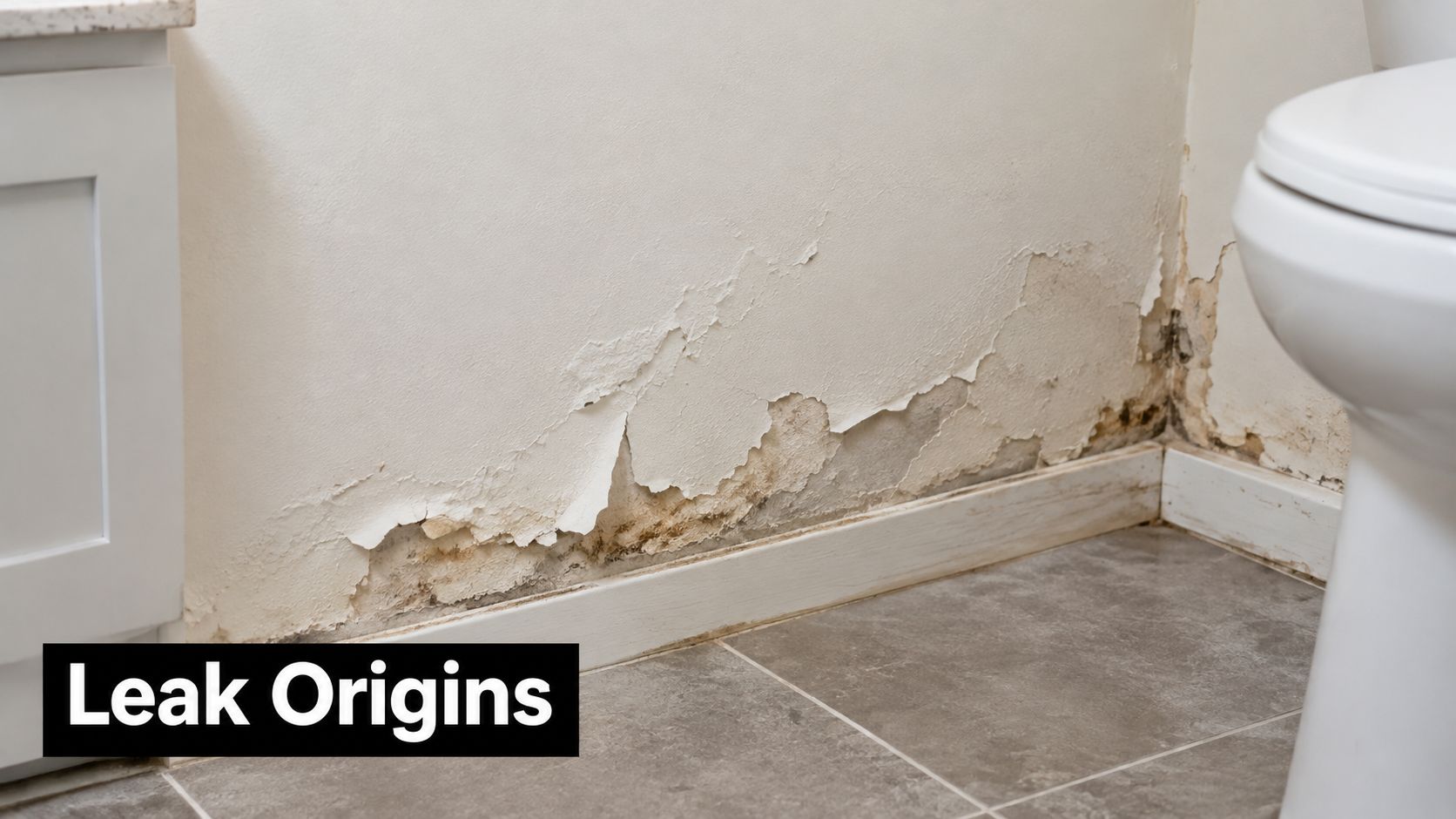
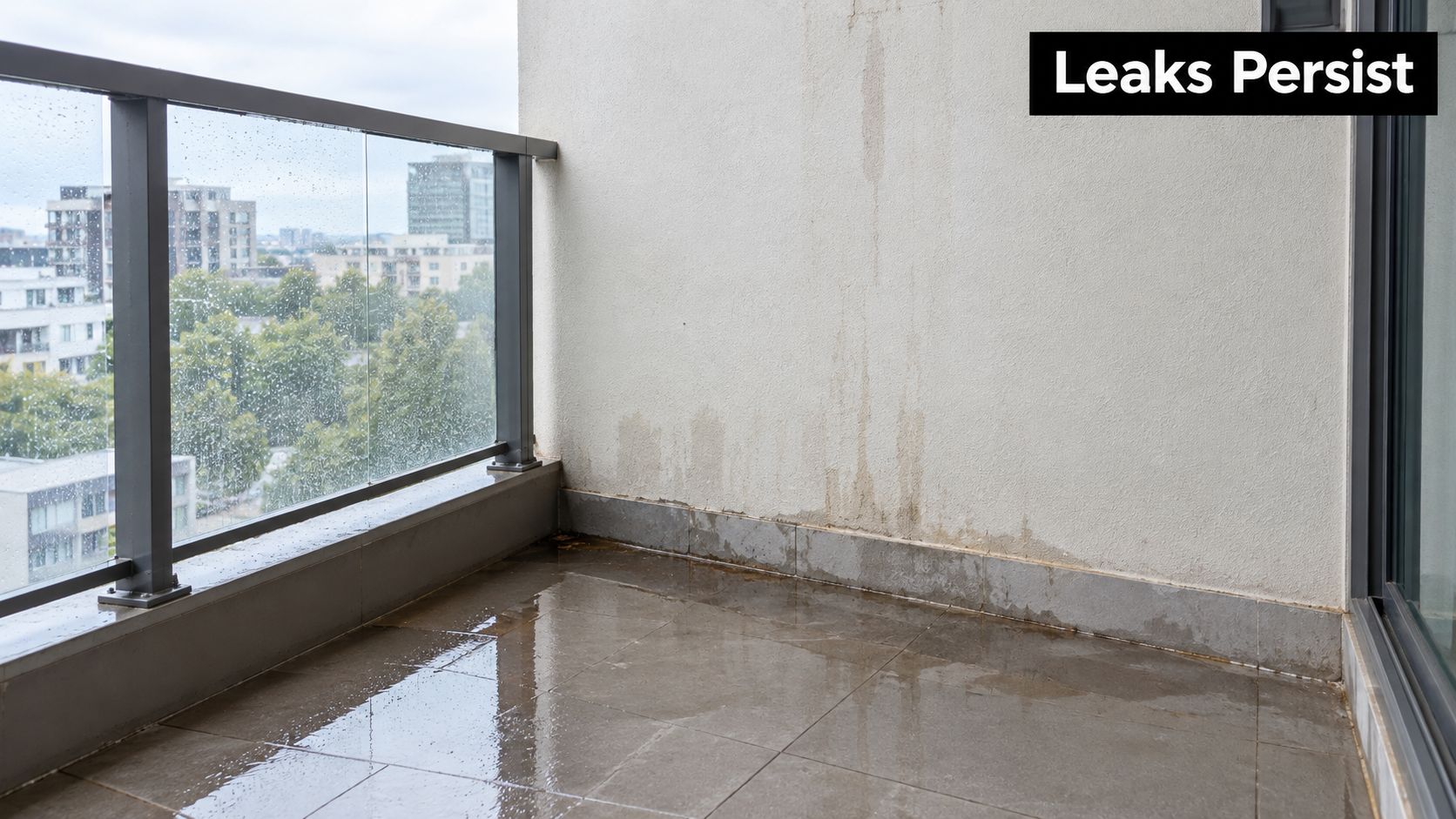
A balcony leak usually starts with something small. A brown ceiling stain under the slab. A tile that sounds hollow underfoot. A musty smell near the door after rain. Homeowners often hope it's just grout, silicone, or one cracked tile. Sometimes it is. Often it isn't.

In Melbourne, balcony leaks regularly trace back to deeper construction and waterproofing defects, not just tired finishes. A Victorian government study found that 52% of assessed balcony defect cases were caused by water ingress, and another 19% involved insufficient waterproofing in the assessed buildings across Victoria, as set out in the Victorian government balcony defects research paper. That's why waterproofing balconies melbourne isn't a “seal it and forget it” trade task. It's often a rectification job that needs proper diagnosis, compliance checks, and coordinated trades.

If the balcony ties into doors, balustrades, drainage, structural concrete, or tiled finishes, the job starts to look more like a compact external renovation than a simple maintenance repair. That's also why homeowners planning bathroom renovations should pay attention. The same lesson applies. Waterproofing only works when the substrate, detailing, drainage, and finish trades all line up.

Table of Contents

Your Guide to Waterproofing Balconies in Melbourne

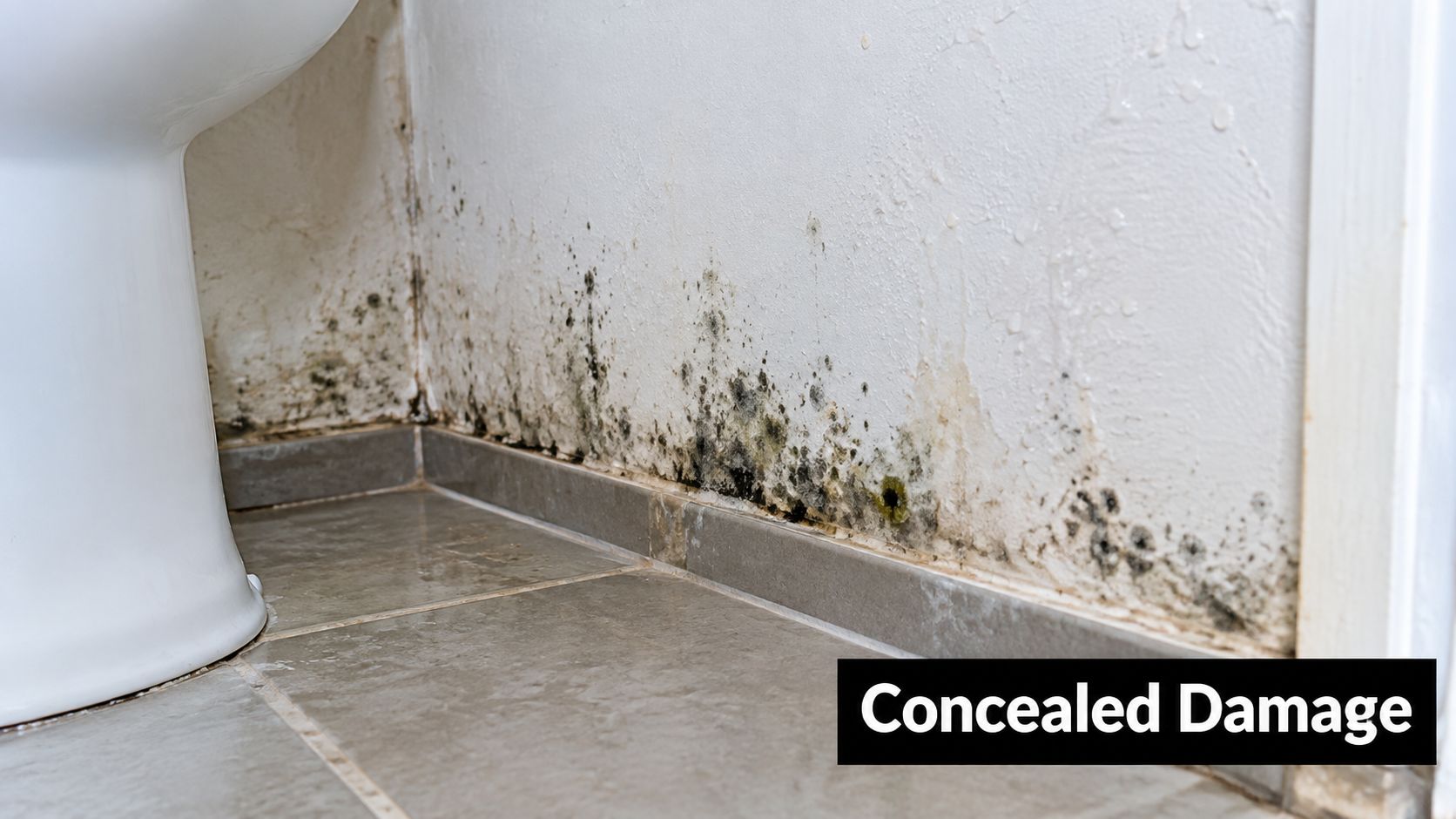
You notice the stain after heavy rain. It sits on the inside ceiling below the balcony door, dark and spreading at the edges. The top tiles still look mostly fine, so the first instinct is to blame grout or a failed bead of silicone. That's where plenty of Melbourne owners lose time and money. Surface symptoms rarely tell you the full story.

A large brown water stain leaking from a ceiling above a window, indicating a balcony leak problem.

A leaking balcony can involve tiles, screed, membrane, flashings, drainage, door thresholds, slab movement, or balustrade penetrations. Once water gets past one weak point, it travels. The visible damage often appears well away from where the failure started.

That's why waterproofing balconies melbourne should begin with triage. Is this a targeted leak repair, or has the balcony reached the point where it needs full remediation under a registered builder?

The first question to ask

Ask what has failed. Not what looks tired, but what allows water through.

A practical site review usually checks:

  • Surface clues: Hollow tiles, cracked grout, loose skirtings, salt deposits, or ponding after rain.
  • Edge details: Terminations, balcony lips, flashings, drip edges, and any low points near doors.
  • Penetrations: Balustrade posts, outlets, thresholds, and service points.
  • Movement and substrate condition: Cracking in screed, differential movement, rust marks, and concrete spalling.

Practical rule: If the leak keeps returning after sealing, grouting, or replacing isolated tiles, treat it as a system failure until proven otherwise.

Owners often ask whether balcony work is really that different from bathroom renovations. The answer is yes and no. The sequencing discipline is similar. The risk exposure is not. External balconies take direct weather, UV, thermal movement, and drainage load, so mistakes get punished faster.

For straightforward membrane replacement on a sound substrate, a specialist trade team may be enough. If the balcony needs demolition, structural repair, regrading, drainage correction, or trade coordination, a registered builder should control the scope, sequence, and compliance. That's the difference between a patch and a durable fix.

Why Melbourne Balconies Fail Signs and Root Causes

The visible signs are usually easy to spot. The hard part is understanding which ones matter, and which ones point to a deeper failure in the build-up below the tiles.

What owners usually notice first

Some symptoms are cosmetic. Others are warning signs that the membrane, substrate, or drainage design has already failed.

Common signs include:

  • Drummy or loose tiles: Water may have broken the bond between tile and screed, or movement may have fractured the bed.
  • Efflorescence: White salts usually mean moisture is moving through cement-based materials and evaporating at the surface.
  • Cracked grout and recurring joint failure: Grout isn't a waterproof layer. Repeated cracking often points to movement or water pressure below.
  • Swollen skirtings, peeling paint, or stains below: Water has already travelled beyond the balcony finish.
  • Concrete damage and rust staining: Moisture may be reaching reinforcement or exposed metal components.
  • Persistent ponding: Water sits where it should drain away, increasing pressure on joints and terminations.

What actually sits behind the symptoms

The Victorian Building Authority's balcony leakage research points to a bigger issue. Balcony leaks often come from systemic problems such as poor design choices, unclear accountability during construction, and misinterpretation of waterproofing requirements, as noted by the Victorian Building Authority balcony leakage research. In plain terms, the membrane may not be the only thing that failed. The balcony may have been difficult to waterproof properly from the start.

Three root causes show up again and again on Melbourne projects:

Bad geometry

If the balcony doesn't shed water cleanly, the membrane lives under constant stress. Low spots, blocked outlets, and poor edge detailing trap water where it shouldn't sit.

Weak detailing

Corners, door thresholds, balustrade penetrations, and wall junctions are common failure points. These areas need reinforcement, compatible materials, and correct termination heights. Shortcuts here are expensive later.

Trade disconnect

A plumber may set drainage points. A builder forms the substrate. A waterproofer applies the membrane. A tiler installs the finish. If those trades don't work to one coordinated detail, the balcony ends up with gaps in responsibility.

A useful visual explainer on leak patterns and rectification is below.

A cracked tile doesn't prove the leak started at the tile. It only proves the balcony moved, deteriorated, or stayed wet long enough for the finish to fail.

Melbourne's weather adds another layer. Balconies cycle through sun, rain, cold nights, and thermal movement. Older tiled balconies are especially vulnerable because each layer may have aged differently. The top looks serviceable. The build-up below often tells a different story.

A Homeowners Guide to Balcony Waterproofing Systems

A homeowner calls after the first winter storm. Water has marked the ceiling below the balcony, a few tiles have sounded hollow for months, and another contractor has already suggested “just resealing it.” At that point, the job is not choosing a product off a shelf. The job is working out whether the balcony needs a localised repair or a full rebuild scope under a registered builder.

That is how balcony waterproofing should be assessed in Melbourne. Product names come later. Start with the balcony's condition, how it sheds water, how much movement it sees, and whether you are dealing with a new build, a strip-and-rebuild retrofit, or a balcony with hidden structural risk.

For a broader overview of external and internal waterproofing systems used in Melbourne projects, compare systems by where they are being used and what sits above and below them, not by brand label.

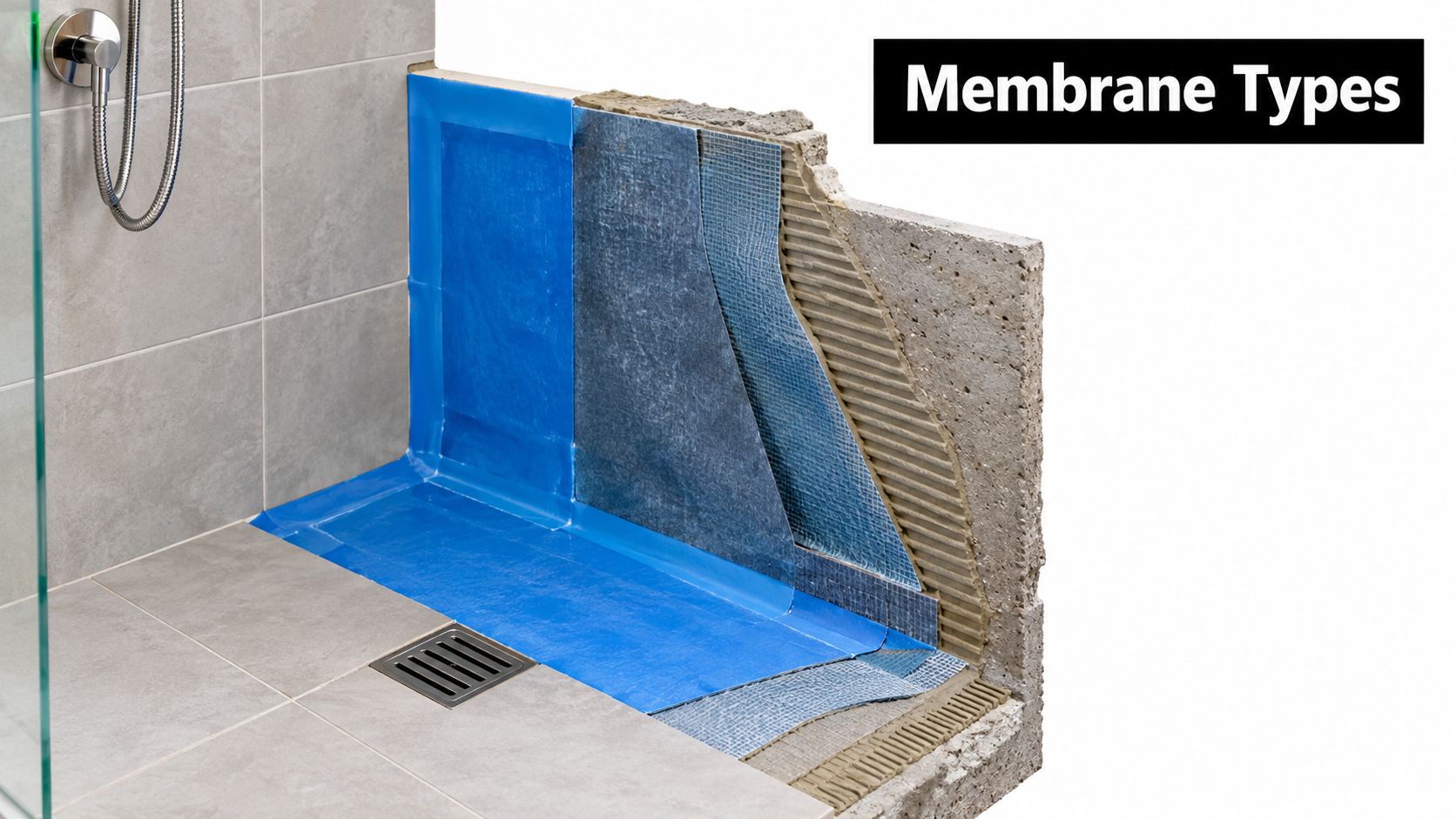
Liquid membranes

Liquid-applied membranes are common on remediation work for a reason. They suit awkward shapes, changes in level, door thresholds, corners, and penetrations better than many sheet products, provided the substrate is properly prepared and the applicator controls film thickness and curing.

They are also less forgiving of poor workmanship. If the falls are wrong, if reinforcement is skipped at junctions, or if the membrane is tiled over before it has cured, the system can fail even though the product itself was suitable. On older balconies, I often see liquid membranes nominated for jobs that also need screed correction, threshold review, and drainage changes. Without that broader scope, the membrane is carrying a problem it was never designed to solve on its own.

Sheet membranes

Sheet systems offer predictable material thickness and can perform well on clean, regular substrates. On new work, or on balconies that have been stripped back far enough to create a controlled base, they can be a sound option.

The trade-off is in the detailing. Laps, corners, upturns, terminations, and penetrations need disciplined installation. On an older Melbourne balcony with patched concrete, mixed materials, balustrade fixings, and irregular edges, that detail work can become the hardest part of the job. A tidy quote for a sheet membrane is not much comfort if the balcony geometry and junctions have not been resolved first.

Cementitious systems and clear coatings

These systems are often oversold.

Cementitious waterproofing has a place in some assemblies, but it is not a default answer for every exposed balcony. Clear coatings and penetrating sealers can reduce surface water entry in limited cases, and they may buy time on a balcony that is otherwise sound. They do not replace a failed membrane. They do not correct poor falls. They do not fix low door thresholds, cracked screed, or movement at wall junctions.

If a balcony is leaking into the room below, surface treatment is rarely the full answer.

How to choose the right system

The right question is simple. Why does this system suit this balcony, and what other work has to happen for it to last?

That means looking at movement, exposure, drainage, substrate condition, finished height, and the tile build-up as one assembly. Trade guidance on rectification also notes that failure often comes from using a system that does not suit the movement or drainage demands of the building, as discussed in this balcony waterproofing comparison from Blackwell Construction.

A practical way to assess it is below.

Balcony condition What usually suits Main caution
Older tiled retrofit Liquid-applied systems with strong detailing capacity Surface prep, reinforcement, and thickness control decide the result
Simple new substrate Sheet or liquid systems, depending on junction details Regular field areas are easy. Penetrations and edges still control performance
High movement areas Flexible systems with reinforced corners and planned movement detailing Rigid patch repairs around joints tend to crack and telegraph through
Highly exposed balconies A membrane system paired with drainage and edge redesign Membrane choice alone will not overcome bad falls or trapped water

One factual option in the local market is Melbourne Tiling Services P/L's waterproofing systems work, which includes balcony applications within wider tiling and remedial scopes. That matters on jobs where the waterproofing cannot be separated from the screed, the drainage set-out, and the tile reinstatement. In practice, that is the primary dividing line for homeowners. Some balconies need a membrane replacement. Others need a builder-led remediation scope with the waterproofer, tiler, and plumber all working to one detail.

The Balcony Remediation Process An Overview

A proper balcony rectification job is staged. That's what separates durable work from patch-up work. If someone proposes to reseal the surface without understanding the substrate, falls, and edge detailing, you're not getting remediation. You're getting delay.

A six-step infographic guide detailing the professional balcony remediation, waterproofing, and restoration process for property owners.

Step by step on a proper rectification job

A full scope doesn't always mean structural rebuilding, but it does mean the team follows a disciplined sequence.

  1. Investigation and scope definition
    The balcony is inspected for tile bond failure, drainage behaviour, threshold heights, cracking, and moisture pathways. If the leak is entering occupied areas below, the underside damage gets reviewed too.

  2. Demolition and strip-out
    Existing tiles, adhesives, screed, and failed membrane layers are removed as required. Partial demolition sounds cheaper, but it can leave hidden defects trapped at interfaces.

  3. Substrate repair and fall correction A lot of long-term performance is won or lost during this stage. The team repairs damaged concrete or substrate issues, then reforms the balcony so water drains properly toward outlets and edges.

  4. Membrane application and detailing
    Corners, junctions, upturns, penetrations, and transitions are reinforced and waterproofed as a continuous system. This stage demands patience and documentation.

  5. Protection, finishes, and sealing
    Once cured, the membrane is protected by the specified finish build-up. That may include screed, adhesive, tiles, movement joints, caulking, and edge finishing. External joint detailing often overlaps with broader balcony and wet area caulking and sealing practice, especially around thresholds and perimeter junctions.

  6. Testing, handover, and maintenance advice
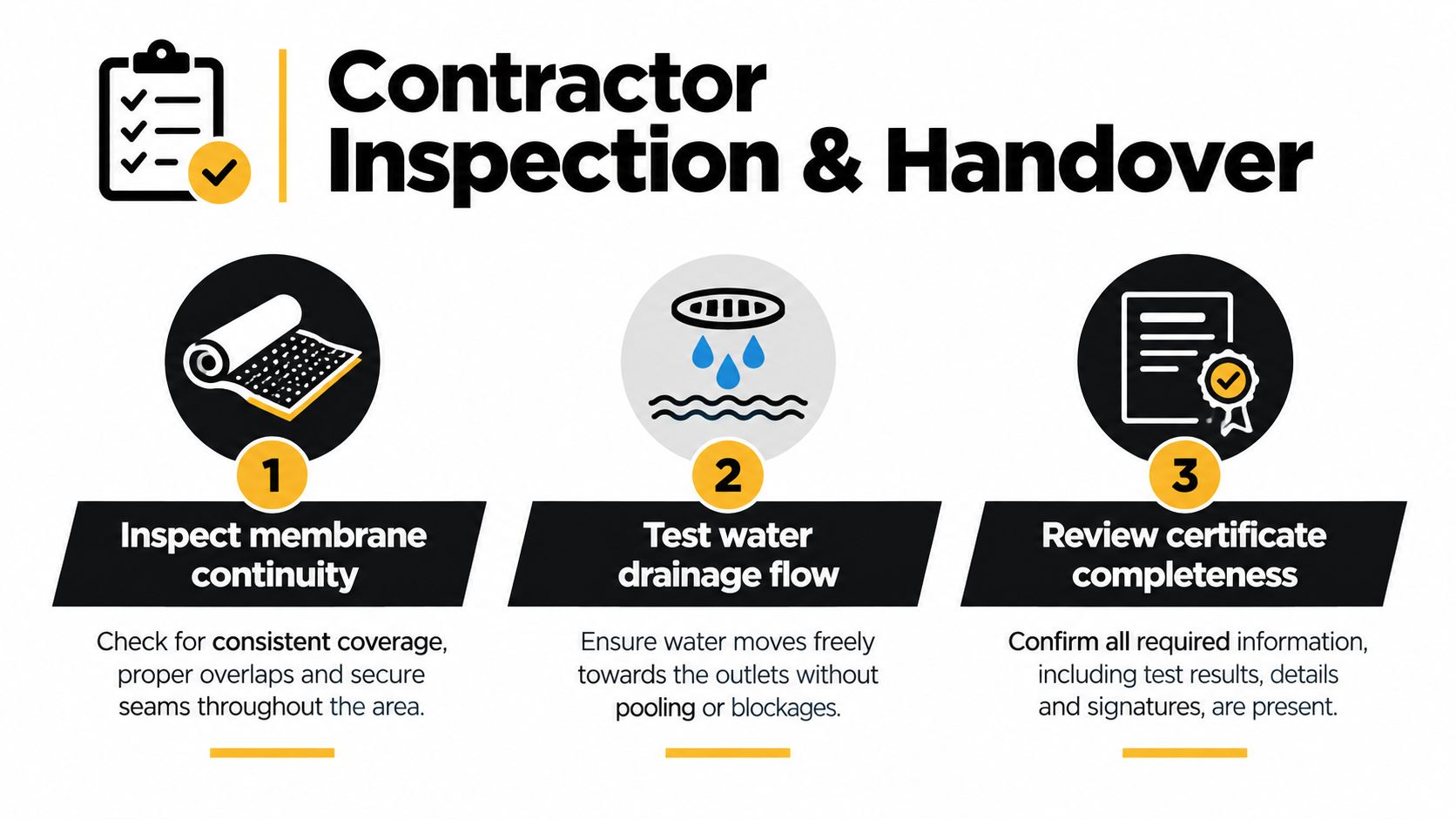
    The contractor checks continuity, finish quality, and drainage behaviour before handover. Owners should also get clear advice on what to monitor after completion.

Where balcony jobs usually go wrong

The biggest failures usually happen in the “small” details. Corners get under-reinforced. Membranes go on too thin. Upturns are cut short because the door threshold is tight. Tilers bridge joints that should move independently.

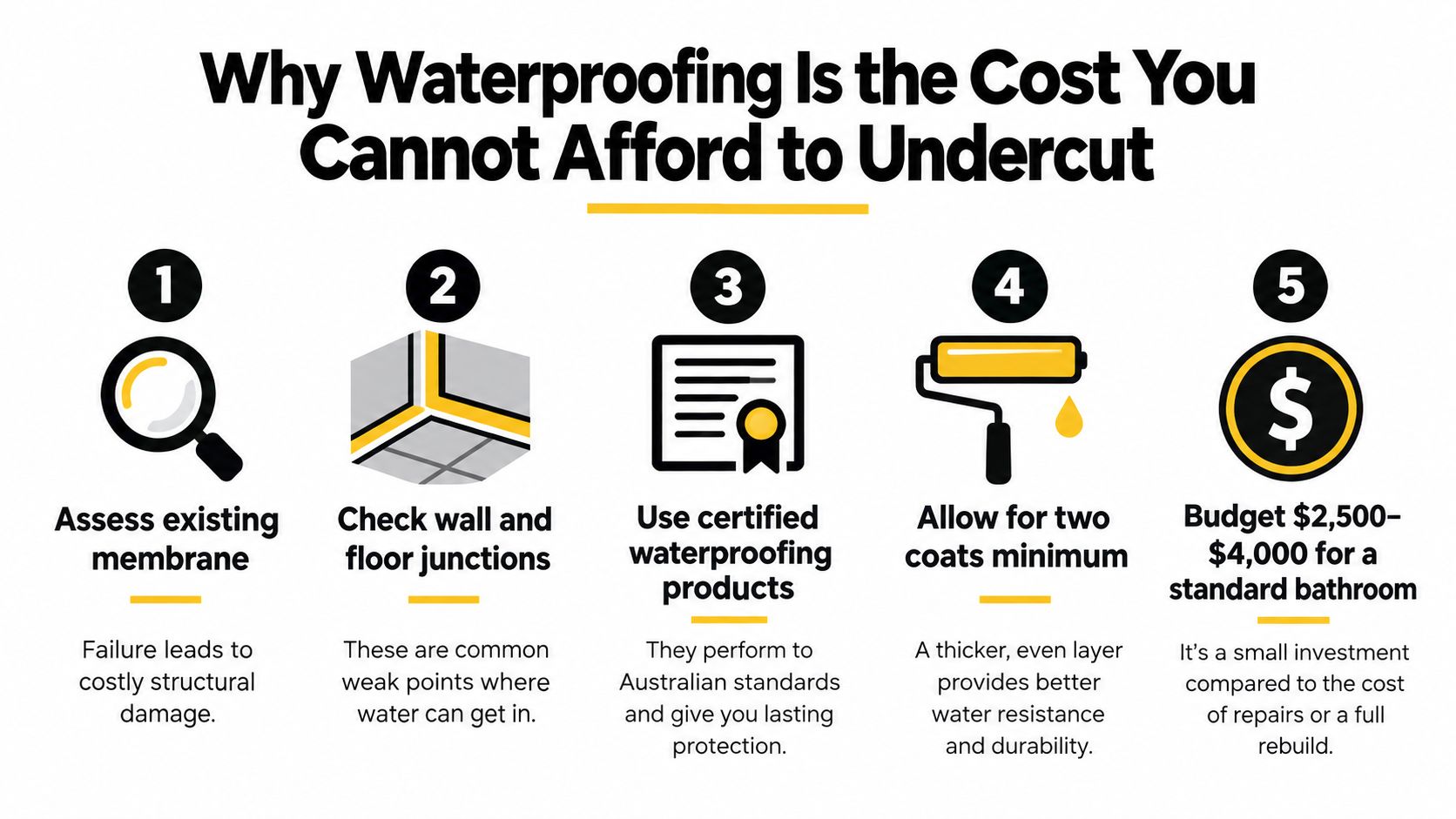
Trade guidance aligned with AS 4654.2 notes that membrane work is typically verified by inspection and either dry-film-thickness checking or a controlled water test, because performance depends on continuity and installed thickness. The same guidance describes liquid membrane application in two coats with poly-cloth reinforcement and return heights up walls, with post-cure thickness confirmation, as outlined in SCR Melbourne's balcony waterproofing under AS 4654.2 guidance.

On site reality: A balcony can fail with a decent membrane if the team leaves weak corners, skimps on thickness, or doesn't resolve the drainage geometry first.

A homeowner doesn't need to supervise each coat. But you should expect a contractor to explain substrate preparation, reinforcement, cure times, terminations, and how the installation is checked before tiles go back on. If they can't explain that clearly, the scope probably isn't mature enough.

Melbourne Building Codes Costs and Warranties

Balcony jobs get mispriced when owners compare them to a simple reseal. They get understood properly when owners compare them to a small external renovation. That's often a better mental model, especially if demolition, substrate repair, and new finishes are involved. The same budgeting logic comes up in bathroom renovations, where waterproofing is only one line item inside a larger coordinated build.

Compliance starts with falls and detailing

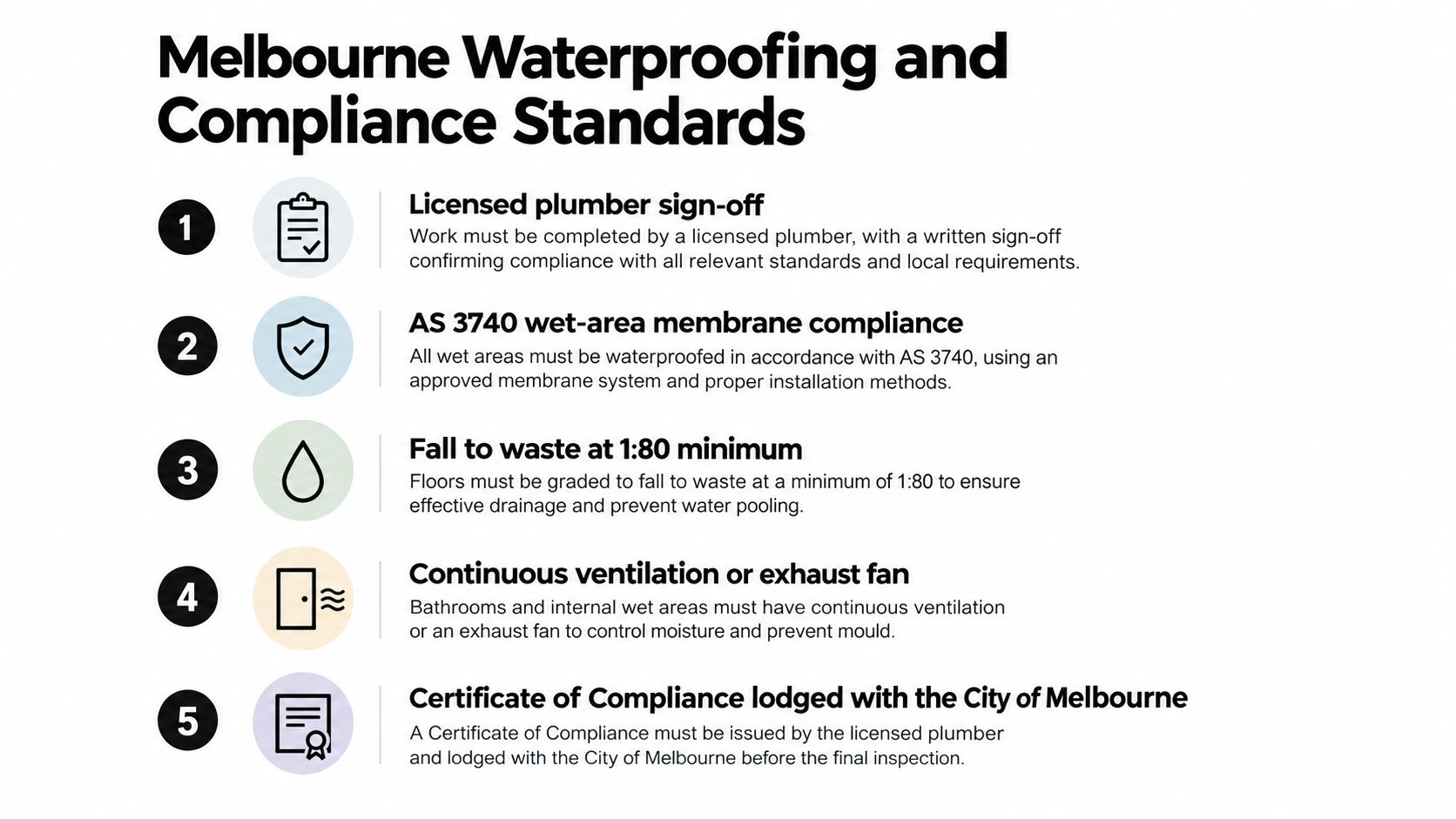
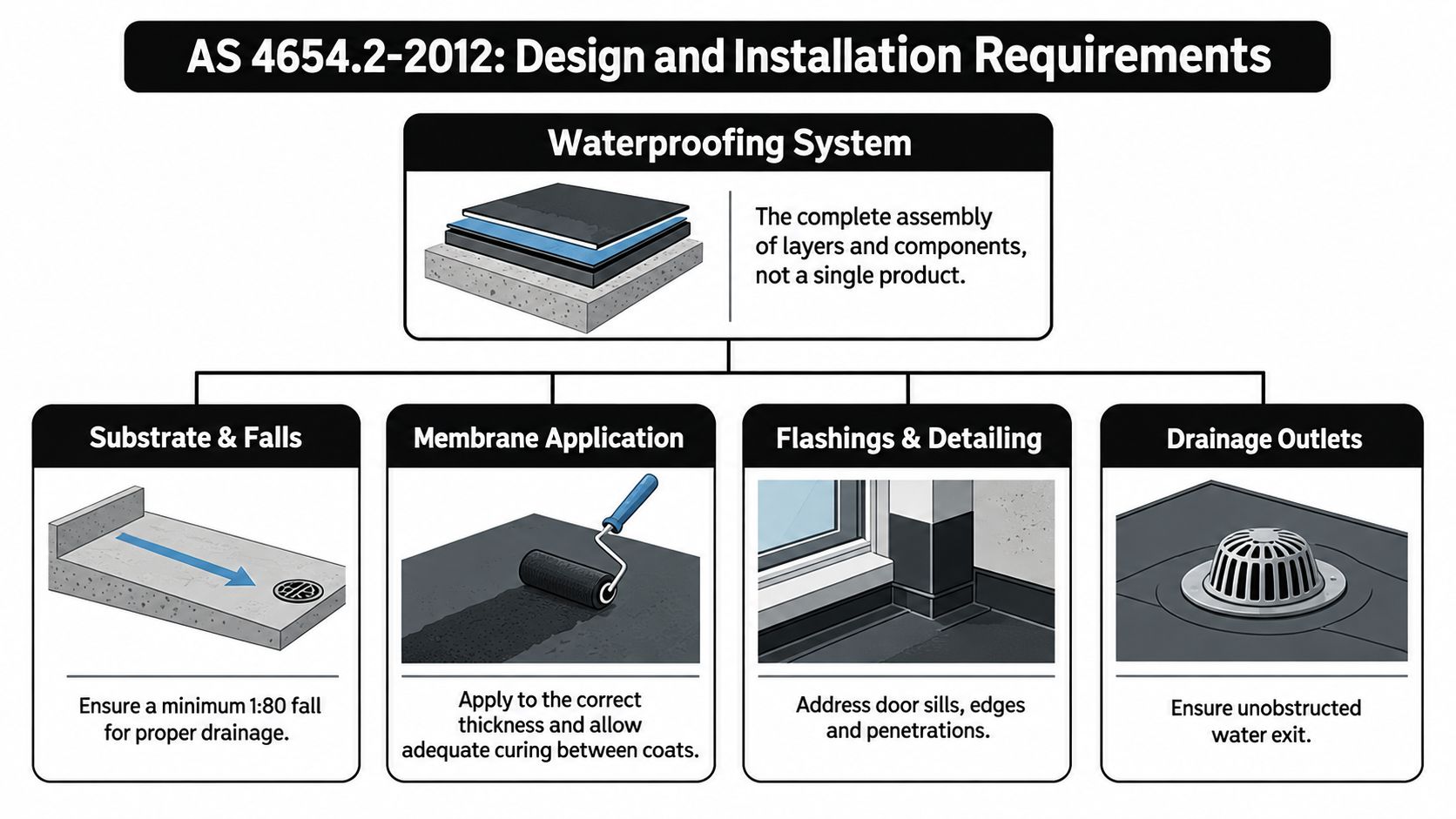
On balconies, compliance is not just about whether a membrane exists. The substrate still has to move water away. The Victorian Building Authority points practitioners to AS 4654.2 for external above-ground waterproofing and notes a minimum fall of 1:100 on a horizontal balcony substrate to shed water to drainage points, as set out in the VBA's water ingress research insights fact sheet.

That single requirement explains a lot of recurring failures. If water ponds, it loads the system for longer. It finds pinholes, weak laps, low terminations, and poor flashing details. A balcony can have a membrane and still be defective.

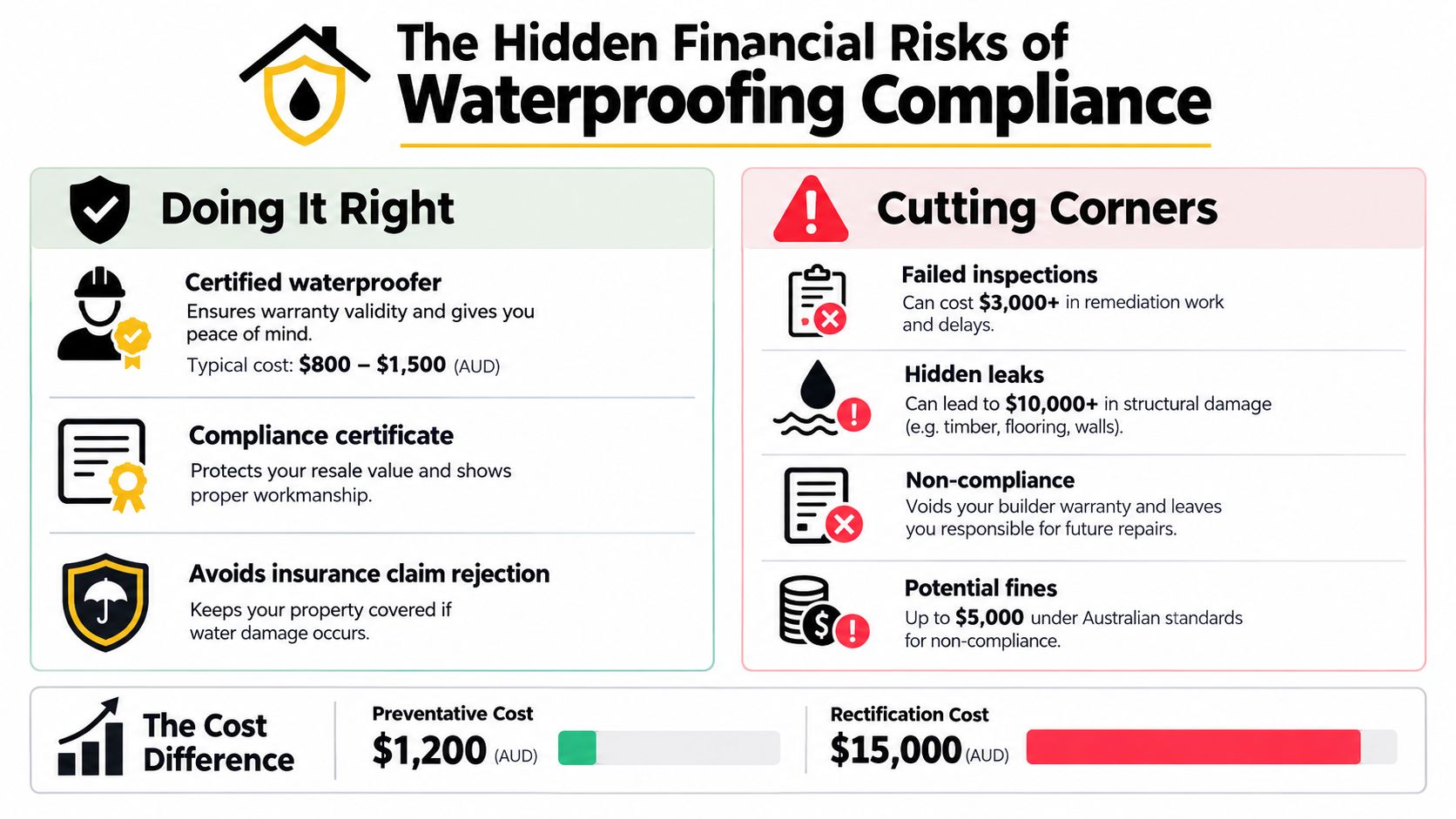
If you need project documentation around that process, owners often ask for a Victorian waterproofing compliance certificate or similar records showing what standard was followed and how the work was checked.

Why balcony budgets vary so much

There isn't one standard price because the scope can swing from localised repair to near-complete rebuild. Cost changes with access, demolition, disposal, substrate condition, drainage relocation, balustrade interfaces, finish selection, and whether adjoining rooms are affected.

A practical triage looks like this:

  • Targeted repair scope: Suitable where the substrate is sound, the leak source is isolated, and geometry is broadly workable.
  • Full re-membrane scope: Needed when the membrane has failed generally, but structural elements remain serviceable.
  • Registered builder remediation scope: Necessary when the balcony needs structural repair, fall correction, balustrade removal, threshold work, or multiple coordinated trades.

The budget usually follows the diagnosis. If the diagnosis is shallow, the quote will be too.

That's why very cheap balcony quotes should be treated carefully. Low pricing often means the contractor has excluded demolition depth, substrate repair, drainage correction, or testing. Those exclusions become variations later, or the defect remains.

What a warranty should actually cover

Owners often hear “product warranty” and assume the whole balcony is protected. It isn't that simple.

Ask three separate questions:

  • Product warranty: What does the membrane manufacturer cover, and under what installation conditions?
  • Workmanship warranty: What does the contractor stand behind in labour and detailing?
  • Scope warranty: What parts of the assembly were renewed, and what existing elements were excluded?

If old door thresholds, metal flashings, or structural cracks remain outside the contracted scope, they may also sit outside the warranty. Get that clarified in writing before work begins.

Choosing Your Expert Licensed Waterproofer vs Registered Builder

This is the decision that saves people the most grief. A skilled waterproofer is the right trade for membrane installation. A registered builder is the right lead when the problem extends beyond membrane installation.

A female painter and a male construction worker holding building tools and blueprints on black background.

When a waterproofer is enough

If the balcony issue is narrowly defined, the substrate is confirmed sound, falls are already correct, and no structural or trade coordination issues sit in the background, a waterproofing specialist may be the right fit.

That usually means work such as:

  • Membrane renewal on a prepared substrate
  • Local junction rectification
  • Minor detailing repairs around edges or penetrations
  • Testing and remedial waterproofing where the construction build-up is otherwise stable

When a registered builder should run the job

Once the job involves demolition, structural repair, screed replacement, drainage changes, door threshold risks, balustrade interfaces, or full tile reinstatement, the smarter move is to appoint a registered builder. That gives the owner one party responsible for sequencing carpenters, plumbers, tilers, waterproofers, and any concrete or metal repair trades.

A few blunt questions help decide:

  • Will tiles and screed be removed fully?
  • Do falls need to be corrected?
  • Is there damage below the balcony or at the slab edge?
  • Do balustrades, flashings, or thresholds need alteration?
  • Will more than one trade need to sign off on the result?

If the answer to several of those is yes, don't under-scope it.

A balcony leak can start as a waterproofing problem and end as a builder's job. The trick is recognising that before the first quote is accepted.

Registered builders also matter when the balcony forms part of a larger upgrade. On homes where leaking balconies sit beside failed wet areas, owners often roll the work into bathroom renovations so waterproofing standards, tiling finishes, and trade coordination get handled consistently across the property.

FAQs About Balcony Waterproofing in Melbourne

Can I fix a leaking balcony by resealing the grout or applying a clear coating

Sometimes that helps briefly, but it's rarely a durable answer if the leak comes from failed membrane detailing, bad falls, movement, or drainage defects. Grout is not the waterproof layer. Clear coatings can be maintenance products, not full rectification.

How do I know if I need a rebuild instead of a repair

Look at the scope, not just the symptom. If the balcony has recurring leaks, drummy tiles, ponding, cracked screed, damage below, or problematic thresholds and balustrade penetrations, the job often moves beyond simple repair.

Is balcony waterproofing similar to bathroom waterproofing

The principles overlap. Both depend on substrate prep, membrane continuity, and correct detailing. External balconies are more demanding because they face weather, UV, thermal movement, and drainage exposure directly.

Should I retile over existing tiles

Sometimes contractors propose it, but that only works in limited conditions and doesn't solve hidden substrate or membrane failures below. If the cause is unknown, tiling over the top can bury the defect.

What should I ask before accepting a quote

Ask what's included in demolition, whether falls will be checked and corrected, how corners and penetrations are reinforced, how the membrane installation is verified, what is excluded from warranty, and who coordinates the trades if the scope expands.

Will insurance cover a leaking balcony

That depends on the policy and the cause. Insurers often distinguish between sudden damage and defects, wear, or poor construction. Owners should confirm the policy wording early and document the condition carefully.


If you need a practical diagnosis before committing to repairs, Melbourne Tiling Services P/L handles balcony leak rectification, waterproofing, tiling, and bathroom renovations under registered builder oversight, which is useful when the job involves more than just reapplying a membrane.

Bathroom Floor Tiling: A Melbourne Renovation Guide

You're probably at the point where the bathroom looks worse before it looks better. Old tiles are out, the floor feels uneven underfoot, and every showroom visit makes it easy to focus on colour, pattern and finish. That's normal. It's also where plenty of bathroom renovations go off track.

Bathroom floor tiling isn't just about what you see on the surface. In a Melbourne home, a tiled bathroom floor only performs properly when the subfloor, screed, falls, waterproofing, adhesive and movement detailing all work together. If one layer is wrong, the prettiest tile in the room won't save the job.

Homeowners usually start with tile choice. Registered builders start lower down. They ask whether the floor is stable, whether the falls can be formed properly, whether the waterproofing detail will comply, and whether the selected tile suits the room and substrate. That is the correct order of work if you want a bathroom that looks sharp on handover and still performs properly years later.

Table of Contents

Choosing the Right Bathroom Floor Tiles

The tile is the part you'll notice every day, but the right choice starts with safety and suitability. In Australia, bathroom floor tiling should be specified around the wet-area slip-resistance benchmark in AS 4586, not just the tile's appearance. For internal wet areas such as bathroom floors, a common practical target is at least P3, as explained in this guide to choosing the right floor tile.

A comprehensive comparison chart of various bathroom floor tile materials including porcelain, ceramic, stone, vinyl, and mosaic.

Start with grip, not colour

A bathroom floor gets wet. That sounds obvious, but plenty of selections are still made as if the room were a dry hallway. The safest bathroom floors usually combine a textured matt finish, sensible tile sizing, and good drainage. Smaller mosaics can help with traction because they create more grout joints underfoot. Large glossy tiles can look clean in a showroom and feel risky in a real shower area.

Practical rule: If a tile looks slippery when it's dry, don't expect it to behave better when soap and water hit it.

Slip resistance also works together with the rest of the floor build-up. A compliant waterproofed floor with poor falls is still a problem. A grippy tile over a badly prepared substrate is still a problem. Good bathroom floor tiling is always a system.

What different tile types do well

Homeowners in Melbourne usually compare a small group of materials.

Bathroom Floor Tile Comparison Best For Durability Maintenance
Porcelain Family bathrooms, ensuites, heavy daily use High Low
Ceramic Budget-conscious bathrooms with straightforward layouts Good Low to moderate
Natural stone Premium bathrooms where appearance is the priority Good, but depends on stone Higher
Mosaic Shower floors and smaller wet zones needing more grip Good Moderate
Large-format tiles Contemporary bathrooms with minimal grout lines Good, but installation-sensitive Low to moderate

Porcelain is usually the practical workhorse. It suits busy bathrooms, it's consistent, and it's available in finishes that can meet wet-area slip requirements.

Ceramic can work well in many domestic bathrooms, particularly where the budget is tighter and the room isn't asking the tile to do too much visually or structurally.

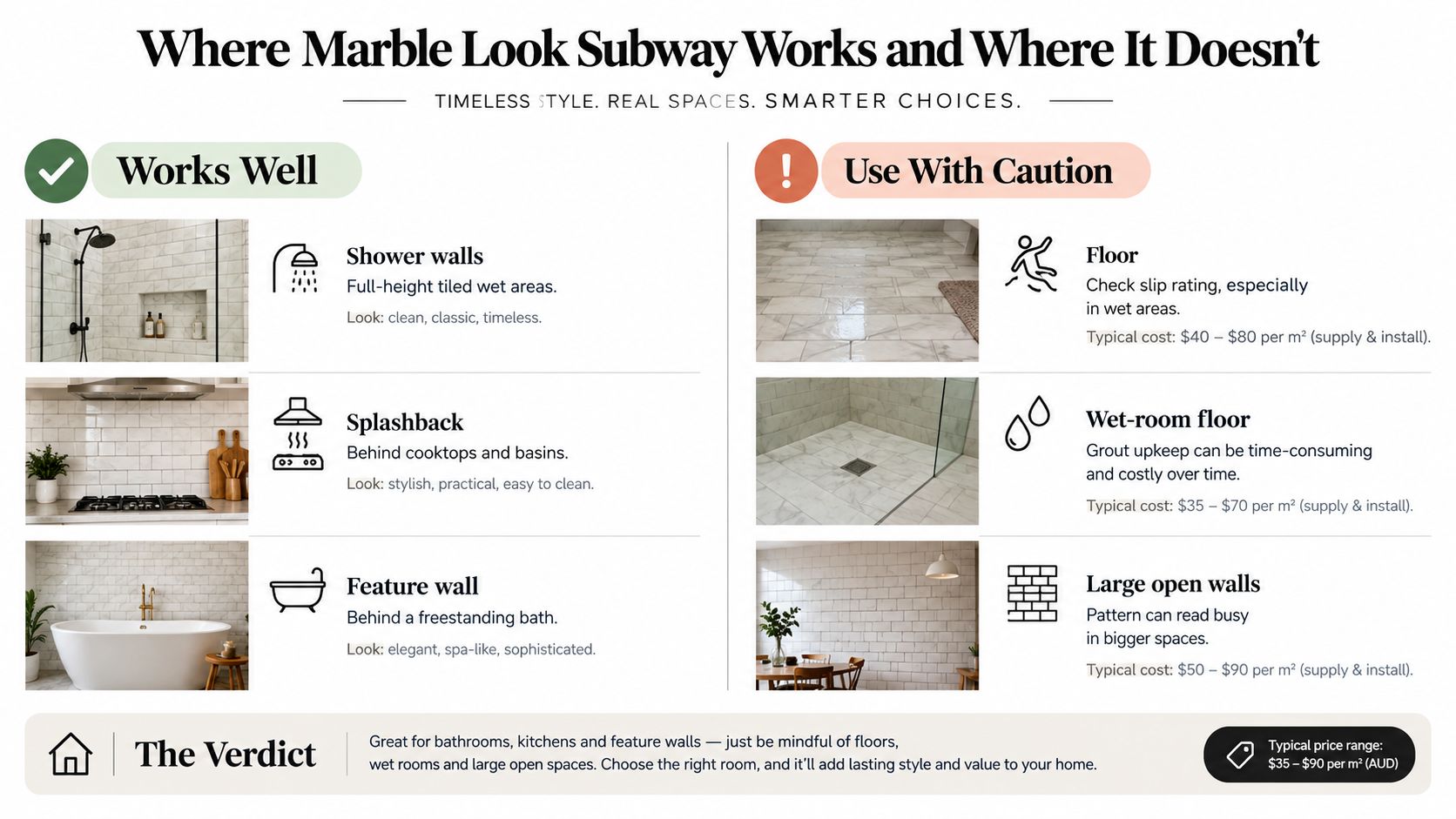
Natural stone such as marble gives a high-end finish, but it asks for more care. It's less forgiving on maintenance, and the selection has to be made carefully for a wet floor.

Large-format tiles look excellent in modern bathroom renovations, but they're less tolerant of imperfect floors. If you're considering slim-profile panels or oversized porcelain, it helps to understand the installation demands before you buy. This overview of large-format tiles gives a good sense of where they work and what they require.

The Critical Foundation Below Your Tiles

Most failed tile jobs don't start with the tile. They start underneath it.

That's the part homeowners rarely see once the renovation is finished, but it's the part that decides whether the floor feels solid, drains properly and stays crack-free. If the substrate is uneven, weak, damp, moving, or out of level, the tile layer above it inherits every one of those problems.

A comparison illustration showing natural stone versus cracked concrete as foundations for tiled floor surfaces.

Why the floor prep decides the result

Think of the substrate the same way you'd think about a house footing. You can spend money on finishes, but if the base is wrong, the finish won't stay right for long.

In bathroom renovations, the common trouble spots are familiar. An old timber floor has too much movement. A slab has dips and high points. Previous renovation work leaves patches, adhesive residue or weak areas. The room might also need falls corrected so water moves to the waste instead of sitting in corners.

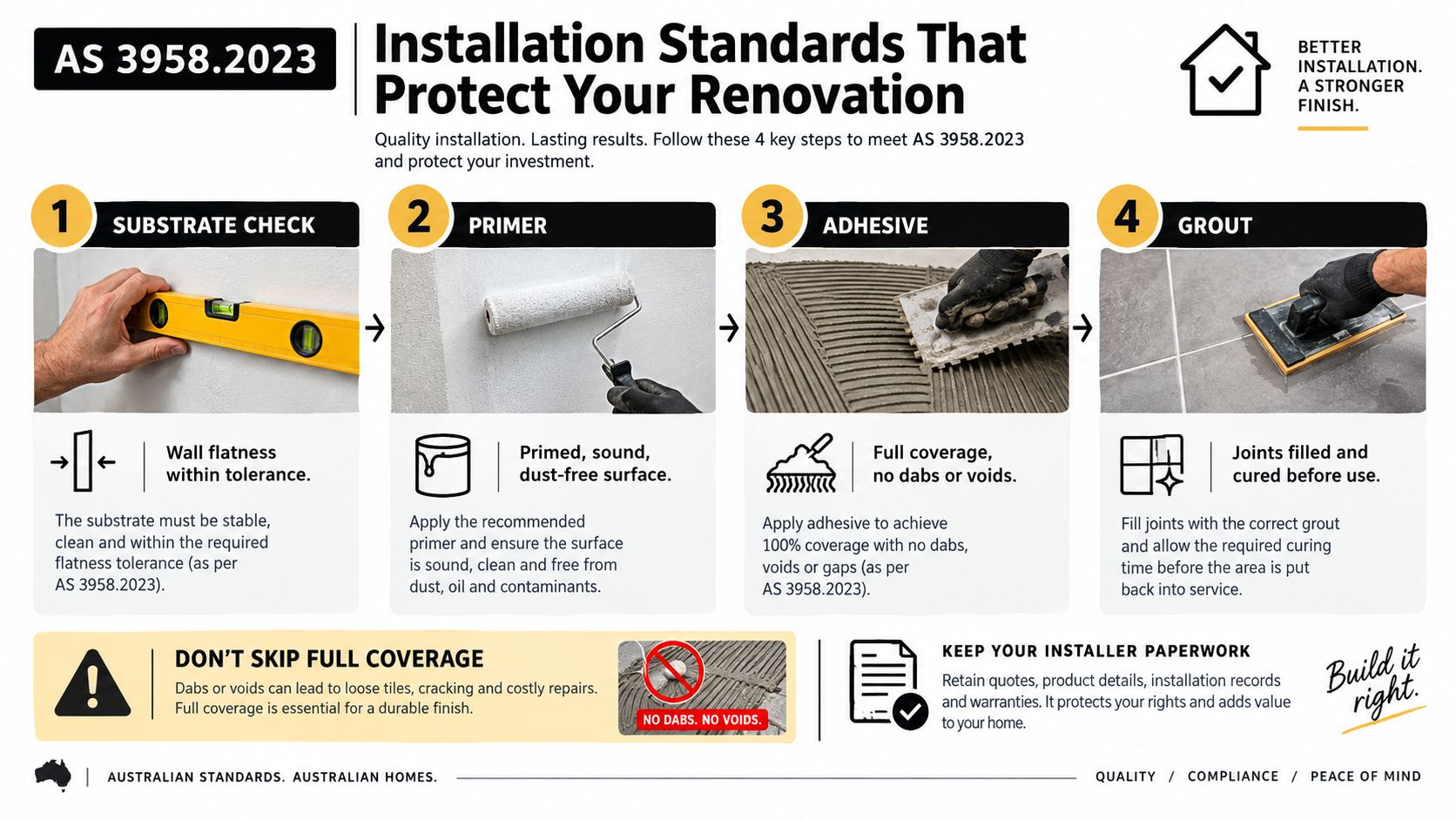
Australian practice places real weight on this stage. A common but critical question for Victorian renovators is whether screeding or self-levelling is needed before tiling. The answer is often yes, because AS 3958.1 places heavy emphasis on substrate flatness and stability, especially for large-format tiles that show every imperfection, as noted in this article on uneven tile in bathroom renovations.

When screeding and self-levelling are needed

Screeding is used when the floor needs shape, especially falls to the waste. It creates a stable mortar bed and gives the tiler something consistent to work over.

Self-levelling compounds are used when the floor needs flatness more than slope correction. They're useful for smoothing out local irregularities before tile goes down.

A builder or tiler might recommend one, both, or neither depending on the room. What matters is the diagnosis. A lot of bad bathroom floor tiling comes from skipping that step and trying to fix a structural or substrate issue with adhesive thickness alone.

  • Use screeding when the room needs corrected falls, a shower recess needs forming, or the floor plane is broadly wrong.
  • Use self-levelling when the floor is structurally sound but locally uneven and needs flattening for tile installation.
  • Pause the tiling altogether when the floor needs structural repair first. That might mean strengthening timber, replacing damaged sheet flooring, or resolving movement before any wet-area build-up starts.

A perfectly laid tile on a poor base is still a poor job. It just takes longer to reveal itself.

Waterproofing Your Melbourne Bathroom to Code

If there's one part of bathroom floor tiling that should never be treated as a shortcut, it's waterproofing. Homeowners often focus on visible finishes because that's what they live with day to day. The structure below the tile doesn't get the same attention until a leak shows up in the hallway, the ceiling below, or the skirting outside the bathroom.

A professional bathroom waterproofing service in Melbourne demonstrating before and after results on brickwork.

What the membrane actually does

The modern benchmark in Australia changed significantly with AS 3740:2010, which standardised waterproofing requirements in domestic wet areas. It requires specific membrane coverage and detailing to prevent water ingress, which is treated as a leading cause of internal building damage in Australia in this discussion of the history of tile flooring and wet-area standards.

That matters because the tile and grout aren't the waterproof layer. The membrane is. The tiled finish above it takes wear, cleaning and foot traffic. The membrane below it protects the structure.

A compliant bathroom floor build-up usually includes prepared substrate, any required screed, the waterproofing membrane, and then the tile assembly above. Junctions, floor-to-wall transitions, penetrations and shower areas need the right detailing. This isn't decorative work. It's protective work.

Why registered builders matter

Registered builders add real value in bathroom renovations through this specialized expertise. The job isn't just to lay tiles. It's to manage the wet-area construction properly, coordinate the right licensed trades, and make sure the sequence is correct from demolition to certification.

If you're trying to understand what proper documentation and sign-off look like in Victoria, this overview of a waterproofing compliance certificate in Victoria is useful. It explains the compliance side that many homeowners only discover after asking for proof late in the project.

  • Bad waterproofing hides well at first. The bathroom can look finished and still be vulnerable.
  • Repairs are rarely local. Once water gets past the system, remediation often means removing tiles and rebuilding layers.
  • Cheap shortcuts are expensive later. Saving money on membrane work usually shifts the cost into leak detection, demolition and reinstatement.

The Tiling Installation Process From Start to Finish

A professional installation rarely begins with opening adhesive bags. It starts with checking the room, confirming dimensions, reviewing the set-out and making sure the floor is ready to receive tile. That's especially important in a bathroom where one crooked line at the doorway can make the whole room feel off.

Layout comes before glue

Good layout work isn't about making every room perfectly centred. In many Melbourne bathrooms, especially older homes with alcoves, nib walls or off-square entries, the smarter decision is to protect the most visible sightline.

For odd-shaped bathrooms, the first decision isn't just visual layout but how to manage cuts at doorways and waterproofing upturns. The aim is to start from a focal point so the most visible lines, such as the threshold, stay clean, even if that means sacrificing a perfectly centred pattern elsewhere, as discussed in this guide to tiling floors in irregularly sized rooms.

That planning usually covers:

  • Entry view: what you see first when the bathroom door opens
  • Perimeter cuts: whether tiny slivers will appear at walls, nibs or the vanity line
  • Drain location: whether the tile size and pattern work with the waste position
  • Fixtures: how the floor lines relate to the toilet pan, vanity and shower screen

The cleanest bathrooms usually don't come from the most symmetrical plan. They come from the smartest compromise.

Setting, curing and finishing

Once the layout is locked in, the installer selects the adhesive to suit the tile type, format and substrate. Large-format porcelain doesn't get treated the same way as a small mosaic floor. Natural stone may need different handling again.

Tiles are then bedded carefully, aligned, checked for lippage and kept consistent across changes of plane. After that, the floor needs curing time. Rushing this stage causes trouble. Walking on fresh work too early, grouting too early, or loading the room with other trades before the bond is ready can undo good installation.

A registered builder coordinates all of this with plumbing, electrical, shower screen measuring and extras such as under tile heating for bathroom renovations. That coordination matters because the bathroom isn't a tiling job in isolation. It's a sequence of trades that need to hand over cleanly.

Costs and Timelines for Melbourne Bathroom Renovations

A bathroom can look like a simple tile update until the old floor comes up. Then the actual cost shows itself. Out-of-level sheeting, water-damaged framing, poor falls, and patchwork repairs are what push budgets and timelines off track in Melbourne bathrooms.

That is why the finish should never be priced in isolation. Floor tiling sits inside a renovation sequence that often includes demolition, plumbing, electrical, carpentry, substrate repairs, waterproofing, screeding, glazing, painting and final fit-off. The tile is visible. The work underneath determines whether the result lasts.

What changes the cost

Cost usually rises with preparation, detailing and coordination.

A straightforward bathroom with a stable substrate and standard porcelain tile is one price. A bathroom that needs floor correction, shower recess work, under-tile heating, stone, large-format tiles, or difficult drainage detailing is another. The labour is heavier, the set-out is tighter, and the margin for error is smaller.

These items commonly push the budget up:

Cost factor Why it matters
Substrate repair Damaged or moving floors need correction before tiling
Screeding or levelling The room may need falls or flattening before tile installation
Waterproofing detail Complex shower areas and transitions require more labour
Tile format Large-format and premium materials need tighter execution
Layout complexity More cuts, awkward edges and drain work take more time
Trade coordination Full bathroom renovations involve multiple licensed trades

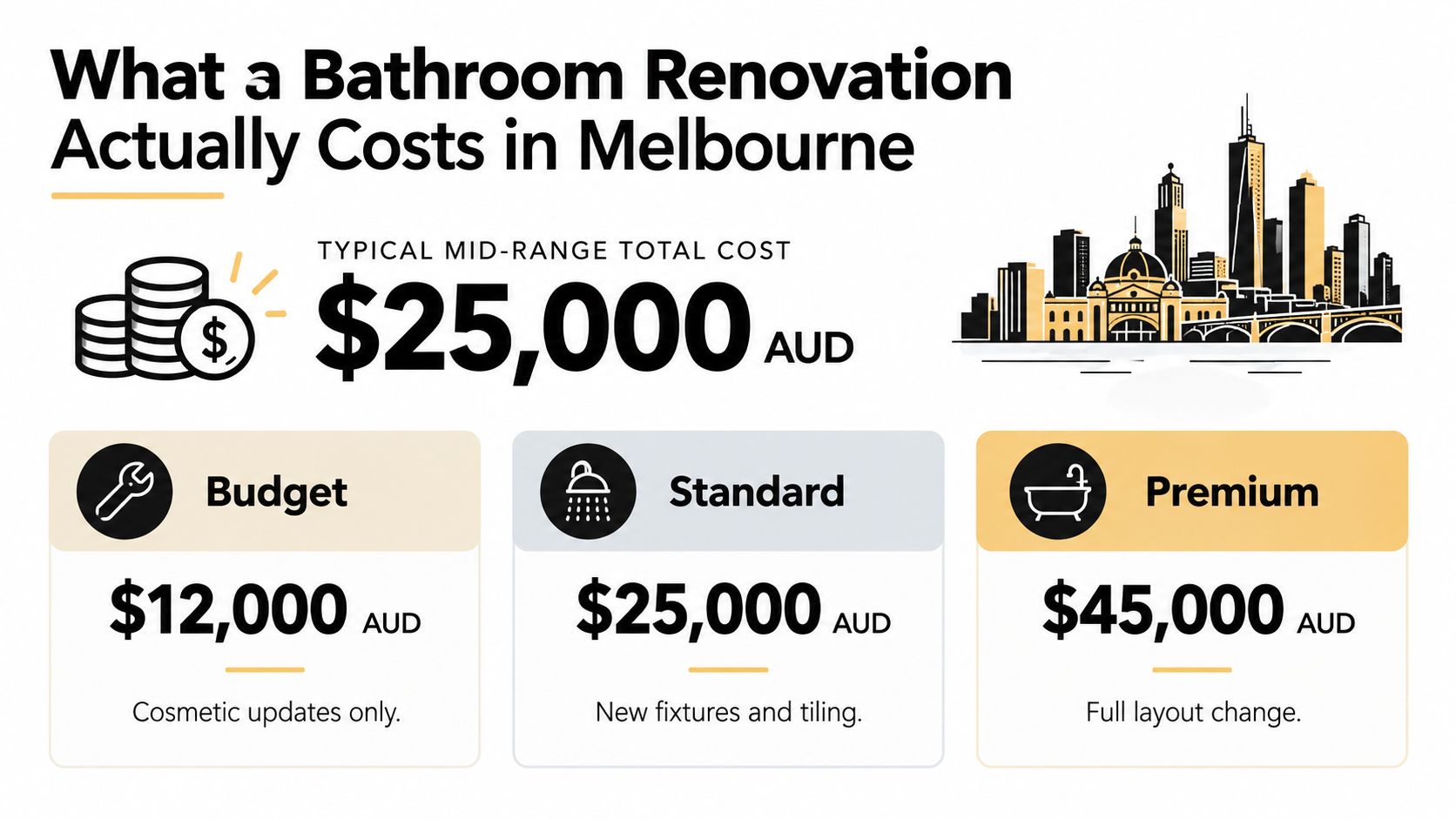
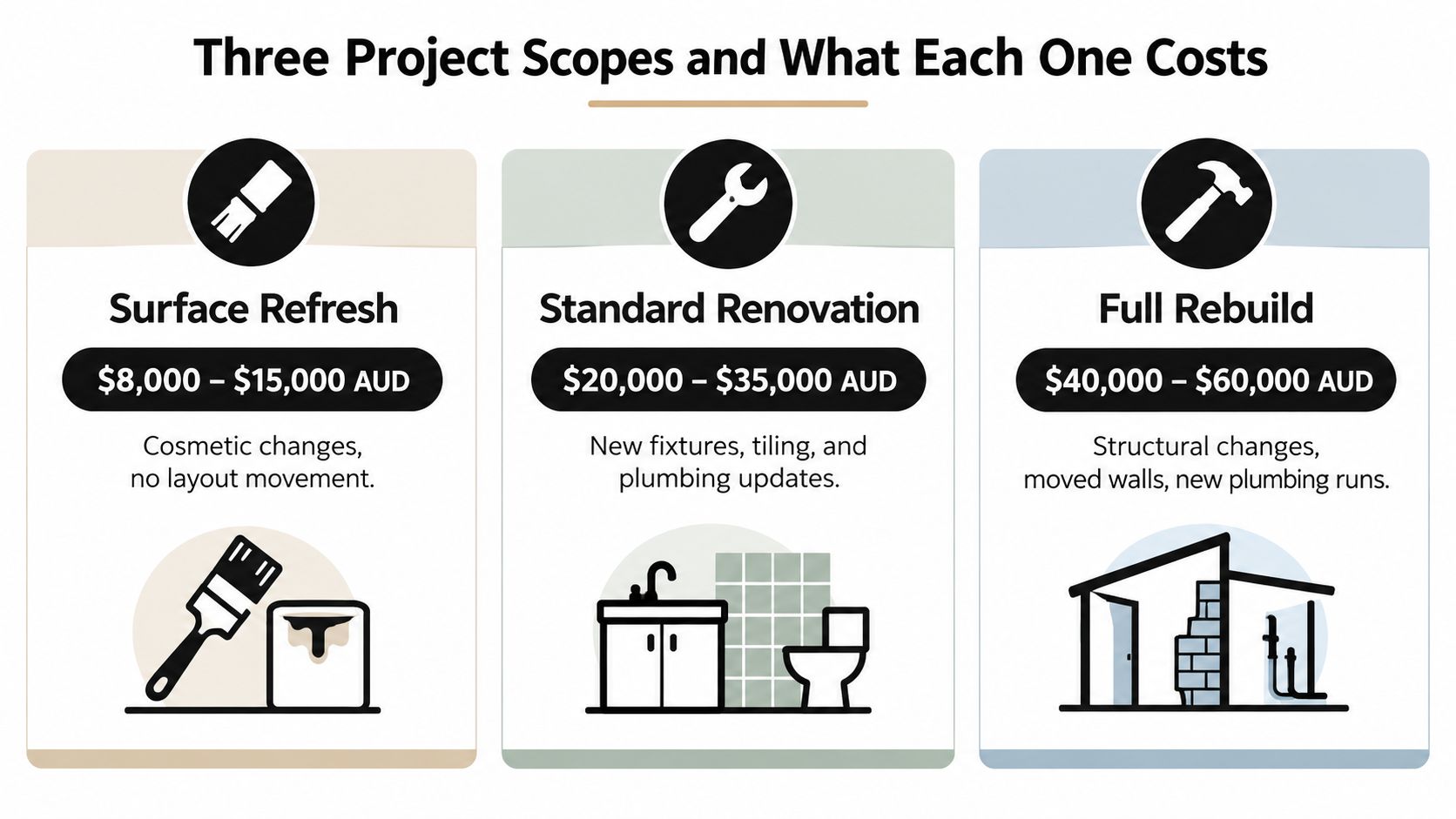
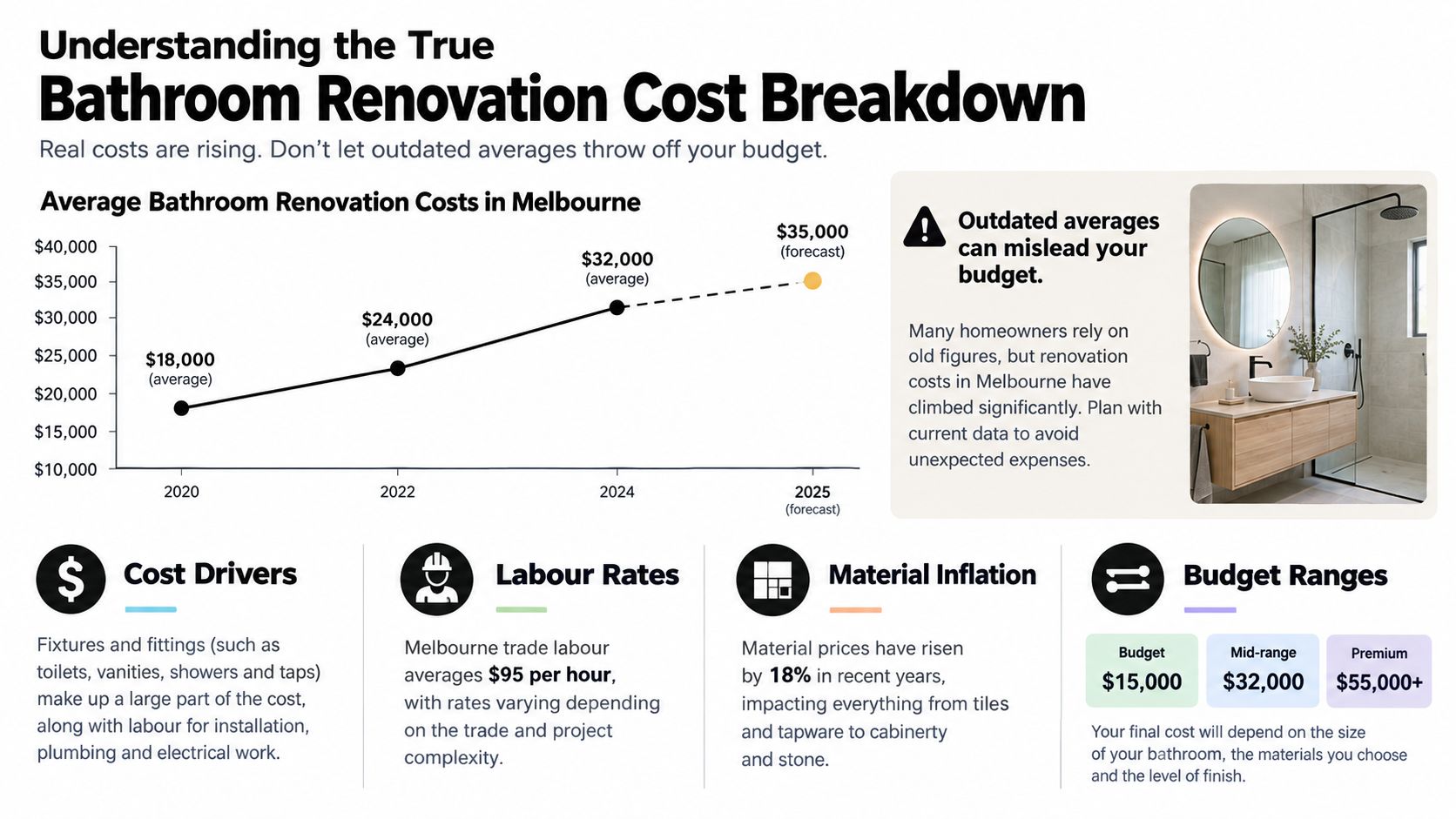
For a full bathroom renovation, Melbourne Tiling Services P/L notes a typical median project cost around $10,000 in its planning material. Use that as a rough reference only. Some bathrooms stay close to that range. Others climb quickly once remedial work, compliance upgrades, premium finishes, or structural corrections are included.

Small rooms can be deceptive. They often cost more per square metre because every junction matters, access is tighter, and there is less room to hide bad planning.

What affects the timeline

Timelines follow condition and sequencing more than room size. I have seen compact bathrooms take longer than larger ones because the base was out of tolerance and several trades had to return in the right order.

A realistic program usually allows for:

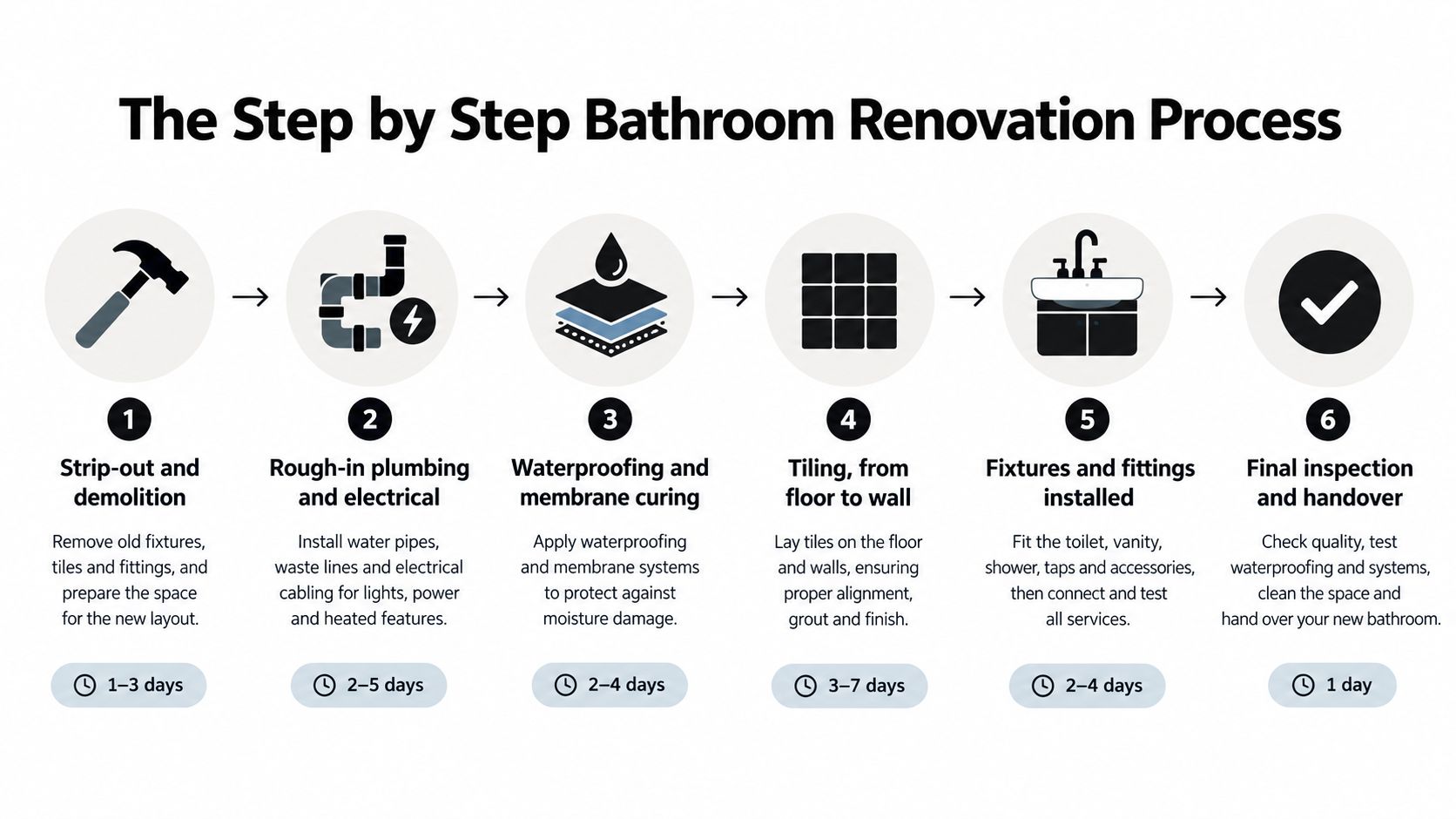
  1. Demolition and strip-out
  2. Subfloor assessment and repairs
  3. Screeding or levelling where required
  4. Waterproofing and curing
  5. Tiling and adhesive cure time
  6. Grouting, sealing and fit-off by other trades

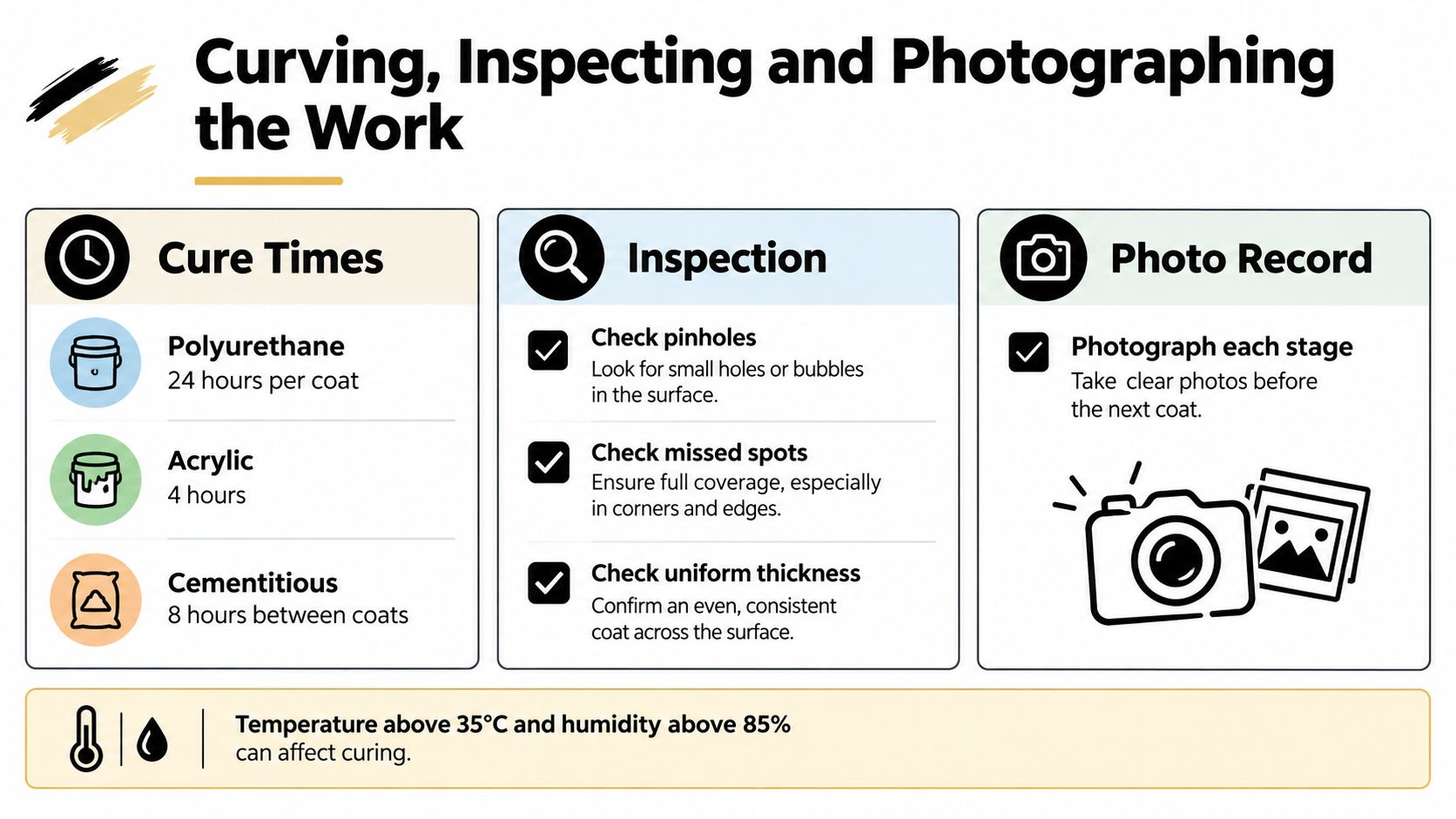
Curing time is where schedules often go wrong. Adhesives, screeds, waterproofing membranes and sealants all need their proper window. If the job gets rushed to save a day or two, the risk of bond failure, cracked grout, trapped moisture or remedial work goes up.

If you want an early budget figure, a renovation calculator can help with planning. Site inspection is still what confirms scope. That is how you separate a cosmetic tile replacement from a bathroom that needs proper preparation, code-compliant waterproofing, and repairs before a single new tile goes down.

Long-Term Care and When to Call for Remediation

A newly tiled floor doesn't need fuss, but it does need sensible care. Most long-term problems come from neglected joints, harsh cleaning, movement underneath the floor, or a leak that went unnoticed for too long.

A split image showing healthy food ingredients for daily routines and a bench for assistive living.

Simple maintenance that protects the floor

The day-to-day routine should be uncomplicated.

  • Use pH-neutral cleaners: They're less likely to damage grout, sealers or stone finishes.
  • Keep water moving: Wipe down standing water if the room stays damp for long periods.
  • Check silicone joints: Junctions around the shower, wall base and fixtures should stay intact.
  • Watch grout condition: Cracking, powdering or persistent discolouration usually means something needs attention.

If the floor is natural stone, the maintenance approach may be a bit stricter. If it's porcelain, the routine is usually simpler. Either way, cleaning should support the finish, not strip or etch it.

Signs the floor needs attention

Small symptoms often show up before major failure.

Large-format tiles are especially unforgiving here. Per AS 3958.1, deviations in the subfloor can telegraph through the tile, creating lippage and stress points that lead to cracks, which is one reason professional remediation is often required, as outlined in this article on ceramic tile installation standards and flatness.

Watch for these warning signs:

  • Loose or drummy tiles: The bond may be failing.
  • Cracked grout lines: Movement can be transferring into the tile field.
  • Lippage that seems to worsen: The substrate may be shifting or the original prep may have been poor.
  • Musty odours or staining outside the bathroom: Water may be escaping the wet area.
  • Repeated silicone failure: There may be movement or moisture pressure behind the joint.

If one tile cracks, that might be local damage. If joints, tiles and seals start failing together, treat it as a system problem.

That's the point to bring in someone who can diagnose the cause, not just patch the symptom.

Start Your Bathroom Renovation with Confidence

The main lesson with bathroom floor tiling is simple. The finish only performs as well as the build-up below it. Homeowners see the grout lines, tile colour and pattern. Registered builders look at structure, flatness, falls, waterproofing, movement and sequencing because that's what keeps the floor sound.

A durable bathroom floor isn't produced by one good decision. It comes from a chain of good decisions made in the right order. Choose a tile that suits a wet floor. Prepare the substrate properly. Form the falls correctly. waterproof to code. Use the right adhesive and movement detailing. Then allow the installation to cure and finish properly before the room is handed over.

That's why bathroom renovations work better when one accountable party manages the process. Instead of having separate trades make isolated decisions, registered builders can coordinate the demolition, plumbing, electrical, waterproofing and tiling so the room is built as one system. That reduces guesswork and helps avoid the common situation where everyone blames the layer before them.

If you're planning a new ensuite, updating a tired family bathroom, or dealing with a floor that has already started to fail, start with the parts that matter most. Ask what condition the subfloor is in. Ask how the waterproofing will be handled. Ask who is responsible for compliance. Those questions will tell you more about the likely result than any tile sample board ever will.


If you're planning bathroom floor tiling and want the whole renovation considered properly, Melbourne Tiling Services P/L can help you organise the next step. You can book a free, no-obligation quote, request 3D drawings to visualise the layout, or use the online renovation calculator to map out budget and scope before work begins.

Shower Screen Installation Cost: 2026 Melbourne Guide

In Melbourne, a standard frameless shower screen installation usually sits between AUD 1,200 and AUD 3,500, and the final figure changes with glass thickness, hardware, labour, waterproofing, and how complex the bathroom is. If you're planning a renovation, that shower screen price only makes sense when you look at it as part of the full bathroom build, not as a stand-alone product.

That's where many homeowners get caught. They start by pricing a nice piece of glass, then later discover the real job includes site measure, tile tolerances, waterproofing interfaces, hardware choice, compliance, and the sequencing of trades. By the time the screen goes in, the room should already be built correctly for it.

A shower screen is one of the last visible items in a bathroom renovation, but it depends on almost everything that came before it. If the walls are out, the tiles aren't plumb, or the waterproofing hasn't been handled properly, the glazier inherits a problem and you inherit a bigger invoice.

Table of Contents

Planning Your Bathroom Renovation Budget

Homeowners typically begin in the same place. They're standing in an older bathroom, looking at dated aluminium frames, tired silicone, and tiles that have seen better years. They search for shower screen installation cost and get pages of pricing that don't match what local trades are quoting.

That confusion isn't your fault. A lot of online content still leans on US pricing, and that's a poor guide for a Melbourne renovation. As noted by This Old House's shower glass door cost guide, much of the content in circulation cites US averages of $530 to $1,390, while Victorian homeowners face different labour rates, Australian standards, and the added cost of bundling shower screens with tiling and waterproofing. The same source notes that homeowners here can underestimate total costs by 50%+ when they treat the screen as an isolated purchase.

A person in a green hoodie stands in a modern bathroom looking at a glass shower enclosure.

The practical way to budget is to start with the whole bathroom, then place the shower screen inside that scope. If you're comparing options early, a bathroom renovation calculator for Melbourne projects is a better starting point than a generic product page because it forces you to consider waterproofing, tiling, labour coordination, and finish level together.

Why isolated pricing causes trouble

A shower screen doesn't sit on its own. It touches wall straightness, floor level, tile layout, hob detail, drainage, and the condition of the substrate behind the tiles.

If one of those elements is off, the screen may still be installable, but the job becomes slower and more delicate. That extra labour often surprises owners who thought they were just buying glass and hinges.

Practical rule: Budget for the screen after you've decided the renovation scope, not before. In bathrooms, sequence drives cost.

What a realistic budget mindset looks like

A homeowner planning a basic refresh may still choose a simpler screen to control cost. A homeowner doing a full ensuite renovation usually gets better value by coordinating the screen with the tiling and waterproofing package from the start.

That's the key trade-off. The cheaper decision at the product stage can become the expensive decision once rework, delays, and compliance are added to the project.

Typical Shower Screen Installation Costs in Melbourne

If you want a clean starting point, use local ranges rather than overseas examples. In Melbourne, a premium frameless shower screen installation typically ranges from AUD 1,200 to AUD 3,500, with cost influenced by 10 to 12 mm tempered safety glass required by AS/NZS 1288 and certified glazier labour at AUD 80 to 120 per hour, according to HomeAdvisor's shower door installation cost reference.

What most homeowners actually pay for

There isn't one universal number because “shower screen” covers very different products. A compact replacement with standard hardware is a different job from a custom frameless panel with premium fittings and exact tile alignment.

The table below is the most practical way to compare options.

Screen Type Typical Cost Range (AUD) Pros Cons
Framed 800 to 1,500 Lowest upfront cost, more forgiving on uneven walls, easier to source Bulkier look, more frame lines to clean, less suited to high-end bathroom renovations
Semi-frameless Around 2,100 median for common installs Good balance of cost and appearance, lighter visual feel, suits many standard bathrooms Still has visible framing, less seamless than full frameless
Frameless 1,200 to 3,500 Premium finish, open look, strong resale appeal, works well in modern bathrooms Highest cost, relies on accurate walls and tiles, hardware quality matters more

Choosing between framed, semi-frameless, and frameless

A lot of homeowners start out wanting frameless, then pull back when they see the top end of the range. That's reasonable. Frameless looks excellent, but it only performs properly when the bathroom has been prepared to suit it.

Semi-frameless is often the middle ground that makes sense. It gives a cleaner result than framed, but it usually places less pressure on the room being perfectly true.

You can also compare local style and product options through Melbourne shower screen installation services, especially if you're still deciding which format suits your renovation scope.

Frameless is usually the right choice when the rest of the bathroom is being rebuilt properly. It's often the wrong place to spend if the room around it is still compromised.

For budget-focused projects, framed screens still have a place. They can be practical in rental properties, basic updates, or where the goal is to replace a failing enclosure without rebuilding the room.

For a full bathroom renovation, though, most owners want the cleaner line and lighter feel of semi-frameless or frameless. The screen becomes part of the design, not just a barrier to keep water in.

Deconstructing Your Quote Materials vs Labour

A proper quote should tell you more than the total. It should show where the money is going and why. That's how you compare one proposal against another without getting fooled by a low headline number.

A refreshing green drink with ice cubes and lemon slices beside a technical drawing diagram.

In Melbourne, frameless shower screen labour can range from $100 to $276 per task, and bundling installation with waterproofing membranes and self-levelling screeds through a registered builder can reduce total outlay by 10 to 15% by coordinating trades and avoiding rework, according to Airtasker's shower screen installation cost guide.

What you are paying for in materials

The glass itself is only the starting point. In a frameless setup, thicker toughened safety glass, cut-outs, polished edges, and exact sizing all push the materials cost upward.

Then there's hardware. Hinges, brackets, channels, handles, and finish colour all matter. Cheaper hardware can look fine on day one and start showing play, corrosion, or poor door movement later.

A better quote usually spells out items such as:

  • Glass specification. Thickness, safety compliance, edge finish, and whether the panels are standard or custom.
  • Hardware finish. Chrome, matte black, or another finish that matches tapware and bathroom fittings.
  • Sealing components. Channels, silicone, and any junction detail needed where the screen meets tile, hob, or wall.

What labour should include

Labour is where experience shows. Good installers don't just arrive and mount the panel. They check dimensions, wall condition, tile plumb, fixing points, and clearances before they start drilling.

For integrated bathroom renovations, labour may also include site protection, coordination with the tiler or waterproofer, and making sure the screen sits correctly against finished surfaces. That's why bundled jobs often cost less overall than separately managed trades.

Cheap labour usually means one of two things. The scope is missing important steps, or someone else will be asked to fix the result later.

A decent quote should account for measuring, handling heavy glass, installation, sealant work, and cleanup. If those items are vague, ask for them in writing.

Later in the process, homeowners often find it useful to watch a clear installation overview before signing off on the scope:

Key Factors That Influence Your Final Cost

Two shower screens can look similar in photos and land at very different prices on a quote. The difference usually comes down to hidden complexity, not sales padding.

A flowchart infographic titled Factors Affecting Shower Cost, listing glass type, hardware quality, and layout complexity.

The biggest cost drivers

The first driver is glass specification. Frameless designs rely on thicker glass and tighter tolerances. If the opening is non-standard, the panel often needs custom fabrication rather than a stock size.

The second driver is hardware quality. Better hinges and brackets cost more, but they also handle heavy glass better and hold alignment longer. In a bathroom, that matters.

The third is layout complexity. A straight screen on square walls is one thing. A screen that has to work around an awkward nib wall, a sloping ceiling, a recessed channel, or a tight door swing becomes a more exact installation.

Here's the hierarchy most homeowners should keep in mind:

  1. Custom sizing and shape
    Custom panels, unusual returns, and non-standard openings generally move the quote faster than any cosmetic choice.

  2. Bathroom condition before the screen arrives
    Out-of-plumb walls, bowed substrates, poor tile cuts, and inconsistent floor level all make the glazier's work harder.

  3. Finish selections
    Premium hardware finishes and higher-spec components lift cost, but they're often easier to justify in a quality renovation because they stay visible every day.

What works and what usually doesn't

What works is designing the shower screen with the bathroom, not after it. If the tiler knows the screen detail in advance, grout lines, falls, hob size, and wall build-up can all support a clean fit.

What usually doesn't work is trying to “make frameless fit” into a room that wasn't set up for frameless. That's when installers start compensating for poor surfaces, and the final result can still look compromised.

A shower screen exposes errors. Frames can hide some of them. Frameless rarely does.

Another practical point is restraint. Not every bathroom needs multiple panels, expensive coatings, or boutique fittings. In many homes, a standard layout with solid hardware gives the best result for the money.

Sample Quote Scenarios for Melbourne Homes

The easiest way to understand shower screen installation cost is to look at real-world renovation patterns. Not exact invoices. The shape of the job.

Scenario one simple replacement

A small apartment bathroom in Kew has an old framed screen that's leaking at the corners and looks tired. The owner isn't rebuilding the whole room. They want a neat replacement that improves appearance without opening up the walls.

A framed or semi-frameless option usually makes sense in this context. The lower-cost path is framed, commonly sitting around AUD 800 to AUD 1,500 based on the verified Melbourne and Victorian ranges already noted earlier in this article. It suits a like-for-like replacement because it's more forgiving if the bathroom isn't perfectly square.

Typical quote shape:

  • Supply of standard screen with basic hardware
  • Removal of old enclosure
  • Installation and resealing
  • Minor making-good where practical

The mistake here is forcing a premium frameless screen into an older bathroom with existing tiles and limited rectification scope. The product can be good and still be the wrong fit for the room.

Scenario two full ensuite renovation

A family home in Highett is doing a complete ensuite renovation. The walls are being rebuilt, waterproofing is redone, large-format porcelain is going in, and the owners want a custom frameless screen in a dark hardware finish.

This is exactly the type of project where a frameless screen earns its keep. The room is being prepared correctly, so the screen isn't trying to solve existing defects. Because the bathroom renovation is integrated, the builder can coordinate the waterproofing, screeding, tiling, and final glass measure in the right order.

The total bathroom spend matters more than the isolated screen number here. Homeowners who focus only on the cost of glass usually miss the value in sequencing and avoiding rework.

Scenario three architectural feature

A Brighton new build has a larger shower zone, more open space, and a strong design brief. The screen is no longer just a practical divider. It's a visible architectural element in the bathroom.

This kind of job often pushes toward the upper end of the local frameless range because the design asks more of the materials and the installation. The panel spans are larger, the visual lines matter more, and the tolerance for imperfect alignment is lower.

A premium result here usually depends on three things:

  • Early detailing with the bathroom design
  • High-grade hardware that suits heavier glass
  • An installer working from true surfaces, not patched ones

The common thread across all three scenarios is simple. The right screen is the one that matches the condition of the bathroom and the scope of the renovation, not the one with the best showroom photo.

Compliance Timelines and The Role of a Registered Builder

A shower screen is fitted late in the job, but compliance starts much earlier. If the waterproofing, substrate prep, plumbing positions, and tiling sequence aren't managed properly, the shower screen stage becomes slower, riskier, and more expensive.

In Victoria, shower screen installation costs rose 18% annually from 2022 to 2025, driven by standards including AS 3740 for waterproofing, and those compliance requirements add 10 to 15% to labour fees because certified installers are needed, according to Wellfor's 2025 shower door installation cost breakdown.

A construction worker uses a green level to ensure a glass shower screen is perfectly vertical.

Why timing matters

The screen installer should be arriving to a bathroom that is ready, dry, tiled, and dimensionally reliable. If waterproofing certificates are unclear, tile set-out hasn't considered fixing points, or wall lines are inconsistent, everyone starts improvising.

That's when jobs drift. The glazier delays. The owner waits. Another trade gets called back. Small sequencing mistakes create expensive friction.

For homeowners dealing with renovation paperwork, waterproofing records and certification matter as much as the visible finish. If you're unsure what should be documented in Victoria, it helps to review a waterproofing compliance certificate guide for Victorian bathroom works.

Why registered builder coordination saves money

A registered builder brings order to the sequence. The builder doesn't just appoint trades. They manage handover points between waterproofing, screeding, tiling, plumbing, and final screen installation.

That matters because shower screens rely on all of those earlier stages. A registered builder can catch issues before the glass is measured, not after.

Good bathroom renovations are coordinated backwards from the finish. If the final screen needs straight lines and clean fixing points, the builder has to protect that outcome from day one.

Trying to run separate trades yourself can work on a very simple job. On anything more substantial, it often creates overlap, uncertainty, and avoidable cost.

How to Hire the Right Installer and Save Money

The cheapest quote isn't always the cheapest job. If the installer doesn't understand how the screen interacts with waterproofing, tile tolerances, and compliance, you can save at the front and pay later.

Australia's BCA and NCC-related waterproofing obligations are often missed in basic online pricing. As noted in Horow's 2025 installation cost guide, compliance items tied to strict mandates can add 20 to 35% or $400 to $1,200 to base costs for certificates and leak-testing. That's why cutting corners on who manages the work can be expensive.

A shortlist that protects your budget

When you speak to installers or builders, ask for the basics in writing:

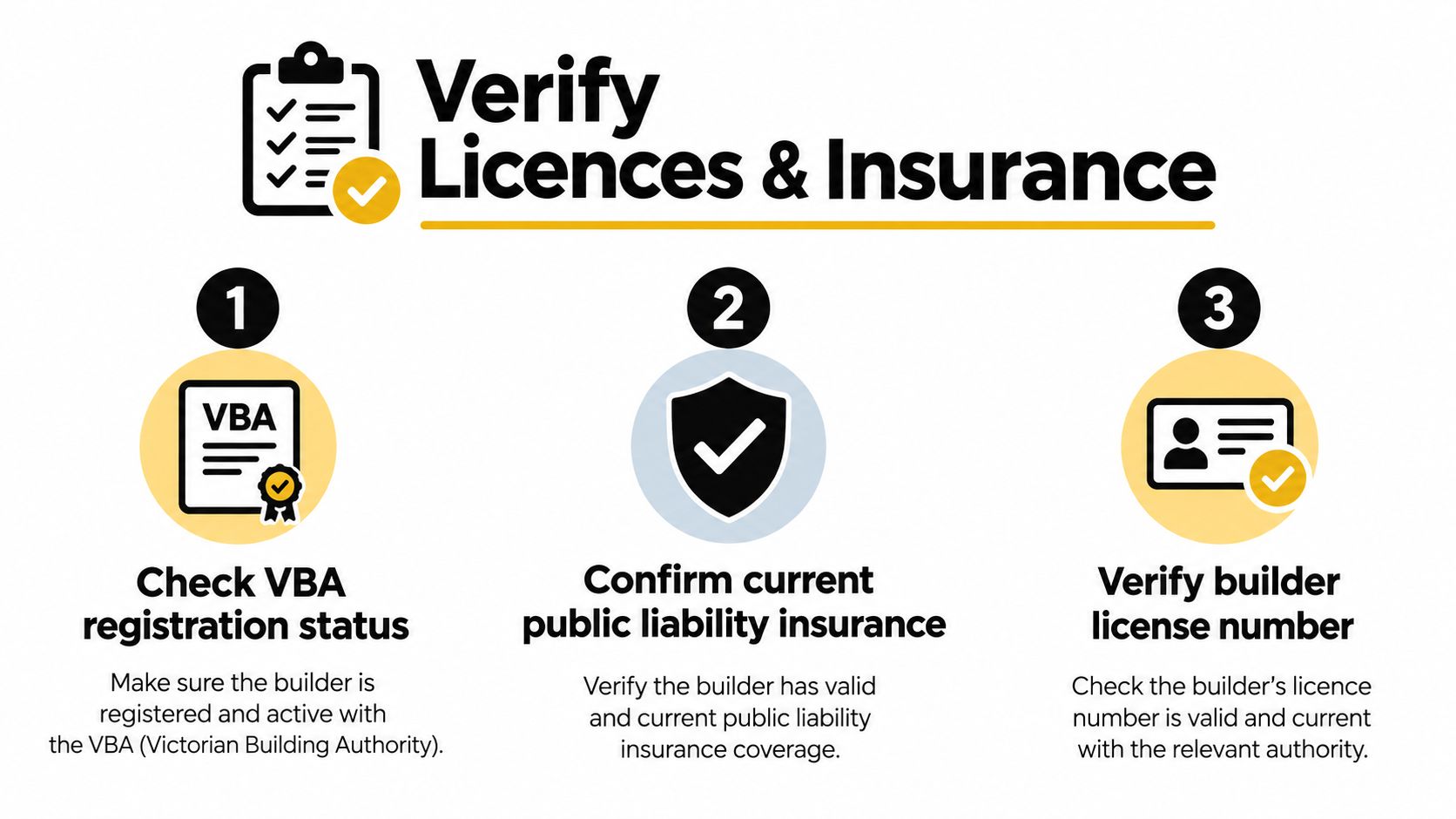
  • Registration and insurance. If bathroom renovations are involved, confirm they're appropriately registered and insured for the scope.
  • A detailed written quote. You want materials, labour, inclusions, and exclusions clearly listed.
  • Recent Melbourne bathroom work. Not generic gallery photos. Recent work in homes similar to yours.
  • Trade coordination plan. Ask who handles waterproofing, tiling, measurements, and final installation timing.

Where to save and where not to

There are sensible ways to reduce shower screen installation cost without lowering the standard of the bathroom.

  • Keep the layout standard if you can. Straight runs and standard panel sizes are usually easier to price and install.
  • Spend on preparation. Plumb walls and good tile work make every later trade more efficient.
  • Avoid bargain hardware in wet areas. It's touched daily and carries the stress of heavy glass.
  • Bundle works under one manager when the bathroom is being fully renovated. That usually prevents call-backs and mismatch between trades.

A good installer protects the bathroom. A good registered builder protects the whole sequence.


If you're planning a bathroom renovation and want a realistic view of shower screen installation cost in Melbourne, Melbourne Tiling Services P/L can help you price the full project properly. Their team handles bathroom renovations, waterproofing, tiling, screeding, and frameless shower screens as an integrated build, which is the safest way to avoid leaks, delays, and expensive rework.

Floor Tiling Melbourne: Expert Guide to the Best Finish

You're probably looking at tile samples, Pinterest saves, and a bathroom that's overdue for work, while also wondering where the budget blows out and how to avoid a leak six months after handover. That's a normal place to start. Most Melbourne homeowners don't struggle with choosing a colour. They struggle with knowing what sits underneath the tile and whether the whole job is being built properly.

That matters more now because renovation costs have been moving the wrong way for homeowners. Australian Bureau of Statistics housing data for Victoria shows renovation spending rose 12% in 2025 due to inflation in materials like ceramic tiles, which is why clear planning and cost control matter from day one, as noted by Melbourne Tiling Services on renovation budgeting in Victoria.

Floor tiling melbourne projects go well when the finish is treated as the last step, not the first. In a proper bathroom renovation, the tile selection, subfloor preparation, waterproofing, drainage falls, and trade coordination all affect the final result. That's the difference between a floor that still looks right years later and one that starts sounding hollow, holding water, or cracking around movement points.

Table of Contents

Starting Your Melbourne Tiling Renovation

A bathroom floor rarely fails because the tile was unattractive. It fails because the planning was shallow. Homeowners often come in focused on pattern, size, and price per tile, then find out too late that the essential decisions were about substrate condition, shower falls, waterproofing details, and whether the person quoting the work can manage the whole renovation.

As a Registered Builder, the first thing I look at isn't the tile board. It's the room itself. Older Melbourne homes often have movement in the floor, previous water damage, patched plumbing penetrations, or walls that aren't square. If those issues aren't resolved before tiling starts, the finish will always be compromised no matter how expensive the tile is.

Start with the room, not the tile

A sound tiling plan should answer a few basic questions early:

  • What is the subfloor made of: Concrete behaves very differently from timber.
  • Is this a tile-only job or part of a bathroom renovation: The answer changes sequencing, access, and who carries responsibility.
  • Will the drainage work properly: Wet area performance matters more than visual symmetry.
  • Who is coordinating trades: Plumber, waterproofer, carpenter, electrician, screen installer, and tiler all affect the floor outcome.

Practical rule: If the quote talks a lot about finishes and very little about preparation, it's incomplete.

Builder thinking changes the result

A tiler can install a floor well. A builder has to think about compliance, sequencing, and risk across the entire room. That matters in bathroom renovations because one rushed trade can undo another. A plumbing change can alter falls. A poor patch can create movement. A missed waterproofing detail can send water behind finished surfaces.

That broader view is what keeps floor tiling melbourne projects from becoming repair jobs later. The best finish starts before a single tile is laid.

Choosing the Right Tile for Your Melbourne Home

Good tile selection is about where the tile is going and how the room will be used. A bathroom floor, laundry, hallway, and open-plan living area don't ask the same things from the material. Some homeowners choose based on showroom appearance alone, then end up with a product that needs more maintenance than expected or highlights every issue in the substrate.

A young couple reviewing various colored tile samples for home renovation on a bright kitchen table.

If you're comparing finishes, these tiling materials used in bathroom renovations give a useful starting point. The ultimate test is matching the material to the room.

Porcelain for hard-wearing bathrooms and living areas

Porcelain is usually the safest all-round choice for Melbourne homes. It's dense, durable, and works well in wet areas, especially when you want a clean modern look without the upkeep of natural stone. For bathroom floors, it gives you a reliable surface that handles moisture well and suits both small formats and large-format layouts.

It also gives builders and tilers more flexibility in design without creating maintenance issues for the owner. In family homes, rentals, and busy ensuites, porcelain tends to be the material that causes the fewest long-term complaints.

Ceramic where design matters more than punishment

Ceramic still has a place. It can work well on walls and in lower-stress areas, and many homeowners like it because there's a wide range of colours and finishes. On floors, though, I'm more selective.

If the room takes regular foot traffic, gets wet often, or needs to stand up to daily wear, ceramic usually isn't my first recommendation. It can still perform well in the right application, but it's less forgiving of poor product choice and poor installation.

Marble when you want character and accept maintenance

Marble looks excellent when the design calls for softness, variation, and a more natural finish. It suits high-end bathrooms, entry spaces, and homes where the owners understand what natural stone involves.

That trade-off matters. Marble needs more care than porcelain. It can mark, it can require sealing, and it shows installation errors quickly because the eye reads natural stone differently than it reads a uniform manufactured tile. If the substrate isn't flat and the layout isn't carefully controlled, marble won't hide it.

Marble can look refined for years, but only if the owner accepts that natural stone is not a low-maintenance product.

Kerlite for large-format minimalism

Kerlite and other large-format slim porcelain products create a very different visual effect. Fewer grout lines, broader visual flow, and a more architectural finish. They can work beautifully in bathrooms and open-plan areas, but they demand a flat substrate and careful handling.

What works with standard porcelain doesn't always work with a large-format slab. Minor irregularities underneath become visible quickly. Adhesive selection, handling, coverage, and cutting technique all matter more. Installer experience becomes particularly evident.

A practical way to choose

When clients are torn between options, I narrow it down like this:

Tile type Best suited to Main advantage Main trade-off
Porcelain Bathrooms, ensuites, living areas, hallways Durable and low maintenance Can feel plain if the selection is too safe
Ceramic Selected floors, many wall applications Broad style range Less ideal for harder-wearing floor areas
Marble Premium bathrooms and statement spaces Natural variation and character Higher maintenance and less forgiving
Kerlite Large-format designer spaces Minimal grout lines and sleek finish Installation demands are much higher

If you want one material that balances appearance, performance, and practicality, porcelain is often the steady choice. If you want a statement surface, marble or Kerlite can deliver it, but only when the preparation and installation standard match the material.

How to Budget for Floor Tiling Costs

A bathroom floor quote often looks reasonable until the old tiles come up. Then the actual costs appear. In Melbourne homes, especially older timber-frame houses, the floor can need straightening, stiffening, new sheeting, or a full rebuild of the wet area base before any tiling starts.

That is why I price bathroom floors as part of the renovation system, not as an isolated tiling job. Tile selection matters, but the bigger cost swings usually come from what is under the tile and how much coordination the room needs across demolition, plumbing, waterproofing, carpentry, and tiling.

Labour rates are only one part of the number

Recent Australian market guides published in late 2025 put tiler labour for standard floor tiling in a broad range, with natural stone and more complex layouts sitting above standard porcelain rates, as noted in this Australian tiler rates per square metre guide. Use that as a rough check only.

Small bathrooms rarely price neatly by square metre. A 10m² bathroom can involve dozens of cuts, set-outs around wastes and corners, waterproof detailing, trim work at doorways, and tighter tolerances than a much larger open floor. Builder-led pricing also has to allow for what happens before the tiler starts, because if the substrate is moving or the falls are wrong, the floor finish is already at risk.

What a proper quote should cover

A floor tiling allowance should break out the items that commonly get missed or underquoted:

  • Demolition and strip-out: Removal of tiles, screed, bedding, sheet underlay, and any failed substrate material.
  • Waste removal: Skip bin, tip fees, and labour to remove debris, especially where access is tight.
  • Subfloor correction: Levelling, patching, new underlay, cement sheet, screed, or structural rectification on timber floors.
  • Waterproofing: Membrane application, bond breakers, corners, penetrations, and curing time.
  • Setting materials: Adhesives, grout, primers, trims, movement joints, silicone, and stone sealers where needed.
  • Detailing: Floor waste cuts, threshold transitions, shower screen line-up, and final finish quality.

For wider project planning, this bathroom renovation cost guide for Melbourne homeowners helps place floor tiling inside the total bathroom budget.
Sample Budget Breakdown for a Standard Melbourne Bathroom (10m² Floor)

Expense Item Typical Cost Range (AUD)
Demolition and waste removal $600 to $1,500
Subfloor preparation and levelling $800 to $2,500
Waterproofing $700 to $1,500
Tiler labour for porcelain $800 to $1,600
Tiler labour for marble or other natural stone $1,200 to $2,400
Adhesives, grout, sealants, trims $350 to $900
Final detailing and clean $150 to $400

These figures are examples, not fixed rates. Access, floor condition, tile size, pattern, drainage setup, and whether the bathroom sits on concrete or timber all shift the final number.

The biggest budgeting mistake is comparing quotes that do not include the same scope. A cheap price can mean no substrate repair, minimal waterproofing allowance, weak material specs, or no provision for correcting falls. That saving disappears fast if the bathroom floor has to be redone after handover.

The expensive part is not always the tile. In many bathroom renovations, the expensive part is fixing what was hidden underneath.

The Renovation Process From a Builder's Perspective

A floor tiling job inside a bathroom renovation needs the right order. Good trades can still produce a poor result if the sequence is wrong. Builder-led projects usually feel more controlled for this reason, because someone is responsible for the room as a whole, not just one part of it.

A five-step infographic showing the professional high-quality process for tiling installation from design to final inspection.

The sequence that prevents failure

The job usually starts with demolition and assessment. Once the existing floor is exposed, the substrate has to be checked for movement, damage, moisture issues, and level. On concrete, that often means grinding or patching. On timber, it may involve structural correction before any sheet underlay goes down.

Then comes forming the floor properly. In wet areas, this stage is essential because Australian Standard AS 3958.1 mandates a minimum floor fall of 1:80 in wet areas to ensure effective drainage, as outlined in this explanation of Australian tiling standards. If the floor doesn't drain, water sits. Once water sits, grout, tile bond, and adjacent finishes all start dealing with a problem they shouldn't have had.

After falls are established, waterproofing is applied in line with the room layout and penetrations. This stage needs clean surfaces, proper detailing, and curing time. Rushing straight from one step to the next is one of the most common reasons bathroom floors fail.

Why each layer matters

Each stage solves a different problem:

  1. Subfloor correction deals with movement and unevenness.
  2. Screeding or levelling establishes the geometry of the finished floor.
  3. Waterproofing protects the structure beneath the tile.
  4. Tiling and bedding create the wearing surface.
  5. Grouting, caulking, and final sealing where required finish the system.

When builders coordinate the room, they also coordinate the handover points between trades. The plumber can't leave penetrations messy. The carpenter can't leave a springy section under a premium tile. The waterproofer can't apply over a dirty or unstable base. Those details are where good bathroom renovations separate themselves from average ones.

The tile is the visible surface. The renovation quality sits underneath it.

Why trade coordination matters

This is also where a registered builder adds value over a tiling-only approach. In a bathroom renovation, the floor ties into shower screens, plumbing set-outs, cabinetry, door clearances, and sometimes underfloor heating or balcony thresholds. Those elements need to be coordinated before the tile goes down, not improvised after.

One example is Melbourne Tiling Services P/L, which handles bathroom renovations, waterproofing, screeding, self-levelling, and tile installation under a registered builder model. That type of setup can reduce confusion on site because one party is managing sequencing and accountability across the room.

Avoiding Common and Costly Tiling Disasters

Most floor failures don't look dramatic on day one. They start small. A tile sounds hollow. Water sits near the shower entry. A hairline crack appears at a doorway. Then the owner starts chasing repairs in a finished bathroom.

A close-up view of a cracked marble floor tile in a hallway with modern interior design.

Cracked and drummy tiles on timber floors

This is common in older Melbourne homes. The bathroom might look solid from above, but the timber subfloor underneath still moves. Tile and grout don't like movement. They want a stable base.

That's why Australian Standards require a fibre-cement underlay on timber floors and a maximum deflection of 1/360 of the span to prevent tile cracking from substrate movement, according to the Australian Tile Council tiling facts guide. If that requirement is ignored, the floor can flex under traffic and the finish starts to fail.

The fix is straightforward in principle, even if it isn't cheap. Stabilise the substrate, install the right underlay, fasten it correctly, and only then prepare for tiling. Skipping that process to save time is exactly how drummy floors and cracked grout lines show up.

Leaks that start below the tile

Homeowners often blame the tile when a shower leaks. Usually the tile isn't the main problem. The issue is below it. Failed waterproofing junctions, poor detailing at penetrations, and rushed floor preparation are much more common causes.

If you're reviewing methods before work starts, look at how bathroom waterproofing systems are applied in renovation work. The floor and wall junctions, waste locations, and transitions matter far more than the tile pattern.

A quick visual explanation can help if you're trying to spot the signs of poor practice on site.

Three red flags during installation

  • Tiles laid over an obviously uneven base: The installer is asking the adhesive to fix a substrate problem.
  • No clear discussion of movement and transitions: Floors need to cope with real building movement.
  • Wet area work pushed through too fast: Curing time matters. A rushed bathroom often becomes a repair job.

If the person doing the work can't explain what sits under the tile, they probably shouldn't be laying it.

How to Hire a Reputable Melbourne Tiler or Builder

Melbourne gives homeowners plenty of choice, but choice can make vetting harder. Australia's tiling services industry has over 20,000 businesses, which makes it a fragmented market where reputation, licensing, and reliable process matter, based on IBISWorld's analysis of Australia's tiling and carpeting services industry.

That size is one reason low quotes and polished sales talk don't tell you much. You need to know who is legally responsible for the work, who is coordinating the other trades, and whether the contractor understands bathroom renovations as a system rather than a tile-laying task.

A professional contractor in a green uniform shakes hands with a female client in a kitchen.

What to check before you sign

A reputable contractor should be comfortable being checked. If they get evasive about registration, insurance, or process, that's useful information.

Use a simple shortlist:

  • Verify registration and licensing: For bathroom renovations, check whether you're dealing with a properly registered builder where required.
  • Ask who manages the full scope: A solo tiler may do good work, but bathroom renovations involve more than tiling.
  • Review wet area experience: Bathrooms, balconies, and leak rectification require a stronger process than a dry internal floor.
  • Look at previous work carefully: Focus on drainage, detailing, finish consistency, and edge treatment, not just styling.
  • Read the quote line by line: If preparation is vague, ask for detail in writing.

Questions worth asking on site

Don't ask generic questions like “Do you do quality work?” Ask questions that force a technical answer.

  • How will you assess the existing subfloor before tiling starts
  • How are floor falls formed in the shower and main bathroom area
  • Who handles waterproofing and how is that coordinated with the tiling
  • Have you installed the exact material I've selected before
  • Who is responsible if another trade delays or affects the floor finish
  • What happens if you uncover substrate damage after demolition

The main difference between hiring a tiler and engaging a registered builder is accountability. A tiler is responsible for tiling work. A registered builder on a bathroom renovation is responsible for how the whole project is organised, sequenced, and delivered. If your project involves plumbing changes, waterproofing, structural correction, or multiple trades, that difference matters.

Project Timelines and Long-Term Floor Care

A realistic bathroom floor timeline

A standard bathroom floor tiling job usually moves through demolition, substrate preparation, waterproofing, tiling, grouting, and final curing. The exact timing depends on access, substrate condition, product choice, and whether the floor is part of a larger bathroom renovation. The mistake homeowners make is assuming tiling starts the moment the old floor comes up.

The slow parts are often the important parts. Preparation has to be done properly. Waterproofing needs time. Adhesives and grout need to set before the room is put back into service. If the schedule sounds too compressed, ask what has been shortened.

How to keep the floor looking right

Long-term care is simple when the installation is sound.

  • Use pH-neutral cleaners: Harsh products can damage grout, sealers, and some stone finishes.
  • Keep sealant lines in good condition: Perimeter and transition joints should be inspected, not ignored.
  • Don't drag heavy items across the floor: Chips usually come from impact, not normal foot traffic.
  • Clean standing water promptly: Especially near screens, doorways, and edges.

A well-built tiled floor shouldn't need constant attention. It should just perform.


If you're planning floor tiling melbourne work as part of a bathroom or ensuite renovation, Melbourne Tiling Services P/L can help with builder-led advice on tile selection, budgeting, waterproofing, and full project coordination across Melbourne and greater Victoria.

Terrazzo Bathroom Tiles: 2026 Melbourne Design Guide

You're probably in the same spot as a lot of Melbourne homeowners. You want a bathroom that feels sharper than the standard white box, but you don't want to spend good money on something that dates quickly, stains easily, or starts showing movement cracks after a couple of winters and a few hot showers.

That's where terrazzo bathroom tiles come into the conversation. They've got character, they work in both older Victorian homes and newer apartments, and they can look either quiet and refined or bold enough to carry the whole room. But terrazzo only performs well when the renovation is handled properly from the framing and substrate through to waterproofing, slip resistance, tile selection, and final finishing.

In Melbourne, that matters more than most style-led blogs admit. Bathroom renovations here often involve uneven floors, old timber structures, moisture issues, and compliance requirements that can't be left to guesswork. A registered builder who understands the whole assembly, not just the tile face, is what separates a polished result from an expensive rectification job.

Table of Contents

Why Terrazzo Is the Timeless Choice for Melbourne Bathrooms

You see it most clearly five or ten years after the renovation. The bathroom still looks current, the floor still feels solid underfoot, and the tile choice has not dated the room.

That long life is why terrazzo keeps turning up in well-planned Melbourne bathroom renovations. It has visual movement, so it does not read flat or cheap, but it also avoids the short shelf life that comes with many highly patterned trends. A good terrazzo selection can blend into the background or carry the whole design, depending on the chip size, base colour, and finish.

Melbourne homes benefit from that flexibility. In an Edwardian or Californian bungalow, terrazzo can pick up the softer, heavier character of the house without feeling faux-heritage. In a new apartment or townhouse, the same material can look sharp and restrained. If you are still comparing options, it helps to understand how terrazzo sits alongside stone, porcelain, and ceramic in a bathroom renovation. This guide to bathroom tiling materials and finishes is a useful starting point.

It suits both period homes and modern apartments

The material gives you range without losing durability. Fine-chip terrazzo in warm white, pale grey, or muted beige works well in bathrooms where the joinery, tapware, or lighting is doing the heavy lifting. Larger aggregate, stronger contrast, or coloured chips bring more energy and suit powder rooms, feature walls, and bolder schemes.

That matters in Melbourne, where many renovations are trying to balance resale, daily use, and the character of the existing home.

Practical rule: If you want a bathroom to hold up visually, choose a finish that gives you design flexibility without creating maintenance headaches. Terrazzo usually does that better than trend-driven decorative tiles.

It rewards a full renovation approach

Terrazzo performs best in bathrooms that are rebuilt properly, not patched around old problems. In Melbourne, that often means dealing with uneven subfloors, tired wall linings, out-of-level framing, and wet area details that no longer meet current expectations.

As a registered builder and tiler, I look at terrazzo as part of the whole bathroom build. Floor waste position, falls, sheet set-out, waterproofing build-up, movement joints, and transition heights all affect whether the finished room looks premium or disappointing. The tile may be the feature people notice first, but the result depends on the structure and preparation underneath it.

That is one reason terrazzo has stayed relevant. It rewards good design, but it also rewards proper construction, which is exactly what a full bathroom renovation should deliver.

What Exactly Are Terrazzo Tiles?

Terrazzo is easiest to understand as a recipe. You've got decorative chips, called aggregate, and you've got a binder that holds those chips together. Once the mix cures, the surface is ground and polished or honed to expose the pieces and create the finished pattern.

An infographic showing the four-step production process of terrazzo including ingredients and finishing techniques.

The basic recipe

The aggregate is where the look comes from. That can include marble, quartz, granite, or glass fragments. The binder is what changes the behaviour of the tile.

Most homeowners will come across three categories:

  • Cement-based terrazzo uses a cement matrix with aggregate mixed through it. It has a more traditional feel and more natural variation.
  • Epoxy-based terrazzo uses a resin binder. It's commonly chosen where a more uniform, less porous finish is wanted.
  • Terrazzo-look porcelain isn't true terrazzo, but it reproduces the look on a porcelain body and is often the simpler option for standard residential bathrooms.

If you're comparing materials for a renovation, it helps to understand the broader differences between stone, porcelain, ceramic and specialty tile products before locking anything in. This guide to bathroom tiling materials and finishes is useful for that early selection stage.

Comparison of terrazzo tile types

Attribute Cement-Based Terrazzo Epoxy-Based Terrazzo Terrazzo-Look Porcelain
Composition Cement binder with stone or glass aggregate Resin binder with decorative aggregate Porcelain tile with terrazzo-style printed surface
Look Natural, solid-body, traditional depth Cleaner, more uniform, often more seamless in appearance Highly consistent and easier to match across batches
Best use Floors and feature areas where mass and authenticity matter Commercial-style wet areas and low-maintenance surfaces Standard residential walls and floors
Maintenance May need more ongoing attention depending on finish and sealing Lower maintenance in many wet-area applications Straightforward everyday care
Installation demands Heavier and more dependent on sound substrate prep Demands proper system selection and adhesion Usually the most familiar format for residential tilers
Budget position Often premium Often premium Usually the easier entry point

Terrazzo isn't one single product. Clients often use one word for three very different materials, and that's where bad selections start.

The important part is this. If you change the binder, the tile body, or the way the face is made, you also change weight, installation method, maintenance, and cost. That's why the selection shouldn't be based on appearance alone.

Is Terrazzo a Good Choice for Your Bathroom?

A client walks into a period home in Melbourne, points at a terrazzo sample, and says they want that same finish across the floor, shower, and vanity wall. The right answer depends on more than the sample board. It depends on the structure under the room, the slip rating of the selected tile, the waterproofing build-up, and whether the product suits the way the bathroom will be used.

In a well-managed renovation, terrazzo is a strong bathroom choice. It wears well, it has real visual depth, and it suits both contemporary and older Melbourne homes. But it only performs properly when the tile selection, substrate preparation, falls, waterproofing, and movement control are handled like part of the building work, because that is exactly what they are.

A modern bathroom vanity featuring black cabinets, a marble countertop, and colorful terrazzo style wall tiles.

Where terrazzo performs well

Terrazzo earns its place in bathrooms that need to last.

It handles regular foot traffic, cleaning, moisture exposure, and the knocks that come with family use. It also gives a room more character than a flat plain tile, without forcing a loud pattern into a small space. In tight ensuites, that balance matters. You get movement and texture, but the room can still feel calm and controlled.

It also works well when the bathroom is being planned as a full renovation rather than a cosmetic update. If comfort is part of the brief, terrazzo can be incorporated with under tile heating in a bathroom renovation, provided the floor build-up, adhesive system, and expansion allowances are set out properly from the start.

Where terrazzo can go wrong

The failures are usually predictable.

The first is structural. Many Melbourne bathrooms sit over older timber floors or mixed substrates that have already moved over time. Cement-based terrazzo and larger-format terrazzo tiles are far less forgiving than clients expect. If the floor has deflection, poor sheet fixing, patchy levelling, or inconsistent screed thickness, the finished surface will show it.

The second is safety. A polished terrazzo sample can look excellent under showroom lighting and still be the wrong floor for a wet area. For bathroom floors, the product has to be checked against the required slip resistance classification, including the practical realities of bare feet, soap residue, and regular water exposure. In Australia, that means looking closely at AS 4586 test information before the tile is approved for use.

The third is maintenance expectation. Some clients want authentic cementitious terrazzo because they like the natural depth and variation. They also want porcelain-level simplicity and a lower install cost. Those goals can conflict. A builder should set that out early, before the tile order is placed and before waterproofing heights and floor transitions are locked in.

The practical decision

Terrazzo suits owners who want a bathroom built for long-term use and are prepared to spend money where it counts. That means stable substrates, compliant waterproofing, correct adhesives, proper falls to waste, and a finish selected for the right location.

If the project budget is tight, the existing floor is marginal, or the bathroom is being refreshed without correcting underlying building issues, terrazzo may not be the smartest choice. In those cases, a more forgiving tile can produce a better result.

Used in the right bathroom, and installed properly, terrazzo is not a risky design move. It is a durable, high-end finish that rewards good building practice.

Designing Your Dream Bathroom with Terrazzo

A good terrazzo bathroom doesn't happen by choosing a random speckled tile from a display wall. It comes from controlling three design decisions properly. Finish, aggregate, and base colour.

A modern bathroom featuring a terrazzo sink and matching bathtub set against a large decorative terrazzo wall.

Start with the finish

On walls, a smoother and more polished face can work beautifully because it reflects light and lifts the room. On floors, the decision has to be more disciplined. In a wet bathroom, safety and feel underfoot matter more than showroom shine.

A honed or matte finish usually gives the room a more grounded, architectural look anyway. It also hides water spotting better than an overly glossy finish. That matters in family bathrooms where the room gets used hard, not staged for photos.

If you're planning comfort features at the same time, terrazzo also sits well within a broader bathroom build that includes heating and upgraded floor systems. If that's part of your renovation brief, look at under tile heating for bathroom renovations before final tile selections are locked in.

Choose the aggregate and base colour

The room's personality shows up here.

Small aggregate in a close-toned base gives a quieter finish. That suits compact ensuites, bathrooms with strong brassware, or homes where you want the tile to feel expensive without shouting. Larger chip terrazzo is bolder. It's great for a feature wall, vanity splashback, or a powder room where you want more energy.

A straightforward approach:

  • Fine chip plus soft grey or warm white base gives a more refined, almost monolithic feel.
  • Mid-size marble aggregate adds classic texture without looking busy.
  • High-contrast or multicolour chip works best when the rest of the room is restrained.

Don't choose from a tiny sample alone. View the tile beside your vanity finish, tapware colour, shower screen trim, and actual bathroom lighting. Terrazzo changes character a lot depending on the surrounding materials.

Where large format terrazzo-look panels fit

Large-format terrazzo-look slabs are becoming more common in Melbourne bathrooms, especially on walls where clients want fewer grout joints and a cleaner visual plane. A recent Melbourne-focused trend is the use of Kerlite slabs up to 3 x 1.5m, with imports reported to have surged 40% in 2025, and the attraction is obvious because fewer grout lines mean easier cleaning and a more continuous finish. The trade-off is that they need precise substrate preparation and licensed installation in humid Victorian conditions, as noted in this discussion of modern terrazzo-look slab applications.

This short video gives a useful visual reference for the kind of finish clients are often trying to achieve with terrazzo in contemporary bathrooms.

Large format surfaces can look outstanding, but they're less forgiving than standard tile modules. If the walls aren't straight, the corners aren't true, or the substrate hasn't been prepared correctly, the result won't look premium no matter how expensive the slab is.

Getting the Terrazzo Installation Right

A terrazzo bathroom can look first-rate on handover and still fail early if the build-up underneath is wrong. In Melbourne renovations, I see the same causes come up again and again. Poor falls, movement in old timber floors, the wrong finish under wet feet, and waterproofing that was treated as a paperwork item instead of a construction sequence.

Slip resistance comes before shine

Clients often start with the face of the tile. In a bathroom, I start with how it performs when wet.

Terrazzo on bathroom floors needs to suit AS 4586 slip resistance requirements. That usually points to a honed or otherwise slip-rated finish on the floor, especially in shower zones and on the main bathroom path where people step out with wet feet. A polished surface can still work well on walls, vanity cladding, or other low-risk areas, but floor selections need a different standard.

That trade-off matters in real use. A finish that photographs well under showroom lighting can feel risky at 6am on a cold winter morning.

A bathroom floor should feel secure every day, not just look good on install day.

Waterproofing and adhesion decide whether the room lasts

Tiles are the wear surface. They are not the waterproofing system.

In a full bathroom renovation, the sequence matters. Substrate correction comes first, then falls, sheeting, junction treatment, membrane application, and only then tiling. If those steps are out of order, or if products are mixed without checking compatibility, terrazzo will not hide the mistake. It usually highlights it through drummy tiles, cracked grout, stained edges, or moisture showing up in adjoining rooms.

For that reason, I always look closely at:

  • Substrate stiffness and deflection, especially in older Victorian and post-war homes with timber floors
  • Falls to wastes, so water moves to the drain instead of sitting against walls or glass
  • Membrane detailing at corners, hobs, niches, and penetrations
  • Adhesive selection and coverage, particularly with heavier terrazzo or low-porosity terrazzo-look porcelain
  • Movement joints and perimeter allowances, so the tiled surface has room to behave properly

If you are reviewing a renovation scope, ask who is responsible for waterproofing compliance and what documentation is issued at completion. A proper Victorian waterproofing compliance certificate for wet areas is part of a properly managed build, not an optional extra.

Substrate prep in Melbourne homes

At this stage, many bathroom budgets are often strained.

A lot of Melbourne homes have floors and walls that are out of plane before demolition even starts. Once the old finishes come off, you can find bouncing joists, patched sheet substrates, old screeds, or previous work laid over surfaces that should have been removed. Terrazzo, particularly larger modules and heavier material, wants a stable base. If the floor moves or the walls are not true, the finished room never looks as crisp as the sample board.

In practice, that can mean sistering or correcting joists, resheeting walls, rebuilding shower bases, screeding for proper falls, or using levelling compounds to get walls and floors within tolerance. None of that is decorative work. It is the part that allows the visible finish to sit flat, drain properly, and stay bonded.

Tile thickness matters too, but it needs to be assessed against the product type, substrate, and application rather than treated as a shortcut on price. In a builder-managed renovation, the right question is not “what is the thinnest tile we can use?” It is “what assembly suits this room, this structure, and this waterproofing system?”

The installation standard has to match the tile choice

Terrazzo can be natural cement-based material, resin-based product, or terrazzo-look porcelain. They do not all install the same way.

Cementitious terrazzo is heavier and less forgiving of movement. It also needs good handling, clean cutting, and proper sealing where specified. Porcelain terrazzo-look tiles are usually easier to maintain and more dimensionally consistent, but they still need proper substrate prep, full adhesive support, and accurate set-out if you want the room to read as premium rather than patched together. Large chips, directional patterns, and strong colour variation all need planning before the first tile is fixed.

Set-out is often overlooked. I would rather spend more time resolving grout lines, drains, niches, and threshold transitions on paper than try to solve them with small cuts on the day. That is usually the difference between a bathroom that feels resolved and one that looks close, but not quite right.

Good terrazzo installation is careful work. The finish gets the attention, but the result comes from the prep, the sequence, and the compliance behind it.

Budgeting and Caring for Your Terrazzo Bathroom

A terrazzo bathroom can look expensive for the right reasons, or expensive for the wrong ones. The difference usually comes down to what was allowed for before the first tile was ordered.

Clients often focus on the tile rate per square metre. In a full Melbourne bathroom renovation, that is only one part of the budget. The bigger swings usually come from floor correction in older homes, wall straightening, waterproofing, drainage detailing, and the labour needed to set terrazzo out properly so the room reads clean and intentional.
Where the money actually goes

Terrazzo sits across a wide price range. Cementitious terrazzo, resin-based products, and terrazzo-look porcelain all carry different supply costs, handling requirements, and maintenance demands. The right choice depends on the room, the substrate, and how much ongoing care you are comfortable with.

In practice, budget pressure tends to show up in four places:

  • Substrate repairs and preparation for movement, deflection, out-of-level floors, or poor past renovation work.
  • Wet-area construction including screeds, shower falls, waterproofing, and compliant junction detailing.
  • Tile size, weight, and cutting complexity, especially around linear drains, niches, hobless entries, and tight bathroom footprints.
  • Finishing work such as trims, mitres, expansion joints where required, and cleaner transitions at doorways and fixtures.

I often observe poor decisions made. Cheapening the build by reducing prep, rushing set-out, or choosing a product unsuited to the structure rarely saves money once rectification is on the table.

A good quote should break the job into clear parts: demolition, carpentry or builder's rectification work, plumbing, electrical, waterproofing, tiling, glazing, cabinetry, and fittings. If those items are bundled too loosely, it becomes hard to see whether the allowance is realistic or whether costs have been pushed to variations later.

How to look after it properly

Maintenance is straightforward if the material is matched to the bathroom and installed properly.

  • Use pH-neutral cleaners on a regular basis. Acidic cleaners can mark or dull some terrazzo surfaces.
  • Keep soap scum and mineral build-up under control with routine cleaning, especially in showers and around basins.
  • Reseal cement-based terrazzo if the manufacturer calls for it. Maintenance schedules vary by product.
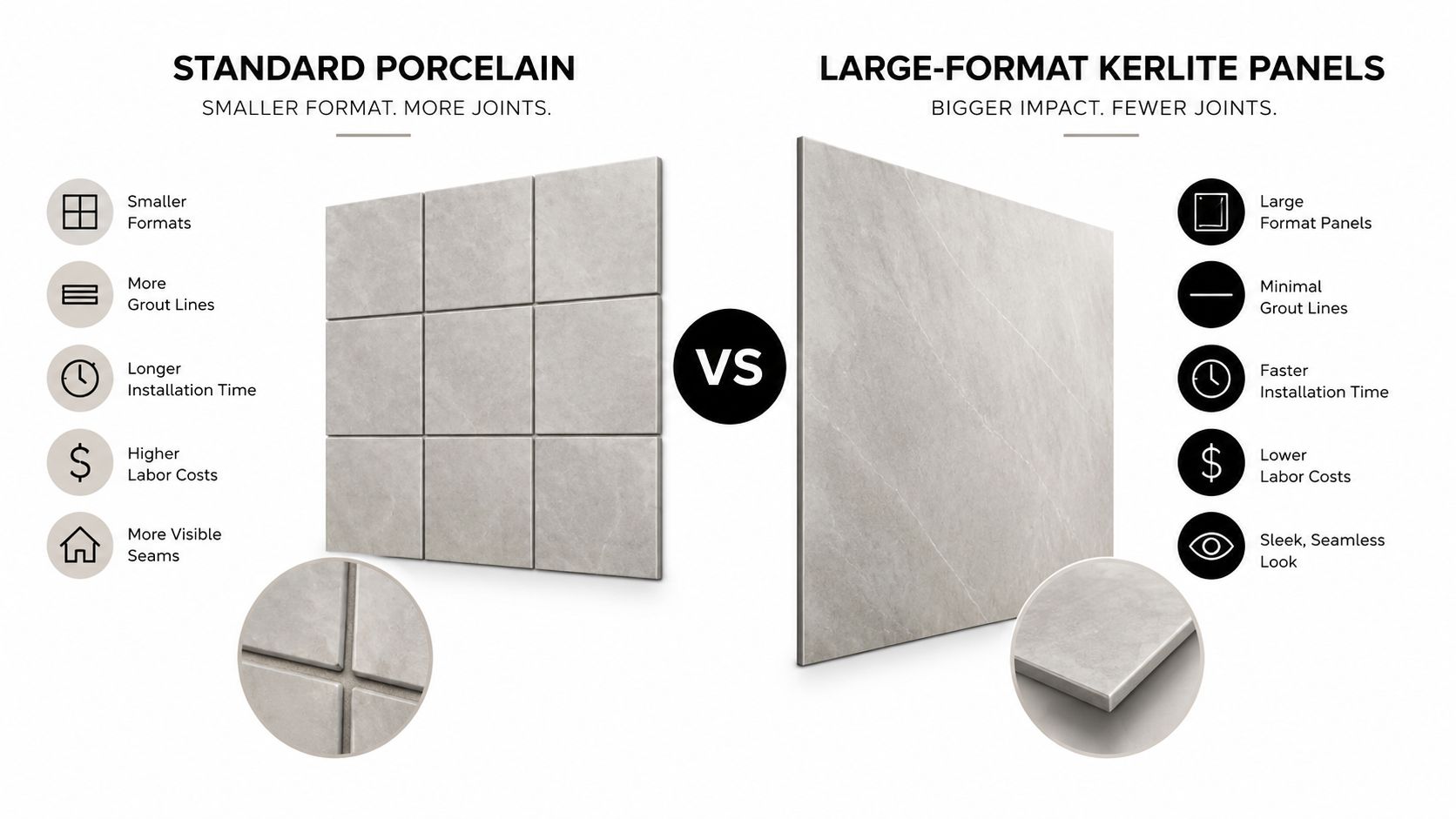
  • Repair chips, cracked grout, or failed sealant early so water does not track into the assembly.

Porcelain terrazzo-look tiles are usually the easiest option for busy households. They are consistent, simple to clean, and less demanding over time. Cementitious terrazzo has more depth and character, but it asks for better product selection, more care during installation, and a bit more attention after handover.

That trade-off is worth making for some bathrooms. It is not the right move for every one. A builder-managed renovation should price the material accurately, explain the upkeep clearly, and match the specification to the way the bathroom will be used.

Your Next Steps for a Perfect Terrazzo Bathroom in Melbourne

A Melbourne bathroom can look straight, clean, and ready for tile, then show its real condition the moment demolition starts. I see it often in older homes. Uneven floors, patched sheeting, out-of-square walls, and tired framing all affect whether terrazzo will finish sharply or fight the build the whole way.

Start with the room, not the colour chart. Check the substrate, the shower set-down or floor waste layout, the amount of natural light, and who will use the bathroom every day. A terrazzo tile that looks refined in a showroom can read busy in a compact ensuite, especially under warm downlights or against veined stone and brushed metal finishes.

Get samples in hand. Put them on the floor and against the wall finish. View them morning, afternoon, and at night with the actual lighting switched on. That simple step avoids a lot of second-guessing once the tile order is placed.

Then choose the team who will carry the whole wet-area build. Terrazzo works best when the builder, waterproofer, tiler, plumber, and electrician are working to one plan and one set of tolerances. In a full renovation, that matters more than the tile itself. Falls need to be right, junctions need to be clean, movement needs to be allowed for, and the waterproofing system needs to suit the substrate and layout.

That is why a registered builder is often the right lead on a terrazzo bathroom in Melbourne. Victorian homes regularly need correction before tile goes down, and those adjustments sit across several trades, not just tiling. One party coordinating demolition, rectification, compliance, and finishes usually gives a better result than splitting the job between separate contractors.

Ask for a quote that shows the build sequence clearly, the tile specification, who is responsible for substrate preparation, and how waterproofing and slip resistance will be handled. If those items are vague, the risk usually turns up later as delays, variations, or finishing compromises.

A terrazzo bathroom can look outstanding for years. The projects that stay that way are the ones where the builder gets the structure, the wet-area detailing, and the tile setting right before anyone starts talking about styling.

If you're planning a terrazzo bathroom renovation and want one team to handle the design, waterproofing, substrate prep, tiling, and builder coordination properly, talk to Melbourne Tiling Services P/L. They deliver start-to-finish bathroom renovations across Melbourne and greater Victoria, with registered builder oversight, compliant wet-area systems, and the kind of detail work terrazzo demands.

Waterproofing Compliance Certificate Victoria: 2026 Guide

You've probably started with the exciting parts of the renovation. Tiles, tapware, vanity, layout, lighting. Then someone mentions a waterproofing compliance certificate and the whole bathroom project suddenly feels more technical than expected.

That reaction is normal. Most Melbourne homeowners don't think about the membrane hidden under the tiles until a builder, surveyor, buyer, or insurer asks for paperwork. By then, the wrong answer can turn a straightforward bathroom renovation into a dispute about leaks, liability, and whether the work was even signed off properly.

A waterproofing compliance certificate victoria issue usually isn't about paperwork for paperwork's sake. It's about proving that the wet area was built to the required standard, by the right practitioner, with traceable accountability if something goes wrong later. In practical terms, that certificate can matter when the bathroom is being built, when the home is sold, and when water damage shows up where it shouldn't.

The biggest trap in Victoria is the gap between smaller jobs and larger renovations. Some works sit in a grey area where homeowners assume they're covered because the bathroom looks finished and the invoice has been paid. That assumption can be expensive.

Table of Contents

Your Bathroom Renovation and the Certificate You Can't Ignore

A bathroom renovation looks simple from the outside. Demolition starts. Plumbing gets roughed in. The room takes shape. Then the part that matters most gets covered up. That's why the certificate matters. It records that the unseen waterproofing work wasn't guessed, rushed, or left to an unqualified trade.

For homeowners, this document protects more than the shower recess. It helps protect adjoining walls, floors, skirtings, ceilings below, and the long-term value of the home. If water gets past the membrane, the damage often stays hidden until mould, swelling, staining, or movement appears somewhere else.

A modern bathroom renovation with green floor tiles, open shelving, exposed pipes, and a waterproofing compliance certificate.

If your project involves a full bathroom renovation in Melbourne, the waterproofing stage is one of the few moments where compliance has to be taken seriously before finishes go on. Once tiles, grout, screens, and joinery are installed, inspecting the membrane becomes much harder and any repair usually means demolition.

Practical rule: If a contractor treats waterproofing like a minor step between screeding and tiling, that's a warning sign. In a wet area, it's one of the core structural protection tasks in the whole job.

The certificate also changes the conversation from trust to proof. A homeowner shouldn't have to rely on “we always do it this way” or “it'll be fine.” You want a traceable record that the work met the required standard and that somebody with the right registration stands behind it.

What Is a Waterproofing Compliance Certificate?

A homeowner usually sees the problem too late. The bathroom looks finished, the silicone is neat, the tiles are straight, and six months later paint starts lifting on the wall outside the shower or a ceiling stain appears below. By that point, the membrane is buried under the finished work and proving what was done becomes much harder.

A waterproofing compliance certificate is the document that ties that hidden work to a clear standard and a legally accountable party. In practical terms, it records that the wet area waterproofing was carried out in accordance with the relevant building requirements and by someone permitted to stand behind that work.

In Victoria, that means the waterproofing behind a bathroom renovation must meet the requirements of AS 3740 and the NCC Volume 2. The certificate matters because waterproofing is one of the few parts of a bathroom you cannot properly judge once tiling is complete. If the membrane is missing, poorly bonded, interrupted at a corner, or badly detailed around a waste or tap penetration, the room can still look first-class at handover.

What the certificate is actually confirming

A proper certificate is evidence that the waterproofing system was installed over a suitable substrate, with the right preparation, set-out, bond breakers where required, and continuity through the areas most likely to fail.

That includes details such as:

  • Internal corners and wall-to-floor junctions that move slightly over time
  • Shower areas and adjacent splash zones where water exposure is repeated
  • Pipe penetrations and tap bodies where small gaps become leak paths
  • Doorways, hobs, and floor transitions where water can escape the wet area
  • Falls and drainage points that affect how long water sits on the surface

Those are the details that separate a bathroom that lasts from one that starts causing damage behind the scenes.

For homeowners, the core issue is not paperwork for its own sake. It is proof. On a smaller job under the common minor works threshold, people often assume the compliance risk is low because the renovation scope feels modest. In reality, the waterproofing risk is the same whether you are rebuilding the whole bathroom or just replacing the shower area. Water does not care what the contract value was.

Why this matters more than many owners expect

The gap between minor works and larger renovations catches a lot of people out in Victoria. A homeowner may hire someone for a bathroom refresh, assume the waterproofing side is routine, and only later find there is no clear certification trail and no registered builder taking responsibility for the full wet area package.

That is where the trade-off sits. A lower upfront price can also mean weaker documentation, blurred responsibility between trades, and a much harder path if defects show up later.

A certificate helps establish who carried out the work, what standard it was expected to meet, and who is exposed if it fails. That can become important if:

  • A leak appears after handover and responsibility is disputed
  • An insurer asks for renovation records
  • A future buyer or conveyancer wants evidence of compliant work
  • Parts of the bathroom need to be opened up and the original workmanship is questioned

From a builder's point of view, this is why registered oversight matters. Waterproofing sits between carpentry, plumbing, screeding, and tiling. If those stages are not coordinated properly, the membrane is often where the failure shows up first, even when the underlying cause started earlier. A registered builder closes that gap by taking responsibility for the sequence, the substrate, the detailing, and the documentation, not just the final tile finish.

A finished bathroom can hide a lot. A compliance certificate gives the homeowner something far more useful than a verbal assurance. It gives them a document that connects the hidden waterproofing work to a recognised standard and a party who can be held to it.

When a Waterproofing Certificate Is Legally Required in Victoria

Many bathroom renovations become complicated at this stage. Homeowners learn that waterproofing must adhere to the standard, but they also find that not every minor project is certified through the same process. Both concepts can be accurate, and the space between them is where people often encounter issues.

Victoria's regulatory framework changed significantly in 2018. The key thresholds often discussed in practice are these: work by unregistered tradespersons can be carried out up to $10,000 without requiring a compliance certificate, while projects valued over $16,000 require VBA registration and formal certification, according to the Victorian waterproofing regulatory changes summary.

The practical threshold problem

Most homeowners don't think in regulatory bands. They think in renovation scope. Replace the shower. Retile the room. Move the vanity. Rebuild the ensuite. The trouble is that the legal and compliance consequences can change depending on who is doing the work, the value of the work, and how the contract is structured.

That creates a real trade-off.

A smaller bathroom job may appear cheaper or simpler if someone says it can be done without the same formal sign-off. But the lower the paperwork, the more important it becomes to check who is responsible if moisture damage appears later. Once a bathroom is stripped, re-sheeted, waterproofed, tiled, and fitted off, it behaves like major building work even if the owner originally saw it as a cosmetic upgrade.

Victorian Waterproofing Certificate Requirements 2026

Project Value Practitioner Certificate Required?
Up to $10,000 Unregistered tradesperson Not required under the threshold described in the 2018 Victorian framework
Between $10,000 and $16,000 This is where homeowners often face uncertainty The framework highlights a practical compliance gap, so verification matters
Over $16,000 VBA-registered practitioner Formal certification required

That middle band is the problem area in real bathroom renovations. It's where homeowners can assume the project is “too big to be casual” but still not receive the clear compliance pathway they expected.

What works and what doesn't

What works is treating wet area waterproofing as regulated building work from the start, regardless of whether the quote lands just under a threshold. That means checking registration early, clarifying who is responsible for sign-off, and making the certificate part of the contract discussion before demolition begins.

What doesn't work is trying to split a larger bathroom renovation into smaller parts to make it feel like a minor job. On site, the water doesn't care how the invoices were separated. If the room fails, the entire assembly gets judged by the outcome.

A practical homeowner question is simple: who is taking legal responsibility for the waterproofing and what document proves it? If nobody can answer that clearly, stop there.

Who Can Legally Issue a Waterproofing Certificate

This is one of the most confusing parts of waterproofing compliance in Victoria, and homeowners aren't imagining the confusion. Different websites, trades, and even industry conversations often give different answers.

According to this overview of common waterproofing issues in Victoria, there is significant homeowner confusion because sources conflict on whether the certificate comes from a VBA-registered waterproofing contractor, a licensed plumber, or a builder, with thresholds discussed from $5,000 to $16,000. The practical takeaway is clear. Verify the practitioner's VBA registration before work starts.

Why homeowners get mixed answers

Part of the confusion comes from the fact that bathroom renovations involve several trades whose responsibilities overlap physically but not legally.

A plumber handles plumbing work. A waterproofer applies the membrane system. A tiler installs the finish. A builder may manage the whole renovation, coordinate sequencing, and carry the broader responsibility for compliant delivery. On site, those roles interact closely. On paper, they aren't interchangeable.

That's why the answer to “can my tiler issue the certificate?” is usually the wrong question. The better question is: what registration does that person hold, and are they authorised to certify this exact work?

Here's the practical split homeowners should keep in mind:

  • Tilers: A tiler can be excellent at finishes and still not be the person who can lawfully issue a waterproofing compliance certificate.
  • Plumbers: A plumber can certify plumbing work within their own scope, but that doesn't automatically resolve waterproofing certification.
  • Waterproofing contractors: They may perform the membrane application, but homeowners still need to confirm the registration status and whether the issued documentation is valid for the project.
  • Registered builders: On full bathroom renovations, a registered builder often provides the clearest line of accountability because the wet area work sits within the broader building scope.

The safest way to approach sign-off

From a homeowner's point of view, the least risky setup is the one with a single accountable party overseeing the renovation and using correctly licensed specialists where needed. That avoids the common site problem where each trade says the next one is responsible.

If three different trades are pointing at each other when you ask about certification, you don't have compliance. You have a future argument.

In practice, registered builders are often the most reliable option on bathroom renovations because they can coordinate the sequence properly. Waterproofing only works when the substrate, plumbing penetrations, falls, sheet linings, membrane system, and tiling are all aligned. That's difficult to manage when the owner hires separate trades and assumes certification will sort itself out at the end.

What doesn't work is relying on verbal assurances. Ask for registration details. Check them. Ask who issues the final compliance document. Get that answer before any membrane is applied.

Your Roadmap to Obtaining a Compliance Certificate

A common Melbourne bathroom scenario goes like this. The room is half-demolished, the plumber has finished rough-in, the tiler is booked, and only then does the owner ask who will handle the waterproofing certificate. By that point, the risk is already on site.

The better approach is to set up certification before work starts, especially in the grey area between minor works under $10,000 and larger bathroom renovations. Smaller jobs often get treated casually, even though the same leak can still damage framing, swell skirtings, stain ceilings below, and trigger an insurance dispute. A registered builder closes that gap by taking responsibility for the whole sequence, not just one trade task.

A six-step infographic showing the roadmap to obtaining a waterproofing compliance certificate for building projects.

Homeowners should also discuss the actual membrane build-up early. The certificate only has value if the underlying work is suitable for the room, the substrate, and the fixtures being installed. Our guide to waterproofing systems used in bathroom renovations helps explain what should be decided before the first coat goes down.

Before work starts

Start by locking in responsibility. Ask three direct questions. Who is carrying out the waterproofing work, who is supervising it, and who will issue the compliance paperwork at the end?

If those answers are vague during quoting, they usually stay vague during construction.

This matters most on projects that sit between a simple refresh and a full structural renovation. Homeowners often split these jobs across separate trades to save money. Sometimes that works. Often it creates a gap where no one owns the compliance side properly. A registered builder usually gives a clearer path because the waterproofing, substrate preparation, plumbing penetrations, sheet lining, falls, and tiling all need to line up.

Before signing off on the job, confirm:

  1. Who is responsible for certification
    Get the name of the practitioner or builder who will stand behind the wet area work.

  2. What the bathroom scope includes Confirm whether the room is being stripped to framing, back to substrate, or partly retained. The certificate process depends on what is being altered.

  3. Which wet areas are included
    The quote should identify shower areas, bathroom floors, wall returns, niches, hobs, and any other sections being waterproofed.

  4. Which products will be used
    Ask for the membrane system, primer, bond breaker, sealant, and accessories. Mixed systems cause problems if components are not compatible.

During the waterproofing stage

Good certification starts with disciplined site work. By the time waterproofing begins, the surfaces should be stable, clean, and ready for the membrane system being used. If the substrate is dusty, moving, cracked, or still too wet, the final paperwork will not save a failed installation.

On site, I look for a few things straight away. Floor to wall junctions need proper treatment. Penetrations at wastes, taps, and mixers need to be sealed with components that suit the system. Corners, hobs, niches, and transitions need careful detailing because those are the places that usually fail first.

Photo records matter here. Once tiling starts, the evidence disappears.

A practical site checklist includes:

  • Substrate readiness with no loose material, contamination, or movement
  • Correct junction treatment at wall and floor changes
  • Compatible detailing around wastes, flanges, tap bodies, and penetrations
  • Clear photos taken after membrane application and before tiling
  • Sequencing control so no trade damages the waterproofing before covering works proceed

Homeowners do not need to become waterproofing inspectors, but they should ask to see the membrane before it is covered. That single step solves a lot of disputes later.

What you should receive at handover

At handover, the paperwork should match the work on site. If the bathroom has been rebuilt properly, there should be a clear record of who did the waterproofing, what system was used, and what evidence supports the sign-off.

For owners, the practical handover pack should include:

  • The compliance certificate
  • The responsible practitioner or business details
  • The waterproofing product details
  • Photos of the membrane before tiling
  • Any written warranty documents that apply to the job

Do not leave this until weeks after completion. If final payment is made and everyone has moved on to the next project, missing documents become much harder to chase.

That is the fundamental difference between a patched-together bathroom job and one run properly. On a larger renovation, responsibility is usually clearer. On smaller or mid-range jobs, it often is not. Hiring a registered builder helps close that liability gap before it turns into a leak claim, a resale issue, or an argument about who was supposed to certify what.

Common Pitfalls and the True Cost of Non-Compliance

Most failed bathrooms don't start with a dramatic event. They start with a shortcut that seemed harmless at the time. A rushed membrane. No photo record. A trade working outside their actual registration. A homeowner being told that a certificate isn't necessary because the room is “only a small reno”.

A person standing in a damaged room next to the text Costly Mistakes written on a black background.

The broad compliance culture in Victoria is not casual. Between July 2024 and June 2025, Victorian water corporations commenced 3,670 investigations into alleged breaches of the Water Act 1989, according to Victoria's water compliance report for 2024 to 2025. That report relates to water regulation, not bathroom certificates directly, but it shows the wider regulatory environment takes water compliance seriously.

Where bathroom renovations go wrong

The first pitfall is assuming waterproofing is just part of tiling. It isn't. Tiling is the surface finish. Waterproofing is the protective system underneath. Good tilers understand this distinction. Cheap operators often blur it.

The second pitfall is trying to save money by treating a substantial bathroom renovation like a minor patch-up. Homeowners sometimes break work into smaller pieces or use separate cash jobs across demolition, waterproofing, and tiling. That can leave nobody clearly accountable for the finished wet area.

The third pitfall is failing to inspect the hidden stage. Once the membrane is covered, your influence drops. If there are no photos, no checklist, and no proper certificate, proving what happened later becomes much harder.

Common warning signs include:

  • Vague answers about certification
  • No registration details provided upfront
  • Pressure to move quickly through curing and tiling
  • No mention of pre-tiling photos
  • A contractor saying the certificate “isn't really needed”

Why shortcuts fail later

The actual cost of non-compliance usually appears after the bathroom looks finished. Water tracks into framing, adjoining rooms, or the ceiling below. Mould develops where you can't clean it. Timber swells. Paint bubbles. Tiles debond. Then the owner learns that fixing the membrane means removing the new bathroom to get back to the failed layer.

This video gives a useful visual sense of how hidden defects can turn into expensive rectification work.

A bathroom leak rarely stays in the bathroom. It spreads into the parts of the home that cost the most to open up and repair.

What works is slower, more disciplined, and less glamorous. Proper preparation. The right practitioner. Clear sign-off. A documented chain from substrate to finished tile. Homeowners remember the stone and the fittings. The house remembers whether the waterproofing was done properly.

How Melbourne Tiling Services Ensures Your Peace of Mind

For homeowners, the biggest relief is having one accountable team manage the bathroom renovation properly from start to finish. That matters because waterproofing compliance only works when the builder, waterproofer, plumber, and tiler are all working in sequence, with the same scope and the same standard in mind.

Melbourne Tiling Services P/L operates as Registered Unlimited Builders, which is exactly the kind of structure that helps close the risk gap between minor works assumptions and major renovation realities. Instead of leaving the owner to coordinate separate trades and chase paperwork afterwards, the process can be managed as one compliant building scope with proper trade supervision and documentation.

That's especially valuable on bathroom renovations where the waterproofing layer disappears behind finishes very quickly. A registered builder-led process means the critical checks happen before the room is closed up. It also means the homeowner has a clear point of accountability rather than a chain of subcontractors passing responsibility around.

If you need a team that handles wet area compliance as part of the build, not as an afterthought, see Melbourne waterproofing services for the practical side of how that work is delivered on site.


If you're planning a bathroom renovation and want the waterproofing compliance handled properly from the start, Melbourne Tiling Services P/L can help you build it once, document it properly, and avoid the grey areas that catch so many homeowners later.

Under-tile Heating | Bathroom Renovations

Under Tile Heating

Under Tile Heating – Frequently Asked Questions (FAQ)
What Is Under Tile Heating?
Under tile heating is a modern, efficient floor heating solution that adds comfort and warmth underfoot—perfect for cold mornings. The system features electric heating cables installed beneath your tiles and controlled via a smart touchscreen or Wi-Fi thermostat.
Melbourne Tiling Services offers seamless under tile heating installation alongside our expert tiling solutions.

Is Under Tile Heating Safe?
Yes, under tile heating is completely safe when installed by professionals. Our systems use premium Hotwire heating cables that exceed Australian safety standards. They are built for maximum safety, reliability, and durability.
Trust Melbourne Tiling Services for licensed installation that meets all compliance requirements.

How Energy Efficient Is Under Tile Heating?
Under tile heating systems are energy-efficient and cost-effective. A typical bathroom setup uses just 700 watts, while standard heating lamps use 1.5kW for the same area.
For optimal savings, run the system at full capacity for 30 minutes, then reduce to 50%. On average, you’ll spend as little as 2 cents per m² per hour.
Use our online cost calculator to estimate your running costs.

Benefits of Under Tile Heating
Under tile heating offers numerous advantages for bathrooms, kitchens, and living areas:

Consistent Warmth: Heat rises evenly from the floor for total comfort.

Smart Controls: Schedule and adjust temperatures via touchscreen or mobile app.

Minimal Profile: Installed under tiles without increasing floor height.

Primary Heating Option: Can replace traditional systems when used with proper insulation.

Energy Efficiency: Heat only where needed, saving on energy bills.

Explore more in our bathroom renovations and tiling services.

How Is Under Tile Heating Installed?
Our team installs heating cables directly into the screed layer beneath your tiles, spaced 60mm apart for consistent heat. The cables are connected to a programmable thermostat for easy control.
All under tile heating systems are supplied and installed by Melbourne Tiling Services as part of our floor tiling and renovation packages.

Why Choose Under Tile Heating?
Perfect for bathroom renovations

Energy-efficient and cost-effective

Low-maintenance and long-lasting

Smart control with Wi-Fi options

Installed by qualified professionals

Get a Free Quote Today
Upgrade your home with smart, stylish, and comfortable under tile heating.
Contact Melbourne Tiling Services for expert installation across Melbourne.

Tiling Tools

The right tiling equipment can be only found in specialized tiling shops. Tools has to be carefully selected to cover most products (tiles or materials).

Read More